
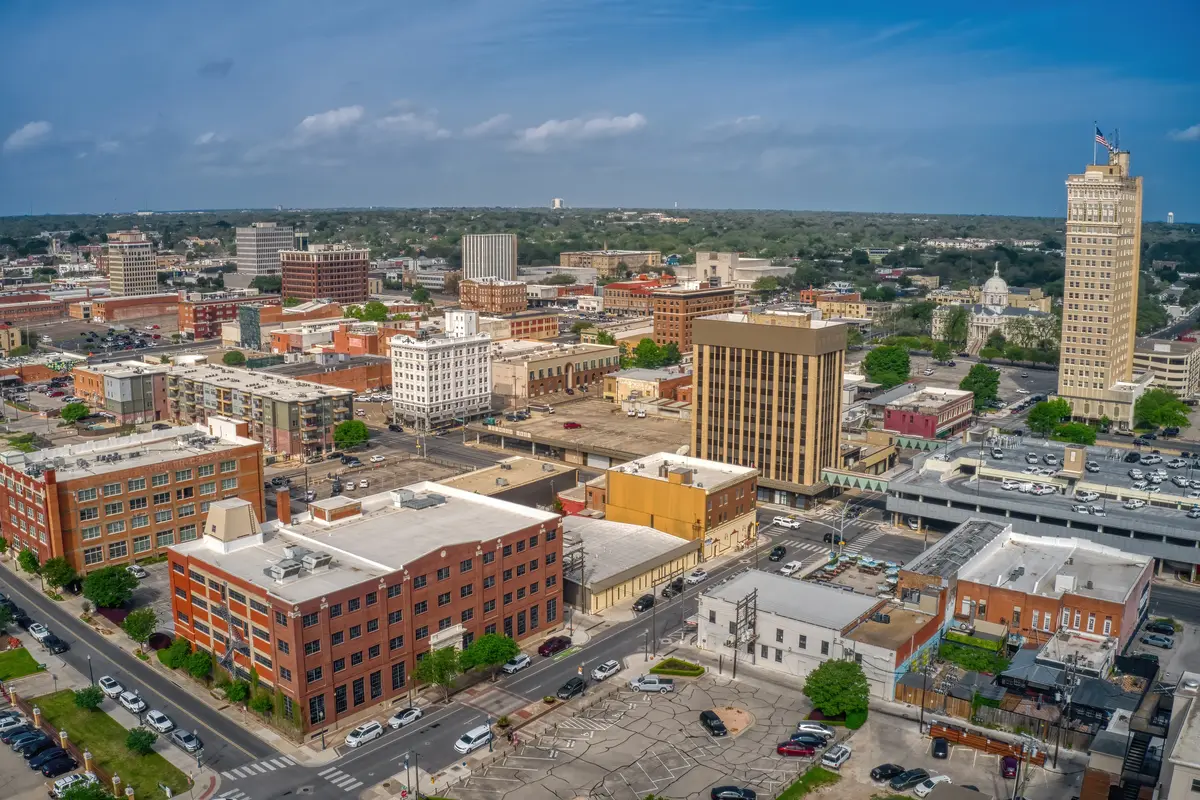
If you're choosing between staying in California and moving to Waco, the decision usually comes down to one number: what you can actually afford to own. Waco sits on the Brazos River at the center of Texas along I-35, roughly halfway between Dallas and Austin. That geography is not incidental — it means you're an easy drive from two major job markets while paying prices that most California buyers find genuinely startling. The city of 147,788 has grown into something more than a waypoint between metros, anchored by Baylor University, a recognizable tourism economy built around Magnolia Market at the Silos, and a wave of manufacturing investment that has reshaped its economic identity.
Waco's economic backbone runs deeper than the Magnolia brand. Baylor University is one of the city's largest employers alongside the Waco Independent School District and the City of Waco itself. L3Harris Technologies brings aerospace and defense work; large capital investments from companies like Graphic Packaging International and Electrolit have added industrial weight. The school district — with 12,908 students enrolled in 2025-26 — holds a D rating, according to the Texas Education Agency, which is among the most common concerns California families raise before they commit to a move. Understanding that reality before you arrive matters more than discovering it after you've closed.
The cost-of-living gap between California and Waco is real and wide. The typical home value in Waco stood at $197,359 as of July 2026 (Zillow ZHVI), a figure that resets almost everything a California buyer has been told about what homeownership costs. Overall cost of living in Waco runs roughly 10–14% below the U.S. national average, with groceries and everyday services tracking noticeably below what most Californians pay. The tradeoff shows up in the school district ratings, in a downtown that is still building density, and in the honest acknowledgment that Waco is not a coastal city with coastal amenities. Whether you're a remote worker, a family looking to cut monthly housing costs, or someone priced out of your current market, the sections below break down Waco's home prices, tax picture, neighborhoods, daily life, and what the California-to-Waco transition actually looks like in practice.
The Home Price Reality: California vs. Waco
California's statewide typical home value of $773,735 is the number most Waco-bound buyers are leaving behind. Waco's typical home value as of July 2026 is $197,359 — roughly a quarter of what the California statewide figure represents. For a buyer who has spent years watching entry-level homes in their California market drift out of reach, that gap lands differently in person than it does on a spreadsheet.
In practical terms, the Waco price point means a household that could only afford to rent in California can often become a homeowner here with a conventional down payment. The mortgage math changes completely — at current rates, the monthly carrying cost on a typical Waco home is a fraction of what the same buyer would pay on a California property. Use the calculator on the cost of living page to run the numbers against your specific income and down payment.
How Neighborhoods Stack Up
Within Waco, price tiers vary meaningfully by area. Downtown Waco and the Baylor neighborhood run above the city median, driven by proximity to the university and the Magnolia tourism corridor. Sanger Heights, North Waco, and Brookview sit below the median, offering the most accessible entry points for buyers working with tighter budgets. Parkdale and Viking Hills track above median as well, reflecting their more established housing stock. For a full neighborhood-by-neighborhood breakdown, the best neighborhoods page covers each area's character and who it suits.
One thing California buyers should know: the affordability picture is real, but it comes with a ceiling. The median household income in Waco is $54,365, which falls short of what's needed to comfortably carry the typical home at current rates. That means Waco is genuinely affordable for buyers arriving with California equity or higher remote-work incomes — but not necessarily for buyers starting fresh at local wages.
| Market | Typical Home Value |
|---|---|
| Waco, TX (July 2026, ZHVI) | $197,359 |
| California statewide (July 2026, ZHVI) | $773,735 |
* ZHVI = Zillow Home Value Index.
Nearby suburbs tell part of the story too. Woodway and Hewitt both run noticeably higher than the Waco median — buyers who prioritize those school districts pay a premium for it. Bellmead tracks at about the same price as Waco itself.
The Tax Shift: What California Movers Gain (and One Thing They Don't)
The tax headline for any California-to-Texas move is income tax. Texas charges no state income tax. California's graduated structure means most working households owe a meaningful share of their income to Sacramento every year — the income-tax savings from crossing the state line favor higher earners most, though nearly any working household sees some benefit. For a dual-income household earning well above local wages, the annual savings compound quickly.
The Property Tax Trade-Off
Here is where the picture gets more honest. California's effective property tax rate of 0.71% is kept low by Proposition 13, which locks assessed values close to purchase price and limits annual increases. Texas has no equivalent cap. Waco's effective property tax rate is 1.53% — more than twice the California rate. On a $197,359 home that math is still manageable, but for a California buyer bringing significant equity and purchasing a higher-value property, the property tax increase can eat a meaningful portion of the income tax savings.
The gap is real and worth running against your specific purchase price. It doesn't erase the income tax advantage for most buyers arriving with California earnings, but it narrows it — especially for retirees on fixed incomes who no longer benefit from the income tax elimination.
Sales Tax: Closer Than You Think
California's statewide base sales tax rate of 7.25% is the highest state-level base rate in the country — but that is before local additions. Many California cities layer on additional fractions that push combined rates well above 9% or even 10%. Waco's combined rate is 8.25%, built from the 6.25% Texas state base, a 0.5% McLennan County add-on, and a 1.5% city portion. For most California movers, the Waco sales tax rate will land close to or below what they were paying at home, especially if they were in a high-tax California municipality.
| Tax Type | California | Waco / Texas |
|---|---|---|
| State income tax | Yes — graduated structure | 0% (no state income tax) |
| Effective property tax rate | 0.71% (Prop 13 suppressed) | 1.53% |
| Statewide base sales tax | 7.25% | 6.25% (state base) |
| Combined sales tax (Waco) | Varies by city — often above 9% | 8.25% |
| Property tax cap | Yes (Proposition 13) | No cap |
One nuance worth flagging: lower-income households sometimes face a heavier effective total burden in Texas than in California, because sales and property taxes are regressive — they take a larger share of a smaller income. If you're arriving with a California salary and equity, the Texas tax structure works heavily in your favor. If you're starting over at local Waco wages, the calculation is less straightforward.

Everyday Cost of Living: Where the Savings Show Up
The grocery cart is one of the fastest reality checks for California movers. Waco's overall cost of living runs 10–14% below the national average. For anyone arriving from Los Angeles, the gap in routine spending is genuinely large — restaurant prices and grocery costs in major California metros run dramatically higher than what Waco residents pay for comparable purchases.
That means the family that was spending heavily on groceries and dining in a California metro is often spending meaningfully less doing the same things in Waco. That difference, compounded monthly, is real money — and it supplements the housing savings in a way that shows up quickly in bank account balances.
What California Movers Are Surprised By
After six months in Waco, California arrivals tend to note two things they didn't expect. The first is how much the lower housing cost changes psychological stress — owning a home outright or carrying a modest mortgage fundamentally alters the feeling of financial security. The second is the summer heat. Central Texas summers are longer and more intense than most coastal Californians have experienced, and air conditioning bills reflect that. The utility savings California movers expect don't always materialize in July and August.
Health coverage costs run noticeably below what most Californians were paying, though the honest trade-off is fewer options for specialized care locally — advanced treatment may mean driving to Dallas or Austin. For routine care, Waco is well covered. For the full picture on healthcare access, that page covers it in depth.
The 230-Day Sun Bonus
Waco gets 230 sunny days a year — more than most California coastal cities actually log. For solar, outdoor lifestyle, or anyone leaving a gray Northern California winter, that number represents a genuine lifestyle upgrade.
Dining out in Waco is conspicuously cheaper than in California's major metros. A sit-down dinner that costs $80 in San Francisco typically runs noticeably less at a comparable Waco restaurant. That cadence matters: Californians who ate out frequently as a discretionary expense find they can continue doing so in Waco without the guilt math.
Looking to buy in Waco? Estimate your payment.
Enter your numbers to see an estimated monthly mortgage payment.
Estimate only. Excludes HOA fees and mortgage insurance. The interest rate above is a starting point, not a quoted rate — replace it with your own to see real numbers. Insurance is a flat placeholder, not a Waco quote.
What You're Trading: The Honest Waco Trade-Off
Every California mover who lands in Waco goes through a version of the same reckoning around month four: the savings are real, but the footprint is smaller. Waco is the 24th-largest incorporated city in Texas. It has a genuine downtown, a university campus, a recognizable cultural identity — but it is not a major metro, and the range of amenities, restaurants, arts venues, and professional services reflects that honestly.
What the City Does Well
Waco punches above its size on a few specific things. Magnolia Market at the Silos has turned the city into a genuine tourism destination, and the downstream effect is a food and retail scene that is more developed than many cities of similar population. The Waco Downtown Farmers Market, the Waco Riverwalk along the Brazos, Cameron Park Zoo, and Waco Mammoth National Monument give the city a recreational and cultural baseline that doesn't require a drive to Dallas.
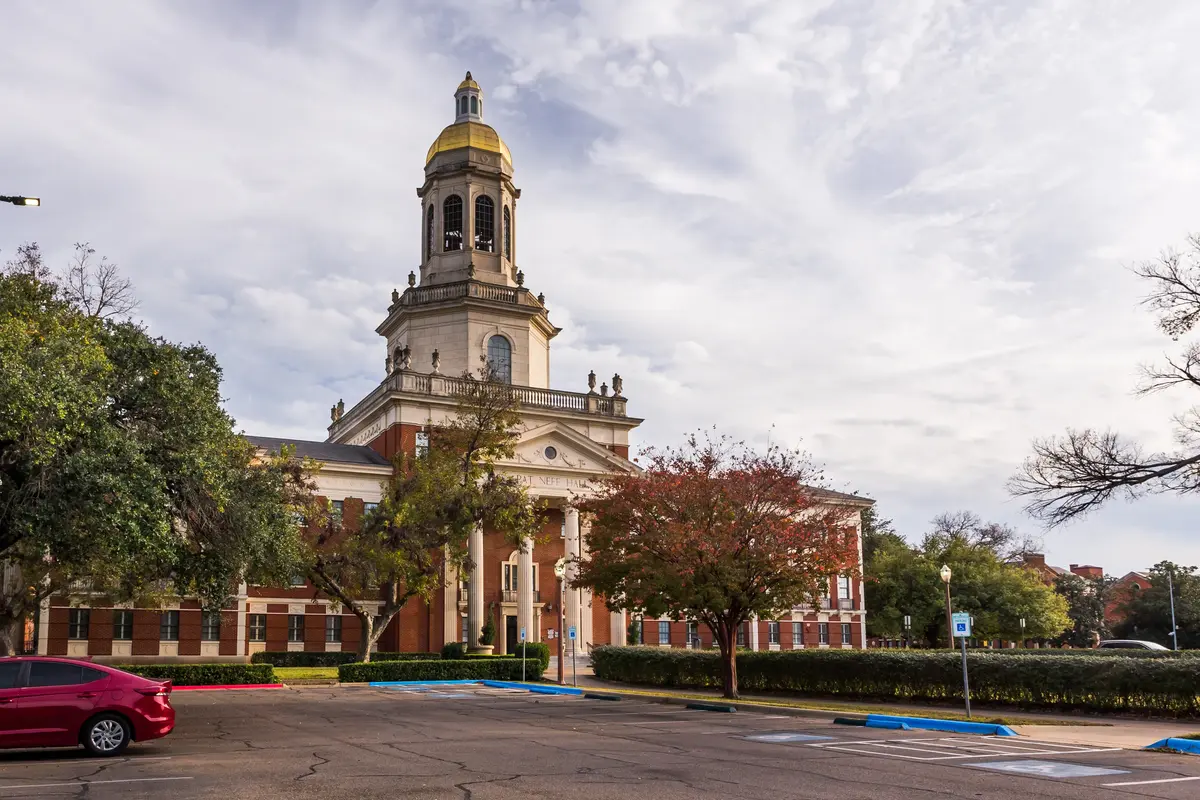
Baylor University keeps the city younger and more active than its demographic profile would otherwise suggest. McLane Stadium's 45,000-seat venue along the Brazos and the newer Foster Pavilion mean genuine college sports energy — and the calendar of events that comes with a major research university. For Californians who are used to being near a university town, that texture feels familiar.
What the City Is Still Building
Downtown Waco has improved materially over the last decade, but it is still a work in progress by the standards of what California movers are leaving. Density is thin outside a few corridors, and a serious shopping trip or a specialized restaurant experience often means driving out of the immediate area. The school district — where on 2024-25 state assessments, 21% of students reached math proficiency and 32% reached reading proficiency — is a live concern for families, and the D rating from the Texas Education Agency is not something to set aside without a plan. Many families who move here enroll in private schools or make school district a primary filter when choosing exactly where to buy, which is why the schools page is worth reading before you make an offer.
People who move OUT of Waco most commonly cite two things: the school district performance, and the limited options for career advancement locally without commuting. I-35 puts Dallas about 95 minutes away, which is manageable as an occasional commute but demanding as a daily one. If your job requires regular in-person presence in a major Texas metro, factor that drive into the calculus honestly — not just for time, but for what it does to your week.
Weekends and Local Life in Waco
Waco's weekend identity is clearer than most mid-sized Texas cities. The Magnolia corridor — Magnolia Market at the Silos, Magnolia Table, and Magnolia Press Coffee Co. — draws visitors from across the state, which means the infrastructure around it (food trucks, shops, the Waco Suspension Bridge footpath along the Brazos) is maintained at a higher standard than the underlying population alone would typically support. Locals use it selectively; on a quiet weekday it functions as a genuinely pleasant neighborhood anchor. On peak tourist weekends, residents tend to go elsewhere.
Cameron Park is where Waco residents actually gather. The park sits above a dramatic stretch of the Brazos River bluffs and connects to the seven-mile Waco Riverwalk. Cameron Park Zoo, one of the better municipal zoos in Texas for a city this size, draws families consistently. Lake Waco to the west gives the city a reservoir recreation option that most Central Texas cities at this scale don't have — boating, fishing, and trail access make it a genuine weekend destination for residents, not just a backdrop.
The Coffee and Dining Scene
Common Grounds Waco has been a Baylor-area institution long enough to feel like part of the city's furniture. Dichotomy Coffee draws a design-conscious crowd in the downtown corridor. Bitty & Beau's Coffee operates on a social enterprise model that has earned it a loyal following beyond just the coffee. For food, Terry Black's Barbecue Waco brings a name that Texas barbecue regulars recognize, and George's Restaurant Bar & Catering has a decades-long local track record that predates the Magnolia era entirely. Twisted Root Burger Co. and The Brazos Landing round out a dining scene that is more varied than Waco's size would typically produce.
For California movers specifically: the food and coffee scene is real, but it is concentrated. You will have a handful of genuinely good options rather than an overwhelming range. The Waco Downtown Farmers Market is a reliable weekly rhythm for anyone used to California market culture — produce, local vendors, a gathering point that functions as a community event as much as a grocery run. Dr Pepper Museum and the Texas Ranger Hall of Fame and Museum give the city a distinctly Texan cultural character that takes some getting used to if you're arriving from the coast, but both are worth the visit within the first month.
The honest summary: Waco rewards the kind of California mover who wanted a smaller, more grounded life and is willing to drive for the things that aren't here. It disappoints the ones who expected a Texas city to offer San Francisco amenities at Texas prices. The gap between those two expectations is the whole ballgame — and knowing which one you are before you sign a contract is the most useful thing this guide can do for you.
Local Expert Takeaway: California buyers who move to Waco almost universally say the housing cost difference is larger in practice than it looked on paper — not just in the mortgage payment, but in the mental space that comes from owning outright or carrying a small loan. The honest friction is the school district: Waco ISD holds a D rating from the Texas Education Agency, and families who don't research that before signing a contract often spend their first year scrambling for alternatives. Run the tax math carefully too — the income tax elimination benefits higher earners most, the 1.53% property tax rate applies to everyone, and the two don't always net out the way the headlines suggest, especially for buyers purchasing above the city median. Arrive with a plan for schools, a realistic read on the ratings, and an honest answer to the question of whether you need a downtown amenity set or a backyard.
Quick Takeaways & FAQs
✅ Waco's typical home value of $197,359 (July 2026) is roughly a quarter of California's statewide typical home value — the gap is real and accessible with conventional financing for buyers arriving with California equity.
⚠️ The property tax rate in Waco is 1.53% — more than double California's Prop 13-suppressed effective rate — which narrows the income tax savings for buyers purchasing higher-value homes.
📍 Waco ISD holds a D rating from the Texas Education Agency, making school research a non-negotiable step for families before choosing a neighborhood or making an offer.
How much cheaper is Waco than California for housing?
Does Texas really have no income tax, and does it matter at my income level?
Is the Waco school district a dealbreaker for families moving from California?
What is the sales tax rate in Waco, and how does it compare to California?
What do California movers most often regret about moving to Waco?
Moving to Texas?
Tell us what you need help with and we'll connect you with local resources.
