
A lot of retirees who land in The Woodlands say the same thing after the first six months: the marketing was actually underselling it. That is a short list of places where that is true. The Woodlands is a master-planned community roughly 45 minutes north of Downtown Houston, spread across a forest of loblolly pines in Montgomery County. The planning shows in ways that matter at retirement age: the pathways connect, the green space is genuine, and the healthcare infrastructure was built into the community rather than retrofitted after the fact. Nationally recognized retirement ranking services have consistently placed it among the top destinations in the country, and the reasons are concrete, not promotional.
What draws retirees here specifically is a combination that is genuinely hard to replicate in the Houston metro: a hospital inside the community with real specialty depth, a trail system covering more than 220 miles, and a tax environment that protects retirement income. Approximately 15 percent of The Woodlands' population of 121,002 is over the age of 65 — enough to sustain active senior programming, clubs, and social infrastructure without the place feeling like a retirement enclave. The Conroe Independent School District keeps the community multigenerational in a way that many purpose-built retirement destinations are not.
The honest caveat is cost. The typical home price here carries a significant premium over the broader Houston metro, and the median household income sits below what is needed to buy at that level without equity from a prior home. For retirees arriving with equity from a higher-priced market — California, the Northeast, or even Austin — the math works well. For retirees on a fixed income without significant assets, the price floor is a real constraint, and the nearby cities of Spring and Conroe offer the same regional advantages at noticeably lower entry points. See the cost-of-living page for a full breakdown of daily expenses.
Whether you are weighing a move here from out of state or comparing The Woodlands against its neighbors, the sections below cover what retirees actually need to know: healthcare access, the tax picture, what daily life looks and feels like on a fixed income, the downsizing inventory, and how The Woodlands stacks up against the other retirement options in this corner of Texas.
Why Retirees Are Choosing The Woodlands
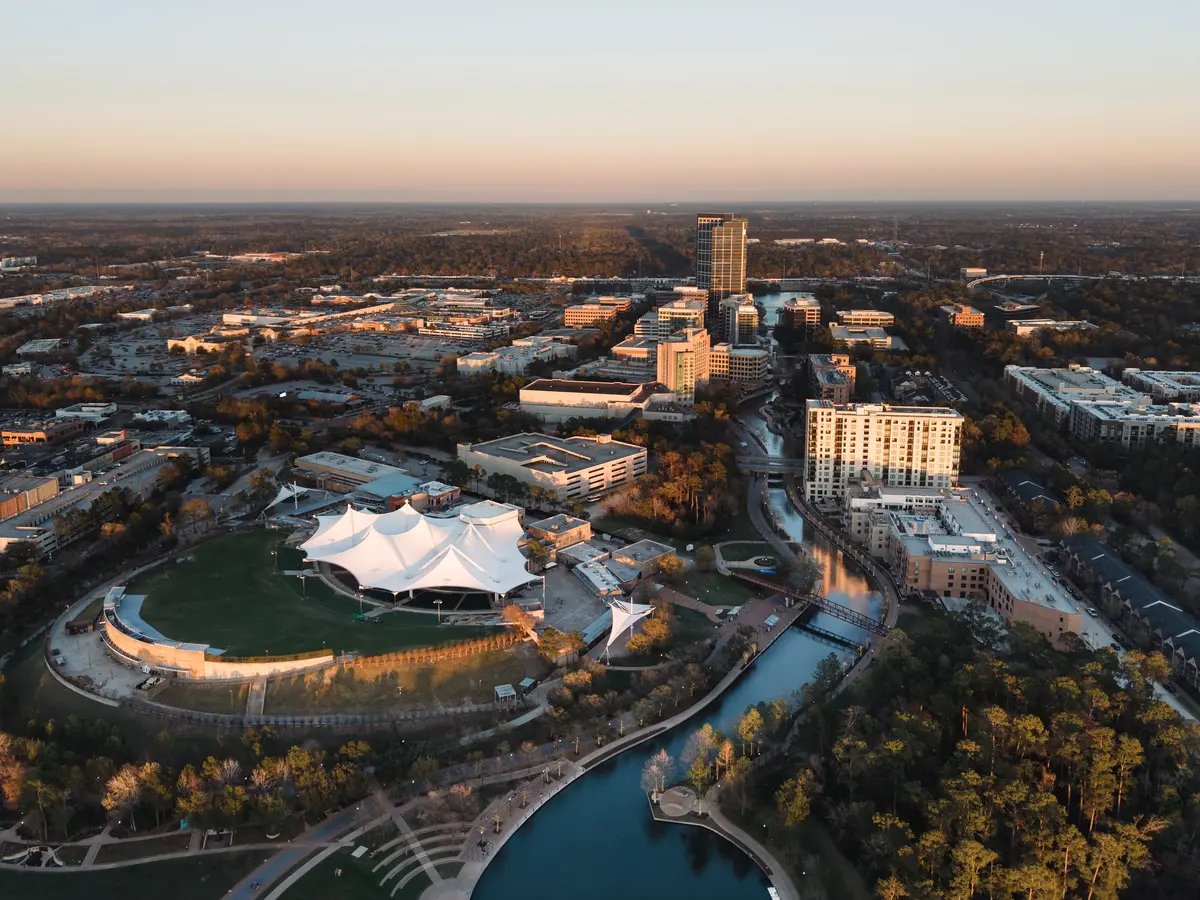
The Woodlands fits retirees who want the conveniences of a large metro — specialist physicians, a serious performing arts venue, a full retail corridor — without the density and traffic of living inside Houston proper. The community was designed from the start around walkable neighborhoods connected by a trail network, which means the infrastructure that matters most in retirement was never an afterthought.
The profile that succeeds here is usually a homeowner arriving with equity. The typical home price represents a real entry bar, and downsizing from a larger family home in a comparable market tends to work better than buying in on a modest pension alone. Retirees who have sold in California, the mid-Atlantic, or a high-priced Texas market often find the numbers genuinely favorable once the state's tax posture is factored in.
Who should look elsewhere? Retirees who want walkable, car-free daily living will find The Woodlands only partially delivers — the Waterway corridor is genuinely pedestrian-friendly, but most of the community requires a car for groceries and appointments. Anyone prioritizing the lowest possible cost of living in the region will find Spring or Conroe more forgiving on a fixed income. And retirees drawn to urban energy — gallery districts, walkable restaurant rows, street-level density — will be better served closer to Houston itself. The Woodlands is a suburb built extremely well; it is not a city.
Healthcare & Medical Access in The Woodlands
The Anchor Hospital
St. Luke's Health – The Woodlands Hospital sits inside the community and is the closest hospital to residents. It has operated since 2003 and carries genuine specialty depth for a suburban facility: cardiac care, neurology, oncology, and sports medicine are all available without leaving the community. Its affiliation with Baylor College of Medicine and Texas Children's Hospital connects it to the clinical resources of the Texas Medical Center, the world's largest medical complex, which is roughly 40 miles south.
For conditions that disproportionately affect older adults, the specialty profile matters. The hospital serves as the clinical home of the Dan L Duncan Comprehensive Cancer Center. That level of oncology infrastructure inside a suburban community is uncommon and worth noting for anyone whose retirement planning puts cancer care high on the list.
What You Get — and What Requires a Drive
St. Luke's Health – Lakeside Hospital, also within The Woodlands, focuses on orthopedics and cardiology, which adds capacity in two of the highest-demand specialties for the over-65 population. For most routine specialist care, residents rarely need to leave the community.
Where the picture changes is at the top end of tertiary care — organ transplant, highly specialized neurosurgery, complex pediatric oncology for grandchildren. Those cases typically route to the Texas Medical Center in Houston, about 45 minutes depending on traffic. That drive is a reality of living in any Houston suburb, not a specific liability of The Woodlands, but retirees managing serious chronic conditions should factor it into the decision.
George Bush Intercontinental Airport (IAH) is 23 miles away, which matters for retirees whose adult children live elsewhere and who may need family to arrive quickly in a medical situation. Proximity to an international airport is often overlooked in retirement planning until it becomes the most important thing.

The Retiree Budget in The Woodlands
The Texas Tax Advantage
Texas levies no personal state income tax. Social Security benefits, pension payments, 401(k) distributions, and IRA withdrawals are all free from state taxation — a meaningful advantage for retirees drawing from multiple income sources simultaneously. Texas also has no estate or inheritance tax; voters approved a 2025 constitutional amendment prohibiting new estate, inheritance, and gift taxes, which closes a door that previously existed for very large estates.
For homeowners 65 and older, Texas provides a school property tax freeze — once established, the school portion of the property tax bill cannot increase even if the home's assessed value rises. An enhanced homestead exemption also reduces the taxable base. These two provisions together meaningfully reduce what is otherwise The Woodlands' most significant carrying cost.
Property Tax Reality
The effective property tax rate here runs approximately 1.38%. Texas property taxes are among the mechanisms the state uses to fund what other states handle through income tax, so the rate reflects that structure. The over-65 school tax freeze is the primary tool available to offset it. For retirees arriving from states with both income tax and lower property taxes, the net calculation is often still favorable — but running the comparison against your actual income sources is worth doing before you assume it always is.
For daily cost of living on a fixed income, The Woodlands runs above average for the Houston metro. Groceries, dining, and services carry a premium consistent with an affluent planned community. The Woodlands Farmers' Market provides a local alternative to big-box shopping through the growing season. For a full picture of grocery, utility, and transportation costs, see the cost-of-living page.
The Budget Honest Truth
The Woodlands rewards retirees who arrive with assets and a plan — equity from a prior home, diversified retirement accounts, and a household income that comfortably covers a property tax bill calibrated to a premium home price. It is not the place to stretch a modest fixed income as far as possible. For that profile, the nearby options are more forgiving.
Looking to buy in The Woodlands? Estimate your payment.
Enter your numbers to see an estimated monthly mortgage payment.
Estimate only. Excludes HOA fees and mortgage insurance. The interest rate above is a starting point, not a quoted rate — replace it with your own to see real numbers. Insurance is a flat placeholder, not a The Woodlands quote.
Walkability, Community & Staying Active in The Woodlands
The Walkability Reality
The Woodlands Waterway trail is a 2.9-mile paved loop — flat, with minimal elevation gain — connecting the waterfront district, Market Street, and The Woodlands Mall. For retirees who want a genuine walking-distance lifestyle, the Waterway corridor is the place to be: restaurants, live music, shopping, and the Cynthia Woods Mitchell Pavilion's outdoor concerts are all within reach on foot. Outside that corridor, The Woodlands is a car-dependent suburb. Most neighborhood errands — pharmacy, grocery run, medical appointment — require driving.
That said, the trail infrastructure is exceptional by any suburban standard. The Woodlands Township maintains more than 220 miles of hike-and-bike pathways and over 150 community parks, with 4,445 acres of open space — 38.3 acres per 1,000 residents, a figure well above the national average as benchmarked by the National Recreation and Park Association. The George Mitchell Nature Preserve adds nearly 40 miles of trails within 1,700 acres of protected forest. Northshore Park and Rob Fleming Park are both well-maintained community gathering points. For retirees whose version of staying active means walking or cycling rather than running errands on foot, the infrastructure is hard to beat in this region.
Social Life and Community Depth
About 15 percent of the population is over 65, which is enough critical mass to sustain real community programming. The Cynthia Woods Mitchell Pavilion hosts a full season of performances — classical, pop, and touring acts — with a capacity of approximately 16,550, making it one of the most significant outdoor venues in the state. Waterway Square connects the Pavilion to live music, public art, and waterside dining, giving retirees a walkable evening destination that most suburbs cannot offer.
The social scene beyond ticketed events runs through the trail network itself. The Woodlands Waterway is where people actually show up — morning walkers, cyclists, and couples using the kayak launches at Riva Row Boat House. Lake Woodlands anchors the northern part of the community the way the Waterway anchors the south. For retirees who build social life through activity rather than programming, the infrastructure supports it. For those who want organized senior-center programming and a more structured social calendar, the Windsor Hills community and the Township's parks-and-recreation programs provide that layer.
Right-Sizing: Downsizing in The Woodlands
The Inventory Challenge
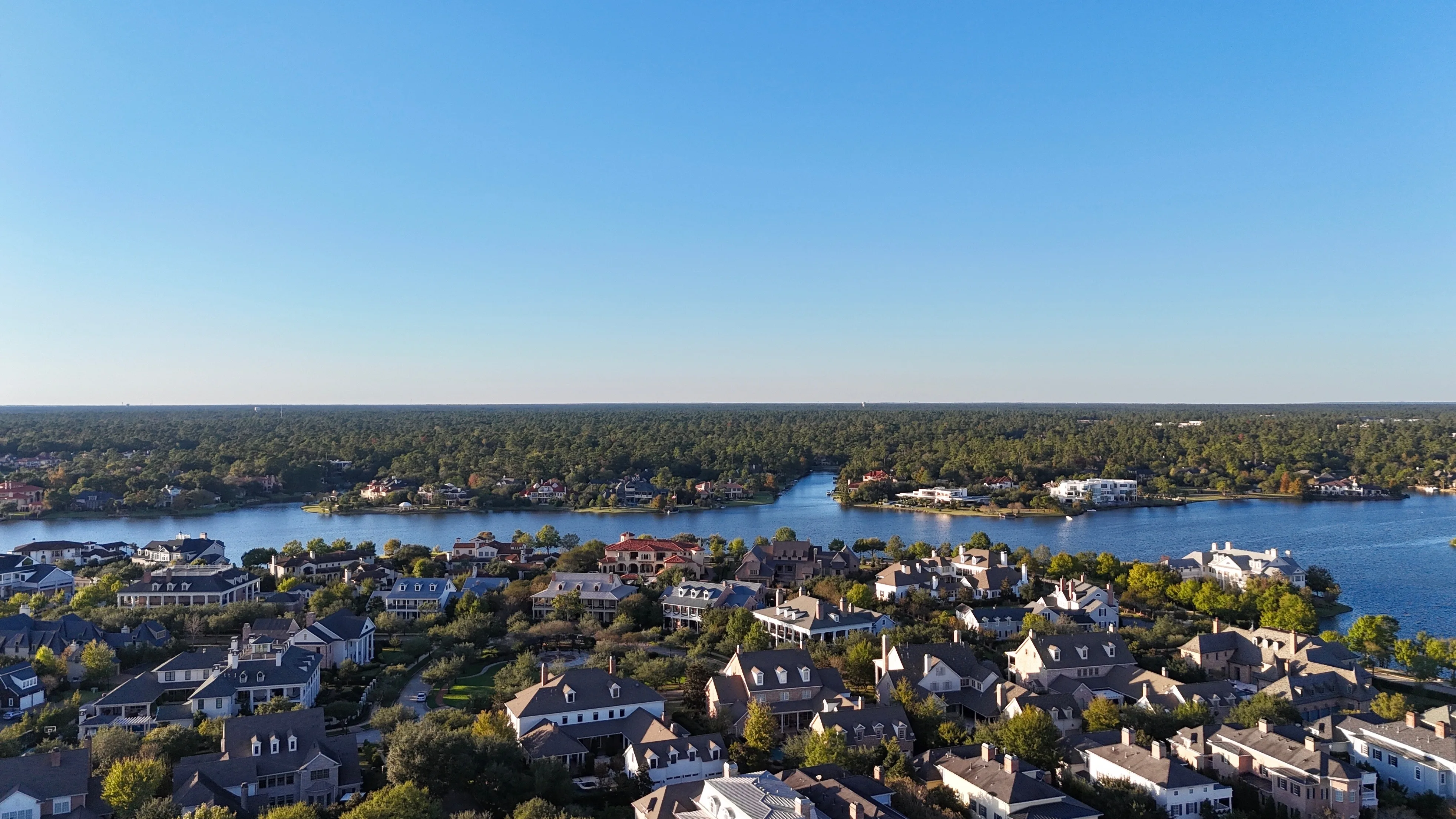
The Woodlands was built primarily as a family-oriented planned community, which means the dominant housing stock is single-family homes on tree-lined lots — not the patio home or low-maintenance condo inventory that downsizing retirees often want. Finding a single-level home with a smaller footprint here takes more patience than it would in a market built specifically for the over-55 demographic. It exists, but it is not abundant, and well-priced single-level homes in established neighborhoods tend to move without sitting long.
Condos and townhomes represent a smaller share of the market than in Houston's inner loop. For retirees who want to eliminate stairs, exterior maintenance, and a large yard entirely, the selection is narrower than the community's overall size might suggest. The tradeoff is that the neighborhood character — mature trees, connected trails, established amenities — is what makes the stock that does exist appealing enough to compete for.
Windsor Hills: The 55+ Option
Windsor Hills is the 55+ community within The Woodlands. It offers resort-style amenities that the broader community is known for: a pool, a library, a grand ballroom, and an organized resident events calendar ranging from book clubs to water aerobics. The setting is tree-lined and quiet, which matches what most buyers in this category are looking for. It is a gated, age-restricted enclave within the larger community rather than an isolated retirement campus, which means residents have full access to the trail system, parks, and amenities of The Woodlands as a whole.
For retirees whose priority is a dedicated 55+ environment with structured programming, Windsor Hills is the in-community answer. For those open to a smaller footprint without the age restriction, the patio home and villa segments of the broader market — concentrated in neighborhoods like Creekside Park and College Park — are worth exploring with a buyer's agent who knows which streets tend toward single-level stock.
One honest friction point: buyers downsizing from a larger home in The Woodlands itself sometimes discover that selling the family home and buying down within the same community requires more capital than expected. The price floor for low-maintenance living here is not dramatically lower than for a traditional single-family home. If the goal is to free up meaningful equity, comparing the Windsor Hills segment against entry-level options in Conroe or Spring — both noticeably cheaper — is worth doing before committing to a within-community downsize. See the neighborhoods page for a closer look at the housing character across the community's villages.
The Woodlands vs Nearby Retirement Destinations
| City | Cost vs The Woodlands | Primary Hospital | Walkability | Senior Living Depth | Overall Retirement Fit |
|---|---|---|---|---|---|
| The Woodlands | Anchor | St. Luke's Health – The Woodlands Hospital (in-community, full specialty depth including oncology and cardiology) | Excellent on the Waterway corridor; car-dependent elsewhere | Strong — Windsor Hills 55+ community, robust Township programming | Top-tier for retirees with assets; demanding price floor |
| Spring | Noticeably lower | Regional hospital access; lacks in-community anchor | Moderate; suburban and car-dependent throughout | Growing; more scattered senior living options | Strong value play for retirees who want north-Houston suburban character at a lower price point |
| Conroe | Noticeably lower | Regional hospital coverage; closer to The Woodlands' facilities than Houston's | Limited; historic downtown is walkable but neighborhoods are not | Moderate; active adult communities exist | Best budget option in the corridor; recognized as a strong regional retirement destination |
| Shenandoah | Noticeably lower | Draws on The Woodlands' hospital infrastructure nearby | Low; almost entirely car-dependent | Limited; small-community feel with fewer organized senior programs | Quiet, lower-cost enclave adjacent to Woodlands amenities; niche fit |
| Magnolia | Noticeably lower | Limited local options; meaningful drive for specialty care | Very limited; rural-suburban character | Thin; fewer organized senior services | Rural character appeals to some retirees; healthcare distance is the tradeoff |
| Oak Ridge North | Noticeably lower | Close proximity to The Woodlands hospital corridor | Low; residential and car-dependent | Limited; small community with modest senior programming | Practical lower-cost alternative for buyers wanting access to Woodlands amenities |
Spring and Conroe are the most direct comparisons — both recognized as retirement destinations in their own right by national outlets, both noticeably cheaper than The Woodlands, and both within easy reach of St. Luke's Health – The Woodlands Hospital. Spring in particular offers much of the same north-Houston suburban character at a lower price point, which makes it the most common alternative for retirees who want the region but not the Woodlands price tag.
Where The Woodlands genuinely separates itself is healthcare depth and community infrastructure. No nearby option puts a hospital with full oncology and cardiology capability and more than 220 miles of trails inside the community itself. Shenandoah and Oak Ridge North essentially function as lower-cost adjacencies — buyers there access Woodlands amenities and healthcare without paying Woodlands prices, but they give up the in-community walkability and the organized social programming that Windsor Hills and the Waterway corridor provide.
Magnolia is the right call only for retirees who genuinely want a quieter, more rural character and can plan their lives around the longer drive to specialist care. For most retirees in this region, the choice comes down to whether The Woodlands' premium is justified by the healthcare access, the trail infrastructure, and the social depth — and for buyers arriving with substantial equity, it usually is.
Local Expert Takeaway: The Woodlands earns its strong reputation among retirement destinations in the categories that matter most: a hospital inside the community with serious specialty depth including oncology and cardiology, a trail and parks system that supports active aging without needing a car for recreation, and a Texas tax structure that protects every dollar of retirement income from state taxation. The friction is on the cost side — the typical home price is a real threshold, and the over-65 school property tax freeze only helps once you own. Retirees who arrive with equity and a plan find The Woodlands delivers what it promises. Those stretching a fixed income will find Spring or Conroe a more honest fit at a noticeably lower price.
Quick Takeaways & FAQs
✅ St. Luke's Health – The Woodlands Hospital is inside the community and offers full specialty depth including cardiac care, neurology, and an oncology center affiliated with Baylor College of Medicine — a level of in-community healthcare access rare in any suburb.
⚠️ The typical home price carries a significant premium over surrounding cities, and retirees on a modest fixed income will find Spring or Conroe offer the same regional advantages at noticeably lower entry points.
📍 Texas homeowners 65 and older qualify for a school property tax freeze that caps the school portion of the bill permanently — one of the most meaningful retirement-specific tax benefits in the state.
Does Texas tax Social Security or retirement income?
What property tax breaks are available to retirees in The Woodlands?
What is the closest hospital to The Woodlands, and how good is it?
Are there 55+ or active adult communities in The Woodlands?
How does The Woodlands compare to Spring or Conroe for retirement?
Moving to Texas?
Tell us what you need help with and we'll connect you with local resources.
