
Maybe your company transferred you to Chevron Phillips Chemical or Huntsman Corporation and The Woodlands just made sense. Maybe you've been renting in Spring or Conroe and finally have the savings to make a move. Either way, the first reality check every first-time buyer here faces is the same one: this is a master-planned community with 121,002 residents, nationally recognized amenity infrastructure, and a median home price that puts typical entry well above what most first-timers picture when they start budgeting. The gap between what people expect and what the market actually costs is the central challenge of buying here for the first time.
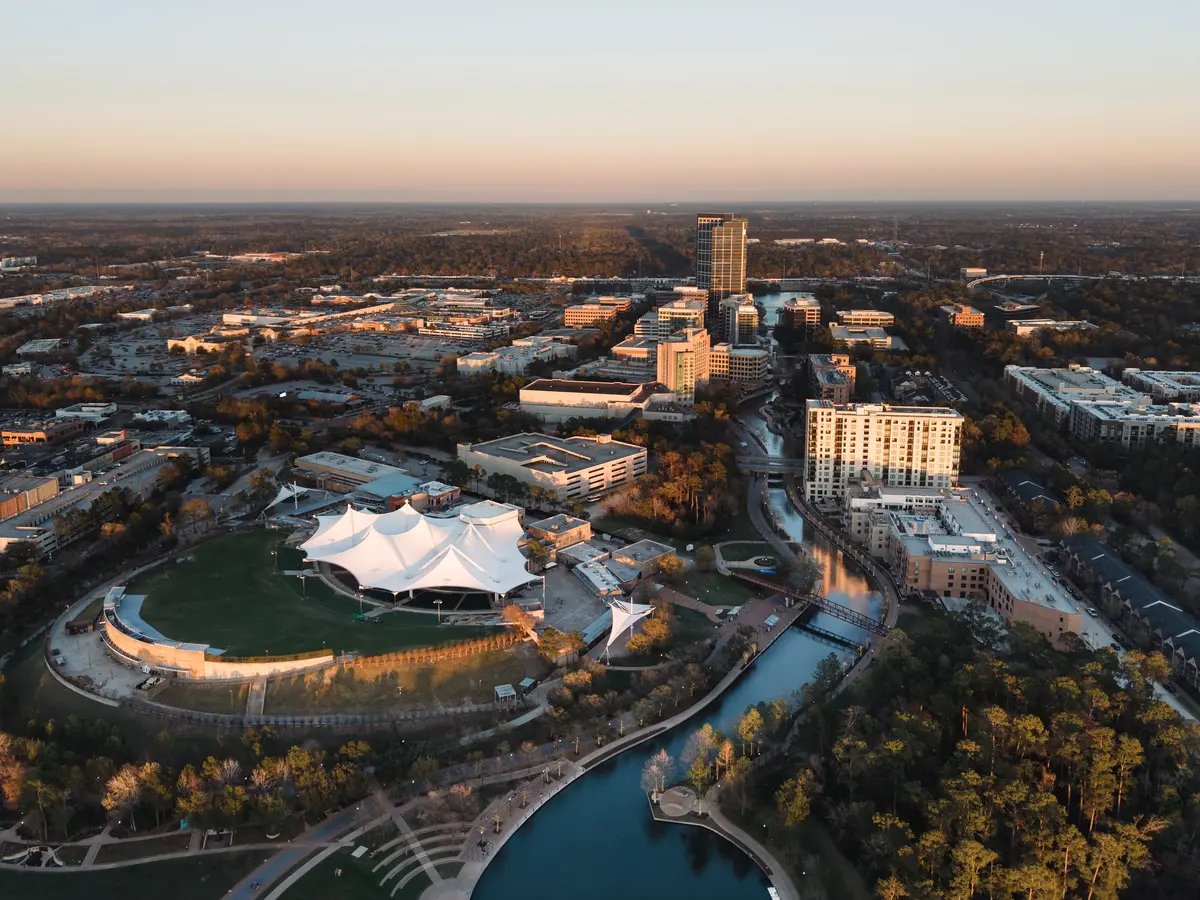
That price is not an accident. The Woodlands was built from the ground up across 28,000 acres beginning in 1974, with 220 miles of trails, more than 150 neighborhood parks, 14 community pools, and a level of maintained green space that few Houston-area suburbs can replicate. Buyers pay for that infrastructure — and when they sell, the next buyer pays for it too. The Conroe Independent School District serves the community, which matters enormously to resale demand. The Houston metro added over 198,000 residents in a single year, second only to New York in raw numeric growth, and a large share of that growth lands in this corridor. Demand here is structural, not cyclical.
For a first-time buyer, the affordability math deserves a clear look before you fall in love with a village. The median household income in The Woodlands is $140,701 — a strong number by any national measure, but still below the income needed to comfortably carry the typical home at current prices. Entry-level options exist, particularly in older sections of Grogan's Mill and Panther Creek, but they require real cash at the table. The effective property tax rate of 1.38% — lower than the Texas state median of 1.48% — applies on top of a purchase price that is already high, so the monthly carrying cost is a number you need to model carefully before you make an offer. The interactive calculator below this guide is a good place to start that math. The full cost-of-living breakdown covers what daily expenses look like once you own here.
Whether you've been researching The Woodlands for months or just got serious last week, the sections below walk through what your budget actually buys, the Texas-specific purchase process step by step, a cash-needed snapshot table, and the four mistakes first-timers here make most often.
The Woodlands First-Time Buyer Reality
The typical home price here is the number that reshapes every first-timer's plan. At that level, a 3% conventional down payment alone runs into the tens of thousands — before closing costs, reserves, or any of the moving-day expenses that arrive all at once. Most first-time buyers here are not buying the median home; they're searching for the entry point beneath it, which exists but requires knowing where to look.
The most realistic entry-level inventory sits in the older villages — Grogan's Mill and Panther Creek in particular — where smaller footprints and 1980s construction bring prices meaningfully below the community average. These homes often need updating, which is a trade-off worth understanding before you tour them. Buyers who want newer construction without stepping up to the full median typically look toward College Park and Harper's Landing, where townhomes and patio homes occasionally surface at more accessible price points. None of this is cheap by Texas standards; Spring and Conroe both come in noticeably lower than The Woodlands across the board, and that price differential is real and worth weighing if your budget is stretched.
One detail specific to Texas that catches first-timers off guard: Texas is a non-disclosure state. The price a neighbor paid for their home is not public record, and the figures you see on listing portals are MLS-based estimates that vary by source and boundary. No single portal number is authoritative. A local agent with access to closed MLS data is your best source for what homes in a specific village have actually sold for — and in this market, that distinction matters when you're writing an offer.
Property taxes are baked into the ownership cost here in a way that first-timers from other states often underestimate. The effective rate of 1.38% reflects the Montgomery County levy, the school district, and Municipal Utility District charges that vary by subdivision. The township itself adopted a 2025 levy of $0.1714 per $100 of taxable value — just one layer of a combined bill that a lender will factor into your debt-to-income calculation. Run the full number, not just the purchase price, before you decide what you can carry. See the cost-of-living page for a fuller picture of what ownership costs look like month to month.
The Homebuying Process in The Woodlands, Step by Step
Step 1: Get Pre-Approved — Before You Tour Anything
In The Woodlands, many listing agents won't even schedule a showing without a pre-approval letter in hand. This is not a formality — it's a hard requirement in a market where well-priced homes attract multiple inquiries quickly. Pre-approval involves a full credit pull, income documentation (pay stubs, W-2s, two years of tax returns), bank statements, and proof of assets. When your documents are organized, the process typically takes one to three business days. A minimum credit score of 620 meets most loan program thresholds; the average Texas buyer score in 2025 was 692, so many first-timers already qualify.
Pre-qualification — where you self-report income without documentation — is not the same thing, and agents here know the difference. Show up with a pre-approval letter, not a pre-qualification estimate.
Step 2: Shop With a Budget You've Already Stress-Tested
Once you're pre-approved, resist the pull to tour homes at the top of your approved range. Pre-approval tells you what a lender will let you borrow; your budget should reflect what your monthly cash flow can actually absorb, including the effective property tax rate of 1.38% applied to the purchase price, homeowners insurance (which deserves its own quote early — coverage costs and availability across the northwest Houston corridor have shifted and should be priced into your budget before you fall in love with a house), and HOA or MUD fees that vary by village.
Step 3: Offer, Option Period, and Earnest Money
Texas purchase contracts include a feature most first-timers have never encountered: the option period. This is a negotiated window — typically three to ten calendar days after the contract's effective date — during which you have the unrestricted right to walk away for any reason. To secure it, you pay a non-refundable option fee directly to the seller, typically $100 to $500 for most residential transactions (more in competitive situations). If the sale closes, that fee is credited back to you. Earnest money, by contrast, remains fully refundable during the option period — a distinction worth understanding clearly before you sign.
Buyers should also confirm their agent is working from the current TREC One to Four Family Residential Contract (form 20-19), which became mandatory on July 1, 2026. This is a standard but specific detail that a first-timer relying on an inexperienced agent might miss.
Step 4: Inspection, Appraisal, and Insurance
Use the option period to complete your inspection. Don't skip it, don't rush it, and don't waive it to make your offer look cleaner — an inspection on a Woodlands home, especially older construction in Grogan's Mill or Panther Creek, can surface drainage, foundation, or HVAC issues that change the deal entirely. Lender-ordered appraisals run concurrently and confirm the bank's collateral; if the appraisal comes in below purchase price, you'll need to negotiate, make up the gap in cash, or walk.
Get homeowners insurance quotes during this window, not after closing. Availability and premiums across the northwest Houston corridor have shifted enough that a buyer who assumes standard coverage at standard cost can find themselves surprised at the last minute.
Step 5: Underwriting, Final Approval, and Closing
Closing in Texas is handled by a title company with an escrow officer — not an attorney, as buyers from some states expect. The typical timeline from executed contract to key handoff is 30 to 45 days. During underwriting, avoid any large purchases, new credit applications, or job changes: lenders re-verify employment and credit close to closing, and a change in your financial picture at this stage can delay or kill the deal.

How Much Home Can You Afford in The Woodlands
The table below shows estimated cash needed at closing across several realistic purchase scenarios in The Woodlands. Closing costs are estimated at approximately 2–3% of the purchase price, which is a typical range for Texas transactions and includes title fees, lender fees, prepaid items, and escrow setup. These are estimates — your actual figures depend on your lender, the specific property, and what you negotiate with the seller. The interactive mortgage calculator below this section will let you model the full monthly payment at current rates.
| Scenario | Purchase Price | Loan Type | Down Payment | Est. Closing Costs (2–3%) | Est. Cash Needed at Table |
|---|---|---|---|---|---|
| Entry-level, older village | ~$390,000 | FHA (3.5%) | ~$13,650 | ~$7,800–$11,700 | ~$21,450–$25,350 |
| Entry-level, older village | ~$390,000 | Conventional (3%) | ~$11,700 | ~$7,800–$11,700 | ~$19,500–$23,400 |
| Mid-range, established village | ~$500,000 | FHA (3.5%) | ~$17,500 | ~$10,000–$15,000 | ~$27,500–$32,500 |
| Mid-range, established village | ~$500,000 | Conventional (3%) | ~$15,000 | ~$10,000–$15,000 | ~$25,000–$30,000 |
| Near-median, newer construction | ~$630,000 | FHA (3.5%) | ~$22,050 | ~$12,600–$18,900 | ~$34,650–$40,950 |
| Near-median, newer construction | ~$630,000 | Conventional (5%) | ~$31,500 | ~$12,600–$18,900 | ~$44,100–$50,400 |
A few things this table doesn't capture: seller concessions (which can offset a portion of closing costs in the right negotiation), MUD fees and HOA dues that vary by village, and reserves that many lenders require you to have on hand after closing. Budget for all three.
One structural reality worth naming: the median household income in The Woodlands is $140,701, which is strong by any national standard — but still below the income level needed to comfortably carry the typical home here. First-timers buying near the median are often doing so with dual incomes, substantial savings built over several years, or both. That's not a warning to walk away; it's a signal to go into the process clear-eyed about what the numbers require.
Looking to buy in The Woodlands? Estimate your payment.
Enter your numbers to see an estimated monthly mortgage payment.
Estimate only. Excludes HOA fees and mortgage insurance. The interest rate above is a starting point, not a quoted rate — replace it with your own to see real numbers. Insurance is a flat placeholder, not a The Woodlands quote.
Common First-Time Buyer Mistakes in The Woodlands
Touring Before Pre-Approval
This one sounds obvious until you've spent several weekends falling in love with homes well above what your pre-approval actually supports. In The Woodlands, agents routinely decline to show homes without a letter in hand. Get the pre-approval first — it takes one to three business days — and use it to anchor your search rather than letting the search anchor your wishlist.
Waiving the Inspection to Compete
First-timers sometimes hear that waiving contingencies makes an offer more attractive and conclude that waiving the inspection is the lever to pull. In The Woodlands, this is a mistake with real consequences. The older construction in Grogan's Mill and Panther Creek in particular can carry drainage, foundation, or deferred-maintenance issues that don't show up on a listing photo. Use the Texas option period — pay the option fee, schedule the inspection on day one of that window, and read the report before you decide whether to proceed. The option fee is not refundable; the peace of mind is worth it.
Underestimating the True Cash Needed
The down payment is the number first-timers focus on, but it's only part of what you need at the table. Closing costs in Texas typically run 2–3% of the purchase price, and that figure includes title fees, lender charges, prepaids, and escrow setup. On a $500,000 purchase, that's $10,000 to $15,000 on top of the down payment — before reserves, the option fee, the inspection, and any moving costs. Buyers who arrive at closing without enough liquid cash have deals fall apart at the last possible moment. Model the full number early.
Ignoring School Boundaries and Commute Reality
The Conroe Independent School District serves The Woodlands, but school assignments are boundary-specific, and boundaries don't always follow village lines cleanly. A home in one section of College Park may feed into a different elementary than a home two streets over. If school assignment matters to your family, confirm the specific boundary — not just the village — before you make an offer. Separately, the drive to Downtown Houston runs about 45 minutes under reasonable conditions, and buyers who tour on a Saturday afternoon and commit to a commute they've never done on a Tuesday at 7:30 a.m. often feel it differently six months in. See the living-in page for a realistic look at commute and daily life patterns.
Local Expert Takeaway: The Woodlands is not an easy market for first-time buyers, and the numbers don't pretend otherwise — but buyers who get pre-approved, understand the Texas option period, and model their true cash-to-close figure before they start touring are consistently better positioned than those who don't. The entry point is real, it exists mostly in Grogan's Mill and Panther Creek, and it requires cash at the table in the $20,000–$30,000 range at minimum. The master-planned infrastructure, the trail system, and the school district make that cash a durable investment — just go in with the full picture.
Quick Takeaways & FAQs
✅ The Woodlands' 220 miles of trails, 150+ parks, and master-planned amenity infrastructure are baked into the home price — and into resale demand for buyers who hold long-term.
⚠️ The typical home price here exceeds what the median household income can comfortably carry — first-time buyers usually need dual incomes, substantial savings, or both to compete near that figure.
📍 Texas's option period gives you an unrestricted right to exit the contract for any reason within the negotiated window — learn how it works before you write your first offer, because the option fee is non-refundable even if you walk.
What is the minimum down payment to buy a home in The Woodlands?
How does the Texas option period work for first-time buyers?
Are there entry-level homes in The Woodlands under $450,000?
How long does it take to close on a home in The Woodlands?
What closing costs should a first-time buyer expect in The Woodlands?
Moving to Texas?
Tell us what you need help with and we'll connect you with local resources.
