
What Is Living in Waxahachie, Texas Like?
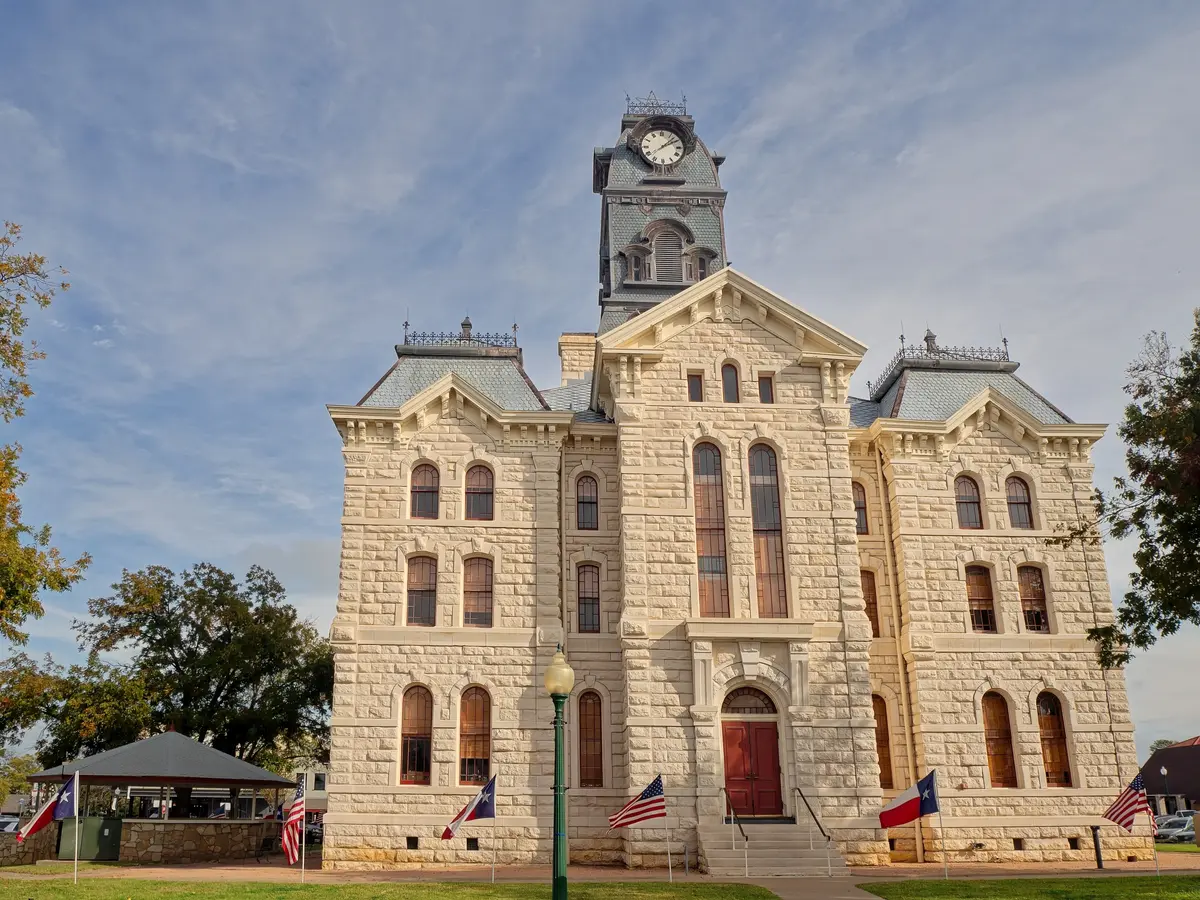
If you're choosing between Waxahachie and a closer-in DFW suburb, the decision usually comes down to one real trade-off: do you want more house and more history for less money, or do you want fewer miles between your driveway and downtown Dallas? Waxahachie sits about 30 miles south of Dallas on I-35E, and that single corridor shapes nearly everything about daily life here — who moves in, what they pay, and how their mornings unfold. At 50,090 residents, it is the county seat of Ellis County and the 76th-largest incorporated city in Texas, but it carries an outsized sense of place: the 1897 Ellis County Courthouse anchors a genuinely intact downtown of Victorian, Queen Anne, and Craftsman architecture that most suburbs of comparable size would pay a consultant a fortune to invent.
The local economy is broader than most bedroom communities this distance from a major metro. Waxahachie Independent School District and the City itself are anchor employers, joined by Ellis County government, a major regional health system, Owens Corning's manufacturing operations, Cardinal IG's glass manufacturing facility, and more recently Fanatics, whose 600,000-square-foot fulfillment facility near the US-287 and I-35E interchange added up to 250 jobs to the local economy. The school district holds a C rating, according to the Texas Education Agency, and on 2024-25 state assessments, 40% of students reached math proficiency and 51% reached reading proficiency; families weighing the district carefully will want to read the full schools breakdown. The city's population has grown nearly 17% since the 2020 Census, and that growth shows up in the master-planned communities spreading north along I-35E as much as it does in the restored bungalows of the historic core.
On price, Waxahachie sits noticeably below nearby Midlothian and roughly in line with Red Oak, making it one of the more accessible entry points into the DFW south corridor — though affordability is relative: the median household income of $85,723 runs below what's needed to carry the typical home here at current rates, so the math bears watching. The full picture on costs — including rent, taxes, and what utilities actually run — lives on the cost of living page. For outdoor life, Getzendaner Park is the city's green anchor, Lake Waxahachie draws anglers and paddlers, and the Scarborough Renaissance Festival — held each spring and drawing crowds from across North Texas — is one of the largest recurring events in Ellis County. The city also claims the official designation of Crape Myrtle Capital of Texas, and the bloom in summer is genuinely striking.
Whether you're being relocated to the area, priced out of closer suburbs, or drawn by a photo of that courthouse on a late-afternoon drive, the sections below break down Waxahachie's neighborhoods, housing market, commute realities, schools, local favorites, and what daily life here is really like.

Waxahachie at a Glance
Looking to buy in Waxahachie? Estimate your payment.
Enter your numbers to see an estimated monthly mortgage payment.
Estimate only. Excludes HOA fees and mortgage insurance. The interest rate above is a starting point, not a quoted rate — replace it with your own to see real numbers. Insurance is a flat placeholder, not a Waxahachie quote.
Why Are People Moving to Waxahachie?
The growth here is real and recent. Nearly 17% population growth since the 2020 Census in a city that already had a functioning downtown, an established school district, and a real employment base is a different story than a greenfield suburb built around a single developer's master plan.
The Price-Per-Square-Foot Calculation
Most people arrive doing the same math: the typical home price in Waxahachie (see cost of living for the full breakdown) is noticeably below Midlothian to the west and lets buyers get into more house — usually more land, too — than they could in the closer-in suburbs of Dallas or Mansfield. That math is driving much of the northern end's new construction boom, where master-planned communities along I-35E and US-77 are filling up with DFW commuters.
More Than a Bedroom Community
Waxahachie has never been a purely pass-through suburb. The school district employs teachers and staff across the city. Owens Corning and Cardinal IG keep a manufacturing workforce here. A major regional health system provides healthcare jobs that don't require a Dallas commute. Fanatics' massive fulfillment facility near the US-287 and I-35E interchange represents the newer face of local employment — logistics and e-commerce infrastructure following the growth.
The result is a city where a meaningful share of residents work within or close to Ellis County. That changes the texture of the place: the lunch spots downtown actually fill up on weekdays, and the school district's events draw a crowd that lives nearby.
The History That Catches People Off Guard
Nobody who drives in for the first time expects the architecture. The Ellis County Courthouse — completed in 1897, ornate in a way that reads more San Antonio than small Texas suburb — anchors a downtown that still has actual bones. The historic residential neighborhoods surrounding it hold Victorian and Craftsman homes that would cost twice as much in Fort Worth's near-south neighborhoods. For buyers who want character with their square footage, this is a genuine differentiator.
The city earned the nickname "The Gingerbread City" and the official designation of Crape Myrtle Capital of Texas for reasons that are visible the moment you drive the older residential streets in summer.
Safety Infrastructure Worth Noting
The Waxahachie Fire-Rescue department holds an ISO Class 1 rating — the top designation issued by the Insurance Services Office — placing it among the best-rated departments in the country. The Waxahachie Police Department earned Texas Law Enforcement Accreditation Program certification for the fourth consecutive year in 2025. For a city this size, those are genuine differentiators that affect homeowners insurance costs and general peace of mind. The safety page covers the specifics on crime rates and how different areas of the city compare.
Who's Actually Moving Here
| Buyer Type | What Draws Them | Best Fit In |
|---|---|---|
| Commuter | I-35E access to Dallas, lower prices than closer suburbs | North Grove, Buffalo Ridge, new construction corridors |
| Families | Established neighborhood feel, local employer base, parks | Garden Valley, Saddlebrook Estates, West End |
| First-Time Buyers | Entry-level price point relative to DFW, historic district character | Indian Hills, Downtown Historic District edges |
| Small-Town Culture Seekers | Intact downtown, festivals, genuine civic identity | Downtown Historic District / Old Town |
| Value Buyers from Pricier Markets | Price gap vs. Midlothian and northern suburbs; more land | West End, newer I-35E-corridor developments |
| Outdoor & Lifestyle Buyers | Lake Waxahachie, trail system, Getzendaner Park, event calendar | Crystal Cove, areas near the lake |
What Daily Life Feels Like in Waxahachie
The Rhythm of the Place
Daily life in Waxahachie moves at a pace that takes people from faster suburbs a few weeks to settle into. The downtown is functional, not just scenic — independent coffee shops, a handful of casual restaurants, and the Ellis County Museum occupy the blocks around the courthouse. Errands that don't require a big-box store are genuinely manageable within the city.
The Waxahachie Farmers Market runs through the warm months and pulls the kind of crowd that comes on foot as much as by car. Getzendaner Park, which anchors the city's recreation system and sits close to downtown, is where families show up on weekend mornings — youth sports, walking paths, picnic pavilions. Lake Waxahachie is the weekend draw for fishing and time on the water.
The Seasonal Calendar
The Crape Myrtle Festival around July 4th — free outdoor concert, fireworks, a parade that starts at Getzendaner Park and winds toward downtown — is the city's signature summer event and draws residents from across the county. The Scarborough Renaissance Festival, held each spring, brings a different crowd entirely: visitors from across North Texas over multiple weekends, which means I-35E traffic heading into the city on those Saturdays is not what most of the year looks like. Newcomers who move in during spring are sometimes caught off guard by the scale of it.
The Texas Country Reporter Festival in October and the Candlelight Tour of Homes in December round out the calendar in ways that feel distinctly local rather than imported from a convention center.
What Surprises People After Six Months
Most newcomers from the northern suburbs say the same thing around month three: they didn't expect to actually use downtown. The assumption coming from Frisco or Allen is that a small city south of Dallas is just a cheaper version of where you already were — but Waxahachie has its own civic identity that doesn't require driving to Dallas to feel like a place. The courthouse square draws people on weekend evenings even when there's no scheduled event.
The other surprise is the commute. The 27.1-minute mean travel time to work reflects everyone — people who work locally and people making the I-35E run north. If you're one of the latter and you're used to a ring-road suburb closer to the city, the directional nature of that commute is worth stress-testing before you commit.
Schools in Daily Life
Waxahachie ISD is a constant presence in community life. Active UIL athletics programs, including Friday night football that fills the stands, are woven into the social fabric. The district holds a C rating, according to the Texas Education Agency; the schools page covers boundary details, individual campuses, and what the assessments actually show.
232 sunny days a year and Texas Heat
Waxahachie gets 232 sunny days a year — that's genuine North Texas sunshine, and it's part of why outdoor life here works. The catch is summer: July and August routinely push over 100 degrees, and the months from May through September reward early-morning outdoor activity and air-conditioned afternoons. People from the Pacific Northwest or the upper Midwest consistently underestimate this. The city's parks and trail network are built for fall and spring use, and that's when they're most rewarding.
The Waxahachie Housing Market Right Now
Where Prices Stand
The typical home in Waxahachie is priced at $371,652 (Zillow Home Value Index, July 2026) — noticeably below Midlothian to the west and roughly in line with Red Oak, while running well above Ennis to the south. That gap against Midlothian is the main reason commuters doing the DFW south-corridor comparison tend to end up here: more square footage, more land, and often a more established neighborhood character, at a lower entry point.
Affordability is real but not unconditional. The median household income here runs below what's typically needed to carry the typical home at current rates — by a meaningful margin — which means buyers stretching to get into this market are genuinely stretching, not just buying conservatively. The cost of living page lays out the full tax and income picture.
What the Market Looks Like Across Neighborhoods
The northern end of the city along I-35E and US-77 has absorbed most of the new construction in recent years — master-planned communities with modern floor plans and amenities that read as classic DFW commuter product. The historic core around the Downtown Historic District and Old Town offers a very different product: Victorian and Craftsman homes that take more maintenance but deliver a sense of place that no new development can replicate.
Some areas run above the city's typical price point, particularly in newer construction, while others offer a more accessible entry for first-time buyers. The neighborhoods page is the right place for that level of detail.
Renting Before Buying
Renting is an increasingly common short-term choice for people relocating here to learn the city before committing to a purchase. The full rent picture — including the city-wide typical figure and how it compares to nearby markets — is on the cost of living page.
The Effective Property Tax Rate
Texas has no state income tax, but property taxes carry more weight here than in most states. Waxahachie's effective property tax rate runs approximately 1.35% — meaningful on any purchase in this range, and worth factoring into a true monthly cost comparison against, say, a California or Colorado baseline. The cost of living page covers the full tax structure.
Waxahachie Neighborhoods
Waxahachie has several distinct areas — each with its own character and appeal. Here’s a breakdown to help you narrow down where to focus your home search.
🏡 North Grove
North Grove sits along the city's growth corridor near I-35E and draws buyers who want newer construction with reasonable access to the freeway. The feel is distinctly suburban — larger lots, newer floor plans, and a neighborhood identity still forming as development continues.
🏠 Downtown Historic District / Old Town
The city's historic core surrounds the 1897 Ellis County Courthouse and offers Victorian, Queen Anne, and Craftsman homes that are rare at this price level in North Texas. It suits buyers who want walkability to coffee shops and restaurants and don't mind the maintenance that comes with older architecture.
🌳 West End
The West End offers established single-family homes in a quieter residential setting away from the I-35E commercial corridor, appealing to buyers who want more space and a lower-key pace than the historic core. The housing stock is a mix of mid-century and more recent construction.
🏘 Garden Valley (Sunrise at Garden Valley)
Garden Valley is one of the more established residential communities in the city, with a mix of housing types and a neighborhood feel that appeals to families with school-age children. Sunrise at Garden Valley represents the newer end of the development here, with more recently built homes and planned community amenities.
🏔 Saddlebrook Estates
Saddlebrook Estates sits right at the city's typical price point, making it a representative sample of what mid-market Waxahachie looks like — single-family homes on modest lots with established streetscaping. It appeals to buyers looking for a move-in-ready suburban option without the premium of newer master-planned communities.
🌆 Buffalo Ridge
Buffalo Ridge is a newer residential area that draws buyers looking for updated construction closer to the I-35E corridor, with a suburban character that suits commuter households. The neighborhood has grown steadily as the northern end of Waxahachie has expanded to accommodate DFW-area population spillover.
Pros & Cons of Living in Waxahachie
The Pros
- Storybook Victorian downtown with a genuinely active historic-preservation scene
- Noticeably more affordable than inner DFW suburbs like Midlothian
- Strong small-town identity with year-round festivals (Gingerbread Trail, Crape Myrtle Festival)
- Growing manufacturing and logistics job base reducing reliance on a Dallas commute
The Cons
- Commute into central Dallas can run 40+ minutes depending on traffic
- Effective property tax rate above the national average
- Rapid population growth is straining schools and roads in some neighborhoods
Getting Around & Commuting in Waxahachie
The Geographic Reality
Waxahachie is a car-dependent city, full stop. I-35E is the primary artery north toward Dallas, with US-287 and US-77 also serving the city and providing connections south and east. If you're commuting to Dallas, you're on I-35E — and that freeway is not a commuter's best friend during peak hours in either direction.
The drive clocks in at about 40 minutes to Dallas under reasonable conditions. That number can stretch significantly during morning peak hours heading north, particularly between Waxahachie and the Duncanville/DeSoto stretch where I-35E begins consolidating traffic from multiple south-corridor communities. People who make this commute consistently recommend leaving before 7 a.m. or after 8:30 a.m. if the job allows flexibility.
The Commute Numbers
| Commute Detail | Figure |
|---|---|
| Mean travel time to work (all residents) | 27.1 minutes |
| Drive alone to work | ~82% of workers |
| Carpool to work | ~8% of workers |
| Drive to Dallas | About 40 minutes |
| Nearest major airport | Dallas Love Field (DAL), approximately 32 miles |
| Primary highway north | I-35E |
| Additional routes serving city | US-287, US-287 Bus, US-77 |
That 27.1-minute mean reflects the full local workforce — including people who work within Waxahachie itself — so the Dallas-commuter experience runs longer than the average suggests.
Local Employment Changes the Math
Not everyone here is commuting north. The school district, city government, Ellis County offices, a major regional health system, Owens Corning, Cardinal IG, and Fanatics' fulfillment operation collectively account for a local workforce that keeps many residents' commutes genuinely short. If you're evaluating a job that's already in Waxahachie or in the southern Ellis County area, the transportation picture looks substantially different than if you're riding I-35E to downtown Dallas every day.
What Locals Know About the Drive
The I-35E corridor gets its worst between Waxahachie and the county line, especially when incidents stack near the US-287 interchange. Residents who've worked out their timing tend to stay off the freeway during the worst windows and use US-77 as a pressure valve for shorter trips within the corridor — but US-77 is a surface road with traffic signals, not an express route.
The nearest DART Park & Ride connection is roughly 20 to 22 minutes away in a neighboring community, which means a genuine transit-connected commute requires driving partway first — manageable but not the seamless park-and-ride experience some newcomers from transit-heavy metro areas expect.
Flying In and Out
Dallas Love Field is approximately 32 miles away, making it the city's most practical airport for frequent flyers. Dallas/Fort Worth International Airport is farther in distance but comparable or shorter in travel time depending on traffic patterns and which terminal you're heading to.
Schools in Waxahachie
Families relocating to Waxahachie have public, private, and higher-education options nearby. Here’s a quick overview.
🎓 School District
Waxahachie Independent School District serves K–12 students across Waxahachie and the surrounding area. Rated C (source: Texas Education Agency, 2025 A-F accountability rating (2024-25 school year)).
🏆 Graduation Rate
The 4-year high-school graduation rate here is approximately 96.4%.
📚 Higher Education
Texas’s public universities — the University of Texas at Austin, Texas A&M University, and the University of Houston — offer four-year degrees statewide, with one of the largest community college systems in the country (50+ public community college districts) providing two-year and workforce programs.
🌐 Online Learning
UT Austin Online and Texas A&M University Online offer fully accredited online degrees for remote learners across the state.
Safety in Waxahachie
A quick look at how Waxahachie compares on the numbers that matter most when weighing a neighborhood or a move.
🛡 Violent Crime
Approximately 2.2 per 1,000 residents.
🔒 Property Crime
Approximately 16 per 1,000 residents.
Compared to the most recent national figures from the Bureau of Justice Statistics (2024), Waxahachie’s violent crime is below the national average (about 3.7 per 1,000), and property crime is below the national average (about 18.4 per 1,000).
Against Texas as a whole, Waxahachie’s violent crime is roughly half the state average, and property crime is somewhat below the state average (Bureau of Justice Statistics, Crime Known to Law Enforcement, 2024 (tables 2 and 3)).
Crime rates can vary a lot within a single city, so the citywide numbers above are only a starting point. Some neighborhoods in Waxahachie run well below these averages, while others run higher — the kind of block-by-block detail that matters most when you’re actually choosing where to live. The full guide below breaks it down neighborhood by neighborhood.
Working in Waxahachie
Waxahachie’s largest employers span several industries — here are some of the anchors of the local job market.
🎓 Waxahachie Independent School District
Education
🏛 City of Waxahachie
Municipal government
🏛 Ellis County
County government
🏥 Baylor Scott & White Medical Center – Waxahachie
Healthcare
🏭 Owens Corning
Manufacturing
🏭 Cardinal IG
Glass manufacturing
Parks & Recreation in Waxahachie
Some of the outdoor spaces that shape everyday life in Waxahachie.
🌱 Getzendaner Park
Waxahachie residents don’t have to go far for green space — spots like Getzendaner Park are part of everyday life here, whether that’s a morning walk, a weekend hike, or just somewhere to unwind outside. The full guide below covers more of what Waxahachie has to offer for parks and outdoor recreation.
Retiring in Waxahachie
Waxahachie draws retirees for its balance of amenities, outdoor access, and cost. Here’s what to weigh.
🌤 Climate
Waxahachie gets 232 sunny days a year — genuine North Texas warmth that retirees from colder climates tend to appreciate immediately. Winters are mild with only occasional freezes, though summers are legitimately hot, with July and August regularly exceeding 100 degrees. The most comfortable outdoor months are October through May, and the spring bloom of crape myrtles is a real seasonal highlight.
🍴 Lifestyle
The historic downtown provides a walkable core with independent coffee shops, casual restaurants, and the Ellis County Museum housed in the 1889 Masonic Temple. The annual festival calendar — Crape Myrtle, Texas Country Reporter, Candlelight Tour of Homes — gives the city a civic rhythm that keeps residents engaged year-round. Getzendaner Park and Lake Waxahachie round out a lifestyle that works well for retirees who want outdoor access without mountain terrain.
🏚 55+ Communities
No 55+ communities were found in Waxahachie. Retirees tend to settle in the city's established single-family neighborhoods, particularly around the historic core and in the quieter residential areas to the west. For more detail on retiring here, see the retiring in Waxahachie page.
✈ Getting Around
Most daily tasks in Waxahachie require a car, and most errands mean a drive. The historic downtown is manageable on foot once you're parked. Dallas Love Field is approximately 32 miles away, making it accessible for retirees who travel frequently. The effective property tax rate of approximately 1.35% and Texas's lack of a state income tax are both relevant to retirement budget planning.
🏛 Texas Taxes for Retirees — What to Know
- No state income tax — Texas has no personal income tax — constitutionally protected under Article VIII, Section 24. Social Security, pensions, 401(k)/IRA withdrawals, and annuity payments are all untaxed at the state level, with no state return to file.
- Sales tax is the tradeoff — The state sales tax is 6.25%, and local add-ons bring the combined rate in Waxahachie to 8.25% (Texas Comptroller of Public Accounts, city sales and use tax rates, July 2026). Groceries and prescription drugs are exempt.
- Property taxes — the real tradeoff — Texas’s effective property tax rate averages about 1.40%, among the highest in the country, since property tax (not income tax) funds most local government and schools.
- Over-65 homestead exemption and school-tax freeze — Homeowners 65+ (or disabled) get an additional $60,000 exemption from their home’s value for school district taxes, on top of the general homestead exemption — $200,000 off school taxable value combined, following November 2025’s Proposition 11 (SB 23), which raised the over-65 exemption to $60,000, and Proposition 13 (SB 4), which raised the general homestead exemption to $140,000. Once claimed, your school district tax bill is frozen at that year’s amount and cannot increase as home values rise, and the ceiling can transfer if you move to a new home within Texas.
- Deferral option if cash is tight — Homeowners 65+ can defer property tax payment entirely for as long as they live in the home, rather than paying it currently — interest accrues, but no forced sale.
- No estate or inheritance tax — Texas has no estate tax, no inheritance tax, and no gift tax.
- No separate capital gains tax — Because Texas has no state income tax, capital gains — including on investments and home sales — are not taxed at the state level at all, unlike states such as Washington that tax capital gains separately from income.
Tax laws change frequently and individual situations vary. This is general information, not tax advice — always consult a qualified Texas tax professional or CPA for personalized retirement tax planning.
Weekends & Local Favorites in Waxahachie
The Events Calendar
The Scarborough Renaissance Festival is Waxahachie's most widely known event outside the immediate region — held each spring, drawing visitors from across North Texas for weeks on end. If you live here, you learn to either lean into it or schedule your spring weekend drives accordingly. It's genuinely fun and unmistakably local.
The Crape Myrtle Festival around July 4th is the city's own internal celebration: a free outdoor concert, fireworks, and a parade that winds from Getzendaner Park into downtown. It's the kind of event that runs on civic pride and has done so for years. The Texas Country Reporter Festival in October brings another set of visitors, and the Candlelight Tour of Homes in December showcases the historic architecture that gives the city its character.
Outdoor Life
Getzendaner Park is the city's recreational anchor — youth sports, walking paths, open green space, and the starting and ending point for the annual parade. Lake Waxahachie draws anglers and kayakers and provides the kind of unhurried weekend that's hard to find closer to the metro. The city also has the 1889 truss bridge hike and bike trail, which pairs outdoor activity with one of the more distinctive pieces of local infrastructure still standing.
A planned regional trail connecting Getzendaner Park to FM 875 — a roughly 2.3-mile shared-use path that would eventually link to a broader Waxahachie-to-Midlothian corridor — was in public-input and environmental review as of late 2026. The decision to fund the project had been made; construction timelines were still being worked out.
Coffee and the Morning Routine
The local coffee scene punches above its weight for a city this size. Fresh Market Coffee, Three Rivers Coffee Co, Peaberry Coffee, VITA COFFEE HOUSE, and Bloom & Pour each have their own character — some oriented toward the morning commuter crowd, others functioning more as neighborhood gathering spots. Residents who've relocated from larger metros consistently mention the coffee options as a pleasant surprise; it's not Austin, but it's genuinely more than a gas station and a chain.
Food and Drink
Campuzano's Fine Mexican Food is one of those places that locals treat as a given — the kind of spot visitors discover and residents take for granted until they move away. Cajun Bros fills a genuinely different lane, and Tuscan Slice handles the casual-Italian end of the dinner question. Rockett Cafe & Club and College Street Pub are where the social end of the evening tends to land — low-key, local, and the kind of places where you recognize faces after a few months of living here.
The Waxahachie Farmers Market fills a weekend-morning slot that has become a genuine community gathering point, with local produce and a crowd that includes longtime residents and newer arrivals in roughly equal measure.
What There Isn't
Waxahachie doesn't have the restaurant density of a larger suburb, and a serious shopping run means driving out of town. The dining scene is limited enough that residents who eat out several nights a week tend to rotate through the same handful of places fairly quickly. That's the honest version: it's a real small city with real small-city limits on nightlife and retail variety, and people who need those things in abundance tend to move on within a year or two.
Local favorites in Waxahachie
Restaurants
- Campuzano's Fine Mexican Food
- Cajun Bros
- Tuscan Slice
- Rockett Cafe & Club
- College Street Pub
Outdoors
- Getzendaner Park
- Lake Waxahachie
Coffee
- Fresh Market Coffee
- Three Rivers Coffee Co
- Peaberry Coffee
- VITA COFFEE HOUSE
- Bloom & Pour
Farmers Markets
- Waxahachie Farmers Market
Top Things Locals Say About Waxahachie
The best intel about a city comes from the people who actually live there. Here’s what Waxahachie residents say when newcomers ask the questions everyone’s thinking.
“I expected to feel like I was sacrificing things by moving this far south — and in some ways the commute is exactly as real as everyone warned me. What I didn't expect was how much I'd actually use the city itself. The courthouse square, the coffee shops, the summer festival — I spend more time downtown than I ever did in the suburb I moved from.”
— Recent Waxahachie home buyer
“What's the most surprising thing about living in Waxahachie?”
The downtown is genuinely alive in a way that's unusual for a city this size and this distance from Dallas. The Ellis County Courthouse area isn't just a historic district on a tourism brochure — people actually go there on weekday lunch breaks and weekend evenings. After six months here, most newcomers from the northern suburbs say they didn't expect to feel like they were living somewhere with a real sense of place rather than just a cheaper version of a closer suburb.
“What do locals love most about Waxahachie?”
The combination of real architecture, a functioning downtown, and a price point that makes home ownership genuinely possible. The Crape Myrtle Festival is a point of pride — the kind of community event that brings out residents who've been here thirty years and residents who moved in last summer, and somehow both groups feel at home. Getzendaner Park and Lake Waxahachie give the outdoors-oriented crowd enough to work with without driving north.
“What should newcomers to Waxahachie know?”
The I-35E commute is real and directional — northbound in the morning, southbound in the evening, and it is long on the days when something goes wrong between Waxahachie and the county line. Build in buffer time or flex your hours if the job allows it. Also: the Scarborough Renaissance Festival in spring means elevated traffic into the city on multiple weekends in a row. Plan around it or embrace it, but don't be surprised by it your first spring here.
“How much do you need a car in Waxahachie?”
A car is essential for virtually everything outside a tight radius of the historic downtown. The downtown core is walkable once you're in it — coffee, a few restaurants, the courthouse, the museum — but grocery runs, most retail, and any trip beyond that core requires driving. Most errands mean a drive, and a serious shopping trip means leaving the city. If you're relocating from a transit-served neighborhood, budget for two cars and factor in the gas.
Cities Near Waxahachie
Other communities near Waxahachie worth a look — each with its own character and price point.
| City | Distance | Best For | Vibe | Median Rent | Median Buy |
|---|---|---|---|---|---|
| Midlothian | 12 mi | Families seeking newer construction | Growing, amenity-rich, suburban | $2,052 | $456,509 |
| Red Oak | 10 mi | Commuters wanting DFW proximity | Compact, affordable, straightforward | $1,600 | $375,000 |
| Ennis | 15 mi | Value buyers, small-town feel | Slower-paced, historic, rural edge | $1,622 | $264,703 |
More Helpful Guides for Waxahachie
Going deeper on Waxahachie? Our blog series covers everything from first-time buying to retiring here — explore the guides below.
Local Expert Takeaway: Waxahachie is the rare DFW suburb where the history is real, the downtown is functional, and the price relative to Midlothian still makes structural sense for buyers who can absorb the I-35E commute. The courthouse square, the Crape Myrtle Festival, Getzendaner Park, and the coffee shops that line the historic core give the city genuine texture — but the 40-minute drive to Dallas is non-negotiable, and the school district's C rating from the Texas Education Agency is a real consideration for families who were counting on strong test scores as part of the package.
Quick Takeaways & FAQs
✅ The ornate 1897 Ellis County Courthouse anchors a genuinely intact historic downtown — one of the most distinctive in any DFW suburb at this price point.
⚠️ The drive to Dallas runs about 40 minutes under good conditions and meaningfully longer during peak morning hours on I-35E, which is the main trade-off for the lower home prices.
📍 Waxahachie holds the official designation 'Crape Myrtle Capital of Texas,' and the spring Scarborough Renaissance Festival draws visitors from across North Texas every year.
How far is Waxahachie from Dallas?
Is Waxahachie a good place to raise a family?
What is the typical home price in Waxahachie?
What is there to do in Waxahachie on weekends?
Is Waxahachie safe?
Helpful Links for Moving to Waxahachie
Moving to Texas?
Tell us what you need help with and we'll connect you with local resources.
