
What Is Living in Midlothian, Texas Like?
You've probably done the math on several DFW suburbs by now — square footage, school ratings, drive times. Midlothian checks real boxes: a Midlothian Independent School District that holds a B rating, according to the Texas Education Agency, a median household income of $126,641, and home prices that still trail what you'd pay closer to the urban core. What the spreadsheet won't tell you is that this city has nearly doubled in population since 2010 and is growing at roughly 4.61% annually — which means the quiet suburban feel that drew the first wave of buyers is actively competing with cranes, new subdivisions, and a downtown that's being intentionally rebuilt from the ground up. That tension between small-town character and rapid growth is the central reality of buying here right now.
Midlothian sits in Ellis County, about 40 minutes to Dallas — close enough to commute, far enough to feel genuinely removed from the metro's density. The economic backbone here is more industrial than most DFW suburbs acknowledge: Gerdau operates a major steel manufacturing facility, and Amrize and Martin Marietta Materials both run cement operations. The Midlothian Independent School District, with 11,559 students enrolled in 2025-26, is one of the city's largest employers. That industrial and institutional base gives Midlothian a stability that bedroom-community suburbs sometimes lack — the city isn't dependent on a single tech campus or retail corridor. A Texas State Technical College campus is also coming after TSTC purchased land here, which will expand workforce training options locally.
On the housing side, the typical home price sits at $456,509 (Zillow Home Value Index, July 2026) — noticeably below what you'd pay in Mansfield and well above what Waxahachie or Cedar Hill would run you. The effective property tax rate is approximately 1.35%, which is relevant math in a state with no income tax. Day-to-day life leans heavily car-dependent; most errands and every grocery run requires a drive. But the city operates 15 public parks, and Mockingbird Nature Park — a 60-acre preserve with a boardwalk, butterfly garden, and pond — gives the area something genuinely worth showing out-of-town guests. For a fuller breakdown of what things cost here, the cost of living page has the complete picture.
Whether you're comparing Midlothian against the rest of the southern DFW market or trying to figure out which neighborhood fits your life, the sections below break down the local economy, housing market, commute patterns, neighborhood feel, and what weekends here actually look like.

Midlothian at a Glance
Looking to buy in Midlothian? Estimate your payment.
Enter your numbers to see an estimated monthly mortgage payment.
Estimate only. Excludes HOA fees and mortgage insurance. The interest rate above is a starting point, not a quoted rate — replace it with your own to see real numbers. Insurance is a flat placeholder, not a Midlothian quote.
Why Are People Moving to Midlothian?
The short answer: more house, less traffic, and a school district that's easier to trust than the ones in some faster-growing suburbs. The longer answer involves a city that's investing deliberately in its own future — not just approving subdivisions and hoping retail follows.
The Industrial Foundation Nobody Talks About
Most buyers arrive thinking of Midlothian as a commuter suburb. It is that, but it's also a working industrial city. Gerdau's steel manufacturing operation and the cement production facilities run by Amrize and Martin Marietta Materials have anchored the local tax base for decades. Gerdau is actively expanding, with a new 35,000-square-foot finishing facility that will manufacture structural posts for large solar projects nationally. That kind of manufacturing investment means local employment diversity that pure bedroom communities don't have.
The City of Midlothian itself is a significant employer, as is the school district. A major regional health system now has a full hospital inside city limits — the first community hospital Midlothian has had — which matters both for employment and for the quality-of-life calculus that retirees and families run when choosing a place to put down roots.
Who's Actually Moving Here
The profile is consistent: families with school-age children who've been priced out of closer-in suburbs like Mansfield, professionals who work remotely or can tolerate a longer commute for significantly more space, and a smaller but growing wave of people relocating from higher-cost states who find Ellis County's combination of income and home price ratios more workable than what they left behind. For those moving from California specifically, the California comparison page goes into detail on what the lifestyle and financial tradeoffs actually look like.
A City With a Plan — Literally
In October 2024, Midlothian adopted a comprehensive long-range plan called Guiding Our Future – Midlothian 2045. That kind of formal planning document signals something real: city leadership is thinking about growth management, infrastructure sequencing, and land use — not just approving whatever gets proposed. The downtown redevelopment effort underscores this. A new City Hall and library are completed and serving as a downtown anchor. The former City Hall site was converted into Heritage Park as part of the Downtown Catalyst Projects — a decision made as part of that same planning push. These aren't cosmetic improvements; they're the early infrastructure of a walkable core that the city is building from scratch.
For parents, the district's active UIL athletics programs — including a Friday night football culture that fills the stands — and the broader school community are a genuine draw. The schools page covers the district's performance and individual campuses in depth.
What Daily Life Feels Like in Midlothian
The Car Is Not Optional
Be direct with yourself about this before you move: Midlothian is a car-dependent city. Most errands mean a drive, full stop. The upside is that the drives are generally short and uncongested within the city itself — getting across town rarely takes more than ten minutes. The downside hits when you need something the local commercial base doesn't yet carry, and a serious shopping trip means driving out of town.
Where Community Actually Happens
The city's Parks and Recreation department runs 21 free special events annually — concerts, summer Movies in the Park, a Kids Fishing Derby. These aren't afterthoughts; they're genuinely where families show up and where newcomers start to feel like they live somewhere rather than just sleep there. Hawkins Spring Park is a local gathering point, and the Harvest Market gives the community a weekly rhythm during the season it runs.
The Midlothian Conference Center — a 39,000-square-foot facility that can host over 1,000 people — handles the larger civic and community events that smaller suburbs have to outsource to neighboring cities. The Midlothian Historical Society Museum is a small but real anchor for the people who want to understand what this place was before the new subdivisions arrived.
Summers Are Serious
The climate here is humid subtropical: summers in the 90s °F, winters in the mid-50s to low 60s. Midlothian gets 230 sunny days a year, which sounds appealing until late July. North Texas severe thunderstorm and tornado season is real — not hypothetical — and newcomers from drier or more temperate climates consistently say the spring storm intensity surprised them. The social rhythm of the city adjusts accordingly: outdoor events front-load into spring and shift back to fall, and summer weekends push toward indoor options or early morning activity.
The Honest Trade-Off
Six months in, most newcomers land on the same observation: the city feels like it's a few years behind where it's going. The bones of a genuine community are here — good parks, an improving downtown, a school district that functions — but the restaurant and retail density that makes suburban life feel complete hasn't fully caught up to the population growth. That gap is closing, but if you're moving from a suburb with a developed main street and a dozen dining options within two miles, the adjustment period is real.
The safety picture is one of Midlothian's clearer strengths. The city reports a violent crime rate of 1.18 per 1,000 residents and a property crime rate of 9.43 per 1,000 residents — both well below state figures and below national figures as well. The safety page has the full breakdown.
The Midlothian Housing Market Right Now
The typical home price in Midlothian is $456,509 (Zillow Home Value Index, July 2026). That figure puts the city in interesting territory: affordable enough to attract buyers who've been squeezed out of closer-in DFW suburbs, expensive enough that the median household income here sits just below what's needed to carry the typical home comfortably. It's not a distressed market — it's a growth market where prices have moved with the population.
Typical rent runs $2,052 per month (Zillow ZORI, July 2026), which reflects the relative scarcity of purpose-built rental inventory in a city that has grown primarily through single-family development. Most of what's available to rent is single-family homes, not apartment complexes, which shapes both the supply and the price floor.
What the Market Looks Like on the Ground
New construction is active throughout the city, and several neighborhoods reflect that — ranging from established areas with mature landscaping and larger lots to newer subdivisions where the streets still look freshly poured. Some areas run above the city-wide median; others come in below it. The full neighborhood breakdown, including which areas price above or below that figure, lives on the neighborhoods page.
The effective property tax rate of approximately 1.35% is the number to model carefully. In a state with no income tax, property taxes do the heavy lifting, and on a home at the typical price point, that rate is a meaningful line in any budget. Well-priced homes in this market tend not to sit — buyers who've done their homework come in prepared, and the competition on move-in-ready inventory is real.
For first-time buyers navigating what to expect from the process in this market, the first-time homebuyer page covers the key steps specific to Texas and Ellis County.
Midlothian Neighborhoods
Midlothian has several distinct areas — each with its own character and appeal. Here’s a breakdown to help you narrow down where to focus your home search.
🏡 Villages of Walnut Grove
A master-planned community with newer construction and a family-oriented feel, Villages of Walnut Grove suits buyers looking for consistency in housing quality and neighborhood amenities. The area has the look and rhythm of a community that grew intentionally rather than incrementally.
🏠 Shiloh Forest
Shiloh Forest runs above the city-wide typical home price, reflecting larger lots and more established landscaping than some of Midlothian's newer developments. It tends to attract buyers who want more space and a slightly more settled neighborhood character.
🌳 Lawson Farms
Lawson Farms prices at the city median, making it a representative entry point for buyers who want a Midlothian address without reaching into the upper tier. The neighborhood has a balanced mix of housing sizes and a community feel that appeals to families in the middle of the market.
🏘 Stonewood Ranch
Stonewood Ranch is a newer residential community with the wide streets and open lots typical of Ellis County development at this scale. It suits buyers who prioritize new construction and a clean suburban aesthetic.
🏔 MidTowne
MidTowne positions buyers closest to downtown Midlothian's ongoing redevelopment — the new City Hall, library, and Heritage Park project are all nearby. For buyers who want to be connected to the city's civic core as it takes shape, this is the neighborhood to watch.
🌆 Ridgeview
Ridgeview comes in below the city-wide median, offering a more accessible entry point into Midlothian's market. The neighborhood suits first-time buyers and those who want the school district and safety profile without stretching to the upper end of the price range.
Pros & Cons of Living in Midlothian
The Pros
- Strong industrial tax base (steel and cement plants) helps fund city services
- Top-rated Midlothian ISD schools with a Niche A- grade
- Small-town, community-oriented feel with lots of new-home construction
- Growing local economy diversifying into distribution and data centers
The Cons
- Longer commute to Dallas/Fort Worth job centers with mean travel times over 30 minutes
- Legacy cement and steel operations create visible industrial presence in parts of town
- Rapid population growth is straining roads and local infrastructure
Getting Around & Commuting in Midlothian
The Highway Reality
Two US highways define almost every commute out of Midlothian. One carries traffic toward Dallas and connects to the metro's broader highway network. The other runs toward the Fort Worth side of the metroplex, which matters for residents whose jobs pull them west rather than north. Local roads and spurs handle traffic within the city itself. The core commute fact: about 40 minutes to Dallas under normal conditions, though that number grows with traffic and with where in Dallas you're actually headed.
Who the Commute Works For
The drive to Dallas is workable for most people three or four days a week — and that's increasingly how many Midlothian residents structure it. Full-time, five-day office commuters to downtown Dallas are the ones who feel it most, especially in the morning peak. For Fort Worth, Arlington, or Grand Prairie destinations, the commute is often shorter and less congested. Remote workers and hybrid schedules have genuinely changed the calculus here; a lot of people who would have passed on Midlothian five years ago are now buying here because the commute math only has to work two or three times a week.
Industrial Traffic
One thing newcomers don't expect: heavy truck traffic. The steel and cement operations that anchor the local economy also put large commercial vehicles on the main commute routes regularly. The timing and routing of that traffic is something worth observing on a weekday before you decide which part of the city to buy in. It doesn't define everyday life for most residents, but it's a real and specific feature of this city that distinguishes it from purely residential suburbs.
Airport Access
Dallas Love Field is the nearest major airport at approximately 30 miles. For frequent flyers, that's a usable drive — not daily, but not punishing for monthly business travel either. The broader DFW Metroplex airport network is also reachable, typically in under an hour outside peak traffic.
| Destination | Typical Commute | Best For |
|---|---|---|
| Dallas (general) | About 40 minutes | Commuters |
| Fort Worth | Roughly 35–45 minutes | Commuters |
| Arlington | Roughly 30–40 minutes | Commuters |
| Waxahachie | Under 20 minutes | Value Seekers |
| Dallas Love Field | Approximately 30 miles | Frequent Flyers |
| Within Midlothian | Under 10 minutes | Families |
Most households in Midlothian run two vehicles, and daily movement throughout the city and the metro is built around driving.
Schools in Midlothian
Families relocating to Midlothian have public, private, and higher-education options nearby. Here’s a quick overview.
🎓 School District
Midlothian Independent School District serves K–12 students across Midlothian and the surrounding area. Rated B (source: Texas Education Agency, 2025 A-F accountability rating (2024-25 school year)).
🏆 Graduation Rate
The 4-year high-school graduation rate here is approximately 96.5%.
📚 Higher Education
Texas’s public universities — the University of Texas at Austin, Texas A&M University, and the University of Houston — offer four-year degrees statewide, with one of the largest community college systems in the country (50+ public community college districts) providing two-year and workforce programs.
🌐 Online Learning
UT Austin Online and Texas A&M University Online offer fully accredited online degrees for remote learners across the state.
Safety in Midlothian
A quick look at how Midlothian compares on the numbers that matter most when weighing a neighborhood or a move.
🛡 Violent Crime
Approximately 1.18 per 1,000 residents.
🔒 Property Crime
Approximately 9.43 per 1,000 residents.
Compared to the most recent national figures from the Bureau of Justice Statistics (2024), Midlothian’s violent crime is below the national average (about 3.7 per 1,000), and property crime is below the national average (about 18.4 per 1,000).
Against Texas as a whole, Midlothian’s violent crime is roughly a quarter of the state average, and property crime is roughly half the state average (Bureau of Justice Statistics, Crime Known to Law Enforcement, 2024 (tables 2 and 3)).
Crime rates can vary a lot within a single city, so the citywide numbers above are only a starting point. Some neighborhoods in Midlothian run well below these averages, while others run higher — the kind of block-by-block detail that matters most when you’re actually choosing where to live. The full guide below breaks it down neighborhood by neighborhood.
Working in Midlothian
Midlothian’s largest employers span several industries — here are some of the anchors of the local job market.
🎓 Midlothian Independent School District
Education
🏛 City of Midlothian
Municipal government
🏭 Gerdau
Steel manufacturing
🏭 Amrize
Cement manufacturing
🏭 Martin Marietta Materials
Cement manufacturing
🏥 Texas Health Resources
Healthcare, located in Arlington
Parks & Recreation in Midlothian
Some of the outdoor spaces that shape everyday life in Midlothian.
🌱 Mockingbird Nature Park
🌱 Hawkins Spring Park
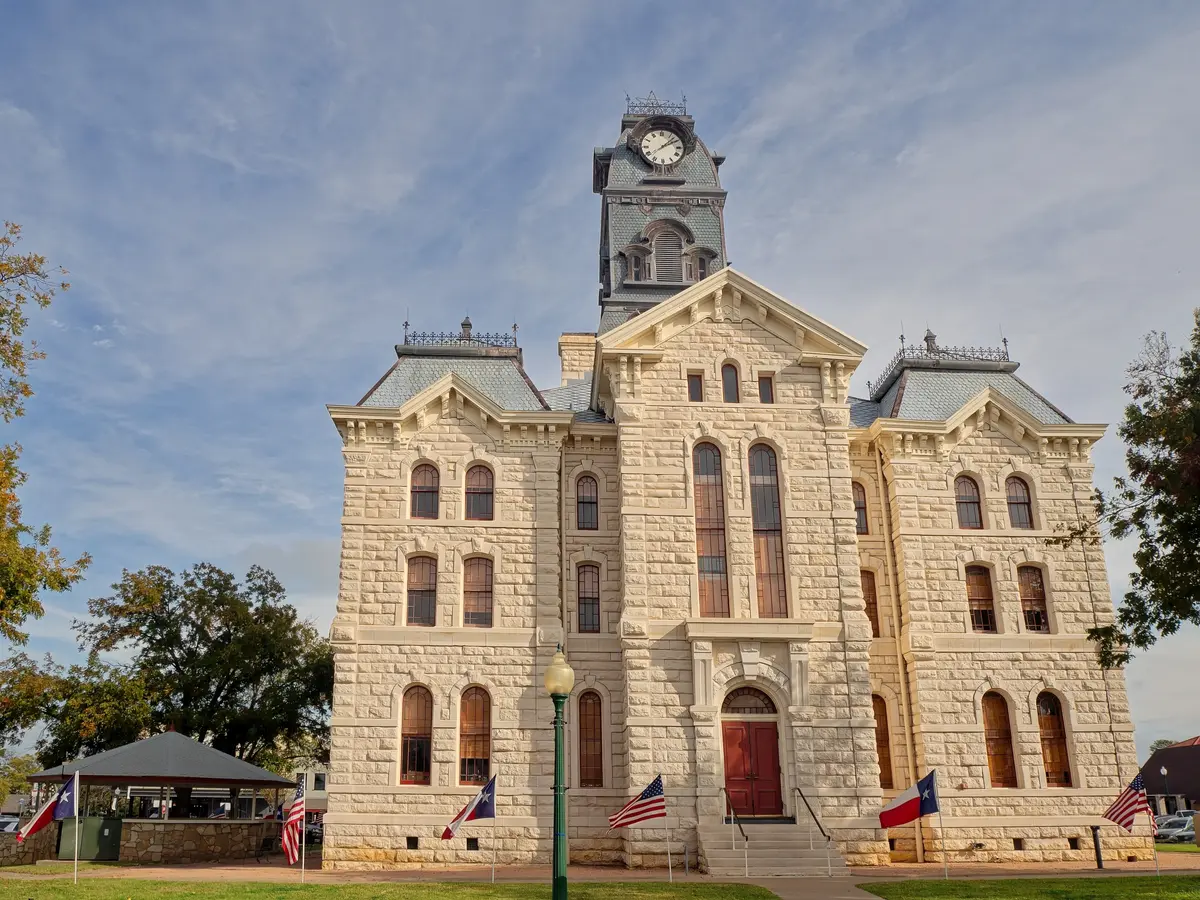
Midlothian residents don’t have to go far for green space — spots like Mockingbird Nature Park and Hawkins Spring Park are part of everyday life here, whether that’s a morning walk, a weekend hike, or just somewhere to unwind outside. The full guide below covers more of what Midlothian has to offer for parks and outdoor recreation.
Retiring in Midlothian
Midlothian draws retirees for its balance of amenities, outdoor access, and cost. Here’s what to weigh.
🌤 Climate
Midlothian offers 230 sunny days a year, with mild winters in the mid-50s to low 60s that suit outdoor activity from late fall through early spring. Summers in the 90s are real and extended, and the North Texas severe thunderstorm season requires respect — a storm shelter or interior safe room is worth considering in any home purchase. Spring and fall are genuinely excellent.
🍴 Lifestyle
The city's 15 parks, free community events, and a growing independent dining and café scene give retirees a livable daily rhythm. The Midlothian Conference Center handles larger community gatherings, and the Midlothian Historical Society Museum anchors the city's civic identity. For more extensive cultural programming, Dallas is about 40 minutes away. More detail on healthcare, senior services, and the retirement picture lives on the retiring page.
🏚 55+ Communities
Symphony Series at Redden Farms is the dedicated 55+ community in Midlothian. It's a newer development reflecting the city's broader growth, and it draws buyers who want the Ellis County lifestyle with age-restricted community structure. A major regional health system now operates a full community hospital inside city limits, which matters meaningfully for retirees evaluating healthcare proximity.
✈ Getting Around
Daily movement in Midlothian is built around driving — most destinations require a car, and most households run two vehicles as a result. Within the city, getting across town is quick and relatively uncongested. Dallas Love Field is the nearest major airport at approximately 30 miles, a reasonable distance for retirees who travel periodically.
🏛 Texas Taxes for Retirees — What to Know
- No state income tax — Texas has no personal income tax — constitutionally protected under Article VIII, Section 24. Social Security, pensions, 401(k)/IRA withdrawals, and annuity payments are all untaxed at the state level, with no state return to file.
- Sales tax is the tradeoff — The state sales tax is 6.25%, and local add-ons bring the combined rate in Midlothian to 8.25% (Texas Comptroller of Public Accounts, city sales and use tax rates, July 2026). Groceries and prescription drugs are exempt.
- Property taxes — the real tradeoff — Texas’s effective property tax rate averages about 1.40%, among the highest in the country, since property tax (not income tax) funds most local government and schools.
- Over-65 homestead exemption and school-tax freeze — Homeowners 65+ (or disabled) get an additional $60,000 exemption from their home’s value for school district taxes, on top of the general homestead exemption — $200,000 off school taxable value combined, following November 2025’s Proposition 11 (SB 23), which raised the over-65 exemption to $60,000, and Proposition 13 (SB 4), which raised the general homestead exemption to $140,000. Once claimed, your school district tax bill is frozen at that year’s amount and cannot increase as home values rise, and the ceiling can transfer if you move to a new home within Texas.
- Deferral option if cash is tight — Homeowners 65+ can defer property tax payment entirely for as long as they live in the home, rather than paying it currently — interest accrues, but no forced sale.
- No estate or inheritance tax — Texas has no estate tax, no inheritance tax, and no gift tax.
- No separate capital gains tax — Because Texas has no state income tax, capital gains — including on investments and home sales — are not taxed at the state level at all, unlike states such as Washington that tax capital gains separately from income.
Tax laws change frequently and individual situations vary. This is general information, not tax advice — always consult a qualified Texas tax professional or CPA for personalized retirement tax planning.
Weekends & Local Favorites in Midlothian
The Outdoor Core
Mockingbird Nature Park is the standout. At 60 acres, it's large enough to feel like a real nature experience rather than a municipal greenway — the boardwalk, butterfly garden, pond, and native grass areas are maintained in partnership with the Indian Trail Chapter of the Texas Master Naturalists, and NaviLens markers make it accessible in ways most suburban parks aren't. Hawkins Spring Park rounds out the outdoor options for a casual afternoon.
The city's 15 public parks and the Parks and Recreation event calendar — including Movies in the Park and a summer concert series — mean there's a legitimate community rhythm here that doesn't require driving to a neighboring city to participate in.
The Food and Coffee Scene
Midlothian's dining and café options have grown with the population, and the local independents are worth knowing. For coffee, Roasted Beeanery Coffee Bar, Moravian Coffee, Daylight Donuts Midlothian, and SOCO Coffee give the city a real morning culture. On the dining side, Bellucci's Italian and Villa Italiana anchor the Italian category; Union 28 covers the upscale casual end; Veracruz Cafe - Midlothian TX handles Mexican; and Eggsquisite Cafe - Midlothian is the go-to for breakfast and brunch. The Harvest Market brings a farmers market rhythm to the community during its season.
The honest assessment: the dining density isn't what you'd find in a more established suburb. But the independents that are here are well-regarded locally, and the growth trajectory suggests more is coming. Residents who want a wide variety of cuisines within a few miles still drive toward the metro for that.
Civic and Community Life
The Midlothian Conference Center handles the city's larger community events — weddings, civic gatherings, the kind of programming that gives a growing city a sense of occasion. The Midlothian Historical Society Museum is a smaller but genuine anchor for anyone who wants to understand the city's roots in agriculture and industry before the current growth wave arrived. Friday night football is a real community event here — the stadium fills, and it functions the way high school sports still function in Texas towns that haven't been fully absorbed into metro anonymity.
Day Trips and Regional Access
One of Midlothian's underrated advantages is its position. The entertainment, dining, and cultural density of the broader DFW Metroplex is about 40 minutes north — accessible for a deliberate evening out without being part of daily life. Waxahachie, just south, offers a genuinely historic downtown that Midlothian doesn't yet have, and it's a quick drive for anyone who wants that texture on a Saturday afternoon.
Local favorites in Midlothian
Restaurants
- Bellucci's Italian
- Union 28
- Villa Italiana
- Veracruz Cafe - Midlothian TX
- Eggsquisite Cafe - Midlothian
Outdoors
- Mockingbird Nature Park
- Hawkins Spring Park
Coffee
- Roasted Beeanery Coffee Bar
- Moravian Coffee
- Daylight Donuts Midlothian
- SOCO Coffee
Farmers Markets
- Harvest Market
Top Things Locals Say About Midlothian
The best intel about a city comes from the people who actually live there. Here’s what Midlothian residents say when newcomers ask the questions everyone’s thinking.
“I knew the commute would be real, but I didn't realize how much I'd stop thinking about it after the first month. What actually surprised me was how fast we got involved — between the school events and the city concerts, we knew more people in six months here than we did in three years in our last suburb.”
— Recent Midlothian home buyer
“What's the most surprising thing about living in Midlothian?”
How much the city is actually building. When we moved here, downtown felt like a work in progress — and it still is — but the pace is real. The new City Hall and library changed how downtown feels almost overnight. The Heritage Park project on the old City Hall site is something people actually talk about. You can see the city becoming something, which is a different feeling than just living in a static suburb.
“What do locals love most about Midlothian?”
The combination of space and safety. You get a yard, you get quiet streets, and you get a school district that functions without requiring you to research every campus transfer. Mockingbird Nature Park is something people genuinely use — it's not a decorative greenway, it's 60 acres with a real trail and a boardwalk. And Friday night football is still a community event here in a way it just isn't in more suburban-absorbed cities.
“What should newcomers to Midlothian know?”
Leave early if Dallas is your destination — the window between a manageable drive and a frustrating one is narrower than it looks on a map. Also, the industrial side of the city is real: you'll share the road with commercial truck traffic in ways that pure residential suburbs don't have. It's not disruptive, but it's worth driving the routes on a weekday before you pick which neighborhood to buy in. And budget a little more than you expect for driving — a serious shopping trip still means leaving the city.
“How much do you need a car in Midlothian?”
You need a car for essentially everything. Most errands, every grocery run, any restaurant that isn't directly on your block — it all requires a drive. Most households here run two vehicles, and that's not an exaggeration. The city's parks and some of the newer neighborhoods have sidewalks and are pleasant on foot, but the commercial infrastructure is car-oriented by design. If you're coming from somewhere with genuine on-foot access to daily needs, that's the adjustment that takes the most time.
Cities Near Midlothian
Other communities near Midlothian worth a look — each with its own character and price point.
| City | Distance | Best For | Vibe | Median Rent | Median Buy |
|---|---|---|---|---|---|
| Waxahachie | 10 mi | Historic charm seekers, value buyers | Historic downtown, slower pace | $1,723 | $371,652 |
| Mansfield | 15 mi | Families, established suburb feel | More developed, similar price point | $1,736 | $447,157 |
| Cedar Hill | 15 mi | Value buyers, outdoor recreation | Hilly terrain, lake access nearby | $1,806 | $315,424 |
More Helpful Guides for Midlothian
Going deeper on Midlothian? Our blog series covers everything from first-time buying to retiring here — explore the guides below.
Local Expert Takeaway: Midlothian is a city that makes sense on the spreadsheet and mostly delivers in person — but the timeline matters. Buyers who arrive expecting a fully built-out suburb with a walkable downtown and a dense dining scene will need to adjust their expectations. Buyers who arrive knowing they're early to a city that's actively investing in itself — Heritage Park replacing the old City Hall, TSTC coming for workforce training, Gerdau expanding, a new hospital already open — will find a community that rewards patience. The sweet spot here is a family that values the school district, can handle about 40 minutes to Dallas, and wants more house and yard than the closer-in suburbs allow.
Quick Takeaways & FAQs
✅ Midlothian reports a violent crime rate of 1.18 per 1,000 residents, sitting well below both state and national averages and making it one of the safer communities of its size in the DFW area.
⚠️ The typical home price of $456,509 (July 2026) sits just above what the median household income here can comfortably carry — budget carefully and factor in the 1.35% effective property tax rate.
📍 Downtown Midlothian is mid-transformation: a new City Hall and library are complete, Heritage Park is under development on the former City Hall site, and the retail and dining scene is still catching up to a population that has nearly doubled since 2010.
Is Midlothian, TX a good place to raise a family?
How far is Midlothian from Dallas for a daily commute?
What is the cost of living like in Midlothian compared to other DFW suburbs?
Is Midlothian growing, and will that affect home values?
What neighborhoods in Midlothian are worth looking at first?
Helpful Links for Moving to Midlothian
Moving to Texas?
Tell us what you need help with and we'll connect you with local resources.
