
What Is Living in Cedar Hill, Texas Like?
Maybe you've been priced out of closer-in Dallas suburbs and someone pointed you toward Cedar Hill. Maybe you drove out on US-67, crested the escarpment, and were surprised by the actual topography — real elevation, tree cover, views of Joe Pool Lake — in a metro that is mostly flat and treeless. Cedar Hill sits about 30 minutes southwest of Downtown Dallas in the southern reach of Dallas County, and it occupies a genuinely different landscape from the surrounding suburbs. The cross timbers and blackland prairie ecoregions meet here, which is why the state park draws crowds from across the region and the city bills itself as the gateway to what it calls "The Great Greenway" — a corridor connecting Cedar Hill State Park, Dogwood Canyon Audubon Center, and thousands of acres of open space. If outdoor access within five minutes of your front door matters, very few DFW suburbs can compete with that.
The city has a population of 49,801 and the economic backbone is exactly what you'd expect from a mid-sized suburban community: Cedar Hill Independent School District is the largest local employer, followed by the City of Cedar Hill itself. Residents with professional roles largely commute out — north toward Dallas, or west toward Grand Prairie and Arlington via US-67. The school district, with 5,877 students enrolled in 2025-26, holds a C rating, according to the Texas Education Agency; the rating is a fair reason to look carefully if schools are your deciding factor, though the district does offer an early-college pathway that lets motivated high schoolers earn up to 60 college credit hours before graduation. Families moving here tend to be drawn by the combination of pricing, space, and outdoor access rather than by the school district's headline number.
The median household income in Cedar Hill is $101,909, and the typical home price of $315,424 (July 2026) sits within reach of that income — a dynamic you genuinely don't find in every DFW suburb. That affordability is the strongest card Cedar Hill holds, and it's why the city keeps attracting buyers from higher-cost parts of the metro. The typical rent runs $1,806 per month citywide. Day-to-day life is car-dependent: STAR Transit provides on-demand service locally and connections into the broader DART network, but a personal vehicle handles nearly everything. The upside is that Cedar Hill State Park, Joe Pool Lake, Valley Ridge Park, and Dogwood Canyon Audubon Center are all genuinely close — and 229 sunny days a year means you'll actually use them.
Whether you're seriously considering a move or just starting your research, the sections below cover why people are choosing Cedar Hill, what daily life actually looks like, the housing market, commuting realities, and what the city offers on weekends.

Cedar Hill at a Glance
Looking to buy in Cedar Hill? Estimate your payment.
Enter your numbers to see an estimated monthly mortgage payment.
Estimate only. Excludes HOA fees and mortgage insurance. The interest rate above is a starting point, not a quoted rate — replace it with your own to see real numbers. Insurance is a flat placeholder, not a Cedar Hill quote.
Why Are People Moving to Cedar Hill?
The honest answer is affordability paired with something most DFW suburbs can't offer: meaningful outdoor space right inside the city limits. Cedar Hill State Park's 1,826 acres sit on the eastern shore of Joe Pool Lake, which itself covers 7,500 acres and supports everything from mountain biking to bass fishing to weekend camping. Buyers who might be looking at Frisco or Allen for the schools are often looking at Cedar Hill because their dollar goes considerably further here — and then staying because of the greenway access they didn't expect to care about.
The city received the 2025 Economic Excellence Recognition from the Texas Economic Development Council, which signals that local leadership is actively working to grow the employment base rather than treat Cedar Hill purely as a bedroom community. The Midtown district is the most visible evidence of that: a four-acre Legacy Dog Park broke ground in May 2026, with completion targeted for fall 2026, and Go Ape Adventure Park has announced plans for a location there as well. These aren't finished amenities yet, but they point toward a city investing in itself.
Crime statistics land in Cedar Hill's favor compared with state and national benchmarks. The city posts a violent crime rate of 2 per 1,000 residents — well below the Texas state rate of 4 per 1,000 and the national rate of 3.7 per 1,000. A property crime rate of 17 per 1,000 residents also comes in below the state figure of 20.7 per 1,000 and the national rate of 18.4 per 1,000. For families weighing safety alongside affordability, that combination matters.
Who Cedar Hill Suits Best
| Buyer Type | Why Cedar Hill Works | What to Watch |
|---|---|---|
| Families | Outdoor access, lower home prices, community feel | School district rating deserves a close look |
| First-Time Buyers | Typical home price accessible at local income levels | Car-dependent; budget accordingly |
| Outdoor Enthusiasts | State park, lake, audubon trails all within the city | No urban walkability; this is a suburban-outdoor hybrid |
| Dallas Commuters | about 30 minutes to Downtown Dallas via US-67 | Rush-hour congestion on US-67 is real |
| Value Seekers | Noticeably below closer-in DFW suburbs at similar incomes | Price gap narrows if you need to be near the Tollway corridor |
| Suburban Settlers | Established neighborhoods, lower density than inner ring | Limited walkable retail or entertainment district |
What Daily Life Feels Like in Cedar Hill
Cedar Hill runs on a quieter suburban rhythm than most cities at this distance from a major downtown. The city is the 77th-largest incorporated city in Texas, which means you get real infrastructure — parks, municipal services, Uptown Village at Cedar Hill for everyday shopping — without the density or traffic of a larger suburb. Most errands happen by car, and most families build their routines around the southern end of the metro rather than making the trip into Dallas unless work requires it.
The Outdoor Reality
The standout feature of daily life here is how close the outdoors actually is. Cedar Hill State Park and Joe Pool Lake are within a few minutes of most neighborhoods — the DORBA mountain-bike trail inside the park is widely regarded as the premier North Texas mountain-biking destination, which draws riders from across the metro on weekends. Dogwood Canyon Audubon Center protects more than 200 acres of forest on the White Rock Escarpment, reaches some of the highest elevations in Dallas County, and connects into a nearly 3,000-acre greenbelt. On a clear day the trails offer views of Joe Pool Lake that feel genuinely removed from a suburb of four million people.
What Newcomers Don't Expect
People who move here from the northern suburbs — Plano, Allen, McKinney — are often surprised by how much the terrain changes things. The topography creates real tree cover and actual hills, which makes summer heat feel somewhat more bearable and makes the neighborhoods feel more established than their ages suggest. The flip side is that Cedar Hill is not a city where you'll stumble into a walkable downtown restaurant row on a Tuesday night. The dining and shopping scene is anchored by Uptown Village at Cedar Hill and a spread of commercial corridors, not a dense urban core.
The school district's rating is the most common friction point for families arriving from higher-performing districts. Cedar Hill ISD holds a C rating, according to the Texas Education Agency — a real consideration for parents who moved specifically for school quality. The early-college program is a genuine bright spot, but the district-wide picture warrants an honest look at individual campus performance before committing. The schools page breaks this down further.
Summers run hot, as they do across the DFW metro. The city logs 229 sunny days a year, which is great for the lake and the trails and demanding if you're doing yard work in August. Most longtime residents build their outdoor routines around early mornings from June through September and spend the heat of the day indoors.
The Cedar Hill Housing Market Right Now
The typical home price in Cedar Hill is $315,424 (July 2026, Zillow Home Value Index) — a figure that positions the city as genuinely accessible relative to the broader DFW market and meaningfully below what you'd pay in comparable suburbs along the northern and eastern edges of the metro. The median household income of $101,909 puts the typical Cedar Hill buyer in a position where the purchase price aligns reasonably with local earnings, which is not a given in many Texas suburbs right now.
The effective property tax rate here is approximately 1.41%, which is consistent with the broader Dallas County range. The City Council adopted a reduced city tax rate in the FY 2024-25 budget, bringing the city's portion to $0.636455 per $100 valuation — worth knowing when you're comparing the full tax picture with neighboring cities. For a complete breakdown of property taxes, utilities, and what the cost of living comparison actually looks like, the cost-of-living page has the detail.
The typical rent citywide runs $1,806 per month. Housing stock ranges from established single-family neighborhoods like Lake Ridge and Bear Creek to newer construction in areas like Windmill Hill and High Pointe. Some areas trade well above the city-wide typical — particularly those with lake views or backing to the greenway — while older sections of Old Town and some of the original subdivisions offer the most accessible entry points. The full neighborhood breakdown lives on the best neighborhoods page.
Buyers moving from outside Texas — particularly from California — often find Cedar Hill's pricing and tax structure a significant shift. The California comparison page addresses that transition directly. For buyers at the earlier end of the process, the first-time homebuyer page covers financing and down payment basics specific to this market.
Cedar Hill Neighborhoods
Cedar Hill has several distinct areas — each with its own character and appeal. Here’s a breakdown to help you narrow down where to focus your home search.
🏡 Lake Ridge
Lake Ridge sits on the western edge of the city along Joe Pool Lake, where the lots are larger and the views are the selling point — this is where buyers come specifically for the water-adjacent lifestyle. It suits families and established buyers who want space and scenery and don't mind the drive to commercial corridors.
🏠 High Pointe
High Pointe is one of Cedar Hill's newer residential areas, with a mix of larger single-family homes and a cleaner, more recently built streetscape that appeals to families upgrading from a starter home. The neighborhood has a settled feel despite its relative youth.
🌳 Windmill Hill / Creeks of Windmill Hill
Windmill Hill and the adjacent Creeks of Windmill Hill subdivision draw buyers who want newer construction and a planned-community feel, with the greenway corridor not far from the back fence. It's a natural fit for families with young kids who want usable outdoor space close by.
🏘 Bear Creek
Bear Creek is a mid-city residential area with an established character and a mix of housing sizes that suits buyers at different stages — from first-time buyers looking for a reasonable entry point to families who want a quieter block without the premium of a lake-view address.
🏔 Stoney Creek
Stoney Creek is a well-regarded subdivision known for its wooded lots and the sense of separation from the commercial corridors that Cedar Hill's other neighborhoods don't always offer. Buyers who prioritize a quieter street environment tend to find it here.
🌆 Old Town / Historic Downtown Cedar Hill
Old Town is the closest Cedar Hill gets to a traditional downtown character — smaller lots, older homes, and a streetscape that reflects the city's pre-suburban history. It suits buyers who want something with more architectural personality than a newer subdivision delivers and who appreciate proximity to whatever a revitalizing downtown eventually becomes.
Pros & Cons of Living in Cedar Hill
The Pros
- Direct access to Joe Pool Lake and Cedar Hill State Park for outdoor recreation
- Relatively affordable home prices compared to northern DFW suburbs
- Hilly, wooded terrain that's unusual for the flat Dallas area
- Growing retail base anchored by Uptown Village
The Cons
- Cedar Hill ISD carries a below-average 'C' rating compared to top DFW districts
- No full-service hospital inside city limits
- US-67 commute corridor gets congested at peak hours
Getting Around & Commuting in Cedar Hill
A personal vehicle is essential for life in Cedar Hill — there's no softening that reality. The city is served by US-67 and FM-1382, known locally as Belt Line Road, and those two corridors carry the vast majority of daily movement. STAR Transit offers two options for residents without cars or who want an alternative: Dial-A-Ride, which can be booked up to two weeks in advance and connects into the DART regional network, and STARNow, a same-day on-demand app-based service within the Cedar Hill area. Both are useful, particularly for connecting to DART for trips further into the metro, but neither replaces a car for routine errands.
The Commute Picture
The dominant commute flow runs north toward Dallas. The drive is about 30 minutes to Downtown Dallas under normal conditions — but US-67 during the morning rush is a different story than US-67 at noon. Residents who work near the Stemmons corridor or the Design District can have a manageable drive. Those heading all the way to the northern suburbs or the Legacy business corridor in Plano are looking at a significantly longer haul, and many find that Cedar Hill works better as a home base for jobs south of the river.
Commutes west toward Grand Prairie and Arlington are well-served by the same US-67 corridor. Most residents with professional roles in that direction report reasonable drive times, though Belt Line Road can back up considerably around Uptown Village at Cedar Hill during peak hours — a friction point locals know to build their timing around.
What Commuters Should Know
The biggest commuting mistake buyers make is underestimating how directional the city's highway access is. US-67 runs the north-south spine efficiently; east-west movement, particularly toward the medical and employment corridors in the mid-cities, takes more effort and more time than the map suggests. If your job is in Irving, Las Colinas, or the DFW Airport corridor, test that specific drive — not just the distance — before committing to a neighborhood on the southern end of Cedar Hill.
Dallas Love Field sits about 23 miles away, making it the practical airport for most Cedar Hill residents and a noticeably shorter drive than Dallas/Fort Worth International for those not headed to terminals served exclusively by one airline over the other.
Schools in Cedar Hill
Families relocating to Cedar Hill have public, private, and higher-education options nearby. Here’s a quick overview.
🎓 School District
Cedar Hill Independent School District serves K–12 students across Cedar Hill and the surrounding area. Rated C (source: Texas Education Agency, 2025 A-F accountability rating (2024-25 school year)).
🏆 Graduation Rate
The 4-year high-school graduation rate here is approximately 90%.
📚 Higher Education
Texas’s public universities — the University of Texas at Austin, Texas A&M University, and the University of Houston — offer four-year degrees statewide, with one of the largest community college systems in the country (50+ public community college districts) providing two-year and workforce programs.
🌐 Online Learning
UT Austin Online and Texas A&M University Online offer fully accredited online degrees for remote learners across the state.
Safety in Cedar Hill
A quick look at how Cedar Hill compares on the numbers that matter most when weighing a neighborhood or a move.
🛡 Violent Crime
Approximately 2 per 1,000 residents.
🔒 Property Crime
Approximately 17 per 1,000 residents.
Compared to the most recent national figures from the Bureau of Justice Statistics (2024), Cedar Hill’s violent crime is below the national average (about 3.7 per 1,000), and property crime is below the national average (about 18.4 per 1,000).
Against Texas as a whole, Cedar Hill’s violent crime is roughly half the state average, and property crime is somewhat below the state average (Bureau of Justice Statistics, Crime Known to Law Enforcement, 2024 (tables 2 and 3)).
Crime rates can vary a lot within a single city, so the citywide numbers above are only a starting point. Some neighborhoods in Cedar Hill run well below these averages, while others run higher — the kind of block-by-block detail that matters most when you’re actually choosing where to live. The full guide below breaks it down neighborhood by neighborhood.
Working in Cedar Hill
Cedar Hill’s largest employers span several industries — here are some of the anchors of the local job market.
🎓 Cedar Hill Independent School District
Education
🏛 City of Cedar Hill
Municipal government
🏥 Texas Health Resources
Healthcare, located in Arlington
Parks & Recreation in Cedar Hill
Some of the outdoor spaces that shape everyday life in Cedar Hill.
🌱 Cedar Hill State Park
🌱 Joe Pool Lake
Cedar Hill residents don’t have to go far for green space — spots like Cedar Hill State Park and Joe Pool Lake are part of everyday life here, whether that’s a morning walk, a weekend hike, or just somewhere to unwind outside. The full guide below covers more of what Cedar Hill has to offer for parks and outdoor recreation.
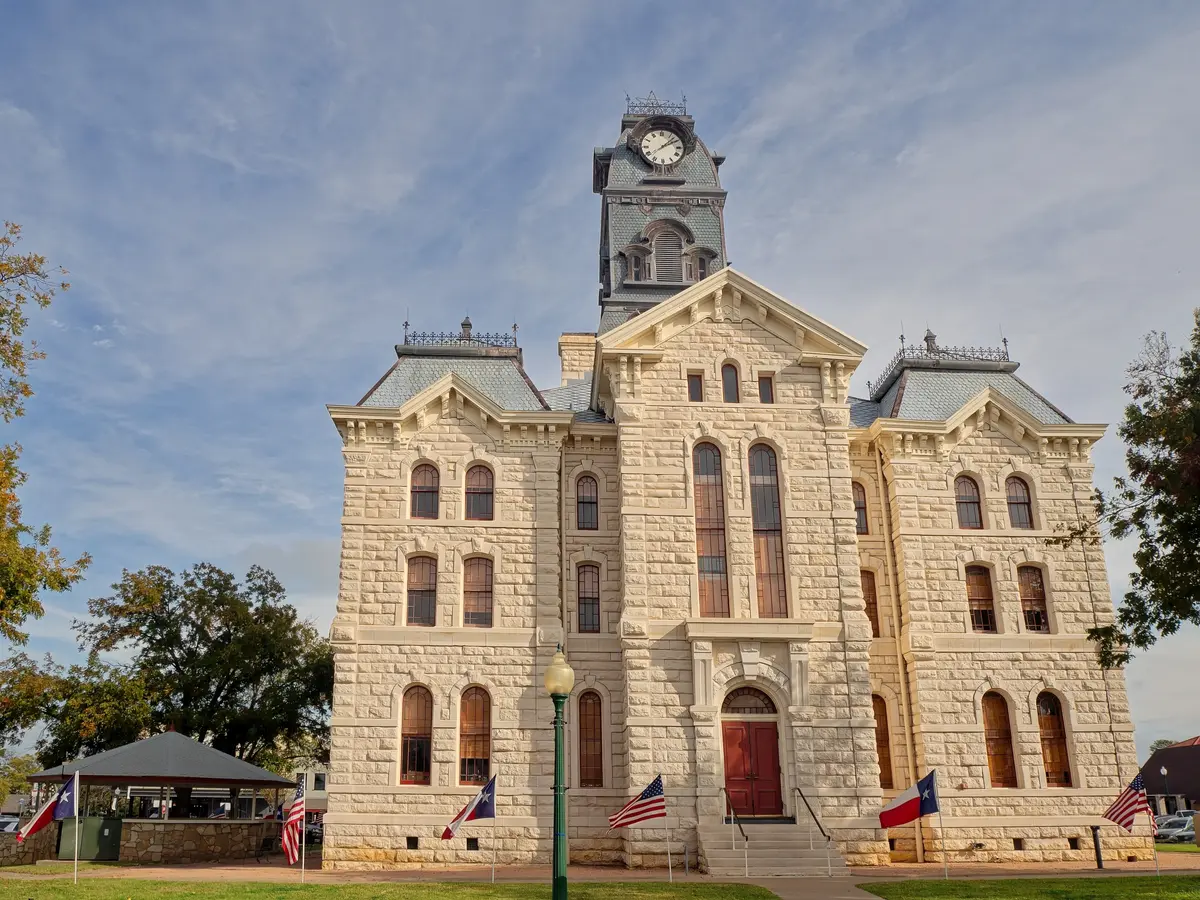
Retiring in Cedar Hill
Cedar Hill draws retirees for its balance of amenities, outdoor access, and cost. Here’s what to weigh.
🌤 Climate
Cedar Hill logs 229 sunny days a year, with warm springs and long summers that stay hot into September. Winters are mild by most standards — occasional ice events rather than sustained cold — which keeps outdoor activity possible most of the year. The elevated terrain and tree cover in the greenway corridor take the edge off the summer heat compared with flatter parts of the metro.
🍴 Lifestyle
Retirees in Cedar Hill tend to organize their days around the park and lake — fishing, walking the trails at Dogwood Canyon, and the Cedar Hill Farmers Market for a community gathering point. The dining scene covers the full range from casual family-style spots to a solid Mediterranean option, and Uptown Village at Cedar Hill handles most shopping without requiring a highway trip. The pace is distinctly suburban and unhurried.
🏚 55+ Communities
No 55+ communities were found in Cedar Hill. Retirees who settle here typically do so in the city's established single-family neighborhoods, several of which offer the lower-maintenance ranch-style homes that suit the later stages of homeownership. The retiring page has more detail on healthcare access and the broader lifestyle picture for that stage of life.
✈ Getting Around
Driving is the practical reality for daily life in Cedar Hill. Most medical appointments, errands, and social outings happen by car, and the city's layout supports that. Dallas Love Field is approximately 23 miles away and serves as the practical airport for most residents. STAR Transit's Dial-A-Ride service offers a bookable option for residents who need connections into the broader metro without driving themselves.
🏛 Texas Taxes for Retirees — What to Know
- No state income tax — Texas has no personal income tax — constitutionally protected under Article VIII, Section 24. Social Security, pensions, 401(k)/IRA withdrawals, and annuity payments are all untaxed at the state level, with no state return to file.
- Sales tax is the tradeoff — The state sales tax is 6.25%, and local add-ons bring the combined rate in Cedar Hill to 8.25% (Texas Comptroller of Public Accounts, city sales and use tax rates, July 2026). Groceries and prescription drugs are exempt.
- Property taxes — the real tradeoff — Texas’s effective property tax rate averages about 1.40%, among the highest in the country, since property tax (not income tax) funds most local government and schools.
- Over-65 homestead exemption and school-tax freeze — Homeowners 65+ (or disabled) get an additional $60,000 exemption from their home’s value for school district taxes, on top of the general homestead exemption — $200,000 off school taxable value combined, following November 2025’s Proposition 11 (SB 23), which raised the over-65 exemption to $60,000, and Proposition 13 (SB 4), which raised the general homestead exemption to $140,000. Once claimed, your school district tax bill is frozen at that year’s amount and cannot increase as home values rise, and the ceiling can transfer if you move to a new home within Texas.
- Deferral option if cash is tight — Homeowners 65+ can defer property tax payment entirely for as long as they live in the home, rather than paying it currently — interest accrues, but no forced sale.
- No estate or inheritance tax — Texas has no estate tax, no inheritance tax, and no gift tax.
- No separate capital gains tax — Because Texas has no state income tax, capital gains — including on investments and home sales — are not taxed at the state level at all, unlike states such as Washington that tax capital gains separately from income.
Tax laws change frequently and individual situations vary. This is general information, not tax advice — always consult a qualified Texas tax professional or CPA for personalized retirement tax planning.
Weekends & Local Favorites in Cedar Hill
Cedar Hill's weekend identity is built around two things: the outdoors and a food scene that punches above what you'd expect for a city this size. The state park and Joe Pool Lake anchor most weekend plans from spring through fall — camping at any of the more than 300 campsites, kayaking the lake, fishing for largemouth bass or white crappie, or riding the DORBA mountain-bike trail. The Penn Farm Agricultural History Center inside Cedar Hill State Park offers a different kind of outing: a preserved Texas family farm that gives the park a layer of history beyond the trail system.
Dogwood Canyon Audubon Center is where residents go when they want something quieter — over 200 acres of forest, trails to some of the highest elevations in Dallas County, and the kind of bird-watching that draws serious listers from across the metro. Valley Ridge Park rounds out the city's green space for more casual outings. The Cedar Hill Farmers Market connects the community with local producers and is a reliable gathering point through the growing season.
For food, Cedar Hill holds up well. Razzoo's Cajun Cafe is a perennial favorite for the kind of loud, generous Cajun spread that makes sense after a day on the lake. Babe's Chicken Dinner House is exactly what it sounds like — family-style Southern cooking that draws people from across the southern metro on weekends. Veracruz Cafe - Cedar Hill covers the Tex-Mex side of the rotation. Crafty Crab Seafood & Bar delivers on the boil-bag seafood format that's become a staple of the DFW suburb dining scene, while a well-regarded Mediterranean restaurant rounds out the options — something Cedar Hill didn't always have and that locals appreciate now that it's there.
For coffee, the city has real options. 1846 Coffee and MOTW Coffee and Pastries serve the independent-café crowd. Feng Cha CedarHill brings the boba tea format that younger residents have made a regular stop. Fortitude Cedar Hill Wellness Bar skews toward the health-focused end and draws a steady morning crowd. Uptown Village at Cedar Hill — the 615,000-square-foot open-air shopping center at the intersection of FM-1382 and US-67 — remains the commercial hub for larger shopping needs and was the first regional mall to open in this corner of Dallas County.
Tangle Ridge Golf Club is the go-to for residents who play, with a layout that makes use of the same topography that makes the rest of Cedar Hill feel different from the flat suburban standard. It's a course that rewards locals who know which holes give trouble and punishes first-timers who assume a DFW suburb course will be straightforward.
Local favorites in Cedar Hill
Restaurants
- Razzoo's Cajun Cafe
- Babe's Chicken Dinner House
- Veracruz Cafe - Cedar Hill
- Crafty Crab Seafood & Bar
- Orabis Mediterranean- Greek Restaurant
Outdoors
- Cedar Hill State Park
- Joe Pool Lake
- Valley Ridge Park
- Dogwood Canyon Audubon Center
- Tangle Ridge Golf Club
Coffee
- Feng Cha CedarHill
- 1846 Coffee
- MOTW Coffee and Pastries
- Fortitude Cedar Hill Wellness Bar
Farmers Markets
- Cedar Hill Farmers Market
Top Things Locals Say About Cedar Hill
The best intel about a city comes from the people who actually live there. Here’s what Cedar Hill residents say when newcomers ask the questions everyone’s thinking.
“I kept expecting it to feel more like the rest of the suburbs — strip malls, flat, forgettable. But you crest the hill on US-67 and it actually looks different. What I didn't expect was how much the park would become part of our regular week, not just a weekend destination.”
— Recent Cedar Hill home buyer
“What's the most surprising thing about living in Cedar Hill?”
The terrain catches people off guard every time. Most of DFW is flat to the point that you stop noticing it, but Cedar Hill sits on the escarpment with real elevation changes, tree cover, and actual views. Drive out toward Lake Ridge on a clear afternoon and you understand why the state park draws visitors from two hours away. Nobody who hasn't been here really believes you that a Dallas suburb has landscape like this.
“What do locals love most about Cedar Hill?”
The access. Cedar Hill State Park is genuinely minutes from most of the city — not a weekend project to get there, just a quick drive. Families who ride, fish, camp, or bird-watch have something available to them that most DFW suburbs simply don't. The food scene being better than expected is a close second; the city supports a real mix of local restaurants that residents actually use regularly.
“What should newcomers to Cedar Hill know?”
Belt Line Road around Uptown Village at Cedar Hill clogs faster than new residents anticipate — if you're planning to run errands after work, the timing matters more than the distance. The school district rating is worth engaging with rather than dismissing; look at specific campuses rather than the letter grade alone. And budget for a car — or two — from day one. STAR Transit helps for connections into the metro, but the city's layout assumes you drive.
“How much do you need a car in Cedar Hill?”
A car handles virtually all daily life here. Groceries, work commutes, school runs, medical appointments — all of it requires a drive. STAR Transit runs Dial-A-Ride service and the STARNow on-demand app for connections to DART and for local trips, which works well for residents who use it intentionally, but it doesn't replace a car for the full routine. If you're a two-adult household, most families here run two vehicles as a matter of course.
Cities Near Cedar Hill
Other communities near Cedar Hill worth a look — each with its own character and price point.
| City | Distance | Best For | Vibe | Median Rent | Median Buy |
|---|---|---|---|---|---|
| DeSoto | 6 mi | Families wanting established neighborhoods | Quiet, suburban, similar pricing | $2,010 | $324,582 |
| Duncanville | 6 mi | Budget-conscious buyers and renters | Older stock, more affordable, central | $1,514 | $278,035 |
| Lancaster | 10 mi | Value buyers, more land per dollar | Spacious, rural edges, growing | $2,251 | $273,149 |
More Helpful Guides for Cedar Hill
Going deeper on Cedar Hill? Our blog series covers everything from first-time buying to retiring here — explore the guides below.
Local Expert Takeaway: Cedar Hill earns its reputation by delivering something specific: a home price accessible to the median income it actually serves, a state park that rivals anything in North Texas for trail and lake access, and a commute to Downtown Dallas that is honest at about 30 minutes. The trade is real — the school district's C rating from the Texas Education Agency means families should research individual campuses carefully, and a car is non-negotiable for daily life. But for buyers who want DFW proximity, outdoor access on their doorstep, and a price under $320,000, Cedar Hill's argument is hard to match in this part of the metro.
Quick Takeaways & FAQs
✅ Cedar Hill State Park and Joe Pool Lake sit within the city limits — one of the few DFW suburbs where a world-class trail, camping, and lake access are a five-minute drive from most front doors.
⚠️ Cedar Hill ISD holds a C rating from the Texas Education Agency, which is a meaningful consideration for families prioritizing school performance; individual campus research matters here.
📍 US-67 is the commuting spine — it works efficiently going north toward Dallas and west toward Grand Prairie, but east-west movement toward the mid-cities or the airport corridor takes more time than the map suggests.
Is Cedar Hill TX a good place to live?
How far is Cedar Hill from Downtown Dallas?
What are home prices like in Cedar Hill TX?
How are the schools in Cedar Hill TX?
What outdoor activities are available in Cedar Hill TX?
Helpful Links for Moving to Cedar Hill
Moving to Texas?
Tell us what you need help with and we'll connect you with local resources.
