
What Is Living in Princeton, Texas Like?
In 2024, the U.S. Census Bureau named Princeton the fastest-growing city in the entire United States — a 30.6% population jump in a single year, with the city more than doubling since 2020. That number alone should tell you something about the decision you're weighing. This isn't a suburb that quietly added a few subdivisions. Princeton went from a small Collin County farming town of roughly 17,000 to a city of 43,524 residents in the span of a few years, and the question every newcomer is really asking is: did the infrastructure keep up? The honest answer is: it's catching up, and the city is making deliberate moves to get there. Princeton sits along US-380 in eastern Collin County, about 15 minutes to McKinney and roughly 45 to 60 minutes from Dallas depending on traffic — close enough to the metro to commute, far enough to feel like you've left it behind.
The economic backbone here is still forming. Princeton Independent School District, with 11,388 students enrolled in 2025-26, is the city's largest employer and one of the fastest-growing districts in Texas — voters passed a $797 million bond in May 2023 to fund new campuses over the coming years. The city itself is the second major employer, and many residents hold jobs at employers in McKinney and Plano: Raytheon's aerospace and defense campus in McKinney draws a steady stream of Princeton commuters, as does JPMorgan Chase in Plano. What draws people here isn't a single dominant industry — it's price. Princeton Mayor Eugene Escobar Jr. has said affordability is the driving factor in the city's growth, and the median household income of $105,200 lines up well with what buying here actually costs.
The typical home price in Princeton is $288,891 (Zillow Home Value Index, July 2026) — a figure that looks almost impossible by DFW standards until you realize McKinney and Wylie are both noticeably higher. For full cost-of-living details, including typical rent and tax rates, see the Princeton cost of living page. Day-to-day life here runs on 236 sunny days a year and the kind of outdoor access you don't expect this close to a major metro: Lake Lavon, a 21,000-acre reservoir near the city's eastern edge, draws approximately four million visitors annually with fishing, boating, and water skiing. The city also approved a $109 million parks bond in November 2023 to transform its public spaces — so what exists now is only the beginning.
Whether you're considering a move or just starting to research, the sections below break down Princeton's neighborhoods, housing market, schools, commute patterns, local employers, and what daily life here is actually like in a city that's still figuring out who it wants to be.

Princeton at a Glance
Looking to buy in Princeton? Estimate your payment.
Enter your numbers to see an estimated monthly mortgage payment.
Estimate only. Excludes HOA fees and mortgage insurance. The interest rate above is a starting point, not a quoted rate — replace it with your own to see real numbers. Insurance is a flat placeholder, not a Princeton quote.
Why Are People Moving to Princeton?
The case for Princeton starts and ends with one word: price. When a working family gets priced out of Frisco or McKinney but still needs Collin County access — good schools, a safe community, proximity to the DFW job base — Princeton becomes the answer. That dynamic drove the Census Bureau's 2024 headline, and it's still driving decisions today.
Princeton's Mayor has been direct about it: affordability is the city's calling card. The median household income of $105,200 is at or above the income needed to buy the typical home here — which is a genuinely unusual statement in the current Texas market. That alignment between what people earn and what homes cost is rare in this part of the metro, and buyers moving from more expensive suburbs feel it immediately.
A Town Actively Choosing Its Future
The city isn't coasting on low prices alone. Princeton's leadership has been intentional about development: the city holds an AA+ bond rating from Fitch Ratings, earned in 2024, reflecting strong fiscal management through a period of explosive growth. City Manager Michael Mashburn put it plainly: the city has the ability to shape what future generations enjoy here — and the capital commitments back that up.
Princeton ISD voters approved a $797 million bond in 2023 to fund new campuses, the city approved a $109 million parks bond that same year, and Collin County committed $110.6 million in infrastructure investment. All three decisions point in the same direction: a city investing heavily in catching up to its own growth, not one that stumbled into becoming big.
The Moratorium Moment
Here's something worth understanding before you buy: in late 2024, Princeton temporarily paused new residential construction permits to let infrastructure catch pace with demand. That decision slowed the pace of new subdivision approvals for a period and signaled that city leadership is paying attention to quality-of-life concerns, not just development velocity. For buyers, it matters because it shapes what's available and what's coming — and it's a sign the city is thinking beyond the next subdivision plat.
Who actually moves here? Mostly younger families with school-age children who need DFW access but can't absorb DFW prices. Remote workers who need occasional metro access and prioritize space over walkability. And first-generation homeowners for whom Princeton's price point represents a real entry into ownership. For a deeper look at how those buyer profiles map to specific parts of the city, the Princeton neighborhoods page breaks it down by area.
What Daily Life Feels Like in Princeton
Princeton in 2025 is a city in the middle of becoming something. The Historic Downtown sits at the center of town with older commercial buildings and genuine small-town bones — but the city has identified downtown revitalization as a priority, so what you see today is a work in progress, not the finished product. Most of the action is in the newer residential neighborhoods spreading out from the core, where subdivisions like Whitewing Trails and Bridgewater are adding density fast.
The Everyday Reality
Most daily errands — groceries, bigger retail, medical appointments — mean a drive. For families with kids, that's usually fine: the rhythm of life here is school, youth sports, and neighborhood streets, not walkable blocks. Princeton Parks and Recreation runs eight youth sports programs directly, covering soccer, baseball, softball, volleyball, football, cheerleading, basketball, and T-ball for children ages 3 to 14.
The community calendar gives you a real read on the city's personality. The Freedom and Fireworks celebration at J.M. Caldwell Sr. Community Park is a genuine summer gathering — drone shows, fireworks, carnival rides, and a Ninja Nation obstacle course. Fishin' Frenzy at the Princeton Municipal Park catch-and-release pond brings out families with young kids. Pumpkin BooLooza signals fall. These aren't imported big-city events; they're the kind of recurring civic traditions that tell you whether a community is actually building something together.
What Surprises People After Six Months
The thing newcomers don't expect is how much US-380 shapes daily life. It's the main east-west artery, it runs right through the city, and at peak commute hours it backs up significantly — partly because the road is still mid-expansion to six lanes, and partly because the population growth on both sides of it has far outpaced the road's current capacity. People who moved here expecting an easy 20-minute glide to McKinney sometimes find the reality closer to 35 minutes in the afternoon. A proposed US-380 bypass north of the city should redistribute that load once built — but that's a future improvement, not a current one.
The school district warrants a realistic read too. Princeton ISD holds a B rating, according to the Texas Education Agency — a solid mark for a district this size growing this fast. Princeton ISD voters approved a $797 million bond in 2023 to fund new campuses, and the district has been building ahead of its enrollment curve. For school-age families, the Princeton schools page goes deeper on what's open, what's coming, and what the numbers mean.
Princeton's crime profile is worth a direct look. The city records a violent crime rate of 2 per 1,000 residents and a property crime rate of 5 per 1,000 residents — both well below the state's violent rate of 4 per 1,000 and property rate of 20.7 per 1,000, and below national benchmarks as well. The full breakdown and comparison table are on the Princeton safety page.
The Princeton Housing Market Right Now
The typical home price in Princeton is $288,891 (Zillow Home Value Index, July 2026). In the context of Collin County — where McKinney and Wylie both price noticeably higher — that figure is the entire reason this city exists on buyers' radar. It's not a distressed-market discount; it's the cost of being at the eastern edge of Collin County rather than the center of it.
The median household income of $105,200 sits at or above what's needed to buy at that price point, which makes Princeton unusual in the current DFW market: ownership is genuinely within reach for the people who live and work here, not just for those arriving with equity from a more expensive market.
What the Inventory Looks Like
Most of what's available skews new construction — subdivisions that have gone up rapidly over the past few years, with standard-package finishes and the practical layouts that appeal to families with kids. Older housing stock exists, particularly closer to the historic downtown, but it's a smaller share of the market than in most established suburbs. Some areas cost more than others based on age, finish level, and proximity to completed amenities — but those differences are best explored at the neighborhood level on the Princeton neighborhoods page.
The city-wide typical rent runs $1,955 per month (Zillow, July 2026), which reflects the relatively new rental stock and the demand pressure of a fast-growing city. For renters considering Princeton as a stepping stone to ownership, that alignment between rent levels and home prices is meaningful — the monthly cost difference between renting and owning here is narrower than in most of the metro.
The Permit Pause and What It Means for Buyers
The temporary construction moratorium the city imposed in late 2024 was not a market collapse — it was a managed pause to let roads, utilities, and schools absorb the pace of new housing. That kind of intervention tends to stabilize rather than suppress a market, and Princeton's fiscal health (AA+ bond rating, strong tax base) suggests the city has the tools to manage the transition. What it means practically: new construction options are more constrained than they were in 2022 or 2023, and resale homes are carrying more of the demand.
For a full picture of taxes, utility costs, and how Princeton's numbers compare to nearby cities, the cost of living page has the detail.
Princeton Neighborhoods
Princeton has several distinct areas — each with its own character and appeal. Here’s a breakdown to help you narrow down where to focus your home search.
🏡 Tillage Farms
Tillage Farms is one of Princeton's newer master-planned communities, built for families who want suburban amenities and elbow room — open green spaces and a neighborhood feel that still has a sense of distance from the busier commercial corridors.
🏠 Bridgewater
Bridgewater attracts families with school-age children looking for newer construction and a neighborhood with active streets — the kind of subdivision where kids are out on bikes in the evening and the HOA amenities are part of the daily routine.
🌳 Whitewing Trails
Whitewing Trails is one of the faster-growing subdivisions in Princeton, with newer homes and a community layout designed around families — proximity to Princeton ISD schools is a consistent draw for parents with children in elementary and middle school.
🏘 Eastridge
Eastridge offers a more established neighborhood feel within Princeton's residential fabric, with housing stock that appeals to buyers who want a move-in-ready home without waiting on new construction timelines.
🏔 Winchester Crossing
Winchester Crossing is a quieter residential pocket that suits buyers prioritizing a calmer street environment — the housing mix and community scale make it a good fit for first-time owners and smaller households.
🌆 Abbey Crossing
Abbey Crossing sits in the broader band of Princeton's newer residential growth, with a neighborhood character that appeals to young families looking for standard suburban amenities at a price point that makes Collin County ownership feasible.
Pros & Cons of Living in Princeton
The Pros
- Home prices still meaningfully below nearby McKinney and Frisco
- Lakefront access to Lake Lavon without the typical DFW premium
- Strong recent growth bringing new retail, schools, and parks
- Small-town community feel with big-city jobs within a short drive
The Cons
- Longer commute to Dallas/Plano/Frisco job centers (40-55 minutes)
- Rapid growth has strained infrastructure, prompting temporary building moratoriums
- No full-service hospital within city limits
- Limited public transit, so a car is essential
Getting Around & Commuting in Princeton
US-380 is the city's main artery and its biggest daily friction point. The road runs east-west through Princeton and carries the bulk of commuter traffic toward McKinney in the morning and back in the evening. The drive is about 15 minutes to McKinney under normal conditions — but US-380 is currently being widened to six lanes, and construction zones plus volume create genuine backups during peak hours. Plan for more time than the map suggests, especially during peak commute windows.
Where People Actually Work
The largest employers pulling Princeton residents out of the city are in McKinney and Plano. Raytheon's aerospace and defense campus in McKinney employs a significant number of local residents. JPMorgan Chase's Plano operations draw another cohort westward along the US-380 corridor. Princeton ISD and the City of Princeton itself round out the local employment base — and for a growing share of residents, the commute is to a home office. Remote and hybrid work has been a genuine driver of Princeton's growth: the price point makes sense only if you're not commuting to downtown Dallas five days a week.
The drive to Dallas proper runs approximately 45 to 60 minutes depending on traffic conditions — long enough to make daily downtown commuting uncomfortable, short enough to make it possible for hybrid schedules. FM-75 and FM-982 provide north-south connections to other parts of the county, though they carry far less traffic than US-380.
The Bypass and What It Changes
The proposed US-380 bypass — which would reroute through-traffic north of Princeton's city center — is the infrastructure improvement most likely to change the commute calculus here. When built, it would reduce the truck and pass-through traffic that currently compounds the congestion on the main corridor, and it would open new land corridors for commercial and residential development on the city's edges. It's a real project with Collin County bond funding behind it, but it's still in planning stages. Buyers who need to commute today are living with the current road, not the future one.
Dallas/Fort Worth International Airport (DFW) is 42 miles from Princeton — a manageable drive for occasional travel, but not the kind of distance that makes a quick trip to the airport a casual errand. Most residents heading to the airport budget well over an hour depending on traffic and departure time.
The Bottom Line on Transportation
Princeton is a drive-everywhere city, full stop. Most errands, appointments, and commutes happen entirely by car, and your daily schedule will be shaped by US-380's current condition. Buyers who understand that going in are happy here. Those who expected the convenience of a more urban suburb are frequently the ones who move out.
Schools in Princeton
Families relocating to Princeton have public, private, and higher-education options nearby. Here’s a quick overview.
🎓 School District
Princeton Independent School District serves K–12 students across Princeton and the surrounding area. Rated B (source: Texas Education Agency, 2025 A-F accountability rating (2024-25 school year)).
🏆 Graduation Rate
The 4-year high-school graduation rate here is approximately 94.1%.
📚 Higher Education
Texas’s public universities — the University of Texas at Austin, Texas A&M University, and the University of Houston — offer four-year degrees statewide, with one of the largest community college systems in the country (50+ public community college districts) providing two-year and workforce programs.
🌐 Online Learning
UT Austin Online and Texas A&M University Online offer fully accredited online degrees for remote learners across the state.
Safety in Princeton
A quick look at how Princeton compares on the numbers that matter most when weighing a neighborhood or a move.
🛡 Violent Crime
Approximately 2 per 1,000 residents.
🔒 Property Crime
Approximately 5 per 1,000 residents.
Compared to the most recent national figures from the Bureau of Justice Statistics (2024), Princeton’s violent crime is below the national average (about 3.7 per 1,000), and property crime is below the national average (about 18.4 per 1,000).
Against Texas as a whole, Princeton’s violent crime is roughly half the state average, and property crime is roughly a quarter of the state average (Bureau of Justice Statistics, Crime Known to Law Enforcement, 2024 (tables 2 and 3)).
Crime rates can vary a lot within a single city, so the citywide numbers above are only a starting point. Some neighborhoods in Princeton run well below these averages, while others run higher — the kind of block-by-block detail that matters most when you’re actually choosing where to live. The full guide below breaks it down neighborhood by neighborhood.
Working in Princeton
Princeton’s largest employers span several industries — here are some of the anchors of the local job market.
🎓 Princeton Independent School District
Education
🏛 City of Princeton
Municipal government
💼 Raytheon
Aerospace, defense, located in McKinney
🏦 JPMorgan Chase
Financial services, located in Plano
Parks & Recreation in Princeton
Some of the outdoor spaces that shape everyday life in Princeton.
🌱 J.M. Caldwell Sr. Community Park
🌱 Princeton Municipal Park
🌱 Veterans Memorial Park
Princeton residents don’t have to go far for green space — spots like J.M. Caldwell Sr. Community Park and Princeton Municipal Park are part of everyday life here, whether that’s a morning walk, a weekend hike, or just somewhere to unwind outside. The full guide below covers more of what Princeton has to offer for parks and outdoor recreation.
Retiring in Princeton
Princeton draws retirees for its balance of amenities, outdoor access, and cost. Here’s what to weigh.
🌤 Climate
Princeton gets 236 sunny days a year, with hot summers that regularly push into the upper 90s and mild winters that occasionally dip below freezing. Spring and fall are genuinely pleasant — the months when outdoor life at Lake Lavon and the city parks is at its best. Severe weather is a real seasonal consideration; Collin County sits in a part of Texas that sees thunderstorms, hail, and occasional tornado watches in spring.
🍴 Lifestyle
Daily life in Princeton runs at a quieter pace than the inner DFW suburbs, with a growing restaurant scene, active city parks programming, and Lake Lavon as the primary recreational anchor. The city approved a $109 million parks bond in November 2023 to fund significant upgrades to public spaces. Historic Downtown Princeton gives the city a small-town center that city leadership is actively working to revitalize.
🏚 55+ Communities
No 55+ communities were found in Princeton. Retirees who want age-targeted community amenities will need to look at neighboring cities. That said, the city's overall safety profile — a violent crime rate of 2 per 1,000 residents — and its affordable home prices make it a realistic retirement option for those comfortable in a general-population community.
✈ Getting Around
Princeton is a car-dependent city where most errands and appointments require a drive. Most daily driving runs along US-380 and the local FM roads. Dallas/Fort Worth International Airport (DFW) is 42 miles away — manageable for occasional travel but a meaningful drive. A major regional health system in McKinney, roughly 11 miles away, is the primary acute care option for Princeton residents.
🏛 Texas Taxes for Retirees — What to Know
- No state income tax — Texas has no personal income tax — constitutionally protected under Article VIII, Section 24. Social Security, pensions, 401(k)/IRA withdrawals, and annuity payments are all untaxed at the state level, with no state return to file.
- Sales tax is the tradeoff — The state sales tax is 6.25%, and local add-ons bring the combined rate in Princeton to 8.25% (Texas Comptroller of Public Accounts, city sales and use tax rates, July 2026). Groceries and prescription drugs are exempt.
- Property taxes — the real tradeoff — Texas’s effective property tax rate averages about 1.40%, among the highest in the country, since property tax (not income tax) funds most local government and schools.
- Over-65 homestead exemption and school-tax freeze — Homeowners 65+ (or disabled) get an additional $60,000 exemption from their home’s value for school district taxes, on top of the general homestead exemption — $200,000 off school taxable value combined, following November 2025’s Proposition 11 (SB 23), which raised the over-65 exemption to $60,000, and Proposition 13 (SB 4), which raised the general homestead exemption to $140,000. Once claimed, your school district tax bill is frozen at that year’s amount and cannot increase as home values rise, and the ceiling can transfer if you move to a new home within Texas.
- Deferral option if cash is tight — Homeowners 65+ can defer property tax payment entirely for as long as they live in the home, rather than paying it currently — interest accrues, but no forced sale.
- No estate or inheritance tax — Texas has no estate tax, no inheritance tax, and no gift tax.
- No separate capital gains tax — Because Texas has no state income tax, capital gains — including on investments and home sales — are not taxed at the state level at all, unlike states such as Washington that tax capital gains separately from income.
Tax laws change frequently and individual situations vary. This is general information, not tax advice — always consult a qualified Texas tax professional or CPA for personalized retirement tax planning.
Weekends & Local Favorites in Princeton
Lake Lavon is Princeton's defining recreational anchor — a 21,000-acre reservoir with crappie and striped bass fishing, boating, water skiing, and swimming spread across 17 shoreline parks. Five of those parks are in the Princeton region. On a Saturday morning in late spring, the lake draws everyone from serious bass anglers to families who just want to wade. The Collin Park Marina and Boathouse is the local put-in point for boaters, and it sees steady traffic through the warm months.
For trail running and mountain biking, Sister Grove Park is the local go-to — a 75-acre Collin County park adjacent to Lake Lavon with a 7-mile hiking and mountain biking loop maintained by the Dallas Off-Road Bicycle Association. It's a legitimately good trail system for this part of Texas, where flat terrain is the rule and technical singletrack is rare. J.M. Caldwell Sr. Community Park and Princeton Municipal Park handle the everyday park needs: open fields, a catch-and-release fishing pond at the Municipal Park, and the infrastructure for the city's community events.
Food and Coffee
Princeton's dining scene reflects a city where the population arrived faster than the restaurant row. Independent spots are filling in, and a few have become genuine locals' favorites. Las Rocas Mexican Cocina and Rivera's Restaurant anchor the Mexican food options that serve the community well. Jocy's Restaurant and Scrambler Cafe Princeton handle the diner-and-breakfast crowd. Tokyo House - Princeton Texas brings Japanese cuisine to a part of the county that doesn't have many options in that category.
On the coffee side, Chuon Chuon Vietnamese Coffee and Banh Mi is the place that surprises newcomers most — Vietnamese coffee and bánh mì in a fast-growing Texas suburb, done well enough that it draws regulars from surrounding areas. Prince Donuts, Lavon Donuts & Pizza, and P T Donut cover the morning stop for a large share of the community, and Cafe Boba rounds out the options for those looking for something beyond drip coffee.
Community Events That Actually Draw Crowds
The Freedom and Fireworks celebration at J.M. Caldwell Sr. Community Park is the city's signature summer event — a drone show, fireworks, carnival rides, and a Ninja Nation obstacle course that fills the park each June. Pumpkin BooLooza marks the fall calendar. The Fishin' Frenzy catch-and-release event at Princeton Municipal Park pond runs as part of the city's parks programming and is genuinely well-attended by families with young kids. These aren't corporate-sponsored festivals imported from elsewhere; they're the events that tell you what kind of town this actually is.
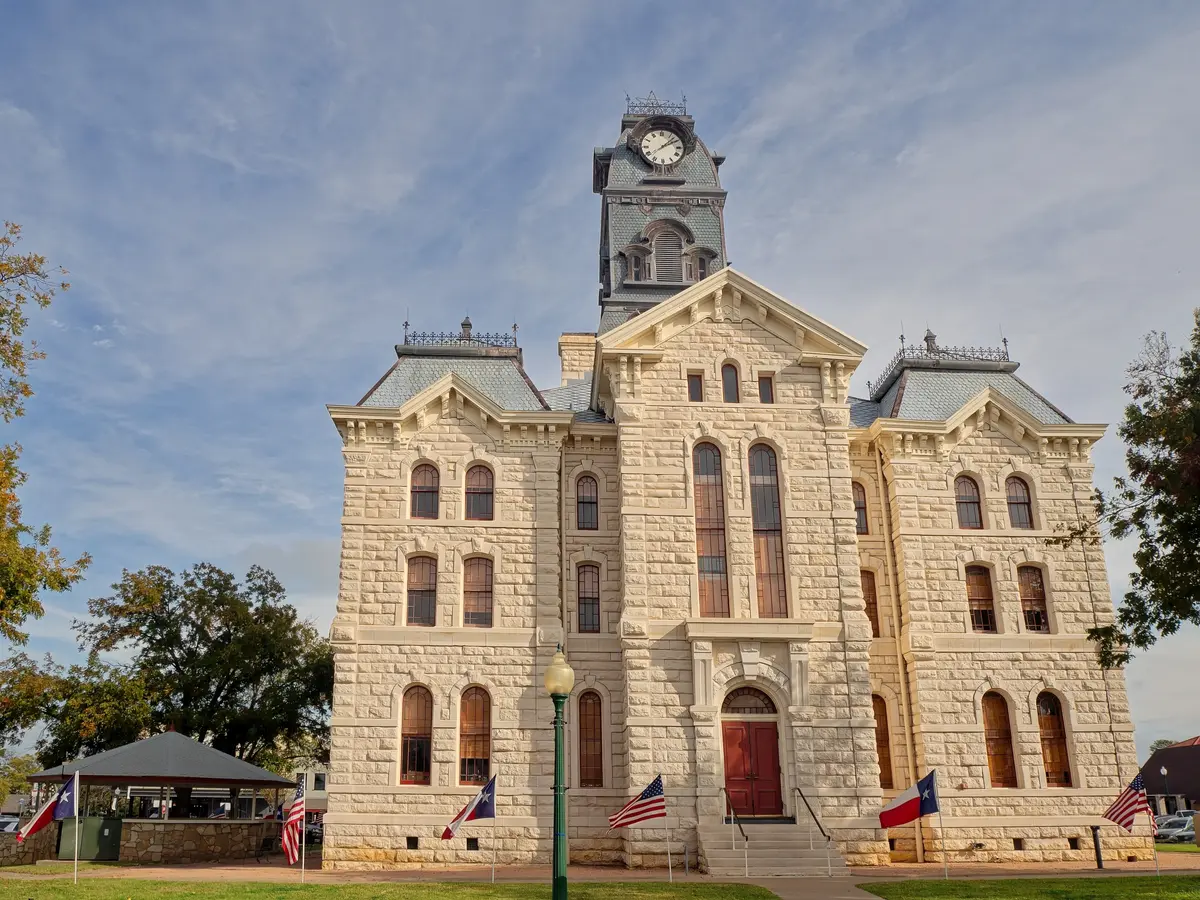
Historic Downtown Princeton is a small but genuine gathering point — older commercial buildings, the visual identity of the original farming town, and the area city leadership has targeted for revitalization. It's not a dining destination yet, but the bones are there and the investment is coming. Parks and recreation details, trail specifics, and the full outdoor picture are on the Princeton parks page.
Local favorites in Princeton
Restaurants
- Las Rocas Mexican Cocina
- Jocy's Restaurant
- Tokyo House - Princeton Texas
- Scrambler Cafe Princeton
- Rivera's Restaurant
Outdoors
- Sister Grove Park
- J.M. Caldwell Sr. Community Park
- Princeton Municipal Park (catch-and-release pond)
- Veterans Memorial Park
- Collin Park Marina/Boathouse
Coffee
- Chuon Chuon Vietnamese Coffee and Banh Mi
- Prince Donuts
- Lavon Donuts & Pizza
- P T Donut
- Cafe Boba
Top Things Locals Say About Princeton
The best intel about a city comes from the people who actually live there. Here’s what Princeton residents say when newcomers ask the questions everyone’s thinking.
“We knew US-380 had traffic, but we didn't understand what that actually meant until we were living it every afternoon. The drive to McKinney is fine in the morning — it's the evening return that will test you. We'd do it again for the price, but we wish someone had been blunt about the road.”
— Recent Princeton home buyer
“What's the most surprising thing about living in Princeton?”
How quickly it went from feeling like a small town to feeling like a suburb. Neighbors who moved to Whitewing Trails four years ago say the fields around them were still empty. Now there are subdivisions as far as you can see. The town is changing fast enough that what you read about it six months ago may already be out of date — more restaurants, more schools, more of everything.
“What do locals love most about Princeton?”
Lake Lavon is the honest answer. Having a 21,000-acre reservoir a short drive away — with real fishing, boating, and shoreline parks — is something most DFW suburbs at this price point can't offer. On top of that, the sense of community at events like Freedom and Fireworks at Caldwell Park is something newcomers consistently say they didn't expect from a city this new and this fast-growing.
“What should newcomers to Princeton know?”
Plan your life around US-380 and budget more time than you think. The road is being widened and a bypass is proposed north of town, but right now it is the bottleneck for everything — school pickup, grocery runs, the commute home. Newcomers who budget an extra 15 minutes for any drive during peak hours are far less frustrated than those who don't. Also: get involved with the parks programs early if you have kids — the youth sports leagues fill fast.
“How much do you need a car in Princeton?”
A car is essential, and realistically you'll want two if you're a two-adult household. Almost every errand — groceries, retail, medical visits — means a drive, and most of the routine driving is on local roads at reasonable distances. The hard part is the US-380 corridor during commute hours, which is where car dependence shows its teeth most clearly.
Cities Near Princeton
Other communities near Princeton worth a look — each with its own character and price point.
| City | Distance | Best For | Vibe | Median Rent | Median Buy |
|---|---|---|---|---|---|
| McKinney | 9 mi | established families, walkable downtown | polished, historic, higher-priced | $1,806 | $480,265 |
| Wylie | 12 mi | families seeking newer suburbs | growing, suburban, well-connected | $1,879 | $420,077 |
| Farmersville | 10 mi | rural feel, small-town buyers | quiet, agricultural, unhurried | $1,500 | $320,000 |
More Helpful Guides for Princeton
Going deeper on Princeton? Our blog series covers everything from first-time buying to retiring here — explore the guides below.
Local Expert Takeaway: Princeton is the most affordable entry point into Collin County for families who need DFW access — and that price advantage is real, not illusory. But the city is still catching up to its own growth. US-380 backs up, the school district is expanding rapidly, and some amenities you'd expect in a city of 43,000 are still arriving. The buyers who thrive here understand the trade clearly: you get a legitimate home at a price that works, Lake Lavon out your back door, and a community that's actively investing in its own future. The buyers who struggle are the ones who expected a finished suburb at a discount price. Princeton is neither finished nor discounted — it's a city that's building itself in real time, and your timing matters.
Quick Takeaways & FAQs
✅ Princeton was the fastest-growing city in the U.S. in 2024, with home prices still noticeably below neighboring McKinney and Wylie — the price gap is the whole story.
⚠️ US-380 congestion is a genuine daily friction point; the road is being widened, but construction and commuter volume make peak-hour travel slower than the map suggests.
📍 Lake Lavon, a 21,000-acre reservoir adjacent to the city, gives Princeton outdoor access that most DFW suburbs at this price point simply don't have.
Is Princeton TX a good place to live?
How far is Princeton TX from Dallas?
What is the Princeton TX school district like?
Why is Princeton TX growing so fast?
What are the best neighborhoods in Princeton TX?
Helpful Links for Moving to Princeton
Moving to Texas?
Tell us what you need help with and we'll connect you with local resources.
