
Your California equity can buy something in Princeton that would have cost three times as much back home — and that's not marketing copy, that's arithmetic. Princeton sits along US-380 in Collin County, about 40 minutes northeast of Dallas in the fastest-expanding corridor in North Texas. The U.S. Census Bureau has documented Princeton as among the fastest-growing cities in the entire country, a pace driven in no small part by Californians — the largest single migration group arriving in Texas — who are landing here for new construction, room to breathe, and prices that make the spreadsheet look almost too good to be true.
The economic story here is one of a city still catching up with itself. The Princeton Independent School District anchors community life and is the city's largest employer. Raytheon's campus in nearby McKinney and JPMorgan Chase's operations in Plano draw commuters from Princeton every morning. The city's population of 43,524 has doubled since 2020, which means the infrastructure — roads, water, services — is genuinely strained. Princeton enacted a moratorium on new residential development in September 2024 and extended it through at least November 2025 while it upgraded water and wastewater systems. A Texas state law signed in summer 2025 limits a city council's future ability to pause new permits, so the pipeline will reopen, but buyers considering new construction need to ask specifically about a project's permit status before signing anything.
The financial picture for a California transplant is stark in the best way. Princeton's typical home price stands at $288,891 (Zillow Home Value Index, July 2026), which lands noticeably below what comparable homes fetch in McKinney or Wylie — and sits in a completely different universe from what the full cost-of-living breakdown shows against California benchmarks. Daily life here runs on North Texas rhythms: warm summers that arrive early and stay late, 236 sunny days a year, wide lots, and a community that still has a Friday-night-football feel even as it grows into a mid-size suburb. A serious shopping trip still means driving to McKinney or beyond, and downtown Princeton is more historic than commercial — but that gap is closing faster than most long-timers expected.
Whether you're liquidating a California property and moving cash-rich, or leaving a rental and buying for the first time, the sections below break down what Princeton offers California transplants specifically: the home price and tax comparison, what the property tax math actually looks like, the lifestyle trade-offs Californians consistently underestimate, what to watch out for in a fast-growing market, and how daily life here compares to what you're leaving behind.
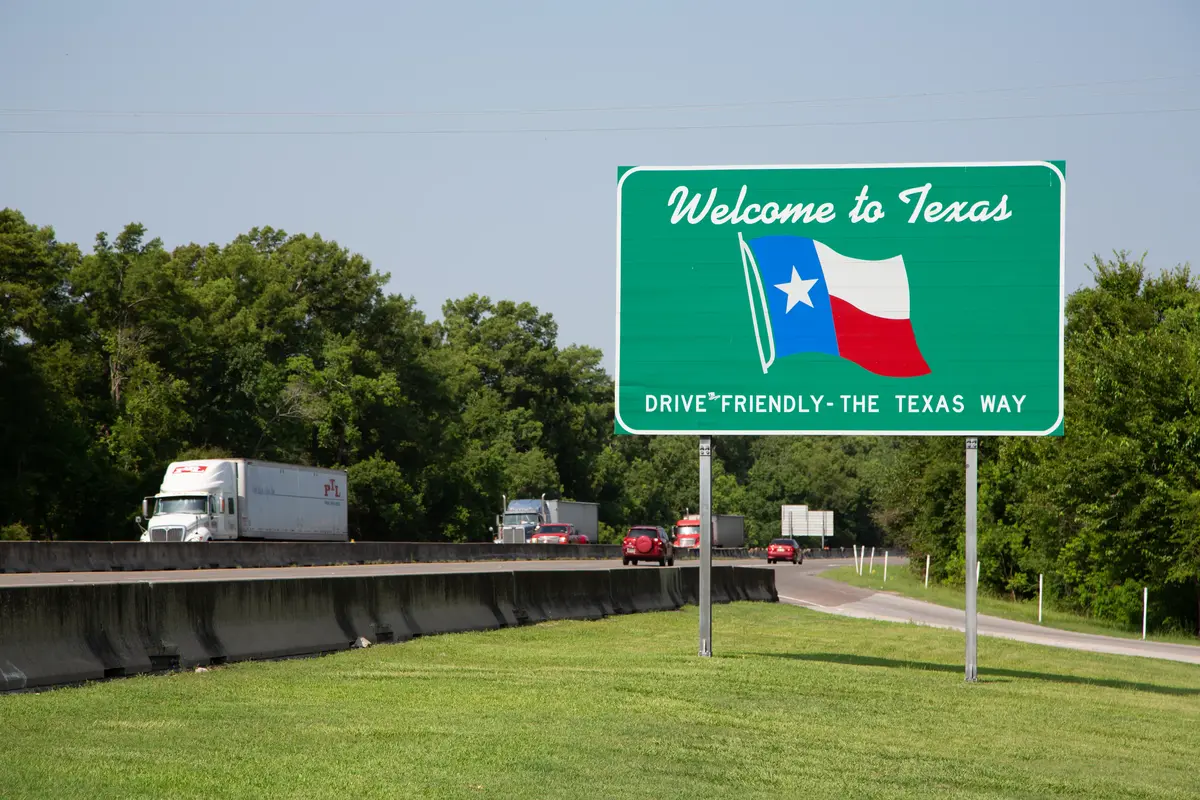
The Home Price Reality: California Equity in Princeton
The number that stops most California buyers cold is the typical home price: $288,891 (Zillow Home Value Index, July 2026). That figure, set against California's statewide typical home value of $773,735 (Zillow Home Value Index), means a buyer selling a median-priced California home arrives in Princeton with enough equity to purchase outright — or to buy a substantially larger house and keep money in reserve.
That gap isn't just a coastal-city phenomenon. California's statewide typical home value of $773,735 covers the whole state, including the Central Valley and the Inland Empire. Princeton's price is still less than 40% of that statewide figure. For a buyer coming from the Bay Area or San Diego, where prices run considerably higher, the contrast is even more dramatic — but the statewide comparison alone is the honest one to anchor on, because it's the one that refreshes from the same source as Princeton's own figure.
What does $288,891 actually buy? In Princeton's newer planned communities — places like Whitewing Trails, Bridgewater, or Winchester Crossing — that price range gets you a 3- or 4-bedroom home with a two-car garage, open floor plan, and a backyard that would cost three times as much in most California markets. Entry-level options exist in older sections near Historic Downtown Princeton. The neighborhoods page walks through the character of each area without attaching prices by district, which is the right way to think about it: location, lifestyle fit, and commute shape the decision more than any intra-city price variation.
One financial detail many California buyers recognize instantly: Texas has a Mello-Roos equivalent. In Princeton's newer subdivisions, Municipal Utility District (MUD) and Public Improvement District (PID) assessments appear as additional line items on your annual tax bill — sometimes adding meaningfully to the effective cost of ownership. Always ask your agent for the full tax bill on any home in a newer community, not just the base property tax rate.
| Factor | California | Princeton, TX |
|---|---|---|
| Typical home value | $773,735 (Zillow Home Value Index) | $288,891 (Zillow Home Value Index, July 2026) |
| Homeowners insurance pressure | Average premiums up significantly since 2020; widespread insurer withdrawals from wildfire zones | Standard market; no wildfire-driven coverage crisis |
| New construction availability | Limited and expensive in most metros | Abundant in planned communities; permit moratorium being lifted |
| HOA / special assessments | Mello-Roos CFD charges in newer developments | MUD/PID assessments in newer subdivisions — ask upfront |
| Nearby-city price comparison | — | McKinney noticeably higher; Wylie noticeably higher; Farmersville somewhat higher |
| Equity after median sale | Baseline | Significant cash position for most California sellers |
One thing Californians consistently underestimate: Texas homeowners insurance is a standard market, without the crisis conditions driving California premiums. The relief on that line item alone is noticeable in a monthly budget.
The Tax Shift: No State Income Tax, Higher Property Taxes
The headline is correct and worth saying plainly: Texas has no state income tax. California's top state income tax rate of 13.3% applies only to the highest earners, but the progressive schedule hits middle-income earners hard too. A single filer earning $100,000 pays roughly $5,055 in California state income tax; that same earner pays $0 in Texas. That's not a rounding difference — it's a recurring annual raise that compounds over a decade.
California's statewide base sales tax rate of 7.25% is the floor; with local add-ons, California's combined rate runs approximately 8.85–8.99% depending on the jurisdiction. Texas starts with a state base of 6.25% and averages about 8.19–8.20% combined — modestly lower, though on most household budgets the difference amounts to a few hundred dollars a year rather than a transformative sum. The income tax elimination is where the real money lives.
The Property Tax Trade-Off
Here is where Californians need to do honest math and not just celebrate. California's effective property tax rate of 0.71% is held artificially low by Proposition 13, which caps assessed value increases as long as you own the property. Princeton's effective property tax rate is 1.53% — more than double California's effective rate — and Texas has no Proposition 13 equivalent.
On a $288,891 home at 1.53%, the gross rate before exemptions produces a meaningful annual bill. Texas does offset this with a homestead exemption: the school-district portion of the tax was raised to a $140,000 exemption on primary residences, effective 2025–2026, which reduces the taxable base for that largest component. But the math still lands higher than what a long-time California homeowner is used to paying — especially one whose Prop 13 basis has been locked in for decades.
| Tax Category | California | Texas / Princeton |
|---|---|---|
| State income tax | California's top state income tax rate of 13.3% (progressive; hits middle earners meaningfully) | $0 — no state income tax |
| Effective property tax rate | California's effective property tax rate of 0.71% (Prop 13 capped) | 1.53% effective rate in Princeton |
| Primary residence exemption | $7,000 assessed-value reduction (minimal impact) | $140,000 school-district homestead exemption (2025–26) |
| State sales tax base | California's statewide base sales tax rate of 7.25% | 6.25% state base |
| Combined sales tax (with local) | ~8.85–8.99% combined | ~8.19–8.20% combined |
| MUD/PID special assessments | Mello-Roos CFDs in newer communities | MUD/PID add-ons in newer Princeton subdivisions |
| Capital gains on home sale | Subject to California income tax above federal exclusion | No state capital gains tax |
The net result for most transplants earning in the $80,000–$150,000 range: the income tax savings exceed the additional property tax cost, often substantially. Higher earners see an even more pronounced swing. The honest caveat is for retirees on fixed income who own outright and have low California property tax bills locked in — that group occasionally finds the trade less favorable than expected, and should model the numbers before selling.

What Californians Get Right — and Get Wrong — About Princeton
The case California transplants make for Princeton is almost always correct on paper: lower prices, no income tax, new construction, space. Where they tend to be wrong is in what the city currently is versus what it's becoming.
What You're Actually Moving Into
Princeton has 43,524 residents and is growing faster than the city's services can comfortably absorb. Roads that were adequate three years ago are now congested at peak hours. The development moratorium wasn't imposed arbitrarily — it reflected genuine strain on water infrastructure and emergency services. The city is actively investing in upgrades, including a 3-million-gallon elevated water storage tank, but growth of this speed leaves visible gaps. Californians coming from well-established suburbs sometimes arrive expecting Plano-level amenities and find a city still building toward them.
The Commute Is the Real Trade-Off
Princeton sits along US-380 east of McKinney. The drive is about 15 minutes to McKinney, which is manageable. But commutes to the employment clusters in Plano, Irving, or downtown Dallas run considerably longer — and US-380 carries significant traffic during peak hours. Buyers who are remote-first or who work in McKinney will find Princeton's location genuinely convenient. Buyers commuting daily to the Legacy corridor or beyond should drive the route on a Tuesday morning before committing. See the living in Princeton overview for a fuller look at commute patterns.
The Cultural Adjustment
Texas suburban culture is genuinely different from California suburban culture, and most transplants say that in month six, not month one. The political landscape leans conservative. Community life often centers on church and UIL athletics — Friday night football fills the stands at Princeton High School in a way that might surprise someone moving from the Bay Area. The pace is unhurried. Neighbors introduce themselves. Summers are punishing — longer and hotter than anything most coastal Californians have experienced, without the marine layer to take the edge off. The 236 sunny days a year means genuine sun, not California overcast-that-still-calls-itself-sunny.
What surprises most Californians after six months isn't the heat — they were warned. It's how much they spend driving. Princeton is a car-dependent community. Every errand, every restaurant, every school pickup is a drive. Families with kids who relied on walking or transit in California need to recalibrate entirely. The flip side: gas costs noticeably less, and a two-car household in Princeton costs less to operate annually than in most California metros.
Where Families Gather
The community anchors around J.M. Caldwell Sr. Community Park and Princeton Municipal Park, which has a catch-and-release pond that draws families on weekends. Sister Grove Park extends the outdoor options for anyone who wants trails and open space outside the subdivision. Lavon Lake is close enough for a day trip when the temperature allows. This is where Princeton's quality of life quietly outperforms what the price tag suggests: genuine outdoor access, low crowds, and room to move.
Looking to buy in Princeton? Estimate your payment.
Enter your numbers to see an estimated monthly mortgage payment.
Estimate only. Excludes HOA fees and mortgage insurance. The interest rate above is a starting point, not a quoted rate — replace it with your own to see real numbers. Insurance is a flat placeholder, not a Princeton quote.
The New Construction Question: What California Buyers Should Know
California buyers often arrive expecting Princeton to be an open construction site of available inventory — and until September 2024, that was largely accurate. The city enacted a moratorium on new residential development that September, citing rapid growth that outpaced water, sewer, road, and emergency service capacity. The moratorium was extended through at least November 2025 while infrastructure upgrades were underway.
A Texas state law signed in summer 2025 — House Bill 2559 — now limits how city councils can impose future moratoriums on residential development, which means Princeton's ability to repeat this pause is constrained going forward. The practical effect for buyers: the new-construction pipeline is reopening, but projects vary in their permit status. Some developments moved forward throughout the moratorium because they had vested rights under earlier permits; others were paused entirely. Ask your agent specifically which phase any given community is in and whether utilities are fully in place.
What to Look For in a Princeton New Build
Princeton's planned communities — Tillage Farms, Bridgewater, Whitewing Trails, Eastridge, Winchester Crossing, Abbey Crossing, Park Trails, and Princeton Crossroads — each have their own HOA structures, builder contracts, and special assessment situations. The MUD and PID charges mentioned earlier are not always prominently disclosed in builder marketing materials. Request the full property tax estimate, including all district overlays, in writing before signing a contract.
California buyers are accustomed to disclosure-heavy transactions. Texas is a different legal environment, and builder contracts especially tend to favor the builder's interests in ways a California resale transaction would not. Getting an independent real estate attorney to review a builder contract is worth the cost — not because Princeton builders are unusually aggressive, but because the contract terms are structurally different from what you've seen before. The first-time buyer guide walks through the Texas purchasing process in more detail.
The median household income in Princeton is $105,200, and the city's affordability profile suggests that income level is sufficient to support the typical home price here — a relationship that holds better in Princeton than in most California markets, where the income-to-price ratio has been distorted for years. That structural sanity is one of the things California transplants notice immediately and genuinely appreciate.
Daily Life in Princeton: A California Benchmark
The lifestyle shift from California to Princeton is less about deprivation and more about recalibration. Some things cost less, some things require more driving, and a few things are simply different rather than better or worse.
Food, Coffee, and the Local Scene
Princeton's dining scene is modest but growing. Local spots worth knowing include Las Rocas Mexican Cocina, Jocy's Restaurant, Tokyo House Princeton Texas, Scrambler Cafe Princeton, and Rivera's Restaurant for sit-down meals. For coffee and lighter fare, Chuon Chuon Vietnamese Coffee and Banh Mi, Prince Donuts, Lavon Donuts & Pizza, P T Donut, and Cafe Boba cover the independent options. None of this is the density of dining Californians are used to in a suburban corridor, but it's more than it was two years ago, and it's expanding. A serious restaurant night still typically means driving to McKinney.
Schools
The Princeton Independent School District, with 11,388 students enrolled in 2025-26, holds a B rating according to the Texas Education Agency. On 2024-25 state assessments, 47% of students reached math proficiency and 52% reached reading proficiency — figures that are honest and worth considering if you're comparing to California's own district benchmarks. The district is growing rapidly alongside the city, which brings both energy and growing pains. The schools page covers individual campuses, UIL athletics, and boundary details.
Safety
Princeton records a violent crime rate of 2 per 1,000 residents and a property crime rate of 5 per 1,000 residents — both well below Texas state averages. For context, the state runs 4 per 1,000 violent and 20.7 per 1,000 property crime. For a California family moving from a mid-size metro, this is a genuine and meaningful improvement in the safety picture. The safety page has the full breakdown.
Healthcare Costs
Health insurance premiums in Texas run noticeably below what most Californians were paying, particularly for employer-sponsored plans not subject to California's regulatory cost pressures. The honest trade-off: routine care is accessible, but advanced specialist care may require a drive that a California metro resident wouldn't have needed.
The Bottom Line
Princeton rewards Californians who are genuinely ready for a smaller, faster-growing community — not those expecting a California suburb at Texas prices. The financial case is real and substantial. The lifestyle adjustment is also real, and the buyers who thrive here are the ones who treated the move as a genuine relocation rather than a coast-to-coast copy-paste.
| Daily Life Factor | California (typical suburb) | Princeton, TX |
|---|---|---|
| Grocery costs | Higher, particularly produce | Noticeably lower on most staples |
| Dining out | Dense options; high prices | Growing local scene; lower check averages |
| Car dependency | Moderate to high depending on city | High — nearly every errand requires driving |
| Nearest major airport | Varies; most within 30–45 min | Dallas/Fort Worth International Airport (DFW), 42 miles |
| Climate | Mediterranean to semi-arid by region | 236 sunny days a year; long, hot summers; genuine winters |
| Community density | Established suburban infrastructure | Fast-growing; services catching up to population |
| Wildfire/insurance risk | High in many zones; FAIR Plan dependence growing | Standard insurance market; no wildfire crisis |

Local Expert Takeaway: California buyers who have done the math on Princeton are usually right — the numbers genuinely work. Where the move surprises people is in what doesn't transfer: the density of dining and retail, the walkability, the established suburban feel. Princeton at 43,524 and doubling is a city mid-construction, not a finished product. Drive US-380 on a weekday morning, walk through J.M. Caldwell Sr. Community Park, get a full tax estimate including any MUD or PID assessments on the specific home you're considering, and then decide. The buyers who land well here are the ones who moved toward Princeton deliberately, not the ones who moved away from California impulsively.
Quick Takeaways & FAQs
✅ Texas has no state income tax — a household earning $100,000 saves roughly $5,055 annually compared with California, immediately and every year after.
⚠️ Princeton's effective property tax rate of 1.53% is more than double California's Prop 13-capped effective rate, and newer subdivisions add MUD and PID assessments on top — model the full tax bill before comparing monthly costs.
📍 Princeton is among the fastest-growing cities in the country, which means roads, utilities, and city services are genuinely strained — ask about infrastructure status for any new-construction community before signing.
How much less does a home cost in Princeton, TX compared to California?
Do Californians actually save money on taxes by moving to Princeton?
Is new construction still available in Princeton after the development moratorium?
What should California buyers know about Princeton's property tax bill?
How does the commute from Princeton compare to commuting in California?
Moving to Texas?
Tell us what you need help with and we'll connect you with local resources.
