
East Texas · Cost of Living · 2026
Cost of Living in East Texas: Every City Ranked
Cities ranked by what it actually costs to own a home and live here, from working-class port towns to rose-country regional centers.
Cities ranked by what it actually costs to own a home and live here, from working-class port towns to rose-country regional centers.
If you're comparing cities across East Texas, you've probably noticed that the price tags on homes look almost reasonable compared to most of Texas — and that's the first thing newcomers say when they start researching this region. What takes longer to figure out is why the numbers vary as much as they do between places that sit just an hour or two apart. The answer usually comes down to three things: whether a city has a real job base in town, whether it's close enough to a regional hub to pull professional demand, and what the local economy actually runs on — timber, petrochemicals, universities, or agriculture.
Cities shaped by industrial economies and smaller footprints tend to carry more accessible home prices — places where wages are local and home prices follow local wages. Cities that offer something their neighbors don't — a hospital system, a state university, a walkable downtown, or proximity to an interstate that makes the rest of the region accessible — tend to carry prices that reflect that pull. Some of that premium is about amenities; some of it is about who can afford to live there because of where they work. The sections below break down what drives cost in each city and what kind of buyer is likely to find a genuine fit there.
All prices reflect 2026 market data sourced from Zillow and cross-referenced with our individual city guides. County tax rates are verified effective rates.
Ranked by overall affordability. Click any city to jump to the full breakdown.
| # | City | Home Price | Monthly PITI | Income to Buy | Est. Rent |
|---|---|---|---|---|---|
| 1 | Marshall Harrison County | $166,238 | $1,055/mo | $34,212/yr | $981/mo |
| 2 | Port Arthur Jefferson County | $125,021 | $850/mo | $38,794/yr | $1,324/mo |
| 3 | Paris Lamar County | $173,974 | $1,179/mo | $55,772/yr | $1,106/mo |
| 4 | Palestine Anderson County | $198,935 | $1,338/mo | $60,683/yr | $1,200/mo |
| 5 | Henderson Rusk County | $200,026 | $1,277/mo | $62,353/yr | $950/mo |
| 6 | Nacogdoches Nacogdoches County | $224,292 | $1,374/mo | $63,399/yr | $1,030/mo |
| 7 | Texarkana Bowie County | $206,981 | $1,491/mo | $66,524/yr | $1,050/mo |
| 8 | Longview Gregg County | $234,128 | $1,495/mo | $67,440/yr | $1,100/mo |
| 9 | Sulphur Springs Hopkins County | $244,634 | $1,682/mo | $71,172/yr | $1,050/mo |
| 10 | Beaumont Jefferson County | $174,566 | $1,182/mo | $71,493/yr | $1,150/mo |
| 11 | Kilgore Gregg County | $215,187 | $1,369/mo | $73,644/yr | $1,130/mo |
| 12 | Tyler Smith County | $253,272 | $1,655/mo | $74,057/yr | $1,200/mo |
| 13 | Huntsville Walker County | $262,042 | $1,726/mo | $75,833/yr | $1,096/mo |
| 14 | Mount Pleasant Titus County | $223,026 | $1,469/mo | $76,342/yr | $956/mo |
| 15 | Port Neches Jefferson County | $247,291 | $1,674/mo | $78,454/yr | $1,250/mo |
| 16 | Lufkin Angelina County | $200,713 | $1,360/mo | $82,052/yr | $1,117/mo |
#1 Most Affordable · Harrison County
Best for buyers who want a very accessible entry into East Texas homeownership.
Marshall's $166,238 typical home price reflects the economy of a small East Texas county seat that has never fully pivoted away from its historical roots in manufacturing and trade. Sitting along I-20 and US-59, it has highway access that belies its size, which helps explain why some buyers commute from here toward Longview or Shreveport. The trade-off is that Marshall is genuinely small — the range of local services, medical care, and employment options is limited in ways that a modest home price alone won't solve.
Marshall tends to suit buyers who want a very accessible entry into East Texas homeownership and are comfortable driving for work, groceries, or healthcare. It's a different proposition than a city like Palestine or Henderson, where slightly higher prices come packaged with a more established local service base.
#2 Lowest Home Price · Jefferson County
Best for petrochemical workers who want to live close to work.
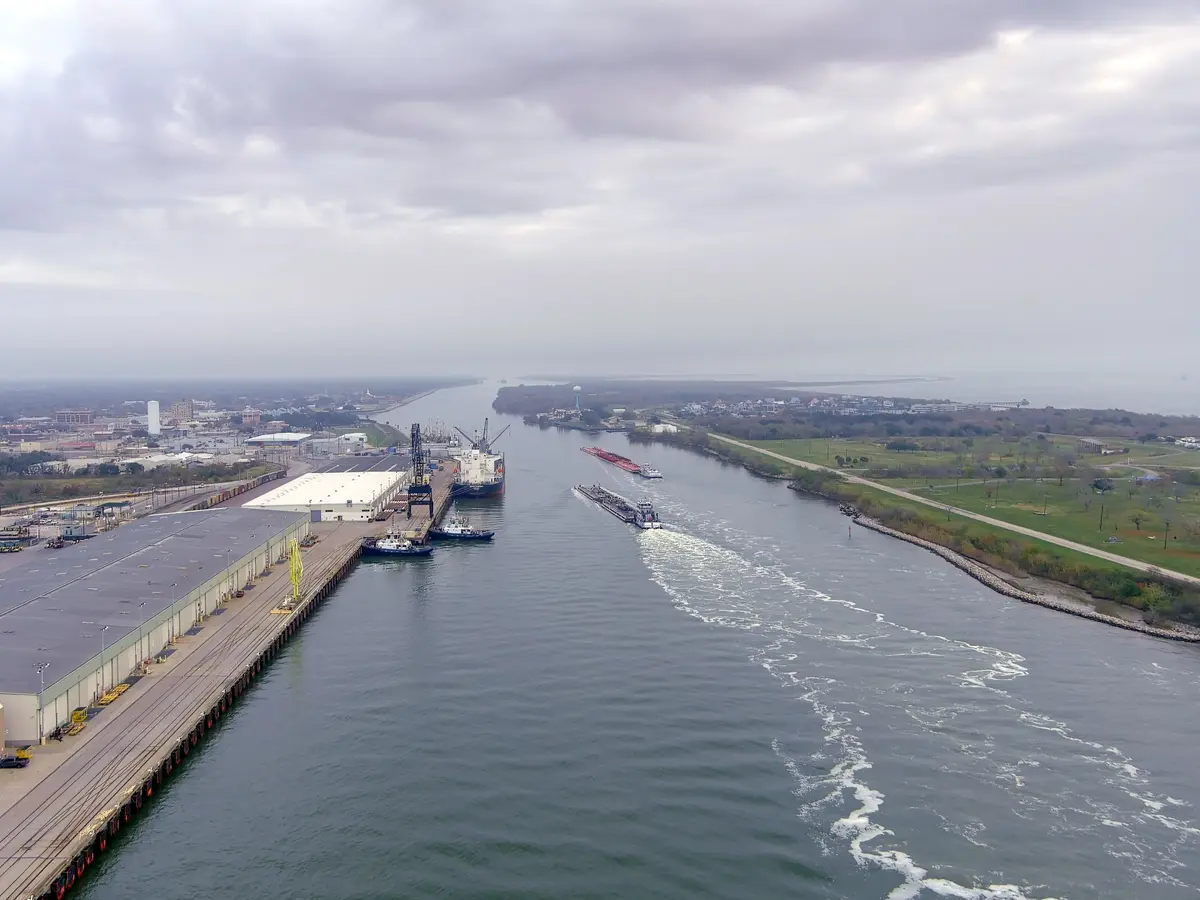
Port Arthur's $125,021 typical home price is driven by the realities of a Gulf Coast industrial city — a petrochemical and refining economy that creates jobs but also creates the environmental and economic pressures that keep residential prices low. US-69, US-96, and TX-87 (Gulfway Drive) connect Port Arthur to the broader Jefferson County corridor, and the city's size — the 71st-largest in Texas — means real urban infrastructure exists here. The catch is that property insurance costs in Jefferson County, shaped by hurricane exposure, are a meaningful part of the total housing cost picture that a home price alone doesn't capture.
Port Arthur suits buyers who work in the petrochemical industry or adjacent trades and want to minimize their mortgage while staying close to work. Buyers coming from outside the industry should think carefully about the local job market before committing, because the city's affordability is tightly linked to a specific economic sector.
#3 Northeast Texas Hub · Lamar County
Best for buyers who want a functional regional center at a modest price.
Paris carries a $173,974 typical home price for a mid-size city that functions as the commercial and civic hub of Lamar County and a wide stretch of Northeast Texas. US-82 and US-271 give it reasonable regional reach, and Loop 286 wraps a downtown that retains more commercial activity than many towns its size. The name draws jokes, but the reality is a genuinely functional small city with hospitals, schools, and retail that make it largely self-contained — you don't have to leave Paris for most everyday needs.
Paris works well for buyers who want a true regional center experience without regional-center prices — a hospital in town, a downtown worth walking, and a community that doesn't require a long drive for basics. It's a different kind of city than Henderson or Marshall, which are quieter and more dependent on what a county seat can deliver.
#4 Piney Woods Heritage Town · Anderson County
Best for remote workers drawn to historic character and Piney Woods scenery.
Palestine's $198,935 typical home price sits above the county-seat baseline for a reason: this is an Anderson County city with a real downtown, a rail heritage that draws visitors, and a natural setting in the Piney Woods that makes it genuinely attractive to buyers who prioritize scenery and small-town character. US-79, US-84, and US-287 connect it to the wider region, and Loop 256 anchors local circulation. The trade-off is that Palestine is still a small city, and the job base is limited enough that many residents work remotely or commute.
Palestine tends to appeal to remote workers, retirees, and buyers who have flexibility in where they earn income and want a town with genuine character — historic architecture, a walkable core, and a natural landscape that distinguishes it from the flatter, more industrial parts of East Texas.
#5 Lowest Rent · Rusk County
Best for buyers who want Longview proximity at a quieter pace.
Henderson's $200,026 typical home price reflects a Rusk County town that has been shaped by the oil economy for nearly a century without being consumed by it. US-259, US-79, and TX-64 connect Henderson to Longview to the north and the deeper reaches of East Texas to the south. It's a small city — the 209th-largest in Texas — with the feel of a county seat that takes itself seriously: a historic courthouse square, local institutions, and a residential fabric that attracts buyers priced out of Longview.
Henderson suits buyers who want proximity to Longview's jobs and services without Longview's price point, and who value a slower-paced, town-square kind of daily life. It's a meaningful step up in character from Marshall, but with a similar logic: you're trading services and scale for a quieter buy-in.
#6 Piney Woods College Town · Nacogdoches County
Best for buyers who want a college-town feel deep in the Piney Woods.
Nacogdoches carries a $224,292 typical home price that reflects what a state university does to a small East Texas city — it anchors the local economy, drives rental demand, and creates enough commercial activity to make the city feel more complete than its size would otherwise suggest. Stephen F. Austin State University is the defining institutional fact here. US-59 and US-259 connect Nacogdoches to the regional highway grid, and SH-7 and SH-21 provide east-west reach across the Piney Woods.
Nacogdoches is a strong fit for buyers who want a college-town atmosphere — independent dining, arts programming, a walkable university edge — at a price point that remains accessible. It's a different feel than Longview or Tyler: more academic, smaller in commercial scale, but with an energy and a sense of place that purely industrial or commercial cities in the region often lack.
#7 Bi-State Border City · Bowie County
Best for buyers who want interstate access and a true bi-state urban center.
Texarkana's $206,981 typical home price comes with a geographic quirk that no other city on this list can claim: the state line with Arkansas runs through the middle of it, which affects everything from retail patterns to school enrollment to how residents think about their commute. I-30 and I-369 give Texarkana genuine interstate access, and the city's size — the 106th-largest in Texas — means a real urban service base exists on the Texas side. The bi-state reality is a genuine complexity for buyers, not just a novelty.
Texarkana suits buyers who work in industries tied to the regional logistics, retail, or medical economy, and who don't mind navigating a city that operates across two tax and regulatory environments. It offers more commercial depth than Henderson or Marshall, but the bi-state dynamic means buyers should research exactly which side of the line a property sits on before making offers.
#8 East Texas Regional Center · Gregg County
Best for buyers who want the broadest services and employers in East Texas.
Longview's $234,128 typical home price reflects the position it holds as one of East Texas's most functional regional cities — a Gregg County hub with I-20 access, a real hospital system, a diversified employment base, and enough commercial infrastructure that most residents rarely need to leave for everyday needs. Loop 281 and US-259 anchor local circulation, and the city's status as the 51st-largest in Texas means it delivers urban services at a scale most of its East Texas neighbors cannot.
Longview tends to draw buyers who want a genuine city experience in East Texas — multiple healthcare options, a range of employers across oil, manufacturing, and services, and a residential market with enough breadth to find both entry-level and move-up options. Buyers coming from Henderson or Kilgore often land here when they decide that the drive to services isn't worth what they're saving.
#9 Dairy Country Corridor Town · Hopkins County
Best for long-distance commuters or remote workers who want rural quiet.
Sulphur Springs carries a $244,634 typical home price that is shaped in part by its position along I-30 — the same interstate that connects Texarkana to the Dallas-Fort Worth metro — which makes it a viable long-distance commuter town for buyers willing to trade a longer drive for a quieter, small-city life. Hopkins County's agricultural economy, dairy farming in particular, gives Sulphur Springs a working-town identity that is distinct from the university and petrochemical cities elsewhere on this list. The trade-off is that local employment options are limited.
Sulphur Springs suits buyers who are either employed in agriculture-adjacent industries, work remotely, or are willing to make a significant commute toward a larger metro. Its character is genuinely rural-adjacent in a way that cities like Longview or Tyler are not — which is a selling point for some buyers and a limitation for others.
#10 Southeast Texas Urban Hub · Jefferson County
Best for buyers who want big-city scale with a modest price — and can manage the insurance.
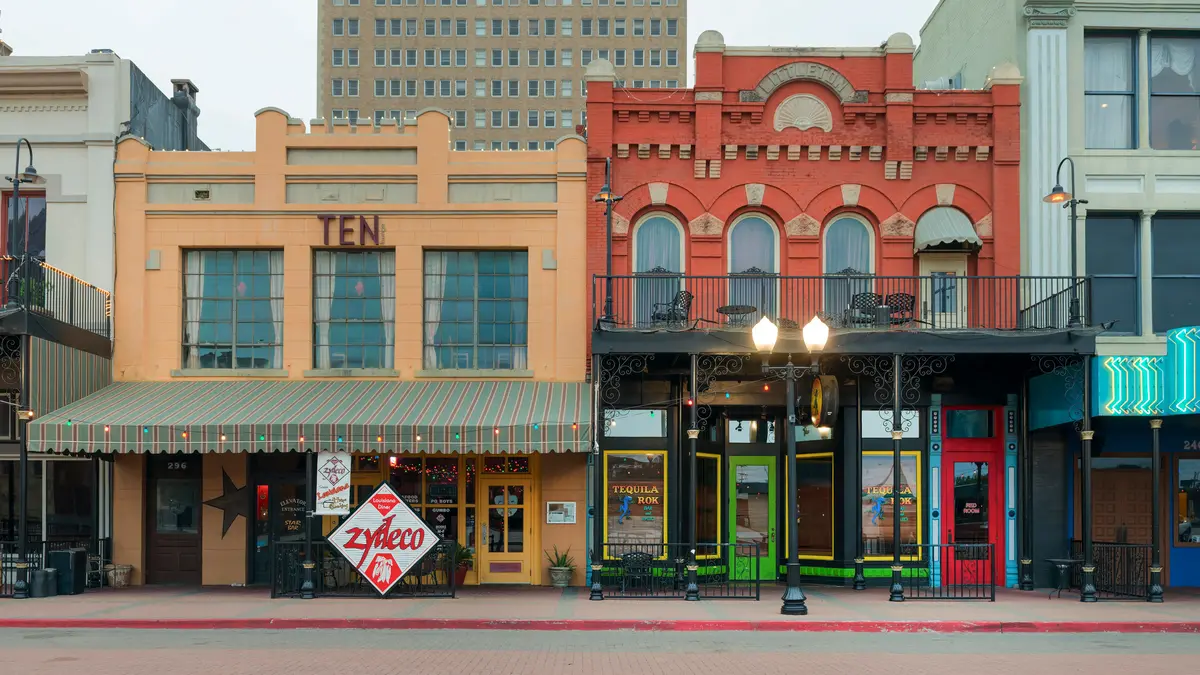
Beaumont's $174,566 typical home price is one of the more striking numbers on this list, given that this is the 39th-largest city in Texas — a genuine regional center with I-10 access, a full hospital and university infrastructure, and a petrochemical economy that supports a real professional class. The explanation is the same as Port Arthur's: Jefferson County's hurricane exposure drives insurance costs that are a significant and ongoing part of the total cost of homeownership here, costs that don't show up in the home price but show up every year on the renewal notice.
Beaumont suits buyers who want genuine urban scale — medical options, higher education, a range of employers, and a commercial scene that most East Texas cities cannot match — and who understand that the insurance environment in Southeast Texas is part of the financial equation, not a footnote. It's a fundamentally different city from the smaller county seats on this list, and the price reflects a market shaped by industrial risk more than by lack of amenities.
#11 Oil Patch Small City · Gregg County
Best for buyers who want Longview access at a smaller-town pace.
Kilgore's $215,187 typical home price positions it as a smaller alternative to neighboring Longview, close enough on I-20 to access Longview's services and employment base without paying Longview prices. Gregg County straddles both cities, and Kilgore's own identity — shaped by the East Texas Oil Museum, Kilgore College, and a compact downtown — gives it more character than a pure bedroom community. TX-31 and TX-42 extend local reach into the surrounding counties.
Kilgore works well for buyers who want a smaller footprint and a quieter pace than Longview while remaining close enough to use Longview's healthcare, retail, and employment. The Kilgore College presence adds a layer of local activity that purely residential small cities in the region often lack.
#12 Rose Country Metro Hub · Smith County
Best for buyers who want East Texas's most complete urban experience.
Tyler's $253,272 typical home price is the natural outcome of being the dominant regional city in East Texas — the 37th-largest in Texas, home to the University of Texas at Tyler, a major regional medical presence, and a commercial corridor along Loop 323 that serves a catchment area stretching across multiple counties. US-69 (Broadway Avenue) and Loop 323 anchor daily life for most residents. The city's status as an East Texas hub is real and durable: the gardens and the annual festival draw visitors, but the more lasting draw for buyers is a city that genuinely has everything within it.
Tyler suits buyers who want the most complete urban experience East Texas offers — the widest range of employers, medical options, restaurants, and schools — and who are willing to pay a premium for it. For buyers in a senior-focused household, Hollycreek Village is one established community option here. The city draws relocating families from across the region precisely because it reduces the trade-offs that come with living in a smaller East Texas town.
#13 Institutional University City · Walker County
Best for university and state-system employees who need I-45 corridor access.
Huntsville carries a $262,042 typical home price shaped by a combination of forces that have little to do with traditional Texas real estate drivers: Sam Houston State University, the Texas Department of Criminal Justice (which has its headquarters here), and I-45's corridor between Dallas and Houston all pull in residents who are employed by institutions rather than industries. SH-30, SH-75, and US-190 connect the city internally, and I-45 defines its regional identity.
Huntsville suits buyers who are employed by SHSU, the state correctional system, or who work remotely and want I-45 access to Houston without paying Houston prices. It's a fundamentally institutional city — which gives it stability and a consistent rental market — but buyers who need a diverse private-sector job base may find it limiting.
#14 Northeast Texas Working Town · Titus County
Best for buyers who want a stable, self-sufficient small city on I-30.
Mount Pleasant's $223,026 typical home price reflects a Titus County city shaped by a mix of poultry processing, manufacturing, and retail trade that serves a rural catchment across Northeast Texas. I-30 and US-271 give it meaningful highway connectivity, and its position as the 186th-largest incorporated city in Texas means it's genuinely small — but small in a self-sufficient way, with local schools, medical access, and enough commercial activity to handle everyday needs.
Mount Pleasant suits buyers who are employed locally in manufacturing or agriculture-adjacent industries, or who want a low-traffic, community-oriented small city along the I-30 corridor. It lacks the college-town energy of Nacogdoches or the regional commercial depth of Tyler, but for buyers whose priorities run toward community stability and affordability over amenity breadth, it's a coherent choice.
#15 Mid-County Industrial Neighborhood · Jefferson County
Best for industrial-corridor workers who want an established neighborhood setting.
Port Neches carries a $247,291 typical home price that tells a different story than neighboring Port Arthur — this is a small, established residential city in Jefferson County where the industrial wages of the petrochemical corridor translate into a stable, owner-occupied neighborhood fabric that residents are genuinely attached to. FM-365 and TX-347 connect Port Neches to the broader Mid-County area. The same Gulf Coast insurance pressures that affect Port Arthur and Beaumont apply here, and they are a material part of the ongoing cost equation.
Port Neches suits buyers who work in the industrial corridor and want a quiet, established neighborhood rather than an urban environment — it's a fundamentally different residential character than Beaumont or Port Arthur, more suburban and community-oriented. The trade-off is the same as across Jefferson County: insurance costs and storm risk are ongoing financial realities, not one-time ones.
#16 Deep East Texas Piney Woods Hub · Angelina County
Best for buyers who want a Deep East Texas hub with real services in town.
Lufkin's $200,713 typical home price covers a mid-size Angelina County city that functions as the commercial and medical hub for a wide stretch of Deep East Texas — an area where the alternatives to driving to Lufkin are significantly farther away. US-59 and US-69 carry most of the regional traffic through town, and Lufkin's timber-industry heritage has given way to a more diversified economy that includes healthcare, retail, and light manufacturing. The Village of Stonewood is one established senior community option in the city.
Lufkin suits buyers who want a genuine regional-center experience in the Piney Woods — real medical options, a stable commercial base, and a community that doesn't require a very long drive for services — at a price point that still reflects a small-market economy. It's a city that punches above its size in terms of what it offers residents, which explains why it draws buyers from the smaller towns that surround it.
In East Texas, the gap between a city's home price and what it delivers day-to-day is where the real decision lives. A lower price tag in a city with fewer services is a different trade-off than a slightly higher one in a place with a hospital, a university, and a functioning downtown.
Tell us what you need help with and we'll connect you with local resources.
