
What Is Living in Marshall, Texas Like?
Most people driving through Marshall on I-20 see the pine trees and keep going toward Longview or Shreveport. That's their loss. Marshall, the Harrison County seat and the self-described Cultural Capital of East Texas, is a city of 24,467 with a serious arts history, two universities, and a housing market that still makes financial sense in a way that most of Texas no longer does. The city sits at the crossroads of I-20 and US-59, which puts it on a major freight corridor running northwest from the Port of Houston — and gives residents straightforward regional access without the sprawl of a major metro.
The economic backbone here is anchored by institutions rather than a single industry: Marshall Independent School District, the City of Marshall, a regional health system, and East Texas Baptist University together make up the largest local employer base. Wiley College — the oldest historically Black college or university west of the Mississippi River, founded in 1873 — gives the city a depth of academic and cultural heritage that most cities its size simply don't have. Marshall ISD holds a C rating, according to the Texas Education Agency. Families with school-age children should read that rating honestly and weigh it against the city's affordability and community character — the full picture is on the schools page.
On the affordability side, Marshall is one of the clearest value propositions in East Texas. The typical home price of $166,238 (July 2026) sits well below what buyers face in Longview or Hallsville — both noticeably higher — and the median household income of $49,817 is at or above what's needed to buy at that price point. Typical rent runs $1,259/mo (Zillow ZORI, July 2026), which gives renters real breathing room. The trade-off is that Marshall is a place where you make your own entertainment, drive for most errands, and invest in the community rather than consuming it. For the full cost-of-living breakdown, see the cost of living page.
Whether you're considering a move or just researching the area, the sections below break down Marshall's neighborhoods, housing market, commute realities, local economy, and what day-to-day life here is really like.

Marshall at a Glance
Looking to buy in Marshall? Estimate your payment.
Enter your numbers to see an estimated monthly mortgage payment.
Estimate only. Excludes HOA fees and mortgage insurance. The interest rate above is a starting point, not a quoted rate — replace it with your own to see real numbers. Insurance is a flat placeholder, not a Marshall quote.
Why Are People Moving to Marshall?
The case for Marshall is shorter than most and more honest. Price, space, and a sense of place — those are the three things people name when they explain why they chose this city over Longview or Tyler or somewhere further west.
The Affordability Reality
At a typical home price of $166,238 (July 2026), Marshall is one of a shrinking number of Texas cities where a median household income still covers the mortgage. That's not a small thing in 2026. The effective property tax rate sits at approximately 1.02%, which is lower than the Texas average for similar-sized cities and a meaningful line item when you're doing the math on monthly costs.
People priced out of Longview — where prices run noticeably higher — regularly land in Marshall and find more house, a quieter street, and a shorter drive than they expected. The catch is that Marshall's economy is smaller and the job market thinner; most people who move here for affordability are either working remotely, already employed by the school district or the health system, or commuting out.
Investment Momentum
Building permits issued in 2024 carried a total valuation of over $36 million — the highest in a decade, driven largely by commercial construction. Two projects add near-term momentum: Solugen, a chemical technology company, has a 500,000-square-foot facility planned adjacent to the Archer Daniels Midland corn plant, with 50 permanent jobs targeted for 2027. In January 2026, Harrison County announced a $400 million battery energy storage project from Peregrine Energy Solutions, intended to benefit local families, schools, and businesses.
Neither project transforms Marshall overnight. But they signal that industrial investment is returning to a city that has historically been overlooked.
History and Identity
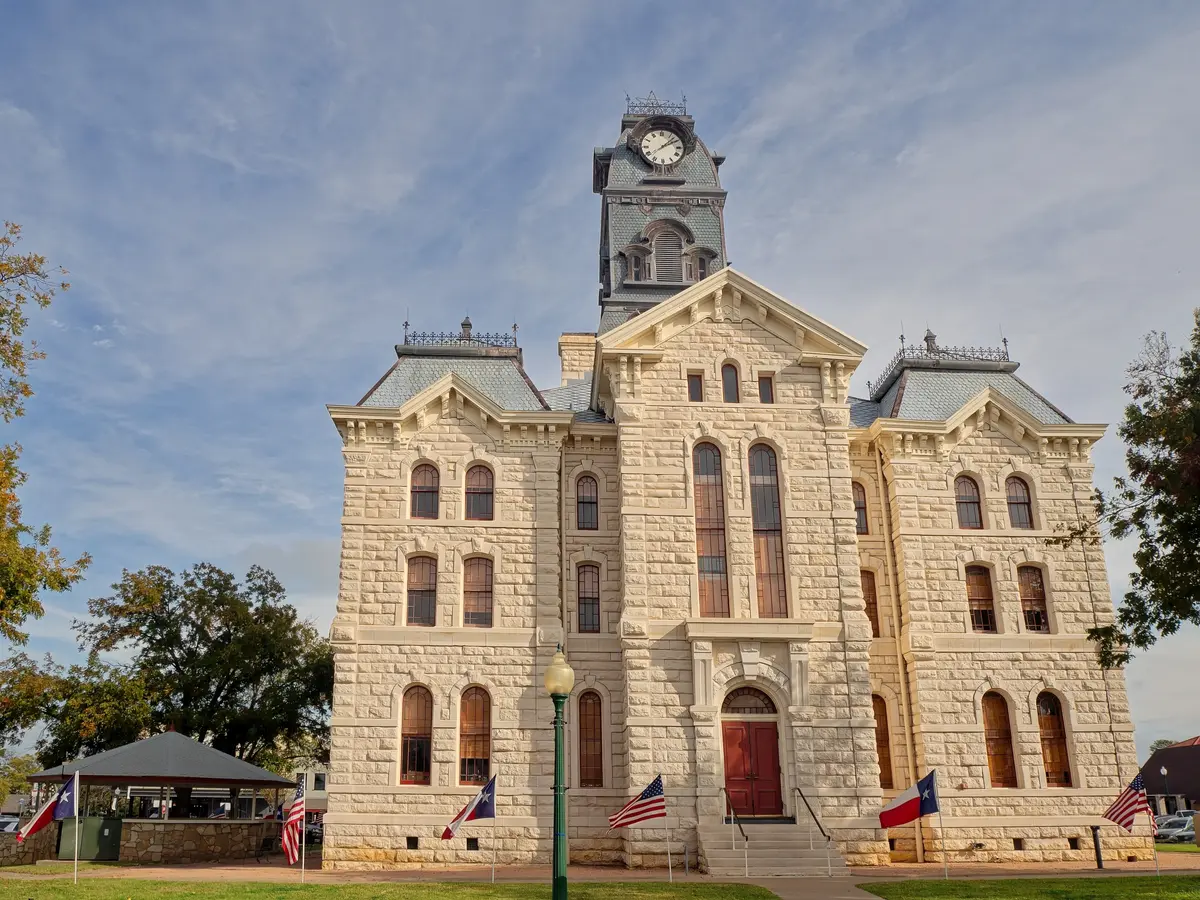
Marshall has more than 100 historical markers and medallions — more per square mile than most East Texas cities — with sites listed on the National Register of Historic Places. The 1901 Harrison County Courthouse anchors downtown. The Starr Family Home State Historic Site, the Texas & Pacific Depot and Railway Museum, and the Michelson Museum of Art give the city genuine cultural weight. Wiley College's nationally famous debate team of the 1930s — the subject of the 2007 Denzel Washington film The Great Debaters — is the most storied chapter in that history.
People who move here from cities without that kind of identity often say the same thing after a few months: they didn't expect to feel it so quickly. The city is proud of what it is, and that pride is contagious.
What Daily Life Feels Like in Marshall
Marshall has a median age of 32.5 years — genuinely young for a small East Texas city — and daily life reflects that. This is not a retirement community or a commuter dormitory. It's a working city with a university energy, a strong sense of local ritual, and a pace that rewards people who slow down to participate in it.
The Seasonal Rhythm
The city gets 212 sunny days a year, but East Texas summers are legitimately brutal. July and August regularly hit the upper 90s with high humidity, and newcomers from drier climates almost always underestimate it. The flip side is that winters are mild — freezes happen but rarely linger — and spring and fall are genuinely beautiful in the Piney Woods, when the trees turn and the festivals kick in.
What surprises people most after their first year here is how much of Marshall's social calendar revolves around outdoor events they didn't expect from a city this size. The Bear Creek BBQ & Balloon Glow Festival brings nearly 20 hot-air balloons each September. The FireAnt Festival in October fills Main Street with over 100 vendors, a parade, and a 5K. And the Wonderland of Lights — which has run for decades — transforms Historic Downtown in late November with millions of white lights on the Harrison County Courthouse, an outdoor ice-skating rink, a vintage carousel, carriage rides, and Santa's Village, drawing crowds from across the region. The lighting ceremony happens the Wednesday before Thanksgiving, and longtime residents treat it like a second Thanksgiving.
Kids and Community
Families with school-age children find that youth sports and community activities are woven tightly into the city's social fabric. Active UIL athletics programs and the Marshall Maverick identity mean Friday night football genuinely fills stands. East Texas Baptist University and Wiley College bring lectures, performances, and athletic events that are open to the broader community and give the city a cultural calendar a town this size wouldn't otherwise have. More on youth programs is on the schools page.
What You Give Up
Marshall is a place where most daily errands require a car. The downtown is walkable once you're in it, but the grocery store, the hardware store, and anything resembling a big-box retail run means driving. A serious shopping trip often means heading toward Longview. For residents used to suburban amenities within five minutes, the adjustment takes a few months. People who move out typically cite that gap — not the city itself — as the reason they left.
The Marshall Housing Market Right Now
Marshall's housing market is the most straightforward in East Texas to understand: prices are low, inventory turns over at a measured pace, and the city's affordability math still works for buyers at the median income level — which is increasingly rare in Texas.
What Buyers Actually Find
The typical home price of $166,238 (July 2026) reflects a market of older construction, generous lot sizes, and neighborhoods that range from the historic streets near downtown to quieter suburban pockets on the city's edges. Entry-level options exist well below that figure, and the upper end of the market — larger homes near the Indian Springs and Country Club corridor — runs above it without approaching the price levels of comparable properties in Longview or Hallsville.
Some areas of the city show their age. Buyers willing to do renovation work find genuine value; buyers expecting move-in-ready condition in every price range may need to adjust expectations or stretch their budget. The detailed neighborhood breakdown, including which areas suit which buyer profiles, is on the best neighborhoods page.
The Rental Side
At a city-wide typical rent of $1,259/mo (Zillow ZORI, July 2026), Marshall's rental market offers options that are meaningfully below what renters pay in Longview or Tyler. Single-family rentals are common and often represent better space-per-dollar than apartment complexes. For renters weighing a purchase, the affordability math — with the median household income at or above what's needed to buy at the typical price — makes ownership a realistic near-term goal for many households.
The Property Tax Picture
Texas has no state income tax, and the effective property tax rate in Marshall of approximately 1.02% is the key number to run in your budget. The full tax and cost-of-living picture is on the cost of living page.
Marshall Neighborhoods
Marshall has several distinct areas — each with its own character and appeal. Here’s a breakdown to help you narrow down where to focus your home search.
🏡 Historic Downtown / Old Town Marshall
The city's most walkable pocket, built around the 1901 Harrison County Courthouse and Main Street's mix of museums, independent cafés, and historic architecture. Best for buyers who want to be in the middle of the Wonderland of Lights footprint and within walking distance of the city's cultural anchors.
🏠 Oakwood Estates
An established residential area with larger lots and a quieter street feel, popular with families who want space without being far from the city's core amenities. The housing stock skews toward mid-century and later construction with room to grow.
🌳 Sugar Creek Estates
A subdivision-style neighborhood on the quieter edges of Marshall, suited to buyers looking for newer construction and a more private feel. It draws families and working households who want a clean suburban environment without the Longview price tag.
🏘 Indian Springs / Country Club
One of Marshall's more established and spacious residential corridors, drawing buyers who want larger homes and mature landscaping in a setting that feels removed from the city's commercial activity. This area consistently runs above the city-wide typical home price.
🏔 Pinewood / Linwood
A mid-city residential area with a mix of housing ages and styles, reflecting Marshall's working-class roots and offering some of the city's more accessible entry points for first-time buyers. Practical, central, and unpretentious.
🌆 Pine Burr Circle area
A quieter residential pocket that appeals to buyers seeking lower-density living and a neighborhood feel that hasn't been overrun by new development. The pine-heavy lots give this area a distinctly East Texas character.
Pros & Cons of Living in Marshall
The Pros
- Very low cost of living relative to national and Texas averages
- Small-town character with historic architecture and two four-year colleges
- Short drive to Shreveport, LA for additional jobs and entertainment
- No state income tax
The Cons
- Crime rates run higher than many similarly sized U.S. cities
- Limited local job market and slower population growth
- Fewer big-city amenities and longer drives needed for major shopping or specialty healthcare
Getting Around & Commuting in Marshall
Marshall's position on I-20 and US-59 is the single most important geographic fact for anyone considering a move here. Those two corridors give the city regional access that most small East Texas cities don't have — and they shape where people live, where they work, and how far they're willing to drive.
The Daily Commute
The most common commute pattern from Marshall is about 25 minutes to Longview, TX, where the job market is broader and major employers are concentrated. That drive is I-20 west — straightforward on most days, though the corridor picks up freight traffic and the occasional backup near the Longview interchange during morning hours. Residents heading toward Shreveport, Louisiana, face roughly a 45-minute drive east on I-20. Dallas is approximately two hours west — realistic for occasional trips but not a daily commute.
US-59 carries significant freight from the Port of Houston corridor, which matters less for commuters and more for the industrial employers along that route. SH-43 connects Marshall northeast toward Caddo Lake and the state park, and US-80 provides a slower parallel east-west option. Loop 390 handles circulation within the city itself.
Within Marshall
Inside the city, a car is essential for almost everything. The Historic Downtown area is walkable once you're there — the Harrison County Courthouse, the Michelson Museum of Art, the Texas & Pacific Depot, and a cluster of cafés and shops are all within easy walking distance of each other. But the grocery store, medical appointments, and most daily errands require a drive. Plan on driving everywhere and treat any walkable stretch as a bonus.
Air Travel
East Texas Regional Airport (GGG) is 32 miles from Marshall and serves the region with connections to Dallas/Fort Worth. For most residents, that's the practical airport for work travel; longer-haul itineraries often mean driving to Dallas or Shreveport for more direct routing options.
Who This Suits
Marshall's commute picture works best for remote workers, people employed locally by the school district or the health system, and households where one partner commutes to Longview and the other works in town. It's a harder fit for anyone who needs daily access to a major metro — the two-hour Dallas distance is manageable a few times a month, not daily.
Schools in Marshall
Families relocating to Marshall have public, private, and higher-education options nearby. Here’s a quick overview.
🎓 School District
Marshall Independent School District serves K–12 students across Marshall and the surrounding area. Rated C (source: Texas Education Agency, 2025 A-F accountability rating (2024-25 school year)).
🏆 Graduation Rate
The 4-year high-school graduation rate here is approximately 82%.
📚 Higher Education
Texas’s public universities — the University of Texas at Austin, Texas A&M University, and the University of Houston — offer four-year degrees statewide, with one of the largest community college systems in the country (50+ public community college districts) providing two-year and workforce programs.
🌐 Online Learning
UT Austin Online and Texas A&M University Online offer fully accredited online degrees for remote learners across the state.
Safety in Marshall
A quick look at how Marshall compares on the numbers that matter most when weighing a neighborhood or a move.
🛡 Violent Crime
Approximately 3 per 1,000 residents.
🔒 Property Crime
Approximately 16 per 1,000 residents.
Compared to the most recent national figures from the Bureau of Justice Statistics (2024), Marshall’s violent crime is below the national average (about 3.7 per 1,000), and property crime is below the national average (about 18.4 per 1,000).
Against Texas as a whole, Marshall’s violent crime is roughly two-thirds of the state average, and property crime is somewhat below the state average (Bureau of Justice Statistics, Crime Known to Law Enforcement, 2024 (tables 2 and 3)).
Crime rates can vary a lot within a single city, so the citywide numbers above are only a starting point. Some neighborhoods in Marshall run well below these averages, while others run higher — the kind of block-by-block detail that matters most when you’re actually choosing where to live. The full guide below breaks it down neighborhood by neighborhood.
Working in Marshall
Marshall’s largest employers span several industries — here are some of the anchors of the local job market.
🎓 Marshall Independent School District
Education
🏛 City of Marshall
Municipal government
🏥 CHRISTUS Good Shepherd Medical Center - Marshall
Healthcare
🎓 East Texas Baptist University
Higher education
Retiring in Marshall
Marshall draws retirees for its balance of amenities, outdoor access, and cost. Here’s what to weigh.
🌤 Climate
Marshall gets 212 sunny days a year, with mild winters that rarely bring extended cold snaps. Summers are the challenge — heat and humidity arrive in June and stay through September, which shapes how most retirees structure their outdoor time. Spring and fall in the Piney Woods are genuinely pleasant and draw residents outdoors for the city's festivals and the Caddo Lake corridor.
🍴 Lifestyle
The city's arts and history infrastructure — the Michelson Museum of Art, the Texas & Pacific Depot and Railway Museum, the Starr Family Home State Historic Site — gives retirees a cultural calendar that belies the city's size. The annual Wonderland of Lights festival in November and the Bear Creek Balloon Glow in September are community anchors. A rotation of local coffee shops and independent restaurants fills out the day-to-day dining and gathering picture.
🏚 55+ Communities
No 55+ communities were found in Marshall. Retirees moving here typically purchase single-family homes in established neighborhoods, with the Indian Springs and Country Club area a common choice for those seeking quieter streets and more space. The full retirement picture, including healthcare access, is on the retiring page.
✈ Getting Around
A car is essential in Marshall — most daily needs require driving, and residents rely on their own vehicles for groceries, medical appointments, and most services. The downtown historic core is walkable for short trips once you are in it. East Texas Regional Airport (GGG) is 32 miles away and connects to Dallas/Fort Worth for regional air travel.
🏛 Texas Taxes for Retirees — What to Know
- No state income tax — Texas has no personal income tax — constitutionally protected under Article VIII, Section 24. Social Security, pensions, 401(k)/IRA withdrawals, and annuity payments are all untaxed at the state level, with no state return to file.
- Sales tax is the tradeoff — The state sales tax is 6.25%, and local add-ons bring the combined rate in Marshall to 8.25% (Texas Comptroller of Public Accounts, city sales and use tax rates, July 2026). Groceries and prescription drugs are exempt.
- Property taxes — the real tradeoff — Texas’s effective property tax rate averages about 1.40%, among the highest in the country, since property tax (not income tax) funds most local government and schools.
- Over-65 homestead exemption and school-tax freeze — Homeowners 65+ (or disabled) get an additional $60,000 exemption from their home’s value for school district taxes, on top of the general homestead exemption — $200,000 off school taxable value combined, following November 2025’s Proposition 11 (SB 23), which raised the over-65 exemption to $60,000, and Proposition 13 (SB 4), which raised the general homestead exemption to $140,000. Once claimed, your school district tax bill is frozen at that year’s amount and cannot increase as home values rise, and the ceiling can transfer if you move to a new home within Texas.
- Deferral option if cash is tight — Homeowners 65+ can defer property tax payment entirely for as long as they live in the home, rather than paying it currently — interest accrues, but no forced sale.
- No estate or inheritance tax — Texas has no estate tax, no inheritance tax, and no gift tax.
- No separate capital gains tax — Because Texas has no state income tax, capital gains — including on investments and home sales — are not taxed at the state level at all, unlike states such as Washington that tax capital gains separately from income.
Tax laws change frequently and individual situations vary. This is general information, not tax advice — always consult a qualified Texas tax professional or CPA for personalized retirement tax planning.
Weekends & Local Favorites in Marshall
Marshall's weekend scene is built around the outdoors, the city's historic downtown, and a community festival calendar that punches well above the city's weight. Residents who take the time to plug in find more going on than they expected; those who don't often feel the smallness of the city more acutely.
The Outdoors Anchor
Caddo Lake State Park, about 15 miles northeast of Marshall via SH-43, is the city's most significant outdoor asset. The park covers 484 acres on Big Cypress Bayou, with historic CCC-built cabins, campsites, trails, and options for canoeing, kayaking, and fishing that make it a genuine weekend destination — one that residents with a canoe or kayak return to repeatedly. It's also where you take out-of-town guests when you want to show them what East Texas actually looks like. City Park serves as the more accessible everyday green space within Marshall itself, with room for picnics, recreation, and family gatherings close to home.
Food, Coffee, and Gathering Spots
The dining and coffee scene in Marshall is smaller than what Longview offers but has real local character. The Jalapeno Tree is an East Texas institution with a loyal following. Jucys Hamburgers is the kind of counter-service burger place that regulars defend fiercely against any fast-food comparison. Cajun Tex Marshall leans into the Louisiana influence that sits just 45 minutes east, and Porky's Smokehouse & Grill covers the barbecue side of the ledger. Pazzeria by Pietro's rounds out the options with a different direction entirely.
On the coffee side, Joe Pine Coffee Co. has become the gathering spot that independent cafés in small cities aspire to be. Huey's Coffee, BeeDonut, Main Street Fuel Bar, and the Blissmoor Company Store give residents a genuine rotation of options rather than a single default.
Culture and History
The Michelson Museum of Art houses a permanent collection from a Russian-American painter whose work found an unlikely home in East Texas — an unexpected find in a city this size, and genuinely worth an afternoon. The Texas & Pacific Depot and Railway Museum and the Starr Family Home State Historic Site give the city's history a physical form that's easy to explore. Marshall Pottery, one of the largest potteries in the United States, is the kind of place that draws day-trippers from across the region and keeps residents coming back seasonally. Wiley College remains a hub of cultural programming, and East Texas Baptist University adds its own events calendar to what's available on any given weekend.
Local favorites in Marshall
Restaurants
- The Jalapeno Tree
- Jucys Hamburgers
- Cajun Tex Marshall
- Pazzeria by Pietro's
- Porky's Smokehouse & Grill
Outdoors
- Caddo Lake State Park
- City Park
Coffee
- Joe Pine Coffee Co.
- BeeDonut
- Huey's Coffee
- Blissmoor Company Store
- Main Street Fuel Bar
Top Things Locals Say About Marshall
The best intel about a city comes from the people who actually live there. Here’s what Marshall residents say when newcomers ask the questions everyone’s thinking.
“I drove through Marshall twice before I actually stopped, and I kept thinking it was smaller than it felt once I lived here. The festival season alone — I wasn't prepared for how much of my social life would just organize itself around it.”
— Recent Marshall home buyer
“What's the most surprising thing about living in Marshall?”
The history catches you off guard. You expect a small East Texas city, and then you realize Wiley College has been here since 1873, that the Harrison County Courthouse has been lit up every November for decades, that there are historical markers on streets you drive past every day without noticing. It's not a city trying to build an identity — it already has one, and it's been there longer than most of the people who live here.
“What do locals love most about Marshall?”
The pace and the price. People here will tell you they get more house than their friends in Longview, a yard they can actually use, and enough left over at the end of the month to do something with it. And the Wonderland of Lights is genuinely special — it's not a tourist gimmick, it's the thing the whole city looks forward to. The Harrison County Courthouse lit up with millions of white lights, the ice rink set up downtown, the whole neighborhood smelling like food — that's the moment of the year.
“What should newcomers to Marshall know?”
Plan your grocery runs and your errands as actual errands — not quick stops between things. Most of what you need requires a real drive, and the mindset shift from a denser suburb to Marshall takes a few months. Also: summer humidity is not a joke. People who move here from West Texas or the Southwest almost always underestimate it. July and August are genuinely rough, and you'll spend more time in air conditioning than you planned. Fall, though, is worth every bit of it.
“How much do you need a car in Marshall?”
You need a car for essentially everything outside of a few blocks in Historic Downtown. The downtown core — the courthouse, the museums, a handful of cafés — is walkable once you're in it, but getting there from most neighborhoods means driving. Groceries, medical appointments, most retail, and anything resembling a major shopping trip all require a car. Marshall is a drive-everywhere city in the East Texas tradition, and residents who accept that early settle in faster.
Cities Near Marshall
Other communities near Marshall worth a look — each with its own character and price point.
| City | Distance | Best For | Vibe | Median Rent | Median Buy |
|---|---|---|---|---|---|
| Longview | 23 mi | Broader jobs, more retail options | Larger, more commercial, busier | $1,177 | $234,128 |
| Hallsville | 12 mi | Families prioritizing school ratings | Quiet, suburban, fast-growing | $1,200 | $260,000 |
| Jefferson | 17 mi | History lovers, slower pace | Small, historic, tourist-friendly | $900 | $180,000 |
More Helpful Guides for Marshall
Going deeper on Marshall? Our blog series covers everything from first-time buying to retiring here — explore the guides below.
Local Expert Takeaway: Marshall rewards people who move here with their eyes open. The housing math is real — a typical home at $166,238 (July 2026) and a property tax rate around 1.02% is a combination that barely exists in Texas anymore. The commute to Longview is about 25 minutes, which keeps a broader job market within reach. And the city's identity — two universities, a century of historical markers, the Wonderland of Lights filling downtown every November, Caddo Lake State Park less than 20 miles out — gives daily life a texture that pure affordability suburbs can't replicate. The honest trade-off: you will drive for almost everything, the school district rating requires a clear-eyed look, and the job market inside the city is thin enough that remote work or a Longview commute is part of most households' plan.
Quick Takeaways & FAQs
✅ Marshall's typical home price of $166,238 (July 2026) is one of the most affordable entry points in East Texas, with a property tax rate around 1.02%.
⚠️ The local job market is limited — most working residents commute about 25 minutes to Longview, TX or work remotely, and the school district holds a C rating from the Texas Education Agency.
📍 Wiley College, founded in 1873, is the oldest HBCU west of the Mississippi River, and its nationally famous 1930s debate team is the subject of the Denzel Washington film The Great Debaters — Marshall carries more history per block than almost any city its size.
Is Marshall, Texas a good place to live?
How far is Marshall, Texas from Longview and Dallas?
What is the housing market like in Marshall, TX?
What are the schools like in Marshall, Texas?
What do people actually do for fun in Marshall, TX?
Helpful Links for Moving to Marshall
Moving to Texas?
Tell us what you need help with and we'll connect you with local resources.
