
You've run the numbers and they don't lie. Marshall, Texas is dramatically cheaper than wherever you're sitting in California right now — and not in a subtle, "you'll save a little" way. We're talking about a city where the typical home price stands at $166,238 (Zillow Home Value Index, July 2026), a figure that reads like a down payment in most California ZIP codes. The city of 24,467 sits in the Piney Woods of East Texas, roughly 40 minutes from Shreveport, Louisiana, and about two hours from Dallas–Fort Worth via I-20 — which means you are not as far from a major metro corridor as the name might suggest.
What makes Marshall something more than a cheap alternative is the institutional weight behind it. East Texas Baptist University and Wiley College — the oldest historically Black college west of the Mississippi, founded in 1873 — give Marshall a college-town energy that punches above its population. The Marshall Independent School District is the city's largest employer, and the downtown square hosts the Wonderland of Lights each Christmas season, routinely described as one of the largest light festivals in the United States. This is a city with a genuine cultural identity, not just a low price tag.
For most people moving from California, the lifestyle shift is real in both directions. Texas has no state income tax, and your housing dollar stretches in ways that feel almost implausible after years in Sacramento, the Bay Area, or San Diego. The compromise is a humid subtropical climate — summers in the Piney Woods regularly hit 90 to 95°F with genuine humidity — and a slower pace of development than the Texas metros getting all the headlines. Health insurance premiums run noticeably below what you were paying in California, though you will drive farther for specialist care. The landscape itself is a surprise: tall loblolly pines, cypress-lined bayous, and Caddo Lake State Park replace the arid terrain most of California presents.
Whether you're drawn here by remote work, retirement savings, or a job offer, this guide walks through the tax math, the housing reality, the cultural adjustment, the climate, and the honest trade-offs that California transplants tend to discover after about six months.
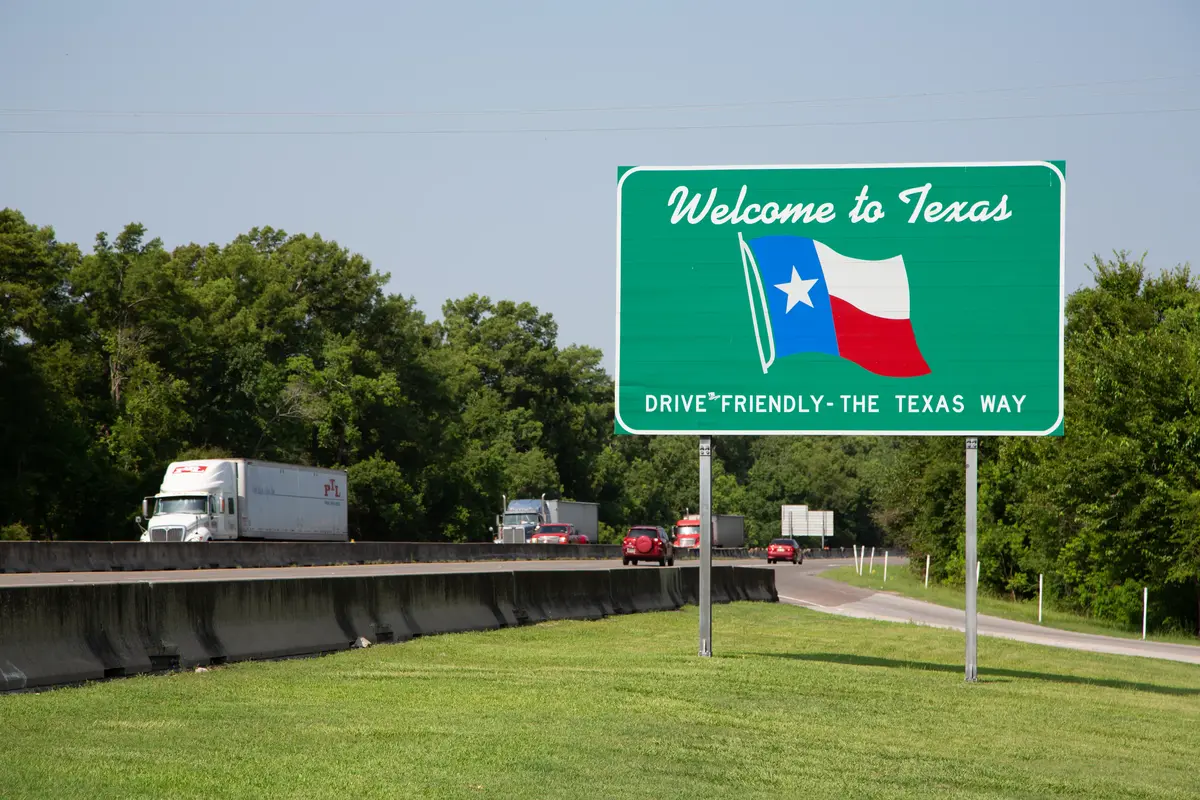
The Tax Shift: What Leaving California Actually Saves You
The headline number is state income tax, and it is not close. California's top state income tax rate of 13.3% applies only to the highest earners, but the burden kicks in at every income level — even a single filer earning $100,000 pays several thousand dollars annually to the California Franchise Tax Board. Texas has no state income tax at all. For most California transplants, the paycheck difference is visible on the first pay stub.
Sales tax moves in your favor as well, though more modestly. California's statewide base sales tax rate of 7.25% is the floor — local add-ons push the combined rate above 10% in parts of Los Angeles County. Texas's base rate is 6.25%, with local additions possible but generally keeping total rates below the California peak. The savings on everyday purchases add up quietly over a year.
Property tax is where the story reverses, and you should understand it clearly before assuming Texas is a tax paradise. California's effective property tax rate of 0.71% sits well below Marshall's effective rate of 1.02%. On paper, Texas charges more per dollar of assessed value. In practice, it almost never matters: the typical Marshall home is priced at $166,238 (July 2026), while California's statewide typical home value of $773,735 means the California buyer is applying that lower rate to a far larger number. The annual property tax bill in Marshall is substantially lower in dollar terms for most buyers, even though the rate is higher.
The Honest Tax Trade-Off
Texas makes up some of the lost income tax revenue through property taxes and sales taxes, so the savings are real but not infinite. What you actually gain is the elimination of California's income tax — which, depending on your bracket, is the single largest tax you pay. For remote workers bringing California salaries to Marshall's cost structure, the combined effect of no income tax and dramatically lower housing costs reshapes the monthly budget entirely.
| Tax Category | California | Texas / Marshall |
|---|---|---|
| State income tax (top rate) | California's top state income tax rate of 13.3% (California Franchise Tax Board) | None |
| Statewide base sales tax | California's statewide base sales tax rate of 7.25% (California Dept. of Tax and Fee Administration) | 6.25% base |
| Effective property tax rate | California's effective property tax rate of 0.71% (Tax Foundation) | 1.02% (Marshall) |
What this table cannot show is the dollar difference property tax produces once you apply each rate to the actual purchase price — and that gap, driven by Marshall's lower home values, is almost always in the Texas buyer's favor.
Home Prices: What Your California Budget Buys Here
The sticker shock runs in reverse when you arrive in Marshall. The typical home price in Marshall is $166,238 (Zillow Home Value Index, July 2026) — a figure that represents a complete reimagining of what homeownership looks like after years of California's market. California's statewide typical home value of $773,735 (Zillow Home Value Index) means the gap between the two states is not marginal. It is structural.
At that price level, the Marshall median household income of $49,817 is at or above what is needed to buy the typical home here — a homeownership threshold that a large share of California buyers never cross no matter how long they save. That affordability ratio is one of the primary reasons the California-to-Texas migration has been the largest interstate population shift in the United States for five consecutive years.
What the Price Gap Means in Practice
A California buyer selling a modest home and arriving with equity can frequently purchase in Marshall without a mortgage, or with a very small one. Buyers who were permanently priced out in California find themselves choosing between neighborhoods rather than just hoping to qualify. The neighborhoods page covers Marshall's distinct areas in detail, but the general picture is a market where quality housing — brick construction, established lots, mature trees — is available at entry points that simply do not exist in most of coastal California.
Nearby Longview and Hallsville both run noticeably higher than Marshall's typical price, which makes Marshall the most affordable anchored option in the immediate corridor. Jefferson comes in somewhat higher. None of them approach California's statewide figure.
One thing Californians sometimes underestimate: Marshall's property tax rate of 1.02% is higher than what you paid in California, and the annual bill is real even at these price levels. Budget for it explicitly. The cost-of-living page breaks down how property tax fits into the full monthly picture alongside utilities and groceries.

The Climate Adjustment: Piney Woods Is Not California
The most consistent thing newcomers say by July is that nobody warned them about the humidity. This is not Phoenix heat, where the air is dry and shade provides relief. Summers in the East Texas Piney Woods regularly hit 90 to 95°F with genuine subtropical humidity. Standing outside at 8 a.m. feels like stepping into a warm towel. The adjustment takes a full summer, and some people never stop noticing it.
The region receives the highest average annual rainfall in Texas. Afternoon thunderstorms are not occasional events — they are a seasonal rhythm from late spring through early fall. If you are moving from a dry-summer climate in Northern or Southern California, the moisture is relentless and the mold and maintenance implications are real. Gutters, exterior paint, and HVAC systems work harder here than they do anywhere west of New Mexico.
What Marshall Gets Right on Climate
Winters are genuinely mild. Hard freezes are uncommon, and snow is rare enough to be an event. Marshall averages 212 sunny days a year — fewer than Southern California but more than most people expect from a region that also gets heavy rain. The Piney Woods stays cooler than Dallas–Fort Worth or Houston in the summer months, which is a meaningful distinction if you are comparing Texas cities.
The landscape itself is unlike anything in California's interior. Tall loblolly and shortleaf pines, hardwood river bottoms, and the ancient bald-cypress bayous of Caddo Lake State Park define the visual character of the area. Caddo Lake, a short drive from the city near Karnack, is one of the most ecologically distinctive places in the South — 484 acres of state parkland on Big Cypress Bayou, more than 70 fish species, and historic cabins built in the 1930s as part of a Depression-era public works program. For Californians who relocated partly for outdoor access, this is a different kind of wild than Yosemite or the Sierra, but it has its own depth.
The seasonal quirk that surprises most newcomers is the heat persistence in September and October. Californians arrive expecting fall. East Texas keeps summer going well past Labor Day, and the cool-down that finally arrives in November comes fast and damp rather than the crisp fall of higher elevations.
Looking to buy in Marshall? Estimate your payment.
Enter your numbers to see an estimated monthly mortgage payment.
Estimate only. Excludes HOA fees and mortgage insurance. The interest rate above is a starting point, not a quoted rate — replace it with your own to see real numbers. Insurance is a flat placeholder, not a Marshall quote.
Daily Life and Community: What Marshall Actually Feels Like
Marshall is a small city — the 137th-largest incorporated city in Texas — and daily life reflects that scale. Most errands require a car. The downtown square offers a walkable core of locally owned restaurants, coffee shops, antique stores, and boutiques, and it is genuinely active rather than just historically significant. The Harrison County Courthouse anchors the square, and the Michelson Museum of Art sits nearby, housing one of the most significant collections of Russian impressionist painting in the United States — which is not something you expect to find in a city of this size.
East Texas Baptist University and Wiley College keep Marshall from feeling purely residential. There are lectures, performances, and campus events that circulate into the broader community. The Texas & Pacific Depot and Railway Museum and the Starr Family Home State Historic Site give the city a sense of layered history that many faster-growing Texas suburbs lack entirely.
Weekends and Local Favorites
The square is where locals actually gather. Joe Pine Coffee Co. and Huey's Coffee are the coffee anchors, and Main Street Fuel Bar adds another option in the same general orbit. For food, The Jalapeno Tree covers the Tex-Mex end of the spectrum, Jucys Hamburgers is the local burger institution, Cajun Tex Marshall brings Gulf Coast flavors to the Piney Woods, Pazzeria by Pietro's handles the Italian side, and Porky's Smokehouse & Grill is the barbecue answer. BeeDonut and Blissmoor Company Store round out the morning options. The Fire Ant Festival and Taco Fest bring the broader region into the square each year, and the Wonderland of Lights in December draws visitors from across East Texas and northwest Louisiana.
Californians who move here and expect the amenity density of even a mid-sized California city will need to recalibrate. There is no Trader Joe's, and a serious shopping trip for things the local stores do not carry means driving out of town. That is not a dealbreaker for most buyers who move here deliberately, but it is a real adjustment for anyone who assumed small-town Texas and mid-sized-city amenities could coexist.
What People Miss After Six Months
The most consistent thing California transplants mention after settling in Marshall is the absence of a large general retail ecosystem. Weekend options for culture and dining that require no planning — the spontaneous Saturday in a city with dozens of restaurants and entertainment venues — do not exist here in the same way. The trade-off is that what Marshall does have, it does genuinely: a downtown square with real character, institutions with national-caliber histories, and a community that shows up for its own events.
Schools, Safety, and Making the Practical Case
The Marshall Independent School District, with 4,736 students enrolled in 2025-26, holds a C rating, according to the Texas Education Agency. On 2024-25 state assessments, 36% of students reached math proficiency and 43% reached reading proficiency — figures that are honest to state plainly, and that Californians with school-age children should weigh carefully. The district has active UIL athletics programs, and the Maverick mascot carries genuine community pride — the schools page covers programs and boundary details in full.
For families considering Marshall specifically for its cost advantages, the school picture is the most significant practical counterweight. The savings on housing and taxes are real. So is the academic performance gap relative to higher-rated districts in Texas. Some California transplant families address this through East Texas Baptist University's broader educational community or through private options in the area.
Safety Context
Marshall has a violent crime rate of 3 per 1,000 residents and a property crime rate of 16 per 1,000 residents, both below the statewide figures of 4 per 1,000 and 20.7 per 1,000 respectively, and below the national violent crime rate of 3.7 per 1,000 (Bureau of Justice Statistics, Crime Known to Law Enforcement, 2024). For the full breakdown by area, the safety page has the comparison detail.
The Practical Case, Summarized
Marshall makes the most sense for buyers who are either working remotely and bringing income from outside the local economy, or who are retiring and want to significantly extend the life of their savings. The median household income in Marshall is $49,817 — a figure that reflects a genuinely local wage market. If your income is tied to Marshall's economy, the low home prices are real, but so is the local salary structure. If your income travels with you, the math tilts sharply in your favor: no state income tax, a typical home at $166,238 (July 2026), and groceries, utilities, and transportation costs that run well below California levels on every major category. The living in Marshall page covers who the city suits best and the employer picture in more depth.

Local Expert Takeaway: Marshall is not a compromise destination for Californians who couldn't afford Texas's bigger cities — it is a deliberate choice. The Piney Woods setting, the institutional depth of Wiley College and East Texas Baptist University, and the Wonderland of Lights tradition give the city a genuine identity. The price gap versus California is structural and large. What you give up is retail density, specialist access, and school performance metrics that rival California's stronger districts. What you gain is a paid-off or nearly paid-off house, a zero-income-tax state, and a downtown square where locals actually show up.
Quick Takeaways & FAQs
✅ Marshall's typical home price of $166,238 (July 2026) gives California buyers purchasing power they likely haven't experienced in years — or ever.
⚠️ The school district holds a C rating from the Texas Education Agency, and that honest figure matters for families with school-age children weighing this move.
📍 Marshall sits about 40 minutes from Shreveport and roughly two hours from Dallas–Fort Worth via I-20, making it far less isolated than its size and price suggest.
How much do California transplants actually save on taxes by moving to Marshall, TX?
Is Marshall, TX affordable on a local salary, or does it only work for remote workers?
What is the climate like in Marshall compared to California?
How do Marshall's schools compare for families moving from California?
What is Marshall's location like for accessing larger cities and amenities?
Moving to Texas?
Tell us what you need help with and we'll connect you with local resources.
