
What Is Living in Tyler, Texas Like?
You've done the spreadsheet. Tyler checks boxes that are hard to find together in one place — a genuine regional medical hub, a university, a housing market well below the Texas triangle metros, and a downtown that's actually spending money on itself right now. What the spreadsheet doesn't show is the texture: the canopy of loblolly pines that makes the Piney Woods feel distinct from the flat plains most people picture when they hear "Texas," the October ritual of the Texas Rose Festival that has run since 1933, or the fact that this is a city of 113,723 people that still manages to feel like it has a neighborhood scale. Tyler sits in East Texas's Smith County, about 100 minutes to Dallas, TX, and that distance is the central fact of daily life here — far enough to keep prices grounded, close enough for anyone who occasionally needs a major airport or a specific specialist.
The economic backbone of Tyler is healthcare, full stop. UT Health East Texas and CHRISTUS Trinity Mother Frances Health System together represent the largest employment sector in the city, anchoring a medical corridor that draws patients from across the region. Trane Technologies adds a meaningful manufacturing presence, Brookshire Grocery Company keeps distribution jobs local, and The University of Texas at Tyler — along with Tyler Independent School District, which has 18,854 students enrolled in 2025-26 — completes a job base that skews toward stable, institution-anchored employment. The Tyler ISD holds a B rating, according to the Texas Education Agency. That combination of healthcare, education, and manufacturing is why Tyler consistently attracts a younger median age than you'd expect for a city of its size — the Tyler Economic Development Council notes the city is one of the few in Texas actively pulling in younger residents.
Housing here remains one of the most compelling arguments for the city. The typical home price sits at $253,272 (July 2026), a figure that looks almost improbable to anyone arriving from Austin, Houston, or Dallas. A typical citywide rent of $1,361 per month tells the same story. Neighborhoods like South Tyler and the Brick Streets area offer distinct characters — the former more suburban and family-oriented, the latter one of the most architecturally intact historic neighborhoods in East Texas. The trade-off is that Tyler is a car-dependent city; most errands require a drive, and the street grid rewards people who know it. The parks and outdoor scene — Tyler State Park, Faulkner Park, Lake Tyler, Lake Palestine — give daily life a green-space texture that surprises people expecting a purely urban East Texas experience.
Whether you're weighing a relocation offer, escaping a pricier Texas market, or just starting to research the area seriously, the sections below break down Tyler's neighborhoods, housing market, employers, commute patterns, schools, local favorites, and what daily life here is really like.

Tyler at a Glance
Looking to buy in Tyler? Estimate your payment.
Enter your numbers to see an estimated monthly mortgage payment.
Estimate only. Excludes HOA fees and mortgage insurance. The interest rate above is a starting point, not a quoted rate — replace it with your own to see real numbers. Insurance is a flat placeholder, not a Tyler quote.
Why Are People Moving to Tyler?
The case for Tyler is easy to make. Housing prices well below the major Texas metros. A self-contained regional economy that doesn't depend on one industry. A downtown that committed $25.5 million to a multi-year improvement project — street and utility upgrades, a redesigned T.B. Butler Square with expanded green space and a food truck area, and a conversion of all downtown square streets to two-way traffic with roundabouts. The case against Tyler is shorter but worth reading: it's a city that requires a car for almost everything, and the drive to Dallas is real time, not a quick hop.
The Economic Pull
Healthcare is Tyler's dominant employer and its most reliable economic engine. The city's health care and social assistance sector is the largest in the local economy, with the two major health systems drawing workers from across the region — and drawing patients from even farther out, which means the surrounding support economy (hotels, restaurants, specialty retail) has a built-in base that doesn't depend on the broader Texas market alone.
Trane Technologies' manufacturing presence adds industrial-sector depth. The University of Texas at Tyler seeds the city with graduates who stay, and Brookshire Grocery Company — headquartered here — is a reminder that Tyler functions as the distribution and commercial center for a wide swath of East Texas. The Perryman Group projects the Tyler metro area will grow by nearly 20,000 people over the next five years, outpacing national growth projections by more than a percentage point.
Who Actually Moves Here
Three groups show up consistently: healthcare and education professionals relocating for the major employers, families with school-age children priced out of DFW suburbs and looking for a city that still has cultural amenities, and remote workers who want a genuine city infrastructure — real restaurants, a university, a regional airport — without paying Austin prices. Tyler's median age sits around 35, which means the city is not quietly retiring in place; it's actively replacing and growing its working population.
The affordability math matters here. At a typical home price of $253,272 (July 2026), Tyler competes with almost nothing in Texas at a comparable urban-amenity level. Neighboring Lindale, Whitehouse, and Flint all run noticeably higher — which sends buyers back toward Tyler proper when they run the numbers. For a deeper look at the neighborhood-level picture, the best neighborhoods page breaks down where the character differences actually live.
What Daily Life Feels Like in Tyler
Six months after moving here, most newcomers say the same thing: they underestimated how green it is. Tyler sits inside the Piney Woods, and the tree canopy — loblolly pines, sweetgums, dogwoods — makes the residential streets feel genuinely wooded in a way that has nothing in common with the rest of Texas most people move from. The second surprise is usually the medical corridor; if you land in any neighborhood near the major health campuses, the traffic patterns of shift changes become part of your day whether you work there or not.
The Seasonal Reality
Tyler gets 218 sunny days a year — less than the Texas average most newcomers expect, and meaningfully more cloudy-gray winter stretches than DFW. The upside is that spring here is spectacular: the Azalea District blooms in late March and early April in a way that stops traffic and earns its own pilgrimage, and the Tyler Municipal Rose Garden hits its first flush around the same window. October belongs to the Texas Rose Festival, which has run every year since 1933 and wraps the city in a level of civic participation that newcomers either embrace immediately or mildly underestimate.
Summers are hot and humid — East Texas humid, which is more intense than most of the state. The practical response is early-morning outdoor activity: the trails at Tyler State Park and the paths at Faulkner Park and Bergfeld Park fill before 9 a.m. from May through September. Anyone who moves here from a dry-heat climate should test a July weekend before buying.
The Car-and-City Balance
Tyler is a driving city. Most errands need a car, the arterial network runs through Loop 323 and the US-69 corridor along Broadway Avenue, and the street patterns reward people who learn them quickly. That said, the city has a municipal bus system — Tyler Transit — that covers North Tyler, South Tyler, the Broadway Express corridor, a Campus Connector, and a Medical District route, operating out of the renovated Cotton Belt Railroad Depot downtown. For daily commuters without a car it's a usable option; for most residents it's a backup rather than a primary mode.
School district quality, the cost-of-living picture, and safety statistics each get their own full breakdowns — see the schools page, cost-of-living page, and safety page for those details. What daily life actually comes down to in Tyler is this: a mid-size city with a genuine regional identity, a walkable downtown that's mid-renovation, and a residential texture that rewards people who were expecting a generic Texas suburb and found something more specific instead.
The Tyler Housing Market Right Now
Tyler's typical home price of $253,272 (July 2026) positions this as one of the more accessible mid-size cities in Texas at a comparable amenity level — and that figure holds even as surrounding communities run noticeably higher. The citywide typical rent of $1,361 per month tells a similar story. For the full cost-of-living context, including tax rates and utility costs, see the cost-of-living page.
What the Market Actually Looks Like
Tyler's housing stock is genuinely varied. The Azalea District and Brick Streets area carry historic bungalows and craftsman homes that draw buyers who want architectural character and a walkable neighborhood core. South Tyler and the Hollytree and The Woods areas — both of which run above the city median — offer newer construction, larger lots, and the kind of subdivision infrastructure that families with kids typically prioritize. The Cascades and Midtown Tyler fill in different needs: The Cascades for buyers who want newer construction in the southern part of the city, Midtown for those who want proximity to the medical corridor and downtown without paying a historic-district premium.
Some areas of the city cost meaningfully more than others, but the entry point into Tyler ownership is still realistic by Texas standards. The effective property tax rate runs at approximately 1.25%, which sits comfortably below many comparable Texas cities — worth factoring into a total monthly cost calculation alongside the purchase price.
One Honest Caveat
The median household income in Tyler is $67,486 — which puts the typical buyer in a position where the math is workable but not comfortable at the city median price. It's not a crisis, but it does mean that many buyers in Tyler are stretching somewhat, and that the market's affordability is real but not effortless for local-income earners. For buyers arriving from higher-cost markets with equity to deploy, the picture looks very different. For first-time buyers earning local wages, the first-time homebuyer page covers the loan options and programs worth knowing before you make an offer.
Tyler Neighborhoods
Tyler has several distinct areas — each with its own character and appeal. Here’s a breakdown to help you narrow down where to focus your home search.
🏡 South Tyler
The most active growth corridor in the city, South Tyler draws families with kids and buyers who want newer construction on larger lots with straightforward access to Loop 323 and the main retail strips. The housing stock skews toward the last two decades of development, and the neighborhood feel is suburban in the best sense — organized, well-maintained, and close to strong school campuses.
🏠 Azalea District
One of the most architecturally intact historic neighborhoods in East Texas, the Azalea District earns its name every spring when the streets bloom in a way that genuinely stops traffic. Buyers here are choosing older homes with real character over newer construction convenience, and the tradeoff is typically worth it for people who value neighborhood walkability and a defined sense of place.
🌳 Hollytree
Hollytree runs above the city median and attracts buyers who want a more established, upscale residential feel in the southern part of the city. The area is known for larger homes, mature landscaping, and the kind of quiet street character that comes from being one of Tyler's longer-established higher-end subdivisions.
🏘 Brick Streets
The Brick Streets area is exactly what the name suggests — a historic neighborhood where the actual brick-paved streets function as the main selling point and the main community identifier. It draws buyers who want proximity to the Bergfeld Park greenway, the older residential core of the city, and the walkable access to the Tyler Rose Garden.
🏔 The Woods
The Woods runs above the city median and delivers what the name promises: a heavily treed, established residential setting with the larger lots and mature canopy that South Tyler's newer subdivisions are still growing into. It attracts buyers who want privacy and natural surroundings without leaving the city limits.
🌆 The Cascades
The Cascades sits in the southern part of Tyler and offers newer planned community living near the US-69 corridor, with amenities built into the development fabric. It suits buyers who want updated construction and a neighborhood association structure in a part of the city with easy access to South Tyler's retail and medical resources.
Pros & Cons of Living in Tyler
The Pros
- Regional hub for healthcare and higher education with strong job base
- Significantly more affordable than Dallas, Austin, or Houston
- Mild winters with abundant sunshine
- Historic charm and green spaces like the famous Rose Garden and Azalea District
The Cons
- Hot, humid summers with many 100°F+ days
- Overall crime rate runs above the national average, particularly property crime
- Limited direct commuter rail or transit, so a car is essential
Getting Around & Commuting in Tyler
The average Tyler resident commutes roughly 20 minutes to work — one of the more manageable figures for a Texas city of this size. That number reflects what it's like to get around inside Tyler, where the main arteries move efficiently outside of peak hours. The calculation changes entirely for anyone working in Dallas; the drive is about 100 minutes to Dallas, TX, and that's not a commute people do every day without planning for it.
The Road Network
Loop 323 is the organizing ring of the city — understanding it is the first thing any newcomer should do, because nearly every major shopping area, employer cluster, and neighborhood access point ties back to it. US-69 runs through the city along Broadway Avenue, carrying the main north-south commercial load. SH-64 connects Tyler Pounds Regional Airport to downtown. SH-31, SH-110 (Troup Highway), and SH-155 (Frankston Highway) extend the city's reach into the surrounding communities and serve the commuters who live in Lindale, Whitehouse, Flint, and the other nearby towns that use Tyler as their employment and commercial center.
The Airport Question
Tyler Pounds Regional Airport (TYR) sits about 6 miles from the city and is served by American Airlines with nonstop daily service to Dallas-Fort Worth International. For most business travelers, that connection is sufficient — it means a same-day connection to any major hub without an overnight. For leisure travelers who need more carrier options or direct long-haul routes, the drive to DFW becomes part of the planning, but TYR removes the necessity of that drive for a meaningful number of trips.
Who Needs a Car vs. Who Can Work Around It
Almost every Tyler resident needs a car for daily life. The Tyler Transit bus system covers the major corridors — Medical District, Broadway Express, Campus Connector, North and South Tyler routes — but the city's layout is spread out enough that transit works best as a supplement for specific trip types rather than a full replacement for a personal vehicle. The typical Tyler household owns two cars, which is the practical answer the city's street grid produces. Remote workers moving here should factor in that "walkable errands" is not a realistic description of most Tyler neighborhoods, but that the short average commute for in-city workers means car ownership is less expensive in time than it would be in a denser metro.
For retirees or buyers weighing a downsizing move, the getting-around picture has its own nuances — the retiring in Tyler page addresses those specifically.
Schools in Tyler
Families relocating to Tyler have public, private, and higher-education options nearby. Here’s a quick overview.
🎓 School District
Tyler Independent School District serves K–12 students across Tyler and the surrounding area. Rated B (source: Texas Education Agency, 2025 A-F accountability rating (2024-25 school year)).
🏆 Graduation Rate
The 4-year high-school graduation rate here is approximately 96.1%.
📚 Higher Education
Texas’s public universities — the University of Texas at Austin, Texas A&M University, and the University of Houston — offer four-year degrees statewide, with one of the largest community college systems in the country (50+ public community college districts) providing two-year and workforce programs.
🌐 Online Learning
UT Austin Online and Texas A&M University Online offer fully accredited online degrees for remote learners across the state.
Safety in Tyler
A quick look at how Tyler compares on the numbers that matter most when weighing a neighborhood or a move.
🛡 Violent Crime
Approximately 4 per 1,000 residents.
🔒 Property Crime
Approximately 19.6 per 1,000 residents.
Compared to the most recent national figures from the Bureau of Justice Statistics (2024), Tyler’s violent crime is above the national average (about 3.7 per 1,000), and property crime is above the national average (about 18.4 per 1,000).
Against Texas as a whole, Tyler’s violent crime is about the same as the state average, and property crime is about the same as the state average (Bureau of Justice Statistics, Crime Known to Law Enforcement, 2024 (tables 2 and 3)).
Crime rates can vary a lot within a single city, so the citywide numbers above are only a starting point. Some neighborhoods in Tyler run well below these averages, while others run higher — the kind of block-by-block detail that matters most when you’re actually choosing where to live. The full guide below breaks it down neighborhood by neighborhood.
Working in Tyler
Tyler’s largest employers span several industries — here are some of the anchors of the local job market.
🏥 UT Health East Texas
Healthcare
🏥 CHRISTUS Trinity Mother Frances Health System
Healthcare
🏭 Trane Technologies
Manufacturing
🎓 The University of Texas at Tyler
Higher education
🛒 Brookshire Grocery Company
Grocery distribution
🎓 Tyler Independent School District
Education
Parks & Recreation in Tyler
Some of the outdoor spaces that shape everyday life in Tyler.
🌱 Tyler State Park
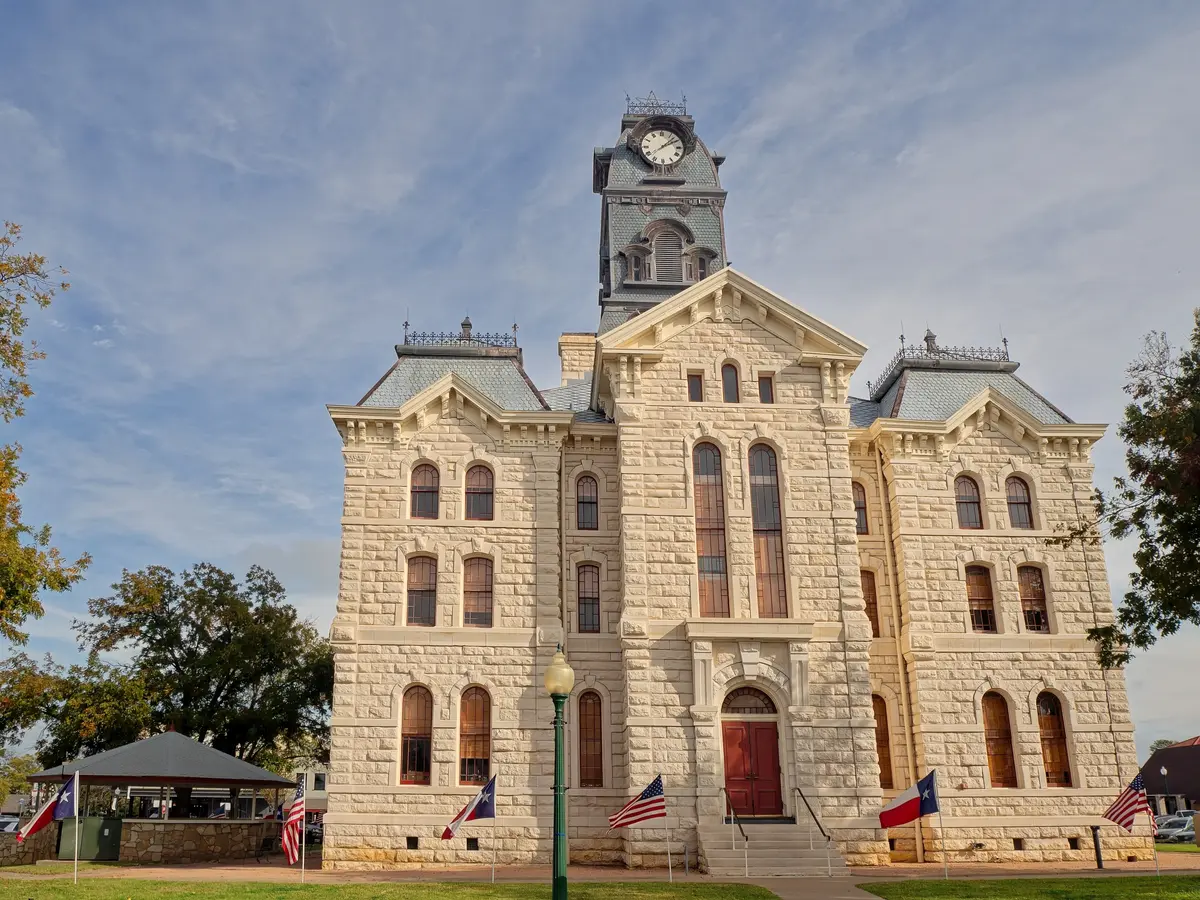
Tyler residents don’t have to go far for green space — spots like Tyler State Park are part of everyday life here, whether that’s a morning walk, a weekend hike, or just somewhere to unwind outside. The full guide below covers more of what Tyler has to offer for parks and outdoor recreation.
Retiring in Tyler
Tyler draws retirees for its balance of amenities, outdoor access, and cost. Here’s what to weigh.
🌤 Climate
Tyler gets 218 sunny days a year — more than enough for outdoor living, but with real winter gray stretches that differ from the image most people have of East Texas. Summers are hot and humid, typical of the Piney Woods region. Spring and fall are the seasons most retirees point to as the reason they stayed.
🍴 Lifestyle
The Tyler Municipal Rose Garden, Caldwell Zoo, Discovery Science Place, and a growing downtown dining scene give retirees genuine cultural texture without needing to drive to Dallas. The regional hospital system means medical care is local and comprehensive. The overall pace of life is measured and community-oriented, with the Rose Festival and other civic traditions giving the calendar a rhythm.
🏚 55+ Communities
Hollycreek Village is the established 55+ community option in Tyler proper. The city's broader housing stock — including lower-maintenance patio homes in South Tyler and The Cascades — also appeals to downsizers who want independent single-family living without the upkeep of a larger lot. For the full retiring-in-Tyler picture, see the retiring page.
✈ Getting Around
Most retirees in Tyler drive; a car is practically essential for daily errands. Tyler Pounds Regional Airport (TYR), about 6 miles from the city center, offers nonstop daily service to Dallas-Fort Worth International — useful for travel without the full highway drive. The average commute inside the city is about 20 minutes, which means driving is convenient rather than burdensome for most daily trips.
🏛 Texas Taxes for Retirees — What to Know
- No state income tax — Texas has no personal income tax — constitutionally protected under Article VIII, Section 24. Social Security, pensions, 401(k)/IRA withdrawals, and annuity payments are all untaxed at the state level, with no state return to file.
- Sales tax is the tradeoff — The state sales tax is 6.25%, and local add-ons bring the combined rate in Tyler to 8.25% (Texas Comptroller of Public Accounts, city sales and use tax rates, July 2026). Groceries and prescription drugs are exempt.
- Property taxes — the real tradeoff — Texas’s effective property tax rate averages about 1.40%, among the highest in the country, since property tax (not income tax) funds most local government and schools.
- Over-65 homestead exemption and school-tax freeze — Homeowners 65+ (or disabled) get an additional $60,000 exemption from their home’s value for school district taxes, on top of the general homestead exemption — $200,000 off school taxable value combined, following November 2025’s Proposition 11 (SB 23), which raised the over-65 exemption to $60,000, and Proposition 13 (SB 4), which raised the general homestead exemption to $140,000. Once claimed, your school district tax bill is frozen at that year’s amount and cannot increase as home values rise, and the ceiling can transfer if you move to a new home within Texas.
- Deferral option if cash is tight — Homeowners 65+ can defer property tax payment entirely for as long as they live in the home, rather than paying it currently — interest accrues, but no forced sale.
- No estate or inheritance tax — Texas has no estate tax, no inheritance tax, and no gift tax.
- No separate capital gains tax — Because Texas has no state income tax, capital gains — including on investments and home sales — are not taxed at the state level at all, unlike states such as Washington that tax capital gains separately from income.
Tax laws change frequently and individual situations vary. This is general information, not tax advice — always consult a qualified Texas tax professional or CPA for personalized retirement tax planning.
Weekends & Local Favorites in Tyler
Tyler's identity as the Rose Capital of America is not a marketing slogan bolted onto a generic East Texas city — it's a physical fact. The Tyler Municipal Rose Garden holds 38,000 rose bushes across more than 14 acres, is listed on the National Register of Historic Places, and is tended by a dedicated city horticulturist. Walk it on a spring weekday morning and you'll understand why the city hired someone specifically for the job. The Caldwell Zoo, directly adjacent, is a legitimate regional destination that locals treat as a neighborhood amenity. The Discovery Science Place draws families with kids consistently enough that it functions as the default rainy-day answer.
The Outdoor Scene
Tyler State Park anchors the northwest side of the city with pine-covered hiking trails and a lake that makes it feel like a different geography from the urban core. Faulkner Park and Bergfeld Park handle the in-city outdoor needs — open space, walking paths, and the kind of grounds where weekend pickup games and family gatherings happen. Lake Tyler and Lake Palestine extend the water-access picture for anyone who wants fishing or time on the water without a major drive.
The Lake Tyler Farmers Market and the Mt Sylvan Farmers Market each draw the kind of crowd that shows up weekly rather than occasionally — a reliable seasonal rhythm for produce, local goods, and the social function that markets serve in mid-size cities.
Where to Eat and Drink
Stanley's Famous Pit Barbecue has a reputation that extends well beyond Tyler — it's the kind of place that appears on regional lists and delivers consistently enough that locals still send visitors there without apology. Happy's Fish House handles the East Texas catfish tradition with a seriousness the category deserves. For something more varied, The Grove Kitchen & Gardens brings a farm-to-table sensibility that feels genuinely local rather than imported, and Aspen Creek Grill and FD's Grill House round out the casual-to-mid-range dining options that families and after-work crowds use regularly.
On the coffee side, The Foundry Coffee House draws the downtown-working and creative crowd, while Brady's Coffee, Crema Coffee Company, Jumpshot Coffee, and Boards and Bites Cafe fill different neighborhood needs across the city. The Goodman Museum and the Azalea Historic District give Tyler a cultural texture that takes several weekends to actually absorb — the kind of city you keep discovering rather than exhausting quickly.
The Downtown Moment
Downtown Tyler is mid-transformation in a way that's worth understanding before you move here. The city approved a $25.5 million Downtown Improvement Project in 2025, committing to street and utility work along Broadway Avenue and the surrounding corridors, a redesigned T.B. Butler Square, and a two-way traffic conversion with roundabouts. Private investment followed: Valencia Hotel Group received city approval to build a 140-room Blackstone Hotel with nearly 90,000 square feet of downtown space. Construction was underway as of late 2025 on the first phases — which means some weekend detours in the core now, and a meaningfully different downtown in a few years.
Local favorites in Tyler
Restaurants
- Stanley's Famous Pit Barbecue
- Happy's Fish House
- Aspen Creek Grill
- FD's Grill House
- The Grove Kitchen & Gardens
Outdoors
- Tyler State Park
- Lake Tyler
- Lake Palestine
- Faulkner Park
- Bergfeld Park
Coffee
- The Foundry Coffee House
- Boards and Bites Cafe
- Brady's Coffee
- Crema Coffee Company
- Jumpshot Coffee
Farmers Markets
- Lake Tyler Farmers Market
- Mt Sylvan Farmers Market
Top Things Locals Say About Tyler
The best intel about a city comes from the people who actually live there. Here’s what Tyler residents say when newcomers ask the questions everyone’s thinking.
“I knew Tyler was cheaper than Dallas, but I didn't expect to have 20-minute commutes and a state park basically in my backyard. The thing nobody tells you is how green and wooded the neighborhoods are — I thought East Texas meant flat and scrubby, and the Piney Woods completely changed that assumption in the first week.”
— Recent Tyler home buyer
“What's the most surprising thing about living in Tyler?”
The tree canopy catches almost everyone off guard. People moving from the DFW area or from out of state expect flat, open Texas and get pine-covered residential streets that feel more like the Pacific Northwest in spots. The other surprise is how self-contained the city is — most Tyler residents go weeks without feeling like they need to drive to Dallas for anything, because the regional medical system, the retail base, and the restaurant scene cover most everyday needs.
“What do locals love most about Tyler?”
The rose garden is genuinely beloved — it's not just a tourist feature, it's where people walk on spring mornings and where the city gathers in October for the Rose Festival. Tyler State Park is another one: a real East Texas pine forest with trails and a lake, less than 15 minutes from most of the city, and locals treat it like their personal backyard. There's also genuine pride in the healthcare system here — the city punches well above its size in medical infrastructure, and residents notice when they compare access to what's available in smaller Texas towns.
“What should newcomers to Tyler know?”
Learn Loop 323 first. It's the organizing ring of the city and nearly every major destination — the grocery corridor, the medical campuses, the neighborhood entry points — connects back to it. The city approved a $25.5 million Downtown Improvement Project in 2025, and construction was underway on the first phases as of late 2025, so plan for detours in the core. The Medical District around the major hospital campuses sees real shift-change traffic in the morning and early evening; if you live near there, you'll time your errands around it eventually.
“How much do you need a car in Tyler?”
Almost entirely. The city has a municipal bus system with several routes covering the main corridors, but the layout of Tyler makes a car the practical tool for nearly every daily errand. Most residents own two vehicles, and the average commute runs around 20 minutes inside the city — short enough that car dependency is less painful here than in a larger metro. The downtown core is becoming more walkable as the revitalization project takes shape, but for grocery runs, school pickups, and most daily tasks, you will need to drive.
Cities Near Tyler
Other communities near Tyler worth a look — each with its own character and price point.
| City | Distance | Best For | Vibe | Median Rent | Median Buy |
|---|---|---|---|---|---|
| Lindale | 12 mi | New construction & family buyers | Quiet, suburban, small-town feel | $1,250 | $340,000 |
| Whitehouse | 9 mi | Families & top-rated schools | Established, residential, low-key | $1,300 | $320,000 |
| Flint | 10 mi | Space, privacy & rural character | Spread out, wooded, quiet | $1,200 | $300,000 |
More Helpful Guides for Tyler
Going deeper on Tyler? Our blog series covers everything from first-time buying to retiring here — explore the guides below.
Local Expert Takeaway: Tyler is a city that rewards people who do the research before assuming it's just another East Texas town. The healthcare economy is real and growing, the housing prices are among the most accessible for a city with this level of infrastructure anywhere in Texas, and the Azalea District and Rose Garden give the city a physical identity that takes newcomers genuinely by surprise. The honest caution: you will need a car for almost everything, the Dallas drive is two-plus hours each way, and downtown was under active construction as of late 2025 — but the investment is visible and the direction is clear. If you're in the healthcare or education sectors, or bringing remote work income into a lower-cost market, Tyler's value proposition is difficult to argue with.
Quick Takeaways & FAQs
✅ Tyler's typical home price of $253,272 (July 2026) makes it one of the most accessible mid-size regional cities in Texas, with neighboring communities all running noticeably higher.
⚠️ The drive to Dallas is about 100 minutes each way — manageable for occasional trips, but a real planning factor for anyone who needs the DFW metro regularly.
📍 The Tyler Municipal Rose Garden's 38,000 rose bushes are tended by a dedicated city horticulturist — a small detail that tells you something real about how the city treats its identity.
Is Tyler, Texas a good place to live?
What is Tyler, Texas known for?
How far is Tyler, Texas from Dallas?
What are the best neighborhoods in Tyler, TX?
What is the cost of living like in Tyler, Texas?
Helpful Links for Moving to Tyler
Moving to Texas?
Tell us what you need help with and we'll connect you with local resources.
