
What Is Living in Texarkana, Texas Like?
You can walk into a single building and stand in two states at once — that is the literal reality of Texarkana, where the United States Post Office and Courthouse straddles State Line Avenue on the Texas–Arkansas border. That geography is not just a novelty: it shapes everything about living here, from which school district your kids attend to which state's income-tax rules apply to your paycheck. Texarkana, Texas (population 36,195) anchors the Texas side of a combined metro of roughly 147,000 people, with I-30 threading through the heart of the city and connecting it to Dallas about 180 miles to the southwest. Most people who move here underestimate how much the twin-city dynamic affects daily life — and how quickly they come to appreciate it.
The city's economic backbone is broader than it looks from the outside. A major regional health system anchors the healthcare sector, which is the city's single largest employment category. Texarkana Independent School District, with 7,626 students enrolled in 2025-26, is itself one of the larger local employers. Texas A&M University-Texarkana brings a university presence to the east side of the city. And Red River Army Depot — located in Bowie County, not within city limits — has sustained the region's defense sector for generations, drawing thousands of workers from across the area. Healthcare, defense, retail, and logistics together make Texarkana the trade hub for a 17-county region spanning Texas, Arkansas, and Louisiana.
The cost-of-living advantage here is real and meaningful. Housing, groceries, and healthcare all run noticeably below national norms — the overall cost of living sits roughly 9 to 17 percent below the U.S. average depending on the index you use. The typical home price of $206,981 (Zillow Home Value Index, July 2026) puts homeownership within reach for a wide range of buyers, though the effective property tax rate of 2.05% is worth factoring into your monthly math. Day-to-day life centers on Spring Lake Park's trails and fishing piers, the Perot Theatre's performing arts calendar, and a downtown that is a short drive from anywhere in the city. For a fuller breakdown of what things cost here, the cost of living page has the detail.
Whether you are being transferred here, priced out of a larger Texas market, or drawn by the region's defense and healthcare jobs, the sections below break down Texarkana's neighborhoods, housing market, employers, local favorites, commute patterns, and what daily life here is genuinely like.

Texarkana at a Glance
Looking to buy in Texarkana? Estimate your payment.
Enter your numbers to see an estimated monthly mortgage payment.
Estimate only. Excludes HOA fees and mortgage insurance. The interest rate above is a starting point, not a quoted rate — replace it with your own to see real numbers. Insurance is a flat placeholder, not a Texarkana quote.
Why Are People Moving to Texarkana?
The Regional Hub Advantage
Texarkana is the commercial and medical center for a 17-county swath of East Texas, southwest Arkansas, and northwest Louisiana. That reach means the city punches above its population in terms of job diversity, retail, and services — people drive in from two states to access employers and healthcare that simply do not exist in the surrounding small towns.
The defense sector is the most consequential piece of that picture. Red River Army Depot, located in Bowie County, has anchored the region's economy for generations and draws a significant portion of the local workforce. Civilian contractors, federal employees, and support-industry workers all ripple out into the broader Texarkana economy. A planned Amazon facility, cited by economic development leaders in late 2025 as a near-term growth driver, signals that logistics is becoming a second pillar alongside defense.
Who Actually Moves Here
The clearest pattern: people relocating for employment. Healthcare, defense, and education are the dominant draw. Texas A&M University-Texarkana brings faculty, staff, and students who often decide to put down roots. The City of Texarkana, Texas itself is one of the larger employers, and municipal-sector workers make up a meaningful slice of homebuyers.
A second, quieter pattern is the affordability migration — buyers priced out of Dallas or other larger Texas metros who want homeownership without a three-hour commute. At a typical home price of $206,981 (July 2026), Texarkana offers entry into the market at a level that has effectively disappeared from most major Texas cities.
The School District Picture
Texarkana Independent School District holds a D rating, according to the Texas Education Agency (2025 A-F accountability rating for the 2024-25 school year). On 2024-25 state assessments, 29% of students reached math proficiency and 42% reached reading proficiency. Families relocating with school-age children frequently look at this carefully — and some choose neighboring Wake Village or Nash partly for access to different district zones. The schools page covers district boundaries and what UIL athletics programs look like here. The district does have active UIL athletics programs, and Friday night football draws genuine community turnout.
What Draws People In — and What Pushes Them Out
After about six months, newcomers consistently mention two surprises: how much of their social life ends up on the Arkansas side of State Line Avenue, and how limited the walkable commercial districts feel compared to what they pictured from online listings. The twin-city dynamic means your restaurant, your weekend errand, and sometimes your commute cross a state line — and that stops feeling unusual within weeks.
People who leave tend to cite the school district's academic performance and the relative absence of a dense, walkable urban core. If you moved here expecting a city with a thriving downtown restaurant row within walking distance of neighborhoods, the reality takes adjustment.
What Daily Life Feels Like in Texarkana
A City That Lives Between Two States
The twin-city setup is the first thing you adapt to, and eventually the thing you stop thinking about. Residents routinely cross State Line Avenue multiple times a day without registering it. Your preferred grocery run might be in Arkansas; the performing arts venue you attend most is in Texas. The United States Post Office and Courthouse — where you can stand in both states in the lobby — captures the surreal-but-practical nature of daily life here.
The metro's combined population gives Texarkana a wider range of amenities than its 36,195 Texas-side count alone would suggest. The Perot Theatre brings ballet, touring musicians, and theatrical productions through town, and it functions as the region's cultural anchor in a way that genuinely overdelivers for a city this size.
Weather You Will Feel
East Texas weather is not the dry heat people associate with west Texas. Texarkana gets hot, humid summers — July highs regularly push above 95°F — and the humidity makes it feel hotter. The city averages 213 sunny days a year, which sounds appealing until August arrives. Winter brings occasional ice storms that catch newcomers off guard; the Piney Woods region sits in a zone where freezing rain is a real seasonal hazard, not a once-a-decade event. Budget extra time on the roads in January and February.
Spring is genuinely beautiful here, and it is when most residents spend the most time outdoors. The Phillip McDougal Trail, the Bringle Lake Trail, and Spring Lake Park all come into their own between March and May before the heat sets in.
Where Families Actually Gather
Spring Lake Park is the answer for most of the year. The park's spring-fed lake, disc golf course, splash pad, and fishing piers mean there is almost always something happening on a warm Saturday. Bringle Lake Park draws a more trail-focused crowd, and the art park at the spillway has become a quiet weekend destination in its own right.
The Scott Joplin connection — the ragtime composer was born in Texarkana — runs through the city's cultural identity in a way that surfaces at the Texarkana Museum of Regional History and at various local events. It is a point of genuine local pride, not just a historical footnote. For a full picture of parks and outdoor recreation, see the parks and recreation page.
The Car-Dependent Reality
Most errands require a drive. The city's layout was built around the highway network, and while some areas are more walkable than others, expecting to go car-free is not realistic. The upside is that traffic, by Texas-city standards, is manageable — rush hour exists but rarely rises to the level of frustration that defines commuting in Dallas or Houston. Most people are at work within 15 to 20 minutes of leaving home.
The Texarkana Housing Market Right Now
What the Numbers Say
The typical home price in Texarkana is $206,981 (Zillow Home Value Index, July 2026) — a figure that stands out sharply against what most Texas metros charge for equivalent square footage. That number puts conventional homeownership within reach for buyers who would be stretched thin in Austin, Dallas, or even Lubbock.
The catch is the effective property tax rate of 2.05%, which is meaningful at any price point and worth stress-testing before you commit. Texas has no state income tax, which offsets some of that burden — but buyers coming from states with lower property taxes sometimes underestimate how much the annual bill adds to the real cost of ownership here.
What You Get For the Price
At this price range, buyers are typically looking at single-family homes with yards — not condos or townhomes. The housing stock skews older in some neighborhoods, with mid-century construction common in areas like Rosehill and Downtown Texarkana, both of which sit below the city-wide typical price. Spring Lake Park and Northwest Texarkana tend to draw buyers who want proximity to the park system and newer construction mixed in with established homes.
Some areas of the city cost meaningfully more than others, but the spread is narrower than in larger metros — you are not choosing between a $200,000 starter and a $900,000 move-up. For a deeper look at how neighborhoods compare and what each area offers, the best neighborhoods page has the full breakdown.
Affordability in Context
The median household income in Texarkana is $50,573 — and it is worth knowing plainly that this falls below the income needed to carry the typical home here at current rates. That gap is not enormous, but it is real, and buyers in this income range benefit from exploring available loan programs. The first-time homebuyer page covers the financing mechanics in detail.
Nearby Wake Village and Nash both come in noticeably lower than the Texarkana typical price, and Hooks is in the same range — options worth knowing if you are stretching a budget and open to a short commute into the city.
Renting First
The city-wide typical rent runs $1,347 per month (Zillow, July 2026), which makes renting a reasonable starting point for newcomers who want to learn the city before buying. Many people relocating for defense or healthcare jobs rent for the first year while they figure out which side of town matches their commute and lifestyle. For city-wide rent trends and neighborhood-level context, the cost of living page goes deeper.
Texarkana Neighborhoods
Texarkana has several distinct areas — each with its own character and appeal. Here’s a breakdown to help you narrow down where to focus your home search.
🏡 Spring Lake Park
The Spring Lake Park area draws families and outdoor-oriented buyers who want the park's trails, disc golf, and fishing piers as a backyard extension. The housing stock mixes established mid-century homes with newer construction, and the neighborhood has a genuine sense of community built around the park itself.
🏠 Northwest Texarkana
Northwest Texarkana offers a quieter, more suburban character that appeals to buyers who want space from the city's busier corridors. The area suits families and professionals looking for a settled neighborhood feel with straightforward access to the main highway network.
🌳 Downtown Texarkana
Downtown Texarkana sits below the city-wide typical price and carries the architectural character of an earlier era, centered around State Line Avenue and the iconic Post Office and Courthouse. It suits buyers who want history, walkable proximity to civic institutions, and entry-level pricing.
🏘 Rosehill
Rosehill is an established neighborhood that also comes in below the city-wide typical price, making it one of the more accessible entry points into Texarkana homeownership. The area has a lived-in, working-neighborhood feel that appeals to first-time buyers and those who prefer older housing stock.
🏔 Liberty Eylau
Liberty Eylau sits on the southern edge of the Texarkana area and functions partly as its own community, with a school district separate from TISD that some families specifically seek out. The character is residential and spread out, with a quiet pace that suits buyers who do not need to be close to the city center.
🌆 Washington Historic District
The Washington Historic District carries one of Texarkana's strongest concentrations of older architectural character, with homes that reflect the city's early-twentieth-century growth period. It suits buyers drawn to historic homes and a neighborhood identity rooted in the city's own history.
Pros & Cons of Living in Texarkana
The Pros
- Below-average cost of living and home prices compared to national and Texas averages
- Straddling two states offers shopping/tax flexibility
- Historic, walkable downtown with local culture
- Short in-town commutes
The Cons
- Crime rates run higher than national and state averages for a city this size
- District-wide school test scores and graduation rate rank below the Texas average
- Smaller labor market than major Texas metros, limiting career variety
Getting Around & Commuting in Texarkana
The Highway Network Is the City's Spine
Texarkana sits at the convergence of I-30, I-369, US-59, US-67, US-71, US-82, Loop 151, and SH-93 — a highway density that reflects its role as a regional freight and trade hub. For residents, this means most commutes involve a highway on-ramp and a short drive rather than surface-street navigation. Getting across town is rarely the problem; getting out of town is genuinely easy.
The commute to the Arkansas twin city is about 15 minutes to Texarkana, AR (twin city)/local employers — a number that barely registers as a commute by any Texas standard. Most people who work on either side of State Line Avenue do not think of crossing it as commuting at all; it is just the drive to work.
Reaching Dallas and Beyond
I-30 is the main artery connecting Texarkana to Dallas, roughly 180 miles to the southwest. That trip is manageable as an occasional run — a day trip for a medical appointment, a concert, or a specialized shopping visit — but too long for a daily commute. The more practical reality is that most residents are employed locally, in the twin-city metro, or at Red River Army Depot in Bowie County.
For travel beyond the region, Texarkana Regional Airport opened a new 40,000-square-foot passenger terminal on July 1, 2024. It offers daily nonstop service to Dallas–Fort Worth on American Airlines, making connections to the rest of the country straightforward. The airport is just 5 miles from downtown — a genuinely short drive with no freeway traffic to fight.
Freight and the Regional Economy
Three Class I railroads — Union Pacific, CPKC, and the Texas Northeastern Railroad — run through or near the city, which is why logistics and distribution have found Texarkana an attractive location. For residents, this mostly surfaces as background texture — the rail presence keeps industrial employment diverse and helps insulate the local economy from single-sector shocks.
Getting Around Day to Day
Every resident drives, and the city's layout assumes it. A car is essential for daily life here — most errands mean a drive, and the distances within the city are short enough that the practical upside is real: most daily trips stay under 15 minutes. The practical upshot is that you should factor two-car household costs into your housing budget, and that your neighborhood choice matters primarily in terms of proximity to your specific workplace, school, and errands.
| Destination | Typical Route | Approximate Drive |
|---|---|---|
| Texarkana, AR (twin city) | State Line Ave / local streets | About 15 minutes |
| Texarkana Regional Airport (TXK) | I-30 / Loop 151 | ~10 minutes from most of city |
| Red River Army Depot (Bowie County) | US-82 / US-67 | 20–30 minutes depending on point of origin |
| Dallas, TX | I-30 westbound | Approximately 2.5–3 hours |
| Shreveport, LA | I-30 / US-59 southbound | Approximately 75–90 minutes |
| Little Rock, AR | I-30 eastbound | Approximately 2 hours |
Schools in Texarkana
Families relocating to Texarkana have public, private, and higher-education options nearby. Here’s a quick overview.
🎓 School District
Texarkana Independent School District serves K–12 students across Texarkana and the surrounding area. Rated D (source: Texas Education Agency, 2025 A-F accountability rating (2024-25 school year)).
🏆 Graduation Rate
The 4-year high-school graduation rate here is approximately 86.8%.
📚 Higher Education
Texas’s public universities — the University of Texas at Austin, Texas A&M University, and the University of Houston — offer four-year degrees statewide, with one of the largest community college systems in the country (50+ public community college districts) providing two-year and workforce programs.
🌐 Online Learning
UT Austin Online and Texas A&M University Online offer fully accredited online degrees for remote learners across the state.
Safety in Texarkana
A quick look at how Texarkana compares on the numbers that matter most when weighing a neighborhood or a move.
🛡 Violent Crime
Approximately 3.8 per 1,000 residents.
🔒 Property Crime
Approximately 25 per 1,000 residents.
Compared to the most recent national figures from the Bureau of Justice Statistics (2024), Texarkana’s violent crime is about the same as the national average (about 3.7 per 1,000), and property crime is above the national average (about 18.4 per 1,000).
Against Texas as a whole, Texarkana’s violent crime is about the same as the state average, and property crime is somewhat above the state average (Bureau of Justice Statistics, Crime Known to Law Enforcement, 2024 (tables 2 and 3)).
Crime rates can vary a lot within a single city, so the citywide numbers above are only a starting point. Some neighborhoods in Texarkana run well below these averages, while others run higher — the kind of block-by-block detail that matters most when you’re actually choosing where to live. The full guide below breaks it down neighborhood by neighborhood.
Working in Texarkana
Texarkana’s largest employers span several industries — here are some of the anchors of the local job market.
💼 City of Texarkana
🏛 Texas
Municipal government
🎓 Texarkana Independent School District
Education
🏥 CHRISTUS St. Michael Health System
Healthcare
🏥 CHRISTUS Health Pine Street
Healthcare
🎓 Texas A&M University-Texarkana
Higher education
🏛 Red River Army Depot
Military, located in Bowie County
Parks & Recreation in Texarkana
Some of the outdoor spaces that shape everyday life in Texarkana.
🌱 Spring Lake Park
🌱 Bringle Lake Park
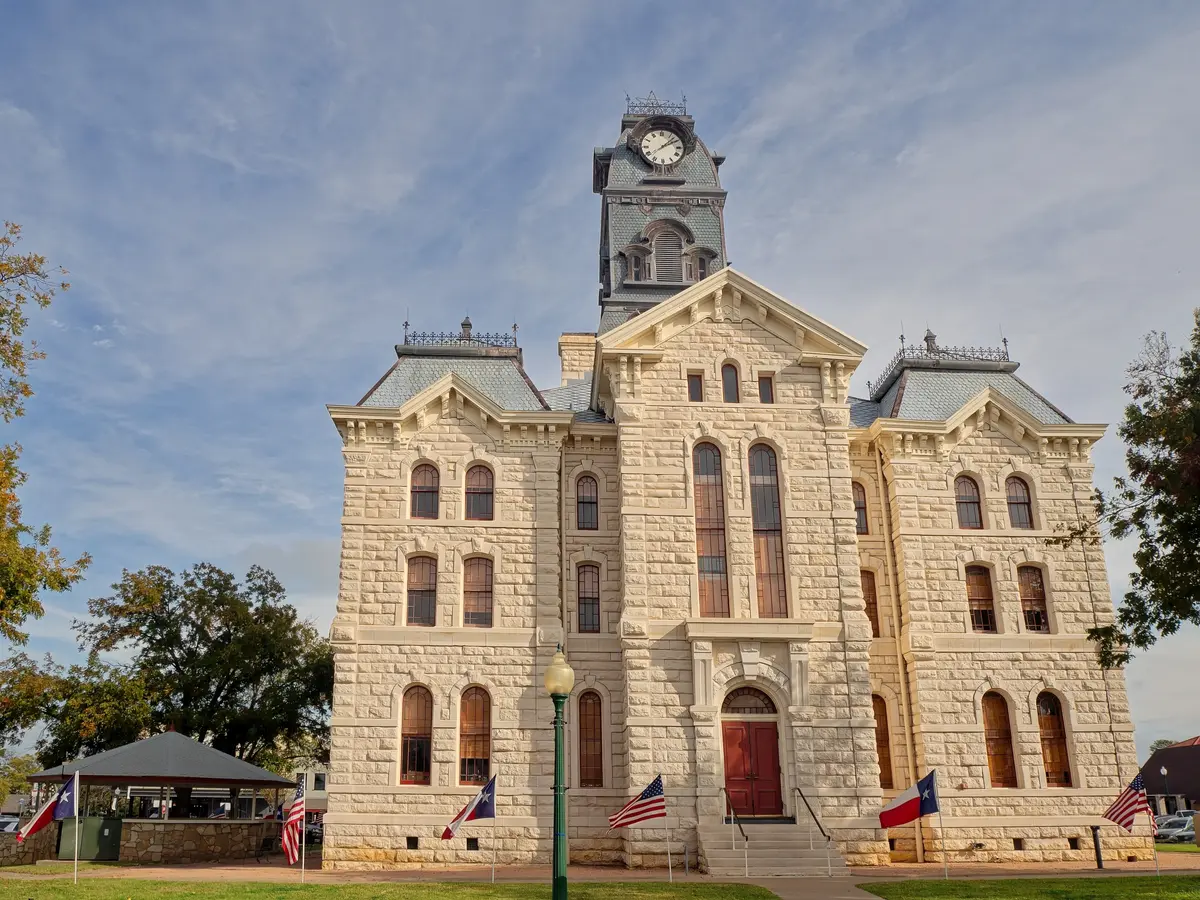
Texarkana residents don’t have to go far for green space — spots like Spring Lake Park and Bringle Lake Park are part of everyday life here, whether that’s a morning walk, a weekend hike, or just somewhere to unwind outside. The full guide below covers more of what Texarkana has to offer for parks and outdoor recreation.
Retiring in Texarkana
Texarkana draws retirees for its balance of amenities, outdoor access, and cost. Here’s what to weigh.
🌤 Climate
Texarkana gets hot, humid summers with July highs regularly above 95°F, and 213 sunny days a year overall. Winters are mild on average but include occasional ice storms that can make roads treacherous for a few days at a stretch. Spring and fall are the most comfortable seasons for outdoor living.
🍴 Lifestyle
The Perot Theatre anchors the cultural calendar with touring performances, ballet, and concerts. Spring Lake Park, Bringle Lake, and Wright Patman Lake give outdoor-oriented retirees plenty of year-round options. The city's cost of living runs noticeably below national norms, which stretches a fixed income meaningfully.
🏚 55+ Communities
No 55+ communities were found in Texarkana. Retirees looking specifically for age-restricted or active-adult communities will need to look at surrounding communities or consider senior apartment options, which are a different category. The retiring page covers what healthcare and lifestyle infrastructure exists here.
✈ Getting Around
A car is necessary for daily life in Texarkana. Most destinations within the city are a short drive, and Texarkana Regional Airport — just 5 miles from downtown with a new terminal opened in 2024 — offers daily nonstop service to Dallas–Fort Worth, making travel to family or specialists elsewhere in the country straightforward.
🏛 Texas Taxes for Retirees — What to Know
- No state income tax — Texas has no personal income tax — constitutionally protected under Article VIII, Section 24. Social Security, pensions, 401(k)/IRA withdrawals, and annuity payments are all untaxed at the state level, with no state return to file.
- Sales tax is the tradeoff — The state sales tax is 6.25%, and local add-ons bring the combined rate in Texarkana to 8.25% (Texas Comptroller of Public Accounts, city sales and use tax rates, July 2026). Groceries and prescription drugs are exempt.
- Property taxes — the real tradeoff — Texas’s effective property tax rate averages about 1.40%, among the highest in the country, since property tax (not income tax) funds most local government and schools.
- Over-65 homestead exemption and school-tax freeze — Homeowners 65+ (or disabled) get an additional $60,000 exemption from their home’s value for school district taxes, on top of the general homestead exemption — $200,000 off school taxable value combined, following November 2025’s Proposition 11 (SB 23), which raised the over-65 exemption to $60,000, and Proposition 13 (SB 4), which raised the general homestead exemption to $140,000. Once claimed, your school district tax bill is frozen at that year’s amount and cannot increase as home values rise, and the ceiling can transfer if you move to a new home within Texas.
- Deferral option if cash is tight — Homeowners 65+ can defer property tax payment entirely for as long as they live in the home, rather than paying it currently — interest accrues, but no forced sale.
- No estate or inheritance tax — Texas has no estate tax, no inheritance tax, and no gift tax.
- No separate capital gains tax — Because Texas has no state income tax, capital gains — including on investments and home sales — are not taxed at the state level at all, unlike states such as Washington that tax capital gains separately from income.
Tax laws change frequently and individual situations vary. This is general information, not tax advice — always consult a qualified Texas tax professional or CPA for personalized retirement tax planning.
Weekends & Local Favorites in Texarkana
Where People Actually Spend Their Time
Spring Lake Park is the gathering point for a large share of the city's outdoor life. The spring-fed lake, 18-hole disc golf course, two fishing piers, splash pad, and a 1.75-mile walking and biking trail give it enough variety that families with kids and solo walkers end up there on the same Saturday morning without getting in each other's way. The Phillip McDougal Trail and the Bringle Lake Trail offer quieter alternatives, particularly the wooded stretch around Bringle Lake where the art park at the spillway has become a low-key local discovery. Wright Patman Lake expands the options significantly for anyone who boats or fishes.
The Perot Theatre is the city's performing arts centerpiece — the kind of venue that draws touring productions, ballet companies, and nationally recognized musicians to a city of 36,195. Longtime residents will tell you it punches well above what you'd expect, and they are right. The Texarkana Museum of Regional History fills a different role: it is where the city's own story gets told, including a music exhibit honoring Scott Joplin, the ragtime pioneer who was born here.
Food, Coffee, and the Daily Routine
The local food scene has genuine depth for a city this size. Ironwood Grill is the go-to for a proper sit-down meal, and Silver Star Smokehouse handles the East Texas barbecue obligation with the kind of seriousness the region demands. The Mighty Crab draws a crowd for seafood, while Twisted Fork Grill & Bar covers the casual end of the dining spectrum. Jaggers rounds out the options as a local staple worth knowing.
For coffee, the city has developed a genuine independent café culture worth exploring. Taste and See and Café Lucille both have followings that go beyond the caffeine. The Doughnut Cafe & Coffee House is exactly what it sounds like and earns its reputation. The Stained Page brings a bookshop sensibility to its coffee offering — a combination that tends to attract a particular kind of regular. Roosters Coffee Co. rounds out a café scene that is stronger than most cities this size can claim.
The State Line as Weekend Architecture
One practical reality newcomers take a few months to fully appreciate: the Arkansas side of Texarkana is not a foreign country — it is where a lot of your weekend life happens. Residents move freely between the two cities for dining, shopping, and errands. The United States Post Office and Courthouse, where you can stand in two states at once in the lobby, is worth visiting once just to internalize the geography you will be living inside.
Local favorites in Texarkana
Restaurants
- Ironwood Grill
- Silver Star Smokehouse
- The Mighty Crab (Texarkana)
- Jaggers
- Twisted Fork Grill & Bar
Outdoors
- Spring Lake Park
- Bringle Lake Park
- Phillip McDougal Trail
- Bringle Lake Trail
- Wright Patman Lake
Coffee
- Taste and See
- Café Lucille
- The Doughnut Cafe & Coffee House
- The Stained Page
- Roosters Coffee Co.
Top Things Locals Say About Texarkana
The best intel about a city comes from the people who actually live there. Here’s what Texarkana residents say when newcomers ask the questions everyone’s thinking.
“I knew it was a twin city, but I didn't really understand what that meant until I'd been here three months. Half my week happens in Arkansas without me even registering it — it's just where certain things are. The state line stops being a fact and starts being your daily geography.”
— Recent Texarkana home buyer
“What's the most surprising thing about living in Texarkana?”
The state line becomes completely ordinary within weeks. You cross it for dinner, for a coffee run, for errands — it stops feeling like crossing anything. What catches people more off guard is how much of the social fabric runs through the Arkansas side. Spring Lake Park draws the Saturday crowd on the Texas side, but a lot of everyday life spills across State Line Avenue in both directions.
“What do locals love most about Texarkana?”
The housing value and the lack of traffic — those two come up constantly. You can actually buy a house here without a second income or a decade of saving, and your commute across town is 15 minutes on a bad day. The Perot Theatre is a genuine point of local pride; people are always a little surprised when they first go and see the caliber of what comes through. And Scott Joplin being from here is something longtime residents bring up with real ownership.
“What should newcomers to Texarkana know?”
Get comfortable with I-30 and Loop 151 early — those two routes handle most of the city's movement, and knowing which direction puts you closest to your workplace or your kids' school matters when you are choosing a neighborhood. The Piney Woods winters surprise a lot of people who moved here expecting mild Texas weather: ice storms happen, and the city is not equipped for them the way a northern city would be. Budget extra time for your commute in January and February, especially early morning.
“How much do you need a car in Texarkana?”
A car is essential — every resident drives. Most errands mean a drive, and the city's layout assumes it. The practical upside is that distances within the city are short; most daily trips are under 15 minutes. The airport is a quick drive from almost anywhere in town, which newcomers appreciate more than they expect. Plan for a two-car household if two people in your home have separate daily destinations.
Cities Near Texarkana
Other communities near Texarkana worth a look — each with its own character and price point.
| City | Distance | Best For | Vibe | Median Rent | Median Buy |
|---|---|---|---|---|---|
| Wake Village | 3 mi | Families, alternative school districts | Suburban, quiet, established | $950 | $191,717 |
| Nash | 8 mi | Budget buyers, small-town feel | Rural edge, low-key, affordable | $950 | $155,097 |
| Hooks | 10 mi | Value buyers, rural lifestyle | Small town, open land, quiet | $900 | $151,674 |
More Helpful Guides for Texarkana
Going deeper on Texarkana? Our blog series covers everything from first-time buying to retiring here — explore the guides below.
Local Expert Takeaway: Texarkana's value proposition is real but specific: homeownership at $206,981 (July 2026 typical price), a manageable commute, and a twin-city setup that doubles your amenity access across the state line. The school district's D rating from the Texas Education Agency is the honest counterweight — families with school-age children should visit the district and look at boundary maps before buying. If you end up at Spring Lake Park on a Saturday morning, surrounded by disc golfers and families at the fishing piers, you will understand why people stay.
Quick Takeaways & FAQs
✅ Texarkana's typical home price of $206,981 (July 2026) makes it one of the most accessible housing markets in East Texas, with real square footage and yards at prices that have vanished from most Texas metros.
⚠️ The Texarkana Independent School District holds a D rating from the Texas Education Agency — a significant consideration for families with school-age children that warrants careful research before committing to a neighborhood.
📍 Standing in two states at once in the United States Post Office and Courthouse lobby on State Line Avenue is the city's most specific geographic fact, and it captures something true about daily life here: the Texas–Arkansas line is a feature, not a border.
Is Texarkana, TX a safe place to live?
What is the Texarkana housing market like for buyers?
How are the schools in Texarkana, TX?
What are the best neighborhoods in Texarkana, TX?
Is Texarkana a good place for retirees?
Helpful Links for Moving to Texarkana
Moving to Texas?
Tell us what you need help with and we'll connect you with local resources.
