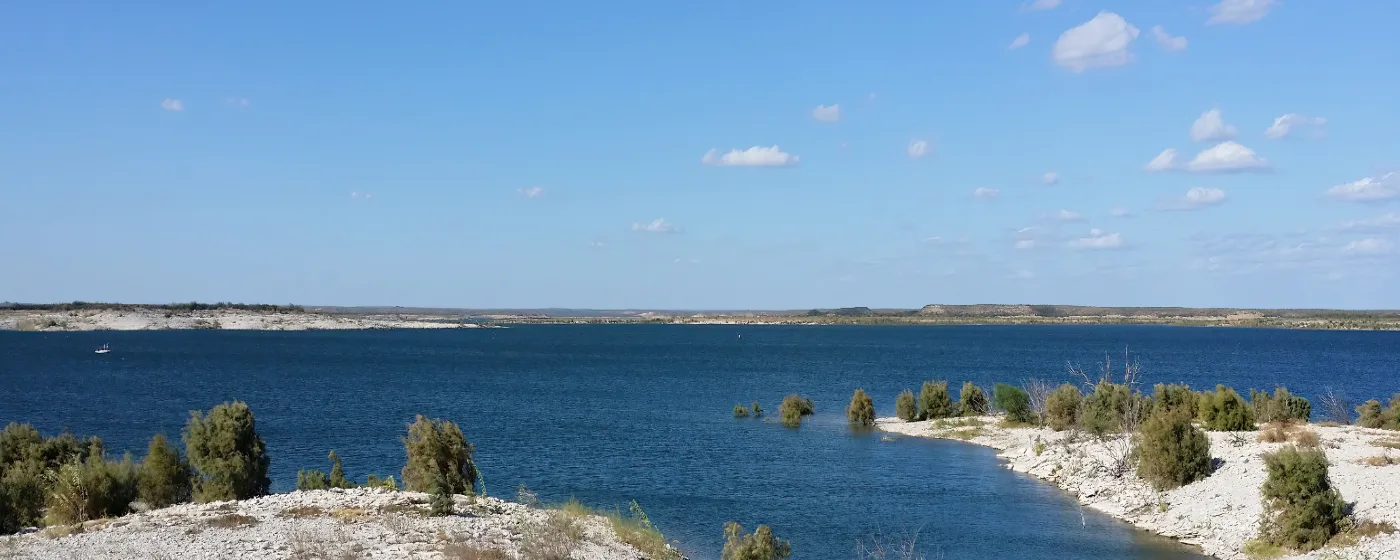
You've done the math. California's statewide typical home value of $773,735 versus a city where the typical home runs a fraction of that. No state income tax. A slower pace, a real spring system, and a lake the size of a small sea sitting at the edge of town. Del Rio, Texas doesn't look like what most Californians picture when they imagine Texas — no gleaming suburb, no tech corridor — but it keeps showing up on the shortlist for military families, remote workers, and people who've simply been priced out and are tired of waiting. The city sits in the far southwest corner of Texas, anchored by US-90 and flanked by the Rio Grande, with Ciudad Acuña, Mexico directly across the water. That border geography isn't a footnote; it shapes everything from the food to the economy to the cultural texture of daily life in a city of 34,496.
The economic engine here is Laughlin Air Force Base, just outside city limits, home to the 47th Flying Training Wing — one of the nation's primary undergraduate pilot training programs. The base anchors the local job market, draws a rotating population of military families from across the country, and creates a community dynamic you won't find in a typical Texas town of this size. The San Felipe-Del Rio Consolidated Independent School District, with 9,510 students enrolled in 2025-26, is the other dominant employer and the institution that shapes family life here. Remote workers have also found Del Rio, drawn by home prices that make a California mortgage feel like a punchline and a cost of living that sits well below the U.S. national average.
The cost shift from California is not subtle. Housing costs here run approximately 18% below the national average, and the broader cost of living in Texas runs roughly 39% below California's. Utilities, groceries, and everyday expenses all follow the same downward direction. What Del Rio lacks is urban density — a serious shopping trip or a specialist appointment often means a drive. The city-wide typical rent runs $1,395 per month (Zillow ZORI, July 2026), a figure that will register as almost implausible to anyone paying California rents. For the full picture on utilities, groceries, and transportation costs, that page goes deep.
Whether you're relocating for military orders, chasing affordability, or simply ready for a different kind of life, the sections below break down Del Rio's tax picture, home prices, neighborhoods, climate, daily life, and the honest trade-offs that every California transplant eventually encounters.
The Tax Shift: What Leaving California Actually Means
The headline is simple: Texas has no state income tax. California's top state income tax rate of 13.3% applies only to the highest earners, but the progressive structure means most working Californians are paying somewhere between 6% and 10% on a meaningful portion of their income. The moment you establish Texas residency, that bill goes to zero.
For a household earning the local median — or a remote worker bringing a California salary to a Texas zip code — the income tax savings alone can restructure a budget. The research puts the annual savings for a single filer earning $100,000 at roughly $5,208 per year. That figure grows significantly for dual-income households or anyone in the upper brackets.
The trade-off is property tax, and it is real. Del Rio's effective property tax rate of 1.75% is above both the Texas statewide average and well above California's effective property tax rate of 0.71%, which is held artificially low by Proposition 13 caps. Texas has no equivalent cap. What this means in practice: on a home priced at Del Rio's typical value, the annual property tax bill will be higher than what many California homeowners — especially long-term owners — are used to paying. But on an absolute dollar basis, a much lower purchase price means the total tax bill is still smaller.
| Tax Category | California | Texas / Del Rio |
|---|---|---|
| State income tax | California's top state income tax rate of 13.3% (Tax Foundation); progressive from 1% | None |
| Effective property tax rate | California's effective property tax rate of 0.71% (Tax Foundation; Prop 13 capped) | 1.75% in Del Rio (above TX average of ~1.40%) |
| Statewide base sales tax | California's statewide base sales tax rate of 7.25% (California Dept. of Tax and Fee Administration) — highest in the U.S. | 6.25% base; combined rate averages ~8.2% with local additions |
| Combined avg. sales tax | ~8.85% with local additions | ~8.2% average combined |
| Estate / inheritance tax | None | None |
| Capital gains tax | Taxed as ordinary income at state rate | No state tax on capital gains |
Sales tax runs close in both states, but the direction still favors Texas — California's statewide base sales tax rate of 7.25% is the highest statewide base rate in the country, and local add-ons push the average combined rate above Del Rio's equivalent. For the full breakdown of what these rates mean for a Del Rio household budget, the cost of living page has the numbers.
The Prop 13 Factor
Many Californians who've owned their homes for a decade or more are paying property taxes on an assessed value far below market — sometimes half or less. Moving to Del Rio resets that clock entirely. Your assessed value in Texas starts at purchase price, and there's no equivalent limit on how much it can grow in subsequent years beyond standard homestead exemption rules. Factor this into your purchase decision, not just the sticker price.
Home Prices: The Number That Changes the Conversation
Del Rio's typical home value stands at $208,595 (Zillow ZHVI, July 2026). That figure sits far below California's statewide typical home value of $773,735. For buyers coming from any coastal California market, the gap is disorienting in the best possible way.
What $208,595 actually buys here is a real house — not a condo, not a converted garage, not a 45-minute commute from anything. Single-family homes with yards, garages, and room to spread out are the norm at this price point. The city's affordability is structural: the median household income here is at or above the income needed to buy the typical home, which means this is genuinely a market where buying makes sense at local wages — a statement that would be laughable in most California cities.
What the Neighborhoods Look Like
The city's residential fabric spreads across distinct areas, each with a different character. South Del Rio and San Felipe sit closer to the city's historic core, with older housing stock and established streetscapes. Buena Vista and North Heights offer mid-range suburban development that families with school-age children tend to gravitate toward. Ceniza Hills and Lake Ridge Ranch represent the newer construction end of the market, with larger lots and more contemporary builds. Quail Run and Kelley Ranch attract buyers who want more space and newer infrastructure. For a deeper look at the geographic divides and what each area actually feels like to live in, the neighborhoods page goes street by street.
Renting Before You Buy
If you're coming from California and want to test the city before committing, the rental market is forgiving. A California salary applied to Del Rio's rental market gives you room to land, learn the city, and make a deliberate purchase decision rather than buying under pressure — a luxury that simply doesn't exist in most California markets. For the full rent picture, see the cost of living page.
Compared to nearby cities, Eagle Pass runs somewhat higher on home prices, while Uvalde and Brackettville both come in noticeably lower. Del Rio sits in the middle of the regional range and tends to hold its value steadily given the stabilizing influence of Laughlin Air Force Base's employment base. See the first-time homebuyer page for guidance on loan programs and down payment options specific to this market.
Climate and Daily Life: The Adjustments Nobody Warns You About
Del Rio averages 226 sunny days a year, and summer is long, serious, and hot in a way that most of California — even the Central Valley — doesn't quite prepare you for. Daily highs reach 100°F in July and August. That's not a bad week; that's the standard two to three months of summer. The heat here is dry-ish during the day but can carry real humidity in the evenings, especially near the lake and the springs.
Winter is the payoff. Daily highs run in the upper 60s°F, and hard freezes are relatively rare at this elevation and latitude. Californians who arrived dreading Texas winters are usually surprised — Del Rio's winter is genuinely mild, and the lack of rain (the city averages about 18.80 inches annually, concentrated in certain windows) means clear days and outdoor access most of the year.
What Surprises People After Six Months
The heat adaptation takes longer than newcomers expect. Most California transplants underestimate it — not the temperature itself, but the sustained nature of it. You rearrange your life around it: errands before 10 a.m. or after 7 p.m., outdoor recreation at Lake Amistad timed to early mornings, afternoon hours spent inside. Residents who fight this rhythm struggle; those who accept it usually find the city's pace genuinely restorative.
The other adjustment is distance. San Antonio is the nearest major metro, at about 150 minutes away. That's not a day trip for an errand — it's a planned excursion. A serious shopping run means driving out of town; anything beyond the local retail footprint means planning ahead or ordering online. Del Rio International Airport (DRT) offers limited commercial service to Dallas/Fort Worth, which helps for travel but doesn't change the ground-level reality of living two and a half hours from a major city.
The Binational Character
Del Rio's position directly across the Rio Grande from Ciudad Acuña, Mexico — a city of over 200,000 residents connected by an international bridge — is something California transplants rarely anticipate and almost universally find fascinating. Cross-border commerce, shared cultural traditions, and a genuinely bilingual community define daily life here in ways that feel different from California's border cities. Spanish is not a second language in Del Rio; it's the first language in many households, and the culture on both sides of the bridge flows freely in the food, the music, and the social fabric of the city.
Weekends and Local Favorites
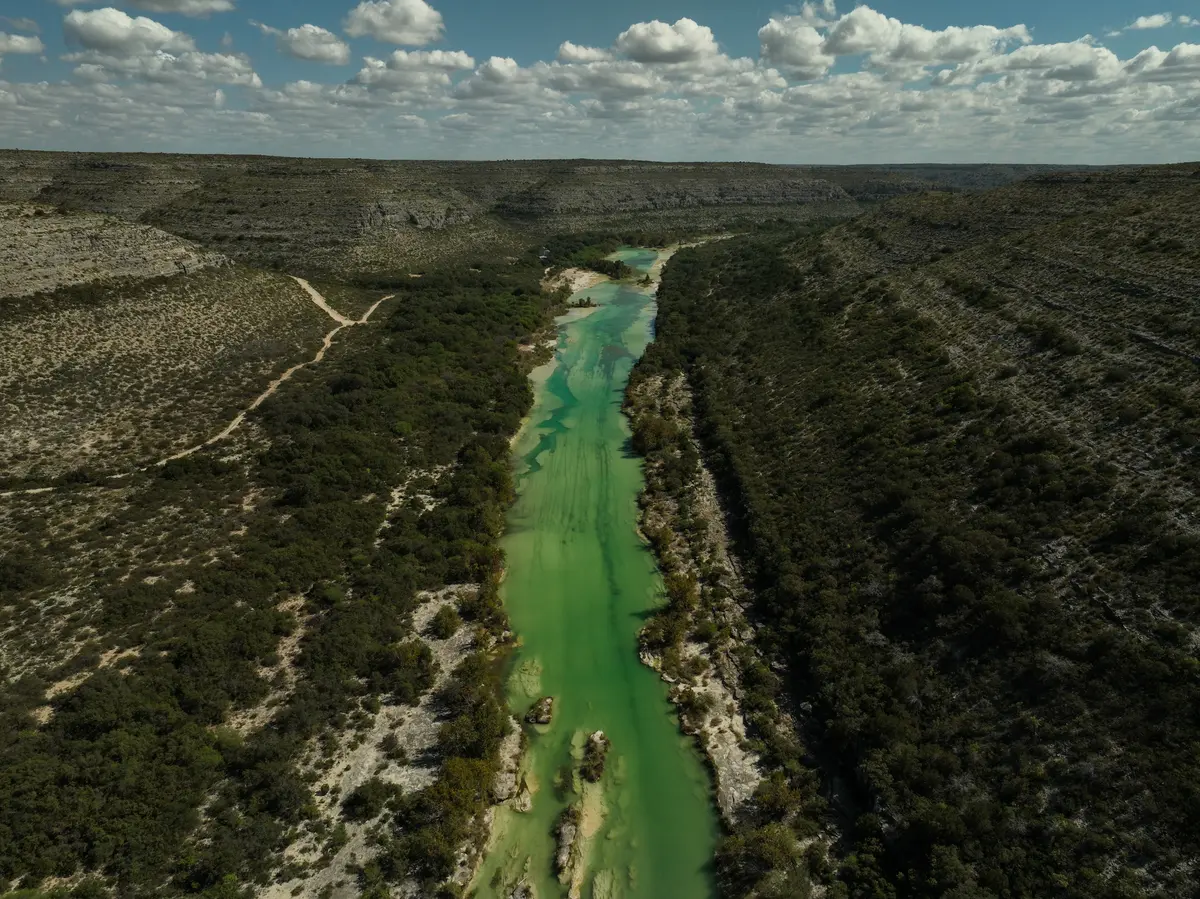
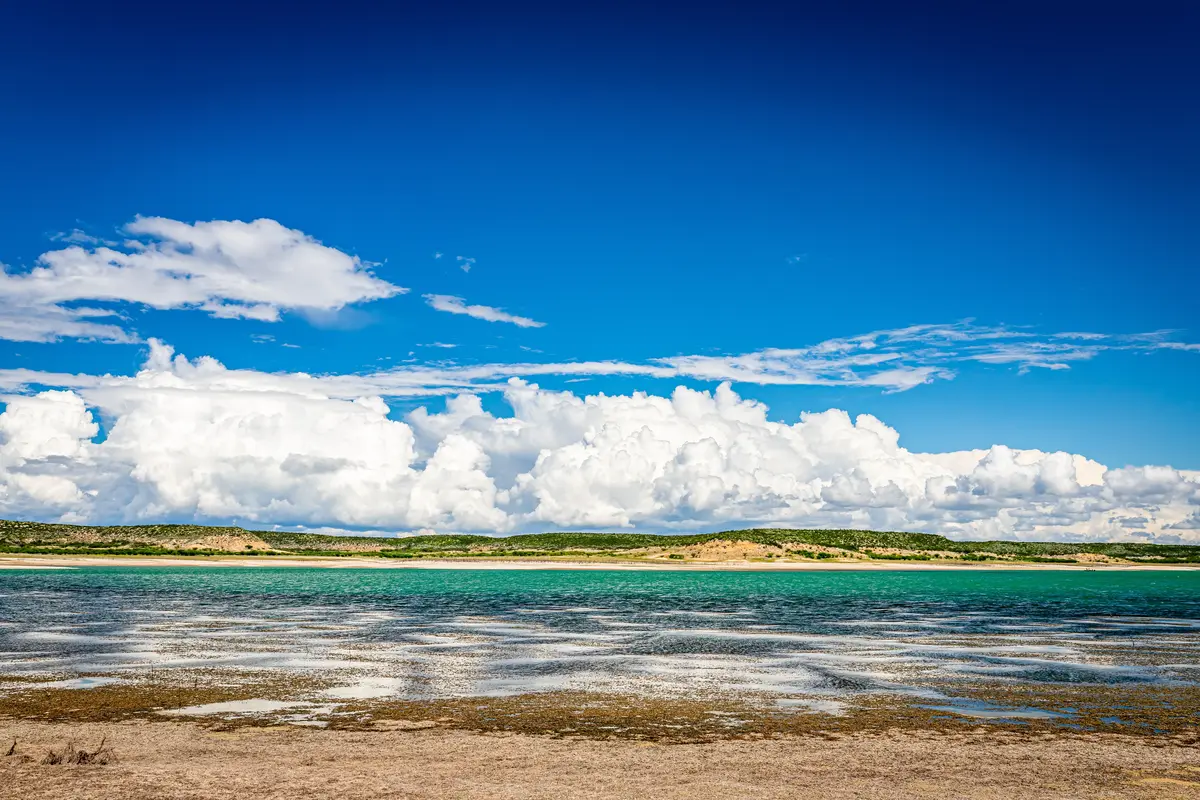
Lake Amistad — the third-largest lake in Texas, managed as part of Amistad National Recreation Area — is the city's defining outdoor asset. Boating, fishing, water-skiing, and scuba diving are all part of the regular weekend rotation for residents. The lake hosts prominent regional and national bass fishing tournaments, and it's widely regarded as one of Texas's best bass fisheries. San Felipe Springs, the fourth-largest spring system in Texas, runs through the city itself and is woven into local recreation and the city's identity in a way that has no California equivalent.
For dining, local anchors include Sirloin Stockade, Rudy's "Country Store" and Bar-B-Q, Salas Better Burger, El Patio Del Río, and Skillet's Restaurant. On the coffee side, River City Doughnut & Coffee, Chapa's Bakery, MoMo's Coffee, Cardinal Points Coffee Shop, and Cafe Sol Coffee & Bakery are the spots locals return to. The Five Points Market is the local farmers market. These aren't backup options for a city without amenities — they're the places Del Rio residents actually prefer, with the kind of regulars-know-the-staff quality that California's larger cities rarely sustain.
Looking to buy in Del Rio? Estimate your payment.
Enter your numbers to see an estimated monthly mortgage payment.
Estimate only. Excludes HOA fees and mortgage insurance. The interest rate above is a starting point, not a quoted rate — replace it with your own to see real numbers. Insurance is a flat placeholder, not a Del Rio quote.
Schools, Safety, and Community Infrastructure
The San Felipe-Del Rio Consolidated Independent School District holds a C rating, according to the Texas Education Agency — the 2025 A-F accountability rating for the 2024-25 school year. On 2024-25 state assessments, 36% of students reached math proficiency and 48% reached reading proficiency. Those numbers are below what many California transplants from higher-performing districts will be used to, and it's worth going in clear-eyed about what that means for families with school-age children. The district has active UIL athletics programs, a student body that's deeply rooted in the community, and the stabilizing presence of military families who cycle through and tend to be engaged school participants. For a full breakdown of individual campuses and boundary details, the schools page has the specifics.
The city's crime picture compares favorably to state and national benchmarks. Del Rio reports a violent crime rate of 2 per 1,000 residents and a property crime rate of 13 per 1,000 residents — both below Texas's statewide figures and below national averages. For the full safety analysis and neighborhood-level context, the safety page covers it in detail.
Higher Education and Workforce Development
Sul Ross State University–Rio Grande College operates a campus in Del Rio, offering upper-division undergraduate and select graduate programs. A June 2025 partnership with Laughlin Air Force Base expanded on-base degree access for military personnel — which matters for the significant portion of the city's population connected to the base. It's a meaningful infrastructure piece for a city this size, and one that Californians used to large university systems might not expect to find here.
The Military Community Texture
The rotation of military families through Laughlin Air Force Base creates a community that's simultaneously transient and tight-knit — a combination that sounds contradictory until you live it. New arrivals find social networks faster here than in most cities because so many residents have been the new arrival themselves. Friday night football fills the stands; community events draw genuine crowds. For California transplants used to the social anonymity of larger cities, the community texture of Del Rio is often one of the genuine surprises on the positive side of the ledger.
Honest Trade-offs: What California Transplants Get and Give Up
The financial case for this move is strong and specific. You eliminate state income tax entirely — California's top state income tax rate of 13.3% becomes zero on day one of Texas residency. You access a housing market where the typical home value is a fraction of what you left behind. Your cost of living drops across nearly every category. Health insurance premiums run noticeably below California levels, though you'll drive farther for specialist care, and advanced treatment means a significant trip.
What you give up is urban infrastructure. There is no equivalent here to the retail density, restaurant variety, arts scene, or specialist professional services that California's metro areas — even mid-sized ones — take for granted. A serious shopping trip means driving out of town. The entertainment footprint is small. If proximity to a major metropolitan center matters for your career or your quality of life, the 150-minute drive to San Antonio is the honest answer to that need, and it shapes every calculation about what's practical and what isn't.
Why People Move Back
The transplants who leave Del Rio usually cite one of two things: the summer heat proves harder to adapt to than anticipated, or the distance from family and from the urban amenities they valued in California becomes untenable over time. Both are real. This is not a city that rewards buyers who haven't genuinely reckoned with what remote living at this scale means — not in terms of hardship, but in terms of a daily rhythm that is fundamentally different from California suburban life.
What You Would Not Do
If you're moving here and prioritizing walkability and urban density, don't buy assuming the city will fill in around you. Del Rio is a driving city, and the gaps in the retail and services footprint are structural, not temporary. Buy for what Del Rio actually is — a border community with extraordinary water recreation, genuine affordability, a strong military-civic backbone, and a binational culture that has no real California analog — rather than for what you hope it might become.
The Budget Reality Check
The combination of no state income tax, housing costs well below the national average, and a city-wide typical rent of $1,395 per month means that a household bringing a mid-range California income to Del Rio can restructure its finances substantially. The property tax rate of 1.75% is the line item that surprises most buyers — it's above both the Texas and California effective averages — but on a home priced at Del Rio's typical value, the absolute dollar figure remains manageable compared to what California buyers are accustomed to paying on higher-priced assets. Run the full numbers on the cost of living page before you finalize any decision.
Local Expert Takeaway: Del Rio makes the most financial sense for buyers who are genuinely done with California's cost structure and ready for a different kind of daily life — not a scaled-down version of what they left, but something distinct. The income tax savings are immediate and real. The home prices are a different category entirely from California's statewide typical home value of $773,735. The honest preparation is this: accept the summer heat as a lifestyle condition you'll work around, not through; plan for a two-and-a-half-hour drive to San Antonio when you need major city amenities; and lean into what Del Rio actually has — Lake Amistad, San Felipe Springs, a binational community unlike anything on the California coast, and a financial breathing room that most Californians haven't felt in years.
Quick Takeaways & FAQs
✅ Texas has no state income tax, which means the savings versus California begin on the first day of residency and compound over time for anyone who was paying into California's bracket structure.
⚠️ Del Rio's 1.75% effective property tax rate is above both the Texas and California effective averages — buyers moving from California's Prop 13 environment will feel this difference, even on a much lower purchase price.
📍 Lake Amistad, the third-largest lake in Texas and a nationally recognized bass fishery, sits at the edge of the city — it is the reason a lot of Californians who came for the price stay for the lifestyle.
How much do I actually save on taxes by moving from California to Del Rio?
What is the typical home price in Del Rio, and how does it compare to California?
What is Del Rio's school district like, and how does it compare to California districts?
What is the weather like in Del Rio, and how big of an adjustment is it from California?
Is Del Rio a good fit for remote workers leaving California?
Moving to Texas?
Tell us what you need help with and we'll connect you with local resources.
