You've probably heard the shorthand about border-town schools. Before you let that shape your decision, spend five minutes with the actual picture in Del Rio. San Felipe-Del Rio Consolidated Independent School District holds a C rating, according to the Texas Education Agency — a number that matters, but that doesn't tell you about the Early College High School sending students out with associate's degrees before they've turned 18, or the STEM elementary sitting on the Laughlin Air Force Base footprint, or a graduation pipeline that compares favorably to statewide norms. The district has real gaps. It also has real programs most districts twice its size don't offer.
Del Rio is a city of 34,496 anchored by two institutions that between them employ much of the local workforce: Laughlin Air Force Base and the school district itself. That overlap matters for families. San Felipe-Del Rio CISD serves military children, civilian families, and a student body that is approximately 93% Hispanic/Latino and 72% economically disadvantaged — demographics that reflect the border community honestly, and that the district's Career and Technical Education programming is specifically built around. The district runs 14 campuses with 9,510 students enrolled in 2025-26, which makes it one of the larger districts in this part of Southwest Texas.
Families moving here from larger metros often expect fewer options and find more than they anticipated — especially at the high school level. On 2024-25 state assessments, 36% of students reached math proficiency and 48% reached reading proficiency, figures that fall below state averages and that parents weighing a move should take seriously. At the same time, the district's dual-enrollment pipeline, its Project Lead The Way curriculum, and its District of Innovation status give motivated students real acceleration paths. For a brief look at what the typical home costs here, see the cost of living page.
Whether you're a military family rotating into Laughlin, a remote worker drawn by the affordability of Southwest Texas, or someone considering a move and trying to understand what school life here actually looks like — the sections below cover the district's structure and rating, the standout campuses worth knowing by name, the youth sports ecosystem, who the district genuinely serves well, and where the honest mismatches are.
San Felipe-Del Rio CISD at a Glance
San Felipe-Del Rio Consolidated Independent School District holds a C rating, according to the Texas Education Agency — specifically the 2025 A-F accountability rating covering the 2024-25 school year. That grade reflects a district navigating the pressures common to high-poverty border communities: limited tax base, high rates of economic disadvantage, and a student population that includes a significant share of English language learners.
What the letter grade doesn't capture is the graduation pipeline. The district keeps a strong share of students on track through completion — a result that reflects deliberate programming at the high school level, including the early college pathway described below. That outcome is not an accident in a community where economic pressures push hard against staying in school.
Teacher licensure is a genuine strength: approximately 95.1% of teachers hold current certification, which compares well even against districts with stronger tax bases. Staffing depth in specialized roles is a different and harder question, one worth raising directly when you tour campuses.
The district operates as a District of Innovation, a Texas designation that gives it flexibility to bring licensed workforce professionals into Career and Technical Education courses — specifically in Trades and Industry, Health Science, and Family and Consumer Science — when traditionally certified candidates aren't available. In a city where a regional medical center is among the top employers and Laughlin AFB shapes the local economy, that flexibility has practical value for students moving toward those fields.
| Metric | San Felipe-Del Rio CISD | Context |
|---|---|---|
| TEA Accountability Rating (2024-25) | C | Statewide A–F scale |
| Enrollment (2025-26) | 9,510 students | 14 campuses |
| Math Proficiency (2024-25 assessments) | 36% | Below state average |
| Reading Proficiency (2024-25 assessments) | 48% | Below state average |
| Licensed Teachers | ~95.1% | Strong licensure rate |
| Student Body — Hispanic/Latino | ~93% | Reflects border demographics |
| Economically Disadvantaged | ~72% | Shapes CTE program focus |
| District Status | District of Innovation | Staffing flexibility in CTE |
A 2025 bond proposal is the most concrete sign of where the district is putting its energy: funding for infrastructure upgrades, permanent facilities to replace aging modular structures, and program improvements across multiple campuses. That investment doesn't fix the test-score picture overnight, but it signals institutional commitment that matters when you're evaluating a district for the long term.
Standout Campuses Worth Knowing
Del Rio Early College High School
This is the campus that surprises most families arriving from out of state. Del Rio Early College High School runs a structured dual-credit program in partnership with Southwest Texas Junior College, allowing students to earn college credits — and potentially an associate's degree — before they finish high school. In the Class of 2023, 99.1% of students received their diplomas on time or earlier.
That completion rate stands out in a district whose overall metrics sit below state averages. The Early College model works in part because it creates a distinct school-within-a-school culture: students who enroll are self-selecting into a more demanding track, and the program's structure keeps them accountable to that choice. For a family with a high school student ready for academic acceleration, this campus changes the equation significantly.
Del Rio High School
The district's main comprehensive high school is the larger, more traditional campus — and it carries options that matter for the full range of learners. Del Rio High School offers Advanced Placement courses, a Project Lead The Way curriculum (an engineering and biomedical pathway built around hands-on applied learning), and a Gifted and Talented program for identified students. Active UIL athletics programs run across fall and spring seasons, and Friday night football fills the stands in a way that is genuinely central to the social fabric of Del Rio — the Rams mascot is everywhere in this town during the season.
The AP and PLTW tracks give families an acceleration path even within the comprehensive school, which matters for students who want breadth — varsity sports, fine arts, electives — alongside rigorous coursework.
Roberto 'Bobby' Barrera STEM Elementary
Situated on the Laughlin Air Force Base footprint, Barrera STEM Elementary serves the military families stationed there alongside civilian employees and their children. The school's location makes it the natural landing point for families rotating into Laughlin, and its STEM focus is a deliberate fit for a base that trains military aviators and houses a technically oriented workforce.
In 2025, a district bond proposal allocated $7 million specifically to replace Barrera's existing modular structures with a permanent brick-and-mortar building — a long-overdue upgrade that acknowledges the school's role in the community and its long-term importance to the district. If you're moving to Del Rio on military orders, this is the first campus to research.
Youth Sports and Kids Activities
Del Rio's youth sports ecosystem is more organized than the city's size might suggest, and the community turns out for it. The two anchors are soccer and baseball, but football, cheer, and aquatics round out a calendar that keeps kids active across all three seasons.
Soccer
The Del Rio Laughlin Youth Soccer Association (DRLYSA) is the city's recreational soccer backbone. It serves children from toddler age through high school, affiliated with the South Texas Youth Soccer Association. The league runs two seasons a year — a fall season and a spring season running into May — with volunteer-coached practices and weekend games. Registration fills up; if you're arriving mid-year, get on the list early.
For families looking for a more competitive level of play, Del Rio Furia Soccer League provides a club-level option affiliated with the Texas South regional soccer association. Furia sits a step above recreational and is the right fit for players who've outgrown the rec environment and want structured club competition.
Baseball and Football
Del Rio Little League operates under the national Little League Baseball umbrella and is an active presence in the city. It's the entry point for most families with younger kids interested in baseball, and the structure is familiar to anyone who's been part of a Little League community elsewhere in the country.
Del Rio Youth Football and Cheer League (DRYFCL) serves children ages 5 through 12. The organization formalized its nonprofit status in 2025 — a marker that the league has reached a scale where it needs institutional structure to sustain itself. It offers both recreational football and a cheerleading program, and it's where most of Del Rio's youngest football players get their first organized experience.
Aquatics and School-Based Programs
The City of Del Rio Parks and Recreation Department operates municipal swimming pool facilities, giving families a public aquatics option that runs independent of the school calendar. For younger kids, this is often the first structured physical activity outside of school PE.
Within the school district, active UIL athletics programs operate at the middle and high school levels across a full range of sports — football, basketball, track, tennis, golf, and more. The UIL framework means students also have access to academic competitions: debate, academic decathlon, one-act play, and band and choir competitions that draw strong participation in this district. These programs are worth asking about when you tour campuses, because participation rates here tend to run high relative to school size.
One thing families notice after a season or two: youth sports in Del Rio are community events in a way that feels different from larger cities. Rosters are smaller, coaches are neighbors, and the stands at youth baseball games and soccer matches draw extended families. The smallness of the city is a genuine advantage here — your kid is not a number on a sign-up sheet.
Looking to buy in Del Rio? Estimate your payment.
Enter your numbers to see an estimated monthly mortgage payment.
Estimate only. Excludes HOA fees and mortgage insurance. The interest rate above is a starting point, not a quoted rate — replace it with your own to see real numbers. Insurance is a flat placeholder, not a Del Rio quote.
What the District Does Well — and Where It Falls Short
The honest answer is that San Felipe-Del Rio CISD over-delivers on graduation and career pathways, and under-delivers on foundational academic proficiency scores. Both things are true at the same time, and understanding which matters more to your family is the real question.
Where It Delivers
The Early College High School is the clearest example of a program punching above the district's overall weight. A student who graduates from that campus with an associate's degree has effectively completed two years of college at no tuition cost — a significant financial advantage in a community where the median household income is $66,158.
The district's CTE programming is genuinely aligned with local employment realities. Health Science pathways connect directly to careers at the regional medical center. Trades and Industry courses prepare students for work that exists in Del Rio rather than requiring relocation to find it. The District of Innovation status gives the district flexibility to staff these courses with working professionals, which improves the practical relevance of what students learn.
Graduation outcomes here are strong relative to what the overall TEA rating would predict. A district that keeps a high share of students through to a diploma — above what the C rating might imply — is doing something right in the middle and high school years, even when the elementary proficiency numbers are a concern.
Where It Falls Short
on 2024-25 state assessments, 36% of students reached math proficiency and 48% reached reading proficiency. For families prioritizing elementary and middle school academic outcomes, those figures are the most important ones on this page. They reflect the compounding effects of high economic disadvantage, a large English-learner population, and the resource constraints that come with a smaller property tax base in a border county.
Classrooms run larger than many families coming from suburban districts are used to. Combined with the proficiency gap, this creates a situation where a student who needs additional academic support may not receive it as consistently as they would in a more resourced district. That gap is manageable for families who supplement at home or through tutoring — it is a real challenge for families who are counting on the school system to carry the full load.
Who This District Is NOT the Right Fit For
Being direct about this saves families from a frustrating mismatch — and the families who tend to be most disappointed in San Felipe-Del Rio CISD share a few recognizable profiles.
Families expecting high standardized test scores as the primary signal of school quality will find this district difficult to defend on that metric. If your comparison set is high-performing suburban districts in the Austin or San Antonio corridors, the assessment numbers here look significantly different. That gap is real and is not explained away by demographics alone — it reflects a district still working through structural challenges.
Families relocating from high-density metro areas who expect a large catalog of extracurricular specialization — competitive robotics clubs, multiple foreign language tracks, a dozen AP sections per course — will find the menu smaller. Del Rio High School and the Early College campus offer meaningful programs, but breadth is limited by school size and budget.
Families with a child who has significant learning differences or requires intensive special education services should investigate the district's capacity carefully before committing. Smaller districts often have less staffing depth in specialized roles, and this is a question to ask directly when you tour.
Families who prioritize private schooling should know upfront that private school options in Del Rio are limited. This is not a city with a robust independent school market. If private school is a non-negotiable, the district's public options are likely your primary path — and the Early College campus is where that conversation starts at the high school level.
The flip side is worth naming too: families who have done the research, who value the specific programs this district offers, and who are active participants in their kids' education tend to find more here than the C rating would predict. The rating is a starting point, not a final answer.
Weekends and Local Favorites
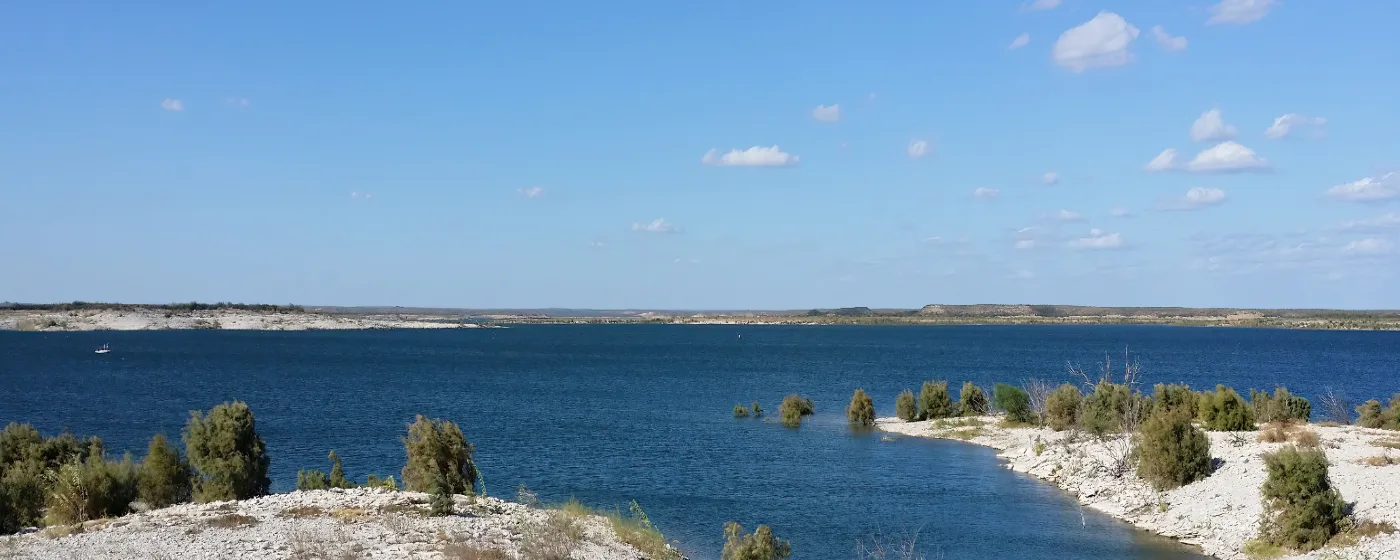
Family life outside of school in Del Rio centers on the outdoors and on a food culture shaped by the border. Lake Amistad and Amistad National Recreation Area are the single biggest draw — a reservoir of more than 65,000 acres where fishing, boating, and hiking define weekend routines for families across the city. San Felipe Springs, one of the largest springs in the United States, is a few minutes from the center of town and becomes a reliable gathering point in the warmer months.
The dining scene skews toward casual and local. Sirloin Stockade is a family-dinner institution in Del Rio — the kind of place you end up at after a youth soccer game. Salas Better Burger and El Patio Del Río fill out the local rotation for families who eat out regularly. Skillet's Restaurant and Rudy's "Country Store" and Bar-B-Q round out a casual dining scene that doesn't require much driving to navigate.
For coffee and morning runs, River City Doughnut & Coffee, Chapa's Bakery, MoMo's Coffee, Cardinal Points Coffee Shop, and Cafe Sol Coffee & Bakery each have their regulars. Del Rio is small enough that you end up at the same place most weeks and know the staff by name within a month — which is either a comfort or a constraint depending on what you're used to.
Five Points Market is the local farmers market option for families who want fresh local produce and a community gathering point outside of the school and sports calendar.
One thing that surprises families six months in: the social life here is tighter than expected. Parents who coach youth soccer or volunteer with Little League find themselves embedded in the community faster than they would in a larger city. The size of Del Rio — 34,496 people — means that school connections, sports connections, and neighborhood connections overlap constantly. That density of relationship is the thing that turns transient Laughlin families into people who request return assignments.

Local Expert Takeaway: San Felipe-Del Rio CISD holds a C rating, according to the Texas Education Agency, and the assessment proficiency numbers are honest challenges families should weigh carefully. But the district's Early College High School — where students can leave with an associate's degree before graduation — and a CTE pipeline built around real local employment change the calculation for families willing to engage with what the district actually offers. Youth sports leagues, from DRLYSA soccer to Del Rio Little League to DRYFCL football, run year-round and serve as the social glue of family life here in a way that bigger cities rarely produce. Do your homework on the proficiency gaps; also do your homework on the programs that sit above them.
Quick Takeaways & FAQs
✅ Del Rio Early College High School offers a dual-credit pathway where students can earn an associate's degree before graduating — one of the most concrete acceleration options available in Southwest Texas.
⚠️ On 2024-25 state assessments, 36% of students reached math proficiency and 48% reached reading proficiency — numbers that fall below state averages and should factor into any family's decision.
📍 Roberto 'Bobby' Barrera STEM Elementary, situated on the Laughlin AFB footprint, is the first campus military families rotating into Laughlin should research, and a 2025 bond allocated $7 million to replace its modular structures with a permanent building.
What rating does San Felipe-Del Rio CISD have?
Does Del Rio have an early college or dual-credit high school program?
What youth sports leagues are available in Del Rio?
How does San Felipe-Del Rio CISD serve military families at Laughlin AFB?
Are there private school options in Del Rio?
Moving to Texas?
Tell us what you need help with and we'll connect you with local resources.
