
What Is Living in Eagle Pass, Texas Like?
Most people who move to Eagle Pass from elsewhere in Texas say the same thing within the first few months: they expected a sleepy border town and found something far more layered. Eagle Pass sits at the confluence of US-57 and US-277 on the Rio Grande, directly across from Piedras Negras, Coahuila — and that binational relationship is not a footnote to life here, it is the whole story. The two cities share bridges, families, commerce, and a cultural calendar. What looks like a boundary on a map functions more like a main street for the 28,926 people who call this side home.
The economy here runs on trade, education, and government in roughly equal measure. The Port of Eagle Pass handled $37.14 billion in exports and imports in 2023, making it the ninth-busiest border crossing in the country, and that volume ripples through local retail, logistics, and professional services. Eagle Pass Independent School District — with 13,450 students enrolled in 2025-26 — is among the largest employers in the city, alongside the City of Eagle Pass, Maverick County, U.S. Customs and Border Protection, and a major regional health system. Foreign Trade Zone No. 96 designation has drawn companies seeking duty advantages, and Sul Ross State University International and Southwest Texas Junior College both anchor higher education locally, with a new four-year university affiliated with SRSU under construction. People move here for stable public-sector jobs, for family already rooted here, and increasingly for the affordability that larger Texas cities have abandoned.
That affordability is real. The typical home price in Eagle Pass sits at $222,003 (July 2026), a figure that looks almost startling to anyone coming from Austin or San Antonio. The median household income of $57,207 sits at or above what is needed to buy the typical home here — a relationship that has largely disappeared in most Texas metros. The Rio Grande riverfront, Fort Duncan Park, Maverick County Lake, and 223 sunny days a year give daily life an unhurried outdoor character that office parks and subdivisions in larger cities simply cannot replicate. Cross-border dining and a genuinely bilingual community make the cultural texture richer than the population count alone would suggest.
Whether you are weighing a first home purchase, relocating for a federal or government position, or just trying to understand what Southwest Texas border life actually feels like day to day, the sections below break down Eagle Pass's neighborhoods, housing market, schools, commute, local favorites, and the honest tradeoffs worth knowing before you commit.

Eagle Pass at a Glance
Looking to buy in Eagle Pass? Estimate your payment.
Enter your numbers to see an estimated monthly mortgage payment.
Estimate only. Excludes HOA fees and mortgage insurance. The interest rate above is a starting point, not a quoted rate — replace it with your own to see real numbers. Insurance is a flat placeholder, not a Eagle Pass quote.
Why Are People Moving to Eagle Pass?
The case for Eagle Pass is easy to make. Home prices well below the Texas average. A stable, government-anchored job market. A bilingual community that gives the city a cultural depth unusual for a city of its size. The case against it is shorter but worth reading: San Antonio is about 140 minutes away, and that distance matters for anyone who needs a major airport, a specialty hospital, or a night at a concert venue that seats more than a few hundred.
The Trade Economy Anchor
Most border cities talk about cross-border commerce. Eagle Pass actually lives it. The Port of Eagle Pass moved $37.14 billion in goods in 2023, and that volume sustains a retail sector driven in part by Mexican consumers who cross daily to shop. Frito-Lay, Bravo, and MicroStar Logistics have located here specifically for the Foreign Trade Zone No. 96 advantages. That trade corridor — connecting Monterrey and interior Mexico to San Antonio and Houston — is the economic spine the city bends toward.
Public Sector Stability
For people who want predictable employment, Eagle Pass delivers. Eagle Pass Independent School District, the City of Eagle Pass, Maverick County, U.S. Customs and Border Protection, and the local healthcare system collectively employ a substantial share of the workforce. Public administration is the highest-paying industry locally, with median earnings well above the citywide household income. That is not an accident — federal border operations alone sustain a meaningful professional class.
Higher Education on the Rise
Sul Ross State University International and Southwest Texas Junior College both operate here, giving residents local access to degree programs and workforce credentials. A new comprehensive four-year university affiliated with SRSU and the Texas State University System was under construction as of early 2025 — a significant investment in a city this size, and a signal about where local leadership sees Eagle Pass heading.
Who Actually Moves Here
| Buyer Type | Why Eagle Pass Works | What to Weigh |
|---|---|---|
| First-Time Buyers | Entry-level prices well below state averages; affordability math works at median income | Limited resale inventory; smaller pool of comparable sales |
| Federal Employees | CBP and federal border operations; stable salaries; short in-city commutes | Advancement may require transfer to larger field offices |
| Families with Kids | Eagle Pass ISD; active UIL athletics; tight-knit community feel | Major medical specialists and larger retail mean a long drive |
| Value-Focused Buyers | One of the most affordable ownership markets in Texas | Appreciation history is modest compared to high-growth Texas metros |
| Relocating Renters | Typical rent well below major Texas cities; smooth transition to ownership | Rental inventory is limited; options tighten quickly |
| Remote Workers | Low cost base; quiet pace; proximity to Mexico for lifestyle variety | Internet infrastructure improving but uneven in some areas |
Eagle Pass was selected as a 2025 Governor's Small Business Summit host city — a detail that says something about the state's view of its trajectory, even if the city still feels under the radar to most Texans outside the border region.
What Daily Life Feels Like in Eagle Pass
The average commute here is 20.1 minutes. Read that again. In a state where San Antonio workers are averaging closer to 25 minutes and Austin workers much longer, the short daily haul is not a talking point — it is a genuine quality-of-life difference that residents notice immediately and newcomers take a few weeks to stop being surprised by.
A Bilingual City, Not a Border Cliché
Eagle Pass is one of the largest bilingual communities on the U.S.-Mexico border, and that shapes everything from what's on the menu to how business gets done at the counter. Spanish is not a second language here in any practical sense — it is co-equal. Newcomers who speak only English navigate fine, but those who speak Spanish, or are raising children to, find the immersion immediate and natural.
The Cross-Border Texture
Piedras Negras is not a day trip from Eagle Pass — it is functionally the next neighborhood over. Families split across the two cities are common. The International Friendship Festival each March makes that relationship visible to the whole region: the Abrazo ceremony brings residents from both sides onto International Bridge I to literally embrace each other, followed by parades, live music, and food that pulls from both culinary traditions. It is one of the few civic events in Texas that you genuinely cannot replicate anywhere else in the state.
What Surprises People After Six Months
Newcomers consistently underestimate the summer heat. Eagle Pass sits in a semi-arid stretch of Southwest Texas where summer temperatures regularly push well past 100°F, and the Rio Grande's humidity makes those days feel heavier than the thermostat suggests. Most locals have adapted — they run errands early, spend afternoons indoors, and return outside after sundown — but buyers from the Hill Country or the coast sometimes find the July and August adjustment sharper than expected.
The Cowboy Calendar
Every February, riders depart from the Camino Real International Bridge II on a week-long trail ride toward San Antonio's Stock Show and Rodeo — a South Texas cowboy tradition that is not performative tourism, it is the real thing. That seasonal rhythm, alongside the March festival, gives the community a cultural calendar that feels rooted rather than assembled.
For a deeper look at Eagle Pass ISD and school options, or the parks, trails, and outdoor recreation that structure weekend life, the dedicated pages go well beyond what this overview can cover.
The Eagle Pass Housing Market Right Now
The typical home in Eagle Pass is priced at $222,003 (July 2026, Zillow Home Value Index) — and the median household income here sits at or above what is needed to carry that purchase at current rates. That affordability relationship has become rare enough in Texas that it is worth stating plainly: buying a home here on a single income is still a realistic proposition for many households.
What the Market Looks Like
Established single-family homes make up the bulk of what trades here — mostly one-story construction with mature yards on streets that have been around long enough to have character. Newer construction in some areas of the city tends to push somewhat above the typical price point, while older stock closer to downtown can come in below it. The neighborhoods page breaks down the character and feel of each area in detail.
The Rental Side
The city-wide typical rent runs $1,206 per month (Zillow, July 2026), which positions Eagle Pass as one of the more accessible rental markets in Texas. For the full picture on rents, utilities, and overall cost of living, see the cost of living page.
Property Taxes — A Real Advantage
Texas has no state income tax, which is well known. Less discussed is Eagle Pass's effective property tax rate of approximately 0.71% — noticeably below what buyers face in high-growth Texas metros. On a home at the typical price, that rate makes a meaningful difference in the monthly carrying cost compared to a similar purchase in San Antonio or Austin.
Who the Market Suits
Eagle Pass is not a market where investors are flipping homes for quick appreciation. It is a market where families buy and stay — sometimes for generations. Well-priced homes move, but this is not a frenzied environment. Buyers who need to sell quickly should understand that the pool of qualified local purchasers, while steady, is smaller than in a major metro.
Eagle Pass Neighborhoods
Eagle Pass has several distinct areas — each with its own character and appeal. Here’s a breakdown to help you narrow down where to focus your home search.
🏡 Downtown Eagle Pass
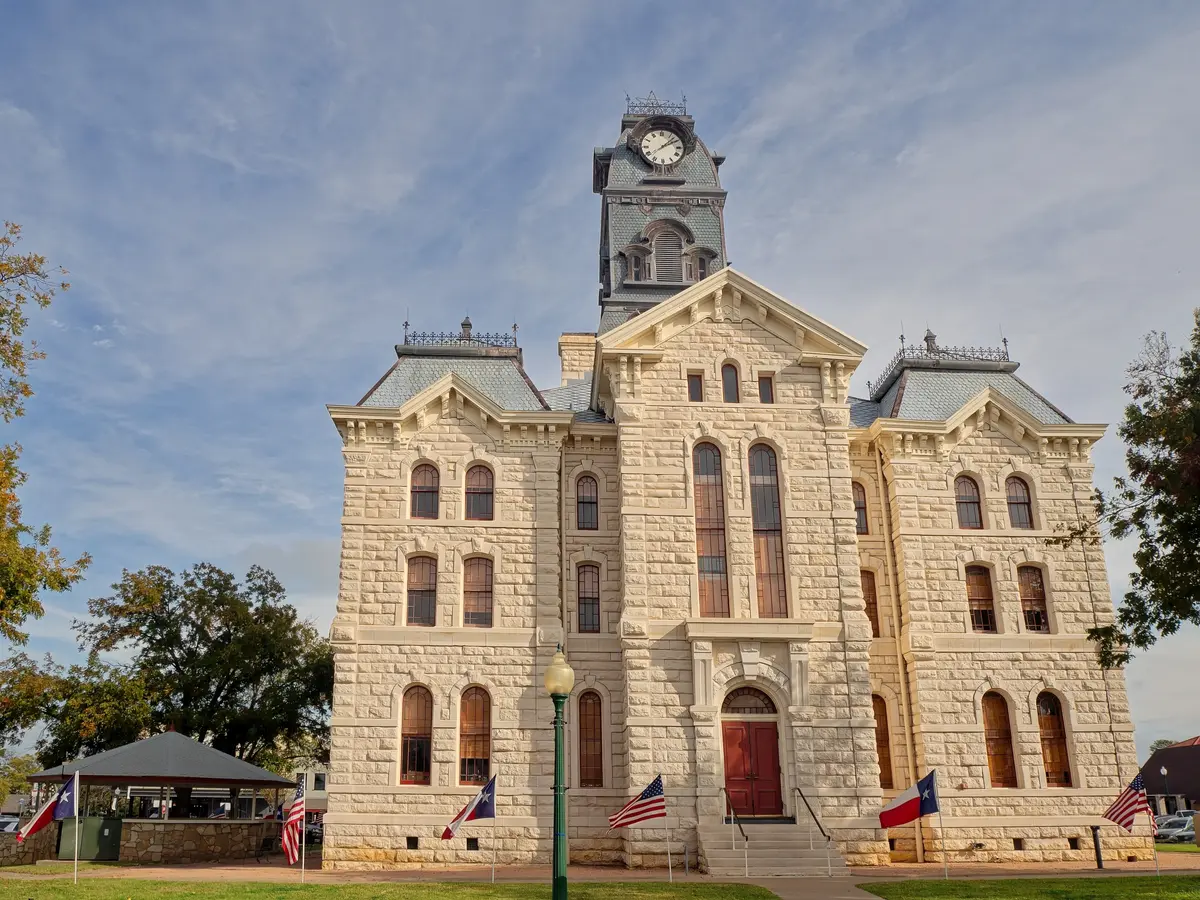
The civic and historic core of the city, anchored by the Historic Maverick County Courthouse and the 300 Block Art and Entertainment District. A good fit for buyers who want to be close to the cultural pulse of the city and within easy reach of the international bridges.
🏠 Chula Vista
An established residential area with a settled, family-neighborhood feel — the kind of block where people know their neighbors and have for years. Well-suited for families with school-age children looking for a consistent, low-key environment.
🌳 Westlakes
One of the newer areas of Eagle Pass, with more recently built housing stock and a slightly more suburban character than the older central neighborhoods. Draws buyers who want newer construction without leaving the city.
🏘 Las Quintas Fronterizas
A neighborhood whose name reflects its proximity to the Rio Grande and its border heritage. Established single-family homes on quiet streets, popular with longtime Eagle Pass families who want to stay close to the river corridor.
🏔 Benavides Heights
A mid-city residential neighborhood with a mix of housing ages and styles, offering relatively straightforward access to the main commercial corridors. A practical choice for first-time buyers and families prioritizing location over newness.
🌆 Vista Hermosa
A quieter residential pocket with a neighborhood feel that tends to attract families looking for a settled, low-traffic environment. Single-family homes predominate, and the area has a consistent residential character throughout.
Pros & Cons of Living in Eagle Pass
The Pros
- Affordable home prices and low effective property tax rate
- Rich binational culture and cuisine right on the U.S.-Mexico border
- Short commute for most residents who live and work locally
- Growing federal and trade-related job base tied to the border crossings
The Cons
- School district posts below-average state test scores and district ratings
- Punishing, long summer heat with highs regularly near 100°F
- Limited economic diversity, with the local economy closely tied to border and government employment
Getting Around & Commuting in Eagle Pass
Eagle Pass is a driving city. The average household here owns two cars, and that figure reflects reality rather than preference — most errands, school runs, and work commutes happen behind a wheel. The good news is that those drives are short. With an average commute of 20.1 minutes, the daily grind that defines life in Austin or Houston simply does not exist here in the same form.
The Highway Framework
US-57 and US-277 are the two routes that organize movement in and out of Eagle Pass. US-57 connects north toward San Antonio, forming the primary corridor for anyone making the trip to the state's largest nearby city. US-277 runs parallel through Maverick County and links Eagle Pass to Del Rio to the north and Carrizo Springs to the south. Both routes carry significant commercial truck traffic tied to the port, which means heavy freight is a routine presence on the roads leading out of town — not a safety hazard so much as a pacing factor during certain hours.
Getting to San Antonio
San Antonio is about 140 minutes away on a clear day. That is the relevant benchmark for everything the city does not have locally: major medical specialists, a wide retail selection, concert venues, and San Antonio International Airport (SAT), 144 miles away. Most Eagle Pass residents make that trip a handful of times a year, not monthly — the city is self-sufficient enough for daily life that the distance only bites when something specific pulls you out.
The International Bridge Factor
The Eagle Pass–Piedras Negras International Bridge I and the Camino Real International Bridge II are not just infrastructure — they are daily commute routes for a meaningful share of the local workforce and commercial traffic. Wait times at the bridges vary, and residents who cross regularly learn quickly which times of day and which days of the week flow faster. Anyone buying near the bridges should factor bridge-related traffic into their mental map of the city.
Within the City
Inside Eagle Pass, distances are short enough that most cross-town drives take under fifteen minutes. The downtown core, the port area, and the main commercial corridors along US-57 and US-277 are the functional anchors of in-city movement. Most daily life here happens by car, and keeping a reliable vehicle is a basic requirement rather than a preference.
Schools in Eagle Pass
Families relocating to Eagle Pass have public, private, and higher-education options nearby. Here’s a quick overview.
🎓 School District
Eagle Pass Independent School District serves K–12 students across Eagle Pass and the surrounding area. Rated B (source: Texas Education Agency, 2025 A-F accountability rating (2024-25 school year)).
🏆 Graduation Rate
The 4-year high-school graduation rate here is approximately 92.8%.
📚 Higher Education
Texas’s public universities — the University of Texas at Austin, Texas A&M University, and the University of Houston — offer four-year degrees statewide, with one of the largest community college systems in the country (50+ public community college districts) providing two-year and workforce programs.
🌐 Online Learning
UT Austin Online and Texas A&M University Online offer fully accredited online degrees for remote learners across the state.
Safety in Eagle Pass
A quick look at how Eagle Pass compares on the numbers that matter most when weighing a neighborhood or a move.
🛡 Violent Crime
Approximately 1 per 1,000 residents.
🔒 Property Crime
Approximately 19 per 1,000 residents.
Compared to the most recent national figures from the Bureau of Justice Statistics (2024), Eagle Pass’s violent crime is below the national average (about 3.7 per 1,000), and property crime is about the same as the national average (about 18.4 per 1,000).
Against Texas as a whole, Eagle Pass’s violent crime is roughly a quarter of the state average, and property crime is about the same as the state average (Bureau of Justice Statistics, Crime Known to Law Enforcement, 2024 (tables 2 and 3)).
Crime rates can vary a lot within a single city, so the citywide numbers above are only a starting point. Some neighborhoods in Eagle Pass run well below these averages, while others run higher — the kind of block-by-block detail that matters most when you’re actually choosing where to live. The full guide below breaks it down neighborhood by neighborhood.
Working in Eagle Pass
Eagle Pass’s largest employers span several industries — here are some of the anchors of the local job market.
🎓 Eagle Pass Independent School District
Education
🏛 City of Eagle Pass
Municipal government
🏛 Maverick County
County government
🏥 Fort Duncan Regional Medical Center
Healthcare
🏛 U.S. Customs and Border Protection
Federal government
Retiring in Eagle Pass
Eagle Pass draws retirees for its balance of amenities, outdoor access, and cost. Here’s what to weigh.
🌤 Climate
Eagle Pass averages 223 sunny days a year, with mild winters that make outdoor activity comfortable from October through April. Summers are the honest challenge — intense heat and Rio Grande humidity push temperatures well past 100°F from June through September. Retirees who enjoy warm winters and can structure summer days around the cooler morning and evening hours find the climate genuinely pleasant for most of the year.
🍴 Lifestyle
Daily life in Eagle Pass moves at an unhurried pace, anchored by the Rio Grande riverfront, Fort Duncan Park, and a bilingual dining scene that reflects the city's deep ties to Piedras Negras. The Lucky Eagle Casino and Hotel offers entertainment and live events. The International Friendship Festival and the February trail ride give the community calendar a distinct South Texas character that retirees looking for cultural texture tend to appreciate.
🏚 55+ Communities
No 55+ communities were found in Eagle Pass. Retirees considering the area typically purchase in established single-family neighborhoods. For more on the broader retirement picture, including healthcare access, see the retiring page.
✈ Getting Around
Eagle Pass is a driving city — a car is necessary for most daily errands and appointments. In-city distances are short, and the 20-minute average commute reflects how compact daily life is. Fort Duncan Regional Medical Center is within city limits for routine and urgent care. San Antonio International Airport (SAT) is approximately 144 miles away, making longer travel straightforward with advance planning.
🏛 Texas Taxes for Retirees — What to Know
- No state income tax — Texas has no personal income tax — constitutionally protected under Article VIII, Section 24. Social Security, pensions, 401(k)/IRA withdrawals, and annuity payments are all untaxed at the state level, with no state return to file.
- Sales tax is the tradeoff — The state sales tax is 6.25%, and local add-ons bring the combined rate in Eagle Pass to 8.25% (Texas Comptroller of Public Accounts, city sales and use tax rates, July 2026). Groceries and prescription drugs are exempt.
- Property taxes — the real tradeoff — Texas’s effective property tax rate averages about 1.40%, among the highest in the country, since property tax (not income tax) funds most local government and schools.
- Over-65 homestead exemption and school-tax freeze — Homeowners 65+ (or disabled) get an additional $60,000 exemption from their home’s value for school district taxes, on top of the general homestead exemption — $200,000 off school taxable value combined, following November 2025’s Proposition 11 (SB 23), which raised the over-65 exemption to $60,000, and Proposition 13 (SB 4), which raised the general homestead exemption to $140,000. Once claimed, your school district tax bill is frozen at that year’s amount and cannot increase as home values rise, and the ceiling can transfer if you move to a new home within Texas.
- Deferral option if cash is tight — Homeowners 65+ can defer property tax payment entirely for as long as they live in the home, rather than paying it currently — interest accrues, but no forced sale.
- No estate or inheritance tax — Texas has no estate tax, no inheritance tax, and no gift tax.
- No separate capital gains tax — Because Texas has no state income tax, capital gains — including on investments and home sales — are not taxed at the state level at all, unlike states such as Washington that tax capital gains separately from income.
Tax laws change frequently and individual situations vary. This is general information, not tax advice — always consult a qualified Texas tax professional or CPA for personalized retirement tax planning.
Weekends & Local Favorites in Eagle Pass
Eagle Pass is not a city with a long list of tourist infrastructure. What it has instead is a roster of genuinely local institutions that residents return to reliably — places and spaces shaped by a binational community rather than built for outside visitors.
Food and Coffee
The local dining scene leans heavily on the border heritage that defines this part of Texas. Parrilla De San Miguel and La Parrilla are the names locals reach for when they want the kind of grilled meat and fresh tortillas that make this region's food worth traveling for. Yopo's has a following among regulars who want something more casual. Skillets Restaurant handles the breakfast and brunch crowd. Fuddruckers fills the gap for families with kids who need something reliably crowd-pleasing.
For coffee and pastries, Sweet Tweets Bakery, Four Corners Coffee, Revive Coffee Shop, Downtown Cupcake Shoppe, and Ana's Ice Cream & Bakery are all part of the morning and afternoon rotation — an independent coffee scene that punches above the city's size.
Outdoors
The Rio Grande riverfront is the geographic anchor of outdoor life here — a working river with genuine scenic weight that most cities would spend millions trying to activate. Fort Duncan Park sits along it, incorporating the Fort Duncan Museum, which is housed in the original 1849 army headquarters building listed on the National Register of Historic Places. The museum is the place to understand how Eagle Pass became what it is, from military outpost to international trade hub.
Maverick County Lake offers a 1.5-mile walking and jogging trail, a fishing pier, softball fields, and playground areas — the kind of park that families use on a Tuesday evening, not just a special occasion. The Eagle Pass Municipal Golf Course rounds out the outdoor options for those who want an organized outdoor activity that does not require driving out of town.
The Lucky Eagle and the 300 Block
The Lucky Eagle Casino and Hotel — operated by the Kickapoo Traditional Tribe of Texas and the only casino in the state — sits outside the city proper but is part of the local social fabric in a way that few amenities of its type are. Concerts, nightlife, a hotel, and a pool make it a destination for residents as much as visitors. The 300 Block Art and Entertainment District in downtown Eagle Pass is where the city has been building a more walkable cultural presence, with events and performances that reflect the bilingual character of the community.
The Festival Calendar
The International Friendship Festival in March and the February trail ride to San Antonio are the two events that define Eagle Pass's civic identity to the outside world. For locals, they are simply the anchors of a social calendar that runs on community participation rather than ticketed entertainment — the kind of events where you see everyone you know, because everyone you know is there.
Local favorites in Eagle Pass
Restaurants
- Parrilla De San Miguel
- Fuddruckers
- Yopo's
- La Parrilla
- Skillets Restaurant
Outdoors
- Rio Grande riverfront
- Fort Duncan Park
- Eagle Pass Municipal Golf Course
Coffee
- Sweet Tweets Bakery
- Four Corners Coffee
- Downtown Cupcake Shoppe
- Ana's Ice Cream & Bakery
- Revive Coffee Shop
Top Things Locals Say About Eagle Pass
The best intel about a city comes from the people who actually live there. Here’s what Eagle Pass residents say when newcomers ask the questions everyone’s thinking.
“I knew it was affordable, but I didn't realize how different the pace would feel. I'm home for dinner every night — I don't think I've sat in real traffic since I moved here. The cross-border culture took a few months to fully appreciate, but now I can't imagine living somewhere without it.”
— Recent Eagle Pass home buyer
“What's the most surprising thing about living in Eagle Pass?”
How genuinely international the daily rhythm is. You go to the 300 Block for an event and half the conversation is in Spanish, half in English, and nobody thinks twice about it. Piedras Negras feels like a sister neighborhood rather than a foreign country. Once you're used to it, cities that don't have that cross-border texture feel oddly flat.
“What do locals love most about Eagle Pass?”
The commute — or the lack of one, really. Getting anywhere in town takes maybe fifteen minutes on a busy day. The river is always there if you need to clear your head. And the International Friendship Festival in March is the kind of civic event that reminds you why people put down roots in a place like this instead of chasing the bigger cities.
“What should newcomers to Eagle Pass know?”
Plan your summer around the heat. July and August in Eagle Pass are serious — not just dry heat, because the river adds humidity, and the combination at 105°F is something you have to experience to really understand. Locals run their errands before 10 a.m. and after 7 p.m. and consider it a normal seasonal adjustment. Also, learn which bridge has the shorter wait time on any given morning — it makes a real difference if you're crossing regularly.
“How much do you need a car in Eagle Pass?”
A car is essential. Nearly every errand, school run, and work commute requires one, and the average household here owns two. The good news is that in-city distances are short — most cross-town drives take well under fifteen minutes. For anything beyond what Eagle Pass offers locally, you're looking at a drive on US-57 or US-277, so keeping a reliable vehicle is less of a preference and more of a basic requirement for life here.
Cities Near Eagle Pass
Other communities near Eagle Pass worth a look — each with its own character and price point.
| City | Distance | Best For | Vibe | Median Rent | Median Buy |
|---|---|---|---|---|---|
| Del Rio | 57 mi | outdoor recreation seekers & retirees | lake town, open, spread out | $1,395 | $208,595 |
| Uvalde | 56 mi | value buyers & small-town families | quiet, agricultural, community-rooted | $1,050 | $174,888 |
| Carrizo Springs | 40 mi | remote workers & deep-value buyers | very small, unhurried, oil-country roots | $900 | $118,233 |
More Helpful Guides for Eagle Pass
Going deeper on Eagle Pass? Our blog series covers everything from first-time buying to retiring here — explore the guides below.
Local Expert Takeaway: Eagle Pass is one of the last places in Texas where the affordability math genuinely works — a typical home under $225,000, an effective property tax rate well below the state's high-growth metros, and an average commute under 21 minutes. What you trade for that is distance: San Antonio is about 140 minutes away, and that gap matters when you need a specialist, a major airport, or a wider retail selection. The binational culture, the short drives, and the Rio Grande riverfront make daily life here feel grounded in a way that larger Texas cities have largely lost. If that exchange suits your life, Eagle Pass is worth a serious look.
Quick Takeaways & FAQs
✅ Eagle Pass has one of the most genuinely affordable housing markets in Texas, with a typical home price of $222,003 (July 2026) and a property tax rate of approximately 0.71%.
⚠️ San Antonio is about 140 minutes away — major medical specialists, a wide retail selection, and the nearest major airport all require that drive.
📍 The Lucky Eagle Casino and Hotel is the only casino in Texas, operated by the Kickapoo Traditional Tribe of Texas and located just outside the city — a genuine local landmark, not just a tourist footnote.
What is the cost of living like in Eagle Pass, TX?
How are the schools in Eagle Pass?
Is Eagle Pass, TX safe?
What jobs are available in Eagle Pass?
How far is Eagle Pass from San Antonio?
Helpful Links for Moving to Eagle Pass
Moving to Texas?
Tell us what you need help with and we'll connect you with local resources.
