
What Is Living in Uvalde, Texas Like?
You've probably heard of Uvalde for reasons that have nothing to do with what it's like to live here. The city of 15,455 sitting at the crossroads of US-90 and US-83 in the Texas Hill Country is, first and foremost, a small regional hub with deep roots, pecan-shaded streets, and a cost of living that runs noticeably below the national average. It's the county seat, the commercial center for a wide swath of southwest Texas, and a place where a median household income of $51,952 goes meaningfully further than it would in San Antonio or Austin. The two highways that define the city cross practically at the front door of the Uvalde Grand Opera House — the oldest functioning theater in Texas — which tells you something about how history and everyday life overlap here.
The economic backbone is anchored by public institutions. Uvalde Consolidated Independent School District, the City of Uvalde, Uvalde County, and Southwest Texas Junior College together make up the core of local employment, joined by a major regional health system and H-E-B, which anchors retail for the entire county. That employment profile means the city leans toward stable, public-sector jobs rather than tech or industrial booms. Uvalde County's outdoor and agricultural industries — hunting, fishing, trapping — also register at concentrations far above the national norm, a reflection of the ranching culture that surrounds the city on all sides. The district, with 3,822 students enrolled in 2025-26, holds an F rating, according to the Texas Education Agency — a fact that is front-of-mind for many families with school-age children weighing a move here.
On affordability, Uvalde is genuinely competitive. The typical home price sits at $174,888 (July 2026), and total living costs — housing, groceries, healthcare, transportation — run well below the U.S. average. The median household income here is at or above what's needed to comfortably reach that price point, which is a bar a surprising number of Texas cities no longer clear. For outdoor life, the county's three rivers — the Frio, Nueces, and Sabinal — put tubing, fishing, and paddling within easy reach, and Garner State Park near Concan, about 30 miles north, draws Hill Country visitors from across the state. The city itself earns a well-worn nickname among locals, and 221 sunny days a year mean outdoor time is a year-round reality rather than a seasonal one. For the full breakdown on taxes, rent, and utilities, see the cost of living page.
Whether you're being relocated here, priced out of San Antonio, or genuinely drawn by the landscape and the pace of life, this guide covers Uvalde's neighborhoods, job market, housing, commuting realities, schools, and what a typical weekend actually looks like.

Uvalde at a Glance
Looking to buy in Uvalde? Estimate your payment.
Enter your numbers to see an estimated monthly mortgage payment.
Estimate only. Excludes HOA fees and mortgage insurance. The interest rate above is a starting point, not a quoted rate — replace it with your own to see real numbers. Insurance is a flat placeholder, not a Uvalde quote.
Why Are People Moving to Uvalde?
The most common reason people move to Uvalde is price. When the rest of Texas has pushed home costs beyond reach for working families, a city where the typical home comes in at $174,888 (July 2026) — and where that price aligns with local incomes — stands out. People moving from San Antonio, Del Rio, or Eagle Pass often find they can own outright what they were renting elsewhere.
The second reason is stability. Uvalde's largest employers aren't subject to the volatility of a single corporate tenant. The school district, county government, municipal government, Southwest Texas Junior College, and a major regional health system together create a jobs base that doesn't collapse when one company leaves. H-E-B, the dominant retail anchor for the region, adds another layer of economic consistency.
Who Actually Moves Here
Families relocating for public-sector jobs — teachers, county employees, college staff — make up a meaningful share of new arrivals. So do retirees drawn by the cost structure and the Hill Country scenery, though no 55+ communities were found in Uvalde itself. Remote workers have discovered that a home office in a city this affordable, with good outdoor access, is a different kind of calculus than working from a San Antonio suburb.
The bilingual culture is a genuine asset for many arrivals. With approximately 78% of residents identifying as Hispanic or Latino and a deeply bilingual community, Spanish speakers find Uvalde immediately navigable in a way that more homogeneous Texas cities are not. The median age of 34.3 reflects a relatively young population — this isn't a city that feels like it's winding down.
The Honest Trade-Offs
The school district's rating gives many families pause, and understandably so. On 2024-25 state assessments, 18% of students reached math proficiency and 33% reached reading proficiency — figures that matter if you have school-age children and are used to a district that performs near state averages. Some families navigate this through Southwest Texas Junior College's dual-credit programs or private options; others weigh it heavily before committing. See the full picture on the schools page.
Uvalde was chosen as the host city for the first 2025 Governor's Small Business Summit, a signal that the state is paying attention to its economic development potential. The Uvalde Area Development Foundation coordinates tax abatements and industrial park opportunities for businesses considering the area — which matters if you're relocating a small business rather than just a household.
What Daily Life Feels Like in Uvalde
Uvalde moves at a pace that San Antonio transplants consistently describe as jarring at first, then deliberate. The city covers 7.67 square miles, which means most daily errands — the H-E-B run, the school pickup, the post office — take under 20 minutes round trip. That compactness is one of the underrated realities of life here.
The Bilingual Texture
Day-to-day life in Uvalde is bilingual in the most practical sense. Church services, business conversations, school meetings, and the Saturday morning errands all flow between English and Spanish without friction. Newcomers from outside the region sometimes take a few months to calibrate to this rhythm; those who embrace it tend to feel quickly at home.
Where the Community Gathers
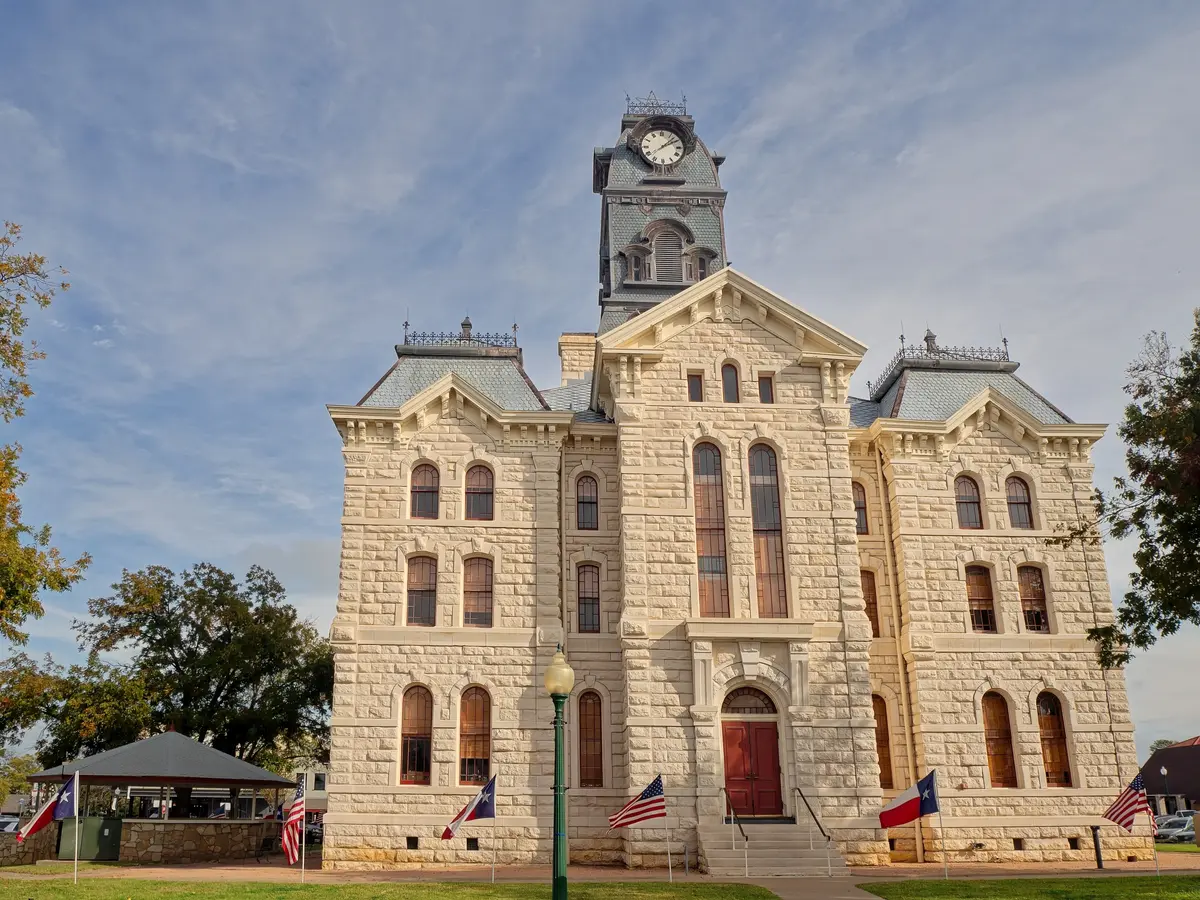
The Uvalde Grand Opera House, built in 1891 and listed on the National Register of Historic Places, anchors the cultural calendar with live plays, concerts, and touring performances. The 1928 Uvalde County Courthouse and the Briscoe-Garner Museum — housed in the former home of Vice President John Nance Garner, who served as FDR's second-in-command — give downtown a civic weight unusual for a city this size. The First State Bank of Uvalde houses a multi-million-dollar art collection, including works attributed to Rembrandt and Gainsborough alongside a significant Western art collection, viewable free of charge — roughly 6,000 people a year take advantage of it.
Uvalde Memorial Park is the green anchor of the residential core, and Cook's Slough Nature Park offers a genuine nature experience inside city limits — riparian habitat, bird-watching, and walking paths that don't require a drive. Those two spaces are where residents actually spend time on quiet evenings.
What Surprises People After Six Months
The summer heat is the most common adjustment newcomers underestimate. With 221 sunny days a year, July and August in Uvalde are genuinely hot in a way that outdoor time requires planning around — the Hill Country mornings are forgiving, but midday errands between June and September test even Texans accustomed to the climate. The flip side is that the winters are mild enough that locals are back outside by November.
The other surprise is how self-contained the city is for its size. A serious shopping trip — anything beyond groceries and hardware — means a drive, and most residents have made peace with ordering online for things the local stores don't carry. That trade-off shows up most clearly when a family needs specialty medical care or a specific retailer that isn't here.
Crime context for Uvalde: the city carries a violent crime rate of 3 per 1,000 residents and a property crime rate of 23 per 1,000 residents. The violent rate sits below both the state figure of 4 per 1,000 and the national figure of 3.7 per 1,000, while the property rate is modestly above the state's 20.7 per 1,000 and the national 18.4 per 1,000. For deeper safety context, see the safety page.
The Uvalde Housing Market Right Now
The typical home price in Uvalde is $174,888 (July 2026, Zillow Home Value Index) — a figure that represents genuine affordability by any Texas measure, and one where the local median household income holds up against the purchase price. That alignment between what people earn and what homes cost has largely held, making ownership realistic for residents in a way it isn't in many Texas cities right now.
The housing stock skews toward single-family homes on established lots, with the mature tree canopy the city is known for showing up in older neighborhoods. Entry-level inventory does exist, though well-priced homes in desirable pockets don't sit indefinitely. Some areas command more than others — the neighborhoods page breaks down the character and feel of each area in detail at best neighborhoods in Uvalde.
What the Market Feels Like
Uvalde is not a high-velocity market. It is not a slow one either. The city is small enough that a well-priced home in a sought-after neighborhood generates real interest quickly, while overpriced listings stay on the market longer than sellers expect. The pool of buyers is narrower than in a metro, but so is the supply — and the affordability floor means the bottom of the market stays active.
Nearby, Sabinal tends to come in somewhat lower than Uvalde's typical price, while Hondo and Eagle Pass both run noticeably higher. Rental costs and utility figures are covered in full on the cost of living page.
The effective property tax rate in Uvalde is 1.23% — below the Texas average, which matters in a state with no income tax but historically high property tax burdens.
Uvalde Neighborhoods
Uvalde has several distinct areas — each with its own character and appeal. Here’s a breakdown to help you narrow down where to focus your home search.
🏡 North Uvalde
North Uvalde tends to attract families and established residents who want newer construction and quieter residential streets with easy access to the city's main commercial corridors. The feel is solidly suburban for a city this size — yards, driveways, and a short drive to everything.
🏠 Downtown Uvalde
Downtown Uvalde is where the city's civic identity concentrates: the Grand Opera House, the 1928 courthouse, the Briscoe-Garner Museum, and a walkable block of local restaurants and coffee shops all within easy reach of one another. Housing here skews toward older stock with the mature tree canopy the city is known for.
🌳 Legend Hills
Legend Hills is one of Uvalde's more established residential pockets, appealing to buyers who want a settled neighborhood feel with proximity to schools and the city's main services. The housing mix leans toward mid-sized single-family homes on tree-lined streets.
🏘 Bluebonnetville
Bluebonnetville sits toward the quieter residential edge of the city, with a neighborhood character that appeals to buyers looking for space and a low-key atmosphere over proximity to downtown activity. It's a practical choice for those whose daily life is oriented toward work and outdoor time rather than walkable amenities.
🏔 Cenizo Hills
Cenizo Hills reflects the Hill Country character in its name and its feel — properties here tend toward slightly larger lots and a more open, southwestern landscape texture. It suits buyers who want the city's affordability without feeling hemmed in by a dense urban grid.
🌆 Sunset Ridge
Sunset Ridge is a residential area that draws buyers looking for newer development within the city's footprint. Its location makes it a reasonable choice for families tied to employment on the city's outer edges, and the neighborhood has a quiet, move-in-ready character.
Pros & Cons of Living in Uvalde
The Pros
- Low cost of living and relatively affordable housing
- Tight-knit small-town community feel
- Close proximity to Hill Country rivers and outdoor recreation (Frio, Nueces, Garner State Park)
- Historic small-city downtown
The Cons
- School district has received poor state accountability ratings
- Violent and property crime rates run above national averages
- Limited local job diversity, with many higher-paying jobs requiring a long commute to San Antonio
Getting Around & Commuting in Uvalde
US-90 and US-83 are the two arteries that organize movement in and out of Uvalde. They cross in the heart of downtown — literally at the Uvalde Grand Opera House — and their reach is substantial: US-90 runs east toward San Antonio and west toward Del Rio and beyond, while US-83 runs north-south through the Hill Country. SH-55 handles the local northern route. These three routes are the complete highway picture; Uvalde is not a city with a ring road or an interstate bypass.
The San Antonio Commute
The dominant long commute is the drive to San Antonio — about 90 minutes under normal conditions. Some residents do this regularly for specialized jobs, medical appointments, or major shopping. Most people who move here have made the calculation that they can tolerate this trip a few times a month, or they've arranged remote work that eliminates it. Doing it daily is a real commitment and a real cost.
Getting Around Inside Uvalde
Within the city, the average one-way commute runs roughly 17 to 19 minutes — well below the national average of 26 minutes. Uvalde is compact enough that the school, the H-E-B, and most workplaces are close together. That said, the city is car-dependent: most errands require driving, and while the downtown core and the areas around Southwest Texas Junior College are manageable on foot for limited purposes, a car is a practical necessity for daily life.
For air travel, San Antonio International Airport is the nearest major airport at 88 miles. Most residents treat it as a half-day trip — driving out, flying, returning — rather than a same-day convenience.
Why People Move Out
The commute is the most cited reason people eventually leave. Families who initially absorb the distance from San Antonio find that it compounds over time — specialist medical appointments, college visits, work travel — until the calculus tips. Uvalde rewards residents who have structured their lives around local employment or remote work; it's a harder fit for anyone who needs to be in a metro regularly.
Schools in Uvalde
Families relocating to Uvalde have public, private, and higher-education options nearby. Here’s a quick overview.
🎓 School District
Uvalde Consolidated Independent School District serves K–12 students across Uvalde and the surrounding area. Rated F (source: Texas Education Agency, 2025 A-F accountability rating (2024-25 school year)).
🏆 Graduation Rate
The 4-year high-school graduation rate here is approximately 89.7%.
📚 Higher Education
Texas’s public universities — the University of Texas at Austin, Texas A&M University, and the University of Houston — offer four-year degrees statewide, with one of the largest community college systems in the country (50+ public community college districts) providing two-year and workforce programs.
🌐 Online Learning
UT Austin Online and Texas A&M University Online offer fully accredited online degrees for remote learners across the state.
Safety in Uvalde
A quick look at how Uvalde compares on the numbers that matter most when weighing a neighborhood or a move.
🛡 Violent Crime
Approximately 3 per 1,000 residents.
🔒 Property Crime
Approximately 23 per 1,000 residents.
Compared to the most recent national figures from the Bureau of Justice Statistics (2024), Uvalde’s violent crime is below the national average (about 3.7 per 1,000), and property crime is above the national average (about 18.4 per 1,000).
Against Texas as a whole, Uvalde’s violent crime is roughly two-thirds of the state average, and property crime is about the same as the state average (Bureau of Justice Statistics, Crime Known to Law Enforcement, 2024 (tables 2 and 3)).
Crime rates can vary a lot within a single city, so the citywide numbers above are only a starting point. Some neighborhoods in Uvalde run well below these averages, while others run higher — the kind of block-by-block detail that matters most when you’re actually choosing where to live. The full guide below breaks it down neighborhood by neighborhood.
Working in Uvalde
Uvalde’s largest employers span several industries — here are some of the anchors of the local job market.
🎓 Uvalde Consolidated Independent School District
Education
🏛 City of Uvalde
Municipal government
🏛 Uvalde County
County government
🏥 Uvalde Memorial Hospital
Healthcare
🎓 Southwest Texas College
Higher education
🛒 H-E-B
Retail
Parks & Recreation in Uvalde
Some of the outdoor spaces that shape everyday life in Uvalde.
🌱 Uvalde Memorial Park
Uvalde residents don’t have to go far for green space — spots like Uvalde Memorial Park are part of everyday life here, whether that’s a morning walk, a weekend hike, or just somewhere to unwind outside. The full guide below covers more of what Uvalde has to offer for parks and outdoor recreation.
Retiring in Uvalde
Uvalde draws retirees for its balance of amenities, outdoor access, and cost. Here’s what to weigh.
🌤 Climate
Uvalde logs 221 sunny days a year with mild winters that make outdoor time comfortable from October through May. Summers are genuinely hot, with July and August temperatures that push most outdoor activity to early mornings. The Hill Country elevation softens the extreme heat somewhat compared to the Gulf Coast, and the nights cool down in a way that residents appreciate.
🍴 Lifestyle
The Uvalde Grand Opera House anchors a cultural calendar with live theater and concerts, and the Briscoe-Garner Museum offers a deep dive into American political history. The dining scene — from Tex-Mex anchors like El Herradero de Jalisco to the more relaxed atmosphere at The Local Fix — reflects the city's bilingual character. Cook's Slough Nature Park provides easy daily outdoor access without leaving town.
🏚 55+ Communities
No 55+ communities were found in Uvalde. Retirees who settle here typically do so in the city's established single-family neighborhoods, drawn by the cost structure and the Hill Country lifestyle rather than an age-restricted community. The compact size of the city keeps daily driving distances short, which matters as years pass.
✈ Getting Around
A car is necessary for daily life in Uvalde, but the city is compact enough that most trips stay under 20 minutes. San Antonio International Airport at 88 miles is the nearest major airport — a meaningful drive for any regular travel. US-90 east is the route most retirees rely on for San Antonio medical appointments, major shopping, and family visits.
🏛 Texas Taxes for Retirees — What to Know
- No state income tax — Texas has no personal income tax — constitutionally protected under Article VIII, Section 24. Social Security, pensions, 401(k)/IRA withdrawals, and annuity payments are all untaxed at the state level, with no state return to file.
- Sales tax is the tradeoff — The state sales tax is 6.25%, and local add-ons bring the combined rate in Uvalde to 8.25% (Texas Comptroller of Public Accounts, city sales and use tax rates, July 2026). Groceries and prescription drugs are exempt.
- Property taxes — the real tradeoff — Texas’s effective property tax rate averages about 1.40%, among the highest in the country, since property tax (not income tax) funds most local government and schools.
- Over-65 homestead exemption and school-tax freeze — Homeowners 65+ (or disabled) get an additional $60,000 exemption from their home’s value for school district taxes, on top of the general homestead exemption — $200,000 off school taxable value combined, following November 2025’s Proposition 11 (SB 23), which raised the over-65 exemption to $60,000, and Proposition 13 (SB 4), which raised the general homestead exemption to $140,000. Once claimed, your school district tax bill is frozen at that year’s amount and cannot increase as home values rise, and the ceiling can transfer if you move to a new home within Texas.
- Deferral option if cash is tight — Homeowners 65+ can defer property tax payment entirely for as long as they live in the home, rather than paying it currently — interest accrues, but no forced sale.
- No estate or inheritance tax — Texas has no estate tax, no inheritance tax, and no gift tax.
- No separate capital gains tax — Because Texas has no state income tax, capital gains — including on investments and home sales — are not taxed at the state level at all, unlike states such as Washington that tax capital gains separately from income.
Tax laws change frequently and individual situations vary. This is general information, not tax advice — always consult a qualified Texas tax professional or CPA for personalized retirement tax planning.
Weekends & Local Favorites in Uvalde
The outdoor calendar in Uvalde County is genuine. The Frio River, roughly 30 miles north near Concan and Garner State Park, draws residents for tubing, swimming, and camping throughout the warmer months. Garner State Park — a large stretch of Hill Country terrain north of the city — is one of the most visited destinations in the state park system for overnight camping, and on a Friday afternoon in summer the drive north is a Uvalde ritual. The Nueces and Sabinal rivers offer similar access with less traffic. Chalk Bluff Park is a local favorite for swimming and camping along the Nueces.
Inside the city, Cook's Slough Nature Park offers a quieter, resident-scale version of that outdoor experience — a riparian nature area where bird-watching and walking trails make for an easy weekday or weekend morning without leaving town.
Food, Coffee & Local Anchors
El Herradero de Jalisco is the kind of place locals bring visitors for Tex-Mex that reflects the city's bilingual character rather than performing it. Oasis Outback handles the steakhouse and Texas BBQ side of things, drawing both locals and the hunting-season crowd that fills Uvalde County each fall. Jack's Steak House has been a fixture long enough that it functions as a civic institution as much as a restaurant. Broadway 830 brings a more current dining sensibility to the mix, and The Local Fix rounds out a downtown scene that punches above its weight for a city this size.
For coffee and breakfast, The Open Range Bakery has built a following among residents who want something beyond fast food in the morning. Getty St. Café & Sandwich Shop serves the lunch crowd and the work-from-home contingent who need a reliable place to land for a few hours.
Culture & History on a Saturday
The Uvalde Grand Opera House has a regular performance schedule worth tracking — live theater in the oldest functioning venue of its kind in Texas is a different experience than a suburban multiplex. The Briscoe-Garner Museum, dedicated to Vice President John Nance Garner, offers a genuinely specific slice of American political history housed in the man's actual home. The First State Bank's art collection — Rembrandt attributions, Gainsborough, and a serious Western art wing — is one of the more unexpected cultural assets in southwest Texas and costs nothing to see.
Uvalde's history as a significant honey-producing region is a legacy of the native flora and the Hill Country environment that supported one of the densest concentrations of honey production in the country. That agricultural identity still shows up in local culture in ways worth paying attention to. The Rio Frio Fest in March, a multi-day country music event near Concan, and UTOPiAfest in September — an alternative music festival built around outdoor activities including hiking and mountain biking — give the county a cultural calendar that draws visitors from well outside the region.
Local favorites in Uvalde
Restaurants
- El Herradero de Jalisco
- Oasis Outback
- Jack's Steak House
- Broadway 830
- The Local Fix
Outdoors
- Cook's Slough Nature Park
- Chalk Bluff Park
- Frio River (nearby)
Coffee
- The Open Range Bakery
- Getty St. Café & Sandwich Shop
Top Things Locals Say About Uvalde
The best intel about a city comes from the people who actually live there. Here’s what Uvalde residents say when newcomers ask the questions everyone’s thinking.
“I knew Uvalde was affordable on paper, but what I didn't expect was how much time I'd actually spend outside — the Frio on weekends, Cook's Slough on Tuesday mornings. The drive to San Antonio is real, but I've made it work, and I own a house here instead of renting something smaller there.”
— Recent Uvalde home buyer
“What's the most surprising thing about living in Uvalde?”
How complete it feels for a city this size. The H-E-B, the hospital, Southwest Texas Junior College, the Opera House — you can genuinely build a life without leaving. What surprises people is that it's not a transit point or a stopover; it's actually a place. The gap is specialty retail and certain medical subspecialties, which means a San Antonio trip a few times a year, but that's a different thing from daily inconvenience.
“What do locals love most about Uvalde?”
The Frio River and the Hill Country access, without question. You can be at a swimming hole in under an hour. The pace of downtown, the pecan trees, the Opera House — Uvalde has a civic identity that a lot of Texas cities twice its size don't have. And the food scene reflects who actually lives here, which makes it feel real in a way that a chain-restaurant strip never does.
“What should newcomers to Uvalde know?”
Learn some Spanish if you don't have it — not because you need it to function, but because you'll get so much more out of the city if you can move between languages. Also: summer heat here is serious, and the time to be outdoors is early morning. And the school district situation is real — go in with eyes open and do your homework on individual campuses and the dual-credit options at the college.
“How much do you need a car in Uvalde?”
You need a car for essentially everything. The city is compact enough that driving anywhere takes under 20 minutes, which makes car ownership easy and low-stress, but walking or cycling to run regular errands isn't how most people live here. The exception is the immediate downtown core and the area around Southwest Texas Junior College, where shorter trips on foot are reasonable. For anything beyond daily basics, a serious shopping run means driving out of town.
Cities Near Uvalde
Other communities near Uvalde worth a look — each with its own character and price point.
| City | Distance | Best For | Vibe | Median Rent | Median Buy |
|---|---|---|---|---|---|
| Sabinal | 19 mi | buyers seeking even lower prices | small, rural, very quiet | $850 | $150,000 |
| Hondo | 40 mi | families wanting a larger service base | established, county-seat feel | $1,000 | $210,000 |
| Eagle Pass | 57 mi | border economy workers and commuters | busy, bilingual, border-city energy | $1,206 | $222,003 |
More Helpful Guides for Uvalde
Going deeper on Uvalde? Our blog series covers everything from first-time buying to retiring here — explore the guides below.
Local Expert Takeaway: Uvalde is one of the genuinely affordable places left in Texas where the median income and the median home price still align — but that affordability comes paired with real trade-offs: a school district with serious academic challenges, a 90-minute drive to San Antonio for anything the city doesn't have, and a social and commercial world that is largely self-contained by necessity. The residents who thrive here have either structured their lives around local work or remote work, embraced the outdoor and cultural life the Hill Country provides, and made peace with the commute as an occasional cost rather than a daily one. The Uvalde Grand Opera House, the Frio River, and a dining scene that reflects the city's bilingual identity give daily life a texture that doesn't feel like a compromise — once you've calibrated to the scale.
Quick Takeaways & FAQs
✅ Uvalde's typical home price of $174,888 (July 2026) is one of the most accessible entry points into Texas homeownership, with local incomes that genuinely support the purchase.
⚠️ The school district holds an F rating, according to the Texas Education Agency, which is the single most significant factor for families with school-age children weighing a move.
📍 US-90 and US-83 cross in downtown Uvalde next to the oldest functioning theater in Texas — this city's geography and history are literally inseparable.
Is Uvalde, Texas a good place to raise a family?
How far is Uvalde from San Antonio?
What is the cost of living like in Uvalde compared to the rest of Texas?
What are the major employers in Uvalde, TX?
What is there to do outdoors near Uvalde?
Helpful Links for Moving to Uvalde
Moving to Texas?
Tell us what you need help with and we'll connect you with local resources.
