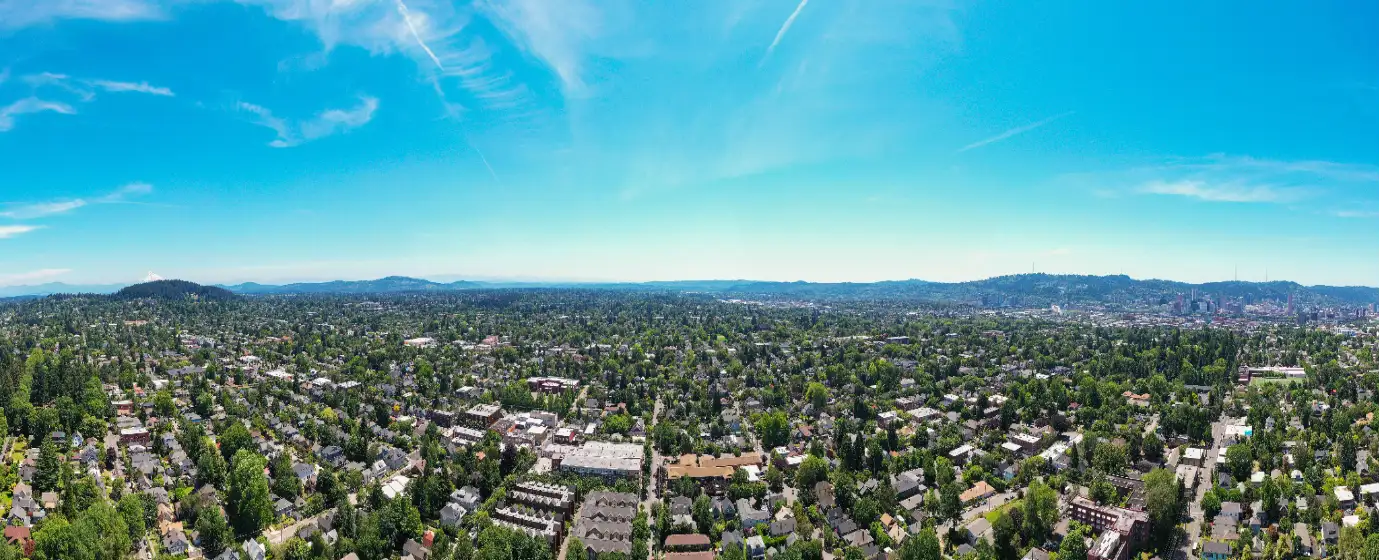
If you have been priced out of closer-in Portland suburbs and someone mentioned Scappoose, you are not alone. The pitch is straightforward: a genuine small town of 8,179 people along US-30, about 35 minutes to Portland, where the Zillow Home Value Index put the typical home price at $490,109 as of July 2026 — noticeably below what the same commute would cost you from Beaverton or Lake Oswego. What the pitch leaves out is the part that matters to a first-time buyer: that $490,109 still sits above what the median household income here can comfortably carry, which means your financing and your cash reserves need to be in order before you start touring.
Scappoose draws buyers who want space, a slower pace, and direct access to the Columbia River corridor without paying inner-ring-suburb prices. The Scappoose School District 1J holds a C+ rating, according to Niche, which is worth understanding before you assume the district competes with West Linn or Sherwood. The city's employment base is anchored by the school district itself, the City of Scappoose, Columbia County, and Pacific Northwest Ironworkers training — which means most working residents commute out, often toward Portland or St. Helens. For a first-time buyer, that commute reality should shape your neighborhood decision as much as price does.
The cost picture is more favorable than the sticker price alone suggests. Columbia County's effective property tax rate sits at approximately 0.74%, well below both the Oregon state median and the national median — a real long-term advantage. Oregon also has no state sales tax, which matters for buyers relocating from California or Washington. Entry-level homes — older construction, smaller footprint — generally start in the low-to-mid $400,000s, while a typical mid-priced purchase gets you a three-bedroom, two-bath home with a two-car garage, likely built in the late 1980s or 1990s. That is a real house, not a condo compromise. See the full cost-of-living breakdown for how Scappoose stacks up on groceries, utilities, and everyday expenses.
Whether you are comparing Scappoose to St. Helens (priced somewhat lower), Warren (noticeably higher), or Columbia City (about the same), the sections below break down what your budget actually buys here, how the buying process works in this market, what the cash requirements look like at the table, and the specific mistakes that trip up first-timers in Scappoose.
The Scappoose First-Time Buyer Reality
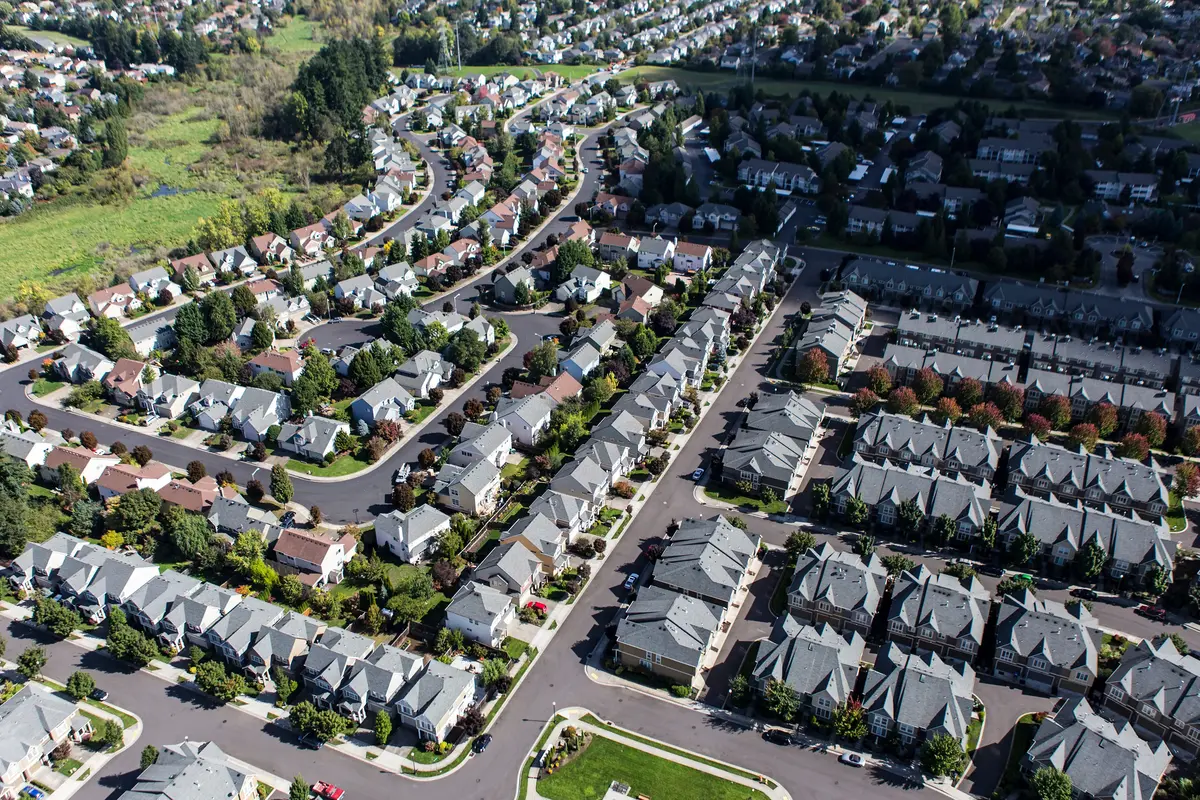
The typical home price in Scappoose sat at $490,109 as of July 2026 (Zillow Home Value Index). That number is the center of the market — not the floor. The honest first-time-buyer reality is that the median household income here falls short of what it takes to carry that price at current rates, by roughly $31,000. That gap does not mean Scappoose is out of reach, but it does mean you need to approach financing with clarity rather than optimism.
Entry-level inventory — think older single-family homes, smaller square footage, possibly a 1970s ranch in South Scappoose or a modest split-level near Downtown Scappoose — generally starts in the low-to-mid $400,000s. That is where most first-timers anchor their search. For that budget you are looking at homes built before 1990, often with deferred maintenance, on lots that give you more yard than a comparable price point in inner Portland would. The trade-off is that these homes can require more in reserve after closing.
The upper end of the first-timer range — homes priced toward the mid-$500,000s — tends to mean newer construction or hillside locations in areas like Dutch Canyon Estates or Huser Estates, where mountain views come with the price premium. For buyers whose budget tops out closer to $450,000, the realistic inventory is thinner but real. Competition for well-priced homes in Scappoose is genuine; this is not a market where you can take two weeks to think about an offer on a clean, move-in-ready home in the low $400,000s.
The Homebuying Process in Scappoose, Step by Step
Step 1: Get Pre-Approved Before You Do Anything Else
Pre-approval is not a formality in this market — it is a requirement before you tour a single home. Listing agents in Columbia County expect to see a pre-approval letter with any offer, and sellers in Scappoose, many of whom are long-time homeowners, are not going to take their home off the market for an unverified buyer. Get your letter from a lender before you call an agent, not after you fall in love with a listing.
Oregon defines a first-time homebuyer as someone who has not owned or occupied a primary residence in the past three years. That definition matters because it may open the door to state-level loan programs — ask your lender which first-time buyer loan options you qualify for under that three-year lookback. A homebuyer education course from an approved provider may be required depending on the program; your lender can tell you which courses qualify.
Step 2: Find a Local Agent and Build Your Search
Scappoose's neighborhood geography is specific enough that an agent who knows Columbia County — not just Portland — is worth finding. The difference between buying in the Airpark and Honeyman Road area versus closer to Heritage Park is a real commute-and-lifestyle question, not just a zip code. See the full neighborhood guide before you commit to a search area.
Step 3: Make Offers Strategically
When a clean, well-priced home in the low-to-mid $400,000s hits the market in Scappoose, it attracts attention quickly. Your pre-approval letter needs to match or closely approach the offer price — a letter capped well below the home's list price signals financing uncertainty. Escalation clauses can help in competitive situations, but only if your lender has confirmed the ceiling is actually financeable.
Step 4: Inspection and Appraisal — Do Not Skip Either
The inspection contingency is the one first-timers in Scappoose most often undervalue. Older homes in the low-to-mid $400,000s are exactly the price band where deferred maintenance accumulates — roofs, electrical panels, foundation drainage. A general inspection is non-negotiable. Depending on the home's age and location, a sewer scope and radon test are worth adding.
The appraisal is ordered by your lender, not by you, but you need to understand what happens if it comes in below the purchase price. In that scenario, you can renegotiate the price, cover the gap in cash, or walk away if your contract includes an appraisal contingency. For a first-time buyer with limited reserves, that contingency is not optional.
Step 5: Closing
In Oregon, closings are handled by title companies or real estate attorneys, not by the agents themselves. You will sign a significant stack of documents, and Oregon buyers typically pay 2%–5% of the purchase price in closing costs — covering appraisal, title insurance, prepaid property taxes, and other lender fees. Budget toward the higher end of that range for your first purchase; costs rarely land at the low end. Closing cost concessions from the seller are negotiable, and your agent should raise the question if the market allows it.

How Much Home Can You Afford in Scappoose
The table below shows approximate cash requirements at the closing table for several realistic purchase scenarios in Scappoose. These are estimates — actual closing costs vary by lender, loan type, and what you negotiate with the seller. Use the mortgage calculator below the table for a payment estimate at current rates.
| Scenario | Purchase Price | Down Payment | Est. Closing Costs (2%–5%) | Cash Needed at Table |
|---|---|---|---|---|
| FHA loan (3.5% down) — entry-level | $420,000 | ~$14,700 (3.5%) | ~$8,400–$21,000 | ~$23,100–$35,700 |
| Conventional (3% down) — entry-level | $420,000 | ~$12,600 (3%) | ~$8,400–$21,000 | ~$21,000–$33,600 |
| FHA loan (3.5% down) — near median | $490,000 | ~$17,150 (3.5%) | ~$9,800–$24,500 | ~$26,950–$41,650 |
| Conventional (5% down) — near median | $490,000 | ~$24,500 (5%) | ~$9,800–$24,500 | ~$34,300–$49,000 |
| Conventional (10% down) — near median | $490,000 | ~$49,000 (10%) | ~$9,800–$24,500 | ~$58,800–$73,500 |
| Conventional (20% down) — upper end | $540,000 | ~$108,000 (20%) | ~$10,800–$27,000 | ~$118,800–$135,000 |
A 20% conventional down payment eliminates private mortgage insurance, which reduces the monthly carry — but reaching that threshold on a $490,000 home requires nearly $100,000 in liquid savings before closing costs. Most first-time buyers in Scappoose close with 3%–10% down and factor the cost of mortgage insurance into their monthly budget.
Columbia County's effective property tax rate of approximately 0.74% is meaningfully below the national median. On a $490,000 purchase, that rate translates to a property tax load that is easier to carry than it would be in many comparable Pacific Northwest markets — the calculator below will reflect this in your estimated payment.
Looking to buy in Scappoose? Estimate your payment.
Enter your numbers to see an estimated monthly mortgage payment.
Estimate only. Excludes HOA fees and mortgage insurance. The interest rate above is a starting point, not a quoted rate — replace it with your own to see real numbers. Insurance is a flat placeholder, not a Scappoose quote.
Common First-Time Buyer Mistakes in Scappoose
Touring Homes Before Getting Pre-Approved
This one happens constantly, and it is painful when it goes wrong. A buyer falls in love with a home near Heritage Park, makes an offer, and then discovers during the pre-approval process that their debt-to-income ratio is higher than expected or that a credit issue needs 60 days to resolve. The home sells to someone else while the paperwork catches up. Pre-approval first, every time — and get it from a lender who will actually underwrite your file, not just pull a soft credit check and hand you a letter.
Waiving the Inspection Contingency to Win an Offer
In competitive situations, some buyers waive the inspection contingency to make their offer more attractive. In Scappoose's entry-level price band — older homes, many built in the 1970s and 1980s — this is a significant risk. A failing roof, an aging electrical panel, or drainage issues on a Columbia County lot can run well into five figures to correct. A better strategy: schedule a pre-offer walkthrough with a contractor if the market allows, or keep the inspection contingency and sharpen the offer on price and terms instead.
Ignoring the Commute Reality Before Choosing a Neighborhood
Scappoose is about 35 minutes to Portland under normal conditions, and US-30 carries that commute. But within Scappoose, where you live affects more than just the drive time — it affects school boundaries, access to the city's limited services, and how much of daily life requires a car trip. Buyers who choose a home in the Airpark and Honeyman Road area based on lot size alone sometimes find that even routine errands add up in ways they did not anticipate. See the commute and daily life guide before you anchor your search to a specific part of town.
Underbudgeting Cash for Closing
Oregon's 2%–5% closing cost range sounds manageable in the abstract. At $490,000, the high end of that range is nearly $24,500 — on top of your down payment. First-time buyers who budget only for the down payment and assume closing costs will land at 2% regularly arrive at the closing table short. Budget toward the middle of that range as a floor, keep a reserve for anything the inspection surfaces, and ask your agent early in the process whether seller concessions are realistic given the specific home and market conditions at the time you are buying.

Local Expert Takeaway: Scappoose offers a genuine entry point into Columbia County homeownership at a price noticeably below the closer-in Portland suburbs — but the gap between the typical home price and what the median household income can carry here is real, and first-time buyers who underestimate their cash requirements at closing are the ones who get surprised. Get pre-approved before you tour, keep the inspection contingency, and build your closing cost estimate toward the upper end of the 2%–5% range. The entry-level market in the low-to-mid $400,000s moves; a clean, well-priced home near Downtown Scappoose or South Scappoose does not sit for long.
Quick Takeaways & FAQs
✅ Entry-level homes in Scappoose — older construction, smaller footprint — generally start in the low-to-mid $400,000s, giving first-time buyers a realistic path into Columbia County homeownership.
⚠️ The median household income in Scappoose falls short of what it takes to carry the typical home price at current rates, so cash reserves and strong pre-approval are non-negotiable before you start shopping.
📍 Columbia County's effective property tax rate of approximately 0.74% is well below the national median — a long-term cost advantage that should factor into any affordability calculation.
What is the minimum down payment to buy a home in Scappoose?
How competitive is the Scappoose housing market for first-time buyers?
Are there first-time homebuyer programs available in Oregon for Scappoose buyers?
What closing costs should I expect when buying in Scappoose?
How does Scappoose compare to St. Helens or Warren for first-time buyers?
Moving to Oregon?
Tell us what you need help with and we'll connect you with local resources.
