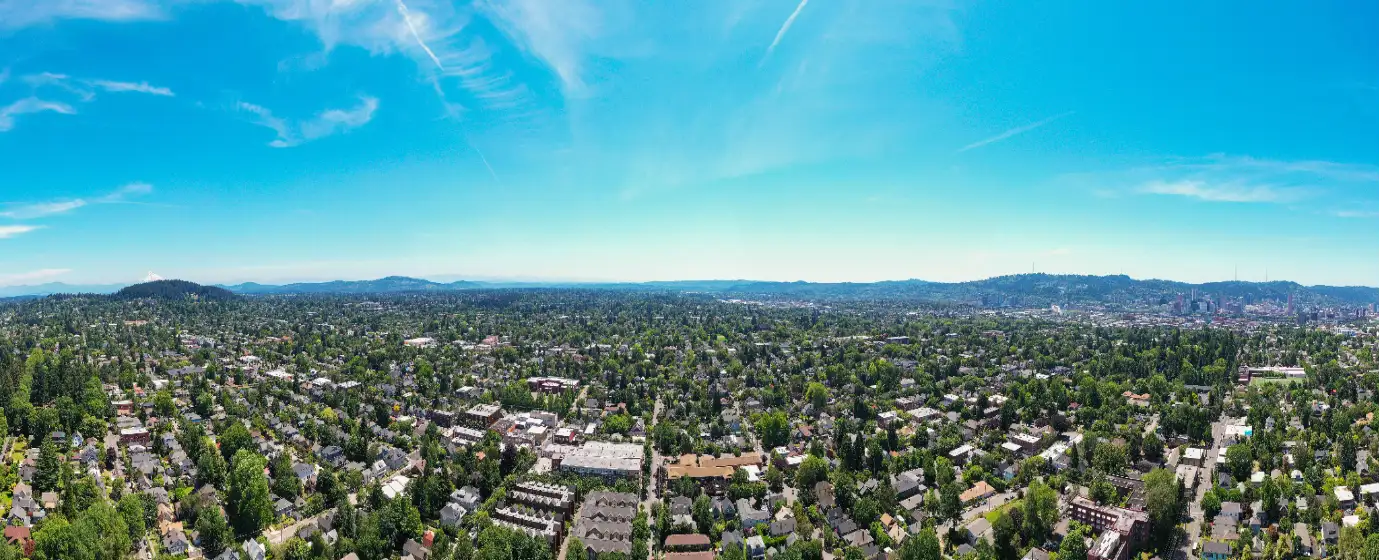
Maybe you have been priced out of the closer-in Portland suburbs and someone mentioned Scappoose. Maybe your spreadsheet shows a median home price well below Lake Oswego or Beaverton and you want to know what you are actually trading away. The answer is: not as much as you might think — but the commute math is real, and it shapes every budget conversation you will have about this city. Scappoose sits along US-30 in Columbia County, about 35 minutes to Portland, on the west bank of the Multnomah Channel where the Columbia River lowlands open up into rolling hill country. That geography is part of what keeps prices lower than the core metro — and part of what makes a car not just convenient but non-negotiable.
The city of 8,179 is small enough that its economy runs on a handful of anchors: the Scappoose School District, the City of Scappoose itself, Columbia County government, and Pacific Northwest Ironworkers training — none of which are high-wage tech employers. The median household income of $97,708 sounds healthy until you put it next to the typical home price, at which point the gap becomes the central financial reality of living here. Most buyers in Scappoose are commuters whose paychecks come from Portland or Washington County, not from downtown Scappoose. That dynamic — small-town cost structure, metro-dependent income — is what the rest of this guide unpacks.
On the cost index that places the national average at 100, Scappoose scores roughly 116 overall. That puts it above average nationally but noticeably below the inner Portland suburbs. Transportation costs are the outlier: running well above the U.S. norm because car ownership is mandatory here and Oregon's fuel tax adds up on a daily commute. Utilities, by contrast, track below the national average — a genuine offset. Groceries run a few percent above the national baseline, consistent with the broader Portland metro. Oregon's zero sales tax means every hardware run, every clothing purchase saves you money compared with most other states.
Whether you are comparing Scappoose with St. Helens down the corridor, weighing a purchase against renting for another year, or trying to understand Oregon's unusual tax structure before you commit, the sections below break down housing costs, everyday expenses, how Scappoose stacks up against nearby cities, and the full tax picture.
What It Really Costs to Live in Scappoose
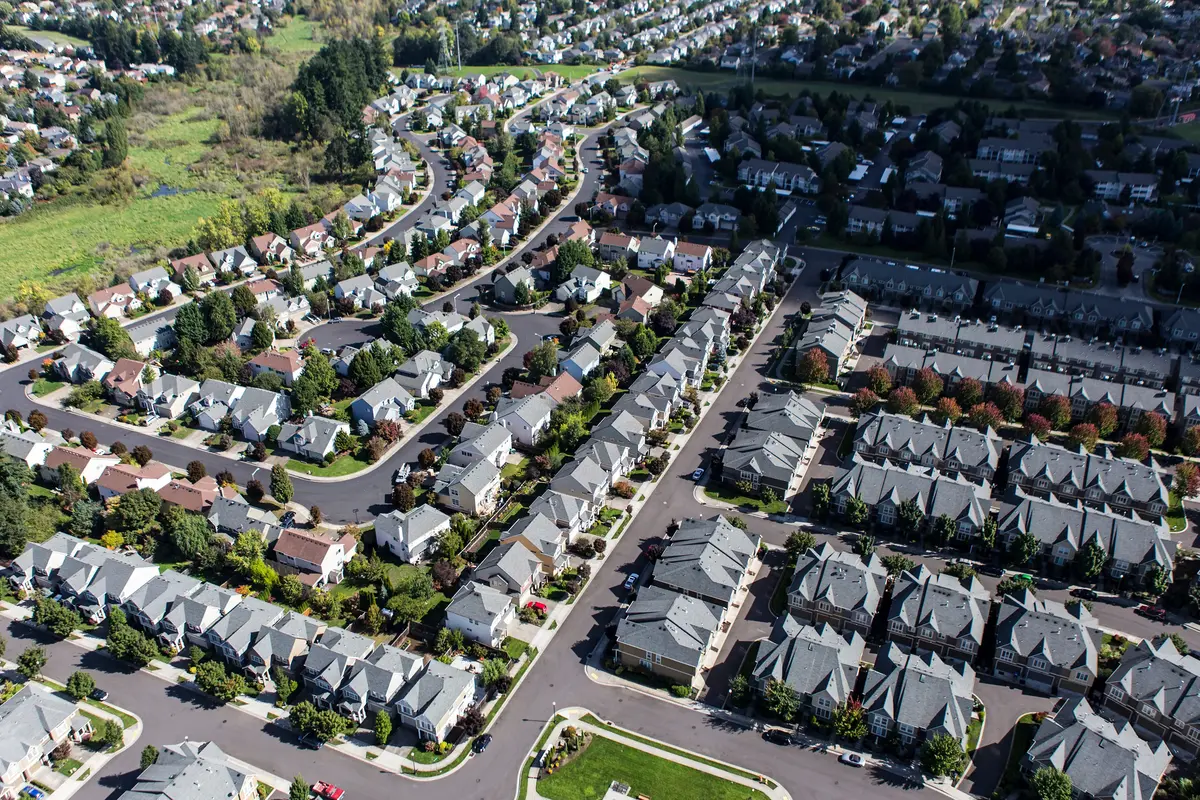
The headline figure is $490,109 — that is the Zillow Home Value Index typical home price for Scappoose as of July 2026. For the Portland metro as a whole, that number sits noticeably lower than most west-side suburbs inside the urban growth boundary, which is exactly why buyers from Beaverton and Hillsboro start looking out here. The trade-off is real: you gain square footage and land, and you give up proximity.
What drives the number in Scappoose specifically is the combination of Columbia County's lower assessed-value base, the city's distance from the metro core, and a housing stock that skews toward single-family homes on larger lots rather than the townhomes and condos that compress prices elsewhere. Most errands and commutes here mean a drive — the city's location along the US-30 corridor puts Portland within reach but keeps it a genuine distance away.
The honest posture: Scappoose is a genuine value play relative to the inner suburbs, but it is not cheap. The median household income here does not fully close the gap with the typical home price — buyers typically need income above that median to carry a purchase comfortably. Families relocating from within Oregon often find Scappoose a stretch; buyers arriving from higher-cost West Coast markets often find it a relief. See the full neighborhood breakdown at Scappoose's best neighborhoods guide for how the housing stock varies across the city.
Housing: Rent vs Buy in Scappoose
The typical 2-bedroom rent in Scappoose runs $1,470–$1,790 per month — a range that makes renting look reasonable on paper, until you account for how thin the rental inventory actually is in a city of 8,179. What is available tends to move quickly, and the selection is narrower than buyers used to a larger market would expect.
On the ownership side, entry-level single-family homes start below the city-wide typical, with older construction and smaller lots allowing buyers to come in under that $490,109 (July 2026) figure. Move-up inventory — newer builds with four or more bedrooms, larger lots, or Columbia River views — pushes well above it. There is no meaningful condominium or townhome market here, so buyers who need a lower purchase price generally have to accept an older home or a less central location. For specifics on which parts of the city offer the most accessible entry points, the neighborhoods guide covers the character of each area without attaching prices to individual zones.
The effective property tax rate in Scappoose is approximately 0.74% — below the Oregon state average and well below the national median. For a home at the city-wide typical price, that is among the more favorable ownership cost structures you will find anywhere in the Pacific Northwest. One recent development worth knowing: the Port of Columbia County resumed collecting property taxes in the 2025–26 fiscal year after a multi-year pause, adding a modest line to annual bills at 8.86 cents per $1,000 of assessed value. It does not dramatically shift the effective rate, but it is a real addition to the levy stack.
Renting makes the most sense in Scappoose if you are uncertain about your commute tolerance before committing — the drive to Portland on US-30 during peak hours is the variable most buyers underestimate. Buying makes sense once you have tested the commute and confirmed that the suburban-rural trade-off fits your life. The interactive calculator below the section will let you model the monthly ownership cost at current rates for your specific down payment.

Everyday Costs Beyond Housing in Scappoose
| Category | Typical Monthly Cost | Notes |
|---|---|---|
| Housing (typical rent) | $1,595/mo | City-wide typical rent. Buying? Use the calculator above for a mortgage estimate. |
| Utilities | $195–$285/mo | Electricity, gas, water, sewer, trash |
| Groceries | $560–$760/mo | Food at home, household of 2–3 |
| Transportation & Gas | $200–$340/mo | Fuel, and transit where it is a real option |
| Phone & Internet | $120–$185/mo | Mobile plan plus home broadband |
| Misc / Discretionary | $250–$480/mo | Dining out, entertainment, subscriptions |
Non-housing figures are estimates for a household of two to three, not a sourced index; housing is the city-wide typical rent (Zillow ZORI, July 2026). Refreshed with the rest of the city data.
Oregon's zero sales tax is not a small thing. Residents of Scappoose pay no sales tax on groceries, clothing, household goods, or most other everyday purchases — a structural savings that compounds over a year in ways that are easy to underestimate when you are moving from California, Washington, or most other states. Grocery prices in the Portland metro run roughly 7–8% above the national average, so you are not getting a discount there, but you are also not paying a tax on top of already-elevated prices.
Utilities for a typical Scappoose home run below the national cost-of-living average for this category. The wet Columbia River climate means heating loads matter in winter, but the mild shoulder seasons keep annual averages in a manageable range. Transportation is the category that adds up most: Oregon's fuel tax runs 40 cents per gallon as of 2026, pump prices in the Portland metro are consistently above the national average, and daily commuting by car is the baseline for most residents. Columbia County Rider (CC Rider) does connect Scappoose to Portland and St. Helens by bus, and NW Connector runs intercity service along US-30, but for most residents these are occasional-use options rather than a daily commute solution. Budget for two-car ownership as a baseline.
Looking to buy in Scappoose? Estimate your payment.
Enter your numbers to see an estimated monthly mortgage payment.
Estimate only. Excludes HOA fees and mortgage insurance. The interest rate above is a starting point, not a quoted rate — replace it with your own to see real numbers. Insurance is a flat placeholder, not a Scappoose quote.
Scappoose vs Nearby Cities: Cost Comparison
| City | Typical Home Price | Typical Rent | Cost vs Scappoose |
|---|---|---|---|
| Scappoose (this city) | $490,109 | $1,595/mo | — |
| St. Helens | $429,356 | $1,400/mo | 12% lower |
| Warren | $609,779 | $1,500/mo | 24% higher |
| Columbia City | $472,035 | $1,350/mo | 4% lower |
Source — home prices: Zillow ZHVI, July 2026; rent: Zillow ZORI, July 2026. Nearby-city figures are the same series, refreshed together.
In the US-30 corridor, Scappoose sits at a middle point in the price spectrum: St. Helens comes in somewhat lower, Columbia City comes in at about the same level, and Warren runs noticeably higher — a useful range to know when you are deciding how far along the river your budget can take you.
Taxes & the Bottom Line for Scappoose
Oregon's tax structure is genuinely unusual, and understanding it is essential before you model a Scappoose budget. There is no sales tax — at any level, state or local. That is a real and recurring savings. What Oregon collects instead is a progressive state income tax with four brackets running from 4.75% to 9.9%, ranking among the highest in the country. Most Scappoose households earning a Portland-metro-level income will land in the upper brackets. That is the honest top-line: no sales tax is wonderful; the income tax rate is not gentle.
Property taxes are the counterbalance. The effective rate of approximately 0.74% — lower than the Oregon state average and well below the national median — makes owning a home at the city-wide typical price significantly more affordable on a monthly carry basis than that same home would be in a high-property-tax state. Oregon also does not tax Social Security income, and some residents age 62 or older may qualify for a retirement income credit — a meaningful offset for those on fixed income. Retirees weighing the full picture should read the Scappoose retiring guide for the detailed breakdown.
Oregon's fuel tax is among the higher statewide rates at 40 cents per gallon as of 2026, which matters in a car-dependent city with a 35-minute commute to Portland built into most residents' daily routine. That transportation cost index running well above the U.S. norm is not an abstraction — it is the pump price every time you fill up heading toward Portland.
The bottom line: Scappoose fits buyers and renters whose income comes from the Portland metro, who can handle a commute, and who want more home for the money than the inner suburbs deliver. The tax structure rewards ownership (low property rate, no sales tax) while asking more of earned income than most states. Buyers whose household income sits at or below the city median will find the typical home price a stretch — not impossible, but a genuine reach that deserves honest budget modeling before you make an offer. Buyers arriving from California or Washington with equity will often find the overall picture a relief, even after accounting for Oregon's income tax. For the full buying-process picture, the first-time homebuyer guide walks through financing options specific to this market.

Local Expert Takeaway: Scappoose is a legitimate value compared with the inner Portland suburbs — the $490,109 typical home price (July 2026) buys you a real single-family home on a real lot, the property tax rate is one of the lowest you will find in the Pacific Northwest, and Oregon's zero sales tax helps on every grocery run and hardware errand. What the spreadsheet often doesn't show is the transportation cost: US-30 is the main route in and out, the drive to Portland during peak hours backs up meaningfully, and every gallon of gas in Oregon costs more than the national average. Budget the commute before you fall in love with the price.
Quick Takeaways & FAQs
✅ Oregon's zero sales tax saves Scappoose residents on every grocery run, clothing purchase, and household errand — a recurring benefit that adds up across a full year.
⚠️ The commute is the hidden cost: US-30 is the main highway in and out, peak-hour backups are real, and car ownership is non-negotiable for most residents.
📍 The Port of Columbia County resumed collecting property taxes in the 2025–26 fiscal year after a multi-year pause — a small but real addition to Scappoose homeowners' annual bills.
What is the typical home price in Scappoose, Oregon?
What is the property tax rate in Scappoose?
Is Oregon's lack of sales tax a real savings for Scappoose residents?
How does Oregon's income tax affect the Scappoose cost of living picture?
Is renting or buying a better financial move in Scappoose right now?
Moving to Oregon?
Tell us what you need help with and we'll connect you with local resources.
