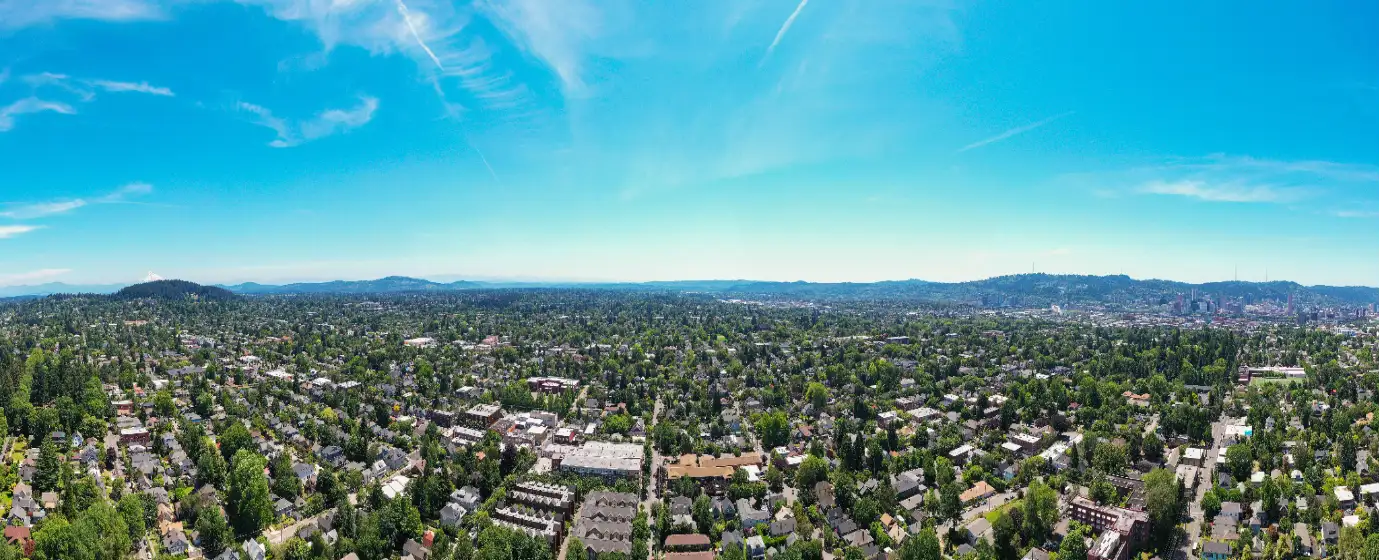
Most people who retire to Scappoose did not plan on it. They were priced out of the Westside suburbs, or they followed a grown child to Columbia County, or they stumbled onto the Columbia River waterfront and did not want to leave. What they found was a city of 8,179 people that moves at a pace Portland stopped moving at decades ago — unhurried, genuinely rooted, and still under $500,000 for a typical home. The compromise is real: you are giving up walkable retail density and hospital-around-the-corner convenience. For the right retiree, that trade lands squarely in the win column.
Scappoose sits along US-30 in Columbia County, about 35 minutes to Portland. That drive is the axis everything else pivots on. The city's economy runs on the school district, city and county government, and light industrial work at the airpark — not the kind of employment base that drives a bustling downtown. What it does have is Heritage Park, the Scappoose Bay Marina, and the Crown Zellerbach Trail threading through town, which gives active retirees a legitimately good outdoor life without ever getting in a car. The Scappoose Farmers Market and the Peace Candle of the World landmark give downtown a civic identity that feels earned rather than curated.
On a fixed income, the math here is friendlier than in much of the Portland Metro. The typical home price is $490,109 (July 2026), Oregon taxes none of your Social Security, and the effective property tax rate sits at approximately 0.74% — modest by Pacific Northwest standards. The absence of a statewide sales tax quietly adds up over a retirement. The full cost-of-living picture is on the cost-of-living page, but the headline is that Scappoose consistently undercuts the Westside suburbs that many retirees are fleeing.
Whether you are narrowing a shortlist or deep into due diligence, the sections below work through what retirement in Scappoose actually looks like: healthcare access and its limits, the retiree tax picture, community and walkability, downsizing options, and an honest side-by-side with nearby alternatives.
Why Retirees Are Choosing Scappoose
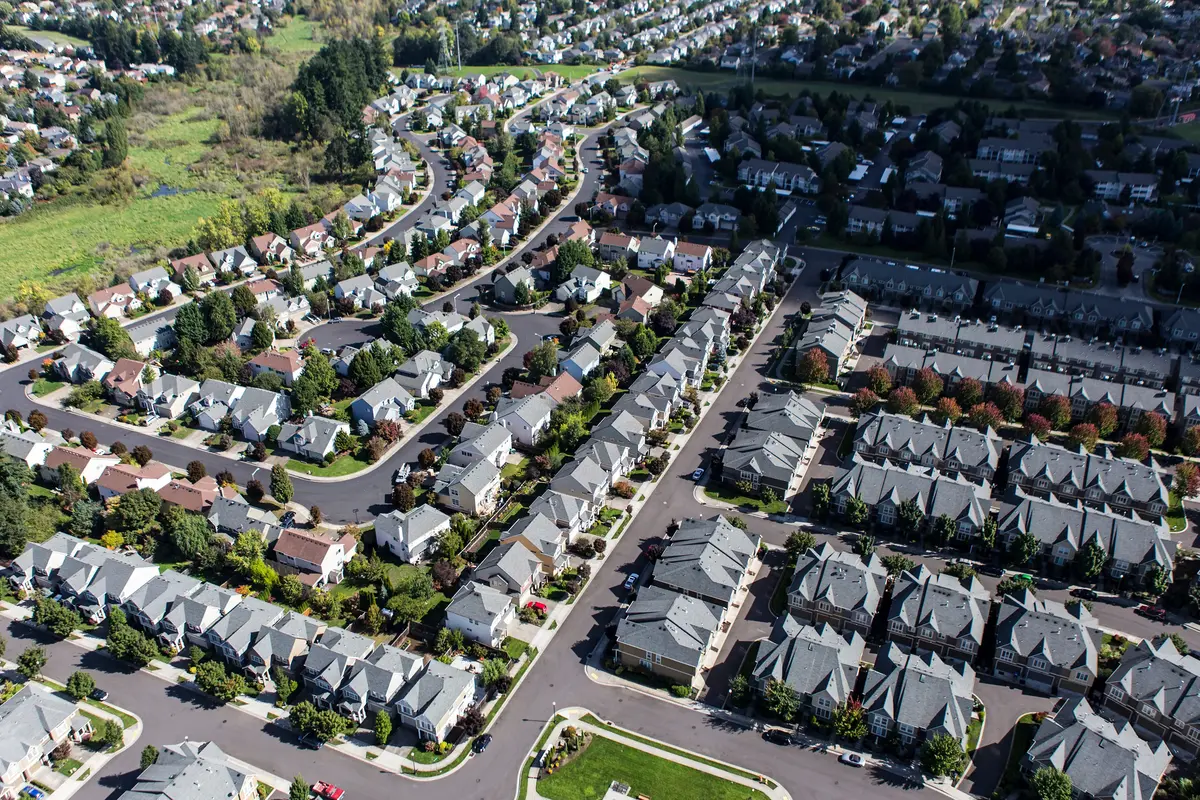
The retirees who land here and stay tend to share a profile: they want a small town with real outdoor access, they are comfortable driving for most services, and they have stopped confusing walkable retail with quality of life. Scappoose delivers on space, scenery, and a slower rhythm. The Columbia River is not a backdrop — it is an active part of daily life, whether that means launching a kayak from Scappoose Bay Marina, walking the Multnomah Channel waterfront, or simply sitting at McCormick Park and watching the water.
The typical home price of $490,109 (July 2026) is the practical reason many retirees end up here after comparing options across the metro. Downsizing from a larger Westside home can free up meaningful equity while landing you in a house with room for grandchildren to visit. That equity cushion matters in retirement planning in a way a zip code alone does not.
The honest counterargument: if your retirement vision requires a walkable main street, easy transit, or same-day specialist care without a significant drive, Scappoose will frustrate you within the first year. The city does not have a hospital, a fitness center with drop-in programming, or the kind of dining and retail density that makes errand-free afternoons possible. Retirees who moved from active urban neighborhoods often find the adjustment steeper than they expected. For those who already lived in a similar-scale Oregon town, or who prioritize the outdoors and quiet over convenience, it fits like it was built for them.
Healthcare & Medical Access in Scappoose
The nearest full-service hospital is about 17 miles from Scappoose, in Hillsboro. It is a full-service facility with 24/7 emergency care and a depth of specialty departments that matters in retirement: cardiology, neurology, orthopedics, oncology, and palliative care and hospice are all on-site. For retirees weighing everyday medical access, this is the institution to understand first.
Columbia Memorial Hospital in St. Helens, roughly 10 miles north along US-30, is a closer option for more routine hospital needs. It does not carry the same specialty depth as the Hillsboro facility, but for emergency situations where distance is the primary factor, it is the realistic first stop for many Scappoose residents.
For day-to-day primary care, Scappoose has local clinic options that handle routine visits without the drive. The gap shows up in specialty care — cardiology follow-ups, oncology consultations, neurology — where the 17-mile run to Hillsboro, or the longer drive into Portland, becomes a regular part of retirement logistics. If you are managing a complex chronic condition or are post-surgical, honestly plan for that. Retirees should confirm which Columbia County providers are in-network for their specific Medicare Advantage or traditional Medicare plan before committing to a move.
There is one assisted living and memory care community in Scappoose. It offers independent living, assisted living, and memory care under one roof, which covers the continuum for aging-in-place transitions. No 55+ communities were found in Scappoose — the senior living infrastructure here is thin compared with larger suburban markets, and retirees who anticipate needing a range of options in the next decade should weigh that honestly against the city's other draws.

The Retiree Budget in Scappoose
Oregon's tax posture on Social Security is one of its clearest retirement advantages: the state fully exempts Social Security and Railroad Retirement benefits from state income tax, regardless of income level. If Social Security is your primary income, your Oregon tax bill is materially lower than it would be in many other states. The catch comes with everything else — pensions, 401(k) and IRA withdrawals, and annuities are taxed at Oregon's graduated rates, which climb to 9.9%. Retirees drawing heavily from pre-tax accounts should run the numbers carefully; the Social Security exemption does not extend to those distributions.
Oregon also levies no statewide sales tax. On a fixed income, that adds up across groceries, home goods, and the occasional larger purchase in a way that is easy to underestimate when comparing states.
Scappoose's effective property tax rate is approximately 0.74%, which is modest for the Portland Metro region. Oregon also operates a Property Tax Deferral program for qualifying seniors — the state pays property taxes to the county on your behalf, with the deferred balance plus 6% simple interest repaid when the home is sold. The household income limit for 2026 is $70,000, counting all income including Social Security. For retirees sitting on a paid-off Scappoose home but running lean on monthly cash flow, it is worth a conversation with a tax professional before the next assessment cycle. Note that Oregon's low-income Retirement Income Credit, which previously offset some state tax liability for lower-income retirees, is scheduled to sunset for tax years beginning January 1, 2026, so that offset is no longer available for those who relied on it. The interactive calculator below gives a starting point for housing costs at current rates — use it as a floor, then layer in the tax picture that applies to your specific income mix.
Day-to-day costs on a fixed income trend lower here than in Westside suburbs. Groceries, gas, and casual dining are priced at a small-town scale. The spending category where Scappoose underperforms is convenience: without dense local retail, many purchases either mean a drive or a delivery, and that friction has a real cost in time if not always in dollars. Retirees who cook at home and are comfortable ordering online will barely notice it. Those who prefer spontaneous errands on foot will feel it every week.
Looking to buy in Scappoose? Estimate your payment.
Enter your numbers to see an estimated monthly mortgage payment.
Estimate only. Excludes HOA fees and mortgage insurance. The interest rate above is a starting point, not a quoted rate — replace it with your own to see real numbers. Insurance is a flat placeholder, not a Scappoose quote.
Walkability, Community & Staying Active in Scappoose
Scappoose is a car-dependent town. Most errands require a vehicle, and the terrain varies enough — particularly around Dutch Canyon and the hillier residential areas — that on-foot access is not realistic for everyone. The exception is the core around Heritage Park and downtown, where the Scappoose Farmers Market, Cathedral Coffee, and a handful of local businesses are genuinely reachable on foot from nearby neighborhoods. If walkability is non-negotiable, those blocks near downtown are the only ones where it is honestly delivered.
The outdoor life is where Scappoose earns its reputation among active retirees. The Crown Zellerbach Trail is a federally designated route accessible from several neighborhoods — flat enough for most fitness levels, long enough for a real walk or bike ride, and connected to the broader trail network that threads toward the Columbia River. Scappoose Bay Marina and the Multnomah Channel give kayakers and anglers a put-in that most Portland-area retirees drive an hour to reach. McCormick Park ties it together with birdwatching and fishing without leaving the city.
The community fabric is tight in the way small river towns tend to be. Heritage Park and the Peace Candle of the World are genuine gathering anchors — not tourism infrastructure, but places residents actually use. The Scappoose Farmers Market brings the town together during the warm months in a way that scales surprisingly well for a city this size. For retirees who find their social life through civic engagement — volunteering, church, local clubs — Scappoose has the density of connection that smaller towns develop when there is not much else competing for attention.
What Scappoose does not have is an indoor recreation center with fitness equipment or drop-in gym programming. For lap swimming, residents drive north to the Greater St. Helens Aquatic District, about 10 miles up US-30. That is a workable arrangement for many retirees, but it is worth knowing before you assume you can walk to a pool. The active-adult social infrastructure that larger suburban markets advertise — organized classes, group fitness, dedicated senior programming — is thin here. Retirees who build their own social framework tend to thrive; those who prefer a ready-made one may find the city slow to deliver it.
Right-Sizing: Downsizing in Scappoose
No 55+ communities were found in Scappoose. That is the first thing retirees looking for a purpose-built active-adult neighborhood need to understand. The senior living infrastructure here is limited to one assisted living and memory care community, which covers that end of the continuum but does not fill the gap for retirees who want a 55+ neighborhood with shared amenities and built-in community. If that model is your target, you will need to look at St. Helens or further into the metro.
What Scappoose does offer is a reasonable stock of single-story homes, particularly in the Heritage Park Area, South Scappoose, and Creekview Park neighborhoods. Ranch-style construction from the 1970s through the 1990s dominates in those areas, and single-level living is achievable without paying a premium specifically for it — it is simply the predominant housing form rather than a niche product. Buyers downsizing from a two-story home often find that a well-maintained ranch here is the most straightforward transition.
The inventory of true patio homes or maintenance-free condos is limited. Scappoose has not developed the attached housing stock that characterizes suburban retirement corridors in the Tualatin Valley or along the I-205 corridor. Retirees who want to swap a yard for a lock-and-leave lifestyle will find the options narrow. The honest read is that Scappoose suits the downsizer who still wants a single-family home — just smaller, on one level, and with a lower price tag — more than the retiree who is done with exterior maintenance entirely. Anyone weighing specific neighborhoods and price bands should look at the full breakdown on the neighborhoods page.
Scappoose vs Nearby Retirement Destinations
| City | Cost vs Scappoose | Primary Hospital | Walkability | Senior Living Depth | Overall Retirement Fit |
|---|---|---|---|---|---|
| Scappoose | Anchor | Regional medical center (17 mi) | Car-dependent; good trails | Thin — one community | Strong for outdoor-focused, car-comfortable retirees |
| St. Helens | Somewhat lower | Columbia Memorial (on-site) | More walkable downtown core | Slightly broader | Better for retirees prioritizing hospital proximity and a walkable main street |
| Warren | Noticeably higher | Regional medical center (~20 mi) | Rural; car-dependent | Very thin | Privacy and acreage over services — fits a specific, self-sufficient retiree |
| Columbia City | About the same | Columbia Memorial (~8 mi) | Quiet river-town streets; limited retail | Minimal | Scenic and affordable, but even fewer services than Scappoose |
| Rainier | Noticeably lower | Columbia Memorial (~25 mi) | Small downtown; car still needed | Very thin | Most affordable of the group, but meaningful trade-off in access |
| Vernonia | Noticeably lower | Columbia Memorial (significant drive) | Compact town; walkable core | Very thin | Strong trail access via the Banks–Vernonia Trail; isolated for medical needs |
St. Helens is the most direct alternative for retirees who want closer hospital access — Columbia Memorial Hospital is right there, and the historic downtown offers a more genuinely walkable experience than Scappoose. The cost savings relative to Scappoose are real and worth calculating.
Vernonia wins on the Banks–Vernonia State Trail, which is a legitimate draw for cyclists and walkers, but the isolation from specialty medical care is the sharpest trade-off in this group. Rainier offers the lowest price point on this list, but retirees who need regular specialist visits will feel the distance. Warren's higher price buys space and quiet, not services. Columbia City is the closest rival to Scappoose in feel — river-town character at a similar cost — but with even less infrastructure. For most retirees comparing this cluster, the decision usually comes down to whether hospital proximity or home-price savings is the higher priority, and St. Helens versus Scappoose is where that choice lives most clearly.

Local Expert Takeaway: Scappoose is genuinely suited to retirees who are done with urban pace but not done with outdoor life. The Crown Zellerbach Trail, Scappoose Bay Marina, and McCormick Park give active retirees a daily routine that Portland suburbanites pay more to live near. The real planning work is around healthcare — building a 17-mile drive to the nearest full-service hospital into your regular calendar — and around the absence of any 55+ community or indoor fitness center. Retirees who walk in clear-eyed about those gaps, and who value the Farmers Market and Heritage Park over a walkable restaurant row, tend to find this town is exactly what they were looking for.
Quick Takeaways & FAQs
✅ Oregon fully exempts Social Security from state income tax, and Scappoose's effective property tax rate of approximately 0.74% is among the lower rates in the Portland Metro — the retiree tax picture here is genuinely favorable.
⚠️ No 55+ communities were found in Scappoose, and the city has no indoor fitness center with drop-in programming — retirees who need that infrastructure will need to drive to St. Helens or further into the metro.
📍 The Crown Zellerbach Trail is federally designated and walkable from several Scappoose neighborhoods — it is the kind of trail access that active retirees in Beaverton or Lake Oswego would drive 45 minutes to reach.
Is Scappoose, Oregon a good place to retire?
Does Oregon tax retirement income or Social Security?
What hospital serves Scappoose retirees?
Are there 55+ communities or senior apartments in Scappoose?
What is Oregon's property tax deferral program and does it apply in Scappoose?
Moving to Oregon?
Tell us what you need help with and we'll connect you with local resources.
