
You've done the math on California housing and the numbers stopped making sense. Maybe you've been priced out of the coastal metros, or maybe a remote job finally freed you to choose somewhere smaller. Independence, Oregon sits in the Willamette Valley about 20 minutes to Salem, along OR-51, in a part of the state that has been quietly absorbing California transplants for years. It is a working river town of 10,199 people — not a suburb, not a resort, not a lifestyle brand — and that distinction matters if you're deciding whether to move here.
The economic backbone is modest and honest. The Central School District, the City of Independence itself, and Polk County are the primary local employers. Many residents commute to Salem's state government offices and broader job market, while others have made the move specifically because remote work means they no longer need to live near a major employment hub. Western Oregon University sits just across the pedestrian bridge in Monmouth, adding a quiet academic undercurrent to the broader community. The city's civic calendar — Indy Days, the annual kayak race on the Willamette, Ghost Walk, and the River's Edge Summer Series at Riverview Park — reflects a town that takes its community identity seriously.
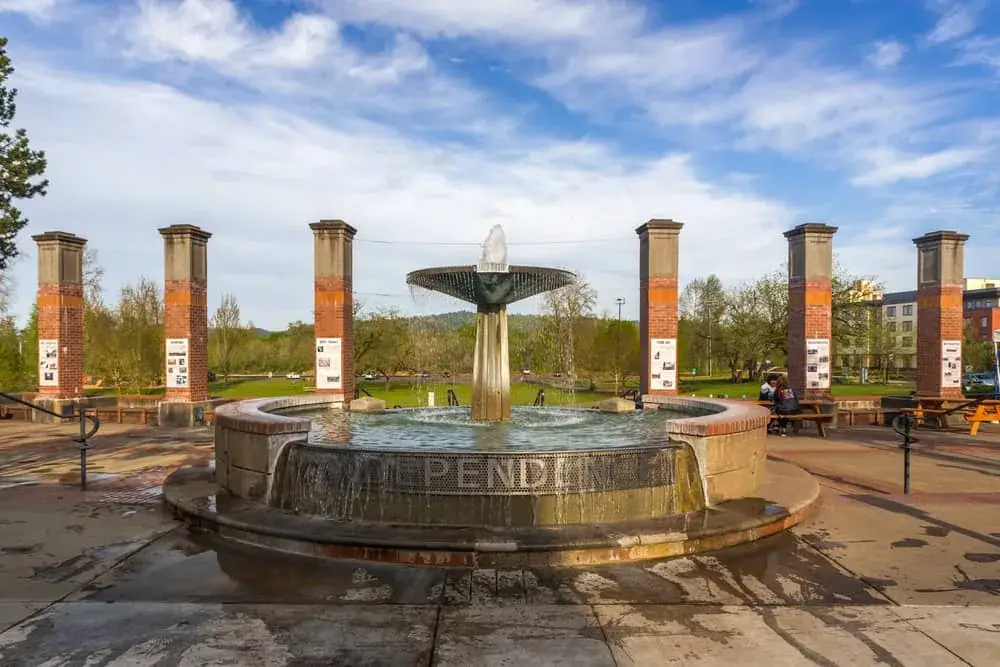
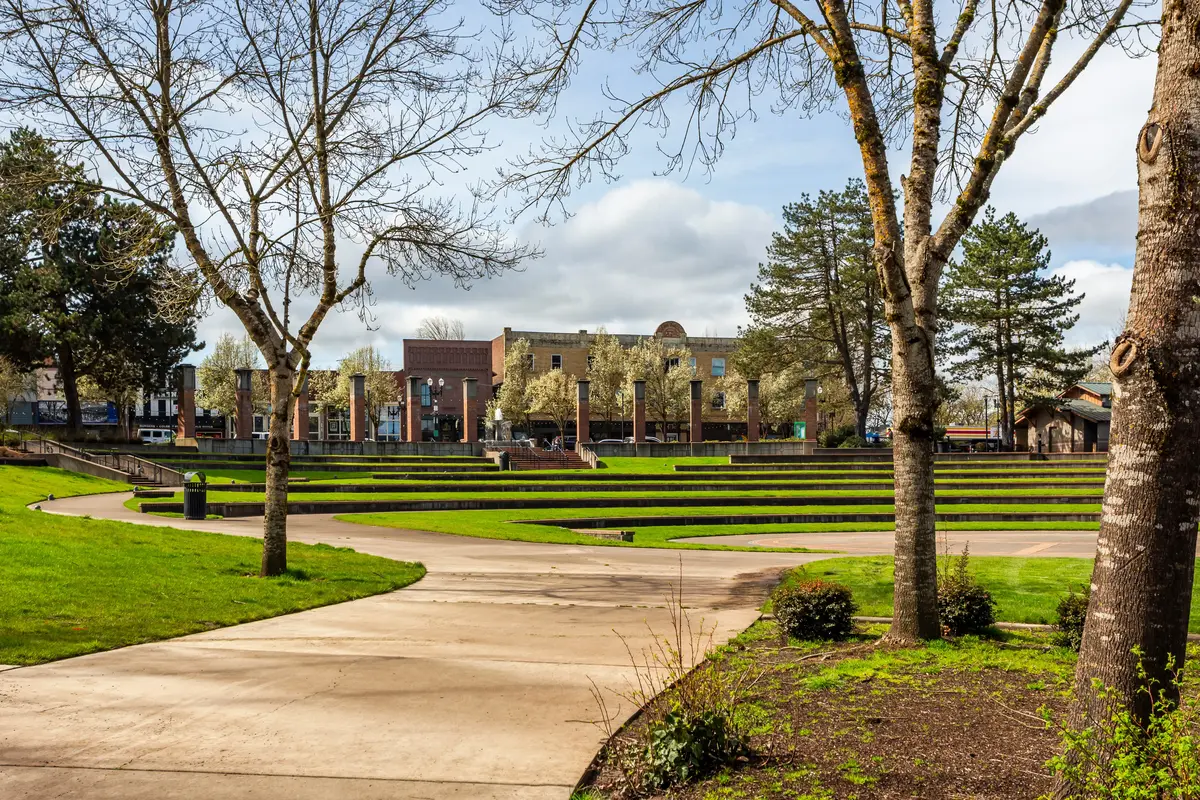
The cost picture is the main story for Californians. The two biggest drivers of the gap between living here and living in California are housing and the complete absence of a state sales tax. The typical home price here is $430,520 (July 2026), which sits well below what you would find across most of California. Riverview Park — with its 5-kilometer trail loop along the Willamette, disc golf, amphitheater, and cyclist-paddler campground — is the kind of public amenity you would expect from a city twice this size.
Whether you are deep in the research phase or already making calls to movers, the sections below break down what California transplants most need to understand: the real home price comparison, how Oregon's taxes actually work for people moving from a high-tax state, what daily life in Independence looks like after month six, and the honest trade-offs nobody puts in the relocation brochure.
The Home Price Reality: California vs. Independence
California's statewide typical home value of $773,735 (Zillow Home Value Index) is the number most transplants are running from. Independence's typical home price of $430,520 as of July 2026 is a genuinely different order of magnitude — not a modest discount but a structural shift in what a purchase means financially.
That gap has real consequences for your down payment, your monthly carrying cost, and your borrowing position. A buyer who sold a California property and banked even a mid-range amount of equity can often arrive in Independence with a meaningful down payment already assembled, which changes what they qualify for and how they compete in a smaller market.
What the Housing Stock Actually Looks Like
Independence has held onto its river-town character in a way that newer Polk County subdivisions have not. Much of the housing stock reflects an older, more established feel — craftsman-era homes in the Downtown and Old Town areas, mid-century ranches in neighborhoods like Northgate and North Park, and newer construction pushing out into Brandy Meadows, Mountain Fir Estates, and Sunset Meadows. You are not buying into a planned community here; you are buying into a town with a history.
Buyers considering properties close to the Willamette River waterfront should check flood-zone status on individual parcels. It is a practical step that California buyers accustomed to wildfire disclosures sometimes overlook in a new state.
Nearby Market Context
If Independence's price point appeals to you, the surrounding area holds roughly similar. Salem runs about the same as Independence's typical home price, while Monmouth and Dallas both come in somewhat higher. For the full breakdown of how these markets compare, the cost-of-living page has the detail.
One honest note on affordability: the median household income in Independence is below the income needed to buy the typical home here, by a meaningful margin. That gap is worth understanding before you assume the market is easily accessible on a local salary — it is more manageable for buyers arriving with California equity than for first-time buyers starting fresh.
The Tax Shift: Where You Win, Where You Should Pay Attention
The headline numbers favor Oregon. But the full tax picture is more complicated than most relocation blogs admit, and Californians who move here expecting a blanket tax cut sometimes get a surprise in April.
Sales Tax: A Real, Immediate Win
Oregon has no state or local sales tax at all. California's statewide base sales tax rate of 7.25% — the highest in the nation, per the California Dept. of Tax and Fee Administration — climbs further with local additions, pushing the combined average toward 8.99% in many counties. For a household spending $40,000 a year on taxable goods, that difference recovers roughly $3,600 annually. It shows up in every grocery run, every hardware-store visit, every car purchase. You will notice it within weeks.
Property Tax: Read the Fine Print on Proposition 13
California's effective property tax rate of 0.71% looks low on paper, and for long-term California homeowners it is — Proposition 13 caps the base rate at 1% of assessed value and limits annual increases to 2% per year. But new California buyers are assessed at full purchase-price market value, and voter-approved bonds plus Mello-Roos assessments typically push the effective rate to 1.1–1.3% at closing for a new purchase.
Independence's effective property tax rate is 0.89%. Applied to the local typical home price, that is a meaningfully smaller dollar amount than what a new California buyer would carry on a California property — both because the rate is lower and because the base it is applied to is far smaller.
Income Tax: The Honest Heads-Up
California's top state income tax rate of 13.3% applies only to the highest earners, per the California Franchise Tax Board — the rate that makes headlines is reserved for income well into seven figures. Oregon's top rate of 9.9% is lower in absolute terms, but Oregon's brackets are compressed: the state collects near its maximum from anyone earning six figures. A California household earning $120,000 may pay more Oregon income tax than they paid California income tax, not less.
The offset worth knowing: Oregon lets residents subtract a portion of federal income taxes paid from their Oregon taxable income — a deduction California does not offer, per the Oregon Dept. of Revenue. It benefits moderate-income earners most. Run your actual numbers before assuming the income tax move goes in your favor.
| Tax Category | Oregon / Independence | California |
|---|---|---|
| Sales tax | None | 7.25% statewide base rate (Tax Foundation), plus local additions |
| Effective property tax rate | 0.89% | 0.71% average — but 1.1–1.3% for new buyers after Mello-Roos and bond assessments |
| Top state income tax rate | 9.9% | 13.3% (California Franchise Tax Board) |
| Federal tax deduction | Partial deduction allowed | Not available |
| Local income tax | None | None statewide (some cities impose payroll taxes) |
| Estate / inheritance tax | Oregon estate tax applies above $1M threshold | No state estate tax |
The sales tax elimination and the property tax math are the strongest wins. The income tax picture requires more care — particularly for remote workers still earning California-scale salaries.
What California Transplants Actually Notice After Six Months
The financial shift lands fast. The slower shift is cultural, and Independence does a few things that catch Californians off guard — both better and worse than they expected.
The Civic Calendar Surprises People
Most transplants don't expect a city of 10,199 to have this much going on. The River's Edge Summer Series at Riverview Park's amphitheater draws residents out on warm evenings through the warmer months. Indy Days, the annual kayak race on the Willamette, and Ghost Walk are the kind of recurring events that turn neighbors into recognizable faces. California transplants consistently cite the civic calendar as one of Independence's unexpected strengths — not because each event is large, but because they happen reliably and people actually show up.
The Sunshine Math
Oregon's reputation for rain is earned, and Independence does not escape it. The city averages 159 sunny days a year — roughly half what most of coastal California delivers. The gray stretches from November through March are longer and more persistent than anything most Californians have lived through. Seasonal adjustment disorder is a real conversation here. Buying good rain gear in September rather than January is a decision you will thank yourself for.
What You Give Up in Scale
Independence is not Salem, and it is not Portland. The dining and retail scene is genuinely local — a handful of independent cafés and restaurants, a couple of coffee shops, and not much else within the city limits. A serious shopping run means driving. The pedestrian bridge to Monmouth expands the immediate walkable footprint, but it does not add big-box retail or a wide medical network. If you are moving from a California city where every major chain and specialty store was within a few miles, the adjustment to a smaller-town supply chain is real.
The Heritage Museum is free and worth an afternoon — it traces Independence's roots as an Oregon Trail waypoint and hop-farming hub, which is a culturally specific backstory that newer Willamette Valley suburbs simply do not have.
Looking to buy in Independence? Estimate your payment.
Enter your numbers to see an estimated monthly mortgage payment.
Estimate only. Excludes HOA fees and mortgage insurance. The interest rate above is a starting point, not a quoted rate — replace it with your own to see real numbers. Insurance is a flat placeholder, not a Independence quote.
Weekends and Local Favorites
Riverview Park is where Independence actually happens on a weekend. The 5-kilometer soft-surface trail along the Willamette, the disc golf course, sports fields, and the cyclist-paddler campground make it a legitimate destination rather than a municipal checkbox. Families with kids gravitate here; so do cyclists arriving from out of town via the riverfront path.
The dining scene is small but genuine. Mangiare Italian Restaurant and Chase Bar and Grill Independence Oregon anchor the sit-down options. Starduster Cafe Inc. and Pink House Cafe serve the casual end of the day. Gilgamesh Brewing: The River brings a craft taproom to the waterfront. For coffee, Brew Coffee & Tap House - Independence, Ovenbird Bakery, Butter sugar coffee/Ravens society, Brook's & Terry's Espresso, and Buckaroo Brew Coffee cover the full range from straightforward espresso to a proper bakery case. None of these are chains, and that consistency of local ownership is part of what Independence regulars notice and appreciate.
The Independence Heritage Museum, free to enter, is a genuine asset — not a tourist trap but a well-maintained record of the city's specific history. The Independence Bridge and the Willamette waterfront anchor the visual identity of the place in a way that newer Polk County communities simply cannot replicate.
For anyone who moves here working remotely, the rhythm of the week tends to organize itself around Riverview Park, the coffee shops, and the occasional drive to Salem for anything the local scene doesn't carry. It is a small-town schedule, and residents who embrace it rather than resist it tend to settle in quickly.
The Honest Trade-Off: Who Independence Is and Isn't For
Independence is a genuine fit for a specific kind of California transplant. It is a harder sell for others, and it is worth being clear about both.
Who Tends to Land Well Here
Remote workers who left California on price — and who want a real community rather than a suburb — often find Independence works. The cost structure is dramatically different, the civic identity is intact, and the Willamette Valley setting is genuinely beautiful without being tourist-priced. Nature Value Quiet
Buyers arriving with California equity have a real structural advantage here. The local median household income sits below what is needed to comfortably carry the typical home price, which means equity-backed buyers compete differently than income-only buyers do. That is an honest assessment of the market, not a sales pitch.
Who Tends to Struggle
Californians expecting a scaled-down version of what they left — a full-service retail environment, a dense dining scene, consistent sunshine, a major airport nearby — will find Independence undersized. Eugene Airport (EUG) is about 50 miles out and Portland International Airport (PDX) is about 65 miles, which means travel days require planning. The Central School District 13J holds a C- rating, according to Niche, and families who are weighing school quality heavily will want to read the full schools breakdown before committing.
The income tax adjustment catches some transplants off guard, especially six-figure remote earners. Oregon's brackets hit harder than California's at that income level, which partially offsets the sales tax and property tax savings. Build that into your budget before you move, not after.
The Bottom Line
Independence rewards people who want a smaller, slower, more affordable version of Pacific Northwest life — and who are genuinely comfortable trading scale for character. It asks something of you in return: patience with the gray winters, a willingness to drive for things the town doesn't have, and an acceptance that the school district is a work in progress. For the right buyer, those trade-offs are worth it. For others, Salem or Corvallis might be a better fit, and knowing that before you sign is the point of a guide like this.
Local Expert Takeaway: Independence is one of the more honest value propositions in the Willamette Valley for California transplants — the typical home price of $430,520 (July 2026), zero sales tax, and a well-developed riverfront park would be remarkable amenities in any California city at this price point. The catch is that Oregon's compressed income tax brackets hit six-figure earners harder than California's do, the school district is rated C- by Niche, and the town's small scale is a feature only if you actually want a small town. Buyers who arrive with California equity, work remotely, and genuinely want a river-town community tend to stay. Buyers who are quietly hoping Independence will grow into something bigger tend to move again within two years.
Quick Takeaways & FAQs
✅ Oregon's complete absence of sales tax saves a typical household thousands of dollars annually compared to California's statewide base rate of 7.25%.
⚠️ Oregon's income tax brackets are steep enough that six-figure remote workers may owe more state income tax here than they paid in California — run your numbers before you move.
📍 Riverview Park gives Independence a Willamette River trail loop, disc golf, a campground, and an amphitheater that hosts the River's Edge Summer Series — a public amenity package that punches well above the city's size.
Is Independence, Oregon significantly cheaper than living in California?
How does Oregon's property tax compare to California's for a new buyer?
What is the commute like from Independence to Salem?
What are the schools like in Independence, Oregon?
What do California transplants say they wish they had known before moving to Independence?
Moving to Oregon?
Tell us what you need help with and we'll connect you with local resources.
