
Most people choosing a retirement town in the Willamette Valley are choosing between Salem and Corvallis. Independence, sitting on the western bank of the Willamette River about 20 minutes to Salem, is the city they often overlook — and then can't stop thinking about after they visit. It's a genuine small town of 10,199 people with a compact, walkable historic core, a 20-acre riverside park, and a home price that still allows equity from a larger city sale to land you somewhere comfortable without spending it all.
The economy here runs on the school district, city government, and the university campus in neighboring Monmouth — none of which are retirement draws by themselves, but together they produce a stable, unhurried community with a lower transient population than you'd find in a college town proper. The Willamette Valley's agricultural identity is real here: the annual Hop & Heritage Festival at Riverview Park and the wine-country tasting rooms of the Eola-Amity Hills within easy reach keep weekends from feeling empty. For retirees who moved to Oregon from high-tax, high-cost states, the city's combination of no sales tax, Social Security exemption, and a typical home price of $430,520 (Zillow Home Value Index, July 2026) makes the math look different than expected.
The honest caution: Independence is a small city with limited specialty medical depth on its own. The nearest hospital is about 10 miles away in Dallas, and anything requiring a major medical center means a drive to Salem or, for complex oncology and cardiac care, Portland. For retirees whose health situation demands close proximity to a full-service hospital system, that distance is the central fact to weigh. For those in good health who prize quiet, community, and the outdoors over urban convenience, it tends to recede quickly. Oregon's mild valley winters and the river corridor make the daily texture of retirement here genuinely pleasant — though the region's gray-sky months mean you need to embrace the rain rather than fight it.
Whether you're coming from California, considering a downsize from Salem, or comparing Independence directly against Monmouth or Dallas, the sections below cover healthcare access, the retiree tax picture, walkability, senior community options, and how Independence stacks up against nearby alternatives.
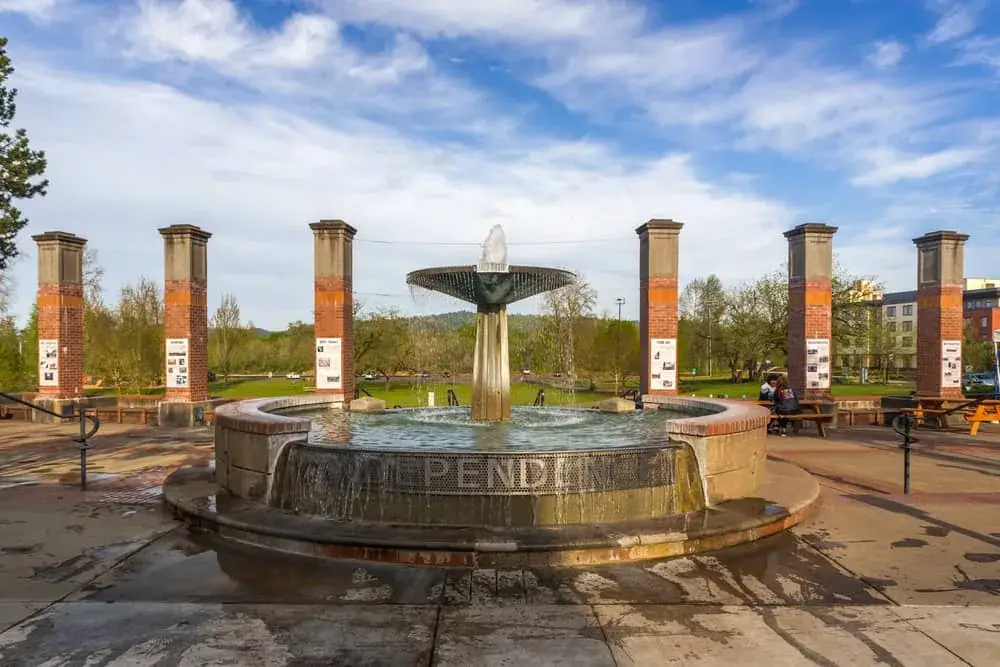
Why Retirees Are Choosing Independence
The retirees who land in Independence and stay share a few things: they want a real town, not a suburb; they want walkable access to daily life without needing a big city; and they want their housing dollar to go further than it does in Salem or Corvallis. A typical home price of $430,520 (Zillow Home Value Index, July 2026) — see the full cost of living breakdown for context — is low enough that retirees arriving with equity from a larger market can often purchase outright or carry a minimal mortgage.
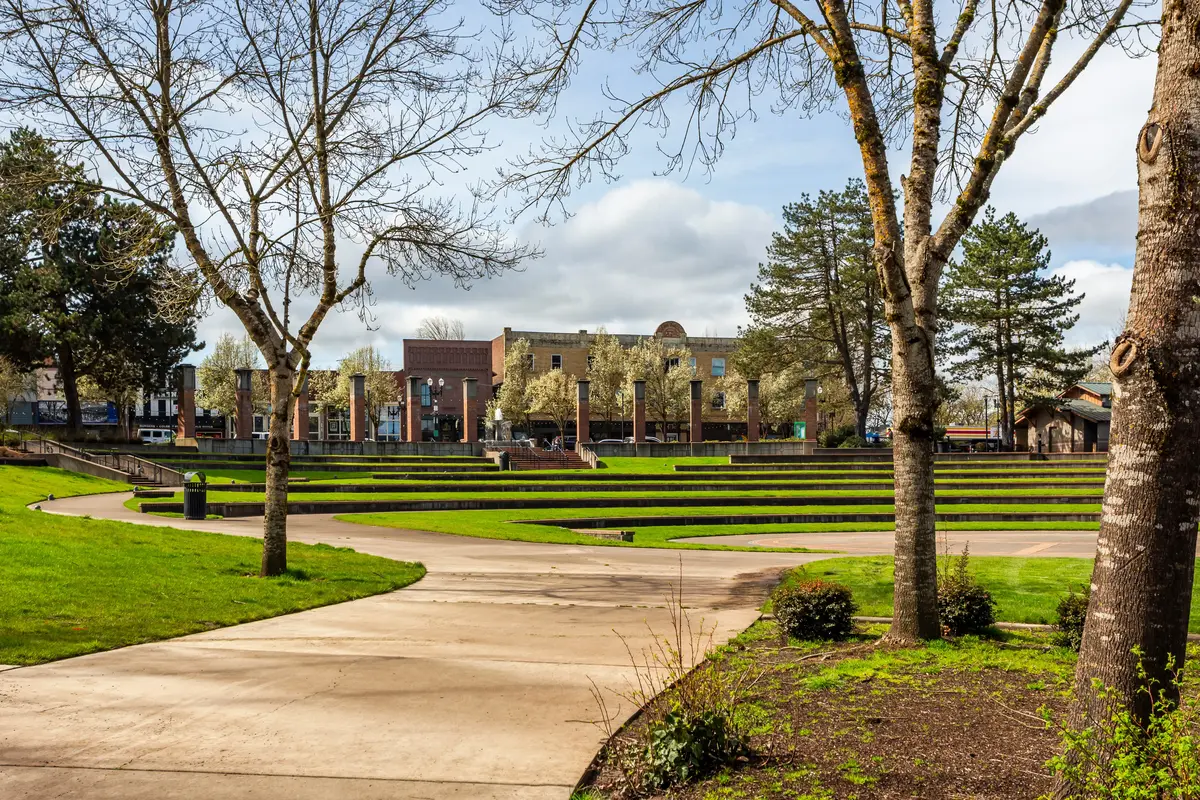
The Willamette riverfront is the social spine of the city. Riverview Park hosts the River's Edge Summer Series concert program at its amphitheater each summer, Movies in the Park, and the Hop & Heritage Festival each September. For retirees who want to walk to a community event rather than drive to one, this is a genuine differentiator from most small Oregon towns.
Who should look elsewhere? Retirees who need frequent specialist appointments, who want a dedicated 55+ community with built-in amenities, or who are drawn to a larger cultural and dining scene will find Independence thin. The city's small size — the 53rd-largest incorporated city in Oregon — means the trade-offs are real. No 55+ communities were found in Independence, and the nearest assisted living facilities are in the broader Polk County area. If walkability to a hospital, not just a park, is your requirement, Salem or Corvallis will serve you better.
Healthcare & Medical Access in Independence
Salem Health West Valley Hospital in Dallas is the closest hospital to Independence, about 10 miles away. It operates as a critical access hospital — the designation for rural facilities that maintain 24-hour emergency services and inpatient care — and it handles the full range of conditions that bring most people to an emergency room. For routine urgent care and many planned procedures, the drive to Dallas is manageable.
The specialty depth at West Valley is broader than the critical-access label might suggest. Salem Health expanded the facility's services in 2024, opening a dedicated specialty clinic for wound care, anticoagulation management, infusion therapy, medication management, and outpatient rehabilitation. Surgical services include cataract surgery, glaucoma management, orthopedic procedures including knee replacement, general surgery, urology, and sports medicine — procedures that collectively cover a substantial portion of what retirees need over a decade of aging in place.
The honest limit is in advanced subspecialty and tertiary care. Complex cardiac procedures, oncology treatment beyond initial staging, neurosurgery, and organ transplant evaluation require Salem Health's main Salem campus or Oregon Health & Science University in Portland. For most retirees in reasonable health, the West Valley-to-Salem-to-Portland continuum works — but it requires planning, reliable transportation, and the ability to travel. Retirees without a driver's license or a support network nearby should factor that distance seriously before committing to Independence over a Salem address.
Oregon also funds the Oregon Project Independence (OPI) program, which provides in-home services — housekeeping, personal care, home-delivered meals, and case management — to help older adults remain in their own homes. A Medicaid-supported expansion of the program began accepting new applications in 2025, which is relevant for retirees who anticipate eventually needing home-based support rather than a facility move.
The Retiree Budget in Independence
Oregon's tax treatment of retirement income is genuinely split, and retirees need to understand both halves. Social Security and Railroad Retirement benefits are fully exempt from Oregon state income tax — a real advantage for retirees whose income is primarily Social Security. Pensions, IRA withdrawals, and 401(k) distributions, however, are taxed at Oregon's regular graduated rates, which run from 4.75% to 9.9%. If your retirement income is largely drawn from tax-deferred accounts, Oregon's upper brackets matter.
The offset that surprises most newcomers: Oregon has no state sales tax. On a fixed income, the absence of sales tax on groceries, clothing, household goods, and dining saves a meaningful amount compared to most states a retiree might be moving from — particularly California or Washington.
The effective property tax rate in Independence runs approximately 0.89%, which is low by national standards. For qualifying homeowners aged 62 or older with household income at or below $60,000 (the 2025 threshold, adjusted periodically), Oregon's property tax deferral program allows the state to pay county property taxes directly, with the deferred amount repaid at 6% simple interest when the home is sold. That program can meaningfully reduce cash-flow pressure for retirees on a tight fixed income who own their home outright or nearly so.
Day-to-day costs on a fixed income in Independence are shaped by the city's size: a serious shopping trip — major grocery chains, big-box retail, specialty stores — means driving to Salem. That errand overhead adds up over a year, both in time and fuel. The local dining and coffee scene is genuine but small. Retirees who track their spending carefully will want to budget for regular Salem runs as a line item, not an afterthought. For a full picture of groceries, utilities, and transportation costs, the cost of living page has the detail.
Looking to buy in Independence? Estimate your payment.
Enter your numbers to see an estimated monthly mortgage payment.
Estimate only. Excludes HOA fees and mortgage insurance. The interest rate above is a starting point, not a quoted rate — replace it with your own to see real numbers. Insurance is a flat placeholder, not a Independence quote.
Walkability, Community & Staying Active in Independence
Downtown Independence is one of the more genuinely walkable small-town cores in the mid-Willamette Valley. The historic district is flat — no meaningful hills between the riverfront and the commercial streets — and compact enough that a retiree with moderate mobility can cover most of it on foot. The Independence Bridge and a pedestrian connection link the city to neighboring Monmouth, giving walkers a cross-river loop that feels more expansive than a city of 10,199 would suggest.
Riverview Park is the social anchor. The 20-acre park on the Willamette draws residents for the River's Edge Summer Series concerts, Movies in the Park events, and the Hop & Heritage Festival each September. The park's dog park is a daily gathering point that functions the way a neighborhood café does elsewhere — a place to show up, recognize faces, and get absorbed into the rhythm of the town. The Fourth of July celebration here draws crowds from across the region for a Grand Parade and a rubber ducky derby on the river, which gives you a sense of how seriously the city takes its civic identity.
For retirees interested in wine country, the Eola-Amity Hills tasting rooms are among the closest in the Willamette Valley, and the surrounding region has enough producers to fill leisurely day trips through any season. That geography makes wine-country exploration a realistic weekend habit rather than an occasional excursion. Volunteering opportunities run through the city government, the school district, and local civic organizations — in a city this size, volunteer labor is visible and valued in ways it often isn't in larger places.
The honest gap: Independence does not have a hospital, a standalone dedicated senior center, or the density of social programming a larger retirement community might offer. Retirees who thrive on structured activity calendars, fitness classes, and a built-in peer cohort may find the city's offerings thin. Those who are self-directed, enjoy the outdoors, and are comfortable creating their own social network in a small town tend to fare better here. For more on parks and recreation options, the parks and recreation page covers the trail network and outdoor amenities.
Right-Sizing: Downsizing in Independence
No 55+ communities were found in Independence. That is the central fact for any retiree hoping to move into an age-restricted community with shared amenities, maintenance-free living, and a built-in peer group. It doesn't exist here in that form, and the nearest options are in the broader Polk County area. Assisted living facilities in the area carry an average cost of approximately $4,634 per month, though that figure reflects the broader county area rather than Independence specifically.
What does exist is a modest inventory of single-level homes in neighborhoods like Brandy Meadows, Sunset Meadows, and Southwest Crossing — subdivisions built largely in the 1990s and 2000s where ranch-style floor plans are more common than in the older historic stock near downtown. These neighborhoods tend to offer the practical features retirees prioritize: attached garages, minimal stairs, and lower-maintenance lot sizes. The trade-off is that they sit further from the walkable riverfront core, putting you back in the car for the daily errands and community events that make downtown Independence distinctive.
Condominiums and patio homes are limited in number. Independence is not a condo market in the way Salem or Corvallis are, and buyers specifically seeking lock-and-leave convenience with no exterior maintenance responsibilities will find the inventory thin. The city's housing stock skews toward detached single-family homes, and the downtown historic district's character homes — though appealing — typically come with two-story layouts that are less practical as mobility changes.
The practical advice: if single-level living and walkability to the riverfront are both requirements, the search will be narrow and require patience. If you're willing to trade one for the other — walk-everywhere access to the historic district versus a single-level ranch in a newer subdivision — Independence has options. Retirees who complete their initial search here and find the inventory doesn't fit often extend their search to Monmouth or Dallas, where the single-level new-construction pipeline has been more active. The neighborhoods page covers the character and housing stock of each area in more detail.
Independence vs Nearby Retirement Destinations
| City | Cost vs Independence | Primary Hospital | Walkability | Senior Living Depth | Overall Retirement Fit |
|---|---|---|---|---|---|
| Independence | Anchor | Salem Health West Valley (Dallas, ~10 mi) | Good in historic core; flat terrain | Limited; no 55+ communities found | Strong for outdoorsy, self-directed retirees |
| Monmouth | Somewhat higher | Same — Salem Health West Valley (~10 mi) | Moderate; Western Oregon University campus adds walkable amenities | Limited; small-city inventory | Comparable feel; slightly more active campus energy |
| Salem | About the same | Salem Health Main Campus (in-city) | Moderate to good depending on neighborhood | Strong; multiple 55+ and assisted living communities | Best for retirees who prioritize healthcare proximity and amenity depth |
| Dallas | Somewhat higher | Salem Health West Valley (in-city) | Modest; smaller commercial core | Limited; some senior housing options | Best for retirees who want the hospital in town with a quieter feel |
| Corvallis | Noticeably pricier | Samaritan Health Services campus (in-city) | Strong; flat, bike-and-walk-friendly city | Good; multiple retirement community options | Best for retirees who want a university town with full amenity access |
| Rickreall | Noticeably cheaper | Salem Health West Valley (~15 mi) | Minimal; rural crossroads community | Very limited | Rural living only; limited services for retirees |
Salem is the clear answer if healthcare access is your top priority — a full-service hospital campus in-city, multiple established 55+ communities, and a retail and service depth that Independence simply doesn't match. Corvallis beats Independence on walkability, cultural programming, and senior living inventory, but comes at a noticeably higher price point that offsets much of the fixed-income advantage retirees are often chasing in this region.
Dallas puts Salem Health West Valley Hospital in town rather than 10 miles away, which matters if medical proximity is a daily comfort rather than an occasional need — though the city's smaller commercial core makes it a quieter option than Independence. Monmouth and Independence are close enough in character and healthcare access that the choice between them often comes down to whether you prefer a river-oriented downtown or proximity to a university campus.
Independence earns its place on this list by combining a genuine historic walkable core, a lower price point, and a community identity that's unusually strong for a city its size. The retirees who regret choosing it are usually the ones who underestimated how much the 10-mile hospital distance would matter, or overestimated how much the local amenity base would grow to feel sufficient. Visit on a summer Saturday when Riverview Park is full and the comparison feels obvious — then visit on a gray February weekday and make sure you still like it.
Local Expert Takeaway: Independence rewards retirees who show up knowing what they're buying: a compact, flat, river-anchored historic downtown with genuine community events, a tax environment that's kind to Social Security income, and a home price that still gives equity buyers real breathing room. The gaps are real — no 55+ community, a hospital that's 10 miles away in Dallas rather than across town, and a shopping and specialty-care trip that means driving to Salem. But for the self-directed retiree who wants Riverview Park out the front door, Eola-Amity Hills wine country on the weekends, and a town small enough that people learn your name, Independence is one of the more honest values left in the Willamette Valley.
Quick Takeaways & FAQs
✅ Oregon exempts Social Security benefits from state income tax entirely, and Independence's effective property tax rate of approximately 0.89% is among the lower rates in the valley — a genuine combined advantage for retirees on a fixed income.
⚠️ No 55+ communities were found in Independence, and the nearest full-service hospital is Salem Health West Valley in Dallas, about 10 miles away — retirees who need specialist care regularly will be making that drive often.
📍 Riverview Park's summer concert series, the annual Hop & Heritage Festival each September, and the pedestrian connection to Monmouth give this small city a community social calendar that punches well above its population of 10,199.
Is Independence, Oregon a good place to retire?
Does Oregon tax retirement income?
What is the nearest hospital to Independence, Oregon?
Are there 55+ communities or senior living options in Independence, Oregon?
Does Oregon have a property tax break for senior homeowners?
Moving to Oregon?
Tell us what you need help with and we'll connect you with local resources.
