
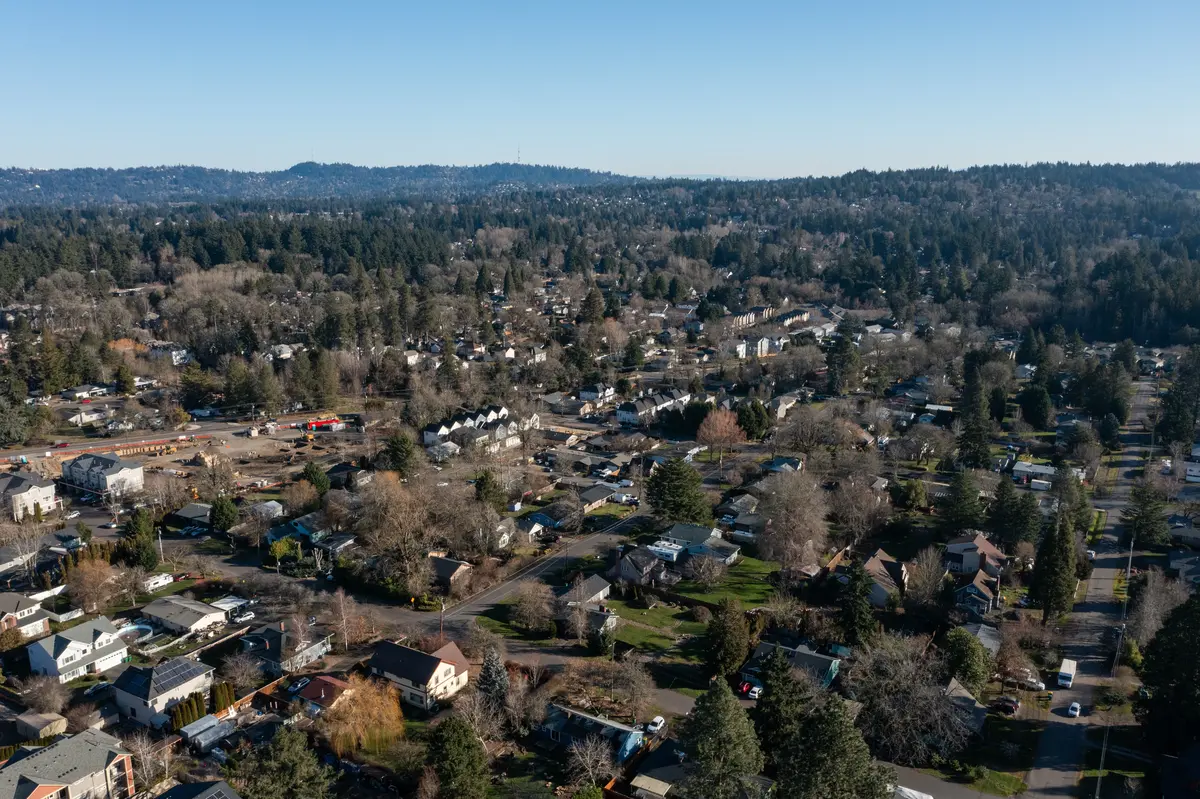
Bethany draws a specific kind of retiree: someone who spent decades in the Portland metro workforce, knows the region well, and wants to age in place without sacrificing proximity to the city. The community of 33,106 sits in the west hills corridor above Beaverton, served by US-26, and its daily rhythms — quiet residential streets, mature landscaping, a genuine town center at Bethany Village — make it feel more like a settled neighborhood than an edge-city suburb. That calm is the draw. The catch is price: a typical home here sold for $766,000 as of May 2026, which means retirement in Bethany usually requires equity from a prior home sale or substantial savings, not a first-time buy on a fixed income.
What makes the financial math more interesting for retirees is Oregon's tax posture. Social Security benefits are entirely exempt from state income tax — no means-testing, no phase-out. The effective property tax rate in Bethany sits at approximately 0.84%, which is low by Pacific Northwest standards and helps retirees whose net worth is concentrated in their home. The trade-off is that pension income, IRA withdrawals, and 401(k) distributions are taxed at Oregon's graduated rates, which climb meaningfully for larger distributions. Retirees coming from no-income-tax states like Washington or Nevada should model that carefully before committing.
The lifestyle case is easier to make. Kaiser Permanente Westside Medical Center sits roughly 4 miles away, offering a full specialty lineup without a long drive to Portland. The Ben Graf Greenway connects Bethany Lake Park and Kaiser Woods Natural Area along a flat, paved path that suits walkers of every fitness level. Bethany Village Town Center hosts a summer concert series and a holiday tree lighting that genuinely pull the community together. And for retirees who want a purpose-built active-adult setting, Claremont — a 556-home community within Bethany — is one of the most complete 55+ options anywhere in the Portland metro.
Whether you are weighing a downsizing move from a larger Portland-area home, evaluating Bethany against Beaverton or Hillsboro, or just trying to understand whether the numbers work on a fixed income, the sections below cover healthcare access, the retiree tax picture, walkability, right-sizing options, and how Bethany stacks up against its nearest retirement-relevant neighbors.
Why Retirees Are Choosing Bethany
Bethany is a genuine fit for retirees who want suburban quiet with metro-area access — and who are arriving with equity. The typical home sold for $766,000 in May 2026, which means most buyers here are people converting a prior home into a right-sized purchase, not stretching a pension to make a first mortgage work. If that describes you, the value proposition is real: low crime relative to state and national benchmarks, strong regional healthcare nearby, and a community that skews toward professional households who take their neighborhood seriously.
Who should look elsewhere? Retirees on a tight fixed income will find few entry points in Bethany at this price level — Beaverton and Hillsboro offer noticeably lower typical prices and more condo inventory, without sacrificing much in the way of healthcare access or parks. Retirees who want the kind of dense, walkable urban retirement that means coffee on foot and a bus to a doctor's appointment will also find Bethany a poor match. This is a car-dependent community, and that does not change with age.
What retirees who stay here consistently say — usually around the six-month mark — is that they underestimated how much they would use the trail system. The Ben Graf Greenway is not a weekend amenity; it becomes a daily rhythm. The other surprise is how quickly Bethany Village Town Center fills a social role. The fountain plaza draws people in the way a downtown square does in a smaller city, even though Bethany is technically an unincorporated community. For retirees who want community without the noise of a true urban center, that combination is hard to replicate at this distance from Portland.
Healthcare & Medical Access in Bethany
The closest hospital to Bethany is Kaiser Permanente Westside Medical Center, about 4 miles away. For most retirees, this proximity is one of Bethany's most compelling practical arguments: a full-service hospital is not a 30-minute highway drive — it is a short surface-street trip in any direction of traffic.
The depth of specialty care at Westside is meaningful. The hospital's department roster covers cardiology, orthopedics, oncology, neurology, nephrology, and palliative care and hospice — the specialties that matter most as retirees move through their sixties and seventies. Emergency services are available around the clock. U.S. News & World Report has recognized the hospital as high performing in colon cancer surgery, hip fracture treatment, pneumonia, and uncomplicated maternity care.
One honest limitation worth naming: Kaiser Permanente operates primarily within its own integrated system, which means retirees on traditional Medicare or non-Kaiser insurance may not be able to use Westside as their primary facility and would instead access its services through a separate referral or out-of-pocket path. For Kaiser members — and there are many in Bethany, given that Kaiser Permanente is one of the area's major employers — the proximity is nearly seamless. For everyone else, it is still a nearby resource for emergency care, but specialty follow-up may route to other facilities in the Portland metro.
For advanced tertiary care — complex cancer treatment, major cardiac procedures, transplant services — OHSU (Oregon Health & Science University) in Portland is the regional reference center. The drive from Bethany is manageable, and most retirees in this part of Washington County are accustomed to it for specialized needs. Day-to-day and urgent care, however, rarely requires leaving the immediate area.
The Retiree Budget in Bethany
Oregon's treatment of Social Security income is one of its most retiree-friendly features: the state exempts Social Security and Railroad Retirement benefits entirely, with no income threshold that phases the exemption out. That is a meaningful difference from states that tax benefits at higher income levels.
The rest of the retirement-income picture is less simple. Pension distributions, IRA withdrawals, and 401(k) income are all subject to Oregon's graduated income tax, which starts at 4.75% and reaches 9.9% at higher income levels. Retirees drawing heavily from pre-tax accounts will feel that, particularly if they are also receiving a public pension. Oregon's upside for daily costs is real: no statewide sales tax means groceries, goods, and services cost a percentage less than in most states, and that compounds meaningfully on a fixed income over years of spending.
The effective property tax rate in Bethany is approximately 0.84% — see the cost of living page for the full tax breakdown. At that rate, the tax burden on a typical Bethany home is competitive with much of the Portland metro, though it still represents a real carrying cost on a high-priced asset. Homeowners aged 62 or older with household income under $60,000 may qualify for Oregon's property tax deferral program, under which the state pays the county taxes directly and records a lien at 6% simple interest, repaid when the home is eventually sold. For retirees with substantial home equity but modest annual income, this can be a meaningful cash-flow tool worth confirming with the Washington County Assessment and Taxation office.
One tax issue that catches retirees off guard in Oregon: the state levies its own estate tax with a $1 million exemption — far below the current federal exemption. Estates that owe nothing federally may still owe Oregon estate tax. Retirees with significant assets should factor this into estate planning well before it becomes relevant.
Looking to buy in Bethany? Estimate your payment.
Enter your numbers to see an estimated monthly mortgage payment.
Estimate only. Excludes HOA fees and mortgage insurance. The interest rate above is a starting point, not a quoted rate — replace it with your own to see real numbers. Insurance is a flat placeholder, not a Bethany quote.
Walkability, Community & Staying Active in Bethany
Running errands on foot in Bethany requires honest expectations. Bethany Village Town Center puts a grocery store, restaurants, and services within reasonable walking distance for residents closest to it — but most of Bethany's residential fabric is hilly, without sidewalks on every block, and genuinely requires a car for most weekly needs. Retirees who plan their housing choice around walkable daily logistics should look carefully at which specific neighborhood they land in before assuming proximity to the town center.
Where Bethany genuinely shines for active retirees is its trail network. The Ben Graf Greenway — also called the Rock Creek Trail — runs as a paved, flat, multi-use path through the community, connecting Bethany Lake Park, Kaiser Woods Natural Area, Abbey Creek Park, and multiple green corridors. The terrain along the greenway is accessible to walkers at a wide range of fitness levels, and the wetland sections attract herons, migrating ducks, and occasional beaver sightings. Bethany Lake Park, managed by the Tualatin Hills Park & Recreation District (THPRD), adds a regularly stocked trout pond and picnic areas. Forest Park — one of the largest urban forests in the country, at approximately 5,200 acres with more than 80 miles of trails — is accessible from Bethany for retirees who want longer, more varied hikes.
Bethany Village Town Center anchors community life in a way that is easy to underestimate. The amphitheater and fountain plaza host a summer concert series and a holiday tree lighting that pull residents together in numbers that are rare for an unincorporated community this size. The center's restaurant cluster — including Degarios Italian Ristorante, Brooklyn Trattoria Italian Restaurant, and Bethany's Table — gives retirees a genuine dining scene within the community rather than requiring a drive into Portland or Beaverton.
For organized social life, Claremont (covered fully in the next section) offers the densest programming. But the broader community also draws retirees who simply want a low-key neighborhood with good infrastructure for outdoor activity — and Bethany's THPRD membership gives every resident access to one of the most developed park systems in Washington County.
Right-Sizing: Downsizing in Bethany
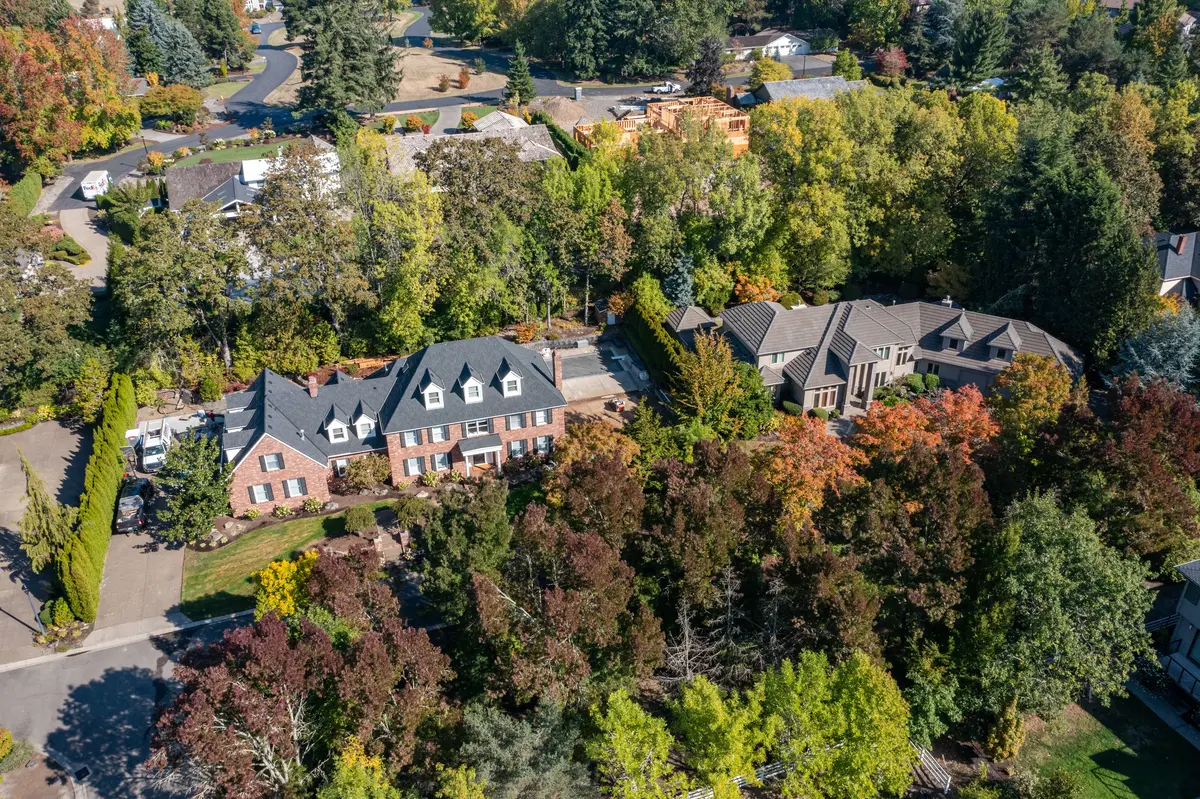
Bethany's housing stock skews heavily toward larger single-family homes built in the 1990s and 2000s. That means right-sizing options are narrower here than in Beaverton or Hillsboro, where condo and townhome inventory is more plentiful. Retirees looking to shed square footage and maintenance responsibility will find the Bethany market less accommodating than the surrounding area — though single-level construction does exist, particularly in neighborhoods that were purpose-designed for older buyers.
Claremont: The Only Purpose-Built 55+ Community in Bethany
Claremont is the standout option for retirees who want a deed-restricted active-adult setting. The community encompasses 556 homes — a mix of single-family homes and attached townhomes — governed by a master Claremont Civic Association to which all homeowners belong. The breadth of on-site amenities is genuinely unusual for the Portland metro: a clubhouse with a fitness center, swimming pool, and tennis courts; a second amenity center on the east side of the community; a resident-operated nine-hole golf course; a putting green; an 18-hole putting course; and bocce courts.
The organized programming inside Claremont is equally substantial. Residents have access to fitness classes, water aerobics, book clubs, lawn bowling, wine events, a walk-and-dine club, and a calendar of holiday gatherings. For retirees who want built-in community infrastructure without having to seek it out independently, Claremont removes most of that friction.
One thing to know before assuming Claremont is the right fit: homes within a planned resort community of this scale carry homeowners association dues on top of the property's carrying costs, and the community's internal culture — heavily oriented toward organized activities and shared amenities — suits some retirees very well and others not at all. Touring the community and attending a resident event before buying is the right move.
Single-Level and Low-Maintenance Options Outside Claremont
Outside Claremont, single-level homes in Bethany exist but are not the dominant housing type. Buyers willing to do a thorough search will find ranches and single-story homes, particularly in Arbor Heights and Bauer Highlands, where some of the original mid-1990s construction included one-story floor plans. Attached townhomes and smaller patio-style homes appear occasionally in Bethany Village and Bethany Ridge. The broader inventory picture for downsizing — full condo buildings, elevator access, lock-and-leave formats — points buyers toward Beaverton rather than Bethany. For retirees whose priority is a tight, manageable home in a safe, green community and who are not set on Bethany specifically, Beaverton's noticeably lower price level and deeper condo stock make it worth comparing directly.
Bethany vs Nearby Retirement Destinations
| City | Cost vs Bethany | Primary Hospital | Walkability | Senior Living Depth | Overall Retirement Fit |
|---|---|---|---|---|---|
| Bethany | Anchor | Kaiser Permanente Westside (~4 mi), full specialty depth | Car-dependent; excellent trail network | Claremont (556-home 55+ community); limited condo inventory | Strong for equity-rich retirees; Claremont is a metro standout |
| Beaverton | Noticeably lower | Kaiser Permanente Westside (shared resource); same region | More walkable core; TriMet MAX access | More condo and townhome options; several independent senior communities | Better for fixed-income retirees; more housing format diversity |
| Hillsboro | Noticeably lower | Tuality Community Hospital plus Kaiser satellite clinics | Moderate; downtown corridor is walkable | Growing senior housing inventory; more affordable entry points | Good value for retirees less tied to the Bethany lifestyle |
| Cedar Mill | Somewhat higher | Kaiser Permanente Westside (nearby, shared); same corridor | Car-dependent; quiet residential feel | Very limited dedicated senior housing | Suits retirees who want extreme quiet; fewer organized community resources |
| Oak Hills | About the same | Kaiser Permanente Westside (nearby, shared) | Car-dependent; residential only | Minimal dedicated senior living options | Best for retirees who already know the neighborhood and value privacy |
| Rock Creek | Noticeably lower | Kaiser Permanente Westside (shared region) | Car-dependent; some trail access | Limited; less developed than Bethany | Suits budget-conscious retirees willing to sacrifice community programming |
Beaverton is the most practical alternative for retirees whose budget is stretched by Bethany's price level — the hospital access is effectively identical since both communities draw on Kaiser Permanente Westside, and the transit options in Beaverton's core are a meaningful advantage for retirees who anticipate giving up a car later in retirement.
Hillsboro makes sense for retirees who are also tied to the technology corridor — Intel's campus is nearby, and the city has invested in downtown walkability — but the healthcare picture is less concentrated than in Bethany's immediate radius. Cedar Mill and Oak Hills appeal primarily to buyers who already have ties to those neighborhoods and want to age in place with minimal disruption; neither offers much in the way of dedicated senior programming.
Rock Creek offers the most affordable entry point in this comparison and shares the same general green infrastructure — trail corridors, THPRD parks — but lacks Bethany's town center energy and purpose-built senior community. For a retiree who wants Claremont specifically, Bethany is the only answer. For a retiree whose priorities are lower carrying costs, transit access, and flexibility of housing format, Beaverton is the honest first comparison.
Local Expert Takeaway: Bethany is one of the few Portland-area communities where a retiree can have a purpose-built 55+ neighborhood (Claremont), a hospital four miles away (Kaiser Permanente Westside Medical Center), a flat paved trail corridor for daily walks (the Ben Graf Greenway), and a genuine town-center gathering place (Bethany Village) — all within a few square miles. That combination is unusual at any price, and it is why equity-rich retirees keep choosing Bethany over cheaper alternatives nearby. The catch is real: Social Security is tax-free in Oregon, but pension and IRA income is not, and the property tax deferral program is worth exploring early if your annual income is modest relative to your home's value.
Quick Takeaways & FAQs
✅ Claremont is one of the most fully programmed 55+ active-adult communities in the Portland metro, with 556 homes, a nine-hole golf course, two amenity centers, and a dense organized activities calendar — all within Bethany itself.
⚠️ Oregon exempts Social Security income from state tax entirely, but pension, IRA, and 401(k) distributions face rates up to 9.9%, which can surprise retirees relocating from no-income-tax states like Washington.
📍 Kaiser Permanente Westside Medical Center sits about 4 miles from Bethany and covers cardiology, orthopedics, oncology, neurology, and palliative care — unusually deep specialty access for a community this size.
Is Bethany, Oregon a good place to retire?
Does Oregon tax Social Security income for retirees?
What is the closest hospital to Bethany, Oregon?
What 55+ communities are in Bethany, Oregon?
Can Oregon retirees defer property taxes if they are on a fixed income?
Moving to Oregon?
Tell us what you need help with and we'll connect you with local resources.
