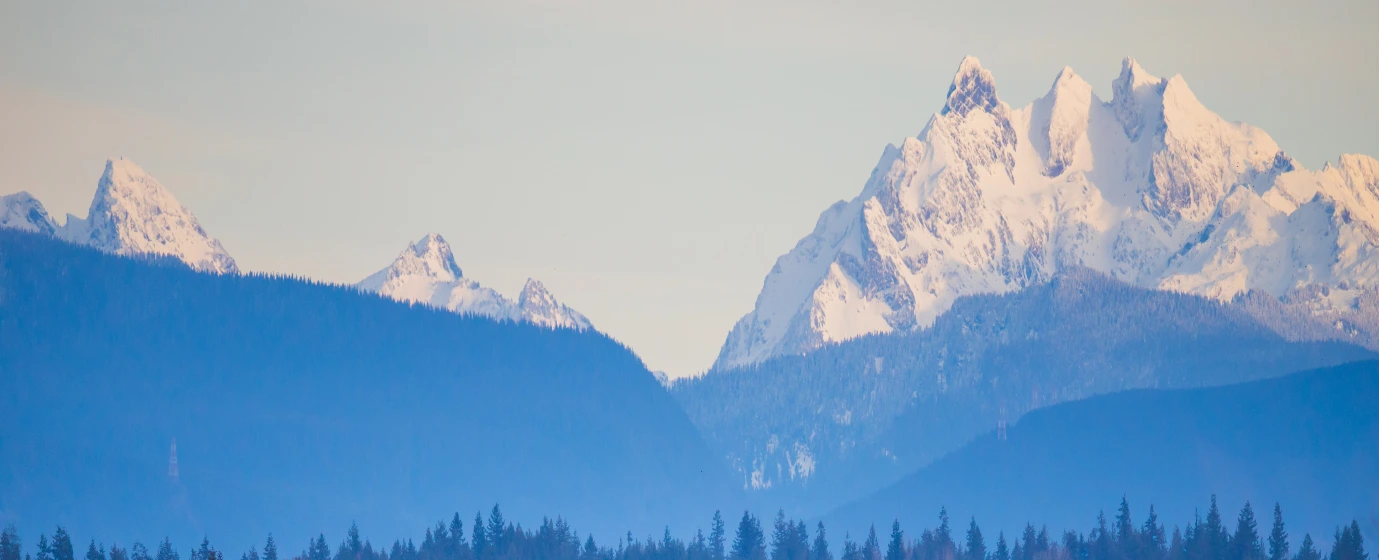
Maybe you've been priced out of the Bay Area and someone mentioned the Pacific Northwest. Maybe remote work finally freed you from a Southern California commute and you started wondering what $650,000 actually buys somewhere north of the 45th parallel. Whatever brought you to Stanwood's search results, the first thing to understand is that this is not a suburb in the traditional sense. Stanwood is a small city of roughly 8,373 people, set between the Stillaguamish River delta and the Cascade foothills, about 50 miles north of Seattle and 20 miles north of Everett. Highway 532 connects it west to Camano Island and east to Interstate 5. The working rhythm here is tied to Puget Sound agriculture, North Sound aerospace, and the daily Everett commute — not to the kind of density or pace most Californians are leaving behind.
The economic backbone is more regional than local. Boeing Everett and Naval Station Everett are the dominant employers within a 29-minute drive, and they draw a workforce that values the trade of urban access for small-town quiet. Twin City Foods operates locally in food processing, and the Stanwood-Camano School District is one of the city's steadier employers. Families relocating from California often ask about schools first — the Stanwood-Camano School District holds a B- rating, according to Niche, and students compete in athletics under the Washington Interscholastic Activities Association (WIAA) rather than the California Interscholastic Federation (CIF) they're used to. For a fuller look at academics and programs, see the Stanwood schools page.
The cost picture is genuinely compelling if you're coming from a California metro. Stanwood's overall cost of living runs noticeably below the Bay Area and well below San Francisco — across major categories, the gap is substantial. Housing is the primary driver, but the state's absence of a personal income tax is the figure that stops most California transplants mid-sentence. Washington levies no personal state income tax on wages and salaries for households earning under $1 million per year, while California's top marginal rate reaches 13.3%. That difference alone restructures a household budget. Utilities, groceries, and everyday costs are covered in depth on the Stanwood cost of living page.
Whether you're weighing a specific offer from Boeing, escaping a California property-tax reassessment, or simply trying to figure out if 37 inches of annual rain is something you can live with, the sections below break down the California-to-Stanwood comparison across home prices, taxes, lifestyle, and the practical surprises that most relocation guides don't mention until month four.
The Home Price Reality: What Your California Equity Buys Here
The Zillow Home Value Index for Stanwood sits at $656,789 as of August 2026 — a figure that draws a sharp reaction from California buyers in two completely opposite directions depending on where they're coming from.
If you're relocating from the Bay Area, where a modest single-family home in a mid-tier suburb regularly clears $1.3 to $1.5 million, that number looks like relief. If you're coming from California's Central Valley or Inland Empire, where prices have softened, the gap feels narrower than you expected. The honest framing: Stanwood is not cheap, but it is substantially more affordable than Seattle's closer suburbs, and your California equity — if you're selling and moving — will stretch further here than almost anywhere else in the Puget Sound metro.
What $656,789 Actually Gets You
At the Stanwood median, you're typically looking at a three- or four-bedroom house with a proper yard, a two-car garage, and enough land to feel the separation between you and your neighbors. That description would cost you meaningfully more in Edmonds, Mukilteo, or Bothell. Entry-level properties — older ranch-style homes and smaller lots — start noticeably below the median, while newer construction in areas like Pioneer Hills or Jasper Junction trades at a premium. For the full neighborhood-level breakdown, the best neighborhoods in Stanwood page covers each area's character in detail.
The Proposition 13 Trap California Sellers Don't See Coming
This is the piece of the home-price conversation that surprises California buyers the most — not what they pay, but how property taxes work once they do.
California's Proposition 13 caps annual property-tax reassessment increases at 2% for existing owners, which means a homeowner who bought in a Bay Area suburb in 2005 might be paying taxes on an assessed value of $400,000 even though the home is worth $1.4 million today. That protection vanishes entirely the moment you sell. In Stanwood, Washington, there is no equivalent cap. The effective property tax rate is 0.77%, applied to market value, reassessed regularly. On a $656,789 home, that works out to approximately $5,057 per year. It's a transparent, predictable system — but if you've spent years benefiting from Proposition 13's suppressed bills, the reset will feel like a step up even as your purchase price steps down.
California's effective property tax rate is approximately 0.75% on assessed value — nearly identical to Stanwood's rate on paper. The difference is entirely in the base: Stanwood taxes current market value; California, for longtime owners, taxes something much lower. Budget accordingly.
The Income Tax Advantage — and Where Washington Recoups It
Washington has no personal state income tax on wages and salaries for households earning under $1 million per year. For the vast majority of Californians relocating to Stanwood, that is an unqualified improvement over where they came from.
California's top marginal state income tax rate is 13.3% — the highest in the nation. Even at a household income of $90,000, a California filer faces a meaningful state income tax bill. In Washington, that same household keeps the full gross. The annual difference depends entirely on your income, but for a dual-income household earning $180,000 combined, the savings run into five figures annually. That is money that either reduces your need to deplete savings on a down payment, accelerates mortgage payoff, or simply stays in your checking account.
One Transparency Note for High Earners
Washington enacted a new millionaires tax, signed into law on March 30, 2026. Starting January 1, 2028, household income exceeding $1 million per year will be subject to a 9.9% Washington state tax on the amount above that threshold. If your household income stays below $1 million annually, this does not affect you. If you're relocating with significant investment income or equity compensation that regularly pushes past that line, it's worth factoring into a longer-term model.
Where Washington Recoups: Sales Tax
The state funds its government without an income tax partly through a higher sales tax. Stanwood has a combined state and local sales tax rate of 9.3% — 6.5% state plus 2.8% local. California's statewide base rate is 7.25%, though many California cities have already climbed to 10% or above through local add-ons. If you're leaving a high-tax California city, the sales tax shift is minimal. If you're coming from a lower-add-on California jurisdiction, you'll notice the difference at the register.
| Tax Category | California | Stanwood, WA | Net Effect for Most Transplants |
|---|---|---|---|
| State income tax | Up to 13.3% marginal rate | None (under $1M/year) | Significant annual savings |
| Millionaires tax | N/A (separate from existing rates) | 9.9% on income over $1M (effective 2028) | Relevant only to very high earners |
| Effective property tax rate | ~0.75% on assessed value (Prop 13 applies) | 0.77% on current market value | Similar rate; very different base |
| Sales tax | 7.25% base; many cities 10%+ | a combined state and local sales tax rate of 9.3% | Roughly comparable; depends on origin city |
| Capital gains tax | Taxed as ordinary income | 7% on long-term capital gains above a $278,000 standard deduction for 2025, rising to 9.9% on gains above $1,000,000 | Relevant if selling stocks, not primary home |
| Overall tax burden | Among highest in U.S. | Among lowest in U.S. | Meaningful reduction for most households |
The income tax savings are real and recurring. The sales tax and property tax dynamics are worth modeling before you assume the net benefit is as large as it first appears.
Climate: The Honest Conversation California Transplants Need to Have
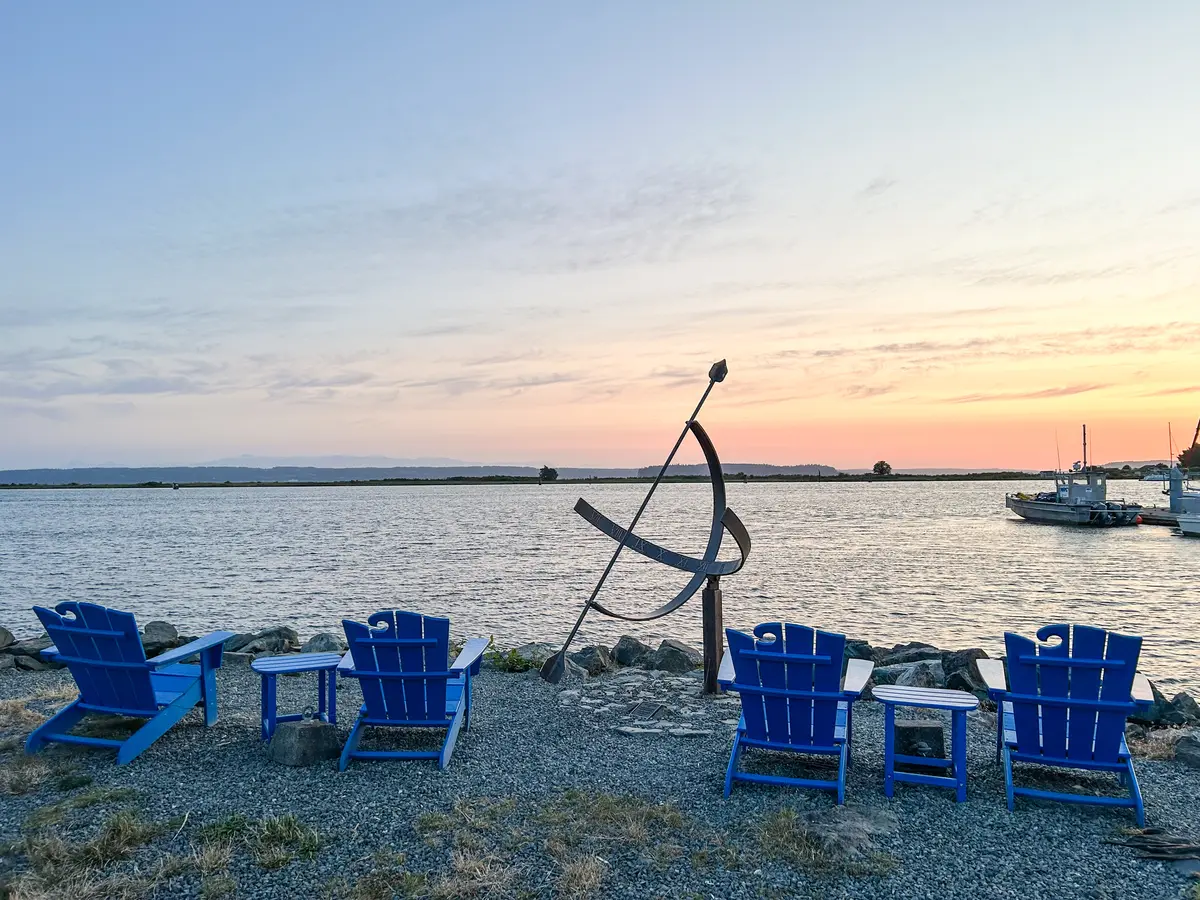
Nobody who moves to Stanwood from California in July feels the climate trade-off. The summers here — short, dry, and rarely above 76°F — are genuinely comfortable, often better than what you left. August evenings at Heritage Park or along the Stillaguamish feel like a version of the Pacific Northwest that outdoor-gear ads are built around.
The rest of the year is a different conversation.
The 189-Day Number
Rain falls on roughly 189 days per year in Stanwood. November is the wettest month. The annual total runs approximately 37 inches — not as dramatic as the stereotype suggests, but spread across more days than most Californians have experienced in years. It is rarely a downpour; more often it is a persistent gray ceiling and a light drizzle that makes a short errand feel wetter than you planned for.
Snow is possible from November through April, though it rarely accumulates to depths that would concern anyone from the Sierra Nevada foothills. The ice risk — particularly on rural roads near Cedarhome or out toward Warm Beach — is more relevant than snowfall totals. Buy all-season tires before your first November.
The Seasonal Adjustment Nobody Warns You About
Six months in, most California transplants say the same thing: they were prepared for the rain but not for the darkness. From November through January, Stanwood sees fewer than nine hours of daylight at the solstice. That's not a weather problem — it's a light problem, and it affects mood, energy, and routine in ways that a sunny weekend trip to the Pacific Northwest won't reveal. A vitamin D supplement, a light therapy lamp, and intentional outdoor time on the rare clear days are not optional accessories. They are infrastructure. This is the detail that sends a meaningful share of transplants back to California within two years, not the housing market or the taxes.
The flip side: Stanwood's summers are a legitimate quality-of-life upgrade over most of California. Long evenings, no air conditioning required, and proximity to Puget Sound, the Cascades, and the San Juan Islands make June through September genuinely exceptional. You are trading four excellent months for a difficult winter. Whether that trade works for you is the honest question to sit with before you sign.
Looking to buy in Stanwood? Estimate your payment.
Enter your numbers to see an estimated monthly mortgage payment.
Estimate only. Excludes HOA fees and mortgage insurance. The interest rate above is a starting point, not a quoted rate — replace it with your own to see real numbers. Insurance is a flat placeholder, not a Stanwood quote.
Daily Life: What Actually Changes When You Get Here
The physical texture of daily life in Stanwood is a genuine shift from any California metro, and it's worth being specific about what that means rather than letting "small-town feel" do all the work.
Groceries, Dining, and Everyday Errands
Stanwood has a functional commercial core along 270th Street NW and the surrounding blocks, but it does not have the density of retail that most California transplants are used to. You'll find the basics — a grocery store, a hardware store, a pharmacy — without driving far. For specialty items, a Costco run toward Marysville or a trip into Everett handles most gaps. There is no Trader Joe's in Stanwood; the nearest is a meaningful drive south.
For a low-key weekend morning, Farmers Cafe on 72nd Ave NW is the kind of family diner that has been anchoring a community longer than most of the area's newer residents have lived here. For evenings, SAAL Brewing Company on 270th St NW is the local gathering point — a properly run brewpub that Stanwood residents treat as the default answer to "where are we going tonight?" Neither of these is a California analog; both are specifically Stanwood in a way that matters when you're trying to feel at home somewhere new.
Getting Around Without a Car Is Not the Plan
This is a car-dependent community. Transit connections exist toward Everett, but the practical reality is that every meaningful errand requires a vehicle. If you're coming from a walkable California neighborhood — parts of San Francisco, or a dense stretch of Los Angeles — the adjustment to car-first daily logistics is real and ongoing. For those working from home, it's manageable. For households with one car or no car, it's a structural problem to solve before moving day.
Healthcare Costs vs. What You Were Paying
Health insurance premiums in Washington generally run noticeably below what California residents pay for comparable coverage, which matters practically for self-employed transplants or anyone buying their own plan. The honest trade-off: routine care is readily accessible, but you will drive farther for specialist care than you would from most California metros. That context belongs in your planning, not as a dealbreaker, but as something to factor into the move.
Where Stanwood's Community Actually Shows Up
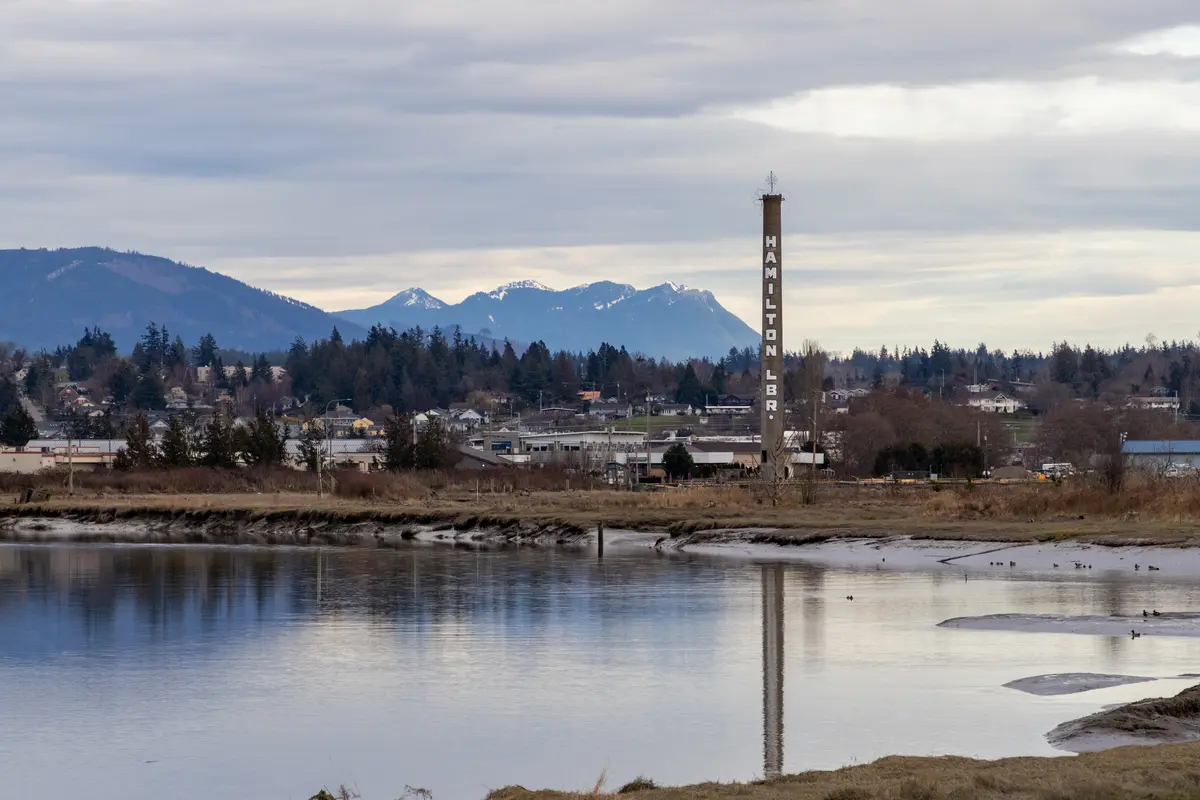
The social fabric here runs through the Stanwood-Camano School District activities, the weekly farmers market, and waterfront access at Hamilton Landing Park. Friday nights in fall center on Stanwood High School football in a way that California transplants from larger cities genuinely don't expect — it's the kind of community ritual that doesn't show up in any relocation calculator but shapes whether you feel like you belong somewhere within the first year.
The California-to-Stanwood Decision: What the Spreadsheet Doesn't Show
The case for the move is easy to make on paper. No state income tax. A typical home price of $656,789 — substantially below what you would pay in a comparable position relative to Seattle versus what you paid relative to a major California metro. Access to Boeing, Naval Station Everett, and a regional economy that has been more stable than California's tech-sector swings. Cleaner air, less traffic density, and a community small enough that your neighbors know your name within a few months.
The Case Against — Specific, Not Theoretical
The commute math only works if your job is in Everett or accessible via remote work. A daily drive to Seattle from Stanwood is a different proposition — plan on 60 to 90 minutes in peak traffic on I-5 southbound, and that's before any incident near Marysville or the Lynnwood interchange. The living in Stanwood page covers the commute reality in full.
The lifestyle gap is real for transplants with specific California habits. If your weekend default is a walk to a coffee shop, a farmers market with 40 vendors, or a wine bar that stays open past 10pm, Stanwood will require recalibration. It has equivalents — but not substitutes, and not at the same density.
And the schools, while solid, are worth a closer look for relocating parents. The district offers genuine community investment in its programs and is covered in full on the schools page.
Who This Move Actually Fits
| Buyer Type | Why Stanwood Works | What to Watch |
|---|---|---|
| Commuter | 29-min drive to Everett; Boeing and Naval Station access | Seattle commute is significantly longer |
| Families | Lower price point, yards, community-rated district, community feel | Kids' activities require driving; no dense teen social scene |
| First-Time Buyers | Entry-level options below the median; no income tax frees up savings | Financing options vary; see first-time buyer page |
| Outdoor-Oriented | Puget Sound, Cascades, Camano Island all within easy reach | Winter dark limits outdoor motivation for some |
| Equity Transplants | California sale proceeds go substantially farther here | Prop 13 reset on property taxes; model the full number |
| Remote Workers | No commute pressure; cost savings compound fast without income tax | Internet infrastructure varies by area; verify before committing |
The buyers who regret the move are usually the ones who underestimated the winter light deficit or overestimated how quickly a city of 8,373 people would replace what they had in a California metro of millions. The ones who stay — and many do — tend to say that what they gave up was replaced by something they didn't know they were missing.

Local Expert Takeaway: The income tax math is the headline, but the real Stanwood story is what the combination of no state income tax, a $656,789 typical home price, and a 29-minute drive to Everett looks like stacked together against what you were paying in California. Grab breakfast at Farmers Cafe on 72nd Ave NW and you'll see the community you're buying into — working families, tradespeople, and a surprising number of people who made this exact move from California in the last five years and haven't second-guessed it once. The ones who struggled are almost always the ones who arrived in October without a winter plan. Come with realistic expectations about the dark months, verify your specific commute to wherever you're working, and model the full property tax picture against your Proposition 13 reality — and this move makes more sense than most relocation spreadsheets make it look.
Quick Takeaways & FAQs
✅ Washington's zero personal state income tax — for households earning under $1 million annually — is one of the most direct financial upgrades a California household can make without changing jobs or careers.
⚠️ The Proposition 13 reset is real: California's assessed-value freeze disappears the moment you sell, and Stanwood's 0.77% rate applies to current market value from day one — budget for it before you fall in love with a listing.
📍 SAAL Brewing Company on 270th St NW is where Stanwood transplants and long-timers mix — if you want to take the temperature of the community before you move, that's the room to be in.
Do I really pay zero state income tax if I move from California to Stanwood, WA?
How do Stanwood home prices compare to where I'm coming from in California?
What happens to my property taxes when I move from California to Washington?
Is the rain in Stanwood as bad as people say?
What's the sales tax rate in Stanwood, and how does it compare to California?
Moving to Washington?
Tell us what you need help with and we'll connect you with local resources.
