
You've probably done the math on Seattle and come up short. Maybe Everett felt like the compromise, but even that number has climbed. Stanwood sits about 35 miles north of Seattle at the edge of the North Puget Sound lowlands — accessible via SR-532 and I-5, with a Sounder commuter rail station that connects to the broader region — and it prices differently than the cities closer to the urban core. But "differently" doesn't mean cheaply. Living costs in Stanwood run roughly 36% above the U.S. national average, and housing is the engine driving that gap.
What actually pushes Stanwood's number is a combination of geographic desirability and limited inventory. The city is small — just over 8,300 residents — bordered by farmland, the Stillaguamish River delta, and Puget Sound access that larger Snohomish County cities simply don't offer at the same scale. The household median income here sits at $90,242, which means the local workforce is not universally stretched, but it also means a typical buyer is relying heavily on dual incomes or equity from a prior sale. Most residents commute to employers in Everett, Marysville, and the broader Puget Sound corridor for work.
On the tax side, Stanwood quietly benefits from Washington's structure in ways that newcomers from income-tax states notice immediately. There's no state income tax on wages. Groceries are exempt from Washington sales tax. And Stanwood sits outside the Sound Transit Regional Transit Authority boundary, so residents avoid the 1.1–1.4% RTA sales tax surcharge that hits shoppers and buyers in Everett and points south. The effective property tax rate in the 98292 ZIP code is approximately 0.77% — meaningfully below both the Washington state median and the national median. None of that makes Stanwood cheap, but it does reshape the take-home math versus Seattle-area alternatives.
Whether you're comparing Stanwood to Marysville on price, weighing renting versus buying, or trying to understand what a monthly budget actually looks like here, the sections below break down housing costs, everyday expenses, how the city stacks up against nearby markets, and the tax picture that shapes what you keep.
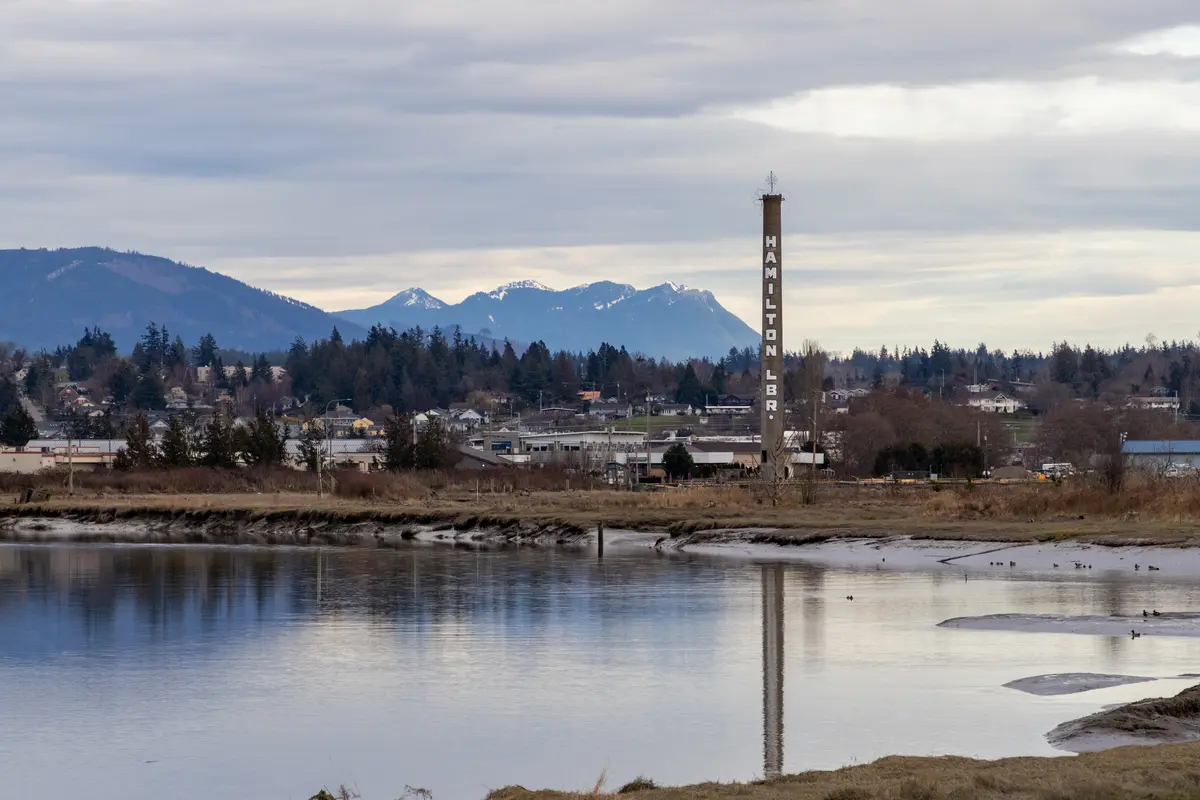
What It Really Costs to Live in Stanwood
The Zillow Home Value Index for Stanwood stands at $656,789 as of August 2026 — a figure that places it above the Washington statewide median but noticeably below the Seattle metro core and the Eastside suburbs. That number is not a ceiling or an anomaly; it reflects what a typical single-family home in this small North Puget Sound city actually trades for in the current market.
Stanwood is pricier than inland alternatives like Arlington and other communities further from the Sound, and roughly in line with — or slightly above — Marysville, depending on the quarter. It is comfortably below Everett's newer construction corridors and well below Camano Island's waterfront-adjacent premiums. The driver is not a hot commercial district or a tech campus. It's access: Puget Sound views within reach, a functional Sounder station, and a small-town character that larger Snohomish County cities have largely traded away in exchange for density.
Buyers coming from states with high income taxes often feel an immediate structural advantage here, even at these price levels. Washington's no-income-tax posture and the grocery sales-tax exemption redirect money that would otherwise leave your paycheck or your weekly grocery run — which matters more at Stanwood's price point than it might in a lower-cost market.
Housing: Rent vs Buy in Stanwood
The Buying Side
Entry-level homes in Stanwood — older construction, smaller footprints, some deferred maintenance — start in the low-to-mid $400s on the rare occasions they appear. The city-wide median, as noted above, sits at $656,789. Most of what sells in the mid-$500s to mid-$600s is a 3-bedroom house with a garage, not a luxury property. If you want newer construction or acreage, you're typically crossing into the $700s or above.
The effective property tax rate in the 98292 ZIP code is approximately 0.77% — below the Washington state median of roughly 0.92% and well below the national median of 1.02%. That rate applies to assessed value, not just the sale price, but in practice the two track closely in recent years. Use the mortgage calculator below to model your full monthly payment — it accounts for principal, interest, taxes, and insurance together, which is the only useful way to see whether the numbers work for your income.
The Renting Side
Median rent in Stanwood runs approximately $2,112 per month — a figure that reflects a market with limited apartment stock and strong demand from people priced out of buying. Rental supply is tighter here than in Marysville or Arlington, where more purpose-built apartment complexes exist. If you're relocating without certainty about staying long-term, renting first makes practical sense: the downtown core near 270th Street NW and 271st Street NW has a handful of smaller rental units close to independent cafés and a well-regarded local bakery, giving you genuine walkable access to daily life while you learn the city.
Renting wins on flexibility; buying wins on the tax math, given Washington's no-income-tax structure and Stanwood's below-state-average property tax rate. The case for buying is stronger if you're planning a five-plus-year horizon and have equity to deploy — the case for renting is stronger if you're still testing whether the 35-minute commute corridor to Everett or beyond actually works for your life.

Everyday Costs Beyond Housing in Stanwood
Utilities in Stanwood are a genuine bright spot. Residential electricity averaged approximately 14.11 cents per kilowatt-hour in early 2026 — about 20% below the national average at that time. That said, rates rose roughly 17% year-over-year from early 2025 to early 2026, so the gap with the national average is narrowing. The city adopted a new inclining-block water rate structure in 2026 that is expected to lower monthly water bills for roughly half of residential customers; the combined water, sewer, and drainage bill increased by approximately $5.18 per month beginning in 2025, with similar annual increments planned through 2030.
Groceries run about 9% above the national average — consistent with Washington broadly and softened by the state's exemption of food from sales tax. Transportation costs, including gas and any transit fares, run approximately 17% above the national average; Stanwood is a car-dependent city and most residents are fueling a vehicle daily, not relying on transit. The sample budget below reflects a realistic renter's monthly picture — owners should use the mortgage calculator above for the housing line.
| Category | Typical Monthly Cost | Notes |
|---|---|---|
| Housing (2BR rent) | $1,900 – $2,300 | Reflects current Stanwood rental market; owners: use the calculator above for your mortgage estimate |
| Utilities (electric, water, sewer, drainage) | $140 – $200 | Electricity ~14¢/kWh; new tiered water rates effective 2026 — light users may see lower bills |
| Groceries | $500 – $650 | ~9% above national average; groceries are exempt from Washington state sales tax |
| Transportation & Gas | $350 – $500 | Car-dependent city; ~17% above national average; Sounder commuter rail available for Seattle corridor trips |
| Phone & Internet | $130 – $180 | Standard plan estimates; cable/fiber availability varies by neighborhood |
| Dining & Miscellaneous | $300 – $500 | Includes occasional meals out; downtown Stanwood has independent cafés and casual dining |
These are estimates for planning purposes, not guarantees. Actual costs will vary based on household size, commute distance, and consumption habits.
Looking to buy in Stanwood? Estimate your payment.
Enter your numbers to see an estimated monthly mortgage payment.
Estimate only. Excludes HOA fees and mortgage insurance. The interest rate above is a starting point, not a quoted rate — replace it with your own to see real numbers. Insurance is a flat placeholder, not a Stanwood quote.
Stanwood vs Nearby Cities: Cost Comparison
| City | Median Home Price | Typical 2BR Rent | Cost vs Stanwood |
|---|---|---|---|
| Stanwood | $656,789 | ~$2,100 – $2,200/mo | — (baseline) |
| Marysville | ~$560,000 – $590,000 | ~$1,900 – $2,100/mo | Noticeably cheaper |
| Arlington | ~$530,000 – $565,000 | ~$1,800 – $2,000/mo | Meaningfully cheaper |
| Skagit County communities | ~$490,000 – $530,000 | ~$1,750 – $1,950/mo | Cheaper across the board |
| Everett | ~$600,000 – $650,000 | ~$2,000 – $2,300/mo | About the same, slightly lower |
| Camano Island | ~$680,000 – $740,000 | Very limited rental stock | Slightly to noticeably higher |
Camano Island and Stanwood trade at similar or higher price levels because both offer North Puget Sound access with small-city character — the difference is that Camano has no Sounder station and even thinner rental inventory. Buyers choosing between Stanwood and Marysville are essentially trading small-town walkability and the historic downtown for lower sticker prices and more apartment options.
Taxes & the Bottom Line for Stanwood
No State Income Tax — With a Caveat
Washington levies no personal income tax on wages or salaries. For someone moving from California, Oregon, or any high-income-tax state, this is a structural shift, not a minor perk — it meaningfully raises your effective take-home on the same gross salary. The one carve-out worth knowing: Washington taxes 7% on long-term capital gains above a $278,000 standard deduction for 2025, rising to 9.9% on gains above $1,000,000. That threshold is high enough that most wage earners aren't affected, but investors and those selling appreciated assets should plan accordingly.
Sales Tax: Better Than It Looks
Washington's combined state-and-local sales tax statewide averages approximately 9.51% — and yes, that sounds steep. Two factors soften it for Stanwood residents. First, groceries are fully exempt from Washington sales tax, which meaningfully reduces the day-to-day sting. Second, Stanwood sits outside the Sound Transit district boundary, meaning residents are not subject to the additional 1.1–1.4% Regional Transit Authority surcharge that applies in Seattle, Bellevue, Everett, and Marysville. That distinction shows up in every retail purchase and every car purchase you make locally.
Property Tax: A Relative Advantage
The effective property tax rate in Stanwood's 98292 ZIP is approximately 0.77% — below the Washington state median and well below the national median of 1.02%. At the home price discussed above, that works out to an estimated $5,057 per year, though individual assessed values vary. For buyers moving from high-property-tax states, this rate is often a pleasant surprise.
Who It Works For — And Who It Stretches
Stanwood's tax posture is genuinely favorable: no income tax, a grocery exemption, a below-average property tax rate, and an RTA sales tax carve-out. The honest constraint is housing. At the price levels detailed above, a single-income household at the median income will find the math tight. Dual-income households, people bringing equity from a prior sale, and remote workers on higher salaries tend to find Stanwood's overall budget equation workable — often more workable than it first appears when compared to Seattle-area alternatives with worse tax structure and higher prices.
People who tend to find it a stretch: first-time buyers without a substantial down payment, single earners below roughly $100,000, and renters hoping to save toward a purchase while paying $2,100-plus per month. The combination of above-average living costs and limited entry-level inventory makes that transition genuinely difficult without outside equity or a significant income cushion.

Local Expert Takeaway: Stanwood's cost of living is real — about 36% above the U.S. average — but the tax math is better than most Pacific Northwest cities this size. No state income tax, groceries exempt from sales tax, an effective property tax rate of 0.77%, and no Sound Transit RTA surcharge create structural advantages that don't show up in a simple sticker-price comparison. If you're benchmarking against Everett or Marysville, budget for similar or slightly higher housing, then factor in those offsets. The independent cafés and bakeries along 270th and 271st Street NW in the downtown core give you a quick read on why people pay the premium to be here rather than somewhere cheaper with a longer drive and a bigger tax bill.
Quick Takeaways & FAQs
✅ Stanwood sits outside the Sound Transit district boundary, sparing residents the 1.1–1.4% RTA sales tax surcharge that applies in Everett and Marysville.
⚠️ At a Zillow Home Value Index of $656,789 (August 2026), entry-level inventory is scarce and tight, making the path from renting to buying genuinely difficult on a single income.
📍 Washington exempts groceries from state sales tax and levies no income tax on wages — two structural advantages that meaningfully reshape the monthly budget compared to what the raw cost-of-living index suggests.
What is the median home price in Stanwood, WA?
Does Stanwood have a state income tax?
How much does it cost to rent in Stanwood?
Is Stanwood cheaper than Everett or Marysville?
What is the property tax rate in Stanwood, WA?
Moving to Washington?
Tell us what you need help with and we'll connect you with local resources.
