Best Cities for Remote Workers in South Sound, Washington — Ranked
Cities scored on internet infrastructure, coworking access, coffee culture, airport convenience, and affordability — so you can find the right base.
By Todd Davidson, Relocation Writer & Housing Market Analyst, Updated September 2026
Home ›
Blog ›
Best Cities for Remote Workers in South Sound, Washington — Ranked
Remote work gave you the freedom to move. The question for a lot of people eyeing the South Sound is: which city actually supports the lifestyle — not just on paper, but day to day? This corridor stretches from the Pierce County suburbs just south of Seattle all the way down through Thurston County to Olympia, the state capital. The cities here differ sharply: some are large enough to have real coworking infrastructure and a genuine independent café scene; others are small towns where you will be working from your kitchen table, driving for your morning coffee, and planning airport runs carefully.
What separates a good remote-work base from a frustrating one in this region comes down to a handful of things that are easy to overlook when you are focused on home prices alone. City size shapes how much provider competition you get for internet service, how many shared workspace options exist nearby, and whether an independent coffee culture has had room to develop. Airport access matters differently depending on how often you fly — some cities make Sea-Tac a quick run, others turn it into a commitment. The sections below break down each city on all of these dimensions so you can weigh the trade-offs honestly before you buy.
Each city is scored 1-10 on every dimension below against a fixed statewide scale — never against the other cities in this region — then combined into one weighted Composite score out of 10.
Internet Speed — 25%Weighted contribution to the composite score, graded 1-10 against a fixed statewide scale.
Coworking Access — 20%Weighted contribution to the composite score, graded 1-10 against a fixed statewide scale.
Coffee Culture — 20%Weighted contribution to the composite score, graded 1-10 against a fixed statewide scale.
Airport Access — 20%Weighted contribution to the composite score, graded 1-10 against a fixed statewide scale.
Affordability — 15%Weighted contribution to the composite score, graded 1-10 against a fixed statewide scale.
Top 16 Cities: Best for Remote Workers Snapshot
Ranked by overall composite score. Click any city to jump to the full breakdown.
Best for Remote Workers in Tacoma, Washington (2026)
Best for remote workers who want full urban infrastructure at a real value
Internet
10/10
out of 10
Coworking
10/10
out of 10
Coffee Culture
8.7/10
out of 10
Airport Access
8.5/10
out of 10
Affordability
7.7/10
out of 10
Median Price
$496,203
2026 market price
As the third-largest incorporated city in Washington, Tacoma carries real infrastructure weight for remote workers. Provider competition, shared workspace options, and a genuine Pacific Northwest coffee scene all develop at city scale, and Tacoma has reached that scale. A $496,203 typical home price makes it a legitimately affordable base given how close it sits to the Seattle job market — you get urban amenities without paying Seattle prices. Sea-Tac is a straightforward drive for frequent flyers, and I-5, SR-16, and SR-167 give you multiple ways out of the city.
Tacoma suits remote workers who want the full package: reliable infrastructure, walkable neighborhoods with independent cafés, and airport access that does not require a half-day commitment. If you are choosing between Tacoma and a quieter Pierce County suburb, the honest trade-off is that Tacoma is a real city — which means more of everything, including density and noise.
Best for Remote Workers in South Hill, Washington (2026)
Best for suburban home-office workers who want Pierce County convenience
Internet
7.0/10
out of 10
Coworking
7.0/10
out of 10
Coffee Culture
7.5/10
out of 10
Airport Access
7.8/10
out of 10
Affordability
6.5/10
out of 10
Median Price
$589,647
2026 market price
South Hill is a large unincorporated Pierce County community with enough population to support a real suburban café scene and reasonable broadband infrastructure — the independent coffee options here are a solid showing for a suburban area of this size. The catch for remote workers is that dedicated coworking space, if you need it, will mean a trip to Tacoma. SR-161 carries most of the commercial traffic here, and Sea-Tac is a manageable drive for occasional flyers. At a $589,647 typical home price, South Hill costs more than several neighbors in this group.
South Hill tends to suit remote workers who want a family-oriented suburban setting and do not need a coworking desk regularly — people who are genuinely home-office workers, not hybrid. It compares to Spanaway in that both are Pierce County suburbs without city-center infrastructure, but South Hill has more commercial development along its main corridor and a slightly more polished suburban feel.
Looking to buy in South Sound? Estimate your payment.
Enter your numbers to see an estimated monthly mortgage payment.
Loan amount—
Principal & interest—
Est. property taxes (~0.94% annual rate)—
Est. homeowner's insurance—
Est. total monthly—
Estimate only. Excludes HOA fees and mortgage insurance. The interest rate above is a starting point, not a quoted rate — replace it with your own to see real numbers. Insurance is a flat placeholder, not a South Sound quote.
Want to talk through your numbers for South Sound?Tell us what you need and we’ll connect you with a vetted local professional.
Beyond the Monthly Mortgage Payment — What to Factor In
Total cost of ownership — Your monthly mortgage payment is just the baseline. Depending on the specific city, county, and service district, homeownership costs also include local utility fees, municipal surcharges, and special assessments (such as water, sewer, storm drainage, or local energy taxes) that vary by location.
Independent due diligence — Because these recurring local costs and municipal fees change depending on the exact property address, buyers must research them independently during their transaction process.
Tax laws, local municipal fees, and utility costs change frequently and individual situations vary. This page is general information, not tax or legal advice — always consult a qualified tax professional, CPA, or local municipal offices for personalized guidance.
#3 Top Affordability · Pierce County
Best for Remote Workers in Spanaway, Washington (2026)
Best for budget-focused remote workers committed to working from home
Internet
6.0/10
out of 10
Coworking
6.0/10
out of 10
Coffee Culture
8.7/10
out of 10
Airport Access
7/10
out of 10
Affordability
8/10
out of 10
Median Price
$511,873
2026 market price
Spanaway surprises people who write it off as a purely utilitarian suburb: its independent coffee scene is stronger than you would expect for a mid-sized community. What it cannot offer is coworking infrastructure at any meaningful scale — its population supports decent broadband competition but not a shared workspace culture. SR-7 and SR-507 are the main arteries, and Sea-Tac is a manageable drive. The $511,873 typical home price reflects genuine value in the Pierce County market.
Spanaway fits remote workers who are fully home-office based and prioritize affordability over urban amenities — people who want a house with space, reasonable prices, and a coffee shop they can walk or drive to without traveling far. If coworking access matters to your workflow, Tacoma is the practical answer and you should factor that commute into your decision.
Best for Remote Workers in Lakewood, Washington (2026)
Best for remote workers who want suburban calm with strong highway access
Internet
6.9/10
out of 10
Coworking
6.9/10
out of 10
Coffee Culture
6.5/10
out of 10
Airport Access
7.5/10
out of 10
Affordability
7.3/10
out of 10
Median Price
$525,021
2026 market price
Lakewood sits as the 22nd-largest incorporated city in Washington, a size that supports solid broadband infrastructure and a reasonable suburban services base. An independent café scene gives it enough character for a daily routine, and its position between I-5 and SR-512 makes both Sea-Tac and Olympia accessible. The $525,021 typical home price lands in the attainable range for Pierce County. Coworking options exist at this population scale, though Tacoma — just up the road — expands the choices considerably if you need a proper desk setup outside the home.
Lakewood works well for remote workers who want a mid-sized suburban base with highway access in multiple directions and do not need a vibrant urban core. It compares favorably to Olympia for buyers who want to stay in Pierce County and closer to Sea-Tac, but it lacks Olympia's state-capital-city energy and waterfront character.
Best for Remote Workers in Olympia, Washington (2026)
Best for remote workers who want small-city character and a real café scene
Internet
6.7/10
out of 10
Coworking
6.7/10
out of 10
Coffee Culture
8/10
out of 10
Airport Access
5.5/10
out of 10
Affordability
7.2/10
out of 10
Median Price
$536,583
2026 market price
Olympia functions differently from the Pierce County cities on this list — as the state capital and the 24th-largest incorporated city in Washington, it has a distinct identity built around government, a genuine arts scene, and a coffee culture that locals take seriously. The city's café scene includes well-regarded independent roasters, and broadband infrastructure at this city size is workable for most remote setups. The trade-off for remote workers who fly frequently is real: Sea-Tac sits farther north than from most Pierce County cities, and that drive adds up if you are on planes often. The $536,583 typical home price reflects a market that has become more competitive as remote workers discovered Olympia.
Olympia suits remote workers who want a genuine small-city identity — walkable downtown blocks, independent businesses, a sense of civic life — and who either fly infrequently or have made peace with the airport drive. If you are comparing Olympia to Lacey, the two cities border each other but feel meaningfully different: Olympia has the character and the waterfront; Lacey is more spread out and suburban in its bones.
Best for Remote Workers in University Place, Washington (2026)
Best for remote workers willing to pay for quiet waterfront living
Internet
6.0/10
out of 10
Coworking
6.0/10
out of 10
Coffee Culture
6.5/10
out of 10
Airport Access
7.7/10
out of 10
Affordability
5.9/10
out of 10
Median Price
$662,353
2026 market price
University Place is the 35th-largest incorporated city in Washington — large enough to have decent broadband competition but not so large that coworking infrastructure has developed on its own; nearby Tacoma fills that gap. The residential character here is quieter than Tacoma proper, and the café scene covers daily needs without being extensive. Sea-Tac is a reasonable drive. What remote workers notice most about University Place is the home price: at $662,353, it sits well above most South Sound communities, and the premium reflects the views, the waterfront access, and the quality of the residential fabric rather than urban services.
University Place appeals to remote workers who want a quieter, more residential setting with Tacoma's resources nearby and are willing to pay for the water views and the neighborhood quality. It is a harder sell on pure remote-work infrastructure — buyers paying this price point who also need strong coworking access should look hard at Tacoma first.
Best for Remote Workers in Bonney Lake, Washington (2026)
Best for home-office workers who want newer construction and airport access
Internet
4.8/10
out of 10
Coworking
4.8/10
out of 10
Coffee Culture
7.5/10
out of 10
Airport Access
7.9/10
out of 10
Affordability
5.8/10
out of 10
Median Price
$675,413
2026 market price
Bonney Lake sits as the 51st-largest incorporated city in Washington, a small-city scale that shapes the remote-work experience honestly: plan on a home office, verify your internet provider options at your specific address before you buy, and expect that a coworking desk will mean a drive to Tacoma. The upside is WA-410's connection to the broader Pierce County network and Sea-Tac access that is closer than most people assume. The coffee scene punches above its weight for a city this size. At $675,413, the typical home price reflects the newer construction and family-oriented residential character rather than urban infrastructure.
Bonney Lake suits remote workers who are committed home-office workers, want newer construction in a suburban setting, and do not need shared workspace or a walkable café scene on a regular basis. The airport proximity is a genuine asset for people who travel occasionally, even if the daily remote-work infrastructure is limited.
Best for Remote Workers in Lacey, Washington (2026)
Best for Thurston County affordability with Olympia nearby
Internet
6.7/10
out of 10
Coworking
6.7/10
out of 10
Coffee Culture
4/10
out of 10
Airport Access
5.8/10
out of 10
Affordability
7.5/10
out of 10
Median Price
$517,030
2026 market price
Lacey is the 23rd-largest incorporated city in Washington, and its broadband infrastructure reflects that — workable for most remote setups, with enough population to support reasonable provider competition. The honest gap for remote workers is the café culture: the independent coffee scene is thin, and daily routine will likely lean on chain options. Coworking access is better than the smaller cities on this list, though Olympia next door expands what is available without much added distance. Sea-Tac is farther north than most Pierce County cities, which matters for frequent flyers. The $517,030 typical home price is one of the more attainable options in Thurston County.
Lacey works for remote workers who want Thurston County affordability with access to Olympia's services and do not need a strong independent café scene to feel at home. If the coffee culture score matters to your day-to-day quality of life, Olympia is the better fit — the two cities are adjacent, but the café scenes are not comparable.
Best for Remote Workers in Yelm, Washington (2026)
Best for remote workers who want true small-town living and lower prices
Internet
3.6/10
out of 10
Coworking
3.6/10
out of 10
Coffee Culture
10/10
out of 10
Airport Access
5.9/10
out of 10
Affordability
8.0/10
out of 10
Median Price
$490,346
2026 market price
Yelm is the 84th-largest incorporated city in Washington, a small town where the infrastructure picture for remote workers is straightforward: plan to work from home, confirm which providers serve your specific address before you make an offer, and do not expect coworking spaces in town. What genuinely surprises people is the coffee scene — for a town this size, the number of independent coffee spots is remarkable, and it gives Yelm an outsized amount of daily character for a small community. Sea-Tac is a longer drive from here than from most Pierce County cities. The $490,346 typical home price reflects the rural-edge character and limited services.
Yelm is the right fit for remote workers who want maximum quiet, meaningful affordability, and do not need shared workspace or a short airport run — people who have truly opted out of urban proximity and want acreage, a small-town pace, and a surprisingly good morning coffee. It is a significant lifestyle commitment compared to Lacey or Olympia, just up the highway.
Best for Remote Workers in Tumwater, Washington (2026)
Best for remote workers who want Olympia's proximity at a quieter pace
Internet
5.4/10
out of 10
Coworking
5.4/10
out of 10
Coffee Culture
6.5/10
out of 10
Airport Access
5.5/10
out of 10
Affordability
7.3/10
out of 10
Median Price
$529,264
2026 market price
Tumwater is the 42nd-largest incorporated city in Washington, tucked just south of Olympia along I-5 and US-101. Its broadband infrastructure is mid-sized suburban — workable for most remote setups but not urban-grade, and coworking options are limited enough that regular shared-workspace users will look toward Olympia. A handful of independent coffee spots, including a notable local roaster, give the daily routine some character. Sea-Tac is a longer drive from here than from Pierce County cities, which matters for frequent flyers. The $529,264 typical home price is in line with the broader Thurston County market.
Tumwater suits remote workers who want Olympia's proximity — the state capital's services, waterfront, and independent scene — at a slightly quieter pace and a somewhat lower price point. The trade-off versus Olympia itself is a more industrial, less walkable character; the trade-off versus the Pierce County cities is the airport distance.
Best for Remote Workers in Puyallup, Washington (2026)
Best for remote workers who fly often and want mid-sized suburban life
Internet
6.3/10
out of 10
Coworking
6.3/10
out of 10
Coffee Culture
2/10
out of 10
Airport Access
8.1/10
out of 10
Affordability
6.7/10
out of 10
Median Price
$573,027
2026 market price
Puyallup is the 29th-largest incorporated city in Washington, with broadband infrastructure that reflects its mid-sized population — decent for remote work, with more provider competition than the smaller cities on this list. The gap that stands out is the café culture: the independent coffee scene here is thin compared to most of its South Sound neighbors, and daily routine will rely on national chains more than local spots. SR-167, SR-512, and SR-161 make it well-connected for Pierce County, and Sea-Tac is a genuinely short drive. The $573,027 typical home price sits in the mid-range for this group.
Puyallup works well for remote workers who prioritize airport proximity and highway access and can live without a strong independent café scene. It compares to Sumner in character — both are mid-sized Pierce County cities with good road connections — but Puyallup is noticeably larger and offers more daily services.
Best for Remote Workers in Sumner, Washington (2026)
Best for frequent flyers who want small-town character and no commute
Internet
3.5/10
out of 10
Coworking
3.5/10
out of 10
Coffee Culture
5.3/10
out of 10
Airport Access
8.1/10
out of 10
Affordability
6.9/10
out of 10
Median Price
$597,314
2026 market price
Sumner is the 89th-largest incorporated city in Washington, a small city where the remote-work infrastructure picture is limited by scale: plan on a home office, verify internet providers carefully at your specific address, and expect that coworking will mean a drive. Airport access is a genuine bright spot — Sea-Tac is close enough to make flying relatively painless. The local coffee scene has some character, anchored by a well-regarded local roaster. The $597,314 typical home price is on the higher side for a city with limited urban services, reflecting its location in the broader Pierce County market.
Sumner suits remote workers who fly often, want a small-town feel with historic character, and are fully committed to working from home rather than a shared workspace. Buyers who need regular coworking access or a daily independent café scene will find Puyallup or Tacoma a better fit for roughly similar or lower prices.
Best for Remote Workers in DuPont, Washington (2026)
Best for fully home-based workers who want a quiet planned community
Internet
3.3/10
out of 10
Coworking
3.3/10
out of 10
Coffee Culture
5.3/10
out of 10
Airport Access
6.6/10
out of 10
Affordability
6.9/10
out of 10
Median Price
$561,142
2026 market price
DuPont is the 93rd-largest incorporated city in Washington, a small planned community along I-5 in southern Pierce County. At this scale, dedicated coworking spaces are unlikely and internet provider competition is limited — verifying which providers serve a specific address is essential before buying here. A couple of local coffee spots give it some café character, but options are limited compared to larger neighbors. Sea-Tac is a manageable drive for occasional flyers. The $561,142 typical home price reflects a newer-construction suburban market rather than an urban infrastructure premium.
DuPont appeals to remote workers who want a quiet, planned community feel with I-5 access and do not need shared workspace or a developed café scene. It is a better fit for fully home-based workers than for people who need regular access to a coworking desk; for those needs, Tacoma or Lakewood are the practical alternatives.
Best for Remote Workers in Fife, Washington (2026)
Best for frequent flyers who are fully home-office based
Internet
3.5/10
out of 10
Coworking
3.5/10
out of 10
Coffee Culture
2/10
out of 10
Airport Access
8.9/10
out of 10
Affordability
7.3/10
out of 10
Median Price
$557,282
2026 market price
Fife is the 87th-largest incorporated city in Washington, a small industrial-edge city with its strongest remote-work card being airport proximity — Sea-Tac is closer from here than from almost anywhere else in this group, making it genuinely convenient for remote workers who travel frequently. The trade-offs are real: the independent café scene is essentially absent, and coworking infrastructure at this population size means a trip to Tacoma for a proper desk. I-5, SR-99, and SR-167 converge here, making it a highway-connected base. The $557,282 typical home price reflects the industrial character of the surrounding area.
Fife is a narrow fit: it suits remote workers who fly frequently, are fully home-office based, and prioritize highway access over daily urban amenities. Anyone who needs a walkable café scene or shared workspace as part of their routine will find the character of the city limiting — those needs are better served in Tacoma, just a few miles up I-5.
Best for Remote Workers in Gig Harbor, Washington (2026)
Best for remote workers who prioritize lifestyle and waterfront setting
Internet
3.8/10
out of 10
Coworking
3.8/10
out of 10
Coffee Culture
4/10
out of 10
Airport Access
7.5/10
out of 10
Affordability
4.4/10
out of 10
Median Price
$825,326
2026 market price
Gig Harbor is the 82nd-largest incorporated city in Washington, a small waterfront community on the Kitsap Peninsula side of SR-16. Its remote-work infrastructure reflects its size — internet provider competition is more limited than in larger Pierce County cities, coworking options are scarce, and the independent café scene is modest. The waterfront setting and the quality of the residential environment are the real draws, and they come at a real cost: the $825,326 typical home price is well above the rest of this group, driven by resort-town demand and constrained land. The Narrows Bridge adds both a toll and a geographic reality to every airport run.
Gig Harbor suits remote workers for whom the lifestyle — water views, a walkable harbor village, a quieter pace — is the primary decision driver and who can absorb the premium price and the limited shared workspace infrastructure. It is a harder case to make on pure remote-work metrics; buyers optimizing for those metrics will find more value elsewhere in Pierce County.
Best for Remote Workers in Orting, Washington (2026)
Best for remote workers seeking dramatic scenery and true small-town quiet
Internet
3.0/10
out of 10
Coworking
3.0/10
out of 10
Coffee Culture
2/10
out of 10
Airport Access
7.2/10
out of 10
Affordability
7.1/10
out of 10
Median Price
$560,297
2026 market price
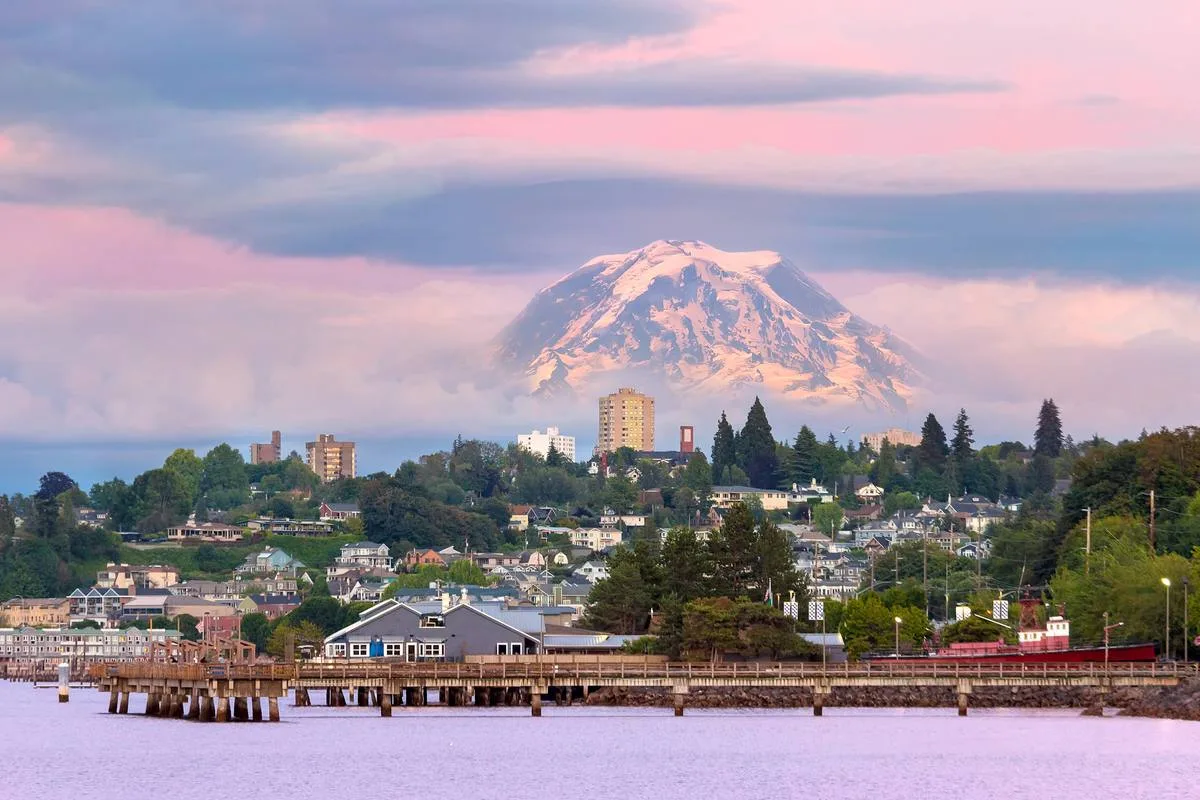
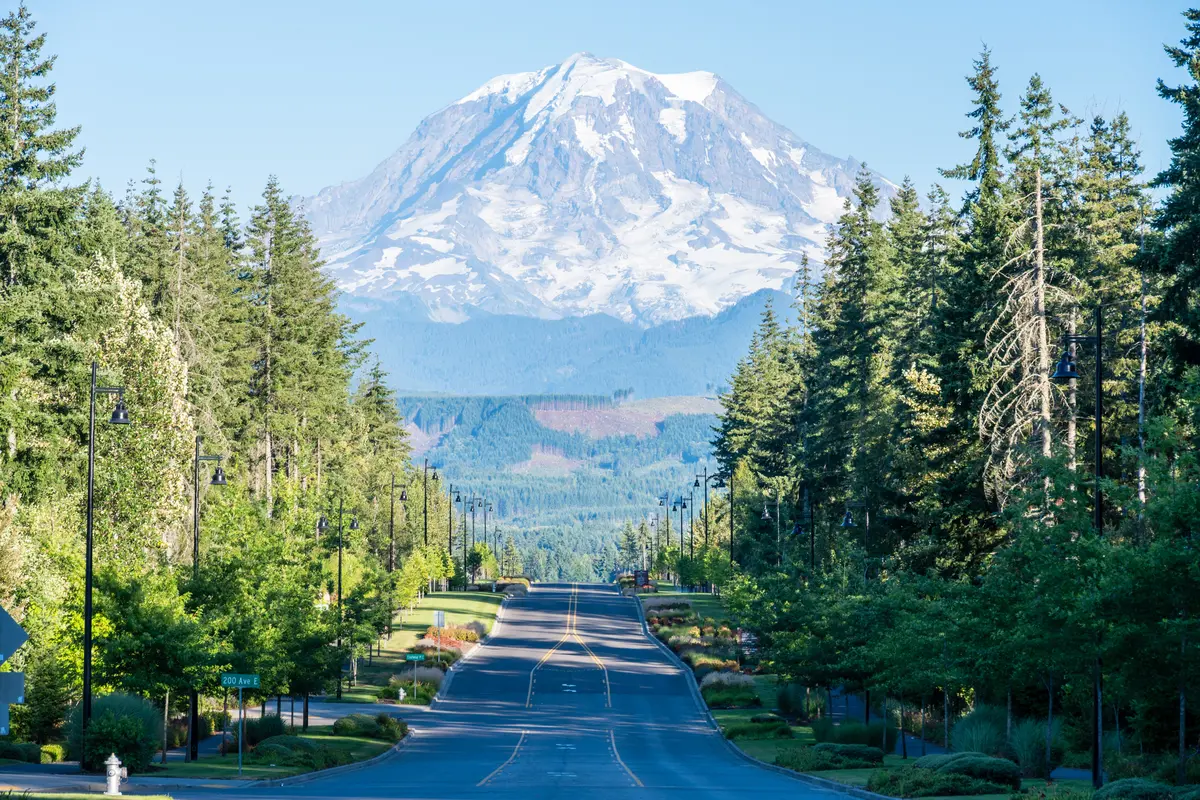
Orting is the 98th-largest incorporated city in Washington, a small town set against a dramatic Mount Rainier backdrop in the upper Puyallup River valley. For remote workers, the picture is honest: provider competition at this scale is limited, dedicated coworking does not exist in town, and the independent café scene has no named local spots in the city's data — coffee will mean a drive. WA-162 is the main route in and out. Sea-Tac is manageable for occasional flyers but not a quick trip. The $560,297 typical home price offers real value given the setting.
Orting is the right fit for remote workers who want a dramatic natural setting, a genuinely small-town pace, and the space and quiet that come with it — and who have made peace with a home-office setup and driving for most daily needs. It is not a practical choice for anyone who needs coworking infrastructure or a developed café scene as part of their regular routine.
In the South Sound, city size does most of the work for remote workers — larger cities tend to offer more provider competition, shared workspace options, and café variety, while smaller towns trade those conveniences for quieter surroundings and often lower price points. Before you commit to any address, confirm which internet providers actually serve that specific home.
Want to see what's for sale in these neighborhoods?Sign up for listing alerts — get notified when homes hit the market.
Which South Sound city has the strongest overall setup for remote workers?
Tacoma offers the most complete picture for remote workers: city-scale infrastructure that supports real provider competition, strong coworking access, a genuine independent coffee culture, and Sea-Tac close enough for frequent flyers — all at a home price that feels like a real bargain for what you get. If you need urban amenities and do not want to pay Seattle prices, Tacoma is the honest answer.
Which South Sound cities are best for remote workers who also fly frequently?
Fife and Sumner sit closest to Sea-Tac in terms of drive time, making airport runs genuinely convenient. Puyallup and Bonney Lake are also strong options for frequent flyers. The trade-off in smaller cities like Fife and Sumner is limited coworking infrastructure and a thin café scene — if those matter to your day-to-day routine, Tacoma gives you the airport access and the urban amenities together.
Are there South Sound cities where I should verify internet service before buying?
Yes — and this applies to every city on this list, but especially to smaller communities like Yelm, Orting, Sumner, DuPont, Fife, and Gig Harbor. Provider competition is shaped by population size, and smaller towns tend to have fewer options at a given address. Confirming which providers actually serve your specific property — not just the general city — is an essential step before you make an offer anywhere in the South Sound.
How does Olympia compare to the Pierce County cities for remote workers?
Olympia has a distinct identity that sets it apart from the Pierce County suburbs: it is a genuine small city with a walkable downtown, an independent café culture that includes well-regarded local roasters, and the services that come with being a state capital. The main trade-off for remote workers is airport distance — Sea-Tac is farther from Olympia than from most Pierce County cities, which adds up for frequent flyers. Lacey and Tumwater border Olympia and share some of its services, but they have a more suburban character and a thinner café scene.
Which South Sound cities suit remote workers on a tighter budget?
Yelm carries one of the lower typical home prices on this list and offers a genuine small-town setting, though its remote-work infrastructure is limited and the airport is a longer drive. Tacoma is worth a close look for budget-conscious remote workers who do not want to sacrifice urban services — its home price is notably accessible given how much infrastructure and café culture it offers compared to smaller cities in the region. Spanaway and Lacey also land in the more attainable range and suit buyers who are fully home-office based.
Tell us what you need help with and we'll connect you with local resources.
Todd Davidson
About the Author
Todd Davidson is the founder of The Move Genie, a premier digital resource offering in-depth city guides, neighborhood profiles, and localized market insights for communities nationwide. Drawing on an extensive background in home financing and real estate, he established the platform to streamline the relocation process, helping families make confident, data-driven decisions when comparing new areas.