
Most Californians who land in Snohomish for the first time describe the same odd cognitive dissonance: the home prices feel high until they do the math on what they left behind. Snohomish sits at the junction of U.S. Route 2 and State Route 9 on the Snohomish River, southeast of Everett and roughly 40 minutes north of Seattle. It is a small city — just over 10,500 people — that occupies a very specific niche in the Seattle metro: historic, slower-paced, and ringed by farms and river bottomland, yet close enough to Boeing's Everett factory and the broader I-5 corridor to function as a genuine daily commuter base. That combination of small-town feel and metro access is exactly what draws Californians who are done with density but not ready to disappear into rural Washington.
The economic backbone here is quieter than what most Bay Area or SoCal transplants are used to. The Snohomish School District and City of Snohomish itself are the primary local employers, but the vast majority of working residents commute to Everett or Seattle — to Boeing, to the tech corridor, to the regional employment hubs that keep the broader Puget Sound economy running. The school district carries an A- rating, which is a meaningful draw for families with school-age children relocating from competitive California districts. First Street's Historic Downtown, known regionally as the Antique Capital of the Northwest and listed on the National Register of Historic Places, gives the city an identity that runs deeper than a bedroom community — though that is, functionally, what it is for most of its working residents.
On cost of living, the headline number is that Snohomish registers roughly 31% above the U.S. national average, driven almost entirely by housing. For someone arriving from San Francisco or the broader Bay Area, that framing is nearly irrelevant — Salary.com's 2026 comparison puts Snohomish's overall cost of living approximately 44% below San Francisco. For Southern California transplants the gap is smaller but still meaningful, particularly once the income tax differential enters the calculation. Washington levies no personal state income tax on wages or salaries, and that single fact restructures household budgets in ways that offset a significant portion of the housing premium.
Whether you're making an offer on a place near Blackmans Lake or still weighing whether Snohomish makes more sense than Monroe or Lake Stevens, the sections below break down the real California-to-Snohomish numbers on taxes and home prices, what changes and what doesn't in your monthly budget, the cultural and practical adjustments Californians consistently underestimate, the housing market reality, and what daily life here looks like once the novelty of the river views wears off.

The Tax Math: What Leaving California Actually Does to Your Paycheck
The income tax difference between California and Washington is not subtle — it is one of the largest state-level tax gaps in the country. Washington levies no personal state income tax on wages or salaries. California's top marginal rate sits at 13.3% (a 12.3% base plus a 1% Mental Health Services Tax that kicks in above $1 million in income), the highest of any state in the nation.
For most households relocating to Snohomish, the practical effect is straightforward: every dollar of wage income you earn in Washington stays whole at the state level. A household earning $150,000 in California at an effective state rate of roughly 7–8% was sending $10,500–$12,000 a year to Sacramento. That money now stays in your account.
One New Wrinkle Worth Knowing
Washington's legislature passed a 9.9% tax on individual income above $1 million — Senate Bill 6346, enacted in 2026 and scheduled to take effect January 1, 2028. It faces expected legal challenges and is not yet in force. Most Californians relocating to Snohomish will not be in that bracket, but if you are, flag it for your tax advisor before the move.
Capital Gains and Investment Income
Washington taxes 7% on long-term capital gains above a $278,000 standard deduction for 2025, rising to 9.9% on gains above $1,000,000. California taxes capital gains as ordinary income with no preferential rate, so even with Washington's excise, most sellers of appreciated California real estate come out ahead. Washington also does not tax Social Security benefits; California taxes them for some filers. For anyone approaching retirement with a meaningful investment portfolio, the cumulative difference across these categories is worth modeling explicitly before you list your California home.
| Tax Category | California | Washington (Snohomish) |
|---|---|---|
| State income tax on wages | Up to 13.3% | None (through 2027; see SB 6346 above) |
| Capital gains treatment | Taxed as ordinary income | 7% on long-term capital gains above a $278,000 standard deduction for 2025, rising to 9.9% on gains above $1,000,000 |
| Social Security benefits | Taxable for some filers | Not taxed |
| State sales tax (base) | 7.25% | 6.5% (combined local rate reaches 9–10.4%) |
| Groceries / prescriptions | Mostly exempt | Exempt |
| Effective property tax rate | ~0.75% statewide avg (Prop 13 may lower yours) | 0.93% on current assessed value |
The sales tax picture deserves honest framing. Combined state-plus-local rates in the Snohomish County area typically reach 9–10.4% depending on jurisdiction — higher than what most Californians pay on taxable purchases. Groceries and prescription drugs are exempt, which softens the daily impact, but big-ticket purchases feel it.
The Property Tax Reality: Prop 13 Is Gone, and Here's What That Means
This is the part of the move that catches Californians most off-guard — not the income tax windfall, but the property tax reset. If you owned a home in California for more than a few years, Proposition 13 almost certainly kept your assessed value well below market. Many long-term California homeowners pay effective rates closer to 0.3–0.5% on a frozen assessed base, even though California's average effective rate runs around 0.75% statewide.
Snohomish's effective property tax rate is 0.93%, applied to current market value with no Prop 13–style cap. On a home purchased at the Zillow Home Value Index median of $891,252 (June 2026), that translates to roughly $8,288 in annual property taxes. For a Californian who spent the last decade paying $3,000–$4,000 a year on a home that appreciated to $1.2 million in assessed-frozen terms, that figure is a real adjustment.
The Honest Framing
The income tax elimination typically exceeds this property tax increase by a wide margin for most working households. A household earning $120,000 that previously owed California roughly $7,000–$8,500 in state income tax is likely coming out ahead even after absorbing the higher property tax bill — but the math is household-specific, and you should run it with real numbers before you sign.
Washington assesses property at 100% of market value, and assessments are updated regularly. There is no equivalent of Prop 13 to protect you from future increases if values rise — which, in the Snohomish market, they historically have. That is a long-term trade-off worth internalizing before you buy. For a full breakdown of how property taxes interact with the rest of Snohomish's cost picture, see the cost of living page.
Home Prices: What Your California Money Actually Buys Here
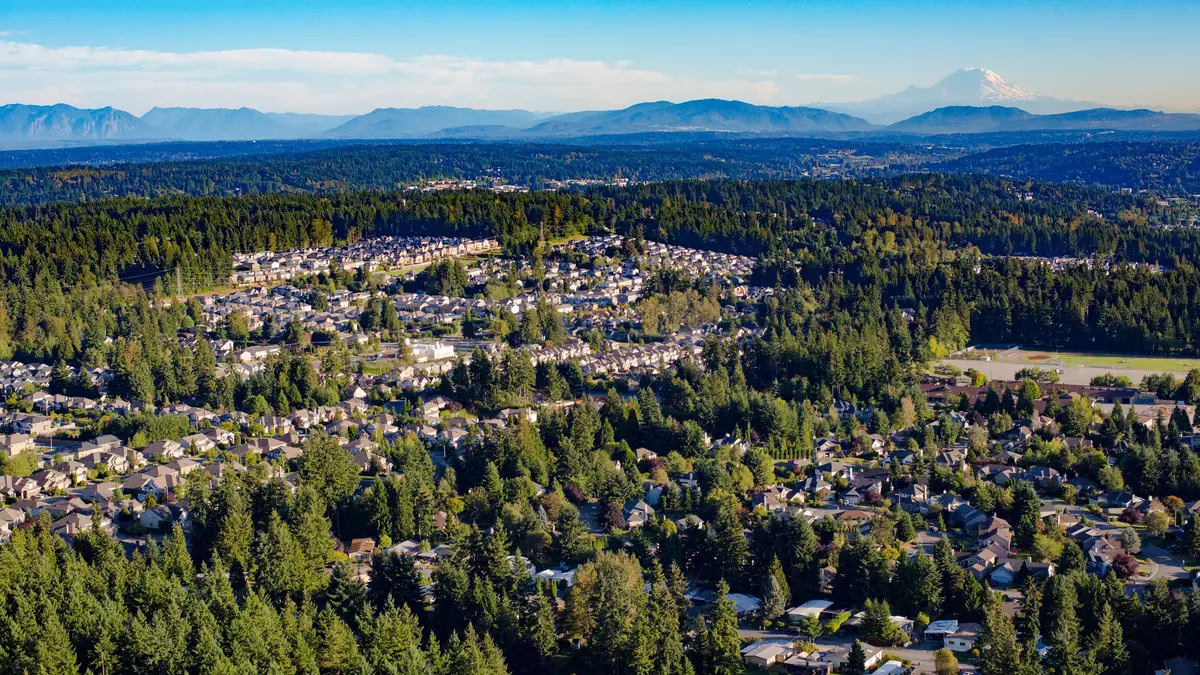
Snohomish is not cheap. The Zillow Home Value Index for the city stood at $891,252 as of June 2026, and that figure reflects a market where single-family homes with character — river views, acreage, historic construction — command a significant premium. This is not a place where Bay Area equity buys you a mansion; it is a place where it buys you a genuinely good home without the financial stress that came with it in California.
For context on what Californians are leaving: Bay Area medians in comparable suburban communities ran well above $1.2–1.5 million through the same period. Southern California suburban markets in the Inland Empire and Orange County ran meaningfully above $700,000–$900,000. Snohomish's median is not dramatically below many Southern California price points, but the income tax elimination, the square footage, and the lot sizes shift the real-dollar comparison considerably.
What the Market Looks Like on the Ground
Snohomish's housing stock skews toward older single-family homes — the Historic Downtown area and surrounding neighborhoods contain a notable concentration of late-Victorian and early-twentieth-century construction that appeals strongly to buyers coming from areas where that kind of architectural character commands a steep premium. Newer construction exists in areas like Highlands East and The Falls, but the lots are smaller and the character is more standard Pacific Northwest suburban.
The city is small enough that the market moves fast. Homes that are priced correctly and presented well in Snohomish do not sit. Californians accustomed to the competitive offer dynamics of the Bay Area will feel familiar here — contingency-waiving offers remain common in strong-demand price bands. What is different is the total purchase price: the same competitive energy plays out at lower absolute numbers, which changes the stakes on inspection and due diligence decisions. For more on how the buying process works in this market, see the first-time homebuyer page.
The Acreage Question
One thing Snohomish offers that most California suburban markets at equivalent prices do not: real land. The areas outside the Historic Downtown core — Machias, Cathcart, the Maltby corridor — include properties with multiple acres at prices that would buy a townhouse lot in most California markets. If land was the thing you dreamed about but couldn't reach in California, Snohomish's geography makes it genuinely possible. For a neighborhood-by-neighborhood breakdown of what each area looks and feels like, the best neighborhoods page goes deep on the distinctions.
Looking to buy in Snohomish? Estimate your payment.
Enter your numbers to see an estimated monthly mortgage payment.
Estimate only. Excludes HOA fees and mortgage insurance. The interest rate above is a starting point, not a quoted rate — replace it with your own to see real numbers. Insurance is a flat placeholder, not a Snohomish quote.
What Changes in Daily Life — and What Californians Get Wrong
The first six months in Snohomish produce a specific kind of surprise for California transplants: the quiet. Not just acoustically — the pace, the social density, the absence of the low-grade urban friction that most people from California metro areas stopped noticing until it was gone. First Street on a Tuesday afternoon is not the Castro or Abbot Kinney. That is the point for many people who move here. It takes some adjustment for others.
The Weather Recalibration
No one from Southern California is fully prepared for a Puget Sound winter — not the cold (it rarely drops below freezing for long), but the persistent overcast. From November through February, Snohomish gets weeks at a stretch where the sun is a rumor. People who moved from the Bay Area, where marine layer is already a known quantity, adapt faster. People from San Diego or the Inland Empire sometimes describe their first January as genuinely difficult. Buy a good rain jacket in October, not March.
Summer is the compensation: long Pacific Northwest evenings, the Snohomish River, Lord Hill Regional Park, the Centennial Trail, and a general outdoor culture that rewards the wait. The shoulder seasons — April through June, September through October — are frequently stunning and consistently underrated by people who haven't lived through one yet.
What You Give Up
Snohomish has independent character in abundance, but it does not have the restaurant density, the transit options, or the cultural programming of a California city. There is no light rail into Seattle from here — that drive on US-2 through Everett is your commute, and when traffic on the corridor backs up, it can stretch well past the 40-minute baseline. People who move here hoping to be car-free will be disappointed. People who knew they were trading transit access for a river town and a real yard generally do not regret it.
Routine care costs and health insurance premiums run noticeably below what most Californians were paying, though you will drive farther when specialist care is needed. The overall Snohomish cost-of-living index sits roughly 31% above the U.S. average — high by national standards, but still meaningfully below the California metro markets most transplants are leaving. Groceries, utilities, and childcare costs all land below what the Bay Area charges for the same.
Where People Actually Gather
In Snohomish, the social life tends to anchor around the Historic Downtown on First Street — the independent shops, the antique dealers, the occasional weekend market — and the parks. Blackmans Lake and Ferguson Park see a consistent Saturday morning crowd of families with kids and dogs. The Centennial Trail draws cyclists from across the county. If you are used to a third-place culture built around coffee shops and bars, you will find it here, just quieter and slower. That adjustment period is real; give it six months before you decide what you think.
The Full Cost Comparison: California vs. Snohomish at a Glance
The table below is designed for the specific question most California transplants are working through: not whether Snohomish is cheap (it isn't, by national standards), but whether the overall package represents a genuine financial improvement over a California metro baseline. For most working households, it does — sometimes dramatically so.
| Cost Factor | California Metro Baseline | Snohomish, WA | Direction for Most CA Transplants |
|---|---|---|---|
| State income tax on wages | Effective rate 5–13.3% depending on income | Zero (through 2027) | Significant improvement |
| Home price (median) | $1.2M+ (Bay Area); $700K–$950K+ (SoCal suburbs) | $891,252 (Zillow ZHVI, June 2026) | Lower than Bay Area; comparable to mid-tier SoCal |
| Effective property tax rate | ~0.75% statewide avg (often less under Prop 13) | 0.93% on current assessed value | Likely higher on a new purchase |
| Capital gains tax | Taxed as ordinary income (up to 13.3%) | 7% on long-term capital gains above a $278,000 standard deduction for 2025, rising to 9.9% on gains above $1,000,000 | Improvement for most sellers |
| Sales tax (combined) | 7.25–10.25% depending on city | 9–10.4% (Snohomish County area) | Roughly comparable; groceries exempt in WA |
| Overall cost-of-living index | SF: ~196; LA: ~170 (U.S. = 100) | ~131 (31% above U.S. average) | Significantly lower than Bay Area; below most SoCal metros |
| Social Security taxation | Taxable for some filers | Not taxed | Improvement, especially for retirees |
The headline takeaway: Snohomish is not a budget destination, but the California-to-Snohomish financial case is genuinely strong for working households — particularly those paying California's higher marginal income tax rates. The property tax reset is the honest counterpoint, and it is worth modeling precisely before you close.
For a closer look at how neighborhood character and geographic location within Snohomish affect the purchase decision, the neighborhoods page covers each area in detail. Schools, safety data, and parks each have their own dedicated pages linked throughout this guide for the Californians who want the full picture before making an offer.

Local Expert Takeaway: The California-to-Snohomish move makes the most financial sense for households earning enough that Washington's zero income tax meaningfully offsets the property tax reset — roughly, anyone who was paying more than $8,000 a year in California state income tax. The Snohomish River setting, the First Street Historic District, and the proximity to Lord Hill Regional Park and the Centennial Trail give you genuine quality-of-life infrastructure in exchange for accepting a smaller city and a real commute. The people who struggle are the ones who expected California density and Pacific Northwest prices to coexist. They don't — and that is, ultimately, why Snohomish is still attainable.
Quick Takeaways & FAQs
✅ Washington's zero state income tax on wages is the single largest financial benefit for most California transplants relocating to Snohomish — often worth $8,000–$15,000 or more annually depending on household income.
⚠️ California's Prop 13 protections disappear the moment you buy in Washington: Snohomish's 0.93% effective property tax rate applies to current assessed value, not a frozen base, which is a real budget adjustment for long-term California homeowners.
📍 Snohomish's Historic Downtown on First Street is listed on the National Register of Historic Places and sits at the heart of the city's community identity — it's the spot California transplants consistently say they didn't expect to love as much as they do by month six.
Does Washington really have no state income tax if I move to Snohomish?
How does Snohomish's home price compare to what I'd pay in the Bay Area or Southern California?
Will my property taxes go up when I move from California to Snohomish?
What do California transplants find hardest about adjusting to Snohomish?
Is Snohomish's overall cost of living actually lower than California, even though it's above the U.S. average?
Moving to Washington?
Tell us what you need help with and we'll connect you with local resources.
