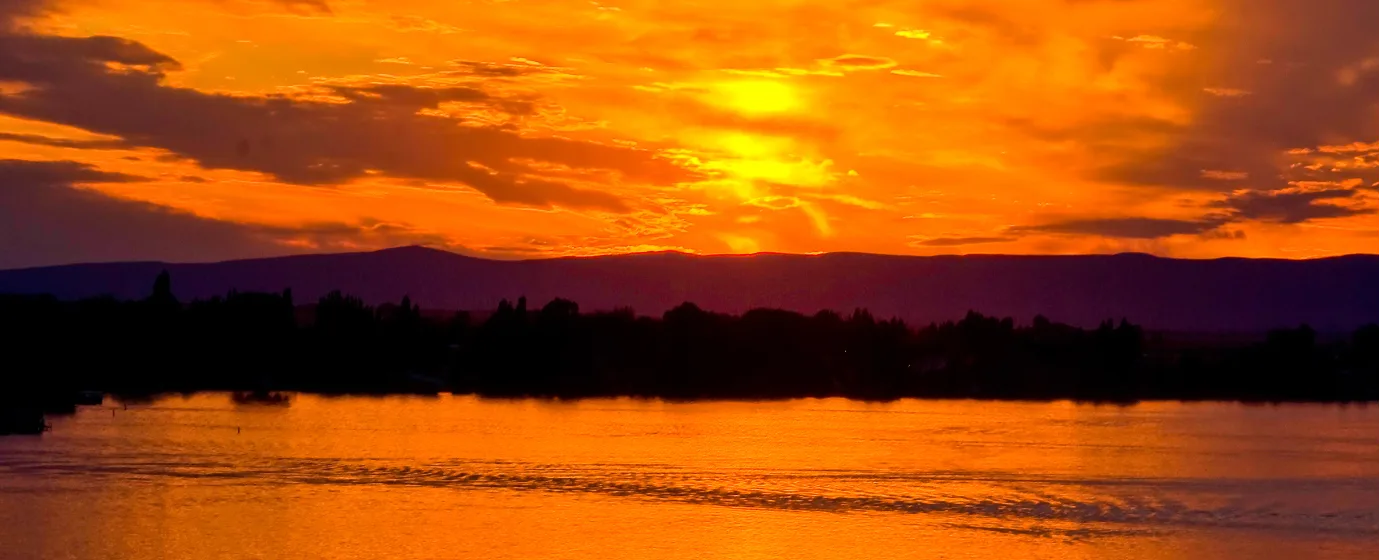
Most people who retire to Moses Lake didn't plan to. They came through on a road trip, or a son or daughter moved here first, or they got priced out of the Spokane suburbs and someone mentioned the lake. Then they looked at the numbers — a Zillow Home Value Index of $355,729 (May 2026), zero state income tax on Social Security, and a brand-new $225 million hospital that opened in March 2026 — and started doing the math more seriously. What they found surprised them: a working-class, agricultural city on an 18-mile natural lake that quietly checks several of the boxes that matter most in retirement.
The honest version of Moses Lake is this: it's not a resort town, and it doesn't pretend to be. Downtown is modest. The winters bring cold, dry winds off the Columbia Basin plateau, and summer temperatures regularly hit triple digits. But it sits at the intersection of I-90 and Highway 17, giving reasonable access to Spokane to the northeast and the Tri-Cities to the south, and Grant County International Airport handles Boeing flight-test operations, which means the runways are serious even if the commercial service isn't. The community leans practical and unpretentious — qualities that suit a lot of retirees better than a polished resort aesthetic does.
On a fixed income, the cost structure here works in your favor in ways that coastal Washington simply doesn't allow. Washington's no-income-tax status extends fully to retirement income streams, the effective property tax rate sits at approximately 0.98%, and the overall cost of living runs noticeably below the state average. The trade-off is an 8.5% combined sales tax and groceries that are taxable — real line items on a fixed budget. But for retirees arriving from California or the Seattle metro, the relief on housing and income tax typically more than offsets those friction costs.
Whether you're seriously considering a move or just running the numbers, the sections below break down Moses Lake's healthcare access, retiree tax picture, daily budget realities, walkability, downsizing options, and how it compares to nearby alternatives.
Why Retirees Are Choosing Moses Lake
The retirees who land here most comfortably tend to share a few traits: they own their next home outright or close to it, they're drawn to outdoor water access over walkable shopping, and they'd rather have lower taxes and more space than a curated downtown. At a Zillow Home Value Index of $355,729 (May 2026), Moses Lake lets many downsizers arrive mortgage-light — or mortgage-free — after selling in a pricier market.
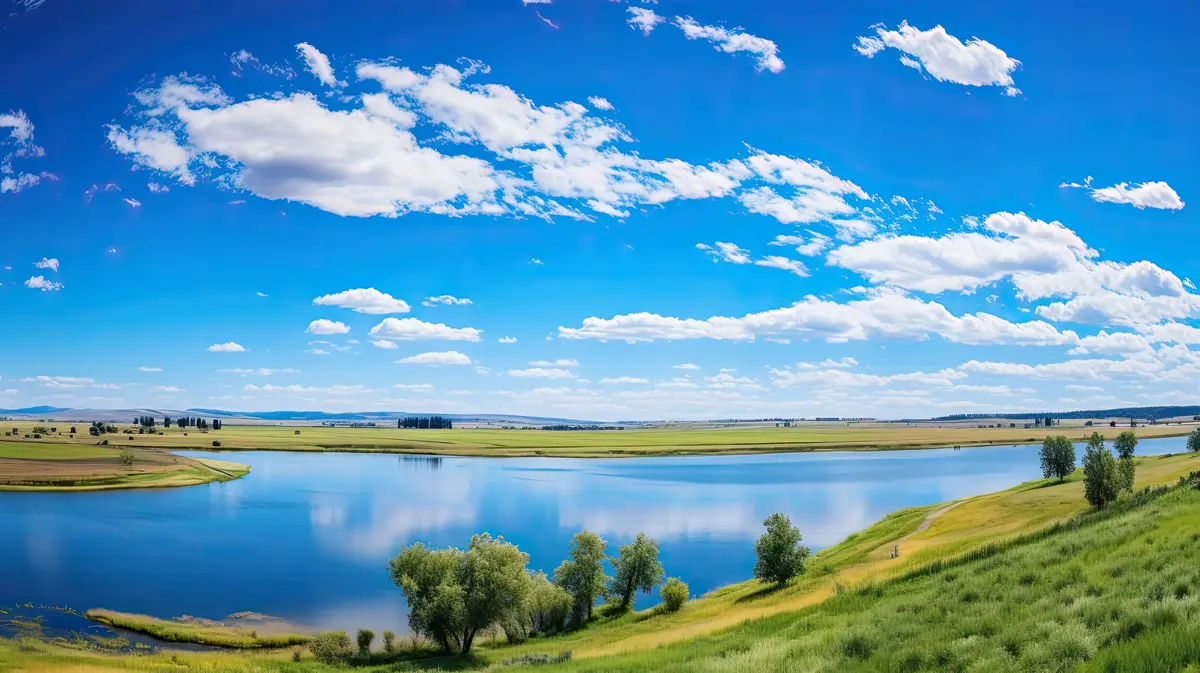
The 18-mile lake is the real anchor. Blue Heron Park, McCosh Park, and miles of shoreline give active retirees a genuinely different backdrop than the high-desert towns scattered across eastern Washington. People who fish, kayak, or simply want to wake up near water find that Moses Lake delivers without the price premium of Lake Chelan or the Tri-Cities waterfront.
Moses Lake is a harder sell for retirees who expect walkable errands, a dense arts scene, or proximity to a major airport with direct flights. If those things matter to you — or if you have a complex medical situation that requires frequent specialist visits — you'll want to weigh the 110-minute drive to Spokane carefully. The city suits retirees who are healthy, car-dependent by habit, and genuinely value affordability over amenity density. Retirees who move here expecting Wenatchee's boutique downtown or Spokane's medical depth sometimes find themselves back on the market within two years.
Healthcare & Medical Access in Moses Lake
A Brand-New Hospital, Right in Town
For a city of 27,000, Moses Lake's healthcare situation took a significant step forward in March 2026. The new Samaritan Hospital opened March 7, 2026, on a 55-acre campus at 2000 S. Clover Drive — a three-story, approximately 174,000-square-foot replacement facility funded in part by a $130 million bond that Grant County voters approved in 2023. This isn't a renovation; it's a purpose-built regional hospital with an expanded emergency department, added ICU capacity, and outpatient services — lab, imaging, rehabilitation, therapy — consolidated on the ground floor for easy access.
Samaritan Healthcare's specialty depth surprises most newcomers. The system currently offers 13 specialty service lines, including orthopedics, cardiology, gastroenterology, urology, pain management, robotic-assisted surgery, and diagnostic imaging. For routine and moderate-complexity retiree health needs, that coverage means most appointments stay local rather than becoming a half-day trip.
Where the Gaps Are
Level I trauma care, complex cardiac surgery, and subspecialty neurology are not available locally. Spokane — home to a full academic medical center and Level I trauma designation — is approximately 110 minutes by car. That's the honest backstop for serious emergencies, and it matters. Retirees managing active cancer treatment, advanced heart disease, or conditions requiring frequent specialist oversight should factor that drive into their decision-making, especially in winter when Highway 2 through the Cascades can slow travel.
For the majority of retirees who need reliable primary care, orthopedic follow-up, and occasional imaging, the new Samaritan campus makes Moses Lake more medically self-sufficient than it has been in decades. The previous facility was aging and constrained; this one was designed for the next generation of Grant County's population.
The Retiree Budget in Moses Lake
Washington's Tax Advantage Is Real
Washington levies no personal income tax — full stop. Social Security benefits, pension payments, IRA withdrawals, and 401(k) distributions all arrive at zero state tax cost. For retirees moving from states like Oregon, California, or Idaho (which tax retirement income), the savings are immediate and substantial.
Washington's capital gains tax, enacted in 2022, applies only to gains above a $278,000 annual standard deduction (as of 2025 — adjusted annually for inflation) and explicitly exempts real estate sales and transactions inside retirement accounts. The typical retiree drawing on Social Security and account withdrawals owes nothing under this tax. The same goes for the proceeds from selling a home before moving here — real estate is carved out entirely.
Property Tax and the Deferral Option
The effective property tax rate in Moses Lake runs at approximately 0.98% — moderate by Pacific Northwest standards and well below what homeowners pay in King, Pierce, or Snohomish counties. Washington also offers an income-based property-tax deferral program for qualifying seniors: rather than paying annually, eligible homeowners effectively borrow from the state and repay only when the home is sold or ownership changes. For retirees who are house-rich but cash-flow-sensitive, that option can meaningfully ease monthly pressure. See the full tax picture at the cost of living page.
The Sales Tax Trade-Off
The catch is an 8.5% combined sales tax (6.5% state plus 2% city, as of 2026). Unlike many states, Washington taxes groceries — a real and recurring cost on a fixed income. Retirees who shop frequently or who cook at home heavily will feel this more than those whose budgets are weighted toward services and housing. It's the structural trade-off of the no-income-tax model, and Moses Lake doesn't soften it.
Day-to-day costs for housing, dining, and services in Moses Lake run noticeably below the Washington state average. For most retirees arriving with equity from a higher-cost market, the budget math works favorably here — though it requires adjusting to the sales tax rhythm if you're coming from a state that exempts food.
Looking to buy in Moses Lake? Estimate your payment.
Enter your numbers to see an estimated monthly mortgage payment.
Estimate only. Excludes HOA fees and mortgage insurance. The interest rate above is a starting point, not a quoted rate — replace it with your own to see real numbers. Insurance is a flat placeholder, not a Moses Lake quote.
Walkability, Community & Staying Active in Moses Lake
The Walkability Reality
Moses Lake is a car-dependent city. Most errands — groceries, medical appointments, hardware — require driving, and the street grid between commercial corridors isn't built for walking. The flat terrain means that walking and cycling are physically easy; the land doesn't work against you. But without a car, daily life here would be genuinely difficult, and that's worth naming plainly before you downsize to one vehicle.
The exception is the lakefront. McCosh Park, Blue Heron Park, and the Japanese Peace Garden offer accessible, flat walking paths with water views, and on a weekday morning they draw a mix of retirees, dog owners, and early risers that functions as the city's informal social commons. If your walking goal is recreation rather than errands, Moses Lake delivers real quality.
Senior Community and Social Life
The Moses Lake Senior Center serves as the primary organized hub for retirees — offering fitness classes, social meals, day trips, and volunteer coordination. It draws a steady crowd and runs with genuine local investment. The Moses Lake Museum and Art Center hosts rotating exhibits and community events that give culturally inclined retirees a reason to get out midweek.
Volunteering opportunities are real here: Grant County PUD, community food banks, and the parks system all rely on retired volunteers, and the city is small enough that a new face becomes a known face quickly. What Moses Lake lacks in density it partially offsets in social accessibility — you're not anonymous at the senior center the way you might be in a larger city.
Six months in, many retirees who expected to miss city life find themselves genuinely adjusted to Moses Lake's pace. The ones who don't tend to miss the proximity to grandchildren in another city — not the city itself. That's a human-geography problem no amount of lake access solves, and it drives more outbound moves than any dissatisfaction with the town.
Right-Sizing: Downsizing in Moses Lake
The downsizing picture in Moses Lake is more practical than polished. There's no master-planned 55+ resort community with a golf course and a pickleball complex — that's Trilogy in Redmond or Sun City in the Tri-Cities, not Moses Lake. What exists here is a solid inventory of single-story ranch homes, patio-style homes with minimal yard maintenance, and manufactured homes on owned land — all priced well below what comparable square footage costs in western Washington.
As of May 2026, the local market carried approximately 5.93 months of residential inventory per Northwest Multiple Listing Service data — near the upper edge of a balanced market. That means negotiating room. Retirees who move here aren't competing in a frenzied seller's market; they can take time to find the right single-level layout without feeling rushed.
What to Look For
Ranch-style homes built in the 1970s through 1990s are the backbone of the downsizer inventory — many are larger than needed but single-story and on flat lots, which matters more as mobility becomes a consideration. Established residential streets near Knolls Vista tend to have more mature landscaping and quieter surroundings; corridors closer to Broadway and Crossroads carry more traffic but easier access to medical services and shopping.
Condo inventory exists but is limited compared to larger cities. Manufactured-home communities on rented or owned lots are a legitimate option for retirees who want low maintenance and minimal capital outlay, though resale liquidity in that segment is narrower. If a true lock-and-leave lifestyle is the goal — one where you can leave for three months without worrying about a lawn — options are available but require patience to find the right fit.
The honest inventory gap: Moses Lake does not yet have a purpose-built active-adult community in the Sun City or Del Webb mold. If that specific lifestyle — resort amenities, age-restricted socialization, organized programming on campus — is what you're after, Kennewick and the Tri-Cities metro have more developed options in that category.
Moses Lake vs Nearby Retirement Destinations
| City | Cost vs Moses Lake | Primary Hospital | Walkability | Senior Living Depth | Overall Retirement Fit |
|---|---|---|---|---|---|
| Moses Lake | Anchor | New Samaritan Hospital (2026), 13 specialties | Car-dependent; flat terrain; good lakefront paths | Modest — ranch homes, limited condos, no 55+ resort | Value Nature Strong for budget-focused, outdoors-oriented retirees |
| Ephrata | About the same | No hospital; Moses Lake (Samaritan) is the nearest | Very car-dependent; smaller commercial core | Thin — primarily single-family stock | Quiet Ultra-quiet small-town feel; healthcare access requires Moses Lake drive |
| Quincy | Noticeably cheaper | No hospital; Moses Lake or Wenatchee for acute care | Very car-dependent; limited services | Very thin — agricultural town, minimal senior infrastructure | Value Entry-level pricing; tradeoff is very limited local services |
| Soap Lake | Cheaper | No hospital; closest is Moses Lake | Very car-dependent; small town | Minimal; some retirees drawn by mineral lake lore | Quiet Niche appeal; suitable only for highly self-sufficient retirees |
| Wenatchee | Pricier | Central Washington Hospital — broader specialty depth | More walkable downtown core; hilly terrain | Better — more senior communities and services | Views Families Stronger amenities and healthcare; costs more |
| Kennewick / Tri-Cities | Pricier | Trios Health system; multiple hospitals in metro | Moderate; suburban layout, more retail density | Strong — active-adult communities, Del Webb-style options | Luxury Commuter Best 55+ community depth in the region; higher price floor |
If healthcare depth is your primary concern, Wenatchee and the Tri-Cities both offer more specialist concentration than Moses Lake — though Moses Lake's new Samaritan Hospital has meaningfully closed that gap for routine and moderate-complexity care.
On pure cost, Quincy and Soap Lake undercut Moses Lake, but both require driving to Moses Lake or beyond for anything beyond the most basic medical needs — a real limitation for retirees whose health situation is evolving. Ephrata sits in a similar position: peaceful, affordable, but medically dependent on Moses Lake.
For retirees who specifically want a purpose-built active-adult community with resort amenities and organized on-site programming, the Tri-Cities metro is the honest answer in this region. Moses Lake is the better call for retirees who want to own a comfortable single-story home near water, keep housing costs low, and have a credible local hospital — without paying the premium that Wenatchee or Kennewick now commands.
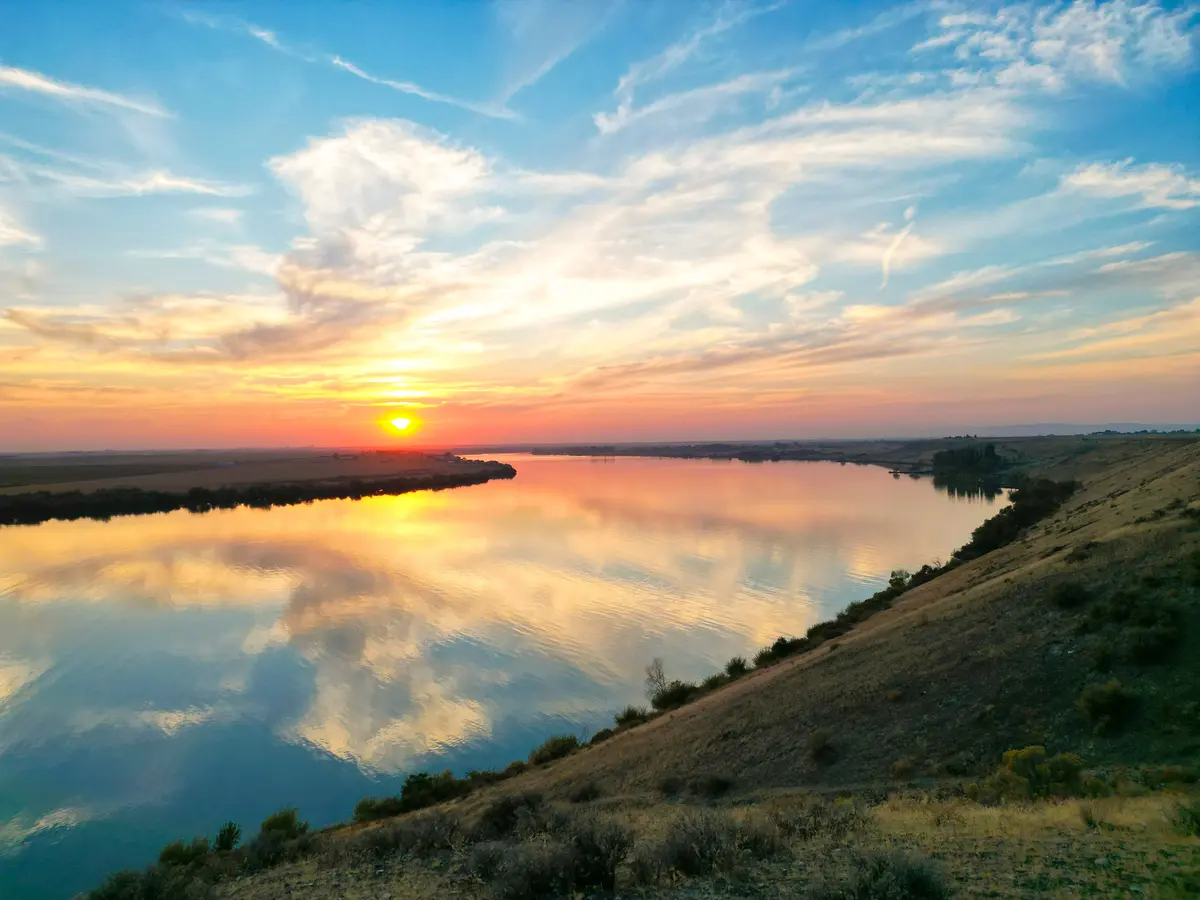
Local Expert Takeaway: Moses Lake's retirement case rests on three things that rarely come together in Washington: a median home price well below $400,000, zero state tax on Social Security and pension income, and a brand-new regional hospital with 13 specialty lines that opened in March 2026. The lakefront paths at McCosh Park and Blue Heron Park give active retirees a genuine daily routine, and the Senior Center is small enough that you'll know people within a month. The catch is honest: this is a car-dependent, working-class city with modest downtown amenities and an 8.5% sales tax on groceries. Retirees who come in clear-eyed about those trade-offs — and who value financial headroom over walkable café culture — tend to stay.
Quick Takeaways & FAQs
✅ Washington's no-income-tax policy means Social Security, pension, and IRA withdrawals all land at zero state tax cost — a clean and lasting advantage for retirees on fixed income.
⚠️ Moses Lake is fully car-dependent for daily errands, and serious medical emergencies require a roughly 110-minute drive to Spokane's Level I trauma center — a real planning consideration as health needs evolve.
📍 The brand-new Samaritan Hospital at 2000 S. Clover Drive opened March 2026 with expanded ICU capacity and 13 specialty service lines, giving Moses Lake more local medical depth than most cities its size in eastern Washington.
Is Washington State a tax-friendly state for retirees?
What hospital serves Moses Lake retirees, and is it adequate?
Are there 55+ or active-adult communities in Moses Lake?
What is the property tax situation for retirees in Moses Lake?
How does Moses Lake compare to Wenatchee or the Tri-Cities for retirement?
Moving to Washington?
Tell us what you need help with and we'll connect you with local resources.
