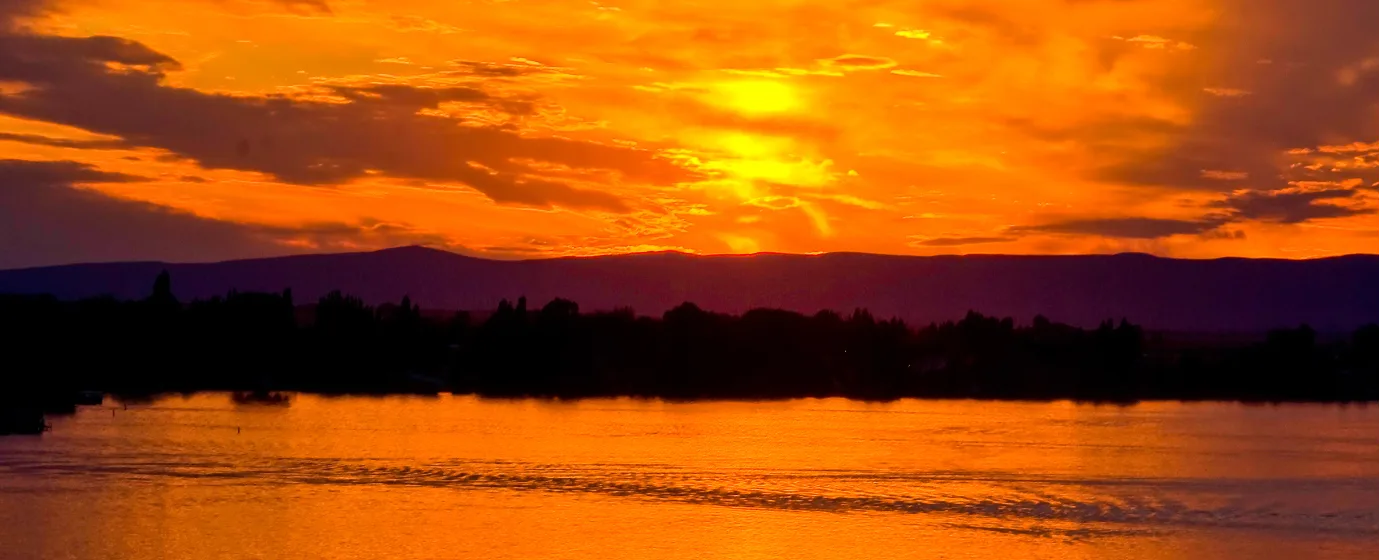
What Is Living in Moses Lake, Washington Like?
Maybe you've been priced out of the Tri-Cities or the west side of the Cascades and someone mentioned Moses Lake as a place where your money goes further. Maybe Boeing brought you here, or the Port of Moses Lake's aerospace corridor caught your attention. Either way, the thing most newcomers notice first isn't the lake itself — it's the sky. Moses Lake sits on the Columbia Plateau, where the sun shines roughly 300 days a year and the horizon actually has room to breathe. The city anchors itself along Interstate 90 roughly 105 miles west of Spokane and 180 miles east of Seattle, with State Route 17 running the north-south backbone through town. That geography shapes everything: who moves here, where they work, and what the tradeoffs look like.
The economic engine here is more varied than most small cities its size. Boeing and AeroTEC use Grant County International Airport for flight testing — the runways are long enough to handle any aircraft on earth, which is genuinely unusual for a city of 27,000. REC Silicon manufactures polysilicon for the solar industry. Grant County PUD keeps some of the lowest electricity rates in the state, which quietly drives industrial recruitment. Big Bend Community College runs aviation training programs found almost nowhere else in Washington. The Moses Lake School District holds a C rating, according to Niche — worth reading about in detail on the schools page before drawing conclusions. The median age here is 32.3 years, making Moses Lake noticeably younger than most of Washington, a fact you feel immediately at Surf 'n Slide Waterpark on a summer Saturday or walking through McCosh Park.
The cost of living index sits at 87.1 — meaningfully below the U.S. average of 100 — which is a real number in a state where affordability is increasingly theoretical in most metro areas. Housing, in particular, stays well below what comparable space would cost closer to Seattle or even Spokane. For a fuller breakdown of what you'll actually spend here, the cost-of-living page covers rent, groceries, utilities, and taxes in detail. Day-to-day life runs on a car, but the lake itself — all 18 miles of it — is the kind of amenity you don't fully appreciate until you're kayaking on a Tuesday evening after work. The city has grown from roughly 10,000 residents in the mid-1980s to nearly 27,000 today, and the infrastructure is visibly trying to keep pace: a second lake crossing is among the City Council's top 2026 priorities.
Whether you're seriously considering a move or just starting to research the area, the sections below break down Moses Lake's economy and employers, what daily life feels like on the ground, the current housing market, commuting realities, and where locals spend their weekends.
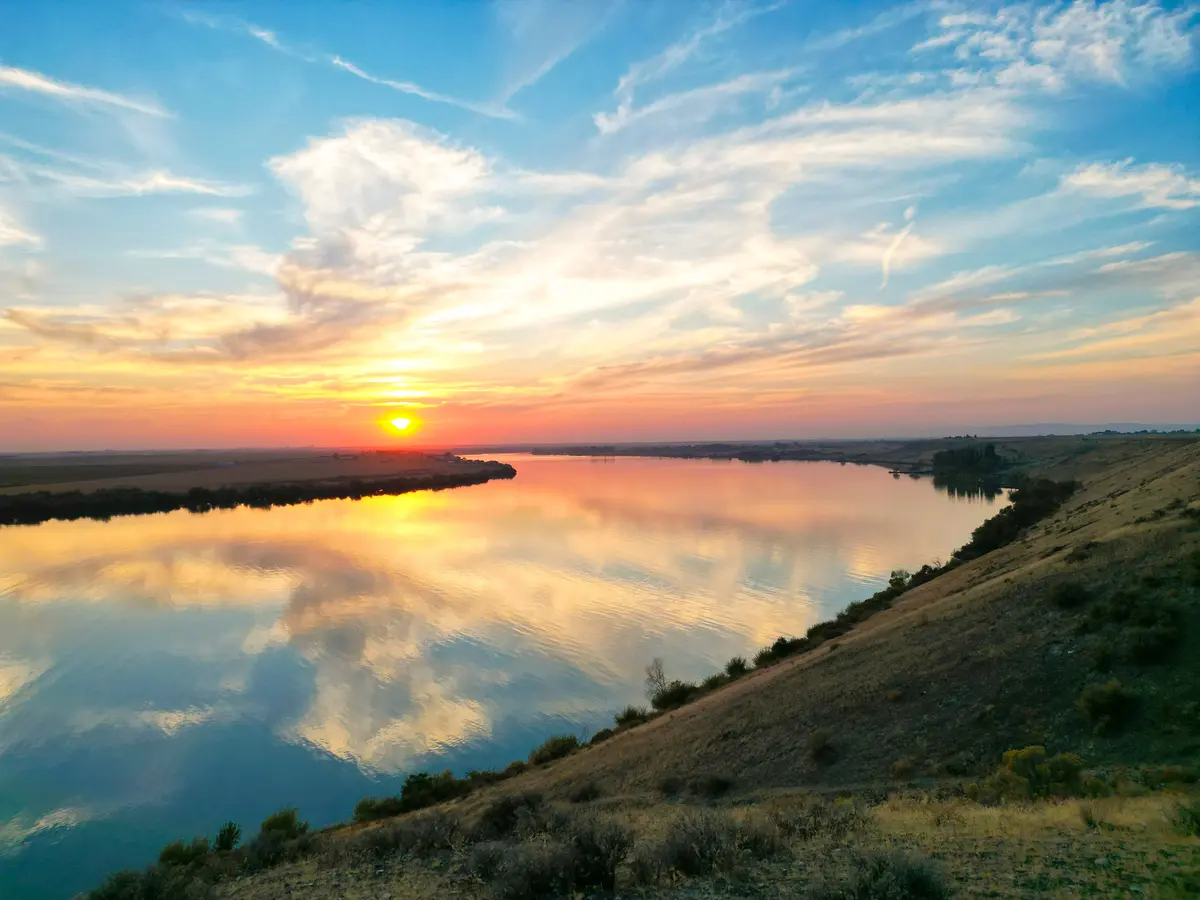
Moses Lake at a Glance
Looking to buy in Moses Lake? Estimate your payment.
Enter your numbers to see an estimated monthly mortgage payment.
Estimate only. Excludes HOA fees and mortgage insurance. The interest rate above is a starting point, not a quoted rate — replace it with your own to see real numbers. Insurance is a flat placeholder, not a Moses Lake quote.
Why Are People Moving to Moses Lake?
The Real Pull
The short answer is affordability plus aerospace jobs — but that undersells it. Moses Lake is the only place in Washington where you can work on Boeing flight-test programs, live on a natural lake, and still afford a house on one income. That combination is pulling people from both directions on I-90.
The Port of Moses Lake and Grant County International Airport function as a serious aerospace hub. Boeing and AeroTEC conduct flight testing here because no other civilian airport in the state offers runways capable of handling any aircraft size. That infrastructure creates a steady pipeline of engineering, logistics, and support roles that don't exist in comparably sized cities.
Industrial Depth Beyond Aerospace
REC Silicon's polysilicon plant represents the kind of advanced manufacturing that doesn't follow typical Pacific Northwest patterns — this is solar-supply-chain work in a city most people associate with wheat fields and water sports. Grant County PUD's hydropower-driven electricity rates are among the lowest in the nation, which continues to attract energy-intensive industrial tenants to the Port's properties.
The Port adopted Tax Increment Financing in 2024 to fund the Columbia Basin Rail project, with a new rail spur onto Port properties slated for construction in 2025. Being seven minutes from I-90 while also gaining rail access positions Moses Lake for continued industrial growth in ways that smaller Columbia Basin towns simply can't match.
Who's Actually Coming Here
| Buyer / Mover Type | Why Moses Lake Works | Best Fit |
|---|---|---|
| Aerospace & tech workers | Boeing/AeroTEC flight-test roles; Port industrial corridor | Commuter Tech |
| Families priced out of larger markets | Sub-$360K median home price; young city demographics | Families Value |
| First-time buyers | Entry-level homes exist; market near balanced; no bidding-war frenzy | First-Time Value |
| Remote workers seeking affordable space | Cost-of-living index of 87.1; lake access; low utilities | Views Nature |
| Renters stepping toward ownership | More attainable price points than western Washington | Renter First-Time |
| Retirees wanting low-cost, sunny climate | 300 sunny days; affordable housing; outdoor recreation | Quiet Nature |
The downtown Catalyst Center, opened by the Chamber of Commerce in mid-2025, signals something newer: an effort to grow a local entrepreneurial layer on top of the industrial base, with five startup tenants including an art gallery and a spin studio already in residence.
The Honest Tradeoff
Moses Lake is not a city where you stumble into a job — you move here because a specific employer or role brought you, or because the affordability math demanded it. The local job market is real, but it's narrow. If your field is tech startups, creative industries, or finance, you'll likely be remote-working and using Moses Lake's cost structure as the advantage.
What Daily Life Feels Like in Moses Lake
The Geographic Reality
Moses Lake the lake sits at the center of Moses Lake the city in a way that's almost impossible to ignore. The 18-mile natural lake literally wraps around parts of the residential fabric, which means some neighborhoods have water views and some don't — and that divide matters more than most neighborhood guides let on. Blue Heron Park and McCosh Park give everyone access regardless of where they live, but the experience of evening walks or morning runs near the water varies enormously by which side of town you're on.
State Route 17 splits the city's commercial and residential character north to south. W Broadway Ave carries most of the retail and dining activity, and Pioneer Way is where you'll find services. The city doesn't have a dense walkable downtown in the western Washington sense — most errands run on wheels.
The Seasonal Surprise
Newcomers from west of the Cascades consistently underestimate the summer heat. Moses Lake's Columbia Plateau location means July and August temperatures regularly reach the mid-to-upper 90s, and 100-degree days aren't rare. The same geography that delivers 300 sunny days also delivers those temperatures with very little humidity to soften them. Locals adapt — early-morning lake swims, Surf 'n Slide Waterpark for the kids, evening activity instead of afternoon. But if you're moving from the coast expecting mild Pacific Northwest summers, month three will be an adjustment.
Where Families Actually Gather
McCosh Park on the lakefront is the community's living room on summer weekends — kayaks launching, kids on the playground, families on the grass. The Japanese Peace Garden offers something quieter: a genuinely well-maintained public space that feels out of scale with a city this size, in the best possible way.
For coffee and conversation, Psalms 23 Coffee on E Broadway Ave has become a consistent morning stop. Mom and Pop's Diner on W Broadway Ave anchors the breakfast-and-lunch crowd. ENZO Italian Restaurant on S Pioneer Way handles date nights. Moore Brewing Co on W Broadway Ave brings the evening crowd together, especially on weekends.
What People Miss When They Leave
Most people who move away from Moses Lake mention two things: the lake access and the lack of traffic. You can get across town in under ten minutes on most days. That's a quality-of-life detail that sounds small until you've spent years commuting. The trade-off is that the entertainment and dining options are limited compared to Spokane or the Tri-Cities — a fact that matters more at month eighteen than it does at month one.
The Moses Lake Museum & Art Center provides genuine cultural programming for a city this size, and Big Bend Community College brings events and educational access that fill some of the gap. But if you're accustomed to a dense urban restaurant-and-bar scene, you'll notice the absence.
The Moses Lake Housing Market Right Now
Where Things Stand
The Zillow Home Value Index for Moses Lake was $355,729 as of May 2026 — down 2.2% year-over-year after the pandemic-era run-up. That figure represents a real correction from peak pricing, and it's brought the market back toward something resembling equilibrium. Some areas command more than others, but the city-wide picture is what drives the headline affordability story relative to most of Washington.
Inventory has normalized dramatically. Fewer than 30 homes were for sale in Moses Lake two years ago — a genuine crisis for buyers. As of mid-2026, roughly 210–260 active listings are on the market, approaching the historic norm of 250–350. Grant County sat at approximately 4.72 months of supply in early 2026, placing it near the 4–6 month range that the Northwest Multiple Listing Service considers balanced territory.
Market Pace
Homes were going to pending in around 12 days as of May 2026 — fast enough that serious buyers need to be ready to move, but not the frantic multiple-offer environment of 2021–2022. The sale-to-list ratio sits at 98.8%, meaning offers very close to asking price are what's clearing the market.
That pace reflects a market where demand is real but no longer desperate. Sellers can still expect near-asking-price results on well-priced homes. Buyers have meaningful choices again and time to think — a substantial shift from the inventory crisis of recent years.
The Bigger Picture
For a full breakdown of what the Moses Lake market means for your budget — rent ranges, property tax rate context, and how costs compare across categories — the cost-of-living page covers those numbers in detail. If you want to understand which specific neighborhoods and areas hold which price profiles, the best neighborhoods page is the right starting point.
Moses Lake Neighborhoods
Moses Lake has several distinct areas — each with its own character and appeal. Here’s a breakdown to help you narrow down where to focus your home search.
🏡 Knolls Vista
Knolls Vista is one of Moses Lake's more established residential areas, with a mix of mid-century and newer ranch-style homes on the west side of town. It suits families and buyers who want established tree cover and proximity to schools without paying a lake-view premium.
🏠 Sage Bay
Sage Bay sits near the water and attracts buyers who want lake adjacency without the price tag of direct waterfront. The neighborhood has a relaxed, outdoor-oriented character that draws people who plan to spend weekends on the water more than they'll spend evenings at restaurants.
🌳 Sage Vista/Park Orchard
This area on the quieter side of the city offers newer construction popular with parents of school-age children. Buyers here tend to want newer homes with manageable lots in a less congested part of town.
🏘 Marina Drive
Marina Drive is where proximity to the lake becomes a genuine daily reality — the neighborhood sits close enough to the water that the lake is part of the morning routine rather than a weekend destination. It attracts buyers who specifically want that access built into their commute path.
🏔 Skyline Acres
Skyline Acres occupies higher ground that earns its name with elevated views across the basin. The neighborhood suits buyers who want a sense of space and separation from the commercial corridors, with a quieter residential atmosphere that longtime residents tend to stay in once they arrive.
🌆 Potato Hill Estates
Potato Hill Estates has a semi-rural character at the edges of the city — larger lots, more distance between neighbors, and a feel that suits buyers who want the Moses Lake employment access without giving up the open-space quality of country living.
Pros & Cons of Living in Moses Lake
The Pros
- Below-average home prices for Washington state with a large natural lake for boating and fishing
- strong aerospace/manufacturing job base anchored by Boeing and the Port of Moses Lake
- short
- easy commute times for most residents
- abundant sunshine and mild precipitation for outdoor recreation
The Cons
- Crime rates run notably above national and state averages
- especially property crime
- school district posts below-average state test proficiency scores
- hot
- dry summers and cold winters typical of the high desert climate
Getting Around & Commuting in Moses Lake
The I-90 Reality
Moses Lake is an Interstate 90 city. That highway is the reason Boeing does flight testing here, the reason the Port of Moses Lake functions as a logistics hub, and the reason people commute to jobs that don't exist locally. I-90 access is genuinely excellent — the Port sits seven minutes from the on-ramp, and most residential neighborhoods aren't far behind.
Within the city, getting around is fast by any reasonable standard. You can cross Moses Lake in ten minutes on most days. The internal road network doesn't have a single dominant chokepoint the way larger cities do, though the Highway 17/Broadway corridor handles a disproportionate share of daily traffic and can back up during school hours and at the end of shift changes near industrial employers.
The Commute Math
| Destination | Typical Drive | Notes |
|---|---|---|
| Grant County International Airport (Port) | 7–12 min | I-90 corridor; minimal congestion |
| Ephrata (Grant County seat) | 15–20 min | SR-17 north; light traffic |
| Quincy | 25–30 min | SR-28 northwest |
| Ellensburg | 55–65 min | I-90 west; mountain pass not a factor at this stretch |
| Spokane | approximately 110 min | I-90 east; long-haul commute, not sustainable daily |
| Seattle | 3+ hours | I-90 west over Snoqualmie Pass; seasonal pass conditions apply |
The Spokane commute — roughly 110 minutes each way — is the one that surprises people. A handful of residents run it a few days a week for high-value roles, but it's not a daily commute anyone sustains comfortably. Moses Lake works best when your job is here or within the Columbia Basin corridor.
Getting Around Without a Car
Moses Lake has a local transit system, but frequency and coverage are limited enough that a car is a practical necessity for most daily routines. Sidewalk coverage is uneven outside the core commercial corridors, and the distances between residential areas and services don't lend themselves to on-foot access in the way a denser city would. If car-free living is a priority, Moses Lake will present real friction.
The Airport Question
Grant County International Airport handles cargo and aviation industry traffic at a scale that exceeds what you'd expect from a city this size, but it doesn't offer commercial passenger service. Spokane International Airport is the nearest option for catching a flight, which means any air travel involves that 110-minute drive first — a planning reality that catches newcomers off guard when they first need to book a trip.
What Locals Know About Timing
The Yonezawa/Highway 17 intersection is on the city's active improvement list for 2026 — a roundabout project that signals the city understands where friction exists. If you're evaluating a home near that corridor, the construction timeline is worth tracking before you commit to a route-dependent daily routine. The planned second lake crossing — a new bridge — would meaningfully reshape north-south connectivity once funded and built, but that remains a planning priority rather than a near-term construction project.
Schools in Moses Lake
Families relocating to Moses Lake have public, private, and higher-education options nearby. Here’s a quick overview.
🎓 School District
Moses Lake School District serves K–12 students across Moses Lake and the surrounding area. Rated C (source: Niche.com).
🏆 Graduation Rate
The 4-year high-school graduation rate here is approximately 84.5%.
📚 Higher Education
Washington’s public universities — the University of Washington, Washington State University, and Western Washington University — offer four-year degrees statewide, with a network of 34 community and technical colleges (SBCTC) providing two-year and workforce programs.
🌐 Online Learning
University of Washington Continuum College and Washington State University Online offer fully accredited online degrees for remote learners across the state.
Safety in Moses Lake
A quick look at how Moses Lake compares on the numbers that matter most when weighing a neighborhood or a move.
🛡 Violent Crime
Approximately 3.94 per 1,000 residents.
🔒 Property Crime
Approximately 42.37 per 1,000 residents.
Compared to the FBI’s most recent national data (2024), Moses Lake’s violent crime is above the national average (about 3.6 per 1,000), and property crime is above the national average (about 17.6 per 1,000).
Against Washington as a whole, Moses Lake’s violent crime is somewhat above the state average, and property crime is about one and a half times the state average (Bureau of Justice Statistics, Crime Known to Law Enforcement, 2024 (tables 2 and 3)).
Crime rates can vary a lot within a single city, so the citywide numbers above are only a starting point. Some neighborhoods in Moses Lake run well below these averages, while others run higher — the kind of block-by-block detail that matters most when you’re actually choosing where to live. The full guide below breaks it down neighborhood by neighborhood.
Working in Moses Lake
Moses Lake’s largest employers span several industries — here are some of the anchors of the local job market.
💼 Boeing
Aerospace flight test
🏭 REC Silicon
Polysilicon manufacturing
🏛 Grant County PUD
Public utility
💼 Port of Moses Lake/Grant County International Airport
Aviation & logistics
🏥 Samaritan Healthcare
Healthcare
Parks & Recreation in Moses Lake
Some of the outdoor spaces that shape everyday life in Moses Lake.
🌱 Moses Lake (18-mile natural lake)
🌱 Blue Heron Park
🌱 McCosh Park
🌱 Japanese Peace Garden
🌱 Moses Lake Museum & Art Center
Moses Lake residents don’t have to go far for green space — spots like Moses Lake (18-mile natural lake) and Blue Heron Park are part of everyday life here, whether that’s a morning walk, a weekend hike, or just somewhere to unwind outside. The full guide below covers more of what Moses Lake has to offer for parks and outdoor recreation.
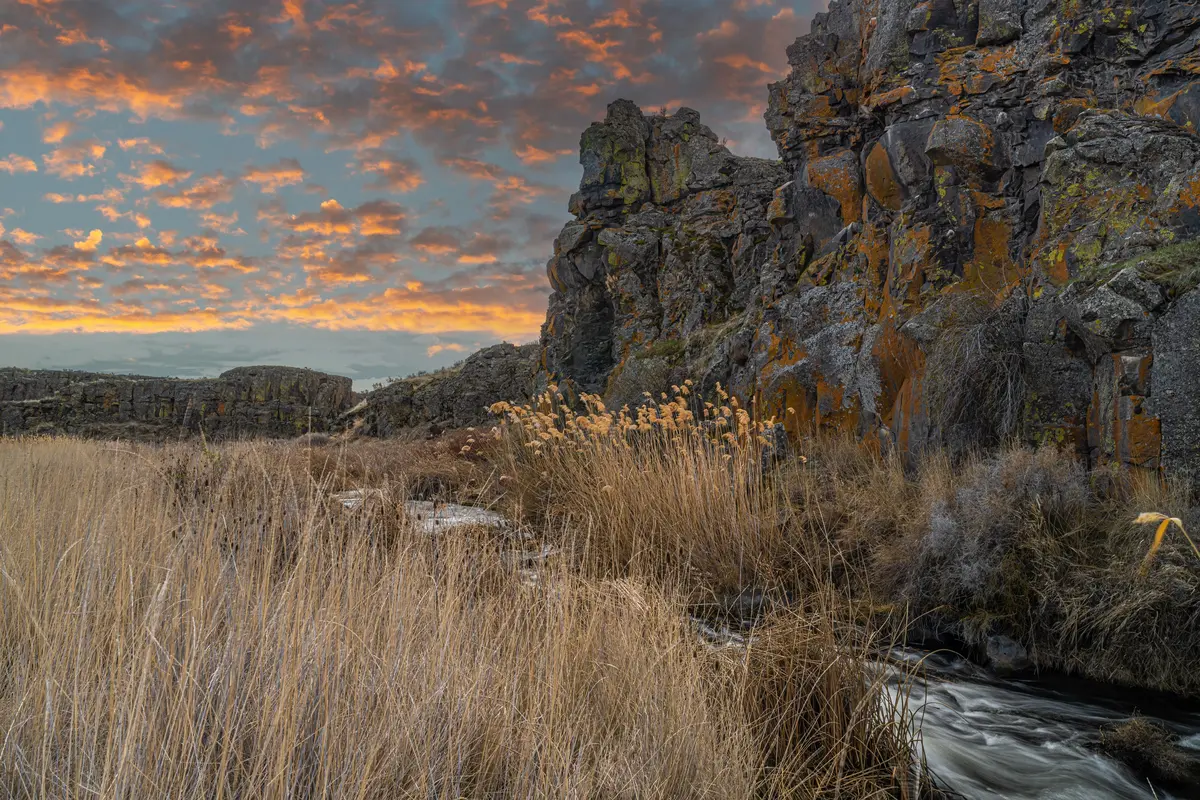
Retiring in Moses Lake
Moses Lake draws retirees for its balance of amenities, outdoor access, and cost. Here’s what to weigh.
🌤 Climate
Moses Lake sits on the Columbia Plateau with roughly 300 sunny days per year and very low humidity — a genuine draw for retirees from the rainy west side of the Cascades. Winters bring cold temperatures and occasional snow, but the Columbia Basin's semi-arid climate means far less precipitation than western Washington. Summer heat in July and August routinely reaches the mid-90s, which requires some adaptation for newcomers.
🍴 Lifestyle
The 18-mile lake anchors outdoor life for retirees — fishing, paddling, and lakeside walking are all accessible from public parks. The Japanese Peace Garden near the lake offers a quiet, maintained space for daily walks. The Moses Lake Museum & Art Center provides cultural programming, and the downtown area is in an early revitalization phase with the Catalyst Center bringing new energy to Broadway.
🏚 55+ Communities
Moses Lake has active-adult and senior housing options appropriate for a city of its size, ranging from independent living communities to assisted care facilities. The city's affordability and sunny climate make it increasingly attractive to retirees from higher-cost Pacific Northwest markets. For specific community names and healthcare access, the retiring page covers those details in full.
✈ Getting Around
A personal vehicle is essential in Moses Lake — the city is compact enough that most errands take under fifteen minutes, which is a genuine quality-of-life advantage for older residents. Spokane International Airport, about 110 minutes east on I-90, handles commercial flights. Grant County International Airport is nearby but does not offer scheduled passenger service.
🏛 Washington Taxes for Retirees — What to Know
- No state income tax — Washington does not tax personal income, so Social Security, pensions, and 401(k)/IRA withdrawals are all untaxed at the state level. There is no state return to file and no retirement exclusion to claim — the rate is simply zero.
- Military and public pensions — Because there is no income tax, military retirement pay and public-employee pensions are untaxed at the state level along with everything else.
- Sales tax is the tradeoff — The state sales tax is 6.5%, and local add-ons bring the combined rate in Moses Lake to 8.5% (Washington State Department of Revenue, Q3 2026 local sales & use tax rate table, July 2026). Groceries and prescription drugs are exempt.
- Property taxes, with senior relief — The effective property tax rate is roughly 0.9%. Homeowners 61+ (or unable to work due to disability, or a qualifying disabled veteran) who own and occupy their home may qualify for a reduction. Income limits are set against each county’s median household income, so the threshold differs by county — check with your county assessor. A separate deferral program is available for those who don’t qualify for the exemption.
- Capital gains tax — but not on retirement income — Washington taxes 7% on long-term capital gains above a $278,000 standard deduction for 2025, rising to 9.9% on gains above $1,000,000. Retirement accounts and real estate sales are both exempt. It therefore does not reach ordinary retirement income or the sale of a home.
- Estate tax — the one to plan for — Unlike most no-income-tax states, Washington has its own estate tax. For deaths on or after July 1, 2026, the exemption is $3 million with graduated rates topping out at 20%. Retirement accounts count toward the taxable estate, so long-time homeowners with sizable balances can cross the line without expecting to.
- No inheritance tax — Washington has no inheritance tax, and no gift tax.
- WA Cares payroll premium — Working Washingtonians pay 0.58% of gross wages into the WA Cares Fund, the state long-term care program, with no income cap. It applies to W-2 wages, so retirees who have stopped working do not pay it — but anyone relocating while still employed will see it. The private-insurance opt-out closed at the end of 2022 and is not available to new applicants; the remaining exemptions are narrow (living outside Washington, military spouses, certain visa holders, and veterans with a 70%+ service-connected rating).
- The Oregon border effect — Oregon has no sales tax, so Washington residents near the river — Vancouver, Camas, Washougal, Longview — often cross over for large purchases. Washington use tax technically applies to goods brought back for use in-state, though it is rarely enforced on ordinary personal purchases.
Tax laws change frequently and individual situations vary. This is general information, not tax advice — always consult a qualified Washington tax professional or CPA for personalized retirement tax planning.
Weekends & Local Favorites in Moses Lake
The Lake, First and Always
The 18-mile lake is the weekend. Kayaking, paddleboarding, fishing, wakeboarding — it's all here, and the access points at McCosh Park and Blue Heron Park mean you don't need a lakefront home to use it. Summer weekends fill the shoreline fast; locals learn that arriving early beats arriving right.
Surf 'n Slide Waterpark draws families from across the Columbia Basin during July and August — it's the kind of regional draw that puts Moses Lake on the map for people in Quincy, Warden, and Soap Lake. On summer weekends, the park traffic adds meaningful volume to the Yonezawa corridor, which is worth knowing if you're routing around it.
Food and Drink
The dining scene is honest about its scale — you're not in Spokane — but the options that exist are genuinely good. Mom and Pop's Diner on W Broadway Ave is the kind of breakfast spot that earns its name: real portions, familiar menu, consistent crowds. ENZO Italian Restaurant on S Pioneer Way handles sit-down dinners without the drive to a larger city. Moore Brewing Co on W Broadway Ave has become the social anchor for the craft-beer crowd, with check-ins running through spring 2026 confirming it's still drawing regulars. For a morning coffee, Psalms 23 Coffee on E Broadway Ave opened in July 2024 and has built a loyal following in a short time.
Culture and Community
The Moses Lake Museum & Art Center punches above its weight for a city this size, with rotating exhibits and programming that reflects the area's agricultural and aviation history. The Japanese Peace Garden — a genuine point of civic pride — sits near the lake and offers the kind of quiet, maintained public space that feels like a gift from a previous generation of city planners.
Downtown is in a recognizable early-growth phase. The Catalyst Center, opened by the Chamber of Commerce in mid-2025, houses five startups including an art gallery — a small but real signal that the city is trying to build cultural density from the ground up, not just wait for it to arrive. Whether that effort takes hold is one of the more interesting open questions about Moses Lake's next decade.
Day Trips and Regional Pulls
Soap Lake, about 20 miles north on SR-17, draws people for its mineral waters and its distinctly odd, beloved character. Quincy's music festival draws crowds from across Eastern Washington in summer. A network of wildlife refuges and pothole lakes sits just south of town — habitat that rewards early-morning visits with extraordinary birdwatching. If you need the full urban experience, Spokane is the realistic day-trip destination: close enough for a long day, far enough that it stays a day trip.
Top Things Locals Say About Moses Lake
The best intel about a city comes from the people who actually live there. Here’s what Moses Lake residents say when newcomers ask the questions everyone’s thinking.
“I assumed Moses Lake would feel like a stopgap — somewhere we'd stay a couple years before moving back toward a bigger city. Three years in, we're not leaving. The lake is right there, the drive across town is ten minutes, and the summer evenings are genuinely hard to beat. Nobody warned me about July being 100 degrees, though.”
— Recent Moses Lake home buyer
“What's the most surprising thing about living in Moses Lake?”
The summer heat catches almost everyone from west of the Cascades off guard. You expect the Pacific Northwest and you get the Columbia Plateau — 95-degree days in July that go on for weeks. Once you build your life around early mornings on the lake and evenings outdoors, it's fine. But month one in August is a genuine culture shock if you moved from the coast.
“What do locals love most about Moses Lake?”
The lake access is the honest answer. You can kayak on a Tuesday evening after work in ten minutes from most neighborhoods. McCosh Park is genuinely excellent — maintained, active, with enough room that it never feels crowded outside of major summer weekends. And the commute within town is almost laughably short compared to what people came from. Getting anywhere in the city in under fifteen minutes doesn't get old.
“What should newcomers to Moses Lake know?”
State Route 17 at Yonezawa is the intersection you'll learn to time carefully — it backs up during shift changes and school hours in ways the rest of the city doesn't. The planned roundabout improvement is in the works, but that's a future project. Also: Spokane is 110 minutes away, not a quick run. Newcomers consistently underestimate that distance until their first time needing a specialty store or a concert and realizing it's a serious half-day commitment.
“Can you live in Moses Lake without a car?”
Technically possible; practically very difficult. The local transit system provides regional bus service, but frequency is limited and most residential areas require longer walks than the sidewalk coverage supports comfortably. The commercial corridors along Broadway and Pioneer Way have the best on-foot access, but the gap between where people live and where services sit makes car-free living a real challenge. If eliminating car ownership is a priority, Moses Lake will push back on that.
Cities Near Moses Lake
Other communities near Moses Lake worth a look — each with its own character and price point.
| City | Distance | Best For | Vibe | Median Rent | Median Buy |
|---|---|---|---|---|---|
| Ephrata | 8 mi | Budget buyers, county services access | Small, quiet, government-adjacent | $1,300 | $320,000 |
| Quincy | 27 mi | Agriculture workers, data center jobs | Rural, tight-knit, industrial edge | $1,350 | $340,000 |
| Warden | 15 mi | Maximum affordability, rural lifestyle | Very small, agricultural, no-frills | $1,200 | $290,000 |
More Helpful Guides for Moses Lake
Going deeper on Moses Lake? Our blog series covers everything from first-time buying to retiring here — explore the guides below.
Local Expert Takeaway: Moses Lake's value proposition is real, but it's specific: you come here because the lake, the aerospace jobs, or the cost structure brought you, and then you find out the city has more going on than you expected. The combination of a balanced housing market near $355,000, an 18-mile lake out the back door, and a genuine industrial employment base at the Port makes Moses Lake one of the few places left in Washington where a middle-income household can still buy a house without a heroic down payment. The catch is that Spokane is 110 minutes away and Seattle is a half-day drive — this is not a commuter suburb of anywhere. If that suits your life, you'll stay longer than you planned.
Quick Takeaways & FAQs
✅ Grant County International Airport's flight-test corridor — home to Boeing and AeroTEC — creates aerospace employment that almost no other city of 27,000 in the country can match.
⚠️ Spokane is roughly 110 minutes away and Seattle is over three hours, meaning Moses Lake works best when your job is local or fully remote — it is not a practical commuter city for either.
📍 The City Council's top 2026 infrastructure priorities include a second lake crossing and a Highway 17 roundabout at Yonezawa — if you're buying near that corridor, track those timelines before you close.
Is Moses Lake, WA a good place to live?
What is the median home price in Moses Lake, WA?
What are the major employers in Moses Lake, WA?
How far is Moses Lake from Seattle and Spokane?
What is there to do in Moses Lake, WA on weekends?
Helpful Links for Moving to Moses Lake
Moving to Washington?
Tell us what you need help with and we'll connect you with local resources.
