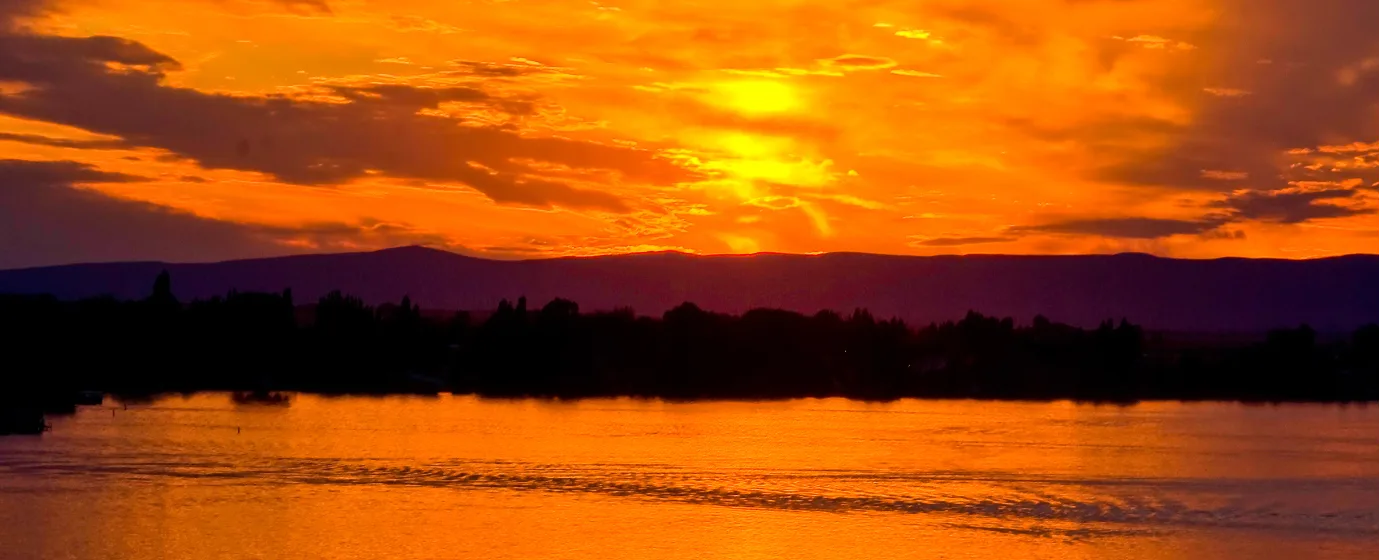
Maybe you've been priced out of the Sacramento suburbs. Maybe remote work finally gave you permission to leave the Bay Area. Maybe someone mentioned that a house in Moses Lake costs less than a used car in the South Bay. Whatever brought you here, the number that stops most Californians cold is the home price: the typical home value in Moses Lake is $355,729 (Zillow Home Value Index, May 2026). That figure isn't a typo, and it isn't a fixer-upper in a flood zone. It's what a move-in-ready house on a real street in a real community looks like when you step outside California's coastal pricing bubble. Moses Lake sits in the high desert of South Central Washington, straddling Interstate 90 about two hours east of the Cascades, built around an 18-mile natural lake with over 120 miles of shoreline — and it operates on a fundamentally different economic logic than anywhere you've lived in California.
The city's economy runs on aerospace, agriculture, and clean energy. Boeing uses Grant County International Airport for flight testing. REC Silicon manufactures polysilicon here. Grant County PUD — the public utility — powers the region with hydroelectric generation from the Columbia River's Priest Rapids and Wanapum dams, delivering electricity at roughly 6.15 cents per kWh after a modest rate adjustment in April 2026, which is about one-third the national average. The Moses Lake School District holds a C rating, according to Niche — more on that on the schools page — and the city of roughly 27,000 draws a mix of young working families, agricultural workers, and Boeing-adjacent professionals who want lake access without Puget Sound prices.
The cost of living runs approximately 14% below the Washington state average and lands near the national average — a jarring contrast if you're arriving from Los Angeles, San Diego, or any Bay Area zip code. Groceries and gas track close to what you'd pay in the Pacific Northwest broadly, but utilities will genuinely surprise you. Health insurance premiums run noticeably below what you were paying in California, though you will drive farther for specialist care. The full cost-of-living breakdown covers utilities, groceries, and transportation in detail. The one category where Moses Lake is modestly higher than California on a rate basis — not a dollar basis — is property tax, and that distinction matters enough that the whole next section unpacks it.
Whether you're deciding between Moses Lake and staying put, or you've already accepted the job at Boeing and just need to understand what you're walking into, the sections below break down the home price and tax comparison, what your California equity actually buys here, the lifestyle shift you should expect, the honest downsides, and what Californians consistently say after their first year.
The Home Price Gap: California vs. Moses Lake
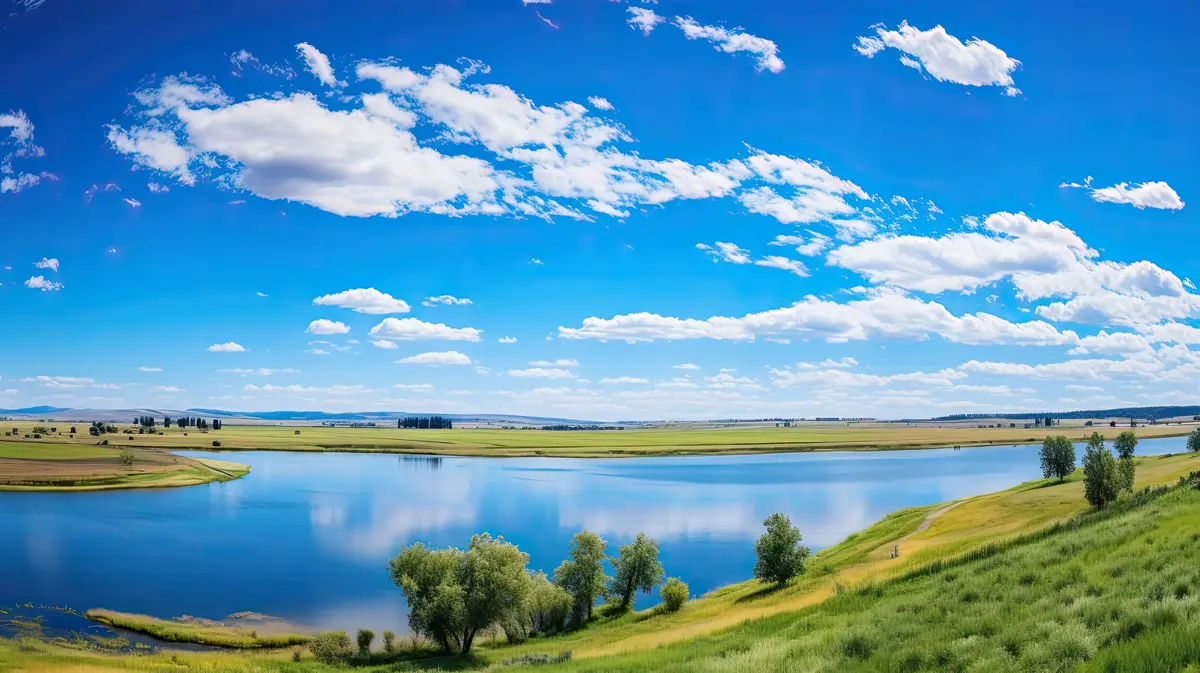
California's statewide median home price sat at approximately $785,000 as of early 2026. Moses Lake's typical home value, per the Zillow Home Value Index for May 2026, is $355,729. That's not a modest discount — it's a structural repricing of what a house means.
In practical terms: the California median buys you roughly two Moses Lake homes with cash left over. The entry point in Moses Lake for a detached single-family home with a yard runs well below that city-wide figure for older construction on the south and east sides of town, while newer builds and lake-adjacent properties push higher. For neighborhood-by-neighborhood character, the neighborhoods guide goes deeper on what each area looks like on the ground.
| Metric | California (Statewide) | Moses Lake, WA |
|---|---|---|
| Typical home price (2026) | ~$785,000 | $355,729 |
| Effective property tax rate | ~0.76% | ~0.98% |
| State income tax (wages) | Up to 13.3% | 0% (wages exempt) |
| State base sales tax | 7.25% | 6.5% (state base) |
| Capital gains tax rate | Up to 13.3% (ordinary income) | 7% above ~$278K; real estate fully exempt |
| Residential electricity rate | ~30+ cents/kWh (statewide avg) | ~6.15 cents/kWh (Grant County PUD) |
The property tax rate in Moses Lake is modestly higher than California's effective rate — approximately 0.98% versus roughly 0.76% statewide in California. On a $355,729 home, that higher rate is applied to a dramatically lower base, so the annual tax bill lands far below what most Californians pay. For the exact dollar figures, the cost-of-living page has the breakdown.
What Your California Equity Actually Buys
If you're selling a home in the Bay Area, Los Angeles, or San Diego, your equity check may cover a Moses Lake purchase outright — or leave you with a substantial down payment and a mortgage payment that feels almost implausible by California standards.
The market in May 2026 carried roughly 5.93 months of inventory, putting it near the upper edge of a balanced market. Home values dipped approximately 2.2% year-over-year as of that same month. For a California buyer arriving with equity and no chain to manage, that inventory level means you're not walking into a bidding war — you have time to look at multiple properties and negotiate.
One thing to understand before you make an offer: Moses Lake's market is smaller and thinner than anything you've transacted in. A $50,000 price swing is a much larger percentage move here than it would be in a California suburb. Work with someone who knows the specific streets, not just the zip code.
The Tax Picture: What Washington Actually Changes
Washington has no state income tax on wages or salaries. Full stop. For most Californians moving here for work — at Boeing, REC Silicon, Grant County PUD, or remotely — that means the state income tax line on your W-2 goes to zero, compared with California's rates that can reach 13.3% at the top marginal bracket.
One significant development for high earners: Washington signed ESSB 6346 into law in March 2026, imposing a 9.9% income tax on household income above $1 million, effective January 1, 2028. If your household income stays below that threshold — which describes the vast majority of people relocating to Moses Lake — this change doesn't affect you.
Capital Gains: A Major Difference for Sellers
California taxes capital gains as ordinary income at rates up to 13.3%, with no preferential treatment for long-term gains. Washington's capital gains tax applies only to long-term gains above approximately $278,000 (the 2025 indexed threshold) at 7%, rising to 9.9% above $1 million. Critically for real estate transactions: gains from directly held real estate are fully exempt under Washington's capital gains tax. If you're selling investment property in California and reinvesting here, that distinction is worth a conversation with a CPA before you close.
Sales Tax and the Daily Math
Moses Lake has a combined state and local sales tax rate of 8.5%, which applies to most goods — slightly above California's 7.25% state base rate, though local add-ons in California counties often push their effective rates higher than that base. What Washington doesn't tax is groceries — unprepared food is exempt from sales tax statewide, which matters for a family's monthly budget in a way that compounds quietly over the year.
The overall tax picture for a median-income household moving from California to Moses Lake is clearly favorable — particularly on income. The catch, if there is one, is that Washington funds public services through higher sales taxes and property taxes rather than income tax, so the savings aren't pure arbitrage. They're a restructuring of when and how you pay.

The Electricity Advantage You Didn't See Coming
Grant County PUD delivers electricity to Moses Lake at roughly 6.15 cents per kWh for residential customers — about one-third the national average and far below what most California utilities charge. That rate reflects the region's access to hydroelectric generation from the Priest Rapids and Wanapum dams on the Columbia River.
Even after a 3.5% rate increase approved by PUD commissioners in January 2026 and effective April 1, 2026, the rate remains dramatically below state and national averages. For context: if you're coming from PG&E territory in Northern California or Southern California Edison, you've likely been paying four to five times this rate per kilowatt-hour.
What That Means in Practice
Running central air conditioning through a Moses Lake summer — and summers here are genuinely hot, regularly reaching the mid-90s and pushing into triple digits during heat events — costs a fraction of what cooling a California home costs. Heating through a cold high-desert winter is similarly cheap. For households with electric vehicles, the math gets even more favorable: charging at home in Moses Lake is one of the lowest-cost EV ownership scenarios in the western United States.
This isn't a minor line item. Californians who track their first year of utility bills here consistently describe it as one of the most tangible quality-of-life improvements — not because it's glamorous, but because the savings show up reliably, every month, without any lifestyle adjustment required.
Looking to buy in Moses Lake? Estimate your payment.
Enter your numbers to see an estimated monthly mortgage payment.
Estimate only. Excludes HOA fees and mortgage insurance. The interest rate above is a starting point, not a quoted rate — replace it with your own to see real numbers. Insurance is a flat placeholder, not a Moses Lake quote.
Lifestyle Shift: What California Didn't Prepare You For
Six months in, almost every Californian says some version of the same thing: "I didn't realize how much I was carrying until I stopped carrying it." The commute, the cost anxiety, the constant optimization of where to live versus where to work — Moses Lake doesn't ask for most of that. But it does ask for other things.
The Summer Payoff
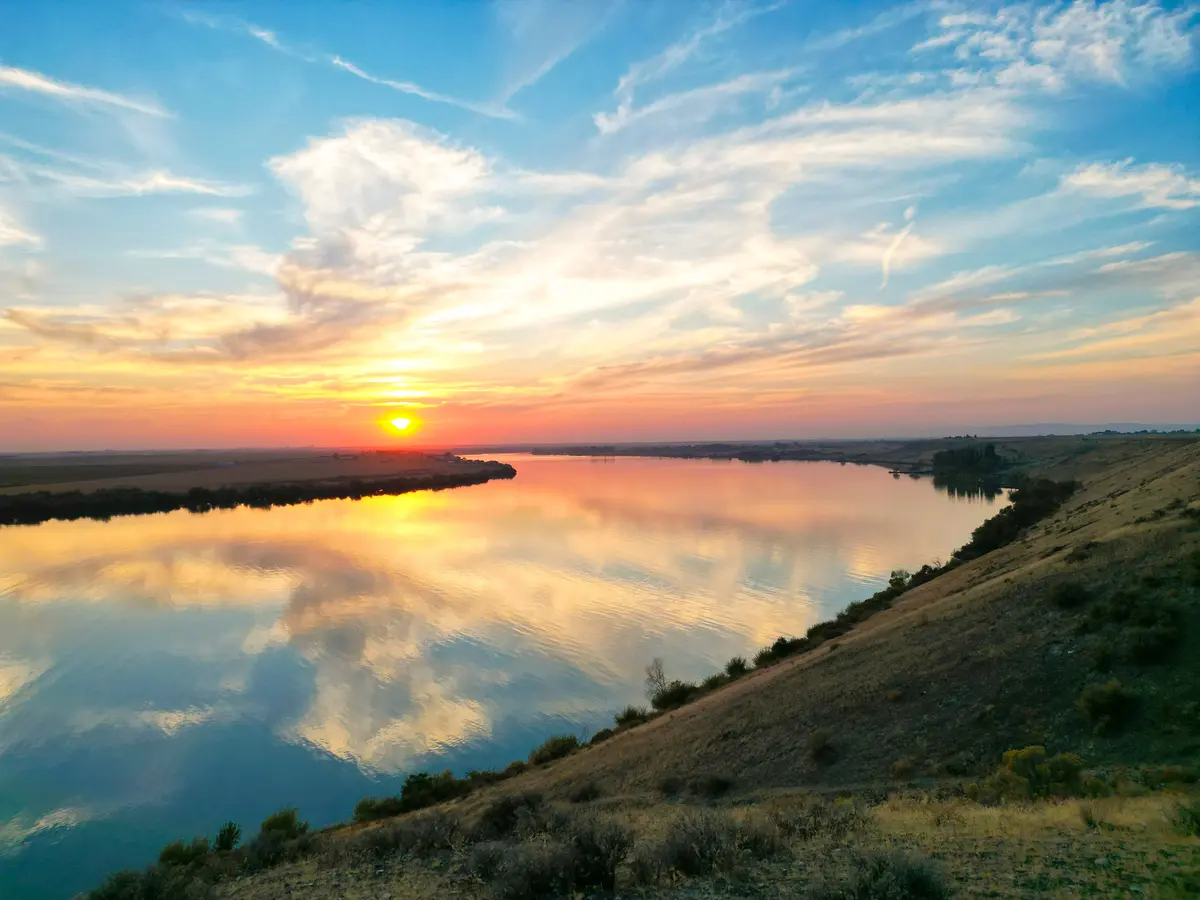
The 18-mile lake is the reason a lot of people stay. Blue Heron Park and McCosh Park give you waterfront access without a membership fee. Surf 'n Slide Waterpark draws families with kids through the summer. The Japanese Peace Garden near the lake's edge is one of those local landmarks that takes newcomers by surprise — a quiet, carefully maintained space that locals have used for decades. On a July evening, the lake is legitimately stunning, and it's yours in a way that California's coastline hasn't been for most people in a generation.
What You Give Up
The honest answer is: a lot of what made California feel urban. Moses Lake has independent cafés, a microbrewery on W Broadway Avenue (Moore Brewing Co), and the Moses Lake Taproom on W Valley Road for a local craft beer scene that punches above the city's size. The Moses Lake Museum & Art Center provides a cultural anchor. But there's no Trader Joe's — the nearest is a significant drive — and the restaurant and entertainment density of even a mid-sized California city simply isn't replicated here.
Specialty medical care means driving. Certain professional services operate on a smaller scale. If you have children in elite travel sports programs, the distances to competition and the WIAA's tournament structures will require planning that California's denser metro sports networks didn't.
The Seasonal Reality
Moses Lake's high desert climate means summer heat that regularly surprises people from coastal California. The valley gets little marine influence — when it's 105°F in August, it stays that way. The flip side is 300 days of sun per year and winters that are cold but far less wet than western Washington. Newcomers from the Bay Area who romanticized Pacific Northwest rain quickly discover they've moved to the dry side of the Cascades, which is a genuinely different climate and a pleasant surprise for most.
Honest Downsides: Why Some Californians Move Back
Not everyone who moves here stays. The people who leave tend to cite the same two or three things, and none of them are secrets — but they're easy to underestimate from a distance.
The Distance Problem
Spokane is roughly 110 minutes by car. Seattle is on the other side of the Cascades, and mountain passes close or slow dramatically in winter. If your work or family life requires regular trips to a major metro, Moses Lake's geography makes that a genuine recurring cost — in time, in wear on a vehicle, and eventually in patience. People who thrive here have typically organized their lives so that the drive to a city is an occasional errand, not a weekly obligation.
The Social Adjustment
Moses Lake's population of roughly 27,000 means the social ecosystem is smaller and more fixed than California cities. Finding your people takes longer. The community is heavily oriented around families with kids, outdoor recreation, and church — if none of those overlap with your life, the first year can feel isolating in a way that's hard to anticipate from a walk-through visit.
The Trade-Off on Services
The city has grown faster than some of its services. Traffic on Stratford Road and the Broadway corridor can back up in ways that seem improbable for a town this size. The school district's performance gaps are real — parents with school-age children should read carefully on the schools page before deciding. For safety context, the safety page covers the property crime rate — which runs higher than Californians from lower-density suburbs tend to expect — and what that looks like neighborhood by neighborhood.
None of these are dealbreakers for the right person. They are, however, exactly the kind of things that get minimized in the excitement of seeing a $355,729 home price for the first time. Go in with your eyes open, visit in February as well as July, and make sure the tradeoffs are ones your household can live with — not just ones you can live with on paper.
Local Expert Takeaway: The financial case for moving to Moses Lake from California is real and specific: no state income tax on wages, a typical home price of $355,729 against California's ~$785,000 statewide median, and electricity from Grant County PUD running around 6.15 cents per kWh — a rate that will genuinely change your monthly budget. The lifestyle case is also real, built around the 18-mile lake, a quiet high-desert climate, and a pace of life that California's coastal metros stopped offering a decade ago. The honest case against it is shorter: distance from major metros, a smaller social ecosystem, and a school district that requires scrutiny. The Californians who make it work here didn't stumble in — they decided the specific trade-offs fit their specific life. Moore Brewing Co on W Broadway and the Moses Lake Taproom on W Valley Road are where you'll find locals debating exactly this question on a Friday night.
Quick Takeaways & FAQs
✅ Washington charges zero state income tax on wages, a direct and immediate saving for most California transplants.
⚠️ The property crime rate in Moses Lake runs higher than many California suburbs — research specific neighborhoods before buying.
📍 Grant County PUD's hydroelectric-powered electricity rate of ~6.15 cents per kWh is roughly one-third the national average and will substantially cut your monthly utility bill.
How much cheaper are homes in Moses Lake compared to California?
Does Washington state have an income tax?
Is the property tax rate higher in Moses Lake than in California?
What is the cost of living like in Moses Lake compared to California cities?
What do Californians most commonly regret after moving to Moses Lake?
Moving to Washington?
Tell us what you need help with and we'll connect you with local resources.
