
Maybe you're relocating from the west side of the Cascades and you've heard Moses Lake's schools are a step down from what you're used to. Maybe you're coming from Yakima or Tri-Cities and wondering if the district is comparable. The honest answer is: Moses Lake School District holds a C rating, according to Niche, and serves a genuinely diverse student body — a district in the middle of a slow, real climb. Graduation rates at Moses Lake High School have risen nearly eight percentage points over the past five years. That trajectory matters more than a letter grade snapshot when you're deciding where to raise a family.
The district serves 8,740 students across 20 schools in a community whose workforce is shaped by Boeing's flight test operation at Grant County International Airport, REC Silicon's polysilicon plant, and Grant County PUD. The families moving here for those jobs bring a range of expectations for public education. The student body reflects the region accurately: approximately 51% Hispanic/Latino, 43% white, and 60% minority enrollment overall, with about 49% of students qualifying for free or reduced-price meals. Economically, this is a working-class to middle-income district, not a wealthy suburban one, and the school experience reflects that honestly.
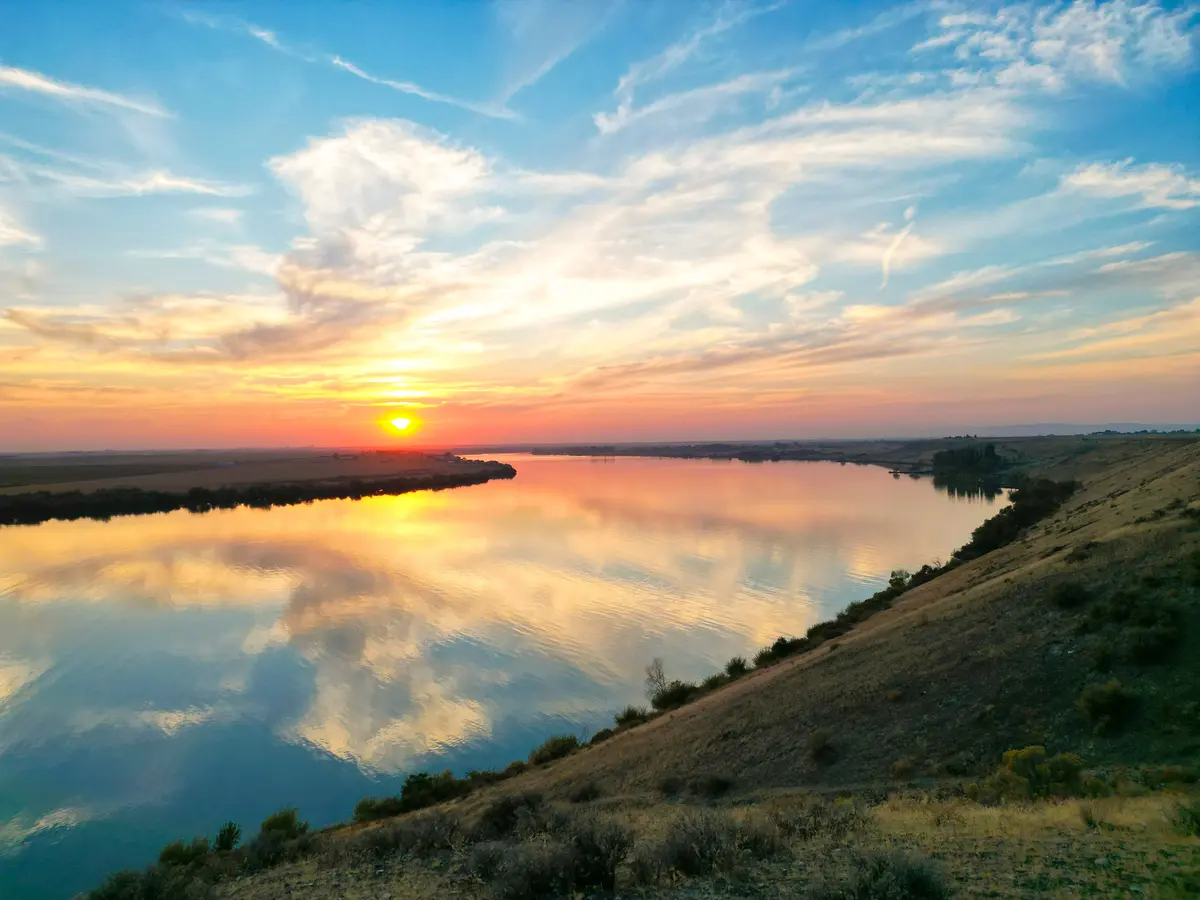
Day-to-day life for kids in Moses Lake happens against a backdrop that is genuinely hard to beat outdoors — the 18-mile lake, Surf 'n Slide Waterpark, and a parks system with multiple lighted athletic complexes that would be the envy of cities twice this size. The gap between school district quality and recreational quality is one of the more interesting things about Moses Lake: on paper the schools are average, but youth baseball here draws 66-team regional tournaments, and high school athletics are run by the 2024–2025 Washington State Athletic Director of the Year.
This guide covers what the Moses Lake School District does well, where it falls short, the one high school every family should understand before enrolling, the youth sports infrastructure that genuinely punches above its weight, and the honest cases for and against choosing this district as your family's home base.

Moses Lake School District at a Glance
The Moses Lake School District — formally MLSD 161 — is a mid-size district by eastern Washington standards, running 20 schools that span elementary, middle, and high school levels. Niche gives the district a C, which places it in the middle of Washington's public school landscape but below the higher-performing suburban districts west of the Cascades that many relocating families are comparing it against.
The Numbers Behind the Grade
That rating reflects a combination of state test proficiency scores, graduation rates, and equity metrics. With approximately 48.5% of students economically disadvantaged and a student body that is roughly 60% minority, the district faces resourcing and achievement-gap challenges that are common to agricultural-region districts across eastern Washington — not unique to Moses Lake, but real nonetheless.
| Metric | Moses Lake SD Figure |
|---|---|
| Total students (2024) | 8,740 |
| Number of schools | 20 |
| District rating | C (Niche) |
| Hispanic/Latino enrollment | ~51.3% |
| White enrollment | ~42.8% |
| Economically disadvantaged | ~48.5% |
| MLHS graduation rate | ~85% (up ~7.5 pts over 5 years) |
| MLHS teachers with master's+ | 63.5% |
| Average teacher experience | 16.5 years |
The teacher experience figure stands out. An average of 16.5 years in the classroom and 63.5% of MLHS staff holding a master's degree or higher suggests the district retains experienced educators even under budget pressure — something that doesn't always show up in a letter-grade rating.
What the Grade Misses
District-level ratings compress a lot of variation. The 20 schools in MLSD 161 do not all perform identically — some elementary campuses score meaningfully higher on Washington's state assessments than others. Families willing to research school boundaries carefully and, where necessary, request transfers within the district, can land their kids in a stronger individual campus than the aggregate suggests.
The district also has no International Baccalaureate program and no confirmed STEM magnet school, so families relocating from urban districts with specialized programming should plan accordingly — Moses Lake High School's breadth of electives and its athletics program are the closest equivalents to what a larger city might offer through specialized schools.
Moses Lake High School: The Mavericks in Detail
Moses Lake High School is the district's one comprehensive 4A high school, located at 803 Sharon Avenue East. With approximately 1,979 students enrolled in 2023–2024, it is one of the larger single high schools in eastern Washington, and it competes in the WIAA Big 9 4A conference — a conference that puts it against schools of similar size across the Columbia Basin.
Academics
The 85% graduation rate is the figure to watch. That's a meaningful improvement over five years and suggests the school is moving in the right direction on keeping students through to completion. The teaching staff's average experience of 16.5 years means your student is more likely to be taught by a seasoned professional than a first-year teacher feeling their way through curriculum.
What MLHS does not have, and what families from larger metro areas sometimes expect, is a wide menu of Advanced Placement courses or a dedicated early college program. The course catalog is solid for a 4A school in a mid-size eastern Washington city — but if your student is an academically accelerated sophomore who thrived in a district with eight AP offerings, the transition may require some adjustment.
Eligibility Rules Worth Knowing Early
WIAA eligibility at Moses Lake High School requires full-time enrollment — seven classes for 9th through 11th graders, six for seniors on track to graduate — and a minimum 2.0 GPA checked every 4.5 weeks during a sport's season. That check-in cadence is more frequent than many families expect coming from other states, and students who let grades slip mid-season can find themselves ruled ineligible with little warning. Know this before your student commits to a fall sport.
The Athletic Director Story
In April 2025, the Washington Secondary School Athletic Administrators Association named the Moses Lake High School athletic director the 2024–2025 Washington State Athletic Director of the Year. The recognition cited leadership during a period of district budget pressure and active roles on both the WIAA Representative Assembly and the WIAA Executive Board. That award signals something real: athletics at Moses Lake High School are administered at a level that outperforms the district's overall rating. The program runs football, basketball, soccer, track and field, volleyball, wrestling, softball, swim and dive, golf, tennis, bowling, cross country, cheer, drill, and unified basketball and soccer — a slate broader than many 4A schools manage.

Youth Sports and Kids Activities in Moses Lake
If academics are the district's complicated story, youth sports are Moses Lake's unambiguous strength. The city's parks infrastructure, its volunteer baseball and softball organizations, and the size of the regional tournaments that come through Grant County together create an athletic environment most towns of 27,000 cannot replicate.
Baseball: The Anchor Sport
The Moses Lake Youth Baseball Association (MLYBA) runs recreational and all-star baseball for ages 4 through 18. The primary home field is Larson Playfield at 2501 W. Broadway Avenue — an 18-acre lighted complex with scoreboards on both the A and B fields, a batting cage, concessions, and a playground. The Paul Lauzier Athletic Complex at 933 W. Central Drive adds additional lighted fields, including a dedicated youth baseball diamond. That level of infrastructure is the reason Moses Lake attracts regional competition rather than just hosting local leagues.
Top Tier Sports, a club baseball organization, partners with the Moses Lake Parks, Recreation and Cultural Services Department and runs weekend tournaments from mid-March through summer. The Dune City Dust Up drew 66 teams in its June 2025 edition — a number that rivals tournaments held in much larger cities. The Big Bend Summer Classic runs later in summer. If your son or daughter is a serious baseball player, Moses Lake's tournament schedule offers competitive exposure that would cost you hours of travel if you lived elsewhere in rural eastern Washington.
Softball
Columbia Basin Girls Softball Little League operates in Moses Lake and anchors the community's spring sports calendar with its annual Youth Day Parade — the 69th edition was held April 19, 2025. The parade is genuinely a neighborhood event, not just an athletics ceremony, and it marks the informal start of the outdoor sports season across the city. Recreational and competitive softball runs through the same parks facilities as baseball, giving girls in the program access to well-maintained, lighted fields from a young age.
Soccer
Soccer infrastructure has been growing. Moses Lake Parks, Recreation & Cultural Services schedules youth play at the Liev Kvamme Soccer Complex, and a RAVE Foundation mini pitch was added to the city in 2025. That said, parents coming from larger Puget Sound communities should calibrate expectations: a formal recreational soccer league for younger age groups is thinner here than what you'd find in a larger metro market. Club-level options exist, but they require more coordination than in markets where multiple competitive clubs operate within a short drive.
The Full Parks Network
Beyond the flagship facilities, the city manages youth play across Harrison K. Dano Park, Yonezawa Park, Crossroads Park, Knolls Vista Park, and Lakeview Park. That geographic spread means most families in Moses Lake's neighborhoods — Knolls Vista, Sage Bay, Skyline Acres — have a lighted field or open-play space within a reasonable drive. The parks system handles scheduling for both youth and adult leagues, so joining a recreational program is straightforward once you know which facility serves your neighborhood.
High School Athletics
For older students, the MLHS athletics slate is the competitive outlet. The Mavericks compete in WIAA 4A, meaning your student-athlete faces opponents of genuine size and depth. Cross country, swim and dive, and tennis round out options for kids who don't fit the traditional team-sport mold. The unified basketball and soccer programs — which pair student-athletes with peers who have intellectual disabilities — are worth noting for families whose children want competitive sports alongside meaningful community engagement.
Looking to buy in Moses Lake? Estimate your payment.
Enter your numbers to see an estimated monthly mortgage payment.
Estimate only. Excludes HOA fees and mortgage insurance. The interest rate above is a starting point, not a quoted rate — replace it with your own to see real numbers. Insurance is a flat placeholder, not a Moses Lake quote.
What the District Does Well — and Where It Struggles
The Genuine Strengths
Teacher retention is real. An average of 16.5 years of classroom experience across MLHS faculty is the kind of number that gets lost in a letter-grade rating but shows up in daily instruction quality. Experienced teachers manage classrooms differently than first-year staff, and the 63.5% who hold a master's degree or higher suggest professional development is a priority even when budget pressures hit.
The graduation rate trajectory — up nearly 7.5 percentage points over five years — is the strongest single signal that the district is improving. Trends matter more than snapshots when you're choosing a district for a child who will be in it for the next decade.
Diversity is another practical strength for families who value multicultural exposure. A student body that is approximately 51% Hispanic/Latino and 60% minority overall means Moses Lake kids interact daily with peers from different cultural and linguistic backgrounds. That's preparation for the actual working world, and it doesn't happen by accident in a district of this size.
The Honest Struggles
The district's middling standing exists for reasons. State test proficiency scores in math and English language arts run below state averages, and the achievement gap between economically disadvantaged students and their peers is a documented challenge the district has not fully closed. Budget pressure has been a recurring theme — the recognition of the MLHS athletic director explicitly cited leadership "amid district budget challenges," which is a polite way of saying MLSD 161 has had to make hard choices about where to put limited resources.
The absence of magnet programs, IB, or confirmed dual-enrollment pathways with a four-year university is the structural limitation that affects academically accelerated students most directly. Big Bend Community College is local and accessible, but a formal early-college program that guarantees credit transfer was not confirmed as of this writing. Families with high-achieving students should call the district directly to confirm current dual-credit options before making relocation decisions.
One friction moment families in Moses Lake mention after their first full school year: the 4.5-week eligibility checks during sports seasons feel more intrusive than they expected. A student who gets a C-minus in one class mid-season can lose eligibility before the family even knows there's a problem. The rule is standard WIAA policy — not unique to Moses Lake — but the pace of the checks catches families off guard. Building a habit of weekly grade monitoring through the district's parent portal from day one prevents this.
Who This District Is NOT the Right Fit For
Honesty here saves families from a bad relocation decision. Moses Lake School District has real strengths in teacher experience and athletics — but it is not the right choice for every family.
Academically Accelerated Students With Specialized Needs
If your student thrives in an IB program, has been in a district gifted-and-talented track, or expects AP course availability across multiple departments, Moses Lake High School will feel like a step back. There is no confirmed magnet or selective-enrollment pathway. Advanced students here succeed, but they tend to do so through individual teacher relationships and early community college access — not through a structured accelerated program the way west-side districts often provide.
Families Relocating from High-Performing Seattle Suburbs
Parents arriving from the higher-performing suburbs east of Seattle consistently find the academic culture shift more significant than the geography suggests. The gap in state test proficiency between those districts and Moses Lake is substantial. That doesn't mean Moses Lake is a bad place to raise a family — it means the school district alone should not be the reason you choose it. The outdoor lifestyle, the cost of housing, and the job access at the airport or with one of the major local employers are the stronger arguments.
Families Whose Kids Need Robust Special Programs in Arts or STEM
A student who needs a well-funded robotics program, a competitive debate team, or a serious pre-conservatory music environment will find Moses Lake's offerings thin compared to a larger district. The school covers the basics and fields competitive athletic programs, but elective depth in arts and STEM is limited by district size and budget.
Parents Who Want to Be Hands-Off
The district rewards involved parents disproportionately. Families who check the parent portal regularly, show up for conferences, and advocate within the system — requesting specific teachers, monitoring eligibility windows during sports seasons, asking about dual-credit options explicitly — consistently report better outcomes than families who assume the system will surface issues on its own. If your family's schedule doesn't allow for that level of engagement, Moses Lake's district average will be what your kids get, and the average is squarely in the middle of the state pack.
The Practical Family Decision: Is Moses Lake Right for Your Kids?
The case for Moses Lake is not primarily a schools case — and families who move here having internalized that do better than families who expect the district to carry the weight of the choice alone. What Moses Lake offers is a specific combination: affordable living, an outdoor environment most Pacific Northwest cities can only approximate, and youth athletics infrastructure that punches well above the city's size.
What the District Delivers for Average and Below-Average Academic Needs
For a student who is a solid B-minus to A-minus earner, involved in sports, and benefits from experienced teachers who know their students by name in a non-anonymous school environment, Moses Lake High School is a reasonable place to spend four years. The 1,979-student enrollment is large enough to offer genuine elective breadth and varsity sports across 15-plus activities, but small enough that a student who makes the effort to be known gets known. That middle ground suits a lot of kids better than they'd get in an enormous suburban district where they'd be one of 3,000 students.
The Youth Sports Calculus
If your 9-year-old plays competitive baseball and you're choosing between Moses Lake and a larger city, the calculus is genuinely close. Larson Playfield's 18 lighted acres and the 66-team Dune City Dust Up tournament are not small-town-league amenities — they're regional infrastructure. A kid who wants to play serious baseball or softball from age 8 through 18 can do it in Moses Lake without driving to Tri-Cities every weekend for a game. That is a real quality-of-life argument for families whose kids are deep in diamond sports.
After Six Months Here
What families consistently say after their first full year in Moses Lake is that the school experience was more stable than they feared and the youth sports scene was better than they expected — but the absence of a walkable after-school café strip or a performing arts center means the social life for teenagers happens mostly through school activities or around the lake. That's fine for a lot of kids, and genuinely limiting for others. Know your student's social needs before you sign a lease.
Whether you're months into your Moses Lake research or just starting to compare districts across Grant County, the sections above break down what the Moses Lake School District is and isn't, how Moses Lake High School competes in the WIAA 4A Big 9 conference, what the youth sports infrastructure actually looks like on the ground, and the honest case for and against making this district your family's long-term home.
Local Expert Takeaway: Moses Lake School District rewards engaged families — the ones checking the parent portal during WIAA eligibility windows, asking about dual-credit options at the district office, and showing up to conferences. The graduation rate at Moses Lake High School has climbed meaningfully over five years, the average teacher has 16.5 years of experience, and the 2024–2025 Washington State Athletic Director of the Year runs the Mavericks' athletics program. On the youth sports side, Larson Playfield at W. Broadway and the Paul Lauzier Athletic Complex on W. Central Drive are genuine regional facilities — the Dune City Dust Up drew 66 teams in 2025. Academically accelerated students without a school district that offers IB or AP depth will need families who compensate actively. For everyone else, Moses Lake is a working district with real upward momentum.
Quick Takeaways & FAQs
✅ Moses Lake High School's graduation rate has risen nearly 7.5 percentage points over five years, and the Mavericks compete in the WIAA Big 9 4A conference with one of Washington's top-recognized athletic directors.
⚠️ The district carries a middling rating with below-average state test proficiency scores and no confirmed IB or STEM magnet pathway — academically accelerated students will feel the gap if they're coming from a high-performing west-side district.
📍 Larson Playfield on W. Broadway Avenue is an 18-acre lighted baseball complex that hosts 66-team regional tournaments; youth baseball and softball infrastructure here is a legitimate draw for athletic families.
What rating does Moses Lake School District have?
How does Moses Lake High School compare to other 4A schools in Washington?
What youth sports leagues are available in Moses Lake?
Are there magnet, IB, or STEM programs in the Moses Lake School District?
What are the WIAA eligibility requirements for student-athletes at Moses Lake High School?
Moving to Washington?
Tell us what you need help with and we'll connect you with local resources.
