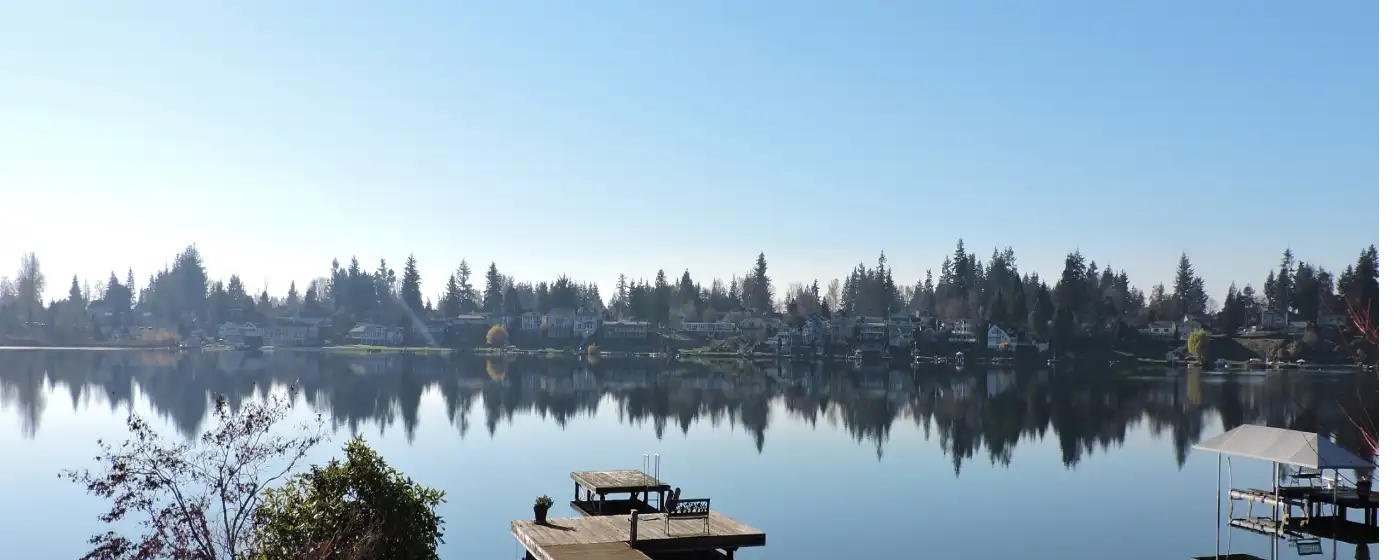
Most people moving to Kent from outside King County expect a generic suburb. What they find instead is a city split by elevation — literally. The valley floor along SR-167 is dense with distribution warehouses, rail lines, and industrial corridors. The neighborhoods everyone actually wants to live in sit on the plateaus above: East Hill to the east, West Hill to the west, each with its own character, price point, and daily rhythm. Buy without understanding this divide and you may end up closer to a Boeing logistics hub than you'd planned.
Kent's roughly 136,000 residents are served by the Kent School District, which carries a B rating from Niche and holds the distinction of being the most diverse school district in Washington State — and fourth most diverse nationwide among districts of its size. That diversity shapes the city's food, culture, and community feel in ways that distinguish it clearly from neighboring Covington or Federal Way. The city-wide median home price sits at $611,760 (Zillow Home Value Index, mid-2026), noticeably below what buyers face in Seattle or Renton, which is the core reason so many South King County relocators end up here.
Daily life in Kent is shaped by the Green River Trail, Lake Meridian Park, and Kent Station — the Sounder commuter rail stop that makes a roughly 30-minute run to King Street Station in Seattle on weekday mornings. The 914 DART shuttle, operated free by the City of Kent, connects the valley floor to the East Hill plateau for residents who don't want to drive the switchbacks. For outdoor time, Lake Meridian's 150-acre spring-fed lake hosts summer swimming, boating, and the annual Lake Meridian Triathlon. For a pint after a ride on the Green River Trail, Four Horsemen Brewery on 148th Ave SE is the verified local option worth finding. See the full cost-of-living breakdown for utilities, taxes, and how Kent compares to nearby cities on a month-to-month basis.
Whether you're weighing East Hill's schools against Panther Lake's price tag or wondering whether Downtown Kent's walkability justifies the trade-offs, the sections below break down all eight of Kent's neighborhoods by character, price range, buyer type, rental options, and the mistakes that catch relocating buyers off guard.
The Kent Reality
The single most important thing to understand about Kent is the valley-versus-plateau divide, and it is not subtle. The Green River Valley floor — where downtown, the industrial parks, SR-167, and the freight rail lines all converge — is functionally a different city from the residential plateaus that flank it. The valley carries truck traffic, rail noise, and the operational hum of one of the densest distribution corridors in the Pacific Northwest. The plateaus are quiet subdivisions, neighborhood parks, and school-bus routes.
East Hill and Meridian sit on the eastern plateau; West Hill sits on the western one. Getting between them without touching the valley requires significant detours. This matters for school boundaries, for daily commute routing, and for resale — buyers on East Hill don't think of themselves as living in the same neighborhood as buyers near the Kent Station condos, even though both addresses technically say "Kent, WA."
School boundaries add a second layer of complexity. Kent School District serves the entire city, but which elementary and middle school feeds your specific address varies meaningfully by block — particularly at the edges of East Hill, where some streets roll into the Covington or Federal Way unified zones. Checking the exact boundary before you make an offer is not optional here; it is the single step most out-of-area buyers skip and most frequently regret. See the full schools guide for boundary maps and district performance by level.
Neighborhoods at a Glance
| Neighborhood | Best For | Price Range | Vibe |
|---|---|---|---|
| East Hill | Families Schools | $580,000–$750,000 | Established suburban plateau with parks and strong school access |
| Panther Lake | First-Time Nature | $520,000–$660,000 | Quiet, close-knit lake community with a neighborhood feel |
| The Lakes | Walkable Nature | $400,000–$650,000 | Master-planned resort feel with man-made lakes and trails |
| Downtown Kent/Kent Station | Transit First-Time | $380,000–$550,000 | Walkable mixed-use core anchored by Sounder rail |
| West Hill | Views Commuter | $560,000–$720,000 | Elevated neighborhoods with Sound views and I-5/SR-99 access |
| Meridian | Families Nature | $600,000–$780,000 | Lake Meridian living with summer events and waterfront access |
| North Park | Value Renter | $450,000–$580,000 | Mixed residential-industrial fringe with transit access |
| South Kent | Value Commuter | $430,000–$570,000 | Affordable valley-adjacent area with SR-167 access |
Best Neighborhood by Buyer Type
| Buyer Type | Best Neighborhood | Why |
|---|---|---|
| First-Time Buyer | Downtown Kent / Kent Station | Condos and townhomes starting in the high $300,000s give entry-level buyers an ownership foothold without requiring a full suburban price tag. |
| Luxury Buyer | Meridian | Waterfront-adjacent homes near Lake Meridian Park command the city's upper price band and carry the most land value per dollar in Kent. |
| Walkability Seeker | The Lakes | The master-planned trail network and man-made lakes make this the only Kent neighborhood where errands-by-foot actually works alongside dedicated walking paths. |
| Families with Kids | East Hill | The plateau's established school feeder patterns, Clark Lake Park, and suburban street grid make it the most consistently family-oriented area in Kent. |
| Commuters | Downtown Kent / Kent Station | Walking distance to the Sounder platform means a predictable train to King Street Station in Seattle without touching I-5 on weekday mornings. |
| Large-Lot Buyers | Panther Lake | Older subdivisions near the lake carry more land per home than East Hill's newer infill, and prices remain the lowest on the eastern plateau. |
| Renters | The Lakes | The mix of condos, townhomes, and apartments within a walkable, dog-friendly community makes The Lakes the most consistently in-demand rental area in the city. |
Looking to buy in Kent? Estimate your payment.
Enter your numbers to see an estimated monthly mortgage payment.
Estimate only. Excludes HOA fees and mortgage insurance. The interest rate above is a starting point, not a quoted rate — replace it with your own to see real numbers. Insurance is a flat placeholder, not a Kent quote.
Most Popular Neighborhoods
East Hill
East Hill is Kent's largest residential district — roughly 29,000 residents spread across subdivisions that range from postwar bungalows to 2000s-era five-bedrooms. The plateau elevation keeps it well above the valley's industrial noise, and proximity to both Clark Lake Park and Lake Meridian Park means weekends here don't require a drive. The catch is that the city's free 914 DART shuttle is the only transit connection down to the valley floor, and the plateau's school boundary edges can surprise buyers who assume the nearest school on the map is their assigned one. Prices typically run $580,000–$750,000.
Best for: Families with school-age children who want an established suburb without paying Renton or Bellevue prices.
Panther Lake
Panther Lake sits about four miles northeast of downtown on its own quieter patch of the eastern plateau, centered on a freshwater lake that draws anglers and hikers rather than commuters. The housing stock skews older and lots run generously sized — this is where the first-time buyer who's been outbid on East Hill turns next. After Kent's 2010 annexation pulled Panther Lake into city limits, some residents feel the neighborhood's pace never fully matched the rest of Kent's growth, which is both the complaint and the appeal. Prices typically run $520,000–$660,000.
Best for: First-time buyers and outdoor-oriented households who prioritize quiet and lake access over restaurant proximity.
The Lakes
The Lakes is the closest thing to a resort community Kent produces — a master-planned neighborhood with man-made lakes, dedicated walking and bike trails, and the Green River running along its western edge. The housing mix spans condos and townhomes up through single-family homes, and residents consistently cite the dog-friendly trail system as the neighborhood's most practical daily asset. What you give up is grocery proximity; the area's on-foot access is self-contained rather than commercial. Prices typically run $400,000–$650,000.
Best for: Active households and dog owners who want structured amenities and trail access in a planned community setting.
Downtown Kent / Kent Station
Downtown Kent has spent the last decade building a legitimate urban core around the Sounder station — Kent Station's retail and dining plaza, the accesso ShoWare Center arena, and the emerging Space Park development are all within a short walk of each other. Condos and townhomes starting in the high $300,000s make this one of the few places in King County where first-time homeowners can buy into a walkable, transit-served neighborhood without a six-figure down payment. The trade-off is that the valley floor's proximity means freight train noise is an actual nightly consideration, not a minor asterisk. Prices typically run $380,000–$550,000.
Best for: Seattle commuters, transit-dependent households, and buyers who want walkable urban convenience at an entry-level price.
West Hill
West Hill's selling point is altitude — elevated enough above SR-99 and I-5 to catch views of Puget Sound and, on clear days, the Olympic Mountains. The neighborhoods here trend naturally toward the SeaTac, Des Moines, and Tukwila corridors, which makes airport access easier than anywhere else in Kent. The downside is that West Hill feels more like an extension of those neighboring cities than a Kent neighborhood with its own identity; locals sometimes joke they moved to "technically Kent." Prices typically run $560,000–$720,000.
Best for: Households with ties to the western employment corridor, SeaTac airport, or I-5 commutes who want Sound views at a price below Des Moines waterfront.
Meridian
The Meridian neighborhood wraps around Lake Meridian, a 150-acre spring-fed lake with a county park that offers a sandy beach, motorized boating, Rainbow Trout and Kokanee fishing, and a summer events calendar that includes the Lake Meridian Triathlon and weekly concerts. Homes near the lake carry Kent's upper price band, and the neighborhood's combination of outdoor access and established school proximity drives sustained demand. The practical downside: lake-adjacent streets can see weekend summer traffic that feels disproportionate to the neighborhood's usual quiet. Prices typically run $600,000–$780,000.
Best for: Buyers who want waterfront recreation access built into daily life without leaving city limits, and families willing to pay a premium for it.
North Park
North Park occupies the transitional zone between Kent's residential core and its northern industrial fringe — a mixed stretch of older homes, small commercial strips, and King County Metro bus connections that make it functional without being aspirational. The lower price point reflects the proximity to light industrial uses along the valley corridor, which shapes both the streetscape and the resale ceiling. King County Metro routes make it one of the more transit-accessible residential areas for households without cars. Prices typically run $450,000–$580,000.
Best for: Value-focused buyers and renters who prioritize transit access and are comfortable with an industrial-adjacent streetscape.
South Kent
South Kent is the city's most affordable ownership entry point for a single-family home, sitting south of downtown where residential streets blend into the SR-167 corridor and the Green River Valley's broader industrial base. The price point is real, but so is the proximity to industrial uses — warehouse traffic on connecting streets is a weekday reality, not an occasional inconvenience. Auburn sits immediately to the south, and the SR-167 ramp access gives South Kent residents some of the fastest freeway on-ramps in the city. Prices typically run $430,000–$570,000.
Best for: Budget-conscious buyers and households tied to the Green River Valley corridor who want to own rather than rent.
Common Mistakes Buyers Make in Kent
Assuming the Plateau Is Uniform
East Hill, Panther Lake, and Meridian all sit on the eastern plateau, but they are not interchangeable. School feeder patterns differ, lot sizes shift dramatically by subdivision age, and commute routing to SR-167 varies enough that a half-mile difference in address can mean ten minutes of extra morning driving. Buyers who treat "East Hill" as a single monolithic choice routinely end up in the wrong corner of it.
Underestimating the Valley Floor's Noise Profile
Downtown Kent and North Park both sit at valley-floor elevation, within earshot of the freight rail corridor that runs through the valley. Sounder commuter trains follow a predictable schedule, but freight trains do not — they run at irregular hours, including overnight. Buyers drawn to Downtown Kent's Sounder convenience and entry-level condo prices sometimes discover the freight rail reality only after closing. Walk the block at 10 p.m. before you make an offer.
Chasing Square Footage in South Kent Without Checking the Trade-offs
South Kent's lower prices per square foot are genuine, and the SR-167 on-ramps are fast. What the listing photos don't show is the weekday freight and warehouse truck volume on connecting streets between the residential pockets and the highway. Families expecting a quiet suburban feel sometimes find the industrial-corridor character more present than anticipated — particularly on streets that directly adjoin the valley's warehouse district.
Skipping the School Boundary Check at the East Hill Edge
The eastern and southern edges of East Hill — particularly streets that approach the Covington and Maple Valley corridors — sit near district boundary lines that don't always follow intuitive geographic logic. A house on one side of a specific cross street feeds to a Kent elementary; a house on the other side may feed to a different district entirely. The Kent School District's online boundary tool is the authoritative source; do not rely on a neighbor's estimate or a listing agent's general assurance. The full district picture is on the schools page.
Best Areas to Rent in Kent
| Area | Ideal For | Typical Rent Range | Trade-off |
|---|---|---|---|
| Downtown Kent / Kent Station | Seattle commuters, car-free households | $1,700–$2,400/mo (1–2 BR) | Freight rail noise at night; limited green space immediately adjacent |
| The Lakes | Active renters, dog owners, couples | $1,900–$2,600/mo (1–2 BR) | No walkable commercial; grocery runs require a car |
| East Hill | Families with kids, longer-term renters | $2,000–$2,800/mo (3 BR SFH) | Single-family rentals turn over infrequently; competition is high |
| North Park | Budget renters, transit-dependent households | $1,500–$2,000/mo (1–2 BR) | Industrial-adjacent streetscape; limited neighborhood retail |
| West Hill | Airport-corridor workers, view seekers | $1,800–$2,500/mo (2 BR) | Neighborhood identity leans toward SeaTac/Des Moines more than central Kent |
Kent's rental market tightens noticeably in late spring and early summer, when new workers arrive in the valley ahead of peak season. If you're moving to Kent and haven't locked housing, targeting The Lakes or Downtown Kent in February or March gives you the best selection before peak-season competition sets in.

Local Expert Takeaway: The buyers who get Kent right are the ones who drive the plateau before they open Zillow. East Hill's family streets near Clark Lake Park and Meridian's waterfront life around Lake Meridian represent genuinely different Kent experiences — and both sit well above the freight-rail and warehouse noise that defines the valley floor. If you're commuting to Seattle, Downtown Kent's Sounder access is hard to beat at that entry price. If you want space and quiet and can tolerate a short drive to everything, Panther Lake is the most underrated address in the city. Stop by Four Horsemen Brewery on 148th Ave SE after you've done your drive-around — it's a useful way to talk to people who actually chose this neighborhood and have opinions about it.
Quick Takeaways & FAQs
✅ East Hill and Meridian offer suburban family living on elevated plateaus well above Kent's industrial valley floor, with prices that remain noticeably below Seattle and Renton.
⚠️ The freight rail corridor through downtown Kent creates genuine overnight noise — a real consideration for condo and townhome buyers drawn by the Sounder rail convenience.
📍 The City of Kent operates a free 914 DART shuttle connecting the valley floor to the East Hill plateau — a transit link most newcomers don't discover until after they've moved in.
What is the most family-friendly neighborhood in Kent, WA?
Where should first-time homebuyers look in Kent?
What's the difference between East Hill and West Hill in Kent?
Is it worth living near Downtown Kent for the Sounder train?
What's the most affordable neighborhood in Kent to buy a home?
Moving to Washington?
Tell us what you need help with and we'll connect you with local resources.
