
Maybe your company is relocating you to Puget Sound and someone mentioned Bremerton as the affordable alternative to Seattle. Maybe you've been watching Bainbridge Island listings and finally accepted the math doesn't work. Either way, Bremerton will surprise you — and not always in the direction you expect. Yes, the Zillow Home Value Index (ZHVI) puts the city's typical home price at $459,702 as of June 2026, which is genuinely less than half what you'd pay across the water on Bainbridge Island. But Bremerton is not cheap in any absolute sense. It sits roughly 16% above the national cost-of-living average, and housing — whether renting or buying — runs approximately 38% higher than the typical U.S. city. The ferry is a commute cost with no real equivalent anywhere else in the country.
What actually shapes daily spending here is a combination of three forces: Puget Sound Energy's electricity rates (among the lowest you'll find in Western Washington), Washington's complete absence of a personal income tax on wages, and a sales tax rate that can exceed the state's already-high average once Bremerton's local additions stack on top. The Puget Sound Naval Shipyard and Naval Base Kitsap are the economic anchors — they keep a steady base of military and civilian federal workers in the housing market year-round, which supports prices even when the broader Puget Sound market softens. That demand floor is real, and it's part of why entry-level homes here don't stay on the market long.
Compared to most of Washington state, Bremerton is noticeably more affordable — roughly 6% below the state cost-of-living average. Compared to the national average, it's meaningfully more expensive. Groceries run about 12% above the U.S. norm, and ferry commuting adds a line item to your monthly budget that most cities simply don't have. The median household income in Bremerton is $74,940, which covers daily life here without a lot of margin if you're also carrying a mortgage near the city median.
Whether you're weighing a move from Seattle, comparing Bremerton against Silverdale or Port Orchard, or just trying to understand whether your income stretches here, the sections below break down housing costs, rent vs. buy math, everyday expenses, a side-by-side city comparison, and the full tax picture so you can run your own numbers honestly.

What It Really Costs to Live in Bremerton
The headline number is $459,702 — the Zillow Home Value Index for Bremerton as of June 2026. That figure sits in a genuinely unusual position: it's well below what most Puget Sound markets demand, yet still out of reach for a median-income household without a meaningful down payment or a second income. A household earning Bremerton's median of $74,940 is stretching to buy at that price point under conventional underwriting assumptions.
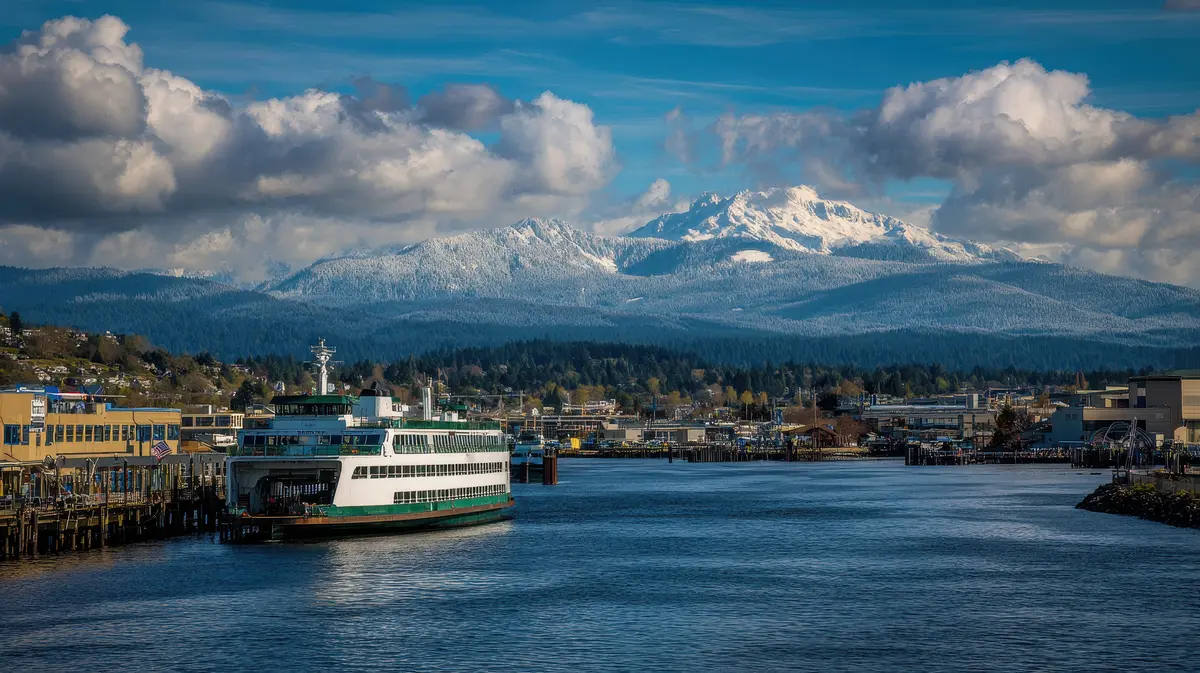
What makes Bremerton's cost profile distinct from other mid-tier Washington cities is the ferry. Living here and working in Seattle means building ferry fares into your monthly budget as a fixed transportation cost — not an occasional expense. The Kitsap Fast Ferry runs passenger-only service in about 28 minutes and costs $13 one-way westbound after a fare increase that took effect October 2025. Washington State Ferries offers the vehicle option at roughly 60 minutes. Neither is free, and neither is an afterthought.
The bright side of the ledger: Puget Sound Energy's electricity rate of approximately 12 cents per kilowatt-hour (March 2026) is a genuine advantage. A typical household electric bill runs well below what residents pay in most Pacific Northwest cities. Natural gas bills are moderate, though damp winters mean heating costs can climb in January and February. Internet and phone costs track close to national norms — Bremerton has several competitive broadband providers given its proximity to the Seattle metro.
Housing: Rent vs Buy in Bremerton
The Buying Side
The city-wide typical home value of $459,702 (Zillow ZHVI, June 2026) is your anchor. Entry-level homes — older ranches, smaller 1960s-era ramblers — can be found noticeably below that figure, though they tend to move quickly. More recent construction and waterfront-adjacent properties push well above it. For neighborhood-level price breakdowns, the Best Neighborhoods guide covers where different price points cluster across the city.
Bremerton's effective property tax rate is approximately 0.80% — one of the more favorable rates in Western Washington. On a home priced near the city median, that translates to a manageable annual obligation relative to what buyers in King County typically face. Use the mortgage calculator below this section to model your full monthly payment; this page intentionally doesn't quote a specific payment figure because rate movements change that number faster than any article can keep up.
The Renting Side
Renting in Bremerton costs substantially more than in the average U.S. city — the C2ER index puts local housing costs (renting and buying combined) about 38% above the national norm. Typical two-bedroom rents fall in the $1,600–$2,100 range depending on unit age and proximity to the waterfront or ferry terminal. That's a real budget commitment for a household at the local median income.
Renting makes the most sense here if you're new to the area and haven't yet decided which part of Kitsap County fits your life — or if you're on a military assignment with an uncertain timeline. Buying makes sense if you have the down payment, plan to stay at least four to five years, and can handle the carrying costs without relying on appreciation to bail you out. Bremerton has appreciated meaningfully over the past decade, but it's not the kind of market where you can count on that trend rescuing a thin purchase.
Everyday Costs Beyond Housing in Bremerton
Puget Sound Energy serves all of Kitsap County, and Bremerton's electricity rate of approximately 12 cents per kilowatt-hour (March 2026) is a genuine advantage. A typical household electric bill runs well below what residents pay in most Pacific Northwest cities. Natural gas bills are moderate, though damp winters mean heating costs can climb in January and February. Internet and phone costs track close to national norms — Bremerton has several competitive broadband providers given its proximity to the Seattle metro.
Groceries deserve a specific flag: Washington exempts grocery staples from retail sales tax, which helps, but Bremerton's grocery prices still run roughly 12% above the national average. The downtown independent cafés near Burwell St — including Cafe Omni — and the restaurant scene along the boardwalk mean dining out is a real lifestyle option, but prepared food is fully taxable. Dog Days Brewing draws a regular local crowd and is a fixture of the after-work scene. Budget for eating out, but know that every restaurant tab includes Washington's combined sales tax rate.
| Category | Typical Monthly Cost | Notes |
|---|---|---|
| Housing (2BR rent) | $1,600–$2,100 | Rental range; homeowners: use the mortgage calculator above for a purchase estimate |
| Utilities (electric, gas, water) | $130–$190 | Electricity is ~12¢/kWh via Puget Sound Energy — well below national average |
| Groceries | $500–$700 | ~12% above U.S. norm; grocery staples exempt from WA sales tax |
| Transportation & Gas | $250–$500 | Wide range: car-only vs. ferry commuters; WA gas tax is 59.04¢/gallon |
| Ferry (Seattle commuters) | $200–$350 | Kitsap Fast Ferry: $13 one-way westbound (post-Oct 2025); WSF rates vary by route/mode |
| Phone & Internet | $120–$200 | Competitive broadband market; multiple providers serve Bremerton |
| Misc / Discretionary | $300–$500 | Dining, entertainment, recreation; all restaurant meals taxed at combined WA rate |
These are estimates for planning purposes, not guarantees. Actual costs vary by household size, commute pattern, and lifestyle. The ferry line is the most uniquely Bremerton line item in any budget — Seattle commuters should model it carefully before assuming a lower mortgage payment fully offsets the cross-Sound transportation overhead.
Looking to buy in Bremerton? Estimate your payment.
Enter your numbers to see an estimated monthly mortgage payment.
Estimate only. Excludes HOA fees and mortgage insurance. The interest rate above is a starting point, not a quoted rate — replace it with your own to see real numbers. Insurance is a flat placeholder, not a Bremerton quote.
Bremerton vs Nearby Cities: Cost Comparison
| City | Median Home Price | Typical 2BR Rent | Cost vs Bremerton |
|---|---|---|---|
| Bremerton | $459,702 (Zillow ZHVI, June 2026) | $1,600–$2,100/mo | — Baseline — |
| Port Orchard | Approx. $430,000–$470,000 | $1,500–$1,950/mo | About the same |
| Silverdale | Approx. $490,000–$540,000 | $1,700–$2,200/mo | Moderately higher |
| Poulsbo | Approx. $550,000–$620,000 | $1,800–$2,300/mo | Noticeably higher |
| Gorst | Approx. $390,000–$440,000 | $1,400–$1,800/mo | Somewhat cheaper |
| Bainbridge Island | Approx. $1,200,000 | $2,500–$3,500/mo | Far more expensive |
* ZHVI = Zillow Home Value Index. Non-Bremerton figures are approximate ranges based on available market data and should be treated as directional, not authoritative — verify current figures before making any purchase decision.
The gap between Bremerton and Bainbridge Island tells the whole story of Kitsap County's internal price stratification: both cities sit on the same peninsula, both offer ferry access to Seattle, and one costs roughly two and a half times the other.
Taxes & the Bottom Line for Bremerton
No State Income Tax — With One Nuance
Washington levies no broad-based personal income tax on wages, salary, or self-employment income. For most Bremerton residents, the state income-tax line on a pay stub is $0. The exception worth knowing: Washington taxes 7% on long-term capital gains above a $278,000 standard deduction for 2025, rising to 9.9% on gains above $1,000,000 — but this doesn't affect wage earners or most primary-home sales, which remain exempt.
Sales Tax Is Real and Adds Up
Washington's base state sales tax is 6.5%, and the statewide combined average including local additions runs approximately 9.51%. Bremerton's own local additions push the combined rate above that state average. Every restaurant meal, electronics purchase, and non-grocery retail transaction carries that full combined rate. Grocery staples are exempt — a meaningful break given that food costs run about 12% above the national norm here — but the exemption doesn't extend to prepared food or restaurant tabs.
Washington also carries one of the highest gas taxes in the country at 59.04 cents per gallon, which lands harder on Bremerton residents than on purely urban households. Between driving to a ferry terminal, running errands across a car-dependent peninsula, and the occasional trip to Tacoma or Silverdale for big-box retail, fuel costs are a real line item.
Property Tax: Relatively Low for the Region
The effective property tax rate of approximately 0.80% is genuinely favorable compared to the rates many buyers encounter in King County or Pierce County. On a home priced at the city median described above, the annual obligation is manageable — though it still adds meaningfully to total housing cost in a market where purchase prices have risen substantially over the past decade.
Who Bremerton's Budget Fits
Remote workers who never touch the ferry, dual-income military or federal civilian households, and buyers coming from higher-cost Pacific Northwest markets will likely find Bremerton's overall cost structure workable. The no-income-tax environment and low electricity rates provide real offsets against above-average housing and grocery costs.
The budget tends to feel tightest for single-income households near the local median who also commute daily to Seattle — the combination of housing costs running well above the national norm plus daily ferry expenses leaves limited margin. That's the honest read: Bremerton is a strong value relative to the broader Puget Sound market, but it is not an inexpensive city in any absolute sense, and anyone modeling a move here should run the ferry line item as a fixed monthly cost, not a rounding error.
Local Expert Takeaway: Bremerton's real cost advantage over the rest of Puget Sound is substantial — but it's a relative advantage, not an absolute one. The $459,702 city-wide home value (Zillow ZHVI, June 2026) is less than half of Bainbridge Island and well below Seattle, yet the city still runs 16% above the national cost-of-living average. The no-income-tax benefit and Puget Sound Energy's low electricity rates (~12¢/kWh) are genuine wins. The underappreciated cost: ferry commuters to Seattle should budget $200–$350 per month for the crossing before celebrating the lower mortgage payment. Stop into Cafe Omni on Burwell St on a weekday morning and you'll hear this exact conversation happening at every other table.
Quick Takeaways & FAQs
✅ Bremerton's typical home price of $459,702 (Zillow ZHVI, June 2026) is well below Seattle and less than half of Bainbridge Island — a real and meaningful price advantage for Puget Sound.
⚠️ Ferry costs are a genuine fixed expense, not a lifestyle perk: daily Seattle commuters on the Kitsap Fast Ferry pay $13 one-way westbound, which adds up to $200–$350 or more per month before any other transportation costs.
📍 Washington's 59.04¢-per-gallon gas tax and a combined local sales tax rate above the already-high state average of 9.51% mean the tax savings from no income tax don't fully offset everyday transaction costs for car-dependent residents.
What is the typical home price in Bremerton, WA in 2026?
Does Washington State have an income tax? How does that affect living in Bremerton?
How much does it cost to commute from Bremerton to Seattle by ferry?
Is Bremerton cheaper than Silverdale or Port Orchard?
What is Bremerton's property tax rate, and how does it compare to the rest of the Seattle area?
Moving to Washington?
Tell us what you need help with and we'll connect you with local resources.
