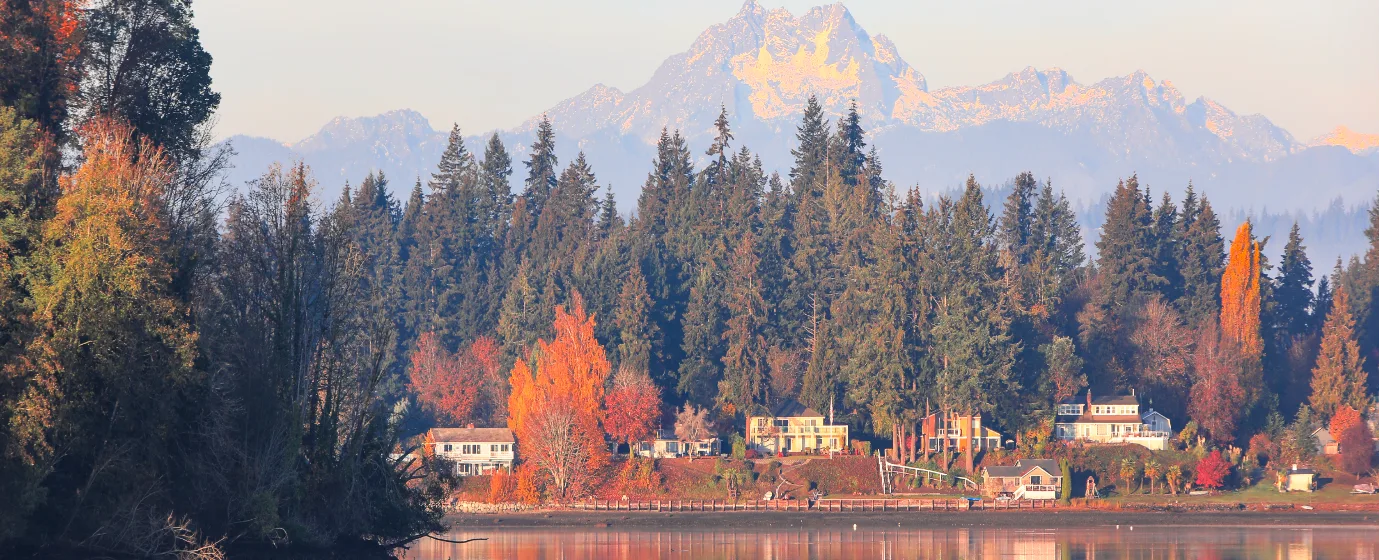
Most people moving to Bremerton from somewhere landlocked don't expect what greets them within the first week: a downtown waterfront where you can watch container ships pass, walk to a farmers market, kayak from a public dock, and then drive twenty minutes to a 596-acre old-growth forest — all without leaving the city's immediate orbit. The outdoor access here isn't incidental. It's structural. Puget Sound defines the western edge of daily life, the Olympic Mountains frame the skyline to the northwest, and the forested hills that press in from the east are laced with maintained trails most residents have only partially explored.
The City of Bremerton manages more than 341 acres of parks, open spaces, and recreational facilities — an outdoor footprint that outpaces cities twice its size on the Kitsap Peninsula. That figure doesn't include the county-managed lands that surround the city or the five Washington State Parks accessible by short drives, including Scenic Beach, Manchester, and Twanoh, which reopened in summer 2025 after playground and day-use renovations. The city completed a 2026–2030 Parks, Recreation and Open Space Plan — locally known as the PROS Plan — to guide future investment and preserve eligibility for state and federal recreation grants. The investment direction matters for buyers: parks here aren't coasting.
Day-to-day outdoor life in Bremerton rotates between two poles. Downtown draws people to the water — the Boardwalk, Harborside Fountain Park, and Evergreen Rotary Park are all within a short walk of the ferry terminal, and on summer Thursday evenings the waterfront fills with locals at the farmers market. The forested east side pulls a different crowd: hikers working through the Illahee trail network, mountain bikers on Green Mountain, and families looking for a waterfall loop they can finish before lunch. After six months here, most residents realize they've barely scratched the surface of what's walkable or drivable on a weekend morning.
Whether you're deciding where to plant yourself or simply trying to understand what outdoor life looks like here, the sections below cover Bremerton's signature parks and waterfront spaces, its trail network from easy loops to full-day mountain routes, water access and seasonal recreation, and the state parks that extend the city's effective outdoor footprint well beyond its borders.
Waterfront Parks: Where Bremerton Actually Gathers
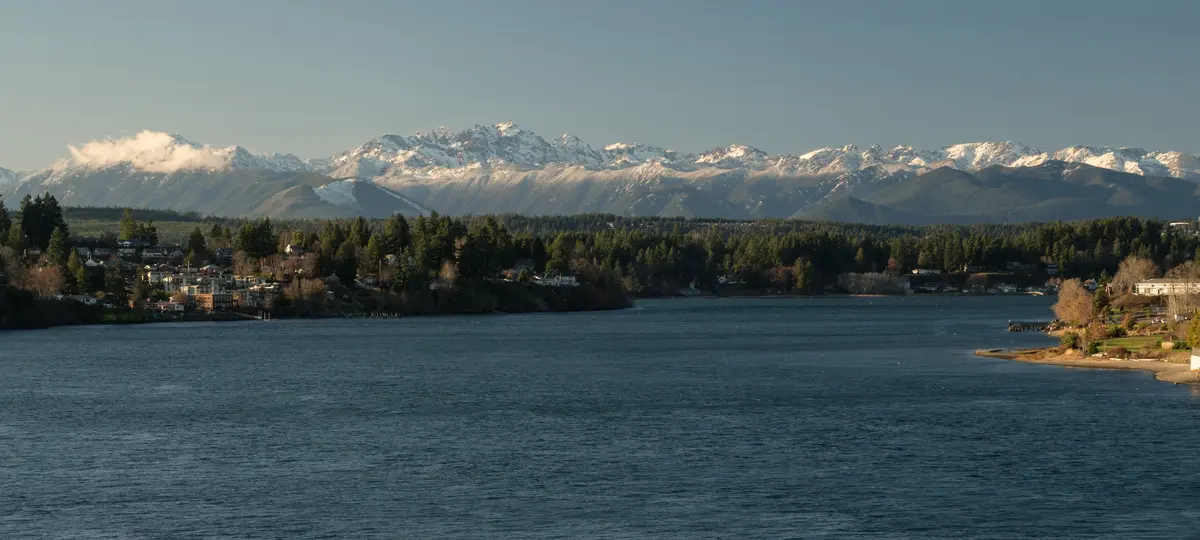
The downtown waterfront is where you understand what separates Bremerton from inland Kitsap cities. Three distinct public spaces — Harborside Fountain Park, the Bremerton Boardwalk, and Evergreen Rotary Park — sit within easy walking distance of each other along the shoreline, and together they form the city's most-used outdoor corridor.
Harborside Fountain Park
At 251 1st Street, right beside the ferry terminal, Harborside Fountain Park packs a lot into 2.21 acres. The most-photographed feature is a set of five copper-plated fountains engineered to resemble submarine conning towers — a nod to Bremerton's naval identity — that periodically spout water into shallow wading pools. On hot summer days, those pools function as the city's unofficial splash pad.
The park is fully accessible, with paved paths, drinking fountains, public art installations, restrooms, and benches oriented toward the water. It works for a quick ferry layover or an hour-long afternoon with kids. The military design motif is the kind of specific local detail that either resonates immediately or prompts a Google search — either way, it's not something you'll find in Poulsbo or Port Orchard.
The Bremerton Boardwalk
Running directly adjacent to Harborside Fountain Park, the Boardwalk is less a quiet stroll and more a community gathering space with a spectacular backdrop. Views extend to the Seattle skyline across the Sound and to the Olympic Mountains on the opposite horizon. Throughout the summer, the Boardwalk hosts local markets, live music, and rotating food trucks — the kind of casual outdoor programming that doesn't require advance planning.
The catch is that the Boardwalk experience is genuinely seasonal. November through February, you're likely to have it mostly to yourself, which some residents love and others find unexpectedly quiet after moving from a more urban environment.
Evergreen Rotary Park
Tucked slightly further along the waterfront, Evergreen Rotary Park is the spot locals use when they want the water without the ferry-terminal foot traffic. It has walking paths, picnic tables, a 9/11 Memorial, and — critically — dock and kayak launch access that makes it a practical starting point for anyone exploring the shoreline by paddle. A farmers market runs here on Thursday evenings through the summer season, which has become the default gathering ritual for a certain cross-section of the neighborhood.
What newcomers don't expect: the Thursday market fills up fast. Arrive early if you're combining errands and recreation, because parking near the waterfront tightens considerably by late afternoon on market days.
Trails and Forest: From Neighborhood Loops to All-Day Routes
Bremerton's trail system runs in two directions simultaneously — toward the water and into the trees — and the forest options are deeper than most residents realize when they first move in.
Illahee Preserve: The City's Backyard Forest
The Illahee Forest Preserve at 8047 Illahee Rd NE covers 237 acres of second-growth conifers and dense underbrush within the city's reach, with trails graded for hikers at multiple skill levels. The broader Kitsap County-managed Illahee Preserve Heritage Park extends that to over 596 acres total, offering a trail menu that ranges from a 0.9-mile easy loop — genuinely manageable with young kids — to a moderate 8.9-mile full loop that takes most people most of a morning.
The forest here feels legitimately wild for how close it sits to a working naval city. Sword ferns, Sitka spruce, and red alder crowd the trail edges. Birdwatching is quietly excellent. The honest limitation: the trailhead parking area is small and fills by mid-morning on summer weekends, so arriving before 9 a.m. isn't overcautious.
Green Mountain State Forest: Bremerton's Benchmark
Green Mountain State Forest is the trail destination that pulls hikers from across Kitsap County — and increasingly from across the Sound. The Green Mountain via Davis and Gold Creek Trail holds a 4.5-star average from over 1,100 AllTrails reviews, which for a trail this accessible is a meaningful signal. It's a multi-use corridor, so expect mountain bikers alongside hikers, particularly on weekend mornings.
The summit rewards on a clear day include views of Puget Sound, the Cascade Range, and the Olympic Mountains simultaneously. That's the kind of payoff that makes a drive from Seattle look reasonable on a Saturday, and it does draw crowds. Weekday mornings are the local's answer to that.
Dickerson Falls: The Family Loop
For a shorter outing, Dickerson Falls is the most-recommended waterfall trail near Bremerton — a 2.0-mile loop through forested terrain that typically runs about 52 to 55 minutes at a relaxed pace. It's legitimately family-friendly, not just labeled that way on a trail app. The waterfall payoff arrives early enough in the hike that it doesn't feel like a bait-and-switch for kids who front-load enthusiasm and fade quickly.
The Manette Bridge Corridor
Not every trail here requires driving. The Manette Bridge pedestrian and cyclist path functions as both a commute corridor and a recreational route, covering roughly two miles of paved surface between the Manette neighborhood and downtown. The views from the bridge span Puget Sound, the Olympic Mountains, and the active working waterfront directly below — a combination that makes the same walk feel different on a clear morning versus a gray November afternoon. It's become a default evening walk for Manette residents in the same way a riverside path might serve another city.
| Trail / Area | Distance | Difficulty | Best For |
|---|---|---|---|
| Illahee Preserve easy loop | 0.9 mi | Easy | Families |
| Illahee Preserve full loop | 8.9 mi | Moderate | Nature |
| Dickerson Falls loop | 2.0 mi | Easy–Moderate | Families |
| Green Mountain via Davis & Gold Creek | Multi-use | Moderate–Strenuous | Nature Views |
| Manette Bridge path | ~2 mi paved | Easy | Walkable Commuter |
| Harborside Fountain Park paths | Short loops | Easy | Families Walkable |
Water Access and Seasonal Recreation
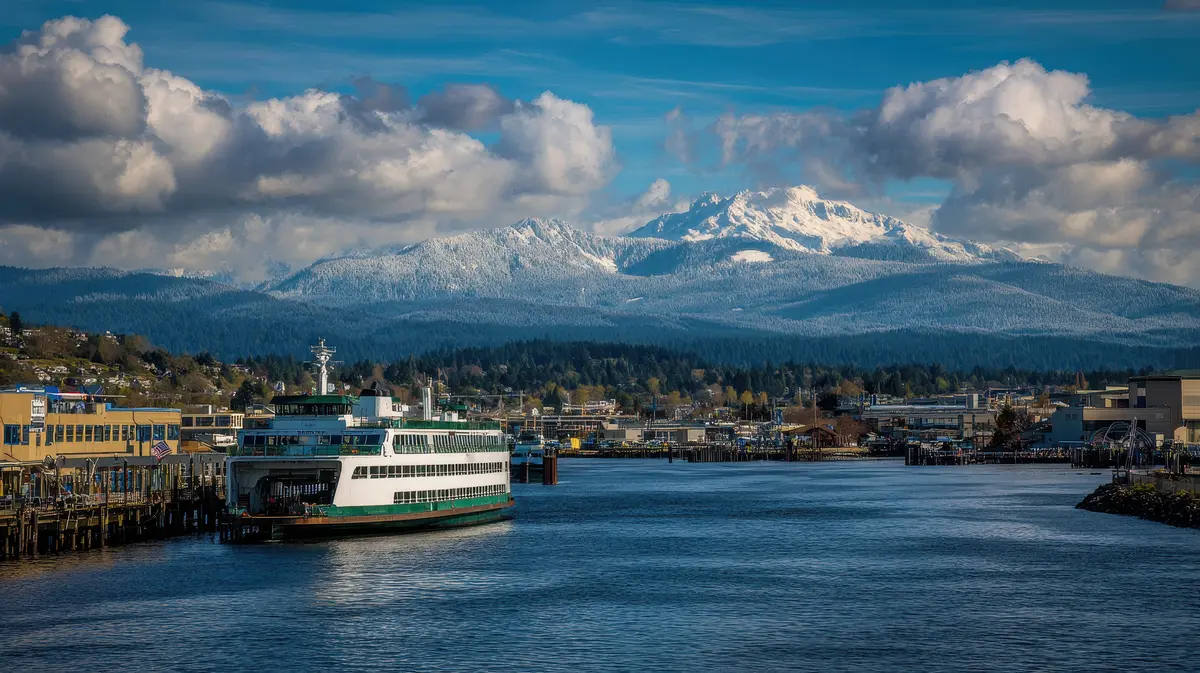
Living on Puget Sound means the water isn't just scenery — it's usable. Bremerton's public waterfront infrastructure is modest but functional, and the kayak and dock access at Evergreen Rotary Park is the clearest example of that.
Kayaking and Paddling
Launching from Evergreen Rotary Park puts you on the Port Washington Narrows, with the Manette Bridge overhead and relatively protected water for paddlers who aren't ready for open Sound conditions. More experienced paddlers extend their routes north toward Dyes Inlet or south toward Sinclair Inlet, where the working waterfront and naval installations create a backdrop that's unlike anywhere else in the Pacific Northwest.
Rentals aren't available at the park itself — you'll need to bring your own equipment or source it elsewhere on the peninsula. That's the friction point most newcomers hit: the access is there, but the supporting infrastructure is thin compared to the waterfront scene on the other side of the Sound.
Summer on the Waterfront
Summer in Bremerton concentrates heavily along the downtown shoreline from June through September. The Boardwalk markets, live music events, and food truck gatherings overlap with the ferry-adjacent foot traffic in a way that makes the waterfront feel genuinely activated rather than just staged. The copper conning-tower fountains at Harborside draw families on warmer days, and the wading pools become a reliable afternoon stop.
The seasonal shift is real, though. By October, the outdoor programming winds down noticeably, and the waterfront returns to a quieter baseline. Newcomers from sun-belt cities sometimes underestimate how completely the outdoor social calendar rotates around the summer window — and how long Bremerton's gray season actually runs.
Winter and Year-Round Options
The trail network at Illahee and Green Mountain stays accessible year-round, and the Manette Bridge walk is genuinely pleasant in light rain if you're prepared for it. Bremerton's mild maritime climate means true snowfall is rare at sea level, so trails rarely close from weather — though the Illahee parking area can get slick after heavy rains in winter months. After a cup of something hot from an independent café along Pacific Avenue, a gray-morning forest walk at Illahee is the kind of routine that makes Bremerton's winters tolerable for people who came prepared for them.
Youth sports and structured recreation programming through the parks system add another layer for families with school-age children — worth reviewing if organized leagues factor into your decision.
Looking to buy in Bremerton? Estimate your payment.
Enter your numbers to see an estimated monthly mortgage payment.
Estimate only. Excludes HOA fees and mortgage insurance. The interest rate above is a starting point, not a quoted rate — replace it with your own to see real numbers. Insurance is a flat placeholder, not a Bremerton quote.
State Parks and Beyond: Bremerton's Extended Outdoor Footprint
One of the practical advantages of Bremerton's location on the Kitsap Peninsula is its proximity to Washington State Parks that most visitors never connect to the city itself. Five state parks sit within a relatively short drive, each serving a different outdoor purpose.
Manchester, Scenic Beach, and Twanoh
Manchester State Park, a former military fuel depot converted to public parkland, sits a short drive south near Port Orchard and offers Puget Sound beach access, picnic areas, and a historic concrete bunker that kids find genuinely interesting. Scenic Beach State Park, near Seabeck, is the one Bremerton residents tend to default to when they want a longer shoreline walk and views of the Olympic Mountains across the water.
Twanoh State Park reopened in summer 2025 after playground and day-use area renovations — a relevant update for families who'd been avoiding it during the closure. The calmer, warmer inlet water at Twanoh makes it a better summer swimming destination than the open-Sound parks, and the drive from Bremerton passes through some of the most scenic stretches of the peninsula.
What This Means in Practice
The extended state park network effectively multiplies Bremerton's outdoor options without requiring residents to cross the Sound or head to the mountains. On a weekend morning, you can choose between a forest trail at Illahee, a waterfront walk at Scenic Beach, or a summit push at Green Mountain — all within roughly 45 minutes of downtown, all without a ferry ticket.
Early starts are the universal local answer to summer weekend crowds on the peninsula's road corridors — the parks themselves reward it with emptier trailheads and better light.
| Park / Area | Type | Approx. Drive from Bremerton | Best For |
|---|---|---|---|
| Manchester State Park | Waterfront / historic | ~20 min | Families |
| Scenic Beach State Park | Beach / shoreline | ~30 min | Views Nature |
| Twanoh State Park | Swimming / beach | ~40 min | Families |
| Green Mountain State Forest | Multi-use trails | ~25 min | Nature Views |
| Illahee Preserve Heritage Park | Forest / hiking | ~15 min | Nature Quiet |
| Bremerton Boardwalk / Waterfront | Urban waterfront | Downtown | Walkable Families |
The 2026–2030 PROS Plan signals that the city intends to expand and improve this infrastructure rather than maintain the status quo — a meaningful factor if you're buying with a long horizon and outdoor access is central to that decision.
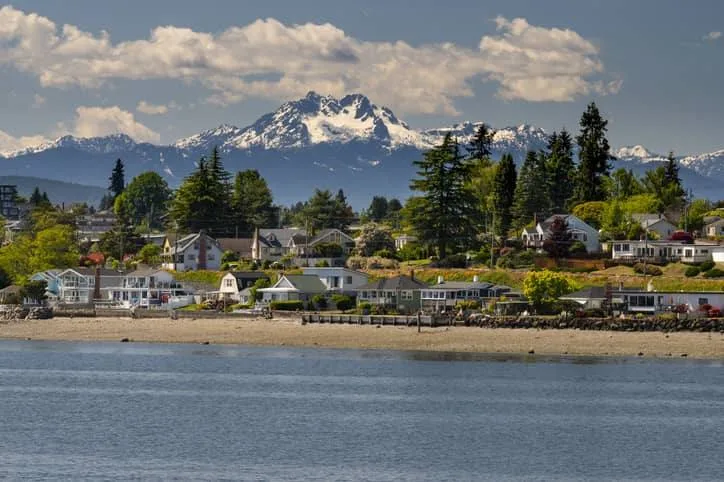
Local Expert Takeaway: Bremerton's outdoor system works best when you treat it as layered: the downtown waterfront — Harborside Fountain Park, the Boardwalk, Evergreen Rotary Park — for daily life and social gathering; Illahee Preserve for accessible forest immersion within 15 minutes; and Green Mountain or the state parks for the longer weekend commitments. The Manette Bridge walk is the city's most underrated daily-use asset — two miles of paved, view-rich path that functions equally as a recreational route and an easy introduction to what Bremerton's geography actually feels like from the inside. The gap in the system is shallow warm-water swimming: for that, Twanoh State Park is the local answer, not the open-Sound shoreline itself.
Quick Takeaways & FAQs
✅ Bremerton manages more than 341 acres of parks and open space — an outdoor footprint that outpaces most comparably sized cities on the Kitsap Peninsula.
⚠️ The outdoor calendar is genuinely seasonal: waterfront programming, farmers markets, and paddle access concentrate heavily between June and September, and the gray-season quiet catches many newcomers off guard.
📍 The copper conning-tower fountains at Harborside Fountain Park — designed to echo submarine architecture — are the city's most distinctive public art installation and double as a family splash area on warm summer days.
What is the best park in Bremerton for families with young kids?
Where do locals hike near Bremerton?
Can you kayak or paddleboard in Bremerton?
Are there state parks near Bremerton worth visiting?
Is Bremerton a good city for outdoor recreation year-round?
Moving to Washington?
Tell us what you need help with and we'll connect you with local resources.
