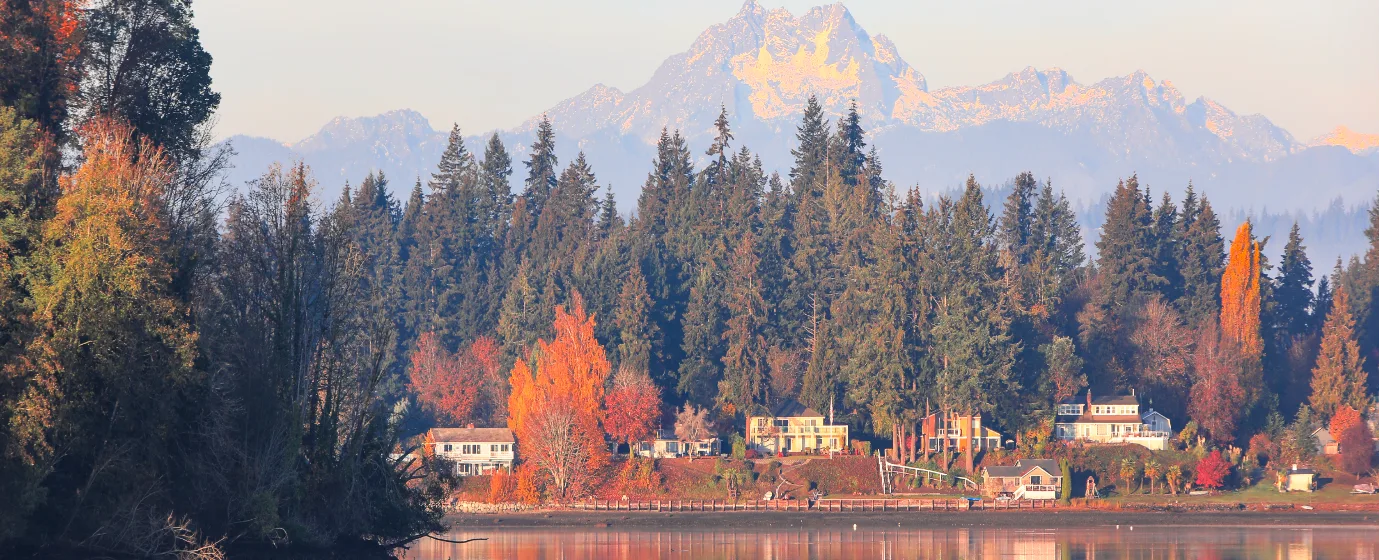
You've probably done the math already. California coastal home prices routinely exceed $800,000 — often well above that in the Bay Area or Los Angeles — and your tax bill reflects every dollar of what you earn. Bremerton sits on a peninsula across Puget Sound from Seattle, reachable by ferry, and it represents a genuinely different financial reality: a Zillow Home Value Index median of $459,702 (June 2026) and zero state income tax on wages. That combination is what draws Californians here, and it's real. But the lifestyle shift is sharper than the spreadsheet suggests, and understanding both sides of the trade-off is what this guide is for.
Bremerton's economy is anchored by Puget Sound Naval Shipyard and Naval Base Kitsap — two federal defense installations that collectively make this one of the most recession-resistant labor markets in the Pacific Northwest. That stability shapes everything: the income profile of the community, the pace of the housing market, and the kind of neighbors you'll have. The Bremerton School District serves the city, and the downtown waterfront along the Bremerton Boardwalk has seen steady reinvestment. For a fuller picture of who lives here and why, the city's character runs closer to working-waterfront town than tech-suburb — which is either exactly what you want or the thing that makes you hesitate.
Bremerton's overall cost of living runs approximately 16–21% above the U.S. national average, with housing as the primary driver — but it sits noticeably below Seattle on housing costs, making it one of the more accessible Puget Sound–adjacent options. Groceries, utilities, and day-to-day spending will feel familiar to Californians who already live in higher-cost markets. The ferry to Seattle — either the Washington State Ferries 60-minute crossing or the Kitsap Fast Ferry's 28-minute run — gives Seattle workers a car-free commute that no California suburb can replicate. Rain is constant from October through April; the gray is real, and no amount of research fully prepares you for your first November here.
Whether you're transferring for a defense contract, pricing yourself back into homeownership after California, or simply done with the freeways, the sections below break down Bremerton's California comparison on taxes and home prices, the honest cost-of-living picture, what the ferry commute actually means for daily life, what surprises people after six months, and how to approach the buying process from out of state.
The Home Price Reality: What Your California Equity Actually Buys Here
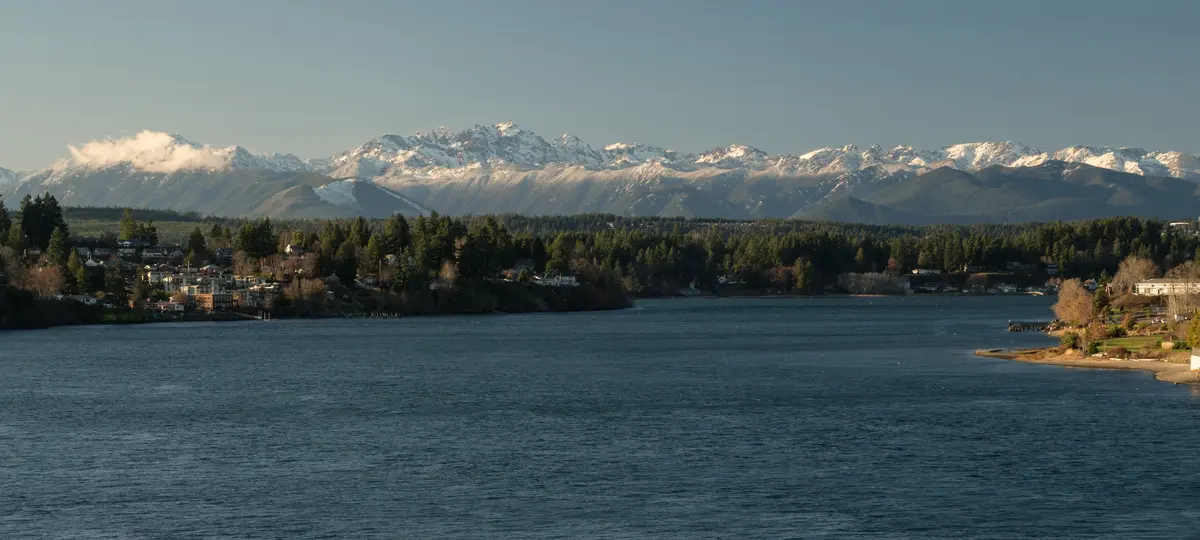
The most straightforward reason Californians end up in Bremerton is purchasing power. The typical Bremerton home value is $459,702 (Zillow Home Value Index, June 2026). California's coastal metro medians routinely run above $800,000 — higher in the Bay Area — which means buyers arriving from those markets are looking at a discount that is, by any measure, substantial.
That gap does not mean Bremerton is cheap in absolute terms. The market is competitive, inventory is limited on the west side of Puget Sound, and homes in the most sought-after pockets of Manette or along the waterfront move quickly. What it does mean is that a buyer who sold a modest California home and cleared meaningful equity can potentially purchase in Bremerton without stretching into an aggressive loan-to-value position. For first-time buyers still renting in California, see the buying process page for current down payment guidance and loan program context.
The Property Tax Comparison
Washington's effective property tax rate in Bremerton runs approximately 0.80% of assessed value. On the median home, that translates to roughly $3,678 annually — a figure that will read as low to any California buyer who purchased after 2010 and has watched their assessed value reset at sale.
California's Proposition 13 caps annual assessment increases at 2% for existing owners, but that protection evaporates the moment a property sells. A buyer purchasing a $900,000 home in coastal California faces a property tax bill calculated on that full sale price at effective rates that frequently land between 1.1% and 1.3% once local bonds and assessments are stacked in. Moving to Bremerton removes that exposure entirely.
| Metric | Bremerton, WA | California Coastal (Typical) |
|---|---|---|
| Typical home value (mid-2026) | $459,702 | $800,000–$1,200,000+ |
| Effective property tax rate | ~0.80% | ~1.1%–1.3% at purchase |
| Annual property tax on median home | ~$3,678 | $9,000–$15,000+ (varies by county) |
| State income tax on wages | None | 1%–13.3% marginal |
| Capital gains tax (state) | 7% on long-term capital gains above a $278,000 standard deduction for 2025, rising to 9.9% on gains above $1,000,000 | Taxed as ordinary income (up to 13.3%) |
| Combined sales tax | 9.2% | 7.25%–10.75% (varies by county) |
| Groceries exempt from sales tax | Yes | Mostly yes (limited exceptions) |
The sales tax number is the one that surprises Californians most. At 9.2% combined (6.5% state base plus 2.7% local), Bremerton's rate is higher than what most California cities charge — though the grocery and prescription drug exemption softens the day-to-day impact considerably.
For a complete look at all cost-of-living line items — utilities, groceries, transportation — the cost-of-living page covers each category in detail.
The Income Tax Advantage (and the Exceptions Worth Reading)
Washington has no individual income tax on wages or salaries. That is the single largest financial shift for most California households relocating to Bremerton, and it is real, immediate, and durable for the vast majority of earners.
For a household earning $100,000, the absence of state income tax saves roughly $5,000–$7,000 annually compared to California's progressive brackets, which peak at a 13.3% marginal rate — the highest of any U.S. state. For dual-income households earning more, the savings scale accordingly.
What Californians Often Miss: Capital Gains
Washington is not entirely tax-free for every transaction. Washington taxes 7% on long-term capital gains above a $278,000 standard deduction for 2025, rising to 9.9% on gains above $1,000,000. For a California tech worker relocating with a large stock position, or someone selling a rental property at a significant gain, this matters. It is not an income tax on wages — but it is real money if you are liquidating a substantial investment or triggering a large taxable event in your first year here.
For the overwhelming majority of people moving from California for affordability reasons, the lower threshold is the more relevant figure. If you are in the upper bracket, consult a tax professional licensed in Washington before your move date.
The Sales Tax Offset
The 9.2% combined sales tax in Bremerton is higher than what you paid in most California counties, and it will register on larger purchases — a new car, appliances, furniture for the new house. Groceries and prescription drugs are exempt, which meaningfully reduces the everyday impact. Most California transplants find the net tax picture strongly favorable to Washington, particularly when the income tax savings are factored across a full year.
Running the full numbers for your household's specific situation is worth doing with a tax professional, but the directional reality is consistent: for wage earners below the capital-gains threshold, Washington's tax structure is noticeably more favorable than California's for most income levels.
Day-to-Day Life: What Actually Feels Different After the Move
Californians moving to Bremerton consistently report that the price tags feel right but the pace feels foreign. This is not a complaint — for many, it is the whole point. Bremerton does not have the density, the restaurant diversity, or the retail footprint of a California coastal city of comparable size. What it has instead is water access, quiet neighborhoods, and a community that is genuinely less transient than most West Coast metros.
The Six-Month Surprise
Almost everyone underestimates the gray. The Pacific Northwest's overcast season runs longer and deeper than California's worst winter stretches. November through February in Bremerton is persistently overcast — not dramatic snowstorms, not California-style rain events, just low cloud and drizzle for weeks at a time. People who moved specifically for the outdoors and the scenery are often the most caught off guard, because the scenery is real but it's hidden for months at a stretch.
The other surprise is how much of local social life organizes around the Manette neighborhood and the downtown waterfront. Independent spots like Cafe Corvo on N Callow Ave and McGavin's Bakery next door draw regulars on weekend mornings — the kind of low-key, walk-in-and-recognize-faces dynamic that California transplants often say they missed without knowing they missed it. Remedy Speakeasy on 4th Street fills a similar role for evenings. None of these are Instagram destinations; they are just genuinely local in a way that takes a few months to find and appreciate.
What the Ferry Does to Your Mental Geography
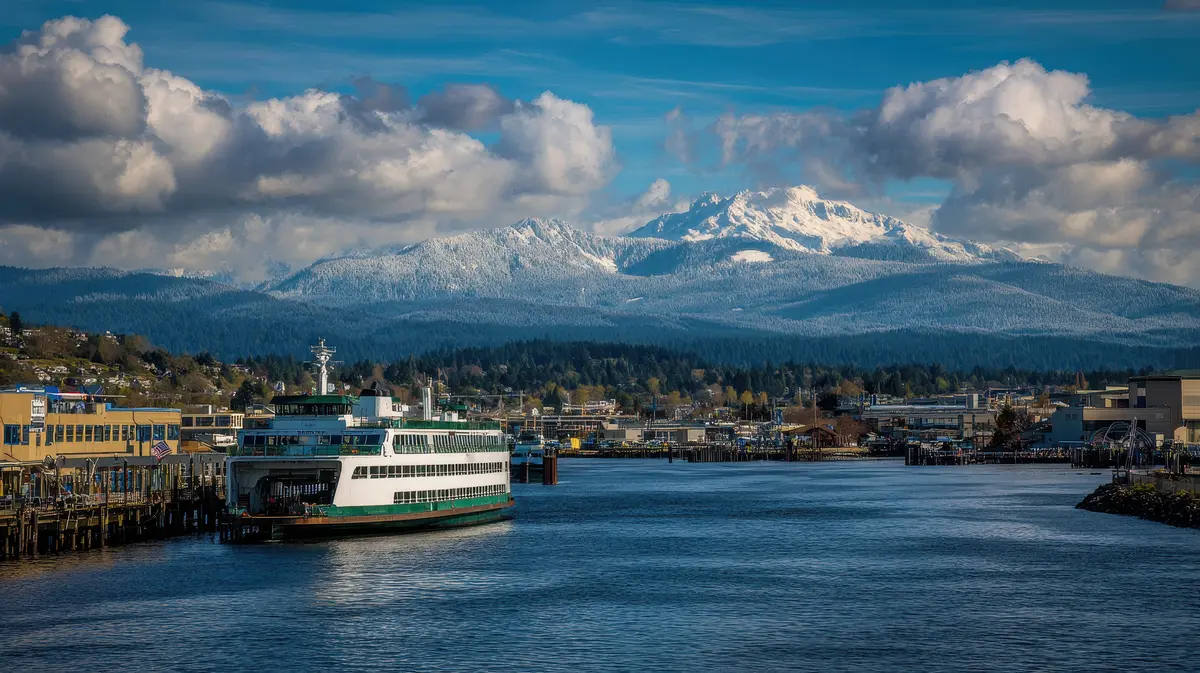
Living west of the Sound changes your relationship with Seattle in a specific way. It is close — 28 minutes on the Kitsap Fast Ferry, about 60 minutes on the Washington State Ferries vehicle crossing — but crossing the water creates a psychological separation that most Californians do not anticipate. You stop treating Seattle as your backyard and start treating Kitsap Peninsula as your home. For some households, especially those with kids in school or parents who work locally, that separation becomes a genuine quality-of-life asset. For dual-income households where both partners need to commute east, managing two different ferry schedules adds a layer of planning that a simple freeway drive does not require.
Walk-on passengers riding the Washington State Ferry eastbound from Bremerton to Seattle travel free; fares are collected on the westbound leg only. The Kitsap Fast Ferry westbound fare is $13 as of October 2025, and PugetPass is no longer accepted on that route — a change that surprised regular commuters when it took effect. For the full commute and employer picture, see the living in Bremerton overview.
Healthcare Costs in Context
Health insurance premiums in Washington typically run noticeably below what California residents pay for comparable coverage — a real line-item difference for households carrying their own plans. The honest trade-off is distance to specialized care: routine and preventive care is accessible locally, but for advanced procedures, you are looking at a drive or a ferry crossing to reach the full range of Seattle-area options.
Looking to buy in Bremerton? Estimate your payment.
Enter your numbers to see an estimated monthly mortgage payment.
Estimate only. Excludes HOA fees and mortgage insurance. The interest rate above is a starting point, not a quoted rate — replace it with your own to see real numbers. Insurance is a flat placeholder, not a Bremerton quote.
Neighborhoods Californians Should Know Before Buying
Bremerton's geography is shaped by Puget Sound to the east, Kitsap Lake to the west, and the shipyard that defines the waterfront. Where you land matters enormously for how the city feels day-to-day. For the full breakdown by area, the neighborhoods guide covers each one in detail — but here is what California buyers specifically need to know before making offers.
Manette: The Most California-Adjacent Feel
Manette sits across the Manette Bridge from downtown and draws the highest concentration of young professionals, remote workers, and recent transplants. It has walkable streets, older craftsman housing stock, and the closest thing to a neighborhood coffee culture that Bremerton offers — Cafe Corvo and McGavin's Bakery are both here on N Callow Ave. If you are coming from a walkable California neighborhood and that texture matters to you, start here.
Downtown Bremerton: Reinvestment in Progress
The Bremerton Boardwalk, Harborside Fountain Park, and the Admiral Theatre anchor the downtown core. It is genuinely improved from where it was a decade ago, and it has waterfront views that no inland California suburb can match. It is also still a work in progress — pockets of vacancy exist alongside the investment, and buyers should walk it on a weekday evening, not just a Saturday afternoon, before committing.
West Bremerton and Kitsap Lake: Space and Quiet
West Bremerton and Kitsap Lake offer the largest lots and the most suburban feel — closer in character to Sacramento-area suburbs than anything on the California coast. Families with school-age children looking for more square footage per dollar tend to look here first. The compromise is that on-foot access to amenities is limited and a car is required for most errands.
Charleston and Bay Vista: Defense-Adjacent Convenience
Charleston sits close to the shipyard and Naval Base Kitsap, which is a genuine convenience for military families. Bay Vista draws buyers who want views without Manette's density. Commuters working on base often land in Charleston; views buyers consistently look at Bay Vista first.
One thing California buyers often overlook: Bremerton's crime profile varies meaningfully by area, and the citywide figures do not tell the full story. The safety page has the neighborhood-level context worth reading before you choose a street.
The Practical Moves: Renting First, Buying Smart, Avoiding the Common Mistakes
Most California relocators arrive with equity, urgency, and not enough local knowledge. The buyers who regret their Bremerton purchase almost always bought too fast — within the first month of arrival, in an area they had not experienced across seasons, without understanding the ferry schedule's real impact on their specific commute pattern.
The Case for Renting First
Renting before buying in Bremerton is more viable than in most Puget Sound markets. The average monthly rent runs meaningfully below comparable California coastal markets, which means a 6–12 month rental period does not carry the same financial penalty it would if you were renting in San Francisco or San Diego while waiting to buy. Use that time to understand which neighborhoods genuinely fit your daily life before committing to a purchase.
Specifically: rent in Manette if you think you want walkability, then ask yourself honestly whether you are actually walking anywhere. Rent near the ferry terminal if you think you will commute to Seattle, then experience the schedule on a rainy February morning before you decide that is a permanent lifestyle. The answers will clarify your buying criteria in ways that no amount of research from California can.
What Californians Often Get Wrong About the Market
Bremerton is not a buyer's market just because it is affordable relative to California. Inventory on the west side of the Sound is genuinely constrained, and well-priced homes in Manette or along waterfront-adjacent streets move quickly. California buyers accustomed to negotiating from a position of strength in a slower market occasionally miscalibrate their initial offers — and miss homes as a result.
The other mistake is underestimating how different the purchase process feels without California's disclosure culture. Washington real estate transactions have their own conventions, timelines, and inspection norms. The buying process page walks through what to expect, including down payment ranges and loan program options relevant to this market.
What You Would Not Do If You Knew Then What You Know Now
Talk to people who have been here two or three years, not just the ones who arrived in the last six months still in the honeymoon phase. The consistent feedback from longer-term California transplants is not regret about the move — it is regret about the specific house or the specific neighborhood chosen under the initial excitement of escaping California prices. Rocky Point and Bay Vista are beautiful in summer; they feel more isolated in January. That is worth knowing before you fall in love with a waterfront view on a clear August afternoon.
For school-age families, review the schools page before finalizing a neighborhood — the Bremerton School District boundary lines affect which school your address assigns to, and those boundaries are not intuitive from a map alone.
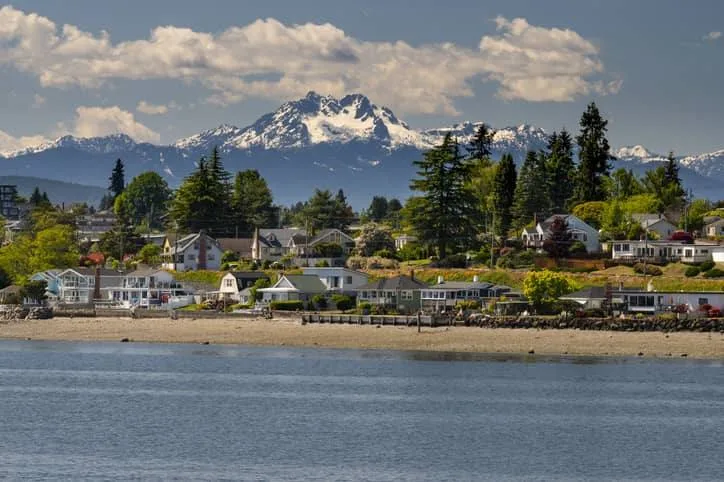
Local Expert Takeaway: The financial case for leaving California is genuinely strong from Bremerton — no state income tax on wages, a Zillow Home Value Index median of $459,702 against California coastal markets running well above $800,000, and a property tax rate of approximately 0.80% that does not reset painfully at sale. What the spreadsheet does not capture is the ferry schedule on a dark February morning, the limited specialist care options compared to a California metro, and the fact that Bremerton's best neighborhoods — Manette, the waterfront corridor — are genuinely competitive despite the headline affordability. Rent on N Callow Ave for six months, walk to Cafe Corvo on a Tuesday, take the fast ferry to Seattle and back on a commute day. If that still feels right, you have probably found your city.
Quick Takeaways & FAQs
✅ Washington has no state income tax on wages — a household earning $100,000 saves roughly $5,000–$7,000 annually compared to California's rates.
⚠️ Bremerton's 9.2% combined sales tax is higher than most California counties, and Washington taxes 7% on long-term capital gains above a $278,000 standard deduction for 2025, rising to 9.9% on gains above $1,000,000 — relevant for sellers liquidating large investment positions.
📍 Walk-on passengers riding the Washington State Ferry from Bremerton to Seattle travel free eastbound — fares are only collected on the westbound leg.
Is Washington state really no income tax for Californians moving to Bremerton?
How much less does a home in Bremerton cost compared to California?
What is Bremerton's property tax rate compared to California?
How does the ferry commute to Seattle actually work day-to-day?
Should I rent first or buy immediately when moving to Bremerton from California?
Moving to Washington?
Tell us what you need help with and we'll connect you with local resources.
