
What Is Living in Sherman, Texas Like?
Maybe you've been priced out of Frisco or McKinney, or your company is following the semiconductor wave north. Either way, Sherman has been appearing on more relocation shortlists than at any point in its history — and the city that greets you today looks nothing like the quiet county seat it was five years ago. Sherman sits in Grayson County about 70 minutes north of Dallas, anchored by US-75 and flanked by US-82. What shapes daily life here is the collision between a long-established small-city rhythm and the industrial buildout of one of the largest semiconductor campuses in American history. That collision is the central fact of every decision you'll make about moving here.
The economic story is extraordinary by any measure. Texas Instruments began production at its first Sherman fab — SM1 — in December 2025, with a second fab underway and two more planned. The total investment for the mega-site is up to $40 billion, supporting 3,000 direct jobs. GlobiTech, a GlobalWafers subsidiary, is adding a $5 billion silicon wafer factory expected to create roughly 1,500 more jobs. Those two investments alone are reshaping who moves to Sherman and why — semiconductor engineers relocating from Austin or Phoenix, construction-trade workers planting roots, and supply-chain professionals drawn to a growing industrial cluster. Alongside that, Tyson Foods and Coherent Corp have been part of the fabric here for years. Austin College, founded in 1849 and the oldest institution of higher education in Texas still operating under its original name, contributes $83 million annually to the local economy and gives the city a genuine intellectual anchor that most cities of 52,417 don't have.
Housing costs are still well below what the Dallas metro commands. The typical home price in Sherman was $255,418 as of July 2026 — a figure that looks striking to anyone coming from Plano or Allen, and reasonable even by Grayson County standards. The city-wide typical rent runs $1,291 per month. The effective property tax rate sits at approximately 1.27%, which is notable by Texas standards — property taxes here are real, as they are everywhere in the state. With a median household income of $58,859, Sherman is an attainable market for working households, though the median income falls short of what's needed to buy the typical home comfortably. Day-to-day life leans on 227 sunny days a year, Lake Texoma a short drive away, Herman Baker Park and Fairview Park inside city limits, and a downtown historic district that gives the city some actual bones. Outdoor life and small-city pace are two things Sherman consistently delivers.
Whether you're considering a move or just starting your research, the sections below break down Sherman's neighborhoods, housing market, daily commute, local favorites, and what life here is really like once you've unpacked.
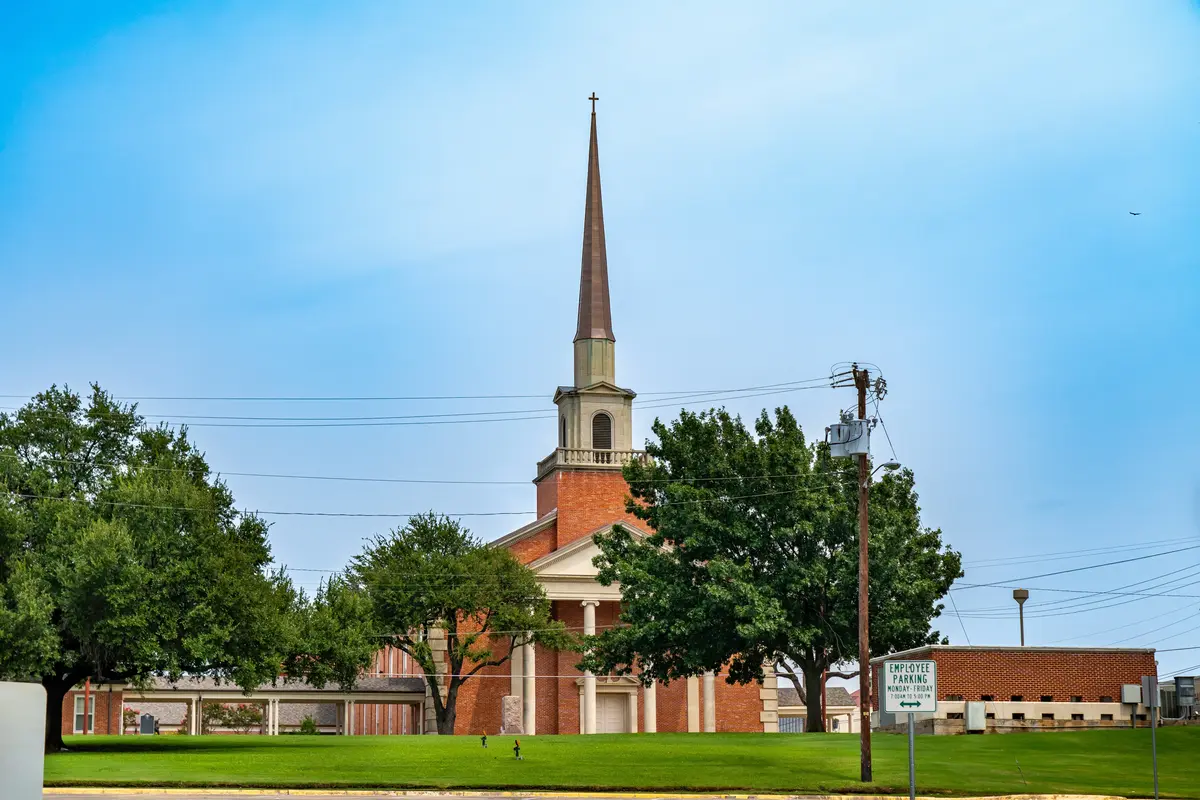
Sherman at a Glance
Looking to buy in Sherman? Estimate your payment.
Enter your numbers to see an estimated monthly mortgage payment.
Estimate only. Excludes HOA fees and mortgage insurance. The interest rate above is a starting point, not a quoted rate — replace it with your own to see real numbers. Insurance is a flat placeholder, not a Sherman quote.
Why Are People Moving to Sherman?
The short version: Texas Instruments chose Sherman for what may be one of the largest private manufacturing investments in U.S. history, and that decision set off a chain reaction. Land investors followed. Infrastructure funding followed. New housing followed. And now people are following — from Dallas, from Austin, from out of state, and from countries whose semiconductor firms are building supply chains nearby.
The Semiconductor Effect
When SM1 began production in December 2025, Sherman stopped being a city that was going to change and became a city that is changing. Texas Instruments' Sherman mega-site plans call for up to four fabs, 3,000 direct jobs, and an investment of up to $40 billion. GlobiTech is building alongside it. The city and its economic development arm have backed that buildout with over $500 million in infrastructure, including a $300 million industrial wastewater facility and an 11-mile water pipeline — the kind of civic commitment that signals this isn't a single-employer gamble.
The practical effect for newcomers: the job market in Sherman now includes high-wage manufacturing and engineering roles that simply didn't exist here a few years ago. That changes who can live here, what they'll earn, and what the local economy can support.
The Price Argument
For anyone relocating from the DFW suburbs closer to Dallas, the numbers are hard to ignore. Sherman's typical home price of $255,418 (July 2026) sits noticeably below what you'd pay in Van Alstyne or Pottsboro, and well below the Frisco and McKinney price levels that have pushed buyers further north for years. Growth is tracking along US-75, and land investors — including entities from other states and countries — are buying tracts at a pace the city describes as unprecedented. Buyers who wait are paying more than buyers who moved two years ago.
The Austin College Factor
Not everyone moving here is chasing a semiconductor job. Austin College draws faculty, staff, and a rotating academic community that values a small-city environment with an actual intellectual life. The college consistently earns national recognition for value and internship programming. Its presence means Sherman has independent coffee shops and a few genuinely good restaurants that wouldn't otherwise exist in a city this size — a fact that matters to the people who care about it.
What you give up, honestly: the school district's performance numbers reflect real challenges. The Sherman Independent School District holds a C rating, according to the Texas Education Agency, and with 7,487 students enrolled in 2025-26, on 2024-25 state assessments, 30% of students reached math proficiency and 42% reached reading proficiency. Families with school-age children weighing the move should read the full schools breakdown before deciding.
What Daily Life Feels Like in Sherman
Six months in, most newcomers from larger metros say the same thing: it's quieter than they expected, in a way that takes some adjusting to. Not empty — Sherman at 52,417 residents has a real downtown, real restaurants, and real parks — but the pace is unmistakably small-city. Weekend plans require more intention than spontaneity.
The Downtown Core
The Sherman Downtown Historic District and the Grayson County Courthouse give the city a center of gravity that not every Texas town this size can claim. The streets around the courthouse have independent dining, a handful of coffee shops, and enough foot traffic on a weekend afternoon to feel alive without feeling crowded. The Sherman Museum of Art adds something that genuinely surprises people who arrive expecting a purely industrial city.
Parks and Outdoor Life
Fairview Park is where families end up on warm afternoons — the Splash Aquatic Center draws kids from across the city, and the dog park has separate areas for large and small dogs with agility courses. Pecan Grove Park has a different draw: an 18-hole disc golf course that's developed a real following, Dean Gilbert Lake for fishing, and an amphitheater that hosts the annual Lights on the Lake Fourth of July celebration, with live music and fireworks. Herman Baker Park fills in as the greenway option, with mature trees and walking paths that feel removed from the construction energy reshaping the city's edges.
Lake Texoma is the outdoor anchor that no Sherman newcomer anticipates until they've lived here a season. A reservoir on the Texas–Oklahoma border drawing crowds from across the region, it offers striped bass fishing, boating, and camping. Hagerman National Wildlife Refuge, just west of the city along Lake Texoma's Big Mineral Arm, offers free-admission birdwatching and hiking that draws serious birders during fall and spring migrations.
The Seasonal Surprises
Sherman averages 227 sunny days a year, which makes summer the dominant season — and summers here are genuinely hot. August is the month when the North Texas Fair and Rodeo runs, drawing rodeo competitors and carnival energy that fills the city in a way that catches newcomers off guard. Plan around it. The flip side is that North Texas winters are mild enough that outdoor life doesn't fully shut down, but cold fronts drop fast and residents who came from the South still get surprised by February ice.
What locals rarely warn you about: construction traffic along US-75 is a living condition right now, not a temporary inconvenience. The semiconductor buildout means heavy vehicles, lane changes, and extended project timelines along the city's main north-south spine. Living here during the buildout period means building buffer time into any drive that touches that corridor.
The Sherman Housing Market Right Now
Sherman's housing market is in a phase most Texas cities only go through once. A city that was affordable-by-default five years ago is now affordable-by-comparison — a meaningful difference. The typical home price of $255,418 as of July 2026 still represents genuine value relative to the broader Dallas metro, and the land investor activity along US-75 suggests the market has more attention than it's historically been used to.
The city-wide typical rent sits at $1,291 per month, which remains one of the more accessible rental markets in the North Texas region — relevant both for renters evaluating the move and for buyers who want to understand the investment context. For the full breakdown of what housing and renting costs across Sherman's neighborhoods, see the cost of living page.
What the Market Looks Like on the Ground
Sherman's housing stock spans a wide range — from established ranch-style homes in neighborhoods like Bel Air Village and Westwood Village to newer construction in Heritage Ranch and O'Hanlon Ranch. The entry point into the market is real: buyers can still find older homes well below the city-wide typical price, while newer builds and larger lots in the city's growing areas run above it. Some areas cost meaningfully more than others, and that gap is widening as new development arrives.
The affordability math is honest but not easy. The median household income in Sherman is $58,859 — enough to make renting comfortable but short of what's needed to carry the typical home without stretching. That gap between median income and the income needed to buy the typical home is a real consideration for first-time buyers, and it's worth understanding before you start shopping seriously. The first-time homebuyer page covers financing approaches in depth.
The Investment Dynamic
Outside buyers are active in Sherman in a way that's rare for a city of this size. Entities from Dallas, other states, and other countries have been acquiring large land tracts, particularly north of the city along US-75. That investor activity doesn't change the day-to-day buying experience for a household looking for a home — but it does explain why land and new construction can price differently than the existing housing stock, and why the market as a whole has more momentum than the typical home price alone suggests.
Sherman Neighborhoods
Sherman has several distinct areas — each with its own character and appeal. Here’s a breakdown to help you narrow down where to focus your home search.
🏡 Heritage Ranch
Heritage Ranch draws buyers looking for newer construction and a neighborhood feel with room to grow — it's one of Sherman's more active areas for new homes and appeals to families with kids and younger households planting roots in the city.
🏠 Bel Air Village
Bel Air Village is an established neighborhood with mature trees and a settled character that appeals to buyers who want the feel of a neighborhood that's already figured itself out — less construction noise, more permanent community.
🌳 Westwood Village
Westwood Village offers a mix of housing styles in a central Sherman location, making it a practical choice for households that want shorter drives to everyday errands without sacrificing a genuine neighborhood feel.
🏘 O'Hanlon Ranch
O'Hanlon Ranch is one of Sherman's newer residential areas, with larger lots and a suburban scale that attracts families looking for space and newer construction closer to the city's growing infrastructure.
🏔 Preston Club
Preston Club has a more elevated residential character with larger homes and a quieter street pattern — it suits buyers looking for a step up in finishes and lot size without leaving Sherman's city limits.
🌆 Turtle Creek
Turtle Creek is a well-established area that draws buyers who value a settled neighborhood environment and proximity to Sherman's parks and greenway corridors, making it a solid fit for families and long-term residents.
Pros & Cons of Living in Sherman
The Pros
- Explosive job growth from Texas Instruments and GlobalWafers semiconductor investments
- Home prices well below Dallas-Fort Worth suburbs
- Historic, walkable downtown with local shops and restaurants
- Close to Lake Texoma for boating and fishing
The Cons
- State school accountability rating is only average (C) despite decent graduation rates
- Property crime runs somewhat above national norms
- Longer commute (60+ minutes) to core DFW job centers than closer-in suburbs
Getting Around & Commuting in Sherman
Sherman is a car city, full stop. US-75 is the main north-south spine connecting the city to the Dallas metro, and US-82 (the Buck Owens Freeway) carries east-west traffic through Grayson County. SH-56, SH-11, and SH-91 handle local and regional movement. Most daily errands, work commutes, and weekend trips begin and end in a vehicle.
The Dallas Commute Reality
Getting to Dallas takes about 70 minutes under normal conditions — a meaningful drive that shapes how people think about Sherman. Most residents who work in the metro are making that trip one to three times a week, not five. Remote and hybrid schedules are what make Sherman viable for Dallas-area employment; a five-day-a-week commute is a different calculation entirely, and most people who've tried it don't sustain it long.
That commute has a structural pressure point: US-75 through Sherman and into the metro is already the city's primary artery, and the Texas Department of Transportation is advancing long-term improvement work on US-75 and US-82 in the Sherman-Denison corridor. During active construction phases, adding buffer time to any drive on that route is not optional — it's just how the corridor works right now.
Local Employment Changes Everything
The most significant commute shift happening in Sherman is the growth of local employment. The Texas Instruments campus, GlobiTech's wafer factory, Tyson Foods, Coherent Corp, and a growing supply-chain ecosystem mean more residents are working inside the city than at any point in recent memory. For households where one or both adults can work locally, the Dallas commute question largely disappears — and that's a genuine quality-of-life upgrade that doesn't show up in the home price data.
The Sherman Independent School District and the City of Sherman remain the city's institutional employers, with roles spread across the city rather than concentrated in one district. Austin College adds another local employment node, particularly for academic and administrative staff who can walk or make a short drive to campus.
Airport Access
Dallas/Fort Worth International Airport is 65 miles away — a drive that runs about 70 minutes under reasonable conditions. For frequent flyers, that distance is real and worth factoring. Most residents treat DFW as the primary travel hub rather than a quick-errand airport, and plan trips accordingly.
Who Sherman Works Best For
| Buyer Type | Sherman Fit | Best For |
|---|---|---|
| Semiconductor/tech worker with local TI or GlobiTech role | Strong — live and work in the same city | Commuter Tech |
| Remote worker priced out of DFW suburbs | Strong — price point and lifestyle work well | Value Quiet |
| Family prioritizing affordability over school rating | Good — cost of living is real; school performance requires research | Families First-Time |
| Hybrid DFW commuter (1-3 days/week) | Workable — 70 minutes each way is the real number | Commuter |
| Retiree seeking small-city pace near Lake Texoma | Good — outdoor access, regional health services, mild winters | Nature Quiet |
| Daily DFW commuter needing five days on-site | Difficult — 70 minutes each way daily is a significant ask | |
| First-time buyer seeking entry-level price | Good — some of the most accessible pricing in North Texas | First-Time Value |
Sherman works best when either the commute is local or the schedule is flexible. The city's value proposition weakens proportionally with every day you add to a Dallas-facing commute.
Schools in Sherman
Families relocating to Sherman have public, private, and higher-education options nearby. Here’s a quick overview.
🎓 School District
Sherman Independent School District serves K–12 students across Sherman and the surrounding area. Rated C (source: Texas Education Agency, 2025 A-F accountability rating (2024-25 school year)).
🏆 Graduation Rate
The 4-year high-school graduation rate here is approximately 93%.
📚 Higher Education
Texas’s public universities — the University of Texas at Austin, Texas A&M University, and the University of Houston — offer four-year degrees statewide, with one of the largest community college systems in the country (50+ public community college districts) providing two-year and workforce programs.
🌐 Online Learning
UT Austin Online and Texas A&M University Online offer fully accredited online degrees for remote learners across the state.
Safety in Sherman
A quick look at how Sherman compares on the numbers that matter most when weighing a neighborhood or a move.
🛡 Violent Crime
Approximately 3 per 1,000 residents.
🔒 Property Crime
Approximately 19 per 1,000 residents.
Compared to the most recent national figures from the Bureau of Justice Statistics (2024), Sherman’s violent crime is below the national average (about 3.7 per 1,000), and property crime is about the same as the national average (about 18.4 per 1,000).
Against Texas as a whole, Sherman’s violent crime is roughly two-thirds of the state average, and property crime is about the same as the state average (Bureau of Justice Statistics, Crime Known to Law Enforcement, 2024 (tables 2 and 3)).
Crime rates can vary a lot within a single city, so the citywide numbers above are only a starting point. Some neighborhoods in Sherman run well below these averages, while others run higher — the kind of block-by-block detail that matters most when you’re actually choosing where to live. The full guide below breaks it down neighborhood by neighborhood.
Working in Sherman
Sherman’s largest employers span several industries — here are some of the anchors of the local job market.
🎓 Sherman Independent School District
Education
🏛 City of Sherman
Municipal government
🛒 Tyson Foods
Food processing
💻 Texas Instruments
Semiconductor manufacturing
💻 GlobiTech
Semiconductor manufacturing
🏭 Coherent Corp
Photonics manufacturing

Retiring in Sherman
Sherman draws retirees for its balance of amenities, outdoor access, and cost. Here’s what to weigh.
🌤 Climate
Sherman averages 227 sunny days a year, with warm springs and mild winters that keep outdoor life possible through most of the year. Summers are genuinely hot and run long — expect heat through September. Cold fronts in winter arrive fast and can bring ice, though extended cold spells are rare.
🍴 Lifestyle
The downtown historic district, the Sherman Museum of Art, and the Grayson County Courthouse give the city cultural anchors beyond what most small Texas cities offer. Lake Texoma and Hagerman National Wildlife Refuge provide year-round outdoor access. The North Texas Fair and Rodeo every August is a genuine community event worth building your calendar around.
🏚 55+ Communities
No 55+ communities were found in Sherman. Retirees drawn to the area typically look at single-family homes in established neighborhoods or explore nearby communities in Grayson County. The city's retiring page covers the full picture of senior living options in the region.
✈ Getting Around
A car is necessary for daily life in Sherman. The city is laid out for driving, with US-75 and US-82 as the main travel corridors. Dallas/Fort Worth International Airport is 65 miles away — the primary option for air travel. A regional medical center is located inside city limits, providing hospital services without a long drive.
🏛 Texas Taxes for Retirees — What to Know
- No state income tax — Texas has no personal income tax — constitutionally protected under Article VIII, Section 24. Social Security, pensions, 401(k)/IRA withdrawals, and annuity payments are all untaxed at the state level, with no state return to file.
- Sales tax is the tradeoff — The state sales tax is 6.25%, and local add-ons bring the combined rate in Sherman to 8.25% (Texas Comptroller of Public Accounts, city sales and use tax rates, July 2026). Groceries and prescription drugs are exempt.
- Property taxes — the real tradeoff — Texas’s effective property tax rate averages about 1.40%, among the highest in the country, since property tax (not income tax) funds most local government and schools.
- Over-65 homestead exemption and school-tax freeze — Homeowners 65+ (or disabled) get an additional $60,000 exemption from their home’s value for school district taxes, on top of the general homestead exemption — $200,000 off school taxable value combined, following November 2025’s Proposition 11 (SB 23), which raised the over-65 exemption to $60,000, and Proposition 13 (SB 4), which raised the general homestead exemption to $140,000. Once claimed, your school district tax bill is frozen at that year’s amount and cannot increase as home values rise, and the ceiling can transfer if you move to a new home within Texas.
- Deferral option if cash is tight — Homeowners 65+ can defer property tax payment entirely for as long as they live in the home, rather than paying it currently — interest accrues, but no forced sale.
- No estate or inheritance tax — Texas has no estate tax, no inheritance tax, and no gift tax.
- No separate capital gains tax — Because Texas has no state income tax, capital gains — including on investments and home sales — are not taxed at the state level at all, unlike states such as Washington that tax capital gains separately from income.
Tax laws change frequently and individual situations vary. This is general information, not tax advice — always consult a qualified Texas tax professional or CPA for personalized retirement tax planning.
Weekends & Local Favorites in Sherman
Sherman's weekend life is quieter than a city of 52,417 might suggest, but the bones are there. The downtown historic district and the parks system carry most of the social weight, and the proximity to Lake Texoma expands the options considerably once you know it's there.
Food, Coffee, and the Local Scene
The dining options in Sherman range from longstanding locals to spots that have grown alongside the city's changing demographics. Cackle & Oink BBQ draws the serious barbecue crowd, with the kind of focused menu that earns repeat visits. City Limits and Tracks Restaurant offer a more relaxed setting for a weeknight dinner or a casual weekend meal. Catrina's Cocina & Tequila Bar fills the Tex-Mex niche with a lively crowd on most evenings. The Post Restaurant rounds out the sit-down options with a feel that leans slightly more upscale by Sherman standards — a solid choice when you want something a step above the everyday.
Coffee in Sherman is better than newcomers expect. Sweetberries Cafe is an institution, doing double duty as a coffee destination and a gathering spot that the Austin College community treats as a second campus. The White Rabbit Coffee House has a distinct personality that regulars are loyal to. CJ's Coffee Cafe is a grab-and-go option for the weekday morning rush. Eggsquisite Cafe and Mom's Bakery fill out the breakfast-and-coffee morning scene with a neighborhood feel that doesn't require a parking strategy.
Markets and Community Events
The Sherman Farmer's Market brings local produce and vendors together in a format that's become a genuine weekly ritual for a growing slice of the population. It's the kind of stop that introduces you to neighbors faster than any block party. The annual North Texas Fair and Rodeo every August is the city's signature community event — rodeo competitions, live music, and carnival energy that fills Sherman with a crowd that feels genuinely local rather than imported.
Getting Out of Town (Without Going Far)
Lake Texoma is the outdoor resource that changes the calculus for Sherman residents. A reservoir drawing crowds from across the region on the Texas–Oklahoma border, it offers striped bass fishing, boating, camping, and swimming. The lake's self-sustaining landlocked striped bass population is what serious anglers come for. Hagerman National Wildlife Refuge, just west of Sherman along the Big Mineral Arm of Lake Texoma, is where birdwatchers go during fall and spring migrations — and the free admission makes it an easy weekend call.
Inside the city, the Sherman Municipal Golf Course gives golfers a local option without a long drive. Herman Baker Park and the trails at Fairview Park handle the weekday run or the weekend walk. Preston Peninsula and Pecan Grove Park round out the outdoor rotation for residents who want variety without leaving Grayson County.
Local favorites in Sherman
Restaurants
- Cackle & Oink BBQ
- City Limits
- Catrina's Cocina & Tequila Bar
- Tracks Restaurant
- The Post Restaurant
Outdoors
- Herman Baker Park
- Fairview Park
- Sherman Municipal Golf Course
- Preston Peninsula
- Pecan Grove Park
Coffee
- Sweetberries Cafe
- Eggsquisite Cafe
- CJ's Coffee Cafe
- Mom's Bakery
- The White Rabbit Coffee House
Farmers Markets
- The Sherman Farmer's Market
Top Things Locals Say About Sherman
The best intel about a city comes from the people who actually live there. Here’s what Sherman residents say when newcomers ask the questions everyone’s thinking.
“I knew the commute to Dallas would be long, but I didn't expect how much I'd stop making it after the first year. Once you put down roots here — find your coffee shop, your park, your people — the city starts to feel complete in a way that I didn't think was possible when I first drove up US-75 looking at farmland.”
— Recent Sherman home buyer
“What's the most surprising thing about living in Sherman?”
How much the city has changed in just a few years, and how fast it keeps changing. New neighborhoods are appearing on the north end of the city, construction crews are a constant presence near the TI campus, and the restaurants and coffee shops downtown feel noticeably busier than they did even two years ago. Longtime residents notice the shift in a way that newcomers don't — but newcomers notice it too, because Sherman doesn't look or feel like the quiet county seat it was marketed as just a few years ago.
“What do locals love most about Sherman?”
Lake Texoma is the answer most people give after they've lived here awhile. It's easy to take for granted until you tell someone in Plano or Frisco that you have a massive reservoir on the Texas-Oklahoma border within reasonable driving distance and they look at you differently. Inside the city, Pecan Grove Park and the downtown historic district are where residents genuinely spend time — the Lights on the Lake celebration every Fourth of July is the community event that brings people out who've never met their neighbors.
“What should newcomers to Sherman know?”
Build extra time into any drive that runs along US-75 right now — the construction related to the semiconductor campus buildout is real and ongoing, and it affects travel times in ways that aren't always predictable. Also: the summers are serious. Heat in Sherman is not something you acclimate to quickly if you're coming from further north, and the stretch from June through September requires adjusting how and when you spend time outside. The payoff is that winters are mild enough to get you back outdoors well before spring.
“How much do you need a car in Sherman?”
A car is essential for daily life in Sherman. Most errands require a drive, and the residential neighborhoods aren't laid out for on-foot access to shopping or services. The downtown core is compact enough to navigate on foot once you're parked in it, but getting there is a drive from most parts of the city. Longer trips — to the lake, to DFW airport, or to the larger retail options that a city Sherman's size doesn't fully support on its own — mean a car without any real alternative.
Cities Near Sherman
Other communities near Sherman worth a look — each with its own character and price point.
| City | Distance | Best For | Vibe | Median Rent | Median Buy |
|---|---|---|---|---|---|
| Denison | 8 mi | History lovers and budget buyers | Established, walkable downtown, slower pace | $1,439 | $225,218 |
| Pottsboro | 15 mi | Lake access and rural feel | Quiet, lakeside, more land for the money | $1,300 | $300,000 |
| Van Alstyne | 20 mi | New construction and fast growth | Fast-growing, newer builds, suburban feel | $1,846 | $430,337 |
More Helpful Guides for Sherman
Going deeper on Sherman? Our blog series covers everything from first-time buying to retiring here — explore the guides below.
Local Expert Takeaway: Sherman is a city mid-transformation, and where you land in that transformation depends heavily on why you're coming. If you're relocating for a role at the Texas Instruments campus or GlobiTech, the math is straightforward: a typical home price of $255,418 (July 2026), a short in-city commute, and a genuine small-city quality of life at a cost that doesn't exist anywhere closer to Dallas. If you're a remote worker or hybrid DFW commuter, Sherman rewards patience and a flexible schedule. The school district's C rating from the Texas Education Agency is a real data point that families with kids need to sit with honestly before making an offer. And the construction energy along US-75 is not a short-term inconvenience — it's the sound of a city rebuilding itself from the ground up, and it's worth experiencing firsthand before you sign anything.
Quick Takeaways & FAQs
✅ Texas Instruments' production campus and GlobiTech's wafer factory make Sherman one of the few small Texas cities where high-wage local manufacturing jobs are actively expanding.
⚠️ The Sherman ISD holds a C rating from the Texas Education Agency, and on 2024-25 state assessments only 30% of students reached math proficiency — a meaningful consideration for families with school-age children.
📍 Growth along US-75 is moving fast enough that land investors from other states and countries are buying tracts at a rate the city describes as unprecedented — which tells you something about where prices are likely heading.
Is Sherman, TX a good place to live?
How far is Sherman, TX from Dallas?
What is the housing market like in Sherman, TX?
What are the schools like in Sherman, TX?
What is there to do in Sherman, TX on weekends?
Helpful Links for Moving to Sherman
Moving to Texas?
Tell us what you need help with and we'll connect you with local resources.
