About Elizabeth
Who Moves to Tigard and Why
The buyers I work with in Tigard are almost always coming from one of two directions: they've been priced out of Lake Oswego and want the same suburban quality of life at a more approachable entry point, or they work somewhere in the Washington Square or Beaverton corridor and want to cut the commute without giving up a real yard and solid schools.
Tigard draws a notably tech-heavy resident base — NeighborhoodScout data puts the share of residents working in computers and math higher than 95% of places nationally. That tracks with what I see in practice. A lot of my clients are engineers, software developers, or healthcare professionals who need reasonable access to both Portland and the Beaverton tech corridor, and who want a city that feels complete rather than purely a bedroom community.
Families with school-age children are the core buyer pool, but Tigard also attracts buyers who are right-sizing after kids have left — particularly toward Summerfield, which is the city's established 55+ community built around a year-round nine-hole golf course, a 24,000-square-foot clubhouse, and a full calendar of social programming. It's one of the few places in the metro where that kind of active adult lifestyle is genuinely built in, not bolted on.
What surprises relocating buyers after six months is usually the same thing: Tigard is larger and more self-contained than they expected. With 57,301 residents, it's the 11th-largest incorporated city in Oregon, and it has the parks, trails, and cultural anchors — including the Broadway Rose Theatre Company — to match that scale. People arrive expecting a through-road suburb and stay because it actually functions as a city.
Tigard Neighborhoods: What I Tell Buyers First
Bull Mountain
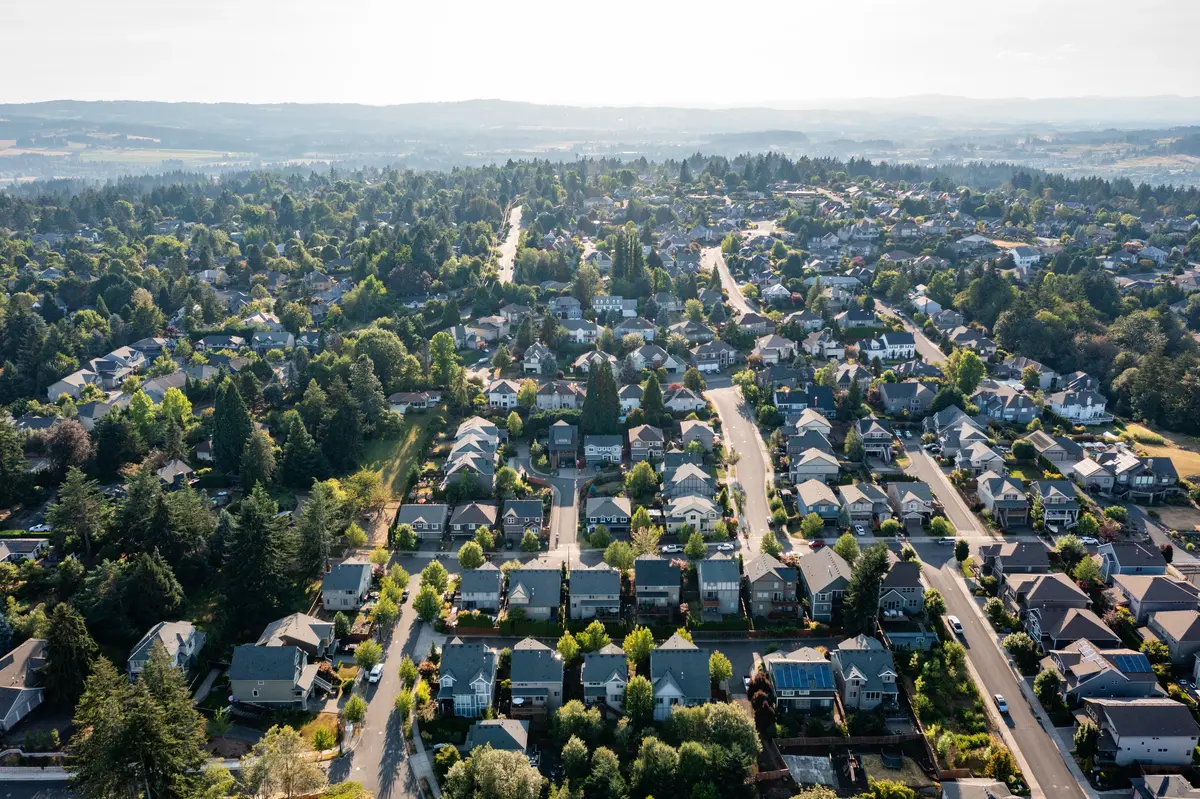
This is where buyers land when they want space, views, and a quieter pace inside city limits. Bull Mountain rises about 800 feet at Tigard's southwest end, and the homes here tend to be larger single-family properties with sightlines into the surrounding evergreens. If you're working with a tight timeline and want move-in-ready construction, this is where I start the conversation.
River Terrace
Tigard's newest planned neighborhood sits on the city's westernmost edge and is mostly newer construction — the kind of homes where everything works and nothing needs immediate attention. The city is actively planning a River Terrace 2.0 expansion on an additional roughly 500 acres, which will eventually extend the walkable, planned-community model further west. Buyers who want new builds and a neighborhood still growing into itself gravitate here.
Summerlake (Scholls-Summerlake)
This corridor offers established neighborhood character with a mix of 1980s and 1990s single-family homes, and it feeds directly into the Tigard-Tualatin district schools that many buyers are already researching. It's the kind of area where the streets feel settled and the community has been there long enough to have a personality.
Southview
Southview runs below the city median, which makes it the entry point into Tigard ownership for buyers who are stretching to get into the market. The trade-off is that the homes are older and the lot sizes are smaller. I'm honest with clients that this is where you make the numbers work now with the expectation of building equity into something else later.
Downtown Tigard and the Tigard Triangle
These two corridors are the most interesting story in Tigard right now. Downtown sits right at the city median — the Fanno Creek Trail renovation, completed in 2025, now connects downtown directly to Dirksen Nature Park, the library, City Hall, and Cook Park, and a 2025 mural at the OR-99W underpass signals the investment the city is making in this corridor. The Tigard Triangle — bounded by OR-99W, OR-217, and I-5 — runs above the median and is actively being rezoned for mixed-use density. Several large mixed-use buildings have already been approved, and in August 2026 the city's development agency released a request for qualifications for additional mixed-use redevelopment of the former cinema site. Buyers who want to be early in a corridor that is clearly changing should pay attention here.
Metzger and Summerfield
Metzger is an unincorporated area that borders Tigard proper — buyers sometimes don't realize until they're in escrow that the address sits outside city limits, which affects which services apply. I flag this early. Summerfield, on the other hand, is purpose-built for 55+ buyers: over 200 acres of single-family homes, townhouses, condominiums, and apartments arranged around that nine-hole golf course, with amenities that make the lifestyle case better than I can in a paragraph. If Summerfield is on your list, I'd encourage you to spend a few hours there on a weekday before you make an offer.
Schools in the Tigard-Tualatin School District
The Tigard-Tualatin School District 23J serves the city, with 11,041 students enrolled in 2025-26, according to figures the Oregon Department of Education publishes. It's a mid-sized district by Oregon standards, and the school question is one I take seriously with every family I work with here.
On 2024-25 state assessments, 34% of students reached math proficiency and 46.7% reached reading proficiency, according to figures the Oregon Department of Education publishes. Those numbers are worth understanding in context — statewide proficiency rates in Oregon have been a policy conversation for several years, and no single district is an island. What I tell buyers is that the individual school building, the grade level, and the specific program matter more than any district-wide average.
The district runs active OSAA athletics programs, and the community texture around Friday night events at Tigard High is genuine — it's the kind of school town feel that matters to families who want their kids embedded in something larger than the classroom.
The honest advice I give every family: confirm the assigned school for your specific address directly with the district before you make an offer, because boundary lines here are not always intuitive, and review the data the Oregon Department of Education publishes themselves. I've seen buyers assume they're in one school's zone because the neighbor's kids go there — and be wrong. That's not a conversation you want to have after closing.
Looking to buy in Tigard? Estimate your payment.
Enter your numbers to see an estimated monthly mortgage payment.
Estimate only. Excludes HOA fees and mortgage insurance. The interest rate above is a starting point, not a quoted rate — replace it with your own to see real numbers. Insurance is a flat placeholder, not a Tigard quote.
Tigard vs Nearby Cities
| City | Typical Home Price | Typical Rent | Cost vs Tigard |
|---|---|---|---|
| Tigard (this city) | $607,011 | $1,850/mo | — |
| King City | $475,000 | $1,600/mo | 22% lower |
| Beaverton | $527,947 | $1,880/mo | 13% lower |
| Tualatin | $635,314 | $1,890/mo | 5% higher |
Source — home prices: Zillow ZHVI, July 2026; rent: Zillow ZORI, July 2026. Nearby-city figures are the same series, refreshed together.
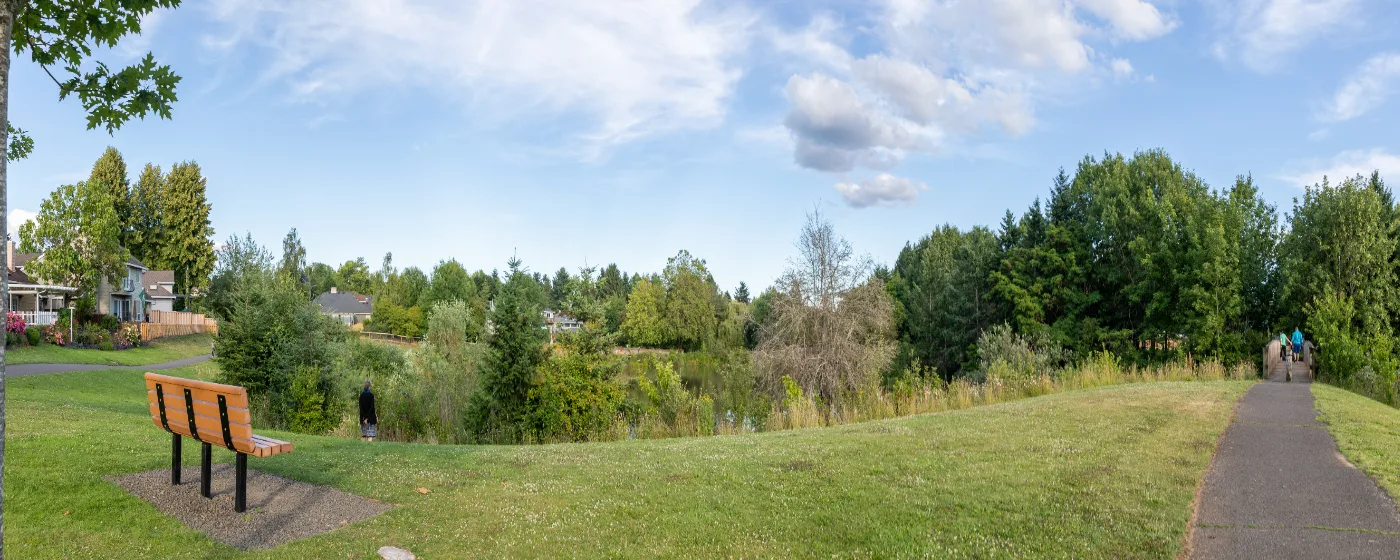
The comparison I make most often is Tigard versus Beaverton, because that's the one most buyers are actually deciding between. Beaverton comes in somewhat lower on typical home prices, and it has more retail density and a slightly more urban feel along its main corridors. What Tigard offers in return is a more cohesive neighborhood character — Bull Mountain and River Terrace read as places, not just zip codes — and a parks system that Beaverton can't quite match. If you work at Nike's Beaverton campus and want to minimize your commute, Beaverton may just be the practical answer. If you want the suburban feel with genuine green space and you can absorb a few more minutes on the road, Tigard is the better fit for most families I work with.
Tualatin to the south comes in at about the same price point as Tigard. The choice between them usually comes down to lifestyle rather than budget. Tualatin has a more small-town character and a different school district. Tigard is larger, has more going on culturally, and is closer to the Portland core.
Lake Oswego is the aspirational comparison — buyers who want Tigard prices but Lake Oswego cachet. The two cities are genuinely different markets, and the gap in typical home prices reflects it. I tell buyers who are cross-shopping those two to be clear about which they're actually buying: a home and a neighborhood, or a postal code and a perception.
King City sits right next to Tigard and comes in noticeably lower on typical home prices. It's a small city with a different feel, and buyers who are purely price-sensitive and flexible on location sometimes end up there. Most of my clients who seriously look at King City decide they want the fuller infrastructure of Tigard, but it's worth a look if the budget is the binding constraint.
Portland is the anchor city, and the drive from most Tigard neighborhoods runs about 20 minutes to Portland under normal conditions. That said, OR-99W can slow considerably during peak hours, and buyers who commute daily into the city should drive the route themselves at their actual commute time before they commit to a neighborhood.
What Buying in Tigard Actually Looks Like
The typical home price in Tigard as of July 2026 is $607,011 (Zillow Home Value Index). That figure tells you the middle of the market, but what it buys varies enormously by neighborhood. In Southview you're looking at older construction, smaller lots, and more of a fixer-upside equation. In Bull Mountain or River Terrace, that same price range gets you newer builds or larger footprints but less room to negotiate.
The income picture matters here too. The median household income in Tigard is $108,823, and the typical home price at July 2026 runs notably above what that income alone can comfortably carry. That's not unusual for the Portland Metro, but it does mean that most buyers in this city are bringing meaningful equity from a prior home, two incomes, or both. First-time buyers who are coming in on a single income should be clear-eyed about where in the city they can realistically compete.
One thing I always walk buyers through is the effective property tax rate, which runs approximately 0.84% in Tigard. For a home at the city's typical price, that's a real number in the monthly carrying cost, and it's one of the places where Washington County buyers get a genuine advantage over comparable homes across the river in Multnomah County.
The city has 145 sunny days a year — that's the reality of living in the Willamette Valley, and I'd rather tell you now than have you discover it in February. Buyers who move from sunnier climates often name the gray winters as the thing they didn't fully account for. It doesn't make people leave, but it does make the park system and the trail access matter more, not less, because getting outside even on overcast days is what keeps the routine sustainable.
On crime: Tigard runs a violent crime rate of 3.1 per 1,000 residents and a property crime rate of 33.3 per 1,000 residents. Tigard's violent crime rate sits below both state and national figures. Its property crime rate runs above both comparisons — something I tell buyers directly rather than let them find in the data afterward. The experience varies by corridor, and buyers who are sensitive to property crime should factor neighborhood choice accordingly.
Weekends and Local Favorites
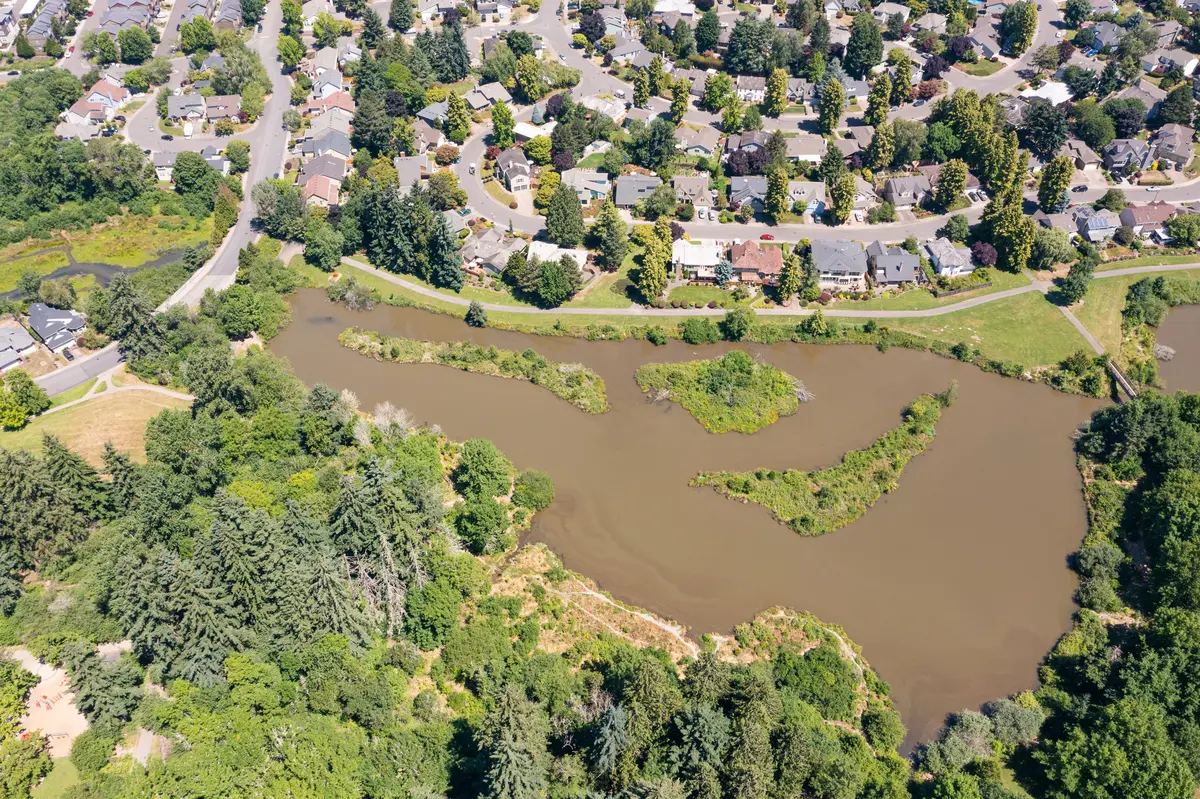
Cook Park is the anchor of outdoor life in Tigard — 79 acres along the Tualatin River, with trails, wetlands, a butterfly garden, a boat ramp, and river access for fishing and kayaking. On a warm weekend, it draws the whole city. Families I work with who are touring Bull Mountain properties always end up at Cook Park before they leave, and it closes the deal more often than any feature inside the house.
The Fanno Creek Trail is the other piece of infrastructure that changes how people live here. Renovated in 2025, it now runs 8.3 miles one-way and connects downtown Tigard to Dirksen Nature Park, the library, City Hall, and Cook Park — all on foot or by bike. Buyers who are coming from a walkable urban neighborhood often feel like Tigard will force them into the car for everything. The trail renovation is the honest answer to that concern. It doesn't make Tigard Portland, but it gives the city a genuine greenway spine that most suburbs this size don't have.
Bull Mountain Park and Dirksen Nature Park round out the outdoor options on the quieter end — the kind of places where you go on a Tuesday morning and see more herons than people.
For dining and coffee, Banning's Restaurant & Pie House has been a Tigard institution for decades — the kind of place that regulars treat as a standing appointment. Thirsty Lion, Margarita Factory Tigard, and Fogo de Chão Brazilian Steakhouse cover a wide range on the dining side. Tigard Taphouse is where the after-work crowd lands. On the coffee front, Symposium Coffee, Well & Good Cafe, Lugano Cafe & Catering, Primo Espresso, and Vault 13 Espresso each have a distinct personality — between them, buyers who care about their morning routine will find something that fits.
The Broadway Rose Theatre Company stages professional productions in the summer and draws audiences from across the metro. It's a genuine cultural anchor, and for buyers who are weighing whether Tigard has any cultural life worth mentioning, it's the honest answer. The Bull Mountain Farmers Market and the Tigard Farmers Market are both worth building into your Saturday routine once you're settled.
Final Advice From Elizabeth
Quick Takeaways & FAQs
✅ Tigard's Fanno Creek Trail renovation, completed in 2025, now connects downtown to Cook Park on foot or by bike — a greenway spine most suburbs this size simply don't have.
⚠️ The property crime rate runs above both Oregon's state average and the national figure, something worth factoring into neighborhood selection before you tour.
📍 The Tigard Triangle is mid-transformation: zoned for six-story mixed-use density with no parking minimums, and the city's development agency issued a redevelopment RFQ in August 2026 — buyers here are early in a corridor that is clearly changing.
What is the commute from Tigard to Portland like day to day?
How are the schools in the Tigard-Tualatin School District?
Which part of Tigard is right for my family?
What does the typical home price in Tigard actually buy?
What surprises people after they've lived in Tigard for six months?
How quickly are homes selling in Tigard right now?
How does Tigard compare to Beaverton, and how do I choose between them?
Is the Tigard Triangle a good place to buy right now?
Moving to Oregon?
Tell us what you need help with and we'll connect you with local resources.
