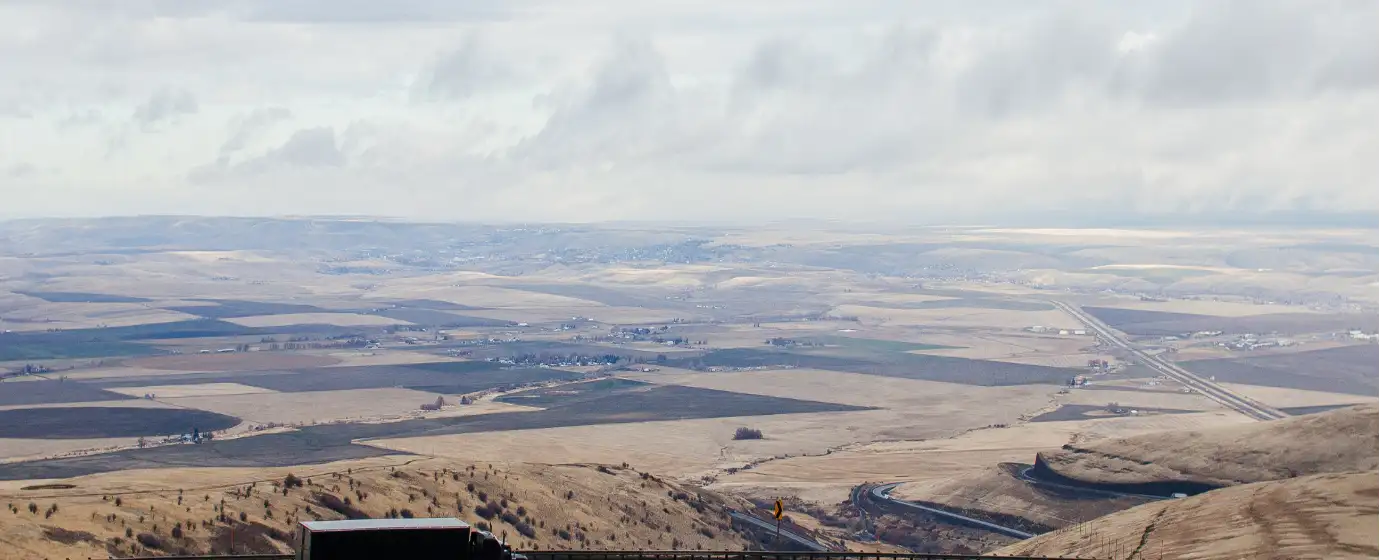
Pendleton surprises most people who look at it seriously for retirement. The price on the screen — a typical home at $304,381 as of July 2026 — looks almost too good compared to what retirees are escaping in the Willamette Valley or the California coast. But the price is real, and so is everything that comes with a city of 16,950 sitting at the crossroads of I-84 and US-395 in the high desert of Eastern Oregon. The trade-off isn't affordability — Pendleton genuinely is affordable. The trade-off is isolation. Getting to a regional medical hub, a major airport, or a big-box shopping center means time on the road.
What keeps retirees here — and draws new ones — is a combination of things that a spreadsheet won't capture. The Pendleton Round-Up fills the city with energy every September and sets the tone for a community that takes its traditions seriously. Pendleton Woolen Mills has been weaving blankets on the same site for more than a century, and the Pendleton Underground Tours draw visitors who then stay for dinner. Blue Mountain Community College sits on a hilltop overlooking the city and offers continuing-education opportunities for residents who aren't done learning. The major employers — including St. Anthony Hospital, Umatilla County, and the Confederated Tribes of the Umatilla Indian Reservation — create a stable local economy that insulates the city from the boom-and-bust cycles that hit other small Western towns hard.
On a fixed income, Pendleton's cost structure is genuinely friendly. Total living costs run well below both the U.S. average and the Oregon statewide average — a meaningful gap when you're living on Social Security and investment withdrawals rather than a paycheck. Oregon's no-sales-tax environment helps daily spending, and the effective property tax rate of 1.10% is manageable on a modest home. The Umatilla River Parkway gives walkers and cyclists a flat, accessible trail right inside city limits, and 195 sunny days a year means you'll actually use it.
This guide covers what retiring in Pendleton genuinely looks like: healthcare access and its honest limits, the retiree tax picture, what community and daily life feel like on the ground, how downsizing works here, and how Pendleton stacks up against nearby towns worth considering.
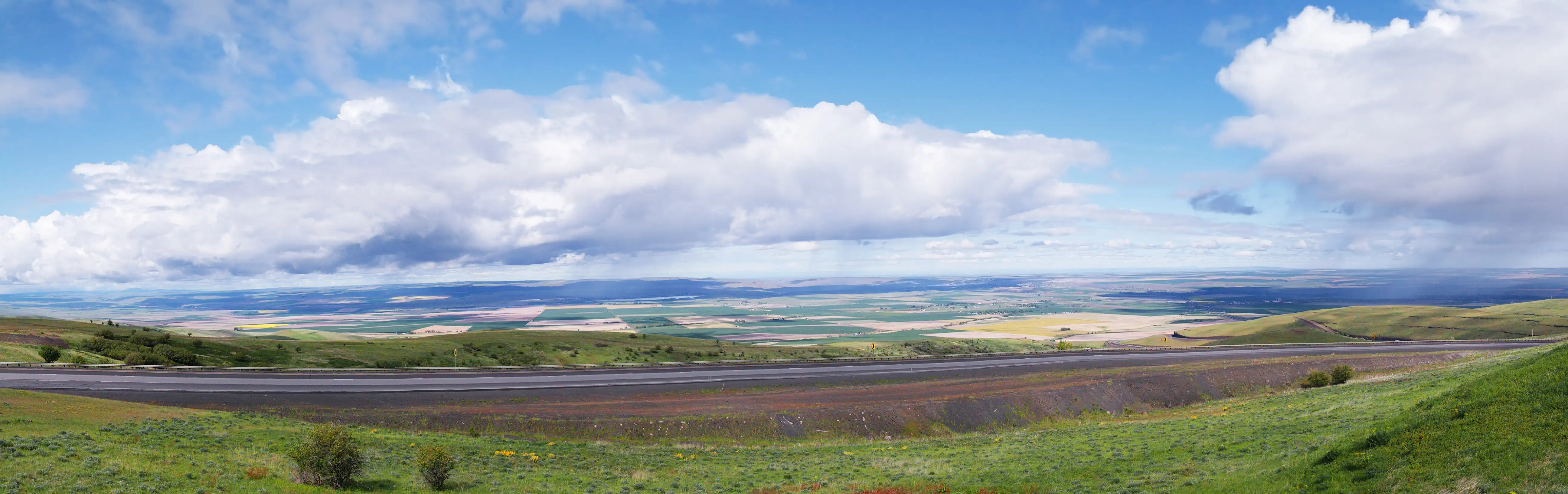
Why Retirees Are Choosing Pendleton
Pendleton fits a specific kind of retiree well: someone who wants a real town with real roots, not a retirement subdivision, and who is willing to accept some geographic remoteness in exchange for low costs and a strong community identity. The typical home price of $304,381 (July 2026) is one of the lowest entry points for ownership in Oregon, which matters enormously if you're downsizing from a higher-cost market and want to buy without carrying debt into retirement.
The city's cultural calendar is unusually strong for its size. The Round-Up, Pendleton Woolen Mills, and the Underground Tours aren't just tourist draws — they're the civic anchors that give residents something to be proud of and participate in. Retirees who want a place where they'll actually recognize neighbors at the coffee shop, where Friday night football means something, and where there's a genuine downtown to walk rather than a strip-mall corridor — those people tend to stay.
Who should look elsewhere? Anyone whose medical situation requires frequent specialist visits or who anticipates needing advanced cardiac, oncological, or neurological care on short notice will feel the distance to larger hospital systems acutely. Retirees who want the full urban amenity set — a dense restaurant scene, museum district, walkable errands, multiple hospital networks within reach — will find Pendleton thin on all of those. And anyone who needs to fly frequently will find the Eastern Oregon Regional Airport useful for regional hops but limited for direct connections to major hubs. Pendleton rewards self-sufficiency and deliberate living. It penalizes anyone who assumed small-town prices would come with big-city conveniences.
Healthcare & Medical Access in Pendleton
What's Here
CHI St. Anthony Hospital is inside city limits and the nearest hospital — a critical-access facility licensed for 49 beds, Level IV trauma-designated, accredited by the Joint Commission, and part of the CommonSpirit Health network. For a city of Pendleton's size, the on-site service list is longer than most people expect: an emergency department, ICU, cancer care including chemotherapy at the Pendleton Cancer Clinic, cardiac services, imaging, a sleep disorders laboratory, hospice, and physical, occupational, and speech therapy. There is also a cardiac rehabilitation program — relevant for retirees managing heart health.
St. Anthony's Family Medicine clinic holds recognition as a Patient-Centered Primary Care Home and a Rural Health Clinic, and it accepts both Medicare and Medicaid. For primary care, routine management of chronic conditions, and many of the day-to-day healthcare needs that come with aging, Pendleton is reasonably well served.
The Honest Distance Reality
The gap shows up at the specialist and tertiary-care level. Complex neurosurgery, advanced cancer treatment beyond chemotherapy, transplant programs, and Level I or II trauma response are not available at a 49-bed critical-access hospital. When those needs arise — and for many retirees they eventually do — the drive matters. Walla Walla, WA is about 45 minutes away, where a regional hospital serves the area. Portland's major academic medical centers are roughly three hours west on I-84.
This is the most important practical question to answer honestly before choosing Pendleton for retirement: how dependent are you on specialist access, and how will you manage the distance when that changes? For healthy retirees in their early sixties, it's a minor inconvenience. For someone managing a serious chronic condition, it's a real logistical challenge worth planning around before signing a purchase agreement.

The Retiree Budget in Pendleton
Oregon's Tax Picture for Retirees
Oregon fully exempts Social Security benefits from state income tax at every income level — a meaningful break for retirees whose income is primarily Social Security-based. The less favorable side: withdrawals from 401(k)s, IRAs, and most pensions are taxed at Oregon's graduated rates, which run from 4.75% up to 9.9%. There is no state sales tax, which quietly adds up over a year of groceries, household goods, and clothing purchases compared to states that tax consumption.
Oregon also has a Property Tax Deferral program for homeowners aged 62 and older with household income at or below $60,000 (the 2025 threshold). Under that program, the state pays your county property taxes directly, recording a lien at 6% simple interest that is repaid when the home sells. For retirees in that income band who are cash-flow constrained but own their home, it's worth a conversation with a tax advisor. One planning note for retirees with larger estates: Oregon levies its own estate tax with a $1 million exemption that is not indexed for inflation, meaning estates that clear the federal threshold aren't the only ones at risk.
Daily Cost of Living
Pendleton's overall cost of living runs well below both the U.S. average and the Oregon statewide average — a real advantage on a fixed income when housing, food, transportation, and healthcare costs all come in below what you'd pay in the Valley. The effective property tax rate is approximately 1.10%, which on a modestly priced home keeps annual ownership costs manageable.
For retirees who want to rent before committing to a purchase, the cost-of-living page covers the full rent picture. The main friction point for budget-conscious retirees isn't the cost of living in Pendleton — it's the cost of everything the city doesn't have, from specialty medical appointments to major shopping runs, that requires driving out of town and absorbing fuel and time costs along the way.
Looking to buy in Pendleton? Estimate your payment.
Enter your numbers to see an estimated monthly mortgage payment.
Estimate only. Excludes HOA fees and mortgage insurance. The interest rate above is a starting point, not a quoted rate — replace it with your own to see real numbers. Insurance is a flat placeholder, not a Pendleton quote.
Walkability, Community & Staying Active in Pendleton
Getting Around Without a Car
Pendleton is not a walkable city in the sense that daily errands can be handled on foot. The terrain is part of it — much of the residential city sits on hills above the downtown core, and the grade between neighborhoods makes walking impractical for anything but recreation. Most retirees will want a car for grocery runs, medical appointments, and routine errands. That said, the downtown core is compact enough that once you're in it, on-foot access to the post office, a handful of independent cafés, and the historic commercial strip is genuine.
The Umatilla River Parkway is the exception worth noting: a paved, accessible riverfront trail inside city limits that provides flat, manageable walking and cycling without needing a car to reach it. For retirees prioritizing daily physical activity, this trail is a real asset — and with 195 sunny days a year, it gets year-round use.
Community Anchors
Blue Mountain Community College on the hilltop above the city offers continuing-education courses and hosts the Distance Education Office for Eastern Oregon University, giving retirees access to lifelong-learning opportunities that a city this size doesn't always have. Pendleton Woolen Mills and Pendleton Underground Tours create a cultural anchor that draws visitors and keeps long-time residents engaged with the city's story.
The Round-Up community extends well beyond September. The Pendleton Round-Up Grounds host events throughout the year, and the volunteer organizations and pageant committees tied to the rodeo draw retirees who want structured ways to plug into local civic life. For retirees willing to show up and get involved, Pendleton has more connective tissue than its size suggests. For those who prefer to keep to themselves and wait for the city to come to them, it can feel quieter than expected.
Right-Sizing: Downsizing in Pendleton
What the Market Offers
Pendleton's housing stock skews toward older, single-family homes — many of them on the North Hill and Sunridge Estates areas — with a mix of ranch-style and two-story construction. Single-level homes exist and are findable, but they are not the dominant inventory type in a city where hillside lots favor multi-level layouts. Retirees specifically seeking single-level living will want to be clear with a local agent about that requirement early, because the pool is narrower than in flat-terrain retirement markets.
Patio homes and condominiums are a limited category in Pendleton. This is not a market that has built heavily toward low-maintenance attached housing, so buyers expecting the same variety they'd find in a larger Oregon city will be working with a smaller selection. The upside is that when single-level or step-free homes do appear at Pendleton's price point, they are meaningfully more accessible than comparable properties in higher-cost markets. See the neighborhoods page for a breakdown of where different housing types concentrate.
55+ Communities and Senior Living
No 55+ communities were found in Pendleton. The city does have several senior living options for retirees who want or need more support: Suttle Care & Retirement offers assisted living under local ownership, Juniper House provides assisted living and memory care, and Sun Ridge Retirement Community operates as an independent senior living option. U.S. News identifies five senior living communities in the city total. None of these are deed-restricted 55+ communities in the traditional sense — they are care and independent-living facilities rather than age-restricted residential neighborhoods.
Retirees looking for a 55+ community with amenities, activity programming, and a peer social environment built into the housing itself will likely need to look at nearby markets. That gap is one of the more honest limitations of retiring in a city of Pendleton's size, and it's worth understanding before narrowing the search here.
Pendleton vs Nearby Retirement Destinations
| City | Cost vs Pendleton | Primary Hospital | Walkability | Senior Living Depth | Overall Retirement Fit |
|---|---|---|---|---|---|
| Pendleton, OR | Baseline | CHI St. Anthony Hospital (in-city, Level IV) | Car-dependent; flat river trail available | Assisted living and independent living; no 55+ communities | Strong for affordable ownership, weaker on specialist access and senior housing variety |
| Hermiston | Somewhat higher | Good Shepherd Medical Center (in-city) | Car-dependent; flat terrain is easier | Growing senior living supply | Good for retirees who want a slightly larger service base and flatter streets |
| Milton-Freewater | About the same | Relies on Walla Walla area hospitals | Car-dependent; small, quiet town | Very limited | Better for retirees prioritizing ultra-low cost and rural quiet; thin on services |
| Walla Walla, WA | Noticeably higher | Providence St. Mary Medical Center (in-city, regional referral) | More walkable downtown core | Broader 55+ and continuing care options | Stronger on healthcare and senior housing; higher cost is the clear trade-off |
| Athena | Likely cheaper | Relies on Pendleton or Walla Walla | Very limited; small rural town | Minimal | For retirees wanting extreme quiet and low cost who are comfortable driving to services |
| Pilot Rock | Likely cheaper | Relies on Pendleton | Minimal; very small town | Minimal | Suits retirees who are fully self-sufficient and want rural isolation near Pendleton's amenities |
Of the nearby options, Walla Walla, WA is the clearest alternative for retirees whose healthcare needs are the deciding factor. Its regional hospital system runs deeper than anything available in Pendleton, and its downtown is more walkable — but that comes at a noticeably higher price of entry.
Hermiston edges out Pendleton on flat terrain (easier for retirees who prefer to walk more of their daily life) and has a growing service base, though its housing costs run somewhat higher and its cultural calendar is thinner. Milton-Freewater sits at roughly the same price point as Pendleton but offers far fewer services, making it a realistic choice only for retirees who are deliberately seeking rural simplicity and have their healthcare arrangements sorted.
Pendleton itself is the right call for retirees who want a genuine town identity, manageable ownership costs, and are healthy enough that the distance to advanced specialist care feels like a future concern rather than a present one.
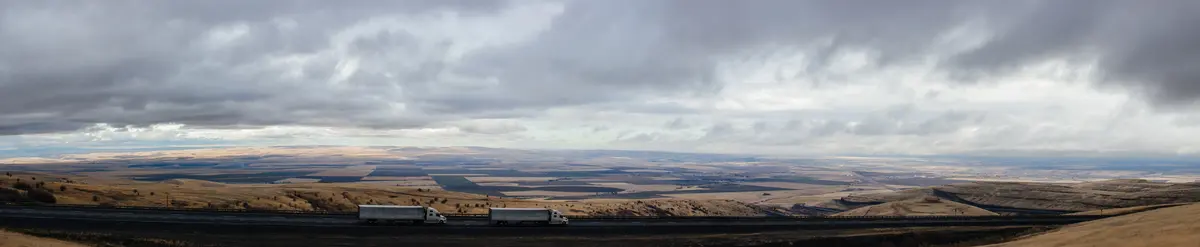
Local Expert Takeaway: Pendleton works best for retirees who arrive with clear eyes: the price is real, the community is genuine, and CHI St. Anthony Hospital handles primary and routine care well. What it cannot give you is specialist depth, a 55+ community with built-in social programming, or the ability to run most errands on foot. Retirees who thrive here tend to own a reliable car, get involved — through Blue Mountain Community College's continuing ed offerings, Round-Up volunteer organizations, or the Umatilla River Parkway's regular crowd of walkers — and have thought through what their healthcare needs will look like in ten years, not just today.
Quick Takeaways & FAQs
✅ Oregon fully exempts Social Security from state income tax, and Pendleton's overall cost of living runs well below the Oregon statewide average — a genuine advantage for retirees on fixed incomes.
⚠️ No 55+ deed-restricted communities exist in Pendleton, and specialist medical care beyond what CHI St. Anthony Hospital offers requires a drive of 45 minutes or more.
📍 The Umatilla River Parkway provides a flat, paved riverfront trail inside city limits — the most accessible daily walking route in a city that is otherwise car-dependent for errands.
Is Pendleton, Oregon a good place to retire?
Does Oregon tax Social Security retirement income?
What hospital serves retirees in Pendleton?
Are there any 55+ communities in Pendleton, Oregon?
What is Oregon's property tax deferral program for seniors?
Moving to Oregon?
Tell us what you need help with and we'll connect you with local resources.
