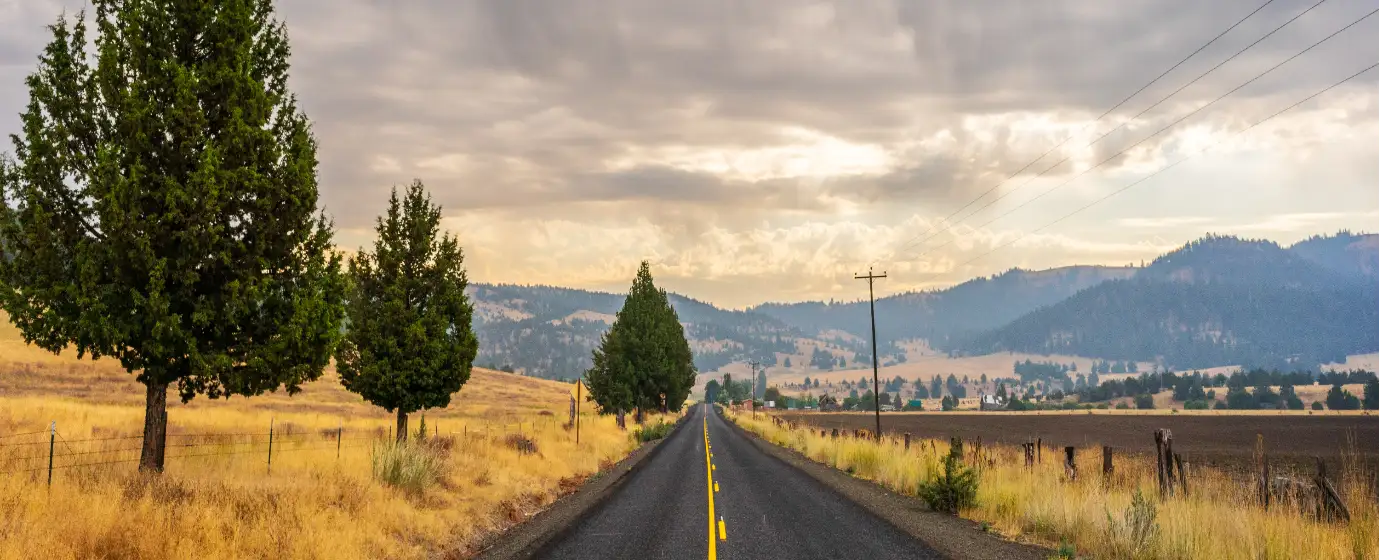
What Is Living in Hermiston, Oregon Like?
Maybe your company is relocating you here, or you've been priced out of the Portland market and someone mentioned Eastern Oregon. Either way, Hermiston tends to surprise people. This is the largest city in Eastern Oregon — a genuine regional hub of 19,899 residents, not a sleepy farm town — and it sits at the junction of two interstate highways where the high desert meets the Columbia River corridor, about 185 miles east of Portland. The city is 7 miles south of the Washington state border, which means Kennewick, Richland, and Pasco are real parts of daily life here, not just names on a map. That cross-border relationship shapes everything from where people shop to where they work.
The economic story is what most outsiders miss. Hermiston's employer base has expanded dramatically, driven by logistics, food processing, and a data center boom that began in earnest in 2019. Amazon runs a significant logistics and web services operation here. Lamb Weston, one of the world's largest potato processors, anchors the food-manufacturing side. The Hermiston School District serves 5,230 students enrolled in 2025-26 and holds a C+ rating, according to Niche — a fact worth weighing seriously if schools are central to your decision. A major regional health care system is headquartered here and has grown its specialist network in recent years. The combination of agricultural roots, logistics infrastructure, and tech-adjacent data center jobs has made Hermiston the destination for most of the job growth across Umatilla County over the past decade.
Housing is the headline advantage. The typical home price in Hermiston is $348,415 (Zillow Home Value Index, July 2026) — a figure that lands noticeably below virtually every major Oregon metro and well below the Tri-Cities market across the river. That value proposition attracts buyers who work remotely, commute north into Washington, or simply want to own rather than rent. The high-desert climate delivers 189 sunny days a year, cold winters with occasional snow, and hot, dry summers. Parks, state recreation areas, and open country are close — Hat Rock State Park on the Columbia, Butte Park in town, and the McNary Wildlife Nature Area are all within reach for a weekend morning. For a fuller breakdown of costs, the cost of living page covers utilities, groceries, and the effective property tax rate in detail.
Whether you're weighing a move or already deep into your search, the sections below break down Hermiston's neighborhoods, the current housing market, what the commute looks like, the employers driving local growth, and how residents actually spend their weekends.
Hermiston at a Glance
Looking to buy in Hermiston? Estimate your payment.
Enter your numbers to see an estimated monthly mortgage payment.
Estimate only. Excludes HOA fees and mortgage insurance. The interest rate above is a starting point, not a quoted rate — replace it with your own to see real numbers. Insurance is a flat placeholder, not a Hermiston quote.
Why Are People Moving to Hermiston?
The short answer is jobs and housing — and unlike a lot of Oregon cities making that pitch, Hermiston has both at the same time. The city has absorbed the majority of regional job growth over the past decade, and homeownership here is still achievable for households earning at or near the median income.
The Economic Engine
Hermiston's position at the crossroads of two interstate highways makes it a natural logistics hub — one truck-day from seven western states and two Canadian provinces, which is exactly why Amazon planted roots here. The Amazon presence has a compounding effect: it drew infrastructure investment, workforce training programs, and ancillary businesses. Blue Mountain Community College partnered with WorkSource Oregon and Amazon Web Services in 2025 to offer paid apprenticeships and skills-based certifications for data center operations — a pipeline that matters if you're weighing career opportunities alongside housing costs.
Lamb Weston's food processing operations represent the other major pillar of the private economy. Agricultural processing has been here for generations; the data center economy is newer. Together they produce a surprisingly durable job base for a city this size.
The Hermiston School District is the largest employer by sector, which means education jobs are a real draw for teachers and administrators relocating from higher-cost markets. A major regional health care system — headquartered in Hermiston and operating a trauma emergency center with growing specialist capacity — is another significant local employer. The City of Hermiston itself rounds out the public-sector side.
Who Actually Moves Here
The profile is genuinely diverse. Remote workers who discovered they no longer needed to pay Portland prices. Families with parents working at Amazon, Lamb Weston, or the school district. Retirees coming from California or Western Oregon who want to own something outright. Tradespeople following the construction wave — the city approved permits in 2025 representing $469 million in project value, which means crews, suppliers, and contractors are busy.
A smaller but growing cohort commutes north into the Tri-Cities. That cross-state dynamic is specific to Hermiston in a way it isn't to most Oregon cities, and it shapes the housing math in ways worth understanding before you make an offer. For more on what retirees specifically find here, see the retiring in Hermiston page.
The Honest Tradeoff
Hermiston is still a small city. The dining scene, cultural programming, and retail selection reflect that. People who move here from Portland or Seattle in month one often feel the distance most acutely around month three — when a specialty errand means a serious drive. That is not a reason not to move here; it is a reason to know it going in.
What Daily Life Feels Like in Hermiston
The Rhythm of the Place
Hermiston is a working city. The day starts early — ag and logistics schedules pull people out before 6 a.m. — and the pace feels more practical than leisurely. That is not a knock; it means the city runs efficiently, the locals are direct, and there is very little of the performative busyness that defines life in larger metros.
The downtown core along Festival Street is where civic life concentrates. It is not a destination dining strip, but it functions as a genuine town center — the Eastern Oregon Trade and Event Center handles regional events, and the annual Melon Fest turns Festival Street and Main Street into the city's biggest party, with free watermelon, live music, a classic car show, and the kind of bathtub races that only make sense if you grew up here. Hermiston has carried the title of Watermelon Capital of the World long enough that it is civic identity, not marketing — the watermelon logo landed on the water tower officially in 2016, but the branding goes back to a postwar campaign rooted in the area's genuinely exceptional growing conditions.
The Seasonal Reality
Newcomers from Western Oregon consistently underestimate the summer heat. July and August in Hermiston run hot — consistently above 100°F during peak weeks — and the high-desert sun is relentless. Locals plan outdoor activity around early mornings and evenings. The flip side is that the 189 sunny days a year make the shoulder seasons genuinely beautiful, and the Columbia River corridor at Hat Rock State Park becomes the weekend release valve for the entire region when the heat peaks.
Winter brings cold snaps that catch transplants off guard. Snow is not heavy, but temperatures drop sharply and the wind off the plateau is unforgiving. Budget accordingly for heating costs, and don't let the mild shoulder-season weather convince you that winter here resembles Western Oregon.
Getting Around Day to Day
Most errands in Hermiston involve a car. The city is compact enough that distances are short — nothing in town takes long to reach — but the street grid, especially in newer residential areas, is not built for on-foot access to services. Downtown Hermiston is genuinely walkable once you are in it. Regional transit is provided by Kayak Public Transit, operated by the Confederated Tribes of the Umatilla Indian Reservation, which runs fixed routes and commuter bus service in the area. The school district's own enrollment and activity patterns drive a lot of family scheduling, as the schools page covers in detail.
Where Families Actually Gather
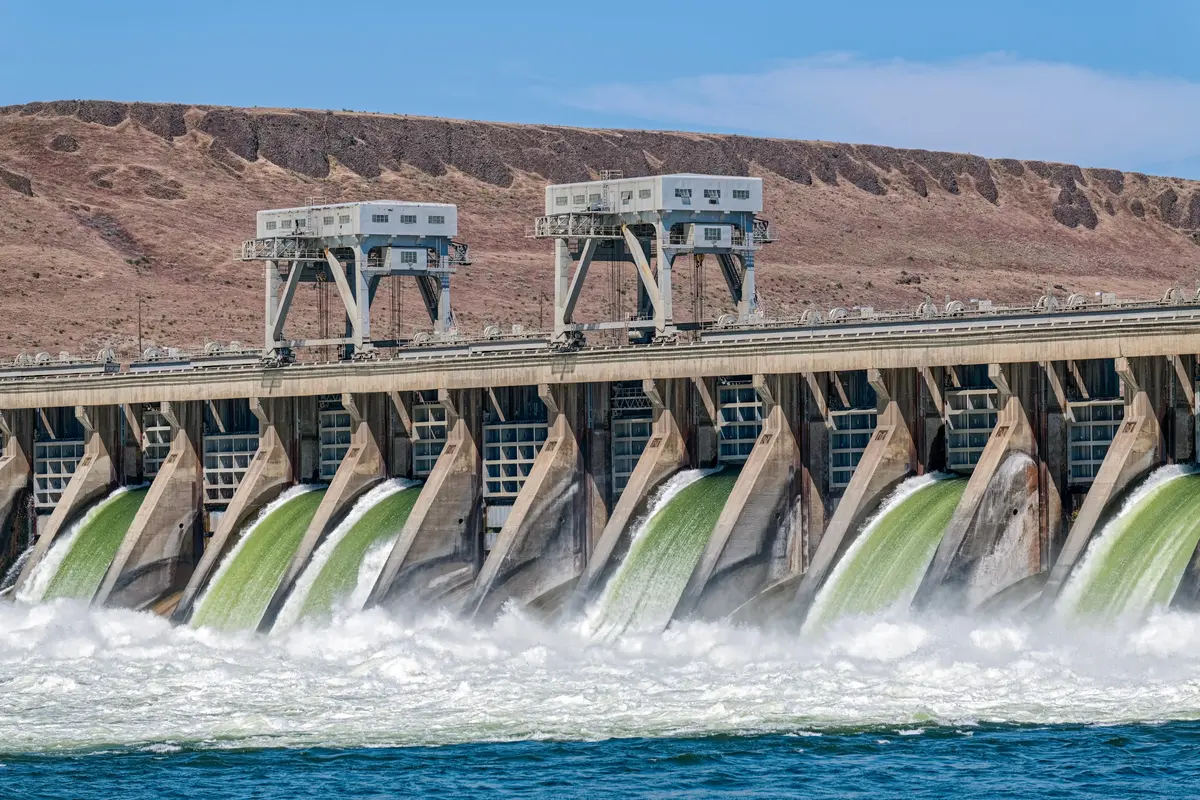
Butte Park is the spot that keeps coming up among parents with school-age children — it anchors outdoor time for a large share of the west side. The Hermiston Butte trail (a 0.9-mile loop) gives you a quick elevation gain and a view over the city that surprises first-timers who assumed Eastern Oregon was flat. On weekends, Hat Rock State Park draws residents for fishing, boating, and swimming on Lake Wallula — the Columbia reservoir behind McNary Dam. The McNary Wildlife Nature Area and Umatilla National Wildlife Refuge round out the outdoor circuit for birdwatchers and anyone who needs an hour away from the grid. For a full look at parks and trails, see the parks and recreation page.
The Hermiston Housing Market Right Now
The typical home price in Hermiston is $348,415 (Zillow Home Value Index, July 2026) — a figure that makes this one of the more accessible ownership markets remaining in Oregon. That price point is noticeably below the Tri-Cities market across the Washington border, and dramatically below the Portland metro. That gap is the reason buyers from Western Oregon and California keep showing up here.
The typical 2-bedroom rent runs $1,460–$1,780 per month, with a city-wide typical rent of $1,588 per month (Zillow, July 2026). Renters will find a mix of older single-family rentals, some apartment stock, and newer townhome-style units in the growth corridors north and west of downtown. Supply has been moving — the 2025 permit activity reflects that — but demand is keeping pace.
What the Market Feels Like
Well-priced homes here rarely sit. Buyers coming from slower markets sometimes underestimate how quickly something moves when it is priced correctly, particularly in the mid-tier where first-time buyers and relocating workers are competing for the same stock.
The housing stock ranges from older post-war construction in South Hermiston and the downtown core to newer subdivisions in areas like Cold Springs and Desert Sky Estates on the city's edges. Some areas run above the city median; others are the entry point into Hermiston ownership. The best neighborhoods page maps the character of each part of town in detail.
The effective property tax rate is approximately 1.10%, which is close to the Oregon state average — not a standout in either direction. Oregon's lack of a sales tax offsets some costs that buyers coming from Washington or California initially don't factor in.
The city approved permits in 2025 representing $469 million in project value, and most of that construction activity is concentrated in and around Hermiston. That trajectory supports long-term demand, though the infrastructure and school capacity questions that come with fast growth are real considerations for anyone buying with a 10-year view.
Hermiston Neighborhoods
Hermiston has several distinct areas — each with its own character and appeal. Here’s a breakdown to help you narrow down where to focus your home search.
🏡 Cold Springs
Cold Springs sits on Hermiston's growing northwestern edge and draws buyers who want newer construction with more elbow room. The housing stock skews toward larger lots and recently built single-family homes, making it a natural fit for families with school-age children who want a quieter residential setting.
🏠 Desert Sky Estates
Desert Sky Estates occupies the drier, more open terrain on the city's periphery and appeals to buyers who prioritize space and privacy over walkability. The neighborhood has a newer feel with relatively little through-traffic, which makes it popular with households that want a genuine retreat at the end of a workday.
🌳 Upland Meadows
Upland Meadows offers a mid-range residential character with a mix of established and newer homes on the city's higher ground. It suits buyers who want a livable, settled neighborhood feel without the higher price points of the city's newest subdivisions.
🏘 View Wood Estates
View Wood Estates takes its name from its elevated position, which provides some of the better sight lines in Hermiston toward the surrounding basalt landscape. The housing here tends toward larger, well-maintained single-family homes, and the neighborhood has a quieter, more established feel than the city's newer growth corridors.
🏔 Downtown Hermiston / South Hermiston
Downtown Hermiston and South Hermiston contain the city's oldest housing stock and its most walkable blocks — Festival Street, the city's civic and event spine, runs through this area. It suits buyers who want to be close to the city's commercial core and don't mind older homes in exchange for location and character.
🌆 Diamond Run
Diamond Run is one of Hermiston's more established residential neighborhoods with a family-friendly character and reasonable proximity to schools and parks. The housing mix of mid-sized single-family homes makes it a practical first or second purchase for buyers who want to be inside the city without landing at the outer edge of new development.
Pros & Cons of Living in Hermiston
The Pros
- Large 30-mile workforce radius and steady logistics/food-processing job base
- Home prices and cost of living well below the Oregon state average
- Short, easy commutes with a Walk-friendly downtown core
- Sunny, low-humidity climate with mild winters compared to the Cascades
The Cons
- Property crime runs notably higher than national and state averages
- Hot, dry summers with triple-digit spikes and cold winters
- School district test scores and Niche academic grade lag state averages
Getting Around & Commuting in Hermiston
The Geographic Advantage
Hermiston's location is genuinely strategic. Two interstates — US-395 running north-south and OR-207 (Hermiston Highway) serving the local corridor — place the city within easy reach of regional job centers in both Oregon and Washington. That cross-state access is the commute story that matters most here, and it is different from almost anywhere else in Oregon.
The most common longer commute pattern is north into the Tri-Cities. The drive is about 30 minutes to Tri-Cities, WA (Kennewick/Richland/Pasco) — a distance that many residents treat as entirely manageable, especially when the housing math pencils out so favorably on the Oregon side. Kennewick in particular draws Hermiston residents for work in healthcare, retail, and professional services.
Local Driving
Within Hermiston itself, most destinations are 5 to 10 minutes apart. The city is compact, and traffic outside of the industrial corridor near the logistics facilities rarely becomes a real issue for daily commuters. The area around the Amazon facility and the main commercial spine on US-395 sees the most congestion during shift changes — typically early morning and mid-afternoon — and that rhythm is something to account for if you live near those corridors.
The City of Hermiston launched a full update of its Transportation System Plan in Spring 2025 — the first comprehensive overhaul since 1997 — acknowledging that commercial development and population growth have outpaced the infrastructure assumptions of the prior plan. Community input flagged demand for more sidewalks, off-street trails, better lighting, and improved street connections. Those improvements are in the planning pipeline, not yet built, which is honest context for anyone evaluating the walkability of newer residential areas.
Transit Options
Kayak Public Transit, operated by the Confederated Tribes of the Umatilla Indian Reservation, runs fixed routes and commuter bus service connecting communities across Northeastern Oregon and into Southeastern Washington. It is a functional option for certain trips, particularly for residents without reliable car access. As of April 2025, Kayak was surveying community interest in a potential new direct route between Hermiston and the Tri-Cities — a connection that would be meaningful for cross-border commuters, though it had not been confirmed as operating at that point.
Air and Long-Distance Travel
The Eastern Oregon Regional Airport (PDT) is approximately 28 miles away and handles regional flights. Portland, at roughly 3 hours by car, is the practical gateway for major air travel and the closest large urban center for services and amenities that Hermiston does not carry locally. Seattle is farther, but accessible via the Tri-Cities airport for those willing to make the northern drive.
Who This Suits
| Commuter Profile | Best Fit | The Honest Reality |
|---|---|---|
| Remote worker | Value Quiet | Hermiston's price point and space make it a strong remote-work base; internet infrastructure has followed the data center investment |
| Tri-Cities commuter | Commuter | about 30 minutes to Tri-Cities, WA (Kennewick/Richland/Pasco) — a trade-off many find worthwhile given the housing cost gap |
| Local employer (Amazon, Lamb Weston, school district) | Families First-Time | Short drive from most neighborhoods; shift patterns shape the traffic rhythm on the main corridors |
| Pendleton commuter | Commuter | Pendleton is roughly 30 miles southeast — manageable for the right job, less so as a daily grind |
| Portland commuter | Privacy | At roughly 3 hours, a daily Portland commute is not realistic; this works for remote workers who travel in occasionally |
| No-car household | Transit | Kayak Public Transit covers core routes; most of Hermiston still requires a vehicle for routine errands |
Schools in Hermiston
Families relocating to Hermiston have public, private, and higher-education options nearby. Here’s a quick overview.
🎓 School District
Hermiston School District 8R serves K–12 students across Hermiston and the surrounding area. Rated C+ (source: Niche.com).
🏆 Graduation Rate
The 4-year high-school graduation rate here is approximately 85%.
📚 Higher Education
Oregon’s public universities — the University of Oregon, Oregon State University, and Portland State University — offer four-year degrees statewide, with a network of 17 community colleges providing two-year and workforce programs.
🌐 Online Learning
Oregon State University Ecampus and Portland State University Online offer fully accredited online degrees for remote learners across the state.
Safety in Hermiston
A quick look at how Hermiston compares on the numbers that matter most when weighing a neighborhood or a move.
🛡 Violent Crime
Approximately 3.45 per 1,000 residents.
🔒 Property Crime
Approximately 32.3 per 1,000 residents.
Compared to the most recent national figures from the Bureau of Justice Statistics (2024), Hermiston’s violent crime is below the national average (about 3.7 per 1,000), and property crime is above the national average (about 18.4 per 1,000).
Against Oregon as a whole, Hermiston’s violent crime is about the same as the state average, and property crime is somewhat above the state average (Bureau of Justice Statistics, Crime Known to Law Enforcement, 2024 (tables 2 and 3)).
Crime rates can vary a lot within a single city, so the citywide numbers above are only a starting point. Some neighborhoods in Hermiston run well below these averages, while others run higher — the kind of block-by-block detail that matters most when you’re actually choosing where to live. The full guide below breaks it down neighborhood by neighborhood.
Working in Hermiston
Hermiston’s largest employers span several industries — here are some of the anchors of the local job market.
🎓 Hermiston School District
Education
🏥 Good Shepherd Health Care System
Healthcare
🏛 City of Hermiston
Municipal government
💼 Amazon
Logistics
🛒 Lamb Weston
Food processing
Retiring in Hermiston
Hermiston draws retirees for its balance of amenities, outdoor access, and cost. Here’s what to weigh.
🌤 Climate
Hermiston's high-desert climate delivers 189 sunny days a year and genuinely mild springs and falls that retirees from cloudier parts of Oregon often find revelatory. Summers are hot — peak weeks run well above 100°F — so early-morning outdoor activity becomes habitual. Winters are cold with sharp winds off the Columbia plateau, but snow accumulation is modest compared to other parts of Eastern Oregon.
🍴 Lifestyle
The city's dining scene skews casual and local — a handful of well-regarded local anchors cover everything from Mexican food to craft beer. Hat Rock State Park, the McNary Wildlife Nature Area, and the Umatilla National Wildlife Refuge offer outdoor programming that suits an active retirement well. Downtown Hermiston's Festival Street hosts the annual Melon Fest and other community events that give the city a genuine civic calendar.
🏚 55+ Communities
Foley Court is the established 55+ option in Hermiston — a smaller community without resort-scale amenities, but functional and locally rooted. The city's overall housing affordability means that many retirees also find single-family homes on standard streets that work well for downsizing without requiring a dedicated age-restricted development. For a fuller picture of retiring here, see the retiring in Hermiston page.
✈ Getting Around
Most daily mobility in Hermiston requires a car, and the compact city grid keeps most trips short. Kayak Public Transit provides fixed-route bus service for residents who need it. The Eastern Oregon Regional Airport is approximately 28 miles away for regional flights, with Portland — about 3 hours by car — serving as the gateway for major air travel.
🏛 Oregon Taxes for Retirees — What to Know
- Social Security is not taxed — Oregon does not tax Social Security or Railroad Retirement benefits. Any amount included in your federal adjusted gross income is subtracted back out on the Oregon return.
- But other retirement income IS taxed — This is the trade-off that surprises people moving from Washington or Texas. Pension distributions and 401(k)/IRA withdrawals are taxed as ordinary income at Oregon’s regular rates — there is no blanket retirement-income exclusion.
- Graduated income tax — Oregon has four brackets — 4.75%, 6.75%, 8.75% and 9.9%. The 4.75% rate covers the first $10,000 of taxable income for a single filer ($20,000 filing jointly); the 8.75% rate starts at $125,000 ($250,000 jointly); and the top 9.9% rate applies above $250,000 ($500,000 jointly).
- No sales tax — Oregon levies no general sales tax.
- Property taxes, with senior deferral — Oregon’s Senior and Disabled Property Tax Deferral lets qualifying homeowners have the state pay their county property taxes, with a lien recorded against the home. The 2026 household income limit is $70,000, and deferred balances accrue 6% simple interest — it defers the bill rather than forgiving it.
- Estate tax — the one to plan for — Oregon has its own estate tax with a $1 million filing threshold — far below the federal exemption, and NOT indexed for inflation, so it reaches more estates every year in real terms. Retirement accounts and a long-held home count toward the taxable estate, so estates that feel modest can cross the line without the owner expecting it.
- No inheritance tax — Oregon has no separate inheritance tax and no gift tax.
Tax laws change frequently and individual situations vary. This is general information, not tax advice — always consult a qualified Oregon tax professional or CPA for personalized retirement tax planning.
Weekends & Local Favorites in Hermiston
Where Locals Eat and Drink
Hermiston's dining scene is unpretentious and genuinely local. Hale's Tavern is the kind of place that has been part of the social fabric for years — a bar and grill where regulars know each other. Ixtapa Hermiston is one of the most consistent stops for Mexican food in the region, drawing people from neighboring towns. Midway Bar & Grill fills a similar neighborhood-anchor role. For something different, Shiki Steakhouse Sushi & Bar brings Japanese cuisine to a market where options are otherwise limited. And Nookie's Restaurant, home of Hermiston Brewing, is the local craft beer anchor — a combination restaurant and brewery that serves as the de facto gathering spot for the craft-beer-leaning crowd.
Coffee and Morning Spots
The coffee culture here is drive-through-forward, which reflects the working-city pace. Wildcat Baristas and Brew and Sorbenots Coffee are the names locals reach for first. Heidi's Coffee has its regulars. Hermiston Donut Shop is an institution for the early crowd. Hortencia by Alondra's Sweets rounds out the options with a bakery and sweets angle that distinguishes it from the espresso-stand model.
The Outdoors Are the Real Weekend
Hat Rock State Park on the south shore of Lake Wallula is the crown jewel of regional recreation — fishing for walleye and sturgeon, boating, swimming, and hiking trails around a basalt formation that Lewis and Clark noted as the first distinctive landmark on their Columbia River descent. On a summer weekend, the park fills with boats and families, and the volcanic rock against the water makes for scenery that catches newcomers off guard.
Butte Park in town and the Hermiston Butte trail loop (0.9 miles, with views over the city) handle the quick outdoor fix. The McNary Wildlife Nature Area and Umatilla National Wildlife Refuge expand the options for birdwatchers and anyone who wants to be away from roads and development. The Columbia River corridor in this stretch is one of the genuine scenic assets of Eastern Oregon, and it is underrated precisely because Hermiston is not a tourist town.
The Melon Fest Moment
Every August, Festival Street and Main Street close down for Melon Fest — the annual celebration of Hermiston's identity as the Watermelon Capital of the World. Free watermelon slices, bathtub races, a classic car show, a watermelon costume contest, seed-spitting competitions, and an FFA animal showcase turn downtown into something that does not happen anywhere else. It is a completely sincere event, which is part of why it works. If you arrive in Hermiston around the time of Melon Fest, it will tell you more about this city in two hours than a week of driving around would.
Local favorites in Hermiston
Restaurants
- Hale's Tavern
- Ixtapa Hermiston
- Midway Bar & Grill
- Nookie's Restaurant Home of Hermiston Brewing
- Shiki Steakhouse Sushi & Bar
Outdoors
- Hat Rock State Park (nearby)
- McNary Wildlife Nature Area (nearby)
- Umatilla National Wildlife Refuge (nearby)
- Butte Park
Coffee
- Sorbenots Coffee
- Wildcat Baristas and Brew
- Heidi’s Coffee
- Hermiston Donut Shop
- Hortencia by Alondra’s Sweets LLC
Top Things Locals Say About Hermiston
The best intel about a city comes from the people who actually live there. Here’s what Hermiston residents say when newcomers ask the questions everyone’s thinking.
“I knew the commute to Kennewick was supposed to be about 30 minutes, but I didn't realize how different the two sides of the river actually feel — Hermiston is quieter, more spread out, and honestly more affordable than I expected even after doing the spreadsheet. What I didn't expect was the summer heat hitting 105 in July and staying there for weeks.”
— Recent Hermiston home buyer
“What's the most surprising thing about living in Hermiston?”
How much is actually here. Before you move, you picture a small Eastern Oregon farm town. Once you're here, you realize it's the commercial center for a massive region — there are specialty stores, solid medical care, a growing restaurant scene, and real job options. What still catches people off guard is the summer heat. Late July and August are brutal by almost any standard, and if you moved from Western Oregon you are not ready for 100-plus-degree days with no marine layer to break the heat.
“What do locals love most about Hermiston?”
The Columbia River access, almost universally. Hat Rock State Park is 20 minutes away and it offers a caliber of outdoor recreation — fishing, boating on Lake Wallula, swimming — that most cities this size don't have anywhere close. People also cite the housing cost. Owning a home here without stretching your budget feels normal, which is not something many Oregonians can say anymore. And the Melon Fest is genuinely beloved in a way that sounds corny until you've been to it.
“What should newcomers to Hermiston know?”
Learn the shift-change rhythm near the Amazon and Lamb Weston facilities on US-395 — early morning and mid-afternoon are when that corridor gets congested, and if your route crosses it, timing matters. The cross-border relationship with the Tri-Cities is real: a lot of people shop, eat, and even work in Kennewick or Pasco, and that changes what you do and don't look for in Hermiston itself. Also, get a car you trust in cold weather — the wind off the Columbia plateau in January is not something you want to discover the hard way.
“How much do you need a car in Hermiston?”
A car is essential for most of daily life. Hermiston is compact enough that distances within the city are short, but the street layout in newer residential areas is not built for walking to services, and most grocery runs, school pickups, and errand clusters require driving. The downtown core is functional on foot once you're in it. Kayak Public Transit runs fixed routes and covers some core trips, particularly for those without reliable car access, but the majority of residents drive for nearly everything. Plan your housing choice around which corridors you'll be driving most.
Cities Near Hermiston
Other communities near Hermiston worth a look — each with its own character and price point.
| City | Distance | Best For | Vibe | Median Rent | Median Buy |
|---|---|---|---|---|---|
| Umatilla | 7 mi | Buyers wanting river proximity | Small, quiet, Columbia-adjacent | $1,100 | $300,000 |
| Stanfield | 10 mi | Value buyers, rural feel | Tiny, agricultural, low-key | $1,000 | $260,000 |
| Pendleton | 32 mi | History lovers, cultural amenities | Established, western character, lively | $1,362 | $304,381 |
More Helpful Guides for Hermiston
Going deeper on Hermiston? Our blog series covers everything from first-time buying to retiring here — explore the guides below.
Local Expert Takeaway: Hermiston is the kind of city where the housing math is real, the job market is growing faster than most people outside Eastern Oregon realize, and the biggest lifestyle adjustment is accepting that a serious shopping trip or a night at a big-city restaurant means planning ahead. The data center economy has changed who moves here; the watermelon festival and Hat Rock State Park explain why many of them stay.
Quick Takeaways & FAQs
✅ Hermiston's typical home price of $348,415 (July 2026) makes it one of the most accessible ownership markets in Oregon, with a job base — Amazon, Lamb Weston, and a major regional health care system — that has grown faster than most comparable-sized cities in the state.
⚠️ A property crime rate of 32.3 per 1,000 residents runs above the Oregon state average of 24.5 per 1,000, which is the honest safety trade-off for a regional commercial hub — worth reviewing on the safety page before you finalize a neighborhood.
📍 The cross-border commute dynamic is specific to Hermiston: about 30 minutes to Tri-Cities, WA (Kennewick/Richland/Pasco) means Washington employers are a real part of the local job picture, and understanding that geography is the first thing new buyers get wrong.
Is Hermiston, Oregon a good place to live?
What are the biggest employers in Hermiston, Oregon?
How far is Hermiston from Portland?
What is the Hermiston school district like?
What is there to do in Hermiston, Oregon on weekends?
Helpful Links for Moving to Hermiston
Moving to Oregon?
Tell us what you need help with and we'll connect you with local resources.
