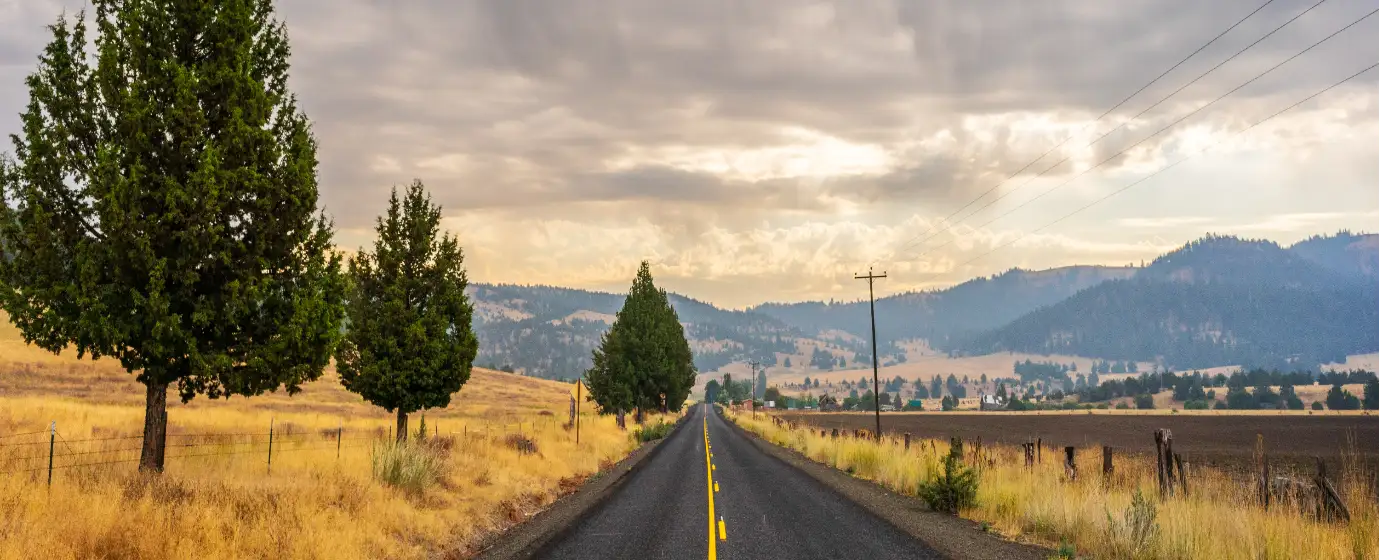
Hermiston doesn't show up on the usual Oregon retirement shortlists. It's not the coast, it's not the Willamette Valley, and it's not Bend. What it is: a working agricultural city of 19,899 in the high desert of Eastern Oregon, sitting where US-395 crosses the Columbia River plateau, with more sunshine than most of the state, lower home prices than nearly anywhere in Oregon, and a regional hospital that punches well above the city's weight class. The case for retiring here is genuinely strong — if you're the right fit.
The economic backbone is agriculture, logistics, and healthcare. Good Shepherd Health Care System is both the city's largest healthcare institution and one of its anchor employers, which is an unusual alignment — it means the hospital has deep community roots and isn't going anywhere. Amazon and Lamb Weston add industrial jobs that keep the local economy diversified. For retirees, what matters most is that the city is a genuine regional hub for Umatilla County: the grocery stores, pharmacies, medical offices, and services you need for daily life are all here, without driving to Pendleton or making the trip to Tri-Cities, WA (Kennewick/Richland/Pasco).
Cost of living is the headline. The cost of living in Hermiston runs noticeably below the Oregon average, and the typical home price of $348,415 (Zillow Home Value Index, July 2026) is a fraction of what you'd pay in the Bend or Portland markets. Oregon doesn't tax Social Security, and the state's no-sales-tax structure saves money on everyday purchases. The tradeoff is a car-dependent city in a high-desert climate with 189 sunny days a year — beautiful summers, cold winters, and no realistic option to ditch the keys entirely.
This guide covers what retirees specifically need to know about Hermiston: healthcare access and its honest limits, the retiree tax picture, walkability and community life, the downsizing inventory, and how the city stacks up against nearby alternatives.
Why Retirees Are Choosing Hermiston
Hermiston fits a specific retirement profile well: someone who's prioritized affordability and a genuine sense of community over walkability and urban amenities. If you're coming from California or the Portland metro, the price difference on a comparable home is striking — the typical home here sits at $348,415 (Zillow Home Value Index, July 2026), and that figure buys a real house on a real lot, not a condo in a suburban complex.
The retirees who tend to land here fall into a few clear categories. Some have family roots in Eastern Oregon and are returning after careers elsewhere. Others are priced out of the Willamette Valley or the Gorge and found that Hermiston's service infrastructure — a full-service regional hospital, established retail, reasonable drive times to Tri-Cities — makes it a practical base. A smaller cohort is drawn to the agricultural landscape, the Watermelon Festival energy, and the feeling that this is a town where people still know each other.
Be honest with yourself about who should look elsewhere. If walkable streets and the ability to age in place without a car are non-negotiable, Hermiston is going to frustrate you — most errands require driving. If you're expecting a retirement-community social ecosystem with planned activities and a pool of age-peers at your doorstep, the 55+ community infrastructure simply isn't here. And if mild winters are on your list, Eastern Oregon's cold snaps will be a recurring surprise. But for retirees who drive, value affordability, and want small-town community life with a real hospital nearby, the case is solid.
Healthcare & Medical Access in Hermiston
The Hospital Inside City Limits
Good Shepherd Medical Center is inside Hermiston's city limits — not a drive to another town, not a referral-only outpost, but a full acute care hospital operating a 24-hour Trauma Level 3 Emergency Room, accredited by Det Norske Veritas (DNV). For a city of under 20,000, that's a meaningful baseline.
What's genuinely unusual is the specialty depth. Good Shepherd carries cardiology, orthopedics, hematology and oncology, neurology, ophthalmology, nephrology, pulmonology, rheumatology, dermatology, endocrinology, gastroenterology, ear/nose/throat, and sleep medicine under one system. Most communities this size send patients two hours away for half of those specialties. Here, many of those appointments happen locally.
Home Health, Hospice, and Transportation
Good Shepherd also runs TLC Home Health and Vange John Memorial Hospice — both meaningful for retirees planning ahead or managing chronic conditions at home. The system operates a CareVan medical transportation service that reaches the surrounding smaller communities, which matters for retirees who no longer drive or who have family in Umatilla, Irrigon, or Echo.
The Honest Limits
A Trauma Level 3 designation means stabilization and initial care — not the same capability as a Level 1 or Level 2 trauma center. For major cardiac events, complex neurosurgery, or certain cancer treatments, patients are typically transferred to larger facilities in the Tri-Cities area or further. If you have a serious or complex chronic condition that requires advanced tertiary care on a regular basis, you'll want to think carefully about whether making the trip to Tri-Cities, WA for those appointments is workable. For the broad majority of primary, specialty, and urgent care needs, Good Shepherd handles it locally — and that's a better answer than most Eastern Oregon communities can offer.
The Retiree Budget in Hermiston
Oregon's Tax Posture for Retirees
Oregon does not tax Social Security retirement benefits, regardless of income level — that's a real advantage compared to states that do. Pension income, IRA withdrawals, and 401(k) distributions are subject to Oregon's progressive income tax, which runs from 4.75% to 9.9%. Retirees age 62 or older receiving taxable retirement income may qualify for Oregon's retirement income credit of up to $6,250, depending on household income — a meaningful offset for those in the middle income tiers.
Oregon has no statewide sales tax. On a fixed income, that translates to genuine savings on groceries, clothing, prescriptions, and daily purchases — every dollar goes further than it would in California or most other western states.
Property Taxes and the Deferral Option
Hermiston's effective property tax rate runs approximately 1.10%. For qualifying seniors — those who have owned and occupied their home for at least five years with a federal adjusted gross income under $60,000 — Oregon's Property Tax Deferral Program allows taxes to be deferred until the property is sold or transferred. That program can be a significant cash-flow relief for retirees on fixed incomes who own their home outright or nearly so. See the full cost of living breakdown for the broader tax picture.
Care Costs on a Fixed Income
Assisted living in Hermiston runs below the Portland-metro norm and below the Oregon state average — a meaningful advantage if you're planning for a care transition over a multi-year horizon. Eastern Oregon's overall cost structure means your retirement savings stretch further here than in the Willamette Valley or Bend. For independent retirees, the city's cost structure supports a comfortable lifestyle at income levels that would feel pinched in Portland or Bend.
Looking to buy in Hermiston? Estimate your payment.
Enter your numbers to see an estimated monthly mortgage payment.
Estimate only. Excludes HOA fees and mortgage insurance. The interest rate above is a starting point, not a quoted rate — replace it with your own to see real numbers. Insurance is a flat placeholder, not a Hermiston quote.
Walkability, Community & Staying Active in Hermiston
The Walkability Reality
Most errands in Hermiston require a car. The city is flat — Hermiston Butte aside — which helps if you do walk or cycle, but the street layout and commercial geography are built around driving. There's no walkable downtown retail core in the traditional sense; Downtown Hermiston Festival Street is a community gathering space rather than a pedestrian shopping district. If you're planning to age in place without a vehicle, that's a significant limitation worth facing directly.
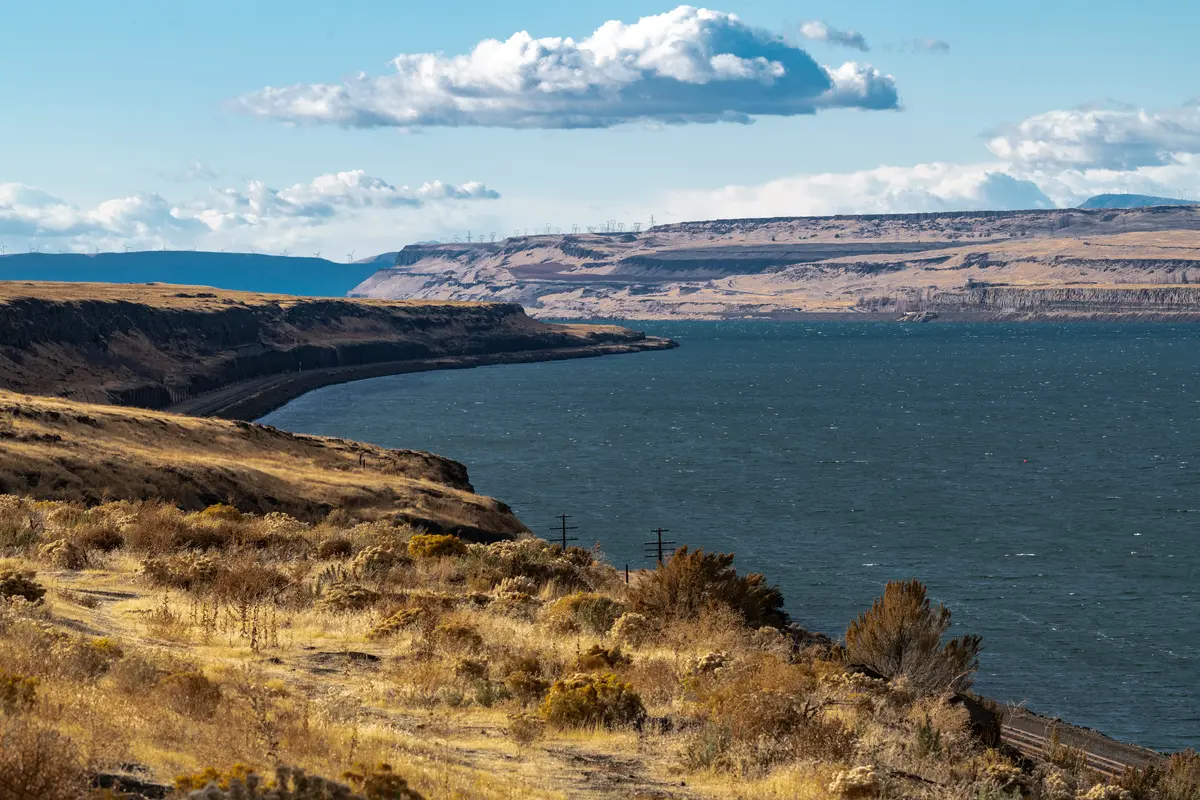
What walking does work for is recreation. The city maintains more than 12 miles of trails across its parks, and the terrain is genuinely flat and accessible. Butte Park gives walkers a neighborhood anchor. Hat Rock State Park, a short drive away on the Columbia River's south shore, offers paved pond-side walking paths alongside fishing, boating, and Lewis & Clark history — a practical destination for regular outings.
The Harkenrider Senior Activity Center
Hermiston's dedicated senior hub is the Harkenrider Senior Activity Center, run jointly by the Hermiston Senior Center Board and the city's Parks & Recreation Department. The city secured a $2 million Oregon Community Development Block Grant toward construction of a new 11,000-square-foot facility with an elevator, basement, and kitchen — the kind of investment that signals the senior community here has real institutional support, not an afterthought.
Community and Outdoor Life
The Hermiston Family Aquatic Center provides year-round aquatic recreation — swimming laps in February in Eastern Oregon is not something every small city can offer. The Umatilla National Wildlife Refuge, about 15 miles from the city, covers nearly 24,000 acres along the Columbia River and draws serious birders along the Pacific Flyway. The annual Watermelon Festival brings the whole region together each summer, and it's the kind of community-wide event that retirees who want to feel embedded in a place — rather than adjacent to it — tend to value most.
For retirees who came from larger cities and found themselves invisible in the noise of it, Hermiston's small-town social texture can feel like a genuine relief. The catch: you need to show up to build it. The Harkenrider Center is the fastest on-ramp.
Right-Sizing: Downsizing in Hermiston
What the Inventory Looks Like
Hermiston's housing stock skews toward single-family homes on modest lots — which is good news for retirees seeking single-level living. Ranch-style homes, many built from the 1970s through the 1990s, are the dominant form in neighborhoods like Cold Springs, Upland Meadows, and South Hermiston. These are the properties that tend to work best for aging in place: wide doorways, no stairs, attached garages, and manageable yards.
The challenge is that this same inventory is what everyone wants. Single-level homes in good condition don't wait long when they're priced right, and the city hasn't seen a wave of purpose-built active-adult construction that has appeared in larger metros. If you're downsizing from a two-story home and want to stay single-level, plan to be patient and move deliberately — the right home exists here, but you'll compete for it.
55+ Communities
No 55+ communities were found in Hermiston. There are no age-restricted active-adult developments here — the kind with a clubhouse, pool, and built-in social calendar. Assisted living facilities exist and run below the Oregon state average in cost, but those serve a different population and a different stage of life. Retirees who want a 55+ community lifestyle will need to look toward larger regional centers. For those comfortable with conventional neighborhoods and self-built social life, the absence isn't necessarily a dealbreaker — but it should be a named expectation before you buy.
Patio homes and lower-maintenance smaller homes do appear in the market from time to time, particularly in newer subdivisions like Diamond Run and Gettman Hill Estates. These tend to sit above the city-wide typical price, reflecting their relative scarcity and appeal to the same downsizing buyer pool you're competing with. For a full picture of the neighborhood breakdown, that page covers each area's character and housing stock in more depth.
Hermiston vs Nearby Retirement Destinations
| City | Cost vs Hermiston | Primary Hospital | Walkability | Senior Living Depth | Overall Retirement Fit |
|---|---|---|---|---|---|
| Hermiston | Anchor | Good Shepherd Medical Center — full acute care, broad specialties, in-city | Car-dependent; flat terrain; 12+ mi of trails | Senior center; care costs below state average; no 55+ communities | Strong for affordability + healthcare access; weak on walkability and 55+ options |
| Pendleton | Somewhat lower | CHI St. Anthony Hospital — smaller community hospital | More compact downtown; still car-dependent for most errands | Some senior services; limited 55+ community options | Good for retirees who want a historic small city feel and slightly lower costs; less specialty depth |
| Umatilla | Somewhat lower | No hospital in-city; relies on Hermiston's Good Shepherd | Small-town layout; car necessary | Very limited senior infrastructure | Best as a quieter, lower-cost alternative for retirees who will use Hermiston's services anyway |
| Stanfield | Noticeably lower | No hospital in-city; closest care in Hermiston | Minimal; very small town | Essentially none locally | Appeals to retirees wanting maximum quiet and low cost; requires driving to Hermiston for nearly everything |
| Richland, WA | Pricier | Kadlec Regional Medical Center — large regional hospital in Richland/Kennewick area | More walkable commercial corridors than Hermiston | Stronger 55+ community options; more senior housing stock | Better for retirees who prioritize hospital depth and senior community amenities and can absorb higher costs |
| Kennewick, WA | Pricier | Trios Health and proximity to Kadlec system | Larger city; more on-foot options in select districts | More developed senior living market | Suits retirees who want metro-adjacent services across the river; Washington's income tax structure differs meaningfully from Oregon's |
The comparison sharpens quickly around two variables: healthcare and cost. Hermiston wins the healthcare column outright against every nearby Oregon option — no other small city in this part of the state has a hospital with Good Shepherd's specialty depth inside city limits. Pendleton is the closest Oregon competitor, but its hospital is smaller and its specialty roster thinner.
On cost, Stanfield and Umatilla come in lower, but both effectively outsource all healthcare and most services to Hermiston — so you'd be paying less while driving here anyway. For retirees who genuinely need the healthcare infrastructure on a regular basis, living in Hermiston rather than a smaller satellite makes more practical sense than the modest price difference suggests.
The Tri-Cities market across the river in Washington offers more senior living depth, stronger walkability in parts, and a larger hospital system — but at a noticeably higher price point, and with a different state tax structure that doesn't offer Oregon's Social Security exemption. For retirees whose retirement income is primarily Social Security, that Oregon tax advantage is real money. The right answer depends on which column matters most to your situation.

Local Expert Takeaway: Hermiston's retirement story is anchored by one fact most people don't expect: a city of under 20,000 with a full-service hospital that runs cardiology, oncology, neurology, and a dozen other specialties in-house. Add a flat, affordable housing market well below the Oregon average, no state sales tax, and a senior center that the city invested real capital in, and the picture for a certain kind of retiree is genuinely compelling. The catch is the car. Hermiston is built for driving, and that's not changing. Retirees who plan to age out of driving need a plan — whether that's a supportive family network, the CareVan service Good Shepherd operates, or an eventual move to a more walkable setting. Get that part right, and Hermiston is one of the better-value retirement options in Eastern Oregon.
Quick Takeaways & FAQs
✅ Good Shepherd Medical Center offers one of the deepest specialty rosters of any community hospital in Eastern Oregon — cardiology, oncology, neurology, and more — all inside Hermiston's city limits.
⚠️ Most daily errands require a car, and no 55+ communities were found in Hermiston — retirees who want walkable streets or a built-in active-adult social structure will need to plan carefully.
📍 Oregon exempts Social Security from state income tax entirely, and Hermiston's effective property tax rate of approximately 1.10% is paired with a state deferral program for qualifying seniors with income under $60,000.
Does Hermiston have a hospital, or do retirees need to drive for medical care?
Is Oregon a good state for retirees from a tax perspective?
Are there 55+ communities or active-adult developments in Hermiston?
How does the cost of assisted living in Hermiston compare to the rest of Oregon?
Can retirees get around Hermiston without a car?
Moving to Oregon?
Tell us what you need help with and we'll connect you with local resources.
