About Ali
The Independence Market: What the Numbers Mean on the Ground
The Zillow Home Value Index puts the typical home price in Independence at $430,520 as of July 2026. That figure matters most when you understand what it buys — and what it hides.
At that price point, you're realistically looking at a three-bedroom home in a neighborhood like Northgate or Sunset Meadows, or an older two- or three-bedroom in the Historic District that may need updating. The mix here is genuinely unusual for a Willamette Valley city of 10,199 people: you have 1880s-era brick-and-Craftsman homes on one end of the spectrum and recently built new construction on the other, with relatively little in between. Buyers who want move-in-ready have options, but they may be competing with buyers who want character — and those are different pools chasing different properties.
One thing I flag with every buyer: the median household income here sits below the threshold needed to purchase the typical home by a meaningful margin. That tells me this isn't a city where the whole community is buying — a meaningful share of residents rent, and the Zillow Observed Rent Index puts the citywide typical rent at $1,945 per month as of July 2026. If you're moving here from a market where incomes and prices track more closely, that dynamic is worth understanding before you set your search parameters.
Property Taxes
The effective property tax rate in Independence runs approximately 0.89%, which is relatively modest by Oregon standards. It's one of the numbers that tends to pleasantly surprise buyers coming from markets with higher effective rates.
Neighborhoods: Where You Actually Want to Land
Downtown / Historic District
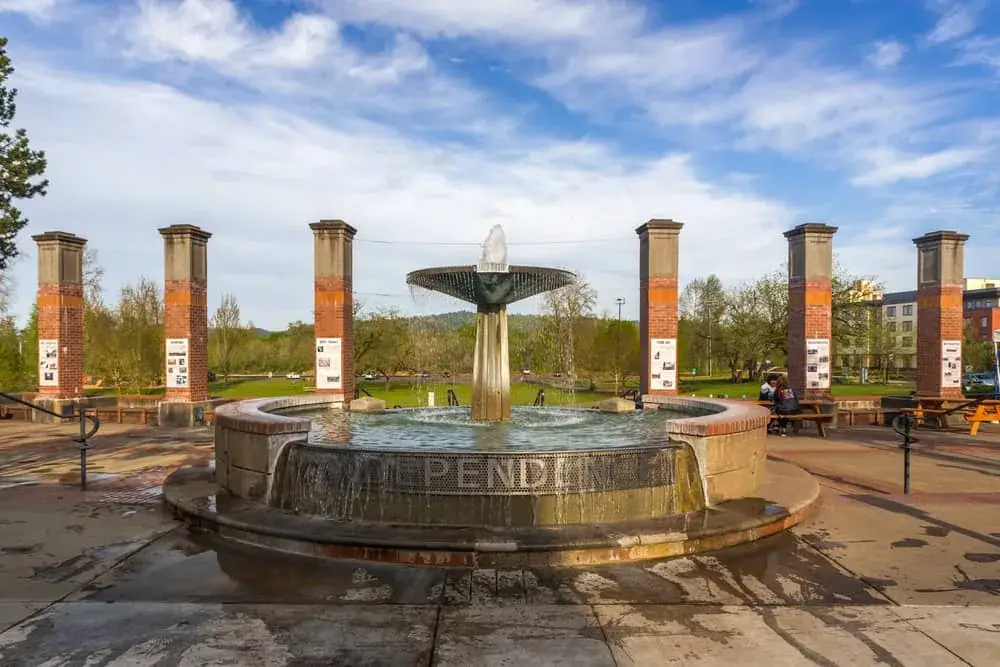
This is the neighborhood I show first to buyers who lead with the phrase "I want to feel like I live somewhere." The roughly 30-block Historic District was listed on the National Register of Historic Places in 1989 and preserves brick commercial buildings with Victorian-era towers alongside residential blocks of bungalows and foursquares dating from the 1880s through the 1920s. The walkability here is real — you can reach the Willamette River waterfront, the Independence Heritage Museum, and the café and restaurant corridor on foot.
The catch is the same one you find in any historic district: deferred maintenance on older homes, and the fact that "character-rich" sometimes means "expensive to insure and costly to update." I tell buyers to budget for a thorough inspection and to look carefully at roofs and electrical panels before falling in love with the original hardwood floors.
Best for: Walkable streets River access
Old Town (Thorp's Town)
Old Town sits adjacent to the Historic District and shares much of the same housing vintage and pedestrian feel, but it tends to attract buyers who want to be close to the energy of downtown without being directly on the main commercial corridor. The homes here have similar bones — older construction, real lot sizes, mature trees — but the blocks feel a bit quieter.
Best for: Quiet Walkable streets
Brandy Meadows
Brandy Meadows is one of the neighborhoods where the newer construction the market data references actually shows up. Buyers who want a home that doesn't need immediate work, with layouts designed for how people actually use space today — open-concept, attached garage, primary suite — look here first. The trade is that you're further from the river and the historic core, and the neighborhood fabric is newer and less established.
Best for: Families First-time buyers
Mountain Fir Estates
Mountain Fir Estates tends to attract buyers who want more space — larger lots, a bit more separation between homes — without leaving the Independence city limits. It's a quieter pocket, and I work with buyers here who are specifically trying to avoid the density of the newer subdivision-style developments.
Best for: Privacy Quiet
Northgate, Sunset Meadows, North Park, Southwest Crossing
These four neighborhoods represent the city's more recent residential growth. The housing stock skews newer, the streets are wider, and the price point tends to be more accessible for buyers entering the market. North Park sits on the northern edge of the city, Southwest Crossing on the southern. I show all four to buyers who prioritize a functional, move-in-ready home over proximity to the historic waterfront.
What I tell every buyer in this group: confirm your school boundary assignment for the specific address before you fall in love with a house. Central School District 13J serves the whole city, but which school your kids attend can depend on which side of an internal boundary line you're on, and those lines are worth verifying directly with the district.
Best for: Families Value Commuters
Schools: What I Tell Buyers Before They Ask
Central School District 13J serves Independence, with 2,951 students enrolled in 2025-26, according to figures the Oregon Department of Education publishes. It's a small district serving a small city — which means your child is unlikely to get lost in the system, but it also means the breadth of elective offerings and specialized programming is more limited than what you'd find in Salem-Keizer or Corvallis.
On 2024-25 state assessments, 19% of students reached math proficiency and 32.3% reached reading proficiency, according to the Oregon Department of Education. I share those figures because buyers deserve the full picture, not because they tell the whole story — a district's assessed proficiency numbers are one lens, and they're worth looking at alongside class size, specific teachers, extracurricular options, and what the school community actually feels like on the ground.
The district has active OSAA athletics programs, and the school community around the high school — home of the Panthers — has the feel of a place where people actually show up for each other on a Friday night.
Here's my honest advice, and I only say it once: anyone seriously considering a move to Independence should do their own due diligence on the schools. Confirm the assigned school for your specific address directly with the district — boundary lines don't always follow the logic you'd expect — and review the data the Oregon Department of Education publishes themselves rather than relying on a single snapshot. It's the most important homework a family can do before writing an offer.
Looking to buy in Independence? Estimate your payment.
Enter your numbers to see an estimated monthly mortgage payment.
Estimate only. Excludes HOA fees and mortgage insurance. The interest rate above is a starting point, not a quoted rate — replace it with your own to see real numbers. Insurance is a flat placeholder, not a Independence quote.
Independence vs Nearby Cities
| City | Typical Home Price | Typical Rent | Cost vs Independence |
|---|---|---|---|
| Independence (this city) | $430,520 | $1,945/mo | — |
| Monmouth | $480,666 | $1,473/mo | 12% higher |
| Salem | $440,726 | $1,584/mo | About the same |
| Dallas | $481,280 | $1,569/mo | 12% higher |
Source — home prices: Zillow ZHVI, July 2026; rent: Zillow ZORI, July 2026. Nearby-city figures are the same series, refreshed together.
I work with buyers who are simultaneously looking at Independence, Monmouth, Salem, and sometimes Dallas or Corvallis, and the decision between them usually comes down to three things: what you want your daily commute to look like, what price point you're working with, and what kind of town you actually want to live in.
Monmouth is the city most buyers put next to Independence in their comparison. They share a school district boundary, they're linked by the free MI Trolley, and Western Oregon University anchors Monmouth's identity in a way that makes it feel slightly more college-town than river-town. On price, Monmouth runs somewhat higher than Independence. If you're choosing between them, it often comes down to whether you want to walk to the river or walk to the university — those are genuinely different towns despite being neighbors you can cross on foot.
Salem is the region's commercial and government hub, and most Independence buyers who commute out of town are driving about 20 minutes to Salem. Salem's price point runs about the same as Independence's, but it offers more inventory, more retail, more dining options, and more employer diversity. Buyers who choose Independence over Salem are almost always making a deliberate lifestyle choice — they want the small-town feel and the river, and they're willing to drive for the things Salem has and Independence doesn't.
Dallas sits to the west and runs somewhat higher in price than Independence. It has a slightly different character — a bit more rural-market feel — and attracts buyers who want to be further from the Salem orbit.
Corvallis is a different kind of comparison. It's a university city with a more robust employment base and a correspondingly higher cost of living. Buyers considering Corvallis are often anchored to Oregon State University or the Corvallis tech corridor; buyers considering Independence are almost always anchored to the mid-valley commuter belt or working remotely.
The table below shows the current home price and rent figures for Independence and each of these cities directly from the data.
Daily Life and Weekends in Independence
Independence is the kind of city where the daily rhythm is genuinely shaped by the river. Riverview Park connects directly to the dog park and the North Riverfront boat ramp, which means on a Saturday morning you can be walking the Willamette River Water Trail or cycling the Willamette Valley Scenic Bikeway within ten minutes of leaving your front door. That's not nothing, and for buyers who move here from a more suburban setting, it's often the thing they mention first when I check in six months later.
The city's agricultural heritage — it was once known as the Hop Capital of the World, with a hops industry that shaped the economy from the 1890s through the 1940s — still anchors the events calendar. The annual Hop & Heritage Festival is the most visible expression of that identity, organized by the Independence Downtown Association and drawing the kind of crowd that actually lives here, not just visitors. A Fresh Hop Fiesta component debuted in September 2026, showcasing fresh-hop beers from Pacific Northwest breweries with proceeds benefiting the Downtown Association and the Ella Curran Food Bank — an inaugural event worth watching. Summer brings Concerts & Movies and Indy Days on the Fourth of July. October brings the Ghost Walk and a free family Halloween event downtown.
For coffee, a meal, or an evening out, the options are concentrated and genuinely local. For a longer shopping trip or a wider dining range, you're driving to Salem — that's the honest trade-off of a city this size, and buyers who don't calibrate for it tend to be the ones who leave within two years.
Getting Around Without a Car
Independence has better transit connectivity than most Polk County cities. The MI Trolley, operated by the regional transit agency, runs seven days a week at no cost, linking downtown Independence with downtown Monmouth and Western Oregon University. Express bus service connects to Salem for buyers who want to commute without driving every day. For a mid-valley city with a population of 10,199, that's a meaningful network — particularly for households with Western Oregon University connections or for buyers who want to reduce their car dependence on the Salem commute.
Weekends and Local Favorites
When my buyers ask where they'll actually spend their weekends, I point them toward Riverview Park and the Riverview Park dog park as the social anchors of the outdoor side of life here. For food and coffee, the local scene includes Starduster Cafe Inc., Mangiare Italian Restaurant, Gilgamesh Brewing: The River, Pink House Cafe, and Chase Bar and Grill Independence Oregon on the restaurant side, and Brew Coffee & Tap House - Independence, Ovenbird Bakery, Butter sugar coffee/Ravens society, Brook's & Terry's Espresso, and Buckaroo Brew Coffee for coffee. What I can say about all of them is that they're genuinely local — this isn't a city where the dining scene is a ring of chain restaurants. The downtown core rewards exploration on foot, particularly along the Historic District, where the architecture from the 1880s and 1920s gives the commercial strip a physical character that most Willamette Valley cities have lost.
What Surprises People After Six Months
The thing I hear most often from buyers who've settled in: they underestimated how much the community actually shows up for itself. The events, the local businesses, the way people recognize each other at Riverview Park — Independence has a level of social fabric that is genuinely hard to predict from a spreadsheet. The buyers who thrive here are the ones who wanted that and trusted the instinct. The ones who leave usually wanted the convenience of Salem with the price of Independence, and that combination doesn't quite exist anywhere.
Crime, Safety, and What the Numbers Actually Say
I get asked about safety in every city I work in, and I'd rather answer it directly than dance around it.
Independence has a violent crime rate of 1.8 per 1,000 residents and a property crime rate of 11.2 per 1,000 residents. For context, Oregon's state figures run at a violent crime rate of 3.3 per 1,000 and a property crime rate of 24.5 per 1,000. Nationally, the benchmarks from the most recent federal crime reporting data are a violent crime rate of 3.7 per 1,000 and a property crime rate of 18.4 per 1,000.
In plain terms: Independence's violent crime rate runs well below both the state and national figures, and its property crime rate is among the lower readings you'll find in a mid-valley Oregon city of this size. That's the picture the data gives. I always tell buyers to walk the neighborhoods they're considering, talk to neighbors, and use these figures as one input among several — a number from a table is never the same as actually standing on the block where you're thinking about raising a family.
The engine renders a full crime comparison table directly below this heading, so you can see the side-by-side breakdown. Read it alongside the neighborhood guidance above — crime data for a whole city always masks variation at the block level, and Independence is no exception.
Final Advice From Ali
Quick Takeaways & FAQs
✅ Independence's typical home price sits noticeably below most Willamette Valley cities of comparable livability, with a historic riverfront downtown and newer subdivisions giving buyers genuine options across housing types.
⚠️ A serious shopping run or a wider dining range means driving to Salem — the city's local commercial footprint is real but small, and buyers who don't plan for that tend to be the ones who leave.
📍 The free MI Trolley connects Independence and Monmouth seven days a week, making the two cities functionally walkable to each other — an unusual transit asset for a Polk County city of 10,199.
What is the commute from Independence to Salem actually like?
How do the schools in Independence compare to what I'd find in Salem or Corvallis?
Which part of Independence is right for a family with young kids?
What does $430,000 actually buy in Independence right now?
How does Independence compare to Monmouth for a buyer who is looking at both?
What surprises buyers after they've lived in Independence for six months?
Is the crime situation in Independence something I should be concerned about?
Who ends up happiest living in Independence, and who tends to leave?
Moving to Oregon?
Tell us what you need help with and we'll connect you with local resources.
