
Eastern Oregon · Best for Remote Workers · 2026
Best Cities for Remote Workers in Eastern Oregon, Ranked
Cities ranked by a weighted blend of affordability, airport access, coffee culture, and internet infrastructure at their scale.
Cities ranked by a weighted blend of affordability, airport access, coffee culture, and internet infrastructure at their scale.
If you've been priced out of Portland or the Willamette Valley and you work from home, Eastern Oregon is the conversation you keep almost having. This region stretches from the Columbia River corridor through the Blue Mountains and across the high desert to the Idaho border — a wide, sparsely populated swath of Oregon where home prices land well below the state average and the pace of daily life runs at a different speed. What ties these cities together isn't a single highway or economic anchor, but a shared condition: they're all small enough that remote work isn't a novelty, it's increasingly how a lot of residents here earn a living.
The spread across this list comes down to a few durable differences — airport proximity, the size of the local café scene (which matters more than it sounds when your living room is also your office), and how far below the state's typical home prices a given market sits. Cities with a regional airport nearby offer a meaningful edge for workers who fly regularly; the more isolated towns trade that convenience for even lower entry prices and a quieter daily rhythm. The sections below break down each city on the factors that actually shape the remote-work experience here.
Each city is scored 1-10 on every dimension below against a fixed statewide scale — never against the other cities in this region — then combined into one weighted Composite score out of 10.
Ranked by overall composite score. Click any city to jump to the full breakdown.
| # | City | Composite | Internet | Coworking | Median Price |
|---|---|---|---|---|---|
| 1 | Pendleton Umatilla County | 7.5/10 | 4.3 | 4.3 | $304,381 |
| 2 | Hermiston Umatilla County | 7.1/10 | 4.6 | 4.6 | $348,415 |
| 3 | La Grande Union County | 6.3/10 | 3.9 | 3.9 | $305,990 |
| 4 | Baker City Baker County | 5.6/10 | 3.3 | 3.3 | $268,574 |
| 5 | Ontario Malheur County | 5.4/10 | 3.7 | 3.7 | $312,219 |
| 6 | Burns Harney County | 4.4/10 | 2 | 2 | $191,972 |
#1 Top Overall · Umatilla County
Best for remote workers who fly regularly and want a real downtown.
Pendleton's case for remote workers starts with what's overhead: the Eastern Oregon Regional Airport sits just a few miles outside town, making it one of the most flight-convenient small cities in the region. That access pairs with a $304,381 typical home price — well below what you'd pay almost anywhere west of the Cascades — and a café scene that punches well above its size. I-84 connects you to the broader corridor, and US-395 runs south if you need to move. Internet infrastructure at this scale is decent but not comparable to a metro; treat a home office setup as something you'll need to research for a specific address.
Pendleton suits remote workers who fly a few times a year and want a genuine small-city feel — local restaurants, a real downtown, a strong sense of community — without paying Bend prices. Compared to the more isolated towns on this list, you're trading some quietude for meaningfully better airport access and daily-life convenience.

#2 Top Coffee Culture · Umatilla County
Best for remote workers who prioritize everyday services and convenience.
Hermiston is the agricultural and industrial engine of the Umatilla County economy, which means it's a working town with a real commercial core — more chain retail, more services, and a café scene that comfortably rivals cities twice its size. A $348,415 typical home price reflects that the town has more going on than most of Eastern Oregon, and US-395 gives you a straightforward north-south route. The regional airport is a manageable drive away, though not as seamless as from Pendleton. At this population level, broadband options are real but not metro-grade; verify what's available at your specific address.
Hermiston is a practical choice for remote workers who want everyday convenience — grocery runs, services, a few good coffee stops — without the trade-offs that come with true small-town isolation. It tends to suit buyers who value amenity density over scenic drama and want their home to function as a base for a full life, not just a quiet retreat.
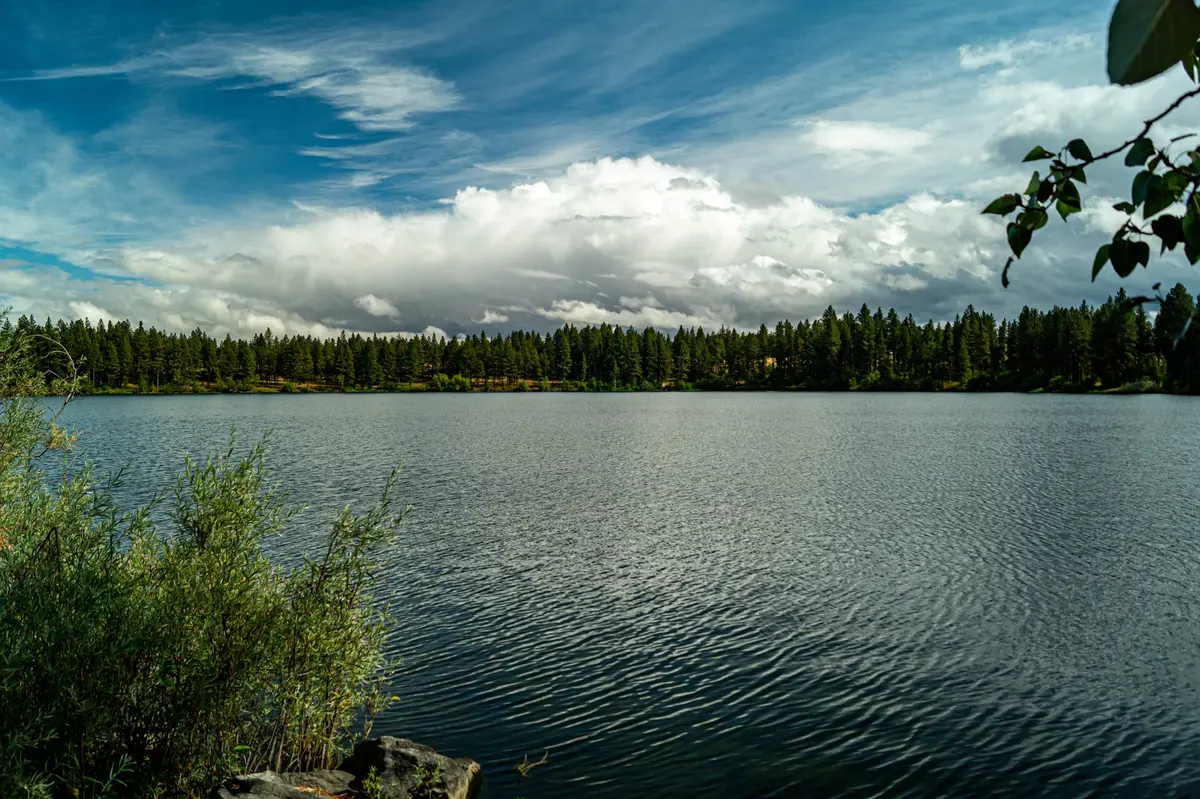
#3 Top Coffee Culture · Union County
Best for remote workers drawn to a university-town feel and outdoor access.
La Grande sits in the Grande Ronde Valley, bracketed by the Blue Mountains and the Wallowa-Whitman National Forest, and it carries the cultural weight of a university town — Eastern Oregon University anchors a sense of intellectual community that's unusual for a city this size. A $305,990 typical home price makes it genuinely accessible, and the local café scene reflects the college-town character: more independent spots, more places where you can work for a few hours without feeling like a squatter. The airport situation is the honest trade-off: plan on an hour's drive for most flights. Internet infrastructure here means researching specific addresses carefully before committing.
La Grande tends to suit remote workers who want outdoor access woven into the workweek — trails and mountains within easy reach — and who value a town with some intellectual and creative texture. Compared to Pendleton, you give up airport proximity; compared to Burns, you gain significant daily-life infrastructure and a more walkable downtown.

#4 Top Coffee Culture · Baker County
Best for remote workers who rarely fly and want a walkable historic downtown.
Baker City has one of the most handsome historic downtowns in Eastern Oregon — genuine Victorian-era commercial buildings along a walkable main street — and a café culture that defies its small-town headcount. A $268,574 typical home price is among the lowest on this list, and I-84 puts you on the main corridor. The honest constraint for remote workers is airport access: the nearest commercial service is a long drive in either direction, so Baker City works best if you fly infrequently or are willing to plan trips well in advance. Broadband at this population size means fewer provider options and more variability by address.
Baker City is a strong fit for remote workers who genuinely want to slow down — the kind of buyer who'd rather invest in a beautifully restored home on a quiet street than optimize for convenience. It tends to disappoint buyers who need to travel regularly for work, but for those whose flights are occasional, the trade-off often feels worth it.

#5 Top Affordability · Malheur County
Best for remote workers who want affordable Oregon with Boise within reach.
Ontario sits on Oregon's eastern edge, practically at the Idaho state line, and its location gives it a dual identity: a small Oregon city with easy access to the Boise metro's employment base and, for remote workers who need it, a regional airport roughly an hour's drive away. A $312,219 typical home price reflects a town that's affordable without being isolated in the way the high-desert communities farther west can feel. The coffee scene is more modest than elsewhere on this list — a handful of options rather than a full local café culture. Internet infrastructure here, as in every city on this list, comes down to your specific address.
Ontario suits remote workers who want an affordable Oregon entry point while staying within reach of a larger metro's services and airport. If proximity to Boise is a genuine asset for your work or personal life, Ontario is the only city on this list that delivers it.

#6 Top Affordability · Harney County
Best for self-sufficient remote workers who value solitude above all else.
Burns is the county seat of Harney County — the largest county by area in Oregon — and it operates at a scale that makes everything else on this list feel urban by comparison. A $191,972 typical home price reflects genuine remoteness: the nearest commercial airport involves a substantial drive, and broadband options at this population level are the most limited on this list. The café scene is a genuine surprise for a town this small — enough local spots to break up the workday — but remote workers should treat internet reliability as an open question that demands an answer before signing anything.
Burns is a fit for a specific kind of remote worker: someone who is fully self-sufficient in their setup, flies rarely, and is drawn to high-desert solitude as a feature rather than a compromise. For buyers in that position, the entry price and the scale of the landscape are genuinely compelling — but it's the least forgiving city on this list if your work depends on fast, consistent connectivity.
In Eastern Oregon, the remote-work calculus is almost always a trade-off between flight access and price: cities closer to a regional airport make client trips and quarterly meetups far less painful. Whichever city you're considering, confirm broadband availability at the specific address before you make an offer — provider coverage varies street by street out here.
Tell us what you need help with and we'll connect you with local resources.
