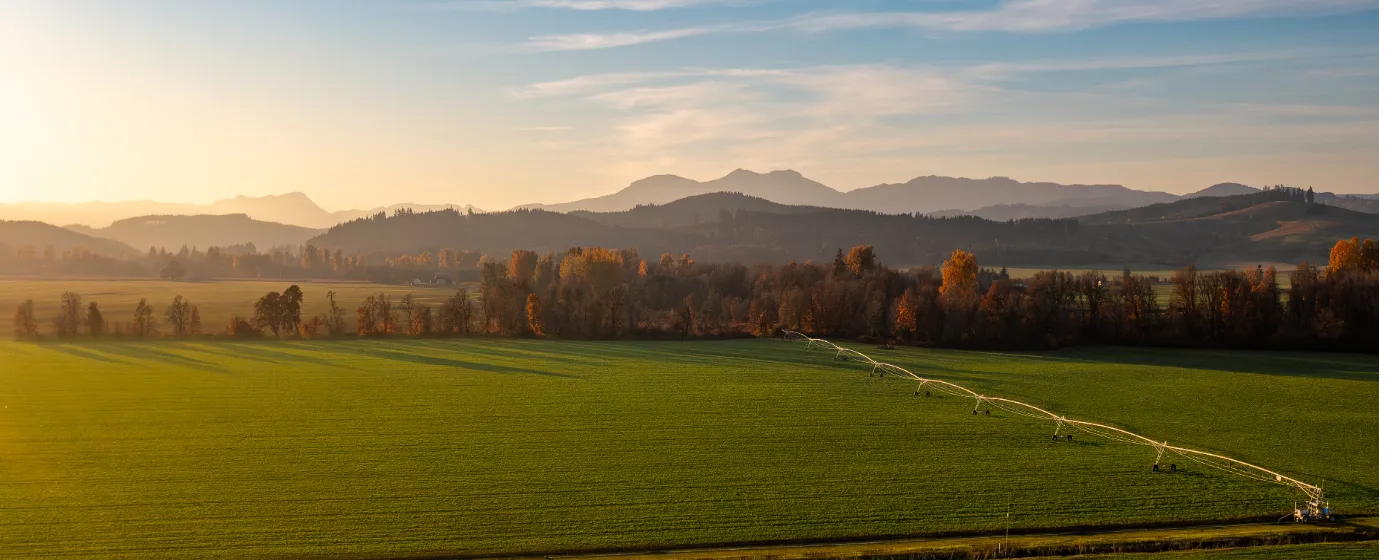
Maybe you've been priced out of Salem and someone mentioned Dallas as the next town west on OR-223. Maybe you drove through the Willamette Valley wine country, saw the rolling vineyards at the city's edge, and started doing math. Either way, the first thing to understand about Dallas, Oregon is that it is a genuinely small city — 17,531 people, a single school district, and a downtown that earned its place on the National Register of Historic Places in 2024 — not a satellite suburb with a bedroom-community identity. That distinction shapes every neighborhood decision you'll make here.
The economic backbone is institutional rather than corporate: the Dallas School District, Polk County, the City of Dallas, and a regional health system are the dominant employers, which means the city's stability comes from public-sector anchors rather than any single private company. Homeownership sits at roughly 69% of residents, a figure that reflects a community where people tend to stay. The school district, with 2,898 students enrolled in 2025-26, holds a C rating, according to Niche — an honest signal for families to weigh alongside the city's genuine affordability relative to larger Willamette Valley markets, and a full breakdown is available on the Dallas schools page.
The typical home price of $481,280 (Zillow Home Value Index, July 2026) puts Dallas noticeably below Salem and squarely in the range where buyers from the Portland metro stop and pay attention. The median household income of $71,549 sits below what's needed to carry that price comfortably at current rates, so down-payment size and financing strategy matter more here than in markets where income and price are better matched. Day-to-day life revolves around Dallas City Park, the Rickreall Creek Trail, and a compact historic downtown — not a regional mall or a freeway corridor.
Whether you're comparing specific streets or just trying to understand how the city fits together, the sections below break down Dallas's neighborhoods, buyer types, common mistakes, and the rental landscape so you can make a grounded decision before you make an offer.

The Dallas Reality
Dallas doesn't have a freeway spine to organize it around. What it has is OR-223 — Kings Valley Highway — which carries most of the traffic in and out of the city and functions as the practical dividing line between the older, walkable core and the newer residential growth pushing toward the agricultural fringe. Neighborhoods close to downtown sit on a traditional street grid with mature trees, shorter lots, and on-foot access to the historic district. Neighborhoods farther out — the Gleanns developments, Ridge View, Ponderosa Ridge, and Polk Station Estates — sit on the rolling terrain where the city meets farmland, and they trade that walkable texture for newer construction and more breathing room.
The school boundary picture is simpler than in many Oregon cities: one district, one high school, and relatively compact geography means the boundary anxiety that drives buyers in Beaverton or Lake Oswego doesn't apply the same way here. What matters more is the commute reality. The drive to Salem is about 20 minutes, which sounds reasonable until you factor in that OR-223 is a two-lane state highway through agricultural land. On a rainy January morning, that commute has a different feel than it does on a dry September afternoon — and buyers who visit once in good weather sometimes learn that the hard way.
The other divide worth naming is the pastoral edge. Outer neighborhoods in Dallas aren't suburban in the conventional sense — they back up against working farms and estate vineyards. That's genuinely appealing to the right buyer and genuinely isolating for someone who expected a more urban-adjacent feel. Getting clear on which you are before you start touring saves a lot of time.
Neighborhoods at a Glance
| Neighborhood | Best For | Vibe |
|---|---|---|
| Downtown Dallas | Walkable First-Time | Historic street grid, on-foot access to shops and the Polk County Courthouse; older bungalows and mixed-use edges |
| Forest Ridge | Families Value | Established residential feel with mature landscaping; quieter streets within reach of city amenities |
| Highland Gleanns | Families Quiet | Planned subdivision character with newer homes; elevated terrain gives a sense of separation from the city core |
| Orchard Gleanns | Families Quiet | Sister community to Highland Gleanns; similar subdivision layout with a slightly more removed, orchard-adjacent feel |
| Ridge View | Views Privacy | Elevated lots with pastoral sightlines; the city's edge meets Willamette Valley farmland and vineyard country |
| Sunrise Meadows | Families Commuter | Accessible residential neighborhood with a practical, low-fuss layout; suited to households focused on the Salem commute |
| Ponderosa Ridge | Nature Privacy | Quiet, semi-rural character; larger lots and a forested edge appeal to buyers who want space over proximity |
| Polk Station Estates | Luxury Nature | The city's most spacious residential offering; estate-scale lots on the agricultural fringe near Baskett Slough |
Dallas typical home price: $481,280 (Zillow ZHVI, July 2026). Typical rent: $1,569/mo (Zillow ZORI, July 2026). Neighborhood tiers on this page are relative to these figures.

Best Neighborhood by Buyer Type
| Buyer Type | Best Neighborhood | Why |
|---|---|---|
| First-Time Buyer | Downtown Dallas | Older housing stock offers the most accessible entry points in the city, and the walkable grid means you need one fewer car. |
| Luxury Buyer | Polk Station Estates | Estate-scale lots and pastoral surroundings offer the most land and separation that Dallas can provide. |
| Walkability Seeker | Downtown Dallas | It's the only neighborhood where the historic district, independent coffee, and the Polk County Courthouse are genuinely reachable on foot. |
| Families with Kids | Forest Ridge | Established streets, mature trees, and proximity to city parks make it a comfortable long-term fit for parents with school-age children. |
| Commuters | Sunrise Meadows | Its layout and position in the city favor a straightforward exit onto OR-223 for the drive about 20 minutes to Salem. |
| Large-Lot Buyers | Ponderosa Ridge | Bigger parcels, a forested edge, and genuine quiet make it the right answer for buyers who want space without leaving city limits. |
| Renters | Downtown Dallas | The widest mix of housing types — including older multifamily and rentable bungalows — is concentrated near the historic core. |
Looking to buy in Dallas? Estimate your payment.
Enter your numbers to see an estimated monthly mortgage payment.
Estimate only. Excludes HOA fees and mortgage insurance. The interest rate above is a starting point, not a quoted rate — replace it with your own to see real numbers. Insurance is a flat placeholder, not a Dallas quote.
Most Popular Neighborhoods
Downtown Dallas
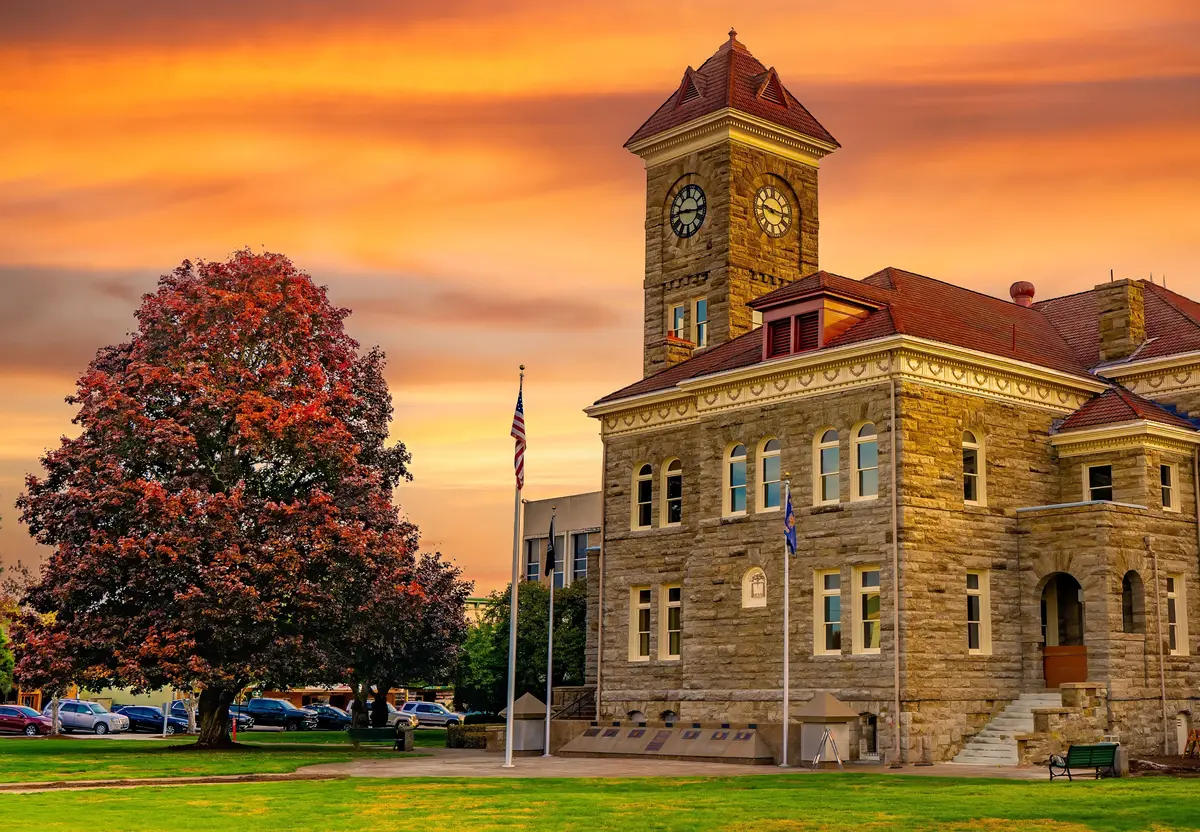
The Dallas Downtown Historic District earned its spot on the National Register of Historic Places in 2024, and the built environment shows it — 32 historic buildings spanning more than 150 years of commerce, anchored by the Polk County Courthouse completed in 1900. Bungalows and older homes sit on a traditional street grid with genuine on-foot access to independent coffee, the Rickreall Creek Trail, and Summerfest each summer. The trade-off is real: older homes mean older systems, and buyers who skip a thorough inspection here tend to discover deferred maintenance after closing.
Best for: Walkability seekers, first-time buyers, anyone who wants to live within a short walk of the city's civic and commercial core.
Forest Ridge
Forest Ridge has an established, lived-in quality that the newer Gleanns subdivisions haven't had time to develop — mature trees, settled landscaping, and streets that feel like a neighborhood rather than a development phase. It sits close enough to Dallas City Park and Roger Jordan Community Park that the skate park, pickleball courts, and the Dallas Aquatic Center's five-pool complex are a short drive or bike ride away. The housing stock is older than the outer neighborhoods, which keeps prices more accessible but also means buyers should budget for updates.
Best for: Families with kids, buyers who want an established feel at a realistic price point.
Highland Gleanns
Highland Gleanns is part of the wave of planned residential development that expanded Dallas onto its elevated terrain, and it shows in the layout — consistent lot sizes, newer construction, and streets designed around cars rather than pedestrians. The elevation gives a sense of remove from the city core, and on clear days the pastoral sightlines toward the Willamette Valley hills reward that position. The catch is that the distance from downtown is real: errands and community anchors require a drive, and buyers who value walkability will feel the gap quickly.
Best for: Families who prioritize newer construction and quiet streets over on-foot access.
Orchard Gleanns
Orchard Gleanns sits adjacent to Highland Gleanns and shares its subdivision DNA — newer homes, planned streets, and a position toward the city's agricultural edge where residential lots give way to farmland and, eventually, estate vineyards. The orchard-adjacent character is genuine, not a marketing name; the area has a pastoral quality that buyers from larger metro areas often find surprisingly calming. Like its neighbor, the compromise is isolation from the city's walkable core, and the commute out via OR-223 governs daily life here more than in the central neighborhoods.
Best for: Buyers who want a newer home with a rural-adjacent feel and don't need to walk anywhere.
Ridge View
The name earns its keep — Ridge View sits on elevated terrain with sightlines across the Willamette Valley that are genuinely hard to find at Dallas price levels. The neighborhood's position at the city's edge means it transitions quickly into the rolling farmland and vineyard country that makes this part of Polk County distinctive. That pastoral quality is the draw and the limitation: residents here depend on OR-223 for access to the city and the Salem commute, and the isolation that feels peaceful on a summer evening can feel pronounced on a wet February morning.
Best for: Buyers who prioritize views and privacy over proximity to the city's amenities.
Sunrise Meadows
Sunrise Meadows has a practical, no-frills residential character that suits households focused on the daily mechanics of life in a Willamette Valley commuter city — the drive about 20 minutes to Salem, access to schools, and a comfortable home at a reasonable price. It lacks the historic texture of Downtown Dallas and the estate-scale lots of the outer neighborhoods, but that's not what it's selling. Roger Jordan Community Park and the Rickreall Creek Trail are reachable, which matters for families with kids who want outdoor time without driving far.
Best for: Commuters to Salem, families with school-age children who want a practical neighborhood layout.
Ponderosa Ridge
Ponderosa Ridge leans into its forested edge in a way that the Gleanns developments don't — larger lots, more vegetative buffer between homes, and a quieter ambient character that attracts buyers who have ruled out anything that feels suburban. The downside is the same one every outer Dallas neighborhood carries: daily life is car-dependent, the city core requires a drive, and the commute on OR-223 to Salem adds up over time. Buyers who move here specifically for the space and quiet tend to stay; buyers who compromised on proximity because the lot was bigger sometimes regret it.
Best for: Nature-oriented buyers, those who want larger lots and genuine quiet within city limits.
Polk Station Estates
Polk Station Estates sits at the city's outermost residential edge, where estate-scale lots and proximity to the Baskett Slough National Wildlife Refuge — 2,492 acres of habitat that has recorded over 250 bird species — give the neighborhood a character that is closer to rural Polk County than to small-city Oregon. Homes here run above the city-wide typical, reflecting the land and the setting rather than the square footage. OR-223 is the route for every errand, every school run, and every Salem commute, and that car dependence is the honest reality of choosing this neighborhood.
Best for: Buyers seeking estate-scale lots, natural surroundings, and the most rural character available within Dallas city limits.
Common Mistakes Buyers Make in Dallas
Assuming the OR-223 Commute Is Consistent Year-Round
Buyers who visit Dallas on a dry fall weekend and run the route to Salem often come away thinking the commute is easy. Kings Valley Highway is a two-lane rural state highway, not a controlled-access freeway, and winter rain, fog, and occasional ice change the calculus significantly. If your household depends on that drive five days a week, test it in January before you close.
Treating All the "Gleanns" Addresses as Interchangeable
Highland Gleanns and Orchard Gleanns sound like phases of the same development, and they share a lot of DNA — but their positions relative to OR-223, the school complex, and the city's commercial center are not identical. Buying based on one address and expecting the other neighborhood's access patterns is a mistake buyers make more often than agents acknowledge. Tour both and drive the routes to school and to Salem before deciding.
Chasing Square Footage on the Outer Edge
The outer neighborhoods — Ridge View, Ponderosa Ridge, Polk Station Estates — consistently offer more home for the money than the central areas. That arithmetic is real. What buyers sometimes don't price in is the accumulated cost of car dependence: a second vehicle, gas, maintenance, and the time cost of driving for every errand and every school pickup. For households that are genuinely rural-lifestyle buyers, the trade-off is a fair one. For households that expected a town with more walkable density, the extra square footage doesn't compensate.
Underestimating What "Historic" Means for Maintenance
Downtown Dallas's pre-war bungalows and early-20th-century commercial-edge housing have genuine character that newer subdivisions can't replicate. They also have knob-and-tube wiring, original plumbing, and foundations that predate modern standards. Buyers drawn to the historic district sometimes skip a sewer scope or a full electrical inspection because the bones look solid — and then discover the first winter that charm and structural integrity are different things. Budget for a thorough inspection and a realistic renovation reserve before you fall in love with a 1920s craftsman.
Best Areas to Rent in Dallas
| Area | Ideal For | Trade-off |
|---|---|---|
| Downtown Dallas | Renters who want walkable access to the historic core, independent coffee, and community events like Summerfest | Older building stock means less modern finishes and occasionally deferred maintenance in rental units |
| Forest Ridge | Renters who want an established neighborhood feel with proximity to Dallas City Park and Roger Jordan Community Park | Rental inventory is thinner than downtown; competition for available units can move quickly |
| Sunrise Meadows | Commuters to Salem and families who want a practical layout near schools and the Rickreall Creek Trail | Less community character than the historic core; the neighborhood is functional rather than distinctive |
| Highland / Orchard Gleanns | Renters who want newer construction and quieter streets, and don't mind driving for all errands | Rental units in planned subdivisions are scarcer; expect single-family rentals rather than apartment options |
| Outer Neighborhoods (Ridge View, Ponderosa Ridge, Polk Station Estates) | Renters seeking space, larger lots, and pastoral surroundings with the Baskett Slough area nearby | Almost entirely single-family homes; very limited rental supply, and every daily errand requires a drive |
Dallas is a homeowner-dominant city — roughly 69% of residents own — so the rental market is smaller than its population might suggest. The tightest inventory is consistently in the neighborhoods with the most community character: downtown and Forest Ridge. Renters who arrive without a signed lease often find themselves competing for a short list of available units, particularly in spring and early summer when the Salem commuter market is most active.
Local Expert Takeaway: Dallas, Oregon rewards buyers who understand what kind of city it actually is — a 17,531-person Willamette Valley town with a genuinely historic downtown, agricultural edges, and a commute to Salem that governs daily life for most working households. The clearest buying decision here is a simple axis: do you want the walkable, historic texture of Downtown Dallas and Forest Ridge, or the space and pastoral character of the outer neighborhoods like Ridge View, Ponderosa Ridge, and Polk Station Estates? There is no version of Dallas that gives you both. Pick your priority, test the OR-223 commute in the wet season before you commit, and budget properly for what older construction actually costs to maintain.
Quick Takeaways & FAQs
✅ Dallas's downtown earned National Register of Historic Places designation in 2024, giving central-neighborhood buyers genuine historic character at Willamette Valley prices noticeably below Salem.
⚠️ The commute to Salem on OR-223 is about 20 minutes in good conditions — but it's a two-lane rural highway, and buyers who don't test it in winter sometimes find the daily reality harder than the weekend visit suggested.
📍 Polk Station Estates sits near the 2,492-acre Baskett Slough National Wildlife Refuge, making it Dallas's most nature-immersed neighborhood — and its most car-dependent one.
What is the most walkable neighborhood in Dallas, Oregon?
What is the typical home price in Dallas, Oregon?
Which Dallas, Oregon neighborhood is best for families with kids?
How does the commute from Dallas to Salem actually work?
Are there any newer neighborhoods in Dallas, Oregon?
Moving to Oregon?
Tell us what you need help with and we'll connect you with local resources.
