
Maybe you've been priced out of your California ZIP code and someone mentioned the Rogue Valley. Maybe your employer went fully remote and you finally ran the numbers. Whatever brought you here, the first thing most California transplants say after a few months in Central Point is that the scale surprised them — not just the price of housing, but the scale of everything. The mountains are closer. The commute is shorter. The grocery line is shorter. Central Point sits about 10 minutes to Medford along I-5, which means you get a genuine small-city feel — a population of 19,171 — without being cut off from the services and airport access that a bigger neighbor provides. Rogue Valley International-Medford airport is approximately 3 miles away, a detail that matters more than you'd expect when you're deciding whether to leave California for good.
The economic picture here is built around a cluster of public-sector and manufacturing anchors: Crater Lake Soda in manufacturing, Jackson County and the City of Central Point in local government, and Central Point School District 6 in education. Many Californians who land here — particularly from the Bay Area and Southern California — arrive with one or both partners working remotely, which is the honest reason the local employer base doesn't need to be Silicon Valley to make the move pencil out. The median household income in Central Point is $86,819, and the community skews toward families with kids, long-term residents, and a growing wave of California arrivals who discovered that community-scale living is something you can actually afford here.
The cost picture is where Central Point earns its credibility with relocating Californians. The typical home price is $423,657 as of July 2026 — a figure that sits well below what the full cost-of-living breakdown covers, but the headline comparison is hard to ignore against California's statewide typical home value of $773,735 (Zillow Home Value Index). Oregon's zero sales tax adds another layer of relief for day-to-day spending. The trade-offs are real too — income taxes are more complicated than the simple headline suggests, and this is a city of 19,171, not a metro, so you adjust your expectations for dining and retail variety accordingly.
Whether you're seriously considering a move or still early in the research, the sections below break down exactly what changes — and what doesn't — when you trade your California address for a Central Point one: home prices, taxes, schools, daily life, and the specific adjustments that trip up first-time Oregon arrivals.
The Home Price Reality: What Your California Budget Actually Buys Here
The number that moves most Californians from curiosity to a serious offer is the home price. Central Point's typical home price stands at $423,657 as of July 2026 — set against California's statewide typical home value of $773,735 (Zillow Home Value Index), the gap is substantial enough to change what kind of life a purchase makes possible.
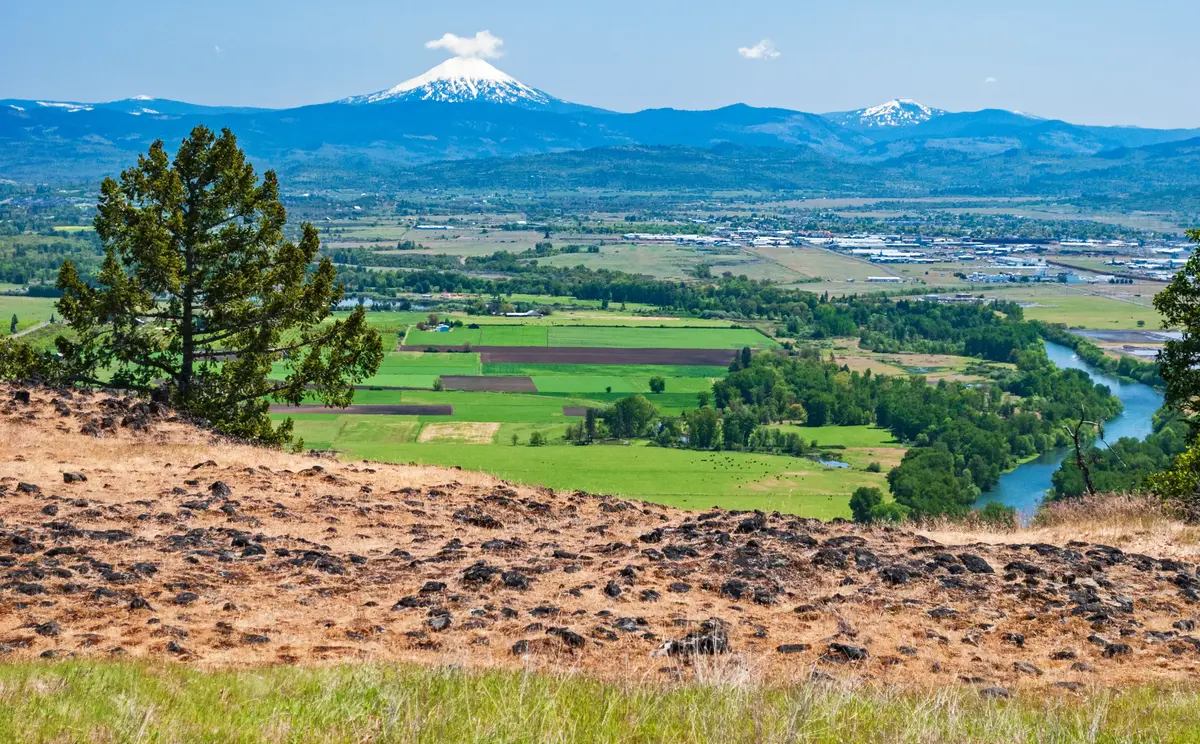
In practical terms, a California buyer who was stretching to afford a two-bedroom condominium finds themselves shopping for a four-bedroom house with a yard in Central Point instead. The neighborhoods here run from established family areas like Twin Creeks and Forest Glen to newer construction in Cascade Meadows and New Haven Estates — and across all of them, the entry point for a detached single-family home is far below what most parts of California ask for a comparable product.
That said, Central Point is not a buyer's paradise with no friction. The median household income of $86,819 sits below what it takes to comfortably carry the typical home here, which means local buyers are already stretching. Remote workers arriving from California with California-adjusted salaries have a genuine advantage in this market. If your household income travels with you, the purchase math improves considerably — but go in with eyes open that this is not a market where prices are stagnant or soft simply because the numbers are smaller than what you left behind.
Nearby, Medford runs at about the same price level as Central Point, Eagle Point trends somewhat higher, and White City sits noticeably lower — so Central Point occupies a middle tier in the immediate Rogue Valley market. For the full breakdown of what neighborhoods look like and how they compare, see the best neighborhoods guide.
What Your Down Payment Does Differently Here
If you're selling a California home to fund this move, you may be arriving with equity that covers a significant portion of a Central Point purchase outright. That's a dynamic that's become common enough among California transplants that local agents recognize it immediately. It changes your negotiating position and your monthly picture in ways that a local buyer working from a lower income base simply can't replicate.
The catch is that a large cash position can also make buyers overconfident about what they're getting. A home priced at $423,657 in Central Point still needs inspection, still needs to appraise, and still comes with the Oregon climate's particular maintenance demands — wood rot from wet winters, HVAC systems earning their keep in summer heat that regularly clears 100°F. Budget for that accordingly. For buying-process specifics, the first-time homebuyer page covers what Oregon's process looks like from offer to close.
Taxes: The Honest California-to-Oregon Comparison
Oregon's tax structure is genuinely different from California's — and the comparison is more complicated than the headlines suggest. Getting it wrong is one of the most common mistakes relocating Californians make in their first year here.
Sales Tax: The Clear Win
Oregon has no state sales tax and no local sales tax. None. California's statewide base sales tax rate of 7.25% (California Dept. of Tax and Fee Administration) climbs higher in most counties and cities once local additions stack on. For a household spending meaningfully on taxable goods each year, eliminating that drag entirely is a real, recurring benefit — one you feel immediately in the checkout line and over time in your annual budget.
Income Tax: Read This Before You Celebrate
This is where many California arrivals get a surprise. California's top state income tax rate of 13.3% (California Franchise Tax Board) is the highest marginal rate in the country — but it applies only to the highest earners. Oregon's top rate of 9.9% sounds like relief until you see where the brackets sit: Oregon's top rate bites single filers at around $125,000 in income, not at the million-dollar threshold where California's 13.3% kicks in.
The income-tax savings favor high earners; many middle-income households pay about the same or more here than they did in California. The 0% sales tax is what balances the equation for most movers — not a simple rate reduction. Oregon does allow taxpayers to subtract a portion of federal taxes paid from Oregon taxable income, which provides meaningful relief for lower- and middle-income earners, though that benefit phases out for higher earners.
If you're a very high-income earner — particularly above $1 million, where California's 13.3% surcharge applies — Oregon becomes a straightforward improvement. For everyone else, run your actual numbers before assuming a lower top rate means a lower tax bill.
Property Tax: Roughly a Wash
Central Point's effective property tax rate is 0.74% — below the Oregon statewide average and, as it happens, comparable to California's effective rate of approximately 0.74% under Proposition 13 (Tax Foundation). Oregon's Measure 50 functions similarly to Prop 13, capping assessed value growth at 3% per year. If you were expecting a dramatic property tax advantage in Oregon, this is the section that recalibrates that expectation: it is not the differentiator. The home price itself is.
| Tax Category | California | Central Point / Oregon | Who Benefits |
|---|---|---|---|
| Sales Tax | California's statewide base sales tax rate of 7.25% (plus local additions) | 0% — no state or local sales tax | Everyone |
| Top Income Tax Rate | California's top state income tax rate of 13.3% | 9.9% (kicks in ~$125K for single filers) | High earners above $1M |
| Income Tax Structure | Wide brackets; 13.3% only above $1M | Compressed brackets; income-tax savings favor high earners; many middle-income households pay about the same or more | California (for most earners) |
| Federal Tax Subtraction | Not available | Partial deduction of federal taxes paid; phases out at higher AGI | Lower/mid earners |
| Effective Property Tax Rate | ~0.74% (Prop 13 caps) | 0.74% (Measure 50 caps) | Roughly equal |
| Assessment Cap | 2% annual growth cap (Prop 13) | 3% annual growth cap (Measure 50) | California (slightly) |
The honest summary: Oregon is a different tax structure, not a uniformly lower-tax state. Run your household's specific numbers — the sales tax elimination is real and recurring, but it may or may not fully offset the income tax picture for your bracket.

Schools: What California Families Actually Find Here
Central Point School District 6 holds a C+ rating, according to Niche, with 4,747 students enrolled in 2025-26. On 2024-25 state assessments, 25.6% of students reached math proficiency and 40.5% reached reading proficiency — figures that land below what families from higher-performing California districts are accustomed to. That is the honest starting point.
The context matters, though. Thirty-nine percent of the district's student body was experiencing economic hardship in 2024-25, according to the Oregon Department of Education, and aggregate test scores track closely with poverty rates across virtually every district in the country. The district is not academically selective, and it is not pretending to be something it isn't.
The TWI Program Is Worth Knowing About
What genuinely distinguishes this district — and what California families from bilingual or dual-language program backgrounds will recognize immediately — is the K–12 Two-Way Spanish Immersion program. Starting in kindergarten, instruction runs in both Spanish and English using a 90/10 dual-language model. Students who demonstrate bilingual proficiency by graduation are eligible for the Oregon State Seal of Biliteracy. For families who specifically sought out dual-language programming in California, finding a K–12 version of it in a city of 19,171 is not what most people expect.
All schools in the district also partner with La Clinica school-based health centers, placing on-site care access at every campus — a benefit that matters practically for families navigating health coverage changes that come with an interstate move.
Active OSAA athletics programs run across the district, and the community takes its sports seriously — Friday night football is genuinely a local gathering point, not a formality. For a fuller picture of youth programming and activities, the schools page goes deeper.
The Adjustment California Families Don't Anticipate
The surprise for parents arriving from high-performing California suburban districts is not the academic stats — most have seen those before arriving. It's the pace and expectation gap that takes adjustment. Central Point runs on a different social clock than Irvine or a high-achieving Sacramento suburb. Extracurricular competition is less intense. The path to college still exists and many graduates take it, but the culture around it is quieter. Some families find that a relief; others find it disorienting in month four.
Looking to buy in Central Point? Estimate your payment.
Enter your numbers to see an estimated monthly mortgage payment.
Estimate only. Excludes HOA fees and mortgage insurance. The interest rate above is a starting point, not a quoted rate — replace it with your own to see real numbers. Insurance is a flat placeholder, not a Central Point quote.
Daily Life in Central Point: The Adjustments That Actually Matter
Central Point has 192 sunny days a year — fewer than most of California, but more than Portland or Eugene, and in a valley that turns genuinely golden in late summer. The climate runs warmer and drier than most Oregonians outside Southern Oregon expect: summer temperatures regularly exceed 100°F, and the Rogue Valley has real wildfire smoke seasons. Arriving from California, you already know what that looks and feels like. What you may not know is that Central Point's air quality during August and September can rival anything you experienced in the Central Valley during a bad fire year.
The Amenity Adjustment
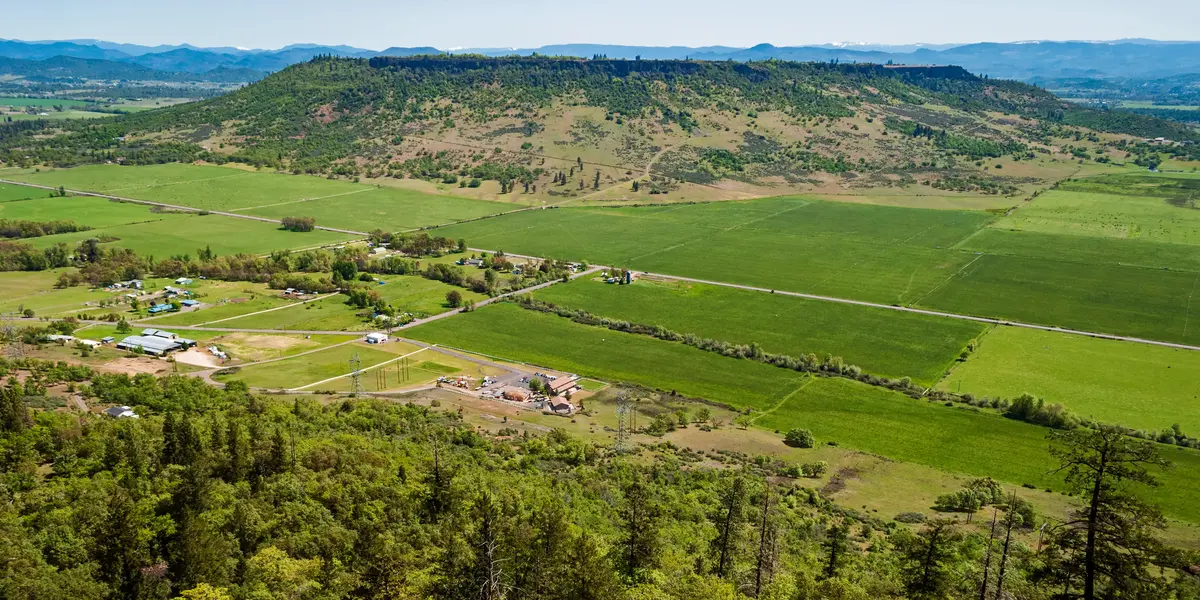
The outdoor access is immediate and genuinely good. Upper and Lower Table Rock are a short drive and provide what any California hiker would recognize as serious volcanic plateau hiking. Bear Creek Greenway runs as a paved trail corridor through the valley floor. TouVelle State Recreation Site sits along the Rogue River. The trade-off is that the indoor amenity layer — the dining variety, the retail depth, the cultural programming — runs thinner than what most Californians are used to. A serious shopping run means driving to Medford or beyond; a serious grocery trip for specialty items means planning ahead or ordering online.
The dining scene has genuine local anchors. Outsider Coffee and Mellelo Coffee Roasters Central Point serve the coffee side of things. The Point Pub & Grill, Mazatlan Grill, Diner 62, Triple Tree Restaurant, and Ferment & Fire represent the local restaurant options. Rogue Creamery — the nationally recognized cheese producer — is in Central Point, which is a legitimate point of pride. The Crater Rock Museum is a small but genuinely one-of-a-kind draw. For events at scale, Jackson County Fairgrounds and The Expo pull in regional programming that a city of 19,171 couldn't sustain on its own.
The Community Texture
What Californians consistently underestimate — and then find they value — is the pace. You will know your neighbors. The parks are not crowded. Don Jones Memorial Park and Twin Creeks Park draw local families on weekends, and the scale of those gatherings is small enough that you start recognizing faces within a month. This is not a city where you can disappear into anonymity, which is a feature or a bug depending entirely on what you were looking for when you left California.
Health coverage and insurance premiums run noticeably below California levels, though the trade-off is real: specialist care requires driving to Medford or further for complex needs, and advanced treatment for serious conditions may mean traveling to Portland or beyond. It is not the same care infrastructure you had access to in a major California metro, and that gap matters more as you get older. The retiring page covers this in more depth for anyone for whom healthcare access is a primary factor.
Who This Move Works For — and Who Should Think Twice
California is consistently the single largest source of new Oregon residents — accounting for 22% of all inbound moves in the United Van Lines 2025 National Movers Study, and delivering a net gain of 6,396 households to Oregon in the most recent IRS migration data. Central Point gets its share of that flow, and the profile of who arrives has gotten fairly consistent.
This Move Works Well For
Remote workers carrying California-scale salaries are the clearest fit. Your income travels; your cost of living drops substantially; your commute to anything is measured in minutes rather than hours. Families who specifically want a smaller, more legible community — where kids walk to school, where neighbors notice when something's off — find that Central Point delivers something that money can't buy in a California metro. The TWI program is a genuine draw for families who were already enrolled in or seeking dual-language education.
Californians who are selling a home and arriving with equity have obvious advantages in this market. Even at $423,657 typical, a well-positioned buyer with California equity can own outright or carry a modest payment — a financial reset that simply is not available in most California ZIP codes.
Who Should Think Twice
If your career requires in-person presence in a major employment center, Central Point does not solve that problem. The commute to Medford is about 10 minutes along I-5, and OR-99 (Rogue Valley Highway) runs parallel — but Medford is not San Francisco or Los Angeles, and the regional job market reflects that. Southern Oregon's economy is not a replacement for a California tech or finance ecosystem; it's a different economy built around different industries.
If you are accustomed to the cultural density of a California metro — the restaurant variety, the live music pipeline, the art institutions, the sheer choice — Central Point will feel thin in ways that are hard to fully anticipate from a research phase. Six months in, some arrivals discover they miss that density more than they expected. The honest ones who leave usually say some version of: I traded one thing I was tired of for something I didn't realize I needed. Know which category you're in before you close.
For the full picture of who Central Point suits and what daily life looks like long-term, the living in Central Point hub pulls it all together.
Local Expert Takeaway: California buyers who do the math on Central Point often fixate on the home price gap and miss the tax nuance — Oregon's income brackets compress fast, and the income-tax savings favor high earners while many middle-income households pay about the same or more than they did in California; the sales tax elimination is what actually balances the ledger for most movers. The move makes the most sense if you're bringing remote income, arriving with California equity, and genuinely want a community where the scale is human. The TWI program at Central Point School District 6 is a real differentiator for bilingual families, Rogue Creamery is a legitimate point of local pride, and Upper and Lower Table Rock will remind you within a week why you left. The adjustment that takes longest is the amenity thinness — plan your first year knowing that certain shopping trips and specialist appointments will require driving out of town.
Quick Takeaways & FAQs
✅ Central Point's typical home price of $423,657 (July 2026) sits well below California's statewide typical home value, giving California equity holders a genuine financial reset.
⚠️ Oregon's income tax is a nuanced trade-off — the income-tax savings favor high earners, while many middle-income households pay about the same or more than they did in California; the 0% sales tax is what offsets that for most movers.
📍 Central Point School District 6 runs a rare K–12 Two-Way Spanish Immersion program starting in kindergarten — a genuine draw for bilingual families relocating from California metro areas.
Is housing in Central Point actually cheaper than California?
Do I really pay less tax in Oregon than California?
How are the schools in Central Point compared to California?
What is the property tax rate in Central Point, and how does it compare to California?
What do California transplants wish they knew before moving to Central Point?
Moving to Oregon?
Tell us what you need help with and we'll connect you with local resources.
