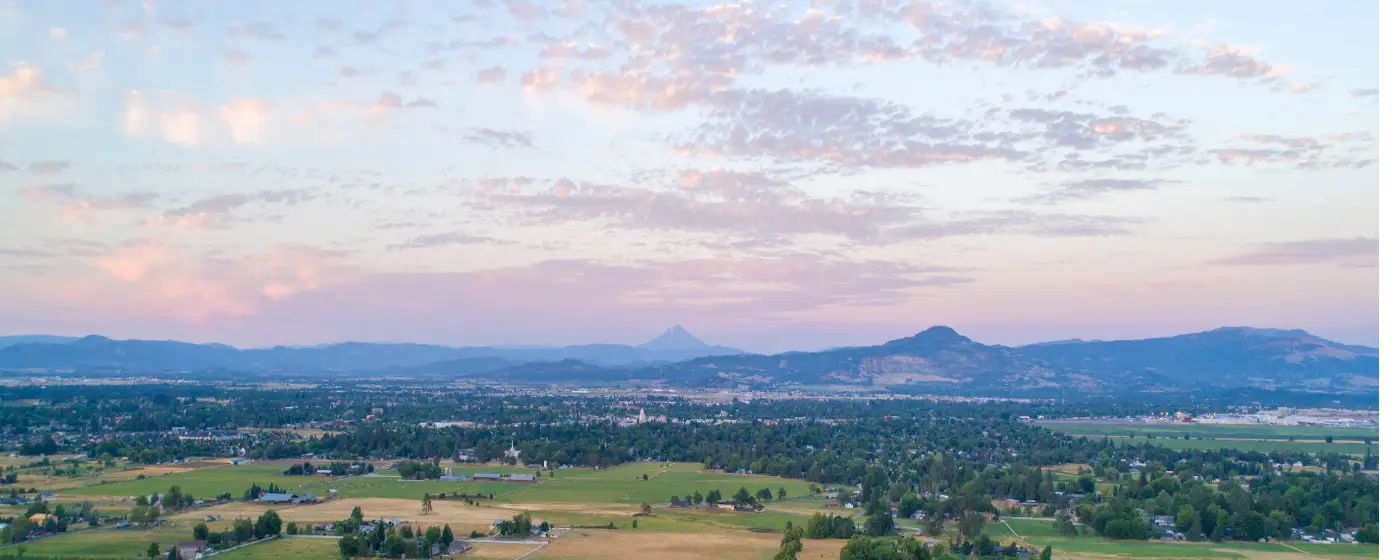
Maybe your company is relocating you to the Rogue Valley and someone mentioned Central Point as the affordable alternative to Medford. Maybe you've been watching home prices and noticed that a city of 19,171 people sitting about 10 minutes to Medford still has a typical home price that lands noticeably below what most of the metro feels like from the outside. The catch is that Central Point is not one city in terms of how it lives. The OR-99 corridor, Griffin Creek, and the master-planned Twin Creeks development have carved the city into zones that feel genuinely different from one another — and buying in the wrong zone for your life is one of the most common and most avoidable mistakes relocating buyers make here.
The economic backbone is a mix of public-sector stability and small-scale manufacturing. Jackson County, the City of Central Point, Central Point School District 6, and Crater Lake Soda anchor the local employment picture. Medford's much larger job market — regional healthcare, retail, distribution — is the real employment draw for most residents, and the commute is short enough that this barely registers as a compromise. The school district holds a C+ rating, according to Niche, and has 4,747 students enrolled in 2025-26. Families with kids in public school will want to look hard at which side of town puts their children in the most convenient walk or drive to a school they feel good about.
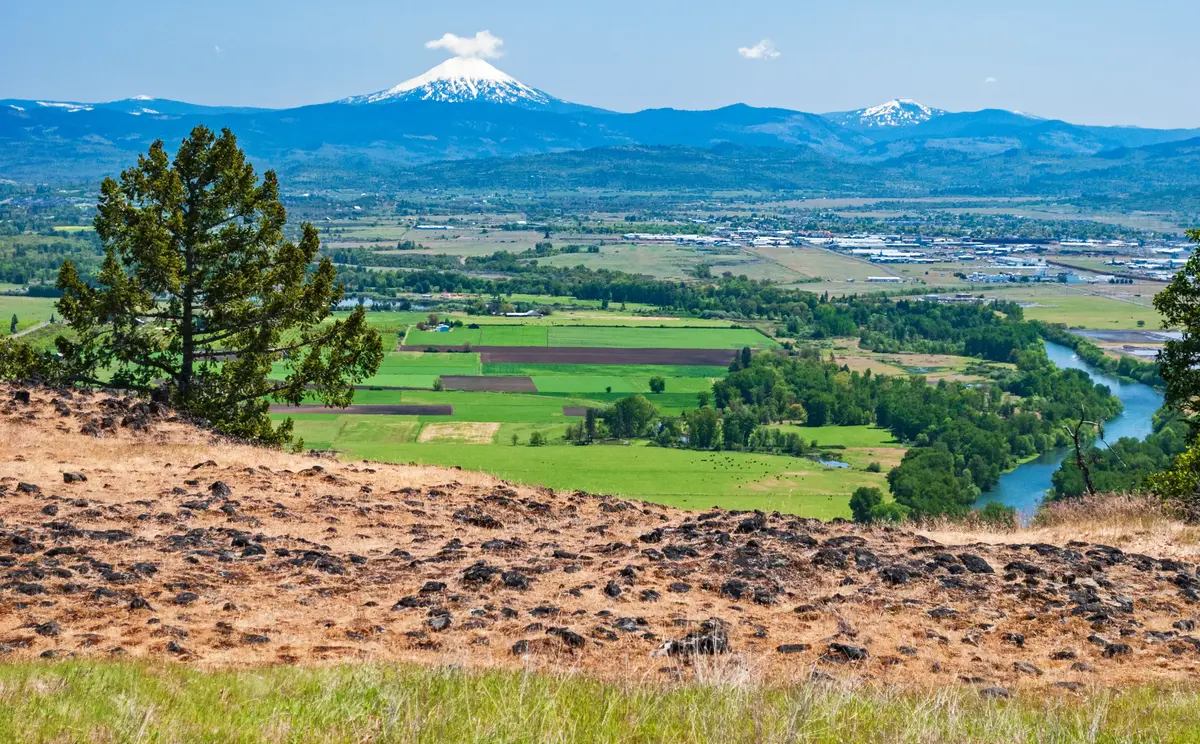
The typical home price sits at $423,657 (July 2026), which makes Central Point one of the more accessible entry points in the Rogue Valley. The median household income of $86,819 is below what the typical home actually requires to carry comfortably — something first-time buyers especially should factor in early. Day-to-day life leans heavily on cars, though the Bear Creek Greenway gives cyclists and walkers a genuine 20-mile route running from Central Point all the way south to Ashland. The Rogue Valley gets 192 sunny days a year, and the mild climate is one of the consistent reasons people who move here stay.
Whether you're comparing a few specific neighborhoods or trying to figure out which part of Central Point actually fits your life, the sections below break down each neighborhood's character, the most common buyer mistakes, the best rental zones, and a street-level picture of what daily life looks like across the city.
The Central Point Reality
The Divide That Shapes Every Purchase Decision
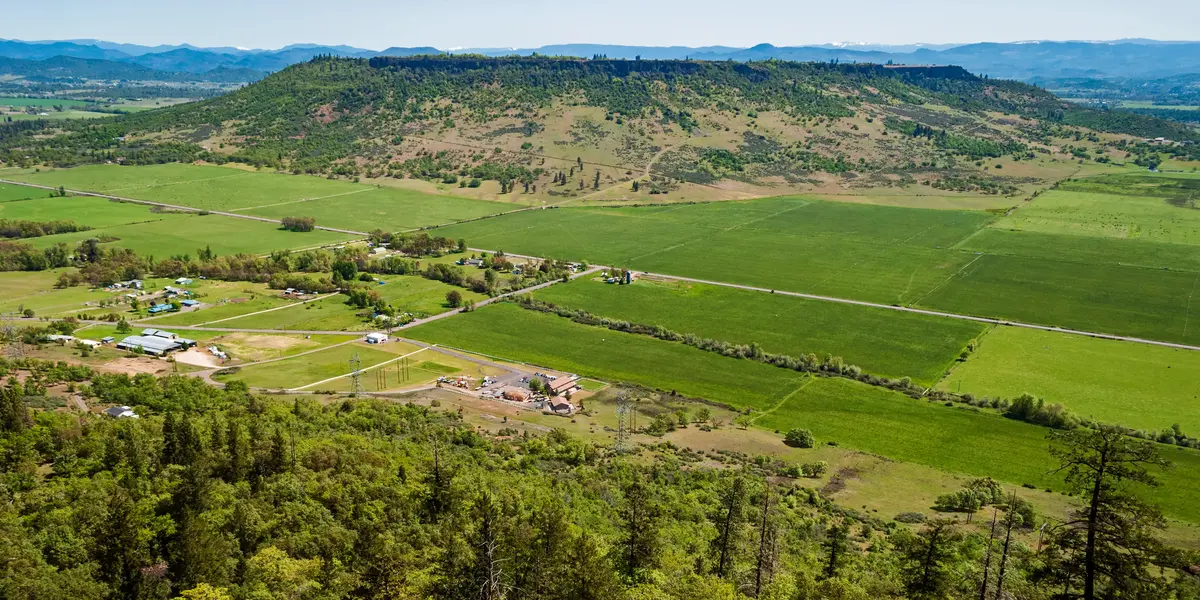
The single most important thing to understand about buying in Central Point is how OR-99 and Griffin Creek together split the city's residential fabric. Twin Creeks — the master-planned development along OR-99 — operates as its own world: walkable, trail-connected, and designed with density in mind. Everything east of Griffin Creek has a different rhythm: established subdivisions with larger lots, quieter streets, and a more conventional suburban feel. These are not interchangeable zones, and buyers who tour one and then make an offer in the other are frequently surprised by how different daily life turns out to be.
School Boundaries and Walkability Are Not Uniform
Crater High School and Mae Richardson Elementary sit within walking distance of Twin Creeks, which is genuinely unusual for a city this size. Neighborhoods like Forest Glen and Cascade Meadows also benefit from school proximity, but the eastern subdivisions — Beebe Woods, Central Point East, Bluegrass Downs — rely on car pickups. If a walkable school commute matters to your household, verifying the specific boundary before making an offer is worth the call to the district.
Commute access to Medford is roughly equal across most of the city — I-5 and OR-99 both reach the city's core quickly — but the practical experience of leaving your neighborhood every morning differs. Twin Creeks residents join OR-99 traffic directly. Eastern residents typically navigate local streets first. Neither is a dealbreaker, but neither is invisible either.
Neighborhoods at a Glance
| Neighborhood | Best For | Vibe |
|---|---|---|
| Twin Creeks | Walkable Families First-Time | Master-planned, trail-connected, mix of rowhomes and single-family |
| Central Point East | Quiet Families | Peaceful, well-maintained, suburban with easy access to eastern neighbors |
| Forest Glen | Families School Proximity Walkable | Quiet streets, neighborhood park, central-western location near Crater High |
| Beebe Woods | Families Value | Early-2000s construction, suburban lots, established and consistent |
| Cascade Meadows | Families Quiet School Proximity | Tight-knit, well-kept, near parks and schools southeast of the Crater area |
| Green Valley / Hidden Grove | Quiet Families Nature | Lush and calm, close-knit, green-heavy suburban feel |
| New Haven Estates | Families Quiet | Peaceful streets, well-kept homes, walkable to local schools and parks |
| Bluegrass Downs | Quiet Renters Families | Residential and unhurried, popular with gardeners and dog owners |
Central Point typical home price: $423,657 (Zillow ZHVI, July 2026). Typical rent: $1,920/mo (Zillow ZORI, July 2026). Neighborhood tiers on this page are relative to these figures.
Best Neighborhood by Buyer Type
| Buyer Type | Best Neighborhood | Why |
|---|---|---|
| First-Time Buyer | Twin Creeks | Rowhomes and 0-lot-line options give entry-level buyers more housing types to choose from than any other part of the city. |
| Luxury Buyer | Green Valley / Hidden Grove | Larger lots, established landscaping, and a quieter corridor attract buyers looking for more space and privacy. |
| Walkability Seeker | Twin Creeks | Designed from the ground up as a transit-oriented community with restored creek trails and a park at its center. |
| Families with Kids | Forest Glen | Crater High School is within walking distance and the neighborhood park gives kids a genuine after-school destination. |
| Commuters | Twin Creeks | Direct access to OR-99 makes the daily run to Medford as straightforward as Central Point gets. |
| Large-Lot Buyers | Bluegrass Downs | Residents here trend toward home improvement and gardening, which signals the lot sizes and pace to match. |
| Renters | Central Point East | Its position near Beebe Woods, Bluegrass Downs, and Cascade Meadows gives renters access to multiple walkable zones without committing to one corner of the city. |
Looking to buy in Central Point? Estimate your payment.
Enter your numbers to see an estimated monthly mortgage payment.
Estimate only. Excludes HOA fees and mortgage insurance. The interest rate above is a starting point, not a quoted rate — replace it with your own to see real numbers. Insurance is a flat placeholder, not a Central Point quote.
Most Popular Neighborhoods
Twin Creeks
Twin Creeks opened in 2001 as one of the Rogue Valley's few genuine attempts at transit-oriented, mixed-use residential design — built between Griffin and Jackson Creeks with rowhomes, 0-lot-line homes, and traditional single-family houses sharing the same blocks. Twin Creeks Park anchors the green space, and Crater High School and Mae Richardson Elementary are both walkable, which is rare for a city this size. The trade-off is density: if you're looking for a large private lot and distance from your neighbors, the rowhome sections will feel tight.
Best for: Buyers who want walkable streets, trail access, and housing variety at a range of price points.Central Point East
Central Point East sits northeast of Griffin Creek and is the kind of neighborhood that doesn't announce itself — well-maintained streets, quiet blocks, and easy reach to Beebe Woods, Bluegrass Downs, and Cascade Meadows to the north and east. It reads as the most transitional of the eight neighborhoods: peaceful in character but without a defining amenity of its own. The genuine appeal is convenience and consistency; the honest limitation is that you're relying on neighboring areas for most of what you'll actually do on a weekend.
Best for: Buyers who prioritize low drama, established neighbors, and central positioning within the eastern half of the city.Forest Glen
Forest Glen sits in central-western Central Point with quiet streets, a well-maintained neighborhood park, and a short walk to Crater High School — which matters more than people expect when you're doing the pickup-and-drop-off math across a school year. It's one of the more genuinely walkable residential pockets in the city outside of Twin Creeks. The downside is that the housing stock is standard suburban construction without the architectural variety that Twin Creeks offers.
Best for: Parents with school-age children who want a walkable neighborhood without the density of Twin Creeks.Beebe Woods
Beebe Woods is an established subdivision with housing stock that leans toward early-to-mid 2000s construction — mostly three-bedroom layouts on suburban lots, sitting northeast of Griffin Creek and northwest of Howard Park. The neighborhood is consistent and well-kept, and the circa-2006 construction means buyers are getting homes that are past their most expensive maintenance cycles but still relatively modern. The honest trade-off is that nothing here will surprise you: it is a reliable suburban neighborhood, not a character-driven one, and the pricing at the city-wide level makes the entry point accessible without being rock-bottom.
Best for: Buyers seeking predictable, established suburban construction in the eastern half of the city.Cascade Meadows
Cascade Meadows sits southeast of the Crater area and northeast of Griffin Creek — a tight-knit, family-oriented subdivision where well-kept homes and nearby parks are the consistent descriptors locals reach for. School proximity is a genuine draw here, similar to Forest Glen, and the neighborhood has the close-in feel of somewhere people actually know their neighbors. The limitation is that it shares the same trade-off as most of the eastern neighborhoods: car-dependent for anything beyond the immediate block.
Best for: Families with kids who want a quieter, close-knit suburban environment near schools and parks.Green Valley / Hidden Grove
Green Valley and Hidden Grove read as one zone from the outside — a quiet, lush pocket northwest of Howard Park where the landscaping is noticeably more established than in the newer subdivisions and the community feel is close-knit in the way that older, settled neighborhoods tend to be. Residents here tend to stay, which keeps turnover low and inventory tighter when homes do come up. If you're expecting frequent options on the market, this is the zone that will test your patience.
Best for: Buyers or renters who want a calm, green-heavy suburban environment and plan to stay long enough to become part of the neighborhood.New Haven Estates
New Haven Estates is peaceful and family-friendly, positioned northwest of Howard Park with quiet streets and well-kept homes in close reach of local schools and parks. It shares a similar character to Green Valley and Cascade Meadows — the Nextdoor profile language across all three is nearly identical — which means differentiating them on feel alone is genuinely difficult. What sets New Haven Estates apart is its proximity to the school corridor, which is the most practical reason to prioritize it over its neighbors.
Best for: Families who want a quiet, school-adjacent neighborhood without a long commute across town for pickups.Bluegrass Downs
Bluegrass Downs sits northwest of Howard Park and northeast of Freeman Road, and the picture that emerges from local community profiles is specific: residents here are into gardening, dogs, home improvement, and a general preparedness mindset — which tells you something real about the lot sizes, the pace, and who stays. It draws both families and retirees, which gives it a slightly wider age range than the family-skewing neighborhoods to the southeast. The catch is that it's the quietest and most removed of the eight neighborhoods, and buyers who underestimate how car-dependent daily errands will feel here sometimes reconsider after a few months.
Best for: Buyers who want space, privacy, and a genuinely unhurried residential pace — and who are honest with themselves about driving everywhere.Common Mistakes Buyers Make in Central Point
Assuming All of Central Point Feels the Same
The most consistent mistake relocating buyers make is treating Central Point as a uniform suburb of Medford. Touring Twin Creeks — with its trail network, rowhomes, and walkable school access — and then making an offer in Bluegrass Downs or Beebe Woods will produce a genuinely different daily life. These neighborhoods are not interchangeable, and the gap between them is larger than the map distance suggests.
Skipping the School Boundary Check
The district's attendance boundaries don't follow neighborhood lines cleanly, and a home in what looks like a school-adjacent neighborhood isn't always zoned for the school it sits nearest to. Buyers chasing square footage in the eastern subdivisions sometimes discover their kids are bused farther than expected. One call to Central Point School District 6 before going under contract costs nothing and prevents a genuine surprise.
Underestimating the Car Dependency Outside Twin Creeks
Twin Creeks was designed for on-foot access — most of the rest of the city was not. Buyers who tour Forest Glen or Cascade Meadows expecting a similar walkable-errand experience tend to find that the neighborhood park is walkable but the grocery run is not. OR-99 and I-5 both reach Medford quickly, but that commute happens in a car, not on foot or by trail.
Ignoring the Affordability Gap
The typical home price of $423,657 (July 2026) looks approachable compared to much of the state, but the median household income here sits below the income needed to carry that purchase comfortably — by a meaningful margin. Buyers who stretch to hit the median price without stress-testing the monthly payment at current rates sometimes find the gap tighter than expected. The first-time homebuyer page covers the financing realities in more depth.
Best Areas to Rent in Central Point
| Area | Ideal For | Trade-off |
|---|---|---|
| Twin Creeks | Young professionals, couples wanting trail access and walkable streets | Higher demand keeps inventory tight; rowhome-style units mean shared walls |
| Forest Glen | Renters with school-age children who want a walkable neighborhood park | Limited rental turnover; fewer options compared to the eastern side |
| Central Point East | Renters who want central positioning and quiet streets without committing to one corner of the city | No defining anchor amenity of its own; relies on neighboring areas for weekend activity |
| Cascade Meadows | Families seeking a tight-knit residential feel near parks and schools | Car-dependent for most errands; limited walkable retail |
| Bluegrass Downs | Renters who want space, quiet, and a slower residential pace | The most removed from OR-99 commercial access; a serious errand run means driving |
The city-wide typical rent runs $1,770–$2,150 for a two-bedroom, and Central Point's rental stock skews heavily toward single-family homes rather than apartment complexes — which means flexibility on move-in timing and availability can be more limited than renters coming from larger metro areas expect.
If the rental market here feels thin, that's accurate: Central Point is predominantly an ownership market, and renters who need to move quickly sometimes find the selection exhausting before they find the right fit. Locking in a lease before your move-in date, rather than arriving and searching, is the practical advice most long-term residents would offer.
Local Expert Takeaway: Twin Creeks is the only neighborhood in Central Point designed from the start to be walked — trails along Griffin and Jackson Creeks, Twin Creeks Park at its center, and Crater High within reach on foot. If walkability and housing variety matter, start there. If you need a larger lot or a quieter pace, the eastern neighborhoods deliver that reliably, but go in knowing that most errands will happen in a car and that the school boundary check is worth doing before you fall in love with a specific house. The Bear Creek Greenway reaching into town from the south is the city's best-kept outdoor asset regardless of which neighborhood you land in.
Quick Takeaways & FAQs
✅ Twin Creeks is one of the few master-planned, trail-connected neighborhoods in the entire Rogue Valley, with rowhomes, 0-lot-line homes, and walkable school access all in one development.
⚠️ The median household income in Central Point sits below what the typical home price requires to carry comfortably — buyers should stress-test the numbers before stretching to the city median.
📍 The Bear Creek Greenway terminates in Central Point, giving residents trail access to Medford, Phoenix, Talent, and Ashland without ever getting in a car — a genuine daily-use amenity, not just a weekend one.
What is the most walkable neighborhood in Central Point?
Which Central Point neighborhoods are closest to schools?
Is Central Point more affordable than Medford for homebuyers?
What are the quietest neighborhoods in Central Point?
Is Central Point a good place to rent before buying?
Moving to Oregon?
Tell us what you need help with and we'll connect you with local resources.
