
Maybe you've found a house you love in Twin Creeks or Cascade Meadows, and the school question is the last one you need answered before making an offer. Or maybe schools are the first thing you research, and everything else follows from there. Either way, Central Point School District 6 will be the center of that conversation — and the honest picture is more nuanced than a single letter grade can capture. The district serves a city of 19,171 that sits about 10 minutes to Medford by freeway, which means families here have real options on both sides of that border.
Central Point School District 6 holds a C+ rating, according to Niche — a middle-of-the-road mark for a district navigating real socioeconomic pressures. With 4,747 students enrolled in 2025-26 and a student body where approximately 39% were experiencing poverty in the 2024-25 school year, the district is working with a population that brings genuine challenges to the classroom. The proficiency numbers on state assessments reflect that reality plainly. What the rating doesn't capture is a community that shows up for its kids in ways that extend well beyond academics — at Friday night football games, on newly built baseball fields, and in the rec soccer leagues that draw families from across the Rogue Valley.
On the cost side, the typical home price in Central Point sat at $423,657 as of July 2026, which makes it one of the more accessible entry points in Southern Oregon. Medford's prices run about the same, so this isn't a city where you sacrifice school quality to save money — it's a city where the trade-offs are about what the district offers, not just what a house costs. The 192 sunny days a year and proximity to Bear Creek Greenway make the lifestyle side of the equation easy; the school side takes more deliberate navigation.
Whether you're weighing this move from within Oregon or relocating from out of state, the sections below break down the district's structure, its standout schools, what the test score data actually means in context, youth sports and kids activities in the community, and who this district genuinely fits — and who it doesn't.
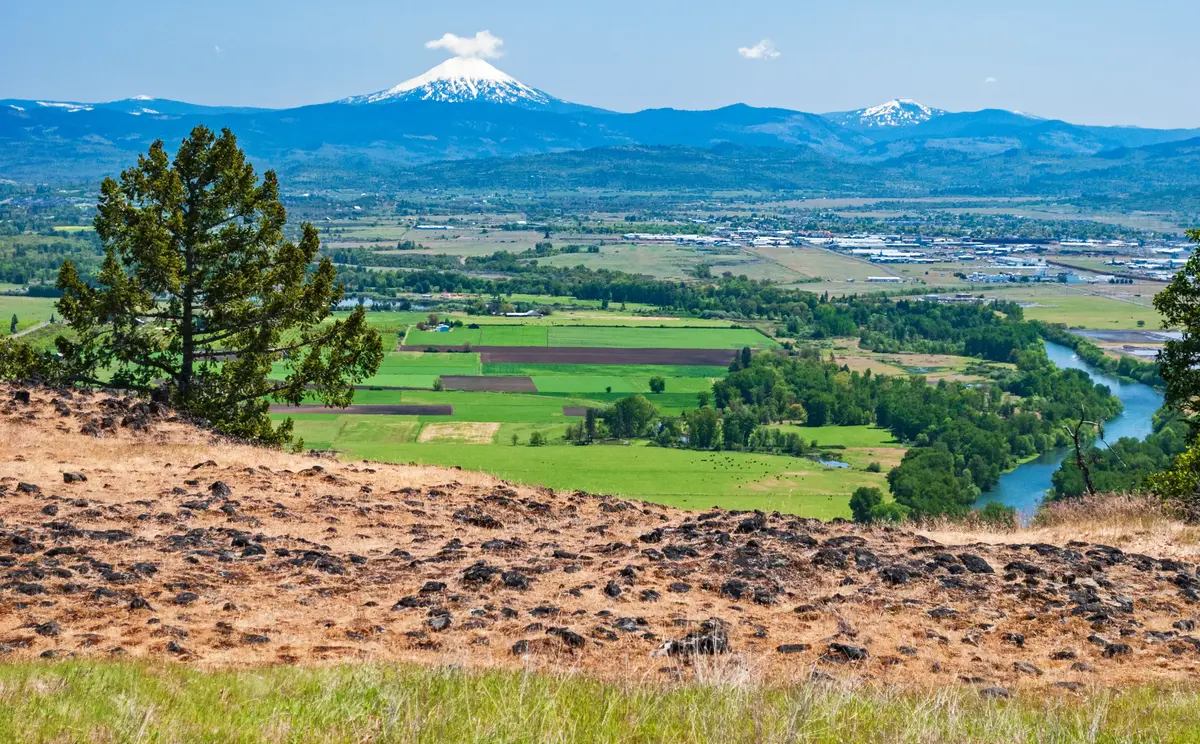
Central Point School District 6: The District at a Glance
Central Point School District 6 is a pre-K through grade 12 district serving Central Point, Gold Hill, and Sams Valley — a geographic footprint that stretches across a meaningful slice of Jackson County. With 4,747 students enrolled in 2025-26, it's a mid-sized district by Southern Oregon standards, operating six elementary schools, two middle schools, and Crater High School as its single comprehensive high school campus.
The district holds a C+ rating, according to Niche. That grade sits below where many relocating families hope to land, and it reflects something specific: on 2024-25 state assessments, 25.6% of students reached math proficiency and 40.5% reached reading proficiency. Both figures trail Oregon state averages of 33% in math and 44% in reading. These aren't gaps you can explain away, and families prioritizing academic metrics should factor them in honestly.
Context matters here, though not as an excuse. When roughly four in ten students in the district were experiencing poverty in the 2024-25 school year, proficiency figures are shaped by more than what happens in the classroom. The district's demographic picture — approximately 71% white and 20% Latino or Hispanic in 2024-25 — also mirrors the broader economic diversity of the Rogue Valley region.
The Structure You're Navigating
Six elementary schools feed into two middle schools: Scenic Middle School in Central Point and Hanby Middle School in Gold Hill. Both serve grades 6 through 8. All middle schoolers ultimately feed into Crater High School, the Comets, which is the district's sole comprehensive high school campus.
Understanding that pipeline matters before you choose where to live within the city. Elementary school boundaries vary by neighborhood, and which elementary a child attends is worth confirming directly with the district office — boundaries don't always follow the neighborhood names families use informally.
| Level | Schools | Grades | Notes |
|---|---|---|---|
| Elementary | Six campuses across the district | Pre-K – 5 | Boundary-assigned; confirm with district |
| Middle School | Scenic Middle School | 6 – 8 | Larger campus; Gifted & Talented program |
| Middle School | Hanby Middle School | 6 – 8 | Located in Gold Hill; smaller campus |
| High School | Crater High School (Comets) | 9 – 12 | Unified campus as of 2024-25; active OSAA athletics |
Standout Schools Worth Knowing
The district has three campuses that come up most often in conversations with families doing their homework before a move. None of them are going to land on a state top-ten list, but each has something specific to offer that goes beyond the district-level averages.
Scenic Middle School
Scenic Middle School is the larger of the district's two middle schools, with approximately 800 students in grades 6 through 8. Its most concrete differentiator is a Gifted & Talented program — a dedicated academic track that isn't available at every middle school in this part of Oregon. For families with a student who has qualified for G&T services at an earlier grade, Scenic is worth a specific conversation with the district about placement and what the program actually looks like in practice.
The school also offers standard extracurricular activities alongside its academic programs. It's not a specialized magnet, but within this district it represents one of the clearer pathways for students who need more academic challenge than the general curriculum provides.
Crater High School — A Unified Campus with a Layered History
Crater High School is every Central Point family's eventual destination for high school, and understanding its recent history helps set realistic expectations. As of the 2024-25 school year, the district consolidated what had previously been multiple specialized sub-school programs — including academies focused on arts and sciences and on business and innovation — back into a single, unified Crater High School campus.
Those academic identities weren't erased. The traditions and curricular focuses those programs developed continue on the reunified campus, which means Crater now operates with more programmatic depth than a typical rural comprehensive high school. Students interested in arts, sciences, or applied business tracks have a pathway into that culture at Crater in a way that wouldn't exist at many comparable-sized high schools in the region.
On the athletics side, Crater runs active OSAA athletics programs across multiple sports under the Comets mascot. Friday night football draws the kind of crowd that makes the stands feel like the center of town — which, in a city this size, they effectively are during fall.
Hanby Middle School
Hanby Middle School serves students in Gold Hill, the smaller community at the district's southern edge. With approximately 428 students, it's a noticeably smaller campus than Scenic — a difference some families see as a feature, particularly for students who do better in a tighter-knit setting with more teacher visibility. If your family lands in a neighborhood closer to Gold Hill, Hanby is worth a visit rather than an afterthought.

Reading the Test Score Data Honestly
The proficiency numbers deserve a direct conversation, because they're the data point most families encounter first and sometimes interpret in isolation. On 2024-25 state assessments, 25.6% of students reached math proficiency and 40.5% reached reading proficiency. Those figures are below the Oregon state averages, and that gap is real.
What they don't tell you is how an individual student is likely to perform. District-level proficiency rates are heavily influenced by the overall economic composition of the student body — and with approximately 39% of students experiencing poverty in the 2024-25 school year, Central Point's numbers reflect that weight. A student arriving from a household with strong academic support, engaged parents, and access to enrichment outside school is not the same student the district-wide average is describing.
What This Means Practically
If your child thrives with institutional support and needs the school itself to be the primary academic driver, this district's averages are a meaningful signal. If your household actively supplements school with enrichment, private tutoring, or strong at-home reading culture, the gap between the district's averages and your child's outcomes is likely to be smaller than the headline numbers suggest.
The G&T program at Scenic Middle School is the clearest structural option for academically advanced students within the district. At Crater, the legacy programmatic tracks in arts-sciences and business-innovation give motivated high schoolers a direction to run in. Neither fully resolves what the proficiency numbers say, but they represent real options worth pursuing rather than assuming the district-wide average is a ceiling.
Families who have moved here from high-performing suburban districts — particularly those used to top-quartile Oregon districts in the Portland metro — tend to experience the biggest adjustment. That's the honest version of what the data says, and it's worth sitting with before you make your decision.
Looking to buy in Central Point? Estimate your payment.
Enter your numbers to see an estimated monthly mortgage payment.
Estimate only. Excludes HOA fees and mortgage insurance. The interest rate above is a starting point, not a quoted rate — replace it with your own to see real numbers. Insurance is a flat placeholder, not a Central Point quote.
Youth Sports and Kids Activities in Central Point
One thing the test scores don't capture is how active Central Point is as a community when it comes to kids' lives outside the classroom. The city is not large, but it punches above its weight in youth sports infrastructure — and the proximity to Medford means families have access to a broader regional rec ecosystem without a significant drive.
Little League Baseball
The most concrete recent investment in youth sports is the new Little League complex. Construction of new baseball fields wrapped up in late 2024, with the first two fields ready for the 2025 season. The city has also planned to host youth tournaments at the complex — a sign that this isn't a minimal facility but a real community anchor for youth baseball in the area. For families with kids who play, this is one of the better pieces of local infrastructure in the Rogue Valley for the age group.
Soccer: Central Valley Futbol Club
Central Valley Futbol Club is based in Central Point and is a registered Oregon Youth Soccer Association club offering both competitive and recreational soccer for the Southern Oregon region. It's the clearest local option for families whose kids play soccer at any level, from first-time recreational players to those looking for a more competitive travel environment. Having a club with a legitimate regional footprint based inside the city — rather than having to drive to Medford for everything — matters when you're building a weekly schedule around practices and games.
School-Based Athletics at Crater High
At the high school level, Crater runs active OSAA athletics programs across multiple sports under the Comets banner. The school's athletic culture is genuine — this is a community that treats Friday night football as a social event, not just a game. For student-athletes, getting involved at Crater means stepping into a program with real history and community investment behind it.
Middle schoolers at Scenic have access to school activities alongside the G&T academic program, giving students multiple ways to plug into the school community before they reach high school age.
Beyond What's Officially Local
For sports not anchored in Central Point directly — basketball, wrestling, flag football, and similar programs — the Medford area's broader rec infrastructure is where most families in the district look. The drive is short enough that many Central Point families treat the two cities as a single activity zone. That's worth knowing going in: some of your kids' activities will have a Medford address, and that's normal for this community rather than a gap in what Central Point offers.
Don Jones Memorial Park and Twin Creeks Park are the most-used community gathering spaces for informal outdoor play and unstructured sports. The Bear Creek Greenway runs through the area and provides a dedicated corridor for bikes and foot traffic that families use year-round.
Who This District Is — and Isn't — the Right Fit For
Most school district profiles focus on who should be excited. This section focuses on who should think carefully — because the families who struggle most here are usually the ones who didn't ask this question before moving.
This District Works Well For
Families who come in with realistic expectations and a plan tend to do well. If you're moving from a comparable mid-tier district and you're used to supplementing school with enrichment activities, tutoring, or strong home reading habits, the Central Point experience is unlikely to feel like a dramatic step down. The community is genuinely engaged with its kids — the youth sports investment, the school athletics culture, the G&T pathway at Scenic — and that community layer matters more than many families expect when they're focused purely on proficiency numbers.
Families with high schoolers who are self-directed and motivated will find legitimate programmatic depth at the unified Crater campus. The academic tradition the old sub-school programs built didn't disappear when the campuses merged; it transferred. A student who goes looking for the arts-and-sciences or business-innovation culture at Crater will find it.
This District Is a Harder Fit For
Families relocating specifically for school quality — moving from a top-performing suburban district and expecting the same academic environment — will hit friction here. The proficiency gap relative to state averages is real, the resources that come with a high-income school population aren't uniformly available, and there's no private or charter school alternative within Central Point itself if the public system doesn't work for a particular student.
Parents who need the school to be the primary academic driver, without supplementing at home or through outside programs, are also navigating a tougher environment than the district's overall quality of teachers and staff would suggest — the structural pressures on a district with significant poverty rates are simply real.
And students who need very high levels of individualized academic acceleration — beyond what a G&T program at one middle school provides — may find the options limited compared to larger districts with more programmatic infrastructure. Central Point is not the wrong city for ambitious students, but it may require families to be more intentional about building the academic environment their child needs rather than relying on the district to provide it fully.
Weekends and Local Favorites
The schools and sports schedules shape weekdays, but Central Point's character as a place to raise kids shows up most clearly on weekends — in where families actually go and what they do together.
The dining scene is genuinely local. The Point Pub & Grill draws families alongside the sports crowd, with a straightforward menu that makes it a reliable Friday-night option when nobody wants to cook after a game. Mazatlan Grill is where a lot of families land for Mexican food without driving into Medford. Diner 62 has the kind of classic American comfort-food menu that works for all ages, while Triple Tree Restaurant and Ferment & Fire round out a dining scene that's small but distinct — these aren't chain restaurants, and that matters for the feel of the community.
On the coffee side, The Palms Cafe, Crater Cafe, Crackin' and Stackin', Outsider Coffee, and Mellelo Coffee Roasters Central Point give the city an independent café culture that's unusually strong for a city of this size. Weekend mornings have a rhythm here — coffee, a walk along the Bear Creek Greenway, and back in time for whatever the kids have in the afternoon.
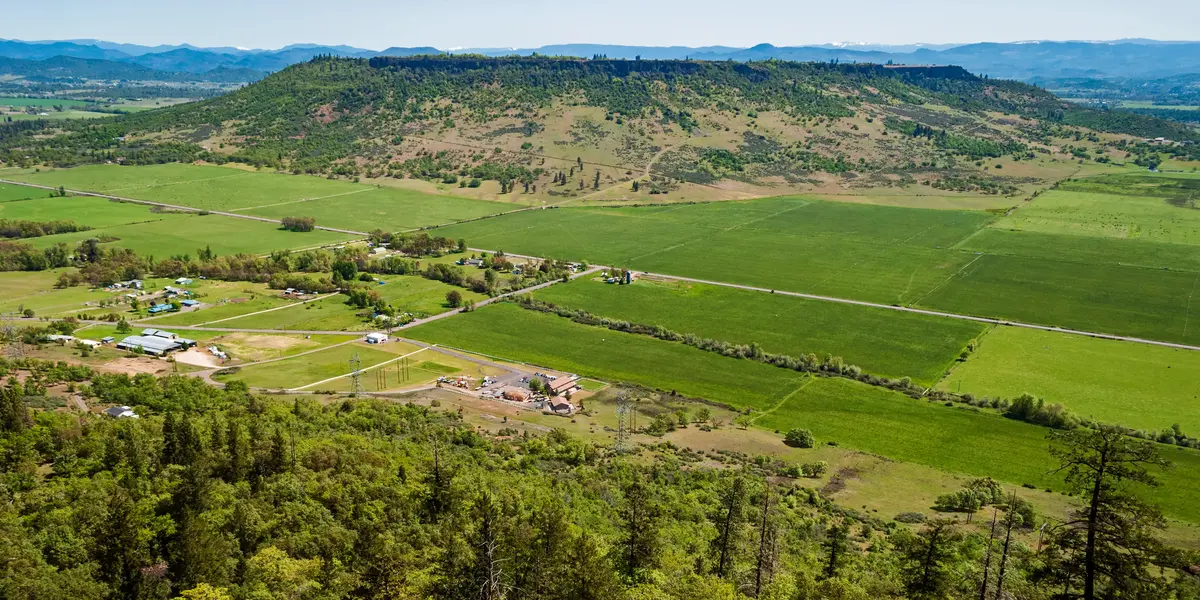
The basalt formations rising from the valley floor just outside town are the regional landmark that tends to surprise families arriving from out of state — dramatic table-top rock formations accessible on foot and genuinely striking in a way that turns a weekend hike into something memorable. TouVelle State Recreation Site along the Rogue River adds another outdoor option that costs nothing and requires almost no planning.
The Jackson County Fairgrounds and The Expo bring events and community gatherings into the city's calendar in a way that gives kids a rotating set of things to look forward to throughout the year. And Crater Rock Museum is the kind of genuinely local institution — rocks, gems, fossils, fluorescent minerals — that elementary-school kids discover on a field trip and then drag their parents back to on a Saturday. It's not a franchise attraction; it's a local one, and that distinction defines a lot about what it means to grow up here.
Local Expert Takeaway: Central Point School District 6 holds a C+ rating, according to Niche, and its proficiency numbers trail the state average in both math and reading — that's the honest starting point for any family doing their research. But the district is not the whole picture. Crater High School's reunified campus carries real programmatic depth in arts-sciences and business-innovation tracks. Scenic Middle School's Gifted & Talented program gives academically advanced students a concrete pathway. And the youth sports infrastructure — new Little League fields ready for 2025, Central Valley Futbol Club for soccer, and a robust OSAA athletic culture at Crater — means kids' lives outside the classroom are genuinely active. Families who come in with clear eyes, supplement where the district's averages fall short, and plug into the community tend to find Central Point works well. Families expecting a top-quartile academic environment without supplementing it will be disappointed.
Quick Takeaways & FAQs
✅ Crater High School's reunified campus continues the academic traditions of its specialized programs, giving motivated students real depth in arts-sciences and business-innovation tracks alongside active OSAA athletics.
⚠️ District proficiency rates — 25.6% in math and 40.5% in reading on 2024-25 state assessments — trail state averages, and families expecting a high-performing suburban district experience should factor that gap in honestly.
📍 New Little League fields completed in late 2024 and Central Valley Futbol Club (a registered Oregon Youth Soccer club based in Central Point) give youth sports families two solid local anchors before they even tap into the Medford-area rec ecosystem.
What rating does Central Point School District 6 have?
Is Crater High School a good school for my student?
Does Central Point School District have a gifted and talented program?
What youth sports are available for kids in Central Point?
How does Central Point School District compare to Medford schools?
Moving to Oregon?
Tell us what you need help with and we'll connect you with local resources.
