
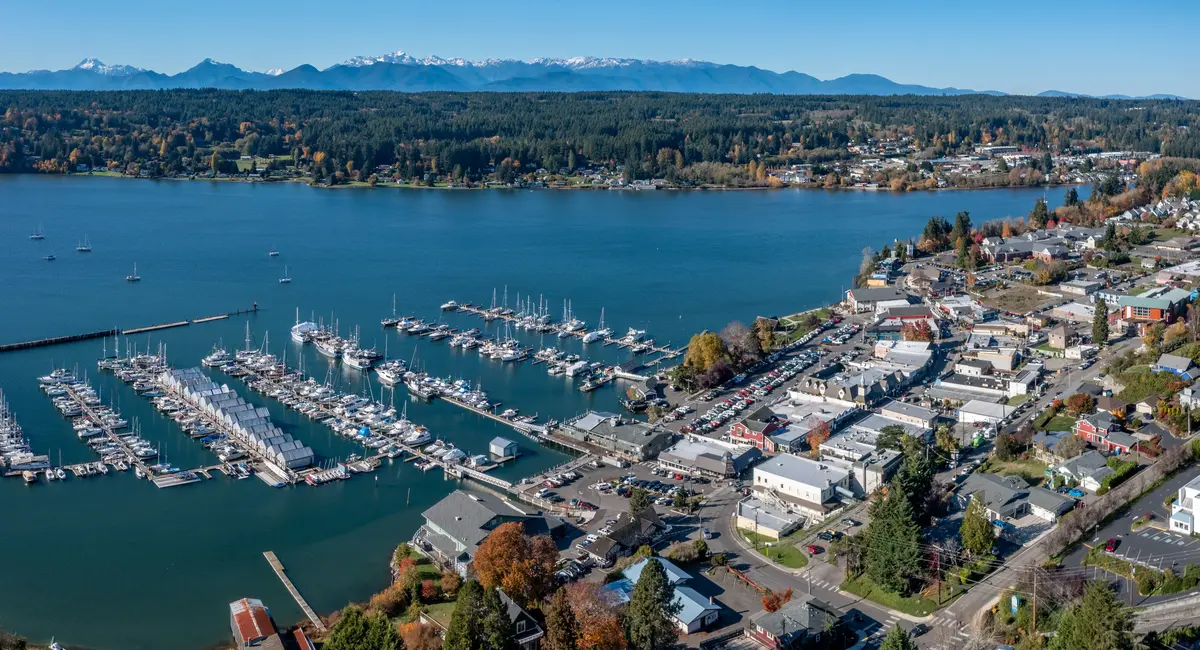
Maybe you've heard Washington state has a property crime problem — and it does, ranking among the worst in the country. So when someone tells you Poulsbo is safe, your first instinct might be to push back. That instinct is worth respecting. But the numbers for Poulsbo are genuinely different from the statewide picture, and understanding why matters before you decide where on the Olympic Peninsula to put down roots. Poulsbo sits on the western shore of Liberty Bay in Kitsap County, connected to the broader Puget Sound region by the Kingston ferry to Edmonds and State Route 305 south toward Bainbridge Island and the Bremerton ferry corridor.
The city's population of about 12,562 is served by 28 full-time law enforcement employees — roughly one officer per 449 residents. That's a meaningful presence for a small city, and it supports a community policing model the department calls COPPS, built around neighborhood beat officers and Neighborhood Block Watch groups rather than reactive patrol alone. The proximity of Naval Base Kitsap and its associated workforce — along with BAE Systems — gives Poulsbo a more stable, rooted resident base than many similarly sized Washington cities, which matters for the social cohesion that tends to correlate with lower crime.
On cost of living, Poulsbo sits noticeably below nearby Bainbridge Island while still offering ferry and highway access to Seattle in roughly 60 minutes. That price differential draws families and professionals who want Olympic Peninsula quiet without full rural isolation — and that demographic tends to reinforce the safety picture. Day-to-day life here means morning coffee along Front Street NE, fresh pastries from a beloved local bakery a few doors down, and evenings near Liberty Bay Waterfront Park without the anxiety that comes with living in higher-crime zip codes closer to Seattle.
Whether you're weighing Poulsbo against Silverdale, Suquamish, or Kingston, the sections below break down the actual violent and property crime figures, how they stack up against Washington state and national benchmarks, what the neighborhood-level picture looks like, and what the Poulsbo Police Department does — and publishes — so you can evaluate this place with real information rather than generalities.
Poulsbo's Crime Numbers at a Glance
The Headline Figures
Poulsbo's violent crime rate is 2 per 1,000 residents and its property crime rate is 18 per 1,000 residents, based on federal crime reporting data. Those two numbers sit at the center of any honest answer to whether this city is safe — and context is everything.
| Geography | Violent Crime (per 1,000) | Property Crime (per 1,000) |
|---|---|---|
| Poulsbo, WA | 2.0 | 18.0 |
| Washington State (2024) | 3.3 | 24.9 |
| United States (2024) | 3.6 | 17.6 |
| Poulsbo vs. WA State | Meaningfully lower | Meaningfully lower |
| Poulsbo vs. National | Meaningfully lower | Slightly higher |
| City-Data Composite Index | 143 vs. U.S. average 235.3 | |
* Violent and property crime figures: 2024 federal crime data via NeighborhoodScout and PlainCrime. City-Data composite index is a weighted, visitor-adjusted metric and should not be read as a direct per-1,000 equivalent.
What the Numbers Actually Mean
Poulsbo's violent crime rate is roughly 44% below Washington state's 2024 figure of approximately 3.3 per 1,000 — and Washington itself is not a low-crime state. On property crime, the comparison is even more striking: Poulsbo's 18 per 1,000 comes in well below the state's approximately 24.9 per 1,000, despite the state ranking 3rd worst nationally for property crime.
The one place Poulsbo doesn't beat the national average is property crime — at 18 per 1,000 versus roughly 17.6 nationally. That gap is narrow, but it's worth naming rather than glossing over. Vehicle break-ins and package theft in high-traffic commercial areas like Front Street are the most commonly reported incidents, not crimes against persons.
Poulsbo's 2024 crime index also fell approximately 14% compared to 2023, tracking the statewide improvement of 14.1% over the same period. Nationally, 2024 produced the lowest violent crime rate since 1969 and a 20-year low in property crime — so the trend lines are favorable at every level.
How Poulsbo Compares to Nearby Cities
The Regional Safety Context
Kitsap County is not a monolith. Silverdale, as the county's commercial hub, carries more traffic and higher retail-adjacent property crime than Poulsbo's quieter, smaller downtown. Bainbridge Island sits at a comparable safety level to Poulsbo but is a distinctly different community — wealthier, more densely developed near the ferry terminal, and separated by water. Kingston and Suquamish, both smaller than Poulsbo, have limited commercial activity and correspondingly low reported crime volumes, though their smaller populations make per-1,000 rates more volatile year to year.
| City | Violent Crime Context | Property Crime Context | Character |
|---|---|---|---|
| Poulsbo | 2 per 1,000 — below state avg | 18 per 1,000 — below state avg | Small city, walkable core, stable population |
| Silverdale | Higher than Poulsbo | Higher than Poulsbo — retail corridor | Unincorporated commercial hub, busier roads |
| Bainbridge Island | Comparable to Poulsbo | Comparable to Poulsbo | Island community, ferry-accessible, higher cost |
| Kingston | Low volume (small population) | Low volume (small population) | Ferry village, limited services |
| Suquamish | Low volume (small population) | Low volume (small population) | Tribal community, residential character |
| Port Gamble | Very low — tiny population | Very low — tiny population | Historic mill town, minimal commercial activity |
The practical takeaway for anyone choosing between Poulsbo and Silverdale is this: Silverdale's retail concentration along Kitsap Mall Boulevard and Randall Way creates the kinds of property crime hot spots — parking lot break-ins, retail theft — that push its numbers higher. Poulsbo's commercial activity is centered on a smaller, more foot-traffic-friendly Front Street corridor, which changes the risk profile meaningfully.
Bainbridge Island is the closest comparison on feel and safety, but the price difference between the two cities is substantial, and the commute dynamic differs too — Bainbridge riders go directly to downtown Seattle's Coleman Dock, while Poulsbo residents typically drive south to Kingston or Bainbridge to catch their ferry. For those not commuting to Seattle regularly, that distinction matters less than the safety and lifestyle data.

Neighborhood-Level Safety in Poulsbo
Where the Safer Areas Are
Residents and local data consistently point to the northwest part of Poulsbo as the city's safest area. That zone encompasses parts of the Vinland and Olhava corridors — newer residential development with lower transient traffic and good street lighting. If minimizing even low-level property crime exposure is a priority, the northwest quadrant is where to look first.
For a full breakdown of what each neighborhood offers in terms of character, walkability, and access, see the best neighborhoods in Poulsbo guide — it covers the distinctions between areas like Bond Road, Noll Road, and Big Valley that go beyond what a safety page can usefully address.
Downtown / Front Street
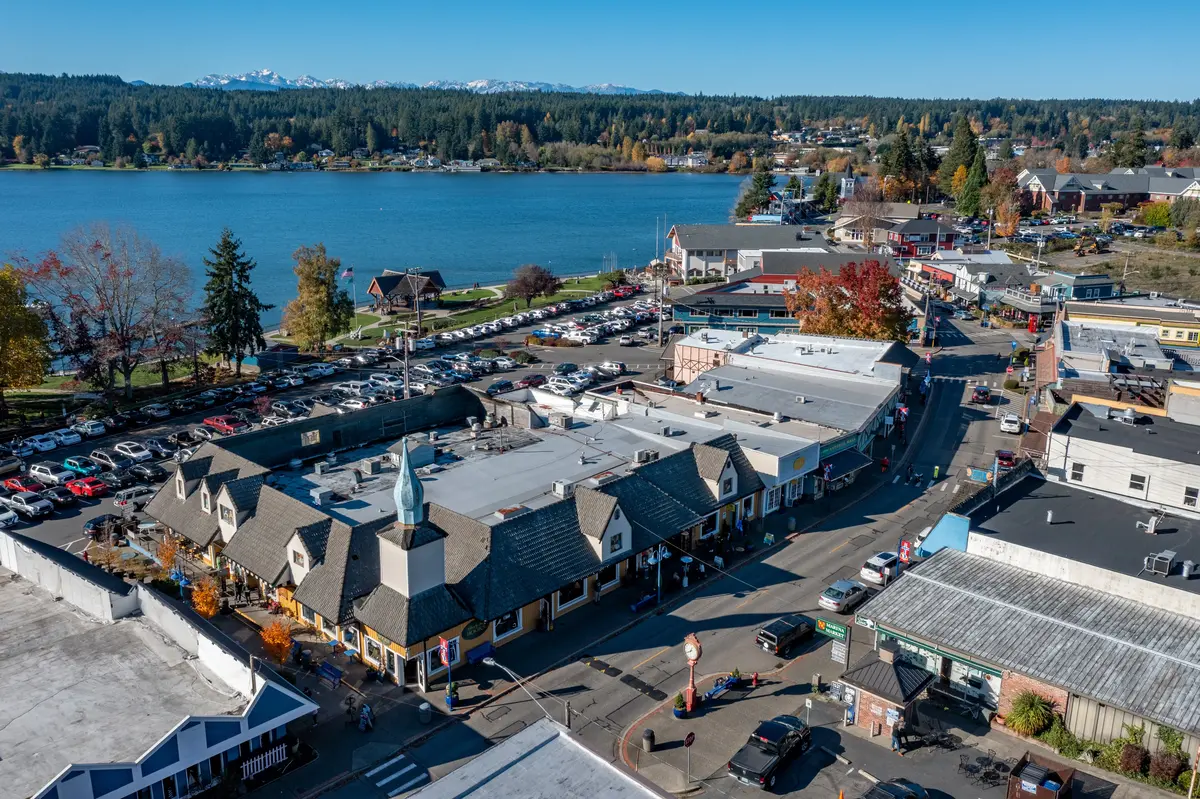
Front Street NE and the blocks immediately surrounding Liberty Bay Waterfront Park see the highest foot traffic in the city — and the highest concentration of reported property incidents. That's consistent with any small city's commercial core. The waterfront setting at American Legion Park and the Poulsbo Marina keeps this strip active into the evening in summer. Violent crime here is low; the realistic concern is opportunistic vehicle break-ins, particularly in the marina parking areas.
Lemolo and Poulsbo Village
These established residential areas sit closer to the water's edge and SR-305, giving them a more mixed residential-commercial character than the newer subdivisions to the northwest. Crime exposure here is moderate for Poulsbo — meaning still well below state averages — but the proximity to the highway corridor means slightly more through-traffic than the quieter inland neighborhoods.
Bond Road, Noll Road, and Big Valley
These are Poulsbo's most suburban-feeling zones, with larger lots and less foot traffic. Reported incidents in these areas are sparse, which aligns with what residents describe as among the city's quieter residential pockets. The catch is that distances to downtown and to SR-305 mean you'll drive for almost everything, and that isolation is a lifestyle trade-off as much as a safety one.
Olhava and Vinland
Both areas represent newer development on Poulsbo's northern and western edges. Olhava in particular has seen significant residential growth, with planned street grids and neighborhood infrastructure that supports the community policing model. These neighborhoods tend to have active Neighborhood Block Watch participation, which is one of the most reliable leading indicators of sustained low crime in a residential area.
Looking to buy in Poulsbo? Estimate your payment.
Enter your numbers to see an estimated monthly mortgage payment.
Estimate only. Excludes HOA fees and mortgage insurance. The interest rate above is a starting point, not a quoted rate — replace it with your own to see real numbers. Insurance is a flat placeholder, not a Poulsbo quote.
What the Poulsbo Police Department Actually Does
Community Policing, Not Just Patrol
The Poulsbo Police Department's COPPS program — Community Oriented Policing and Problem Solving — is not a brochure phrase. It means officers are assigned to specific neighborhoods and are expected to know residents, not just respond to calls. The department runs Neighborhood Block Watch groups across the city, and the practical effect is that neighbors actually know to call before a situation escalates rather than after.
The department also operates a free Community Police Academy open to any resident. It's a structured program that walks participants through how the department actually works — from dispatch to evidence handling — and creates a direct channel for residents to raise concerns with leadership. For a city of 12,562 people, that kind of structured access to department leadership is meaningful, and it's the sort of thing that tends to get taken seriously when it's offered publicly rather than just described in a press release.
Transparency You Can Actually Check
One thing Poulsbo does that many cities its size don't: the department publishes annual analyses of bias-based policing, use of force, vehicle pursuits, and officer complaints, with records going back to 2018. That's a seven-year public transparency record through at least 2025. If you want to evaluate a department's accountability posture before deciding on a neighborhood, that archive is a real resource — not a summary, but actual data.
The staffing picture matters too. Twenty-eight full-time law enforcement employees for a city of roughly 12,562 residents puts the ratio at approximately one officer per 449 residents. That's a workable staffing level for a low-crime city, and the COPPS model means those officers are deployed for prevention rather than spread thin across reactive patrol routes.
What Doesn't Show Up in the Data
Six months after moving to Poulsbo, one thing surprises many newcomers: how often the police scanner is quiet. The city's call volume is genuinely low compared to what people relocating from larger Kitsap cities or the Seattle metro expect. The occasional exception is summer weekend evenings near the marina, when the waterfront draws visitors from across the peninsula and a handful of noise complaints or minor incidents tick up. It's not alarming — it's the rhythm of any small waterfront city in tourist season — but it's a seasonal quirk worth knowing before you assume every evening near the Sons of Norway Poulsbo Lodge will be as quiet as a Tuesday in February.
What to Look For Before Settling on a Neighborhood
Tools Worth Using
City-wide averages are a starting point, not a destination. Poulsbo's composite crime index of 143 — compared to a U.S. average of 235.3 — tells you the city is meaningfully safer than most American cities on a weighted basis, but that figure doesn't tell you whether a specific street near a commercial corridor has a different incident pattern than a cul-de-sac in Olhava.
The most useful free tools for digging deeper: City-Data.com's Poulsbo crime page lets you look at year-over-year trends by category. CrimeGrade.org provides a map-based view that shows the northwest quadrant's relative safety advantage versus the commercial areas near Front Street. The Kitsap County Sheriff and Poulsbo PD both publish call-for-service data that lets you look at incident types rather than just totals.
What Actually Matters at the Street Level
Before settling on a specific part of Poulsbo, look at two things: proximity to the SR-305 commercial corridor (more through-traffic, more retail-adjacent property crime), and whether the street or subdivision has an active Neighborhood Block Watch group. The COPPS program makes it easy to find out — you can ask the department directly which areas have active groups, and the answer tells you more than any crime map.
One thing many people overlook: the Poulsbo Marina parking area and the blocks immediately east of Front Street NE see higher vehicle break-in rates in summer than the rest of the city. If you're evaluating a condo or apartment within walking distance of the waterfront, that's worth factoring into your thinking about what you leave visible in a parked car — a practical precaution, not a reason to avoid the area entirely.
The Honest Bottom Line
Washington state has a genuine property crime problem, and pretending otherwise does a disservice to anyone making a real decision. Poulsbo is a meaningful exception to that statewide pattern — below the state average on both violent and property crime, trending further downward, and supported by a community policing structure that is more substantive than most cities this size bother to build. That doesn't mean every block is identical, and it doesn't mean property crime doesn't happen. It means the baseline here is genuinely better than the state average, which in Washington is saying something real.
Local Expert Takeaway: Poulsbo's violent crime rate of 2 per 1,000 puts it well below both Washington state and national averages — and in a state that ranks among the worst nationally for property crime, Poulsbo's property crime figure of 18 per 1,000 is a genuine distinction. The northwest neighborhoods, including the Olhava and Vinland areas, are the city's quietest on the crime map. The commercial zone along Front Street NE — great for a morning coffee or a waterfront dinner — is where you're most likely to encounter opportunistic vehicle break-ins in summer. The Poulsbo Police Department's COPPS program and its public annual transparency reports give residents more accountability tools than most cities this size offer. If you're comparing Poulsbo to Silverdale or anywhere along the SR-303 corridor, the safety data is one of Poulsbo's clearest practical advantages.
Quick Takeaways & FAQs
✅ Poulsbo's violent crime rate of 2 per 1,000 is roughly 44% below Washington state's 2024 average — a meaningful gap in a state that does not have a low-crime reputation.
⚠️ Property crime near the Front Street NE waterfront corridor — especially vehicle break-ins in marina parking areas — ticks up in summer tourist season and is the most realistic concern for residents.
📍 The Poulsbo Police Department publishes annual bias-based policing, use of force, and complaint analyses dating back to 2018 — a transparency record you can actually pull up and read before deciding on a neighborhood.
What is Poulsbo's violent crime rate compared to Washington state?
What is the safest neighborhood in Poulsbo?
Is property crime a real concern in Poulsbo?
How does the Poulsbo Police Department engage with the community?
Is Poulsbo safer than Silverdale?
Moving to Washington?
Tell us what you need help with and we'll connect you with local resources.
