
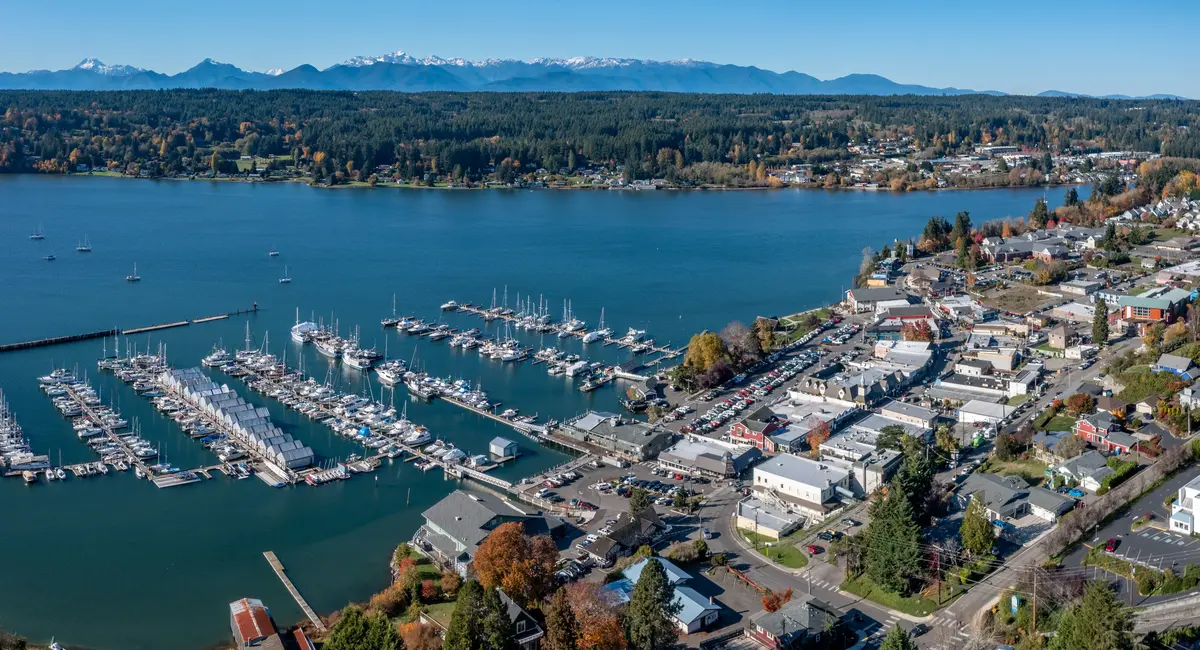
You've probably done the math on Seattle — and decided you can't do it. Poulsbo enters the conversation as the more accessible alternative on the Kitsap Peninsula, a small Norwegian-themed waterfront city on Liberty Bay, roughly 80 road miles northwest of downtown Seattle. But "affordable" is relative here. Poulsbo's overall cost of living index sits at 139 against the national baseline of 100 — meaning daily life runs about 39% above the U.S. average. Housing is the engine driving that number, and the ferry-dependent commute adds a transportation premium that surprises people who assume the peninsula is cheap because it's rural.
What actually draws buyers here is a specific trade-off: you get a genuine small-town waterfront community with a walkable Front Street, a marina, and a location convenient to the major employment corridors of the Kitsap Peninsula — at prices noticeably below what Bainbridge Island commands. The median household income in Poulsbo sits at $116,250, which tells you something about the professional households already here. Many are defense workers, remote employees with Seattle-level salaries, or commuters who decided the ferry crossing was worth the discount.
The places where Poulsbo genuinely beats the national average are narrow but meaningful. Utilities run roughly 9% below the U.S. baseline — a real line-item relief in a Pacific Northwest city where electricity from Kitsap Public Utility District comes in well below average national rates. Groceries run modestly above average, transportation costs run well above, and housing is the dominant weight on the scale. Washington's lack of a state income tax is a meaningful offset for higher earners, though the 9.3% combined sales tax takes its share back on the spending side.
Whether you're relocating to the area, commuting to Seattle, or simply pricing out what the Kitsap Peninsula actually costs compared to where you're moving from, the sections below break down Poulsbo's housing market, rent versus buy dynamics, everyday expenses, a real monthly budget, a comparison with nearby cities, and the full tax picture.
What It Really Costs to Live in Poulsbo
Poulsbo is not a budget city — not by national standards, and not even by Kitsap County standards. The Zillow Home Value Index places the typical home price at $672,676 (2026), which puts this waterfront community firmly in premium Pacific Northwest territory for a city of roughly 12,500 people. That number is driven by geography: Liberty Bay, the ferry access corridor to Seattle, and a supply-constrained peninsula that can't sprawl the way inland cities can.
Against the Seattle metro, Poulsbo reads as a discount. Against nearly every other comparable U.S. small city, it reads as expensive. That gap is worth holding in your head as you work through the numbers below — Poulsbo is less costly than Bainbridge Island or Seattle's core neighborhoods, but it is not inexpensive in any absolute sense.
The one genuine surprise on the cost side is utilities. Kitsap Public Utility District's electricity rates run well below average, and Poulsbo's overall utility index undercuts the national average. Everything else — housing, transportation, even groceries — runs above it. If your household income is near or above the local median of $116,250, the math can work. If you're stretching to reach Poulsbo from a lower-cost market, go in clear-eyed: the ferry system, the peninsula's distance from major retail, and the competitive housing market all add up faster than a back-of-napkin estimate suggests.
Housing: Rent vs Buy in Poulsbo
The Buying Reality
The city-wide typical home price of $672,676 (Zillow Home Value Index, 2026) is the anchor for every purchase conversation in Poulsbo. Entry-level inventory — older construction, smaller lots, less updated interiors — can start meaningfully below that figure, though those properties are competitive and move quickly. The gap between entry-level and the median reflects how much of Poulsbo's supply sits in newer or waterfront-adjacent construction that commands a premium.
Poulsbo's effective property tax rate is approximately 0.80% — meaningfully below the Washington state average and well below what buyers pay in many comparable western Washington cities. For context on what that rate produces in actual dollars, use the mortgage calculator on this page; the precise figure depends on your purchase price.
The Renting Reality
Rental inventory in Poulsbo is thin. The city's small geographic footprint and high homeownership culture mean renters compete for a limited pool of single-family rentals and a modest apartment stock. Rents run above national norms, though still noticeably below what comparable square footage commands in Bainbridge Island or Seattle's urban neighborhoods.
Rent vs Buy: The Honest Read
Buying makes the stronger long-term financial case here if you plan to stay five or more years — the property tax rate is low, the no-income-tax environment rewards earners, and appreciation on the Kitsap Peninsula has been consistent. Renting makes sense if you're new to the ferry commute and want to test it before committing, or if you're waiting for the right property in a thin market. See the full Poulsbo guide for a deeper look at the commute calculus.

Everyday Costs Beyond Housing in Poulsbo
Utilities are Poulsbo's most pleasant budget surprise. Average residential electricity runs about $161 per month — roughly 28% below the national average electric bill — because Kitsap Public Utility District serves the area at approximately 12 cents per kilowatt-hour, well below U.S. average rates. The city's 2026 residential stormwater rate adds $23.28 per month inside city limits. Overall, Poulsbo's utility cost index sits at 91 against the national baseline of 100, making it the one category where living here actually costs less than average.
Groceries are a different story. The C2ER-based index tracked by AreaVibes puts Poulsbo grocery costs about 9.4% above the national average. The peninsula has Albertsons and Central Market for day-to-day shopping, but the absence of warehouse-style competition (the nearest Costco is in Silverdale) means you're paying full retail on most staples. Transportation costs run 33% above the national baseline — a direct reflection of ferry fares, peninsula fuel prices, and the reality that most errands require a car.
| Category | Typical Monthly Cost | Notes |
|---|---|---|
| Housing (2BR rent) | $1,800–$2,400 | Rental range; owners: use the mortgage calculator above for a purchase estimate |
| Utilities | $185–$240 | Electricity ~$161/mo; stormwater $23.28/mo; water/sewer billed separately |
| Groceries | $450–$650 | ~9.4% above national average; estimate for 1–2 person household |
| Transportation & Gas | $300–$500 | Higher than national avg; ferry fares add cost for Seattle commuters |
| Phone & Internet | $120–$180 | Standard Kitsap County cable/fiber options; cell coverage is solid in city limits |
| Dining & Entertainment | $200–$400 | Front Street has independent restaurants and pubs; options thin compared to Silverdale |
| Miscellaneous / Personal | $150–$300 | Clothing, household goods, personal care; sales tax of 9.3% applies to most purchases |
These are estimates for a renter's monthly baseline. Actual totals vary by household size, commute pattern, and lifestyle.
Looking to buy in Poulsbo? Estimate your payment.
Enter your numbers to see an estimated monthly mortgage payment.
Estimate only. Excludes HOA fees and mortgage insurance. The interest rate above is a starting point, not a quoted rate — replace it with your own to see real numbers. Insurance is a flat placeholder, not a Poulsbo quote.
Poulsbo vs Nearby Cities: Cost Comparison
| City | Median Home Price | Typical 2BR Rent | Cost vs Poulsbo |
|---|---|---|---|
| Poulsbo | $672,676 | $1,800–$2,400/mo | — Baseline — |
| Bainbridge Island | ~$1,100,000+ | $2,400–$3,200/mo | Substantially higher |
| Silverdale | ~$530,000–$560,000 | $1,600–$2,000/mo | Noticeably cheaper |
| Kingston | ~$580,000–$620,000 | $1,500–$1,900/mo | Moderately cheaper |
| Suquamish | ~$600,000–$650,000 | $1,700–$2,100/mo | About the same |
| Port Gamble | ~$500,000–$550,000 | Very limited inventory | Cheaper, but minimal rental market |
Bainbridge Island is the starkest comparison — buyers who can't clear that city's median often pivot to Poulsbo and accept a longer commute in exchange for a meaningfully lower price point. Silverdale gives you the best everyday-errand infrastructure at a lower purchase price, but it trades the waterfront character and Front Street walkability that many Poulsbo buyers are specifically paying for.
Taxes & the Bottom Line for Poulsbo
No State Income Tax
Washington levies no personal income tax on wages or salary. For a household earning near or above the local median of $116,250, that's a meaningful annual advantage compared to Oregon, California, or Idaho — states where a significant share of Poulsbo's transplants originate. It won't erase the premium you pay on housing, but it does shift the math.
Sales Tax: 9.3%
Poulsbo's combined sales tax rate is 9.3% as of Q3 2026 — the 6.5% Washington state rate plus a 2.8% local add-on confirmed by the Washington Department of Revenue. That's not the highest in the state, but it's not modest either. Every grocery run, every appliance, every car repair has this rate baked in. Residents who cross into Silverdale for big-box shopping pay essentially the same rate, so there's no meaningful tax-arbitrage option nearby.
Property Tax: The Low Point
The effective property tax rate of approximately 0.80% is one of Poulsbo's genuine financial advantages for owners. It runs well below the Washington state average and significantly below what buyers pay in many comparable western Washington communities. Combined with the no-income-tax environment, it makes ownership here more attractive on a total-tax basis than the sticker price alone implies.
Who This Budget Fits
Poulsbo works financially for households with stable, professional incomes — remote workers with Seattle-level salaries, dual-income households clearing $110,000 or more, or anyone whose compensation travels well to a lower-cost-than-Seattle address. The ferry commute math also matters: if two people are making that crossing five days a week, the annual ferry and transit cost is a real budget line, not a rounding error.
For households earning significantly below the local median, Poulsbo is genuinely difficult. The rental market is thin and above-average in cost, the entry-level purchase market is competitive, and the transportation index running 33% above the national baseline compounds every week. Silverdale and Kingston offer more accessible price points on the same peninsula if the Poulsbo premium doesn't fit your current income.
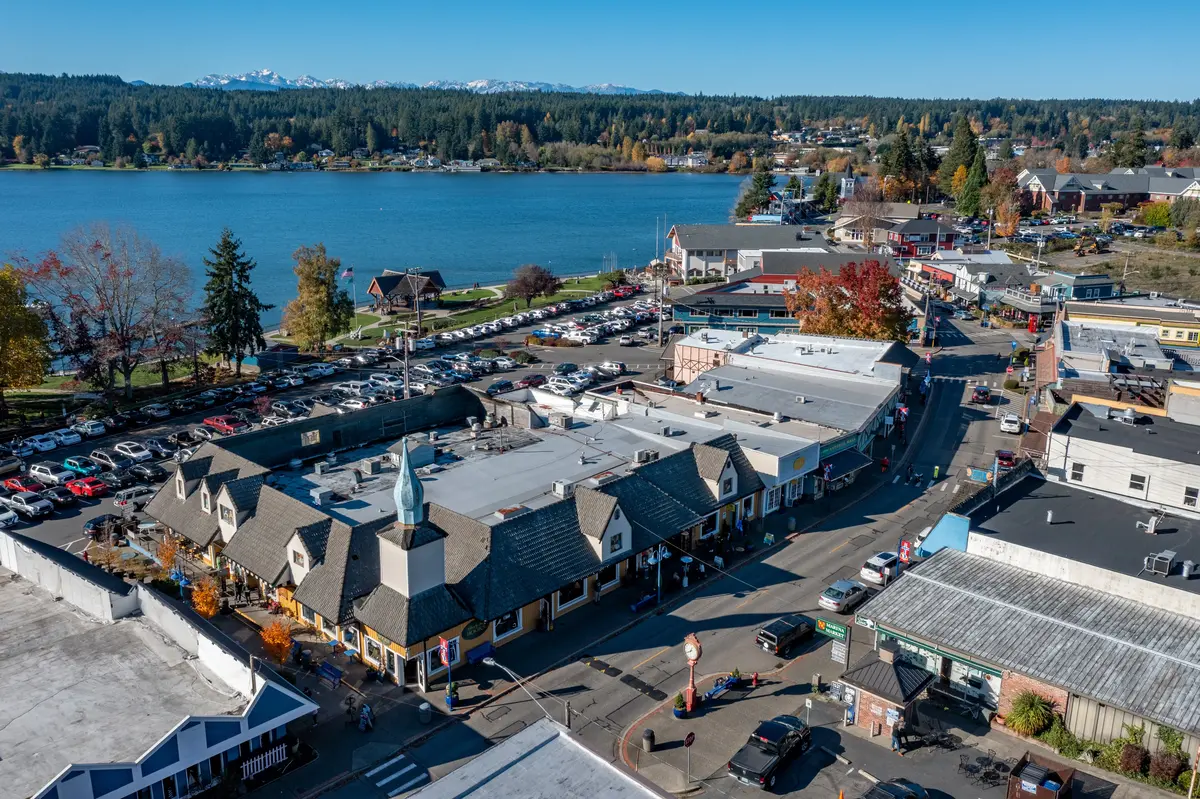
Local Expert Takeaway: Poulsbo's cost story has one structural oddity that shapes every budget: utilities are cheaper than nearly anywhere else in western Washington thanks to Kitsap PUD's rates, while transportation costs run well above average because the peninsula is genuinely far from everything and the ferry isn't free. If you're commuting to Seattle, budget the ferry into your housing decision the same way you'd budget a parking spot in the city — it's a fixed monthly cost, not an occasional expense. The households who thrive here financially tend to be ones who've done that math honestly, have incomes at or above the $116,250 local median, and specifically want what Front Street, Liberty Bay, and this particular waterfront community offer — not just a cheaper version of Bainbridge Island.
Quick Takeaways & FAQs
✅ Washington's zero state income tax is a genuine financial advantage for Poulsbo's professional households, partially offsetting the city's above-average housing and transportation costs.
⚠️ Poulsbo's transportation cost index runs 33% above the national baseline — ferry fares and peninsula geography make commuting genuinely expensive, and that cost should be factored into any housing budget before you make an offer.
📍 Electricity in Poulsbo averages about $161 per month — roughly 28% below the national average bill — because Kitsap Public Utility District's rates are among the lowest in western Washington.
What is the typical home price in Poulsbo, WA in 2026?
What is the property tax rate in Poulsbo, Washington?
Does Washington state have an income tax, and how does that affect living in Poulsbo?
How much does it cost to commute from Poulsbo to Seattle?
Is Poulsbo cheaper than Bainbridge Island?
Moving to Washington?
Tell us what you need help with and we'll connect you with local resources.
