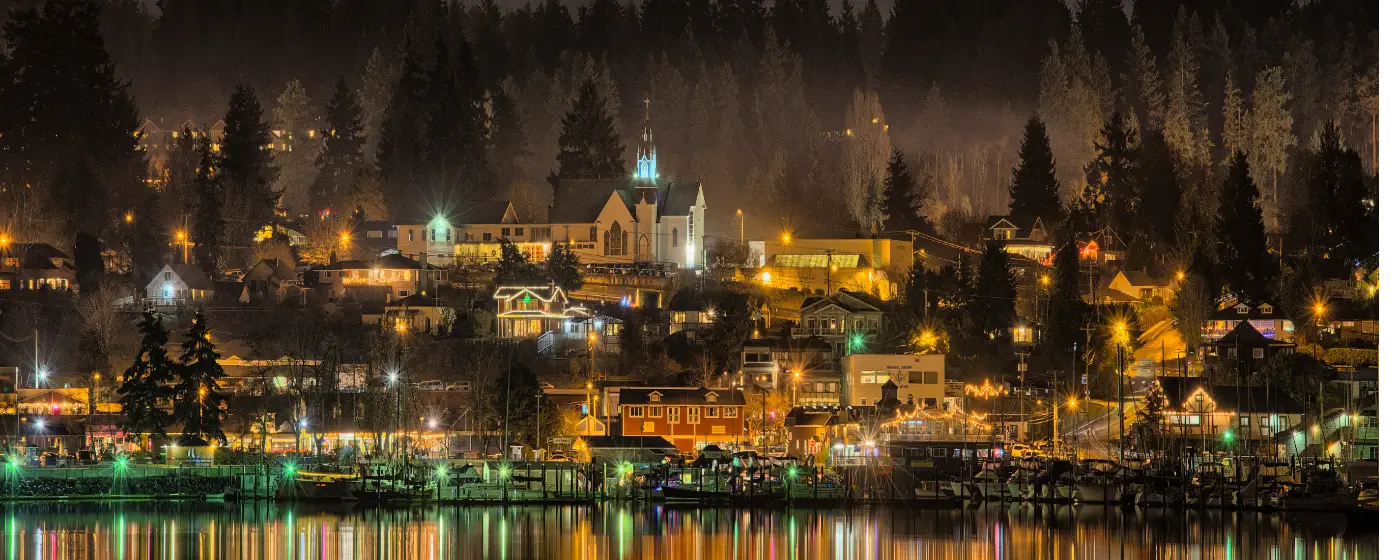
Most people driving through Poulsbo on Highway 305 see a Scandinavian-themed downtown and keep moving toward the ferry. What they miss is that nearly every direction you walk from Front Street puts you within minutes of Liberty Bay, a working estuary, or a wooded trail that feels nothing like a suburb. The city has built 16 parks across 137 acres — roughly half developed, half left as open space or natural buffer — plus more than 5 linear miles of trails that connect the waterfront, the tideflats, and the surrounding forest. For a city of just over 12,000 people, that ratio is genuinely striking.
The outdoor identity here isn't accidental. Poulsbo sits on the western shore of Liberty Bay, a protected inlet off Puget Sound that creates flatwater conditions rare on the open water. That geography makes kayaking and paddleboarding accessible to beginners who would struggle elsewhere on the Sound. It also means the waterfront trail network — running from American Legion Park through Muriel Iverson Williams Waterfront Park — offers wildlife sightings that newcomers consistently underestimate: harbor seals on the rocks, great blue herons in the shallows, and bald eagles overhead on a Tuesday morning in October.
Families with school-age children who prioritize outdoor activities tend to find Poulsbo punches above its weight. Youth sports programming ties into the broader parks system, and the ongoing investment in facilities — including a newly renovated inclusive playground at Raab Park — signals a city that treats recreation as infrastructure, not an afterthought. For context on what families and youth sports specifically look like here, the schools page covers that programming in more depth.
The sections below cover Poulsbo's signature parks and what makes each worth knowing, the trail network and how it connects, the water recreation scene on Liberty Bay, and what seasonal life in this city's outdoor spaces actually looks like across the year.
Poulsbo's Signature Parks: What Each One Actually Offers
Sixteen parks sounds like a lot for a small city — and it is, if you know which ones to use and for what. Three parks anchor daily outdoor life in Poulsbo, and they're distinct enough that residents often develop a clear loyalty to one over the others.
Liberty Bay Waterfront Park
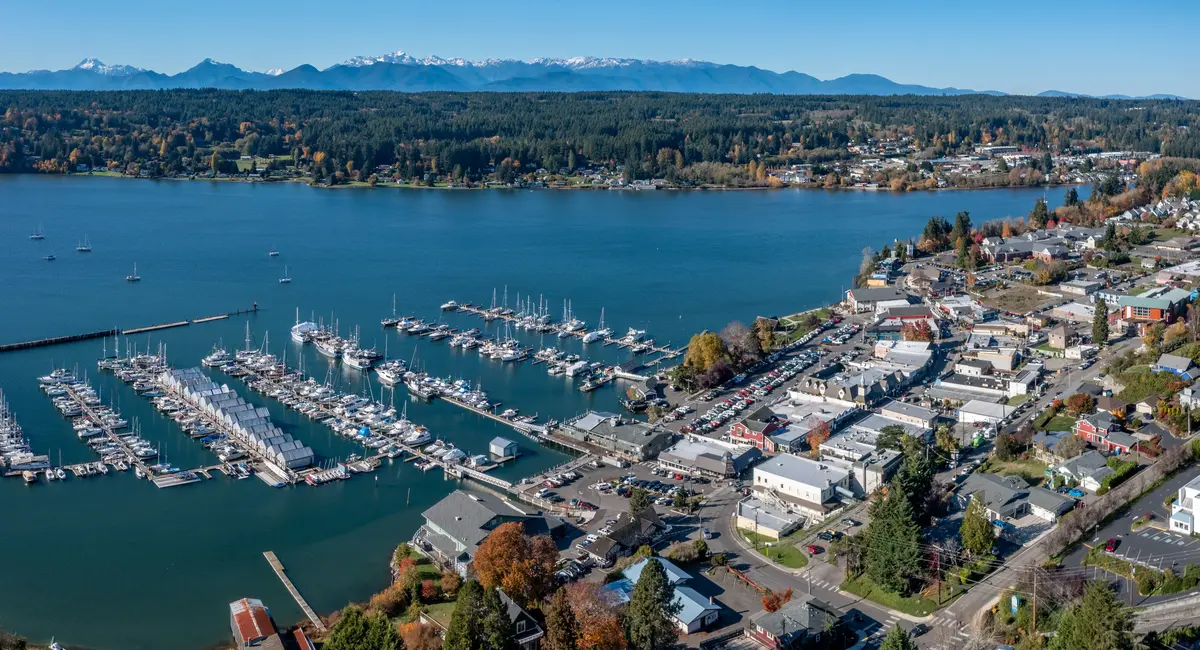
This is the park most visitors see, and it earns its prominence. Located at 18809 Anderson Pkwy directly beside the Poulsbo Marina, Liberty Bay Waterfront Park combines paved walking paths, a gazebo, picnic areas, a playground, public restrooms, and a small veterans memorial anchored by a large anchor sculpture. The boardwalk faces west across the marina, which means afternoon light hits the water in a way that makes even a weekday lunch break feel intentional.
In summer, the boardwalk hosts live music events that draw a genuine cross-section of the town — not just tourists. The wildlife is unscripted: harbor seals haul out on the marina floats close enough to photograph without a zoom lens, and herons stand motionless in the shallows at the park's edge. This is also where the Olympic Outdoor Center operates its seasonal rental dock, so the park serves as a practical launch point for paddling as well as a passive green space.
The Waterfront Park Pollinator Pathway — part of the city's Poulsbo Pollinator Project (P3), launched in spring 2024 — runs near the renovated picnic area and adds a layer of intentional native landscaping that's quietly interesting even if you're not there for the ecology.
American Legion Park
A 4.6-acre waterfront park at 19265 Front St NE, donated to the American Legion by World War I veteran Selmer Myerboe, American Legion Park feels more intimate than the Waterfront Park a few blocks away. The terrain is wooded rather than open, with a pedestrian boardwalk threading through dense vegetation along Liberty Bay's edge.
Wildlife watchers find this one more productive than the marina-facing Waterfront Park — the wooded cover brings songbirds and shorebirds that don't linger in open picnic areas. There's a pavilion, picnic tables with grills, a playground, and restrooms, which makes it a functional family destination rather than just a scenic stop. The P3 pollinator corridor extends here too, with native plantings established along the Front Street frontage.
The trail from American Legion Park connects northward into Muriel Iverson Williams Waterfront Park, and that connection is what turns two small parks into something that feels more like a linear greenway.
Poulsbo Fish Park
The least-known of the three signature parks to newcomers, and the one most likely to become a daily habit once you discover it. Fish Park is a 40-acre nature reserve just north of downtown, built around the Liberty Bay Estuary and Dogfish Creek. Three miles of largely flat trails — suitable for strollers and accessible to most fitness levels — include boardwalk sections over wetland areas, wildlife-viewing platforms, interpretive signage, and benches placed at the spots where you're most likely to need to stop and watch something.
The park's most visible landmark is a large driftwood salmon sculpture by local artist Travis Foreman, installed at a spot along Dogfish Creek where actual salmon return each fall. That convergence of art and ecology in a neighborhood park is the kind of thing that doesn't make a city's marketing materials often enough.
Best for: Fish Park is the go-to for residents who want a genuine nature walk within city limits — flat enough for everyday use, wild enough to feel like an escape.Trails, Bike Infrastructure, and Getting Around on Foot
Poulsbo's more than 5 linear miles of city-maintained trails aren't a loop — they're a network that rewards knowing the connections. The most functional of those connections is the waterfront greenway linking American Legion Park through Muriel Iverson Williams Waterfront Park via boardwalk and wooded path. Walking it end to end takes roughly 20 to 30 minutes at a comfortable pace, and it rarely feels crowded outside of weekend summer afternoons.
The Waterfront Trail Corridor
The corridor hugs Liberty Bay through sections of dense Pacific Northwest forest — cedar, fir, and alder canopy that keeps the trail cool even in July. The boardwalk sections cross wetland areas where the views open up toward the estuary. This is the trail that people who move here from the eastside of Puget Sound consistently mention as the thing they didn't expect: a legitimate nature walk accessible by foot from a downtown block.
One honest caveat: portions of this trail are unpaved and can be muddy from October through March. Newcomers who arrive in summer, fall in love with the trail, and then show up in January in trail runners tend to have a different opinion. Waterproof footwear isn't optional here for most of the year.
Poulsbo Fish Park Trails
The 3-mile Fish Park trail network operates as a separate system from the waterfront corridor, though both are accessible from downtown. The flat terrain and stroller-friendly surfaces make it the most heavily used family trail in the city on weekend mornings. The interpretive signage along Dogfish Creek is detailed enough to be genuinely educational — salmon lifecycle, estuary ecology, native plant identification — without feeling like a classroom.
The Pump Track
Built by the Evergreen Mountain Bike Alliance's West Sound chapter, the Poulsbo Pump Track is free, open to the public, and serves a different purpose than the walking trails. It's a series of berms and rolling terrain specifically designed for bicycle skill-building — not a recreational loop but a practice facility that younger riders in particular use regularly. For parents relocating here with kids who bike, this is worth knowing about before you assume the city's cycling infrastructure is limited to road shoulders.
Port Gamble Forest Heritage Park
Technically in Port Gamble rather than Poulsbo, but close enough that residents treat it as part of their trail rotation. The Port Gamble Forest Heritage Park offers an extensive multi-use network through dense Pacific Northwest forest, with trails designated separately for hikers, cyclists, and equestrians, plus views across the bay. If Fish Park is the daily walk, Port Gamble Forest is the weekend destination.
| Trail / Park | Distance / Size | Surface | Best Use |
|---|---|---|---|
| Waterfront Corridor (American Legion → Muriel Iverson Williams) | ~1.5 miles one-way | Paved + boardwalk + unpaved | Scenic walks, wildlife watching |
| Poulsbo Fish Park | 3 miles of trails, 40 acres | Mostly flat, some boardwalk | Family walks, strollers, nature |
| Liberty Bay Waterfront Park path | Paved loop | Paved | Casual strolls, events |
| Poulsbo Pump Track | Compact berm circuit | Compacted dirt/gravel | Bike skill-building |
| Port Gamble Forest Heritage Park | Extensive network | Natural surface | Hiking, MTB, equestrian |
| City trail network (combined) | 5+ linear miles | Mixed | Walking, jogging, nature access |
The combined system is genuinely useful for daily outdoor life — but it's not a substitute for the regional trail networks in Silverdale or on Bainbridge Island if long-distance running or technical mountain biking is your primary recreational identity.
On the Water: Kayaking, Paddleboarding, and Liberty Bay
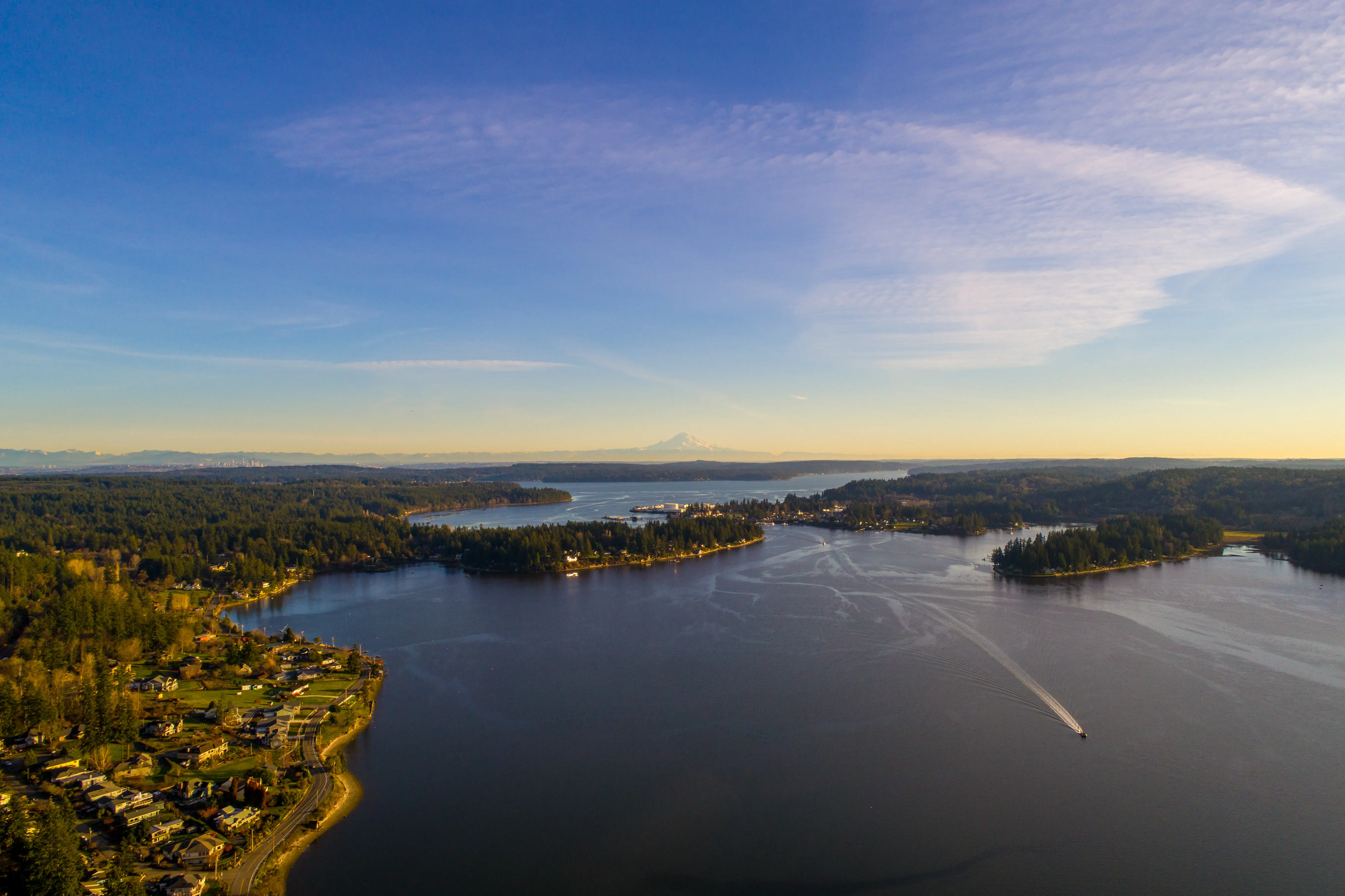
Liberty Bay earns its reputation as one of the more beginner-friendly paddling spots on Puget Sound for a specific geographic reason: the bay is protected from the open-water swells and wind exposure that make kayaking genuinely intimidating on the Sound's main channels. The water is calm on most mornings, the distances between landmarks are short, and the wildlife density is high enough that even a short paddle produces memorable encounters.
Olympic Outdoor Center at the Marina
Olympic Outdoor Center operates a seasonal rental dock at the Poulsbo Marina, directly adjacent to Liberty Bay Waterfront Park. Rentals include single kayaks, tandem kayaks, standard stand-up paddleboards, and a Monster SUP — a group paddleboard that holds up to five people and is exactly as chaotic and enjoyable as it sounds for families with younger kids.
The guided bioluminescence kayak tours are the offering that generates the most word-of-mouth among residents. On calm summer nights, paddling through Liberty Bay's bioluminescent water — the kind of thing you'd expect to need a trip to a tropical destination to see — is genuinely one of the more unusual recreational experiences available this close to Seattle. The staff's local knowledge of where the phenomenon is most visible on a given night is what distinguishes the guided tour from going out on your own.
What the Bay Actually Looks Like
From the water, Poulsbo's waterfront looks like it was designed to be viewed by kayak. The marina, the Norwegian-influenced architecture of Front Street, the wooded hillside rising behind downtown — it's a perspective that the driving approach on Highway 305 completely misses. Harbor seals often follow paddlers at a curious but unhurried distance, particularly in the morning before boat traffic picks up.
The one limitation worth knowing: Olympic Outdoor Center's rental dock is seasonal. Outside of the operating window — typically spring through early fall — self-guided paddling requires your own equipment and a launch point. The Poulsbo Marina has launch access, but it's worth confirming current conditions before planning a winter paddle.
Beyond the Bay
Liberty Bay connects to the broader protected waters of Puget Sound, which means experienced paddlers aren't confined to the inlet alone. Day trips to nearby waterfront communities by water are feasible for paddlers comfortable with tidal currents. For most residents, though, the bay itself provides enough variety — changing light conditions, seasonal wildlife shifts, and the occasional kayak circumnavigation of the marina — to serve as a primary recreational water source without requiring longer expeditions.
Looking to buy in Poulsbo? Estimate your payment.
Enter your numbers to see an estimated monthly mortgage payment.
Estimate only. Excludes HOA fees and mortgage insurance. The interest rate above is a starting point, not a quoted rate — replace it with your own to see real numbers. Insurance is a flat placeholder, not a Poulsbo quote.
Seasonal Recreation and What Locals Actually Do
Outdoor life in Poulsbo shifts meaningfully across the four seasons in ways that don't always show up in real estate listings or city marketing. Here's what the calendar actually looks like for residents who spend time outside regularly.
Summer: The Season That Justifies Everything
From late June through September, the waterfront parks become the social center of town. Liberty Bay Waterfront Park's summer music series draws crowds to the boardwalk on weekend evenings. The Olympic Outdoor Center dock stays busy from morning through early evening. Families with school-age children find that the combination of the waterfront, Fish Park, and the pump track keeps kids occupied in ways that genuinely reduce screen time — which sounds like marketing copy until you've seen it firsthand.
The catch nobody warns you about: summer weekend afternoons in July and August bring visitor traffic from Seattle, ferry passengers, and day-trippers that can make Front Street and the waterfront parks feel crowded in a way that residents who moved here for the quiet find genuinely irritating. Saturday afternoons in peak summer are not the right time to evaluate what daily life here feels like.
Fall: The Season Locals Prefer
September and October are when the Fish Park salmon tours happen — the annual Salmon Tours event at Dogfish Creek recently drew over 350 visitors across 12 informational booths and live salmon viewing in the creek. For residents, this is both a community event and a reminder that the estuary is a functioning ecological system, not just a scenic backdrop.
The fall color along the waterfront trail and through Fish Park is understated compared to eastern Washington — this is maritime forest, so the palette runs to amber and rust rather than brilliant orange — but the light in October on Liberty Bay is the kind of thing people photograph and then fail to adequately describe to friends who haven't been here.
Winter and Spring: The Honest Assessment
Winter in Poulsbo is wet. Not dramatically wet in the way that Forks on the Olympic Peninsula is wet, but consistently gray and damp from November through March in a way that affects how much time you actually spend in the parks. The trails in Fish Park and the waterfront corridor stay accessible, but the unpaved sections become muddy enough to require real footwear. Wildlife activity on the bay actually increases in winter — migratory birds, more seal activity on the rocks — but you have to be motivated to get out and see it.
Spring, which arrives tentatively in March and more reliably in April, is when the Poulsbo Pollinator Project's (P3) native plantings come into visibility. The pollinator corridors at American Legion Park and the Waterfront Park Pollinator Pathway were expanded with hundreds of additional plants through 2024 and 2025, and by May the areas around the renovated picnic areas show the kind of native flowering that draws pollinators and casual observers alike.
| Season | Highlight Activity | What to Know |
|---|---|---|
| Summer (Jun–Sep) | Kayaking, waterfront music, paddleboard rentals | Weekend crowds on Front Street and the marina; go early or weekday |
| Fall (Oct–Nov) | Salmon Tours at Fish Park, trail walking | Best season for locals; visitor traffic drops sharply after Labor Day |
| Winter (Dec–Feb) | Migratory bird watching, quiet bay walks | Trails muddy; waterproof footwear essential; rental dock closed |
| Spring (Mar–May) | Pollinator corridor blooms, early paddling | Bay warms slowly; best wildflower timing is late April into May |
The residents who thrive here outdoors long-term are the ones who adjust their expectations by season rather than trying to recreate summer conditions year-round.
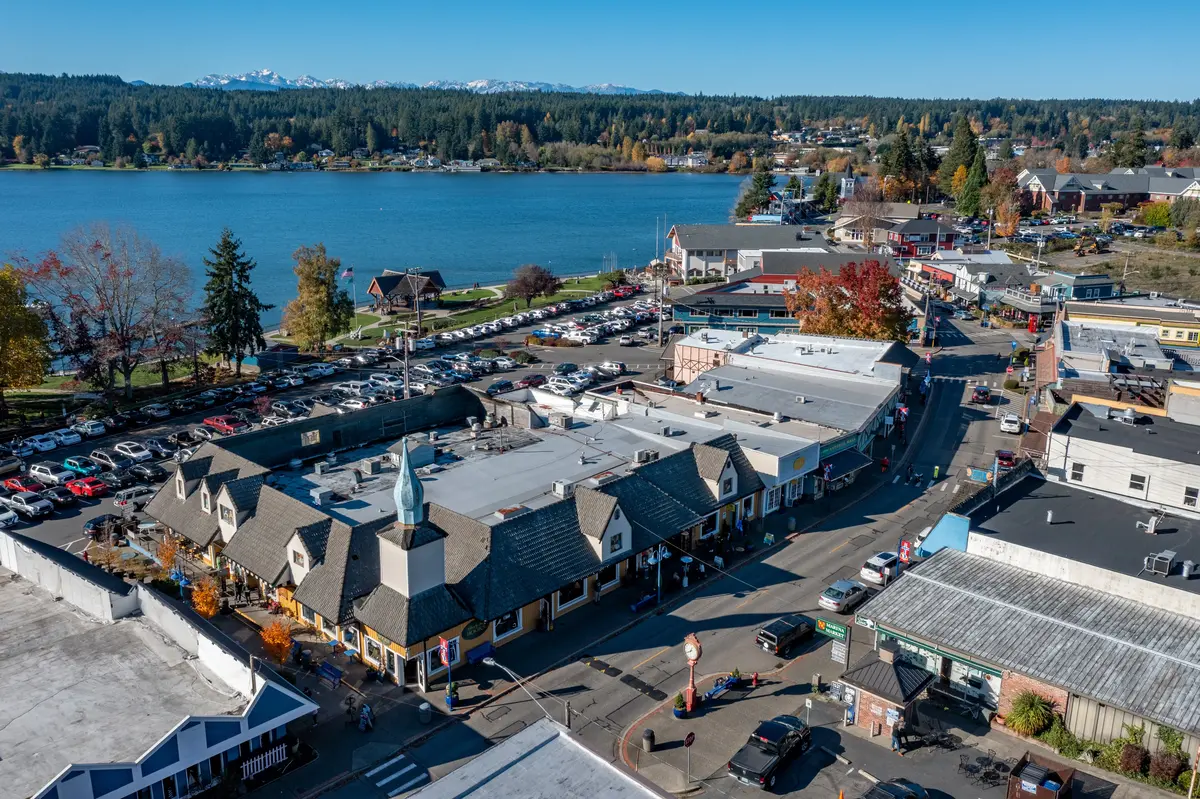
Local Expert Takeaway: Poulsbo's outdoor infrastructure is most impressive when you understand what's connected: Liberty Bay Waterfront Park and the Olympic Outdoor Center rental dock sit at one end of a chain that runs through American Legion Park, along the boardwalk through Muriel Iverson Williams, and up to Fish Park and Dogfish Creek — all accessible on foot from downtown. The bioluminescence kayak tours on summer nights and the fall Salmon Tours at Fish Park are the two experiences that genuinely surprise newcomers. The honest downside is winter: the trails stay open, but the mud and the gray skies test the commitment of people who moved here purely for summer recreation.
Quick Takeaways & FAQs
✅ Poulsbo Fish Park's 3 miles of flat estuary trails — including wildlife platforms and a driftwood salmon sculpture by local artist Travis Foreman — sit within walking distance of downtown and are genuinely unlike anything you'd expect from a city this size.
⚠️ Summer weekend afternoons bring real visitor crowds to Liberty Bay Waterfront Park and Front Street — residents who want the quiet version of Poulsbo do their waterfront walks on weekday mornings or wait until after Labor Day.
📍 The Poulsbo Pump Track, built by the Evergreen Mountain Bike Alliance's West Sound chapter, is free and open to the public — a practical asset for families with kids who bike that most people don't know about until after they've moved here.
Is kayaking on Liberty Bay suitable for beginners with no experience?
Are Poulsbo's parks and trails open year-round?
What is the Salmon Tours event at Poulsbo Fish Park?
How many parks and how many trail miles does Poulsbo have?
What are the bioluminescence kayak tours on Liberty Bay?
Moving to Washington?
Tell us what you need help with and we'll connect you with local resources.
