
Maybe you discovered Bainbridge Island on a weekend ferry ride from Seattle and started doing the math. The crossing is only about 35 minutes, the island feels genuinely removed from the city, and you've been priced out of Ballard or Kirkland for years. What stops most first-timers cold isn't the ferry — it's the price tag. The Zillow Home Value Index for Bainbridge Island sat at $1,184,279 in May 2026, making this one of the most expensive markets in the greater Seattle area by any measure. That figure sets the baseline for everything in this guide.
The buyers who land here successfully tend to share a profile: dual-income households, often with one partner working remotely and one commuting to Amazon or Microsoft via ferry and bus, drawn by a quality of life and a community scale that genuinely cannot be replicated in most Seattle neighborhoods at any price. The island is small — roughly 28,000 residents — the number of transactions in any given month is low, and inventory turns over quickly. This is not a market where you learn by browsing Zillow for six months.
First-timers approaching Bainbridge from Bremerton or Poulsbo often assume the price gap between those markets and the island is bridgeable with a slightly bigger down payment. It isn't — it's a fundamentally different market. The upside: homes here tend to hold value, the ferry walk-on commuter pass runs approximately $199 per month for unlimited travel, and the lifestyle trade-offs relative to Seattle living are real and immediate. The downside: entry-level inventory is scarce, competition is consistent, and the financial bar is high enough that pre-approval isn't a formality — it's the price of admission.
Whether you're serious about making an offer this spring or still six months away from being ready, the sections below walk through exactly what your budget buys on Bainbridge Island right now, the step-by-step Washington State buying process, a budget table you can use to stress-test your cash position, and the specific mistakes that trip up first-timers in this market.
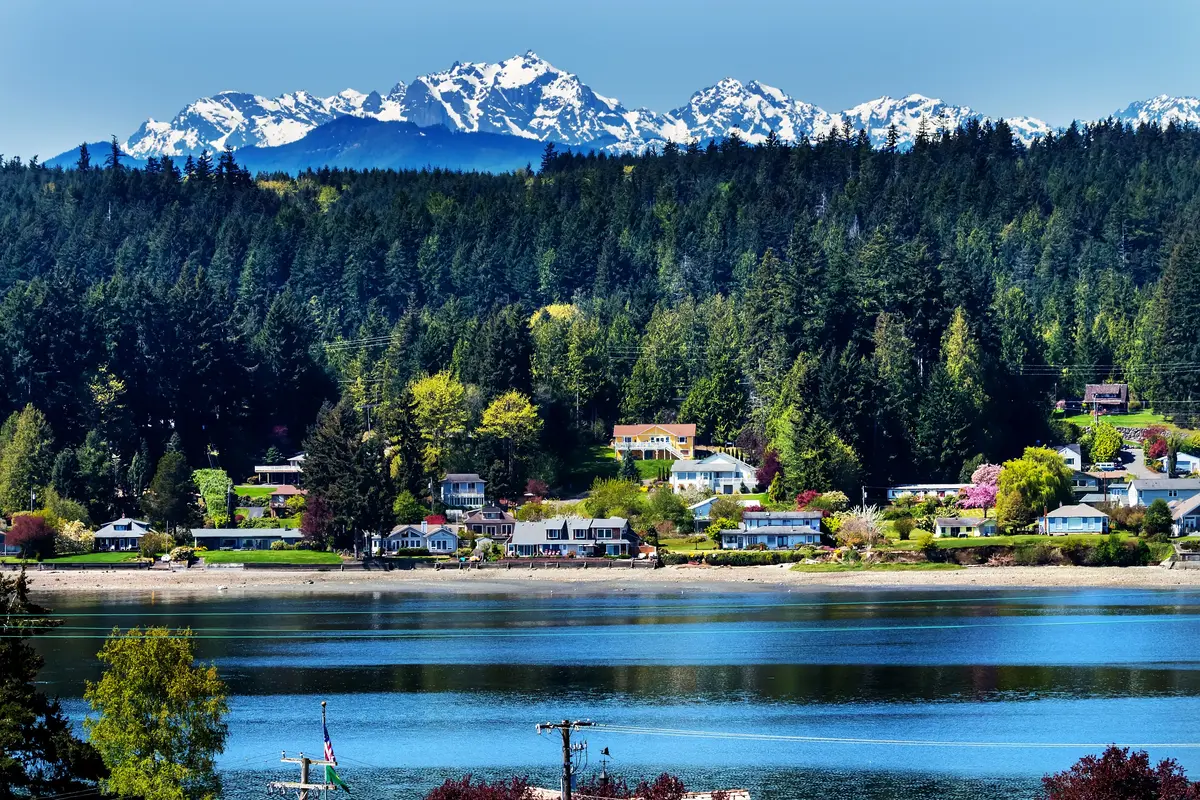
The Bainbridge Island First-Time Buyer Reality
The Zillow Home Value Index for Bainbridge Island was $1,184,279 as of May 2026 — and that figure is an index average, not a ceiling. It reflects the full mix of the island's housing stock, from older Island Center ramblers to waterfront Wing Point estates. What it tells a first-timer is that a starter budget under $900,000 puts you at the thin end of available inventory.
Entry-level homes — older construction, smaller lots, no water views — occasionally appear in the high $700,000s to low $800,000s, primarily in Island Center or portions of Lynwood Center. These move fast. As of April 2026, the average days on market across all Bainbridge Island listings is approximately 40 days from listing to closing, and the sale-to-list ratio sits at 99.9%. That's not a buyer's market by any definition.
The honest picture for a first-timer: if your pre-approved budget is below $850,000, your options are limited and competition for the homes that do appear at that price point is real. If your budget reaches $950,000 to $1.1 million, you access a meaningfully larger slice of the market — still competitive, but with more properties to choose from. A single high-value waterfront sale can swing Bainbridge's monthly reported median significantly, because total transaction volume on the island is low. Track multi-month trends alongside your agent rather than reacting to one month's headline number.
The buyers who struggle most are those who try to approach Bainbridge the way they'd approach Poulsbo or Bremerton — with a contingent offer, extended timelines, and room to negotiate. That playbook rarely works here. Coming in clean, pre-approved, and prepared to move within the 40-day window is the baseline expectation, not a competitive edge.
The Homebuying Process in Bainbridge Island, Step by Step
Step 1: Get Pre-Approved — Before You Tour Anything
In Washington State, an agent is now required to have you sign a written buyer agency agreement before they can tour homes with you — a rule that took effect under the NAR settlement in August 2024. Most sellers' agents on Bainbridge will not accept an offer from a buyer whose pre-approval letter isn't current and specific. Do this first, before you set foot on the ferry for a showing.
Pre-approval here means a full underwritten pre-approval from your lender, not a soft pre-qualification. Given the price range on the island, lenders will be scrutinizing debt-to-income ratios carefully. Have two years of tax returns, recent pay stubs, and bank statements ready before your first lender call.
Step 2: Sign a Buyer Agency Agreement and Start Shopping
Once pre-approved, you'll sign a buyer agency agreement with your chosen agent. This is now legally required in Washington before touring. Choose an agent with specific Bainbridge Island transaction experience — the island's low transaction volume means many Seattle-area agents have never closed a deal here, and local nuances (ferry-commute buyers, seasonal inventory patterns, waterfront disclosure requirements) matter.
Spring is the most active season on the island, with more new listings and the highest buyer traffic. If your goal is spring shopping, your financing should be locked and your agent relationship established no later than January or February.
Step 3: Write a Strong Offer on NWMLS Form 21
Washington State offers are written on NWMLS Form 21 — the Residential Purchase & Sale Agreement — which covers price, earnest money, contingencies, included items, and closing date. Earnest money on Bainbridge typically runs 2–5% of the purchase price, due within two business days of mutual acceptance. At a $1,000,000 purchase price, that's $20,000–$50,000 in cash that leaves your account quickly.
Earnest money is credited toward your down payment at closing, but it can be forfeited if you default without a valid contingency. Know your contingencies going in — financing, inspection, and appraisal are the standard three — and understand which ones you're prepared to keep versus which might cost you the deal in a multiple-offer situation.
Step 4: Inspection, Appraisal, and Final Walkthrough
Washington doesn't require a home inspection by law, but skipping one on a Bainbridge Island home — many of which are older, on septic systems, and subject to marine-climate weathering — is a risk very few first-timers should take. Budget $400–$700 for a standard inspection; add a separate septic inspection if the property isn't connected to municipal sewer.
If you're financing the purchase, your lender will order an appraisal ($500–$800 typically) to confirm the property value supports the loan. If the appraisal comes in below the purchase price and you have an appraisal contingency, you can renegotiate or walk away. If you've waived it, you're on the hook for the gap in cash.
Step 5: Closing
Washington is an escrow state — a title and escrow company handles the closing, not an attorney. Closing costs for buyers in Washington typically run 2%–3% of the purchase price, covering loan origination, title insurance, escrow fees, and prepaid items. Washington's real estate excise tax (the transfer tax) is customarily the seller's responsibility under a standard NWMLS agreement, which is one of the few cost items that falls off the buyer's side of the ledger.

How Much Home Can You Afford in Bainbridge Island
The table below stress-tests three loan structures across a range of realistic Bainbridge Island purchase prices. Closing costs are estimated at approximately 2%–3% of the purchase price. These are estimates — your lender will provide a Loan Estimate with figures specific to your credit profile, loan amount, and rate.
| Scenario | Purchase Price | Down Payment | Est. Closing Costs (2–3%) | Est. Cash Needed at Table |
|---|---|---|---|---|
| FHA (3.5%) — entry-level | $800,000 | $28,000 (3.5%) | $16,000–$24,000 | ~$44,000–$52,000 |
| Conventional (3%) — entry-level | $800,000 | $24,000 (3%) | $16,000–$24,000 | ~$40,000–$48,000 |
| Conventional (5%) — mid range | $950,000 | $47,500 (5%) | $19,000–$28,500 | ~$66,500–$76,000 |
| Conventional (10%) — mid range | $1,100,000 | $110,000 (10%) | $22,000–$33,000 | ~$132,000–$143,000 |
| Conventional (20%) — near median | $1,184,279 | $236,856 (20%) | $23,686–$35,528 | ~$260,542–$272,384 |
| Conventional (20%) — upper range | $1,400,000 | $280,000 (20%) | $28,000–$42,000 | ~$308,000–$322,000 |
Notice that even at entry-level prices, the cash-at-table requirement on Bainbridge Island is significant relative to what first-timers typically expect. The earnest money deposit — typically 2–5% of the purchase price, due within two business days of mutual acceptance — is part of the down payment, not an additional cost, but it must be liquid and accessible immediately.
Washington has no state income tax, which meaningfully improves take-home pay for Seattle-commuting buyers and is worth factoring into your overall affordability picture alongside the effective property tax rate of 0.80%. The interactive calculator below will let you model monthly payments at any purchase price — use the table above to anchor your cash-to-close estimate first, then model the payment.
Looking to buy in Bainbridge Island? Estimate your payment.
Enter your numbers to see an estimated monthly mortgage payment.
Estimate only. Excludes HOA fees and mortgage insurance. The interest rate above is a starting point, not a quoted rate — replace it with your own to see real numbers. Insurance is a flat placeholder, not a Bainbridge Island quote.
Common First-Time Buyer Mistakes in Bainbridge Island
Starting the Search Without a Pre-Approval Letter
On Bainbridge Island, showing up to a listing appointment without a current, underwritten pre-approval letter is a signal to every agent in the room that you're not a serious buyer. With a 99.9% sale-to-list ratio and homes averaging roughly 40 days from listing to closing, sellers here can afford to wait for a buyer who's ready. If you're not pre-approved, you're not in the running — and you'll waste showing appointments that could have gone to a buyer who was.
Waiving the Inspection Contingency Without Understanding What You're Giving Up
In competitive multiple-offer situations, first-timers sometimes waive the inspection contingency to strengthen their offer. On Bainbridge Island, where a significant portion of homes are on septic systems, built before 1980, and exposed to relentless marine moisture, this is a particularly high-stakes waiver. A failed septic system or significant dry rot behind cedar siding can cost $20,000–$60,000 or more to remediate. If you're going to waive inspection, at minimum do a pre-inspection (paid, before you write your offer) so you know what you're accepting.
Underestimating the Earnest Money Requirement
First-timers who've read national homebuying guides often arrive expecting to put down 1%–2% in earnest money. Washington NWMLS practice is 2–5% of the purchase price, due within two business days of mutual acceptance. At $1,000,000, that's up to $50,000 leaving your bank account before you've had your inspection. That cash needs to be sitting in a liquid account — not in a stock portfolio that takes three days to settle, not in a CD with an early-withdrawal penalty. Find this out before you write your first offer, not after.
Ignoring the Ferry Commute's Real-World Logistics
The roughly 35-minute ferry crossing between Bainbridge Island and downtown Seattle sounds straightforward until you miss a sailing. Ferries run on fixed schedules, and missing the last convenient evening boat means either waiting an hour or driving around through Bremerton — a substantially longer trip. First-timers who commute to Seattle offices often don't fully road-test the logistics before buying: ferry terminal parking fills early, the walk-on commuter pass at approximately $199 per month covers unlimited travel but not the Winslow-to-office ride on the Seattle side. Model the full commute door-to-door, including schedule constraints and ferry traffic during summer tourist months, before you commit to a purchase price that assumes seamless daily crossings.
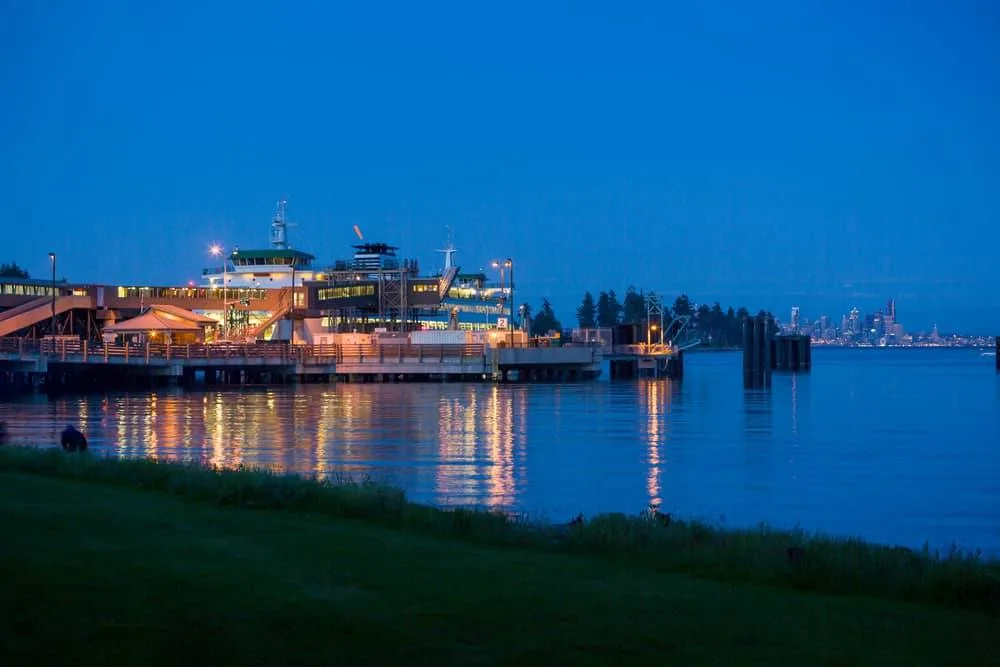
Local Expert Takeaway: Bainbridge Island is one of the few ferry-connected island markets in the country where first-time buyers regularly compete against move-up buyers and remote workers with significant equity. The buyers who succeed here do three things consistently: they get a full underwritten pre-approval completed before their first showing, they have liquid cash reserves well above the minimum down payment to cover earnest money and closing costs simultaneously, and they hire an agent who has actually closed deals on the island — not just in Kitsap County or greater Seattle. If you're six months from ready, use that time to get your pre-approval in order, research the ferry schedule for your specific office location, and start tracking inventory in Island Center and Lynwood Center, where the island's most accessible entry-level homes occasionally surface.
Quick Takeaways & FAQs
✅ Bainbridge Island's combination of ferry access to Seattle and a tight-knit island community draws consistently strong buyer demand — which is why homes here sell at 99.9% of list price even at median prices above $1.1 million.
⚠️ Entry-level inventory below $900,000 is genuinely scarce, and that sale-to-list ratio means lowball offers are unlikely to gain traction — budget honesty before you start touring saves significant time and disappointment.
📍 Washington State now requires a signed buyer agency agreement before any agent can tour homes with you — a post-August 2024 rule that catches first-timers off guard; have this conversation with your agent before you schedule your first showing.
What is the minimum down payment to buy a home on Bainbridge Island?
How long does it take to buy a home on Bainbridge Island?
Can I use an FHA loan to buy on Bainbridge Island?
What are typical closing costs for buyers in Washington State?
Is the Bainbridge Island real estate market a buyer's or seller's market right now?
Moving to Washington?
Tell us what you need help with and we'll connect you with local resources.
